A Look at Ongoing Combat Aircraft Programs in Turkey
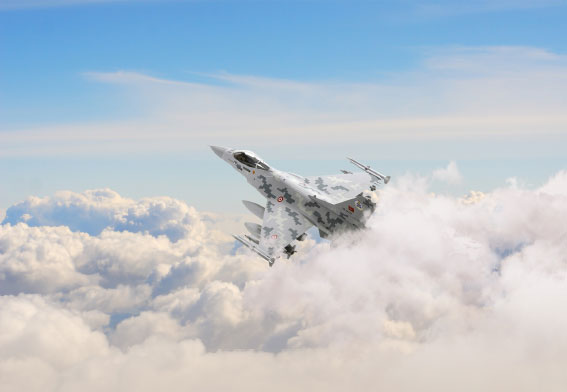
The TurAF’s 238 F-16C/D fighters are currently operated by 8 different Squadrons (113th, 401st, 132nd, 151st, 161st, 181st, 193rd and 152nd) deployed at 7 different air bases (Eskisehir 1st MJB, Konya 3rd MJB, Merzifon 5th MJB, Bandırma 6th MJB, Diyarbakır 8th MJB, Balıkesir 9th MJB and İncirlik (Adana) 10th MJB) around Turkey. Most of them have been modernized to the latest Block 50+ standards under the PO-III and F-16 MSM/CCIP Programs. The F-16C/D Fighting Falcon combat aircraft, that forms the backbone of the TurAF’s airpower, will be deactivated from service starting from 2030 (Block 30 and Block 40 versions) and is to be replaced by Turkey’s next generation National Combat Aircraft (abbreviated as MMU in Turkish), also known as TF-X. There are also some 25 upgraded F-4E 2020 Phantom II all-weather fighter-bombers serving at the 111th Squadron that belong to the 1st Main Jet Base (MJB) Command located in Eskisehir. Starting from 2019 the F-4E 2020s were supposed to be replaced by F-35A Lightning II Joint Strike Fighters that Turkey, as a Level-III Partner of the Joint Strike Fighter (JSF) Program, planned to procure as many as 116 (100 x F-35A and 16 x F-35B). However, deliveries of F-35As to the TurAF were halted by the U.S. Government in July 2019. Four days after the start of 1st S-400 Triumph Air & Missile Defense System deliveries to Turkey on July 16, 2019 U.S. President Donald TRUMP announced that the U.S. would not sell F-35 fighter jets to Turkey. With this announcement Turkey’s participation in the F-35 Lightning II JSF Program was also suspended indefinitely. So, the 5th Generation TF-X/MMU will replace both the F-4E 2020 Phantom IIs and F-16C/D Fighting Falcon combat aircraft currently in the service of the TurAF during the first quarter of the 2030s.
The T-41Ds are used for Screening Flights, while the SF-260Ds are used for Primary Flight Training. T-41Ds and SF-260Ds have been planned to be replaced with MFI-395 Super Mushshak Primary Trainer Aircraft produced by Pakistan. Pakistan Aeronautical Complex (PAC), manufacturer of MFI-395 Super Mushshak Primary Trainer Aircraft, disclosed at the Dubai Airshow 2019 that they would start deliveries to the TurAF in June 2020. However, no deliveries have taken place so far, and this delay stems from COVID-19 pandemic. The T-38M Advanced Jet Trainer Aircraft will fly until 2030 and is then to be replaced by the New Generation Advanced Jet Trainer (AJT) version of the HÜRJET (T-X) which is being developed by TUSAŞ.
As a modern, cutting edge air force, configured and trained to the highest Western/NATO standards, the TurAF is able to execute the full spectrum of air operations and has demonstrated how sharp and strong its claws are during the recent cross-border operations in Syria, Iraq and even in Libya.
Turkish Air Force and Pilot Shortage
As stated above, there are currently around 265 fighter jets in the Turkish Air Force's inventory, including 238 F-16C/D Fighting Falcon (Block 30M/TM, Block 40M, Block 50M, and Block 50+) and about 25 F-4E 2020. The Turkish Air Force must have at least 331 fighter pilots for a Crew-Seat Ratio (CSR) of 1/1.25, and at least 397 fighter pilots for a Crew-Seat Ratio (CSR) of 1/1.5. This number does not include Trainer Aircraft, Military Cargo Aircraft, E-7T AEW&C Aircraft, and helicopter pilots. According to open sources, the day before the July 15 coup attempt, the number of active fighter pilots within the Turkish Air Force was 1,301, including 668 fighter pilots. As a result of 10 separate Statutory Decrees issued since July 15, 2016, a total of 776 pilots were dishonorably discharged from the Air Force, and the number of pilots dropped to 387, including retired pilots. According to open sources, the Crew-Seat Ratio (CSR) is accepted as 1/1.5 internationally. As a result of the discharges, this ratio was decreased to 1/0.8 in the TurAF (with the discharged F-16 instructor pilots, it was decreased to 1/0.4). The required Crew-Seat Ratio for the state of war should be 1/2.5, which means at least two fighter pilots (265 x 2 = 530) are needed for each combat aircraft (F-16C/D and F-4E 2020.)
I believe that the number of pilots has reached 850 in the last period with the inclusion of the pilots who voluntarily and mandatorily returned and the young eagles who graduated from the 2nd Main Jet Base in İzmir Çiğli after completing their flight/piloting training. According to the information in the written and visual media, 24 pilots who had retired before voluntarily returning to duty during this period, and these pilots, who were allowed to work wherever they wanted for four years, were named "Vanguards." Later, Decree No. 694, published in the Official Gazette on August 25, 2016, allowed for the reinstatement of fighter pilots who had retired before 18 years of service, to the Turkish Air Force, and these pilots, who were recalled forcibly, were named ZED (Zorunlu Eve Dönüş/Mandatory Return to Home) Pilots. According to open sources, a total of 202 pilots, including 78 Turkish Airlines and 95 Pegasus Airlines pilots, returned to the TurAF under ZED. Additionally, officers who previously worked in ground services were allowed to train to become pilots, and in this context, 56 officers who completed their pilot training were assigned to the relevant squadrons as pilots. Furthermore, a total of 151 young eagles completed the flight/pilot training at the 2nd Main Jet Base in İzmir Çiğli (52 on July 27, 2018, 43 on April 7, 2019, and 56 on December 13, 2019) and joined the pilot pool as well. Despite the recent increase in pilots, it is anticipated that the Turkish Air Force will reach pre-July 15th figures only by 2030 in terms of both the number of fighter pilots and experience!
Turkish Aerospace Sector 2019 Figures
Realizing around 40% of the revenue, some 50% of total orders, 63% of the imports and 45% of the total Defense exports in 2019, the aerospace (military and civil aviation) sector is the largest contributor in the Turkish Defense sector, with a total value of US$1.383 Billion in military (US$771 Million) and civil (US$612 Million) aviation exports in 2019. These figures reflected the expansion of overall trade with the European Union, the U.S. and other countries (covering Middle East, Asia, Africa and South America). Turkey exports civil/commercial (A220, A319/320/321, A350 XWB, B777, B787 and B737 jet airliners, G-650 business jet as well as AW139 and H135 helicopters) and military aircraft (A400M and F-35 JSF as well as UH-60/MH-60 helicopters) components and parts to EU countries and the U.S. under IP/O commitments. According to the Turkish Defense and Aerospace Industry 2019 Performance Report, that was prepared by the Defense Industrial Manufacturers Association (SaSaD) through the evaluation of figures obtained from 76-member companies and issued on April 24, 2020, Turkey has realized exports valued at US$287 Million in civil aviation exports to the U.S., US$210 Million to Europe and US$115 Million in exports to other countries. In the field of military aviation Turkey has realized US$75 Million in exports to the U.S., US$552 to Europe and US$146 Million to other countries (covering Middle East, Asia, Africa, and South America).
According to the Turkish Defense and Aerospace Industry 2019 Performance Report, Turkish Aerospace Sector (military and civil aviation) has realized US$4.246 Billion (military aviation US$2.410 Billion and civil aviation US$1.836 Billion) of the turnover (represents around 40% of the total turnover, US$10.884Billion), around US$1.383 Billion of the exports (represents some 45% of the total exports, US$3.068 Billion), and around 50% (military aviation US$1.676 Billion and civil aviation US$3.672 Billion) of the order total (US$10.671 Billion) in 2019. With these figures the Turkish Aerospace Sector is likely the strongest sector of the Turkish Defense & Aerospace Industry.
The backbone of the Turkish Aerospace Sector is formed by state-owned Turkish Armed Forces Foundation (TAFF) companies; Turkish Aerospace (TUSAŞ) and TEI, which also contribute the lion’s share in turnover and export figures. With a Decree published on December 24, 2017 the TAFF companies, Turkey's major Defense industry institutions, were officially attached to the Turkish Presidency. According to figures disclosed by the companies, in 2019 TUSAŞ realized US$2.266 Billion in revenues and US$937.373 Million in export sales, whereas TEI realized US$442.5 Million (represents a 13.5% increase compared to 2018) in revenues (80% from the sales of civil/commercial aircraft engine parts and 20% from the sales of military aircraft engine parts) of which US$352 Million came from exports (represents a 23% increase compared to 2018). However, opportunities are also emerging for private companies such as Alp Aviation (a joint venture between the Sikorsky Aircraft Corporation and the Alpata Group of Turkey), BNA (BAE Systems-Nurol Hava Sistemleri A.Ş./BAE Systems-Nurol Air Systems Inc.), Fokker Elmo Turkey, KaleKalıp/Kale Aero, Kale Pratt & Whitney Engine Industries, Baykar Makina and Vestel Defense Industry.
Affiliated under the Turkish Ministry of National Defense (MoND), military factories of the Turkish Air Force (TurAF), such as 1st Air Supply Maintenance Center (ASMC) in Eskişehir, the 2nd ASMC in Kayseri and the 3rd ASMC in Ankara are mainly taking roles in modernization projects such as the F-16C/D Block 30 DB-100 Recce Pod Integration, F-16C/D Block 30 Structural Improvement and C-130B/E Avionics Modernization Program (ERCİYES) and are providing maintenance/overhaul services to the fighter/bomber and transport aircraft in the TurAF inventory. The 3rd Air Supply and Maintenance Command, located in Ankara, provides maintenance, repair and overhaul services for avionics and the land-based radar and missile systems which are in the service of the TurAF.
Does the Turkish Air Force Need an Interim Aircraft?
The delivery of the F-35A Lightning II Aircraft to the TurAF, which was expected to be the primary fighter jet of the Turkish Air Force in the 2020s-2050s, was suspended by the U.S. Government in July 2019. The issue of whether the Turkish Air Force needs an interim fighter aircraft until the Turkish Fighter (TF-X) Aircraft become operational in 2030 has been a matter of public debate after Turkey was suspended indefinitely from the JSF Program, in which Turkey is a 3rd Level Partner, and the U.S. DOD's approval to deliver 6 TurAF F-35A Aircraft ("18-0001", "18-0002", "18-0003", "18-0004", "18-0005" and "18-0006" tail number), 2 of which were produced in LRIP-10 and 4 of which were produced in LRIP-11, to the U.S. Air Force (USAF) following the completion of necessary modifications. After some neighboring countries, as well as Egypt and Israel, with whom we face-off from time to time while protecting our national interests in the Eastern Mediterranean, recently purchased 4+, 4.5 and 5th Generation combat aircraft or signed projects in this direction, and the idea that Turkey should lease or purchase aircraft such as the F-15C/E, Eurofighter Typhoon, and Su-35 (in October 2019, Turkish media outlets claimed that 36 aircraft would be procured from the Russian Federation to form two squadrons) to maintain air superiority has been widely supported by the public. However, adding a new type of fighter aircraft to the TurAF inventory requires a significant budget/financing in terms of both procurement and operating costs. Additionally, whether the Turkish Air Forces, which gathered the F-16C/D fleets under a single structure (such as combining the 161st and 162nd Squadrons under the 161st, and the 181st and 182nd Squadrons under the 181st) and formed common aircraft pools due to the lack of experienced pilots and maintenance personnel, have sufficient infrastructure and personnel for the flight and maintenance operations of this new aircraft type is also a matter of discussion.
Considering the current economic and political conditions (the state of relations with the U.S. and EU countries and the open and secret embargoes), I believe that the most proper solution for the interim period is the option to upgrade a total of 100 F-16C/D aircraft (71 x Block 50M and 29 x Blok 50+) to the F-16V Block 70 level by equipping them with the F-16 AESA Radar and the National Avionics Suite, which was developed and tested by Aselsan under the ÖZGÜR Project. However, to realize this option, the ÖZGÜR Project, which was initiated under the contract signed on March 6, 2012, must deliver successful results; Aselsan should be able to develop the X-Band AESA nose radar with over 1,000 GaN-based Transmit/Receive (T/R) modules successfully, and the U.S. Government should grant the necessary permission for the installation of the national avionics suite and the Aselsan AESA radar on the F-16C/D Block 50M and Block 50+ Aircraft. In this context, we should also take note of the allegations that Lockheed Martin has been lobbying in Ankara to sell about 30 F-16V Block 70 type aircraft and to upgrade some of the TurAF aircraft to the F-16V level, and the U.S. Government is blocking the export of some U.S.-origin parts to be used in the development and production process of the F-16 AESA Nose Radar to Aselsan. Therefore, the option of F-16 modernization with domestic capabilities poses serious challenges.
If this option cannot be realized due to external factors, Turkey’s other options include balancing the superior new generation/modern fighter aircraft capabilities/numbers of neighboring countries until the TF-X becomes operational. Until Turkey can be listed as purchasing an additional S-400 Triumph System to improve air and missile defense capability, the country will benefit from accelerating the procurement processes by prioritizing indigenous air and missile defense system projects such as HİSAR-A/O/RF and SİPER, developing and purchasing new generation and improved armed UAVs (such as AKINCI attack UAV equipped with SatCom and multi-functional AESA nose radar and air-to-air engagement capability) and UCAVs with turbojet or turbofan engines to ease the burden on the F-16C/D Fighting Falcon Aircraft, and commissioning of the HÜRJET (T-X) Aircraft.
Let's take a closer look at neighboring countries as well as Egypt's and Israel's recent modern fighter aircraft procurements and the projects they have implemented for the modernization of their existing aircraft:
Greece: Greek Air Force currently operates 33 F-4E AUP, 154 F-16C/D (32 F-16C/D Block 30, 38 Block 50, 54 Block 52+ and 30 Block 52+ Adv), 18 Mirage 2000EG/BG, and 24 Mirage 2000-5EG/BG Mk2 fighter aircraft. Greece purchased a total of 18 Rafale Aircraft (14 single-seat, 4 twin-seat), 6 of which are new production, and 12 of which are second hand (to be transferred from the French Air and Space Force inventory), from France to replace the Mirage 2000EG/BG Aircraft (planned to be completed in 2021). Under the contract, Greece will pay France approximately €2 Billion in total, approximately €1.7 Billion for 18 Rafale Aircraft, and €300 Million for the missiles and munitions (all the aircraft will be delivered in F3R configuration with Thales RBE2 AESA radar and long-range Meteor air-to-air missiles). Moreover, under the US$1.1 Billion project, the Greek Air Force will upgrade its 84 F-16C/D Block 52+ and Block 52+ Adv aircraft to F-16V Block 72, which includes AN/APG-83 SABR AESA radar and new generation avionics (Greek newspaper Kathimerini claimed that the U.S. asked for US$1.62 billion for the project, and a contract worth US$997 million was signed with Lockheed Martin on December 20, 2018). The work under the project started at Lockheed Martin facilities on September 17, 2018, and at Hellenic Aerospace Industries (HAI) facilities in January 2020 and is expected to be completed on June 30, 2027. With the project, Greece aims to extend the service life of 84 F-16C/D Block 52+ (54 fighters delivered in 2002-2004) and Block 52+ Adv (30 fighters delivered in 2009-2010) to be upgraded to F-16V level by 2048. Greece also plans to procure 24 F-35A Lightning II Aircraft for US$3 Billion to replace F-4E AUP Planes if it resolves the financing problem.
Bulgaria: Bulgaria procured 8 F-16V Block 70 Aircraft under the US$512 million contract signed in April 2020. Deliveries are expected to be completed in January 2027.
Armenia: Armenia ordered 4th+ Generation Su-30SM Aircraft from the Russian Federation in early 2019 for US$100 million and received the aircraft in December 2019. Armenia is stated to have purchased an additional 8 Su-30SM and has modernized 14 Su-25K Aircraft in its inventory to the Su-25SM3 level.
Iraq: The Iraqi Air Force operates 34 F-16IQ Block 52+ (36 ordered, 2 accident, 24 T-50IQ, 12 L-159, 21 Su-25, and 24 T-6C Aircraft (in order).
Iran: According to open sources, the Islamic Republic of Iran Air Force operates 26 F-14A, 20 Mig-29, 23 Su-24, 47 F-4, and 9 Mirage F-1 Aircraft. Iran had plans to purchase 100 Su-30SM Aircraft from the Russian Federation in 2016. However, this purchase could not be realized due to the UN Arms Embargo, which was expected to end on October 18, 2020. It is also claimed that Iran has negotiated with China to procure JF-17 aircraft, which are to be delivered after the UN Arms Embargo is lifted. Currently the UN Arms Embargo is still in place.
Egypt: The Egyptian Air Force operates F-16A/B/C/D, 19 Mirage 2000, and 44 Mig-29M/M2 Aircraft. Egypt ordered a total of 36 F3R configuration 4.5 Generation Rafale Aircraft (with Thales RBE2 AESA radar) from France and started to receive the first batch (24 planes in the first batch, 12 in the second batch). Egypt also purchased a total of 24 4.5 Generation Su-35 Aircraft from the Russian Federation under the US$2 Billion agreement signed in March 2019, and the deliveries are expected to be completed in 2021. In early 2020, it was also claimed that Egypt would purchase 24+ Eurofighter Typhoon Aircraft from Italy.
Israel: According to open sources, the Israeli Air Force (IAF), one of the most powerful Air Forces in our region, currently operates 58 F-15A/B/C/D (modernized to Baz 2000), 25 F-15I, 224 F-16C/D/I, and 24 F-35I Adir aircraft. The remaining 26 of the 50 F-35I are expected to be delivered by the end of 2020. The IAF also plans to increase the number of F-35I Squadrons (currently two active squadrons 140th and 116th) at Nevatim Air Base to three. Moreover, to support its F-35I Adir Aircraft, the IAF also plans to procure 25 additional F-15IA (Advanced Eagle) Aircraft, the new version of the F-15I with next-generation avionics, including AESA radar and a certain amount of "stealth" capability, and to upgrade its 25 F-15I aircraft to F-15IA. It has been claimed that if the contract is signed and the project is implemented, the first F-15IA aircraft could become operational in 2023.
U.S. Removes Turkey from F-35A Lightning II JSF Program
Turkey has a plan to procure as many as 100 F-35As, conventional takeoff and landing (CTOL) variant, by 2031 for the TurAF to replace the aging F-4Es (already phased out of service but when the project was launched, they were in service), F-4E 2020s (which were planned to be phased out of service in 2020 but this deadline was extended in 2018) and F-16C/D Block 30 and Block 40s.
Combining new developments such as composite materials, stealth technology, advanced radar, fully integrated avionics and sensors, low observability (including the use of internal weapons bays), have vastly improved situational awareness through a network-centric combat environment and the design ability to act as an integrated data node, the 5th Generation F-35A Lightning II combat aircraft would be a key factor in deterring any attack on Turkey. The F-35A was a lot more than simply an F-4E 2020 and F-16C/D replacement. It would have added a wide range of capabilities to the Turkish Armed Forces (TAF) that Turkey has never had before. The F-35A Lightning II is not just a new generation fighter. It would be a completely new weapons system for the TurAF and would open a new page in TurAF history, as was experienced with the introduction of F-16C/Ds in late 1980s.
Turkey was supposed to pay around US$11 Billion for 100 F-35As, and as a Level-III Partner of the Program already invested around US$1.5 Billion so far in the F-35 Lightning II development phase. According to the Pentagon the estimated value of revenue to be acquired through the work packages obtained under the awarded contracts by the Turkish Defense Industry over the course of the F-35 JSF Program would have been worth around US$9 Billion. 10 Turkish Defense and Aerospace companies (Alp Aviation, Aselsan, AYESAŞ, Fokker Elmo, Havelsan, Kale Aero, Kale Pratt & Whitney Engine Industries, Roketsan, TÜBİTAK-SAGE and TUSAŞ) have been supporting the development and production phases of the F-35 fighter jets as part of Turkey’s partner role in the JSF Program. Turkish Industry has a significant Industrial Participation role in supporting both Lockheed Martin and Pratt & Whitney for F-35 aircraft sustainment and F135 turbofan engine production and sustainment phases. According to the report published in early 2020 by the U.S. Government Accountability Office (GAO), Turkish Defense and Aerospace companies are involved in building a total of 1,005 parts for both the F-35 (937 parts) and the F135 turbofan engines. A little over 400 of them are sole sourced from Turkish firms, meaning there are no other partners manufacturing those parts. Despite Turkey’s formal expulsion from the JSF Program, the U.S. and partner nations will continue to accept Turkish made key parts of F-35 fighter jets until the end of 2022 (through the end of LRIP-14). According to our sources in order to minimize the effect of Turkey’s removal from the JSF Program in the F-35 supply chain, U.S. manufacturers such as Lockheed Martin, Pratt & Whitney and Northrop Grumman have increased the number of their parts orders. Additional purchases are made for stock purposes to minimize the deficit that will occur with the termination of parts supply from Turkish companies. According to current estimations replacing F-35 airframe and F135 engine components manufactured in Turkey would cost the U.S. about US$1 Billion and cause further delays both in the F-35 supply chain and production.
So far Turkey had placed an order for a total of 30 F-35As in two batches and all would have been deployed at the 172nd and the 171st Squadrons of the 7th Main Jet Base (MJB) Command located in Akçadağ, Malatya. Deliveries of the TurAF’s 30 F-35A Lightning II jets were supposed to be completed by 2024. The first batch included 14 (2+4+8) F-35As and the second batch included 16 (8 x LRIP-13 and 8 x LRIP-14) F-35As. The 172nd and the 171st Squadrons of the 7th MJB Command would have been the TurAF’s first F-35A squadrons. Upon delivery, the first batch of 14 (from AT-01 to AT-14) F-35As would have been deployed at the F-35A Operational Conversion Unit (OCU) Squadron (172nd Squadron), where the TurAF F-35A pilots would have received training from Turkish Instructor Pilots who had completed their training in the U.S. The second batch of 16 F-35As would be utilized to equip the 171st Squadron. To accommodate F-35As, the entire infrastructure for air operations at the 7th MJB was restructured under a contract that was awarded on August 14, 2017 and valued at TL429.5 Million (around US$121.6 Million according to the Turkish Central Bank’s August 14, 2017 US$/TL rate). The schedule for the TurAF’s 30 F-35A Lightning II aircraft per the LRIP contract is: LRIP-10 2 aircraft (2018), LRIP-11 4 aircraft (2019), LRIP-12 8 aircraft (2020-21), LRIP-13 8 aircraft (2022) and LRIP-14 8 aircraft (2023). The TurAF was supposed to have received the first batch of 6 F-35A Block 3Fs (two LRIP-10 and four LRIP-11 aircraft) by 2020, and the remaining 24 F-35As (ordered under LRIP-11/14) from its first 30 F-35As order package by 2024.
The TurAF took delivery of its first two F-35As AT-01 (serial number 18-0001) and AT-02 (serial number 18-0002) in June 2018. The 3rd (serial number 18-0003) and 4th (serial number 18-0004) F-35As, were delivered in March 2019 and joined the TurAF F-35As at Luke Air Force Base (AFB) in early April 2019. Third F-35A arrived at Luke AFB on April 3, 2019 Wednesday and the fourth F-35A arrived at Luke AFB on April 5th, Friday. According to the original schedule, the four F-35As would have been deployed at Luke AFB to be utilized in the training of TurAF pilots and maintenance personnel in the U.S. until December 2020. The TurAF’s 5th (AT-05) and 6th (AT-06) F-35As were originally scheduled to be delivered to Turkey in November 2019 and had planned to be flown by Turkish pilots to the 7th MJB in November of 2019, with several air-to-air refueling operations. By the end of 2019 the TurAF was expected to have received the other two F-35As (7th and 8th aircraft) and these four (18-0005, 18-0006, 18-0007 and 18-0008) F-35As would have served at the 172nd Squadron/F-35A OCU at the 7th MJB. However, these aircrafts were never officially delivered to Turkey.
Delivery and transfer of the F-35A Lightning IIs to Turkey was initially stalled by the U.S. during the second half of 2018 due to Turkey’s purchase of Russian-made S-400 Triumph Air & Missile Defense System, then on April 1, 2019 the U.S. suspended delivery of F-35A JSF parts, training equipment (including F-35 simulators) and related equipment to Turkey including AT-05/18-0005 and AT-06/18-0006 aircraft, then while in the midst of training of new batch of TurAF students/trainees (34 in total) the training was halted, 42 TurAF students/trainees (4 pilots and 38 maintainers) attending F-35 training at Luke AFB in Arizona and at Eglin AFB in Florida were asked to leave the U.S. by 31 July 2019 and finally, shortly after the start of first S-400 Triumph Battery parts/equipment deliveries to the TurAF in July 2019 the U.S. Government took the final step toward cutting Turkey out of the F-35 JSF Program. After repeated warnings since 2018, on July 16, 2019 U.S. President Donald TRUMP finally announced that the U.S. would not sell F-35 Lightning IIs to Turkey. According to U.S. officials, the Russian S-400 Triumph System is not compatible with NATO defense systems and could jeopardize sensitive and classified information about F-35 technologies. It is feared that the F-35’s performance data could be exposed by S-400 tracking. Turkey, however, has countered that the S-400 would not be integrated into any NATO systems and would not pose a threat to the alliance.
In line with the National Defense Authorization Act (NDAA) for the Fiscal Year 2020 (FY 2020 NDAA) acknowledged on December 17, 2019, the U.S. Department of Defense (Pentagon) was assigned as part of the Countering America’s Adversaries Through Sanctions Act (CAATSA) to fly the first 6 TurAF F-35As to a location where they could be stored and preserved until the Department came up with a plan for their use. In the FY 2020 NDAA, U.S. Congress gave the Pentagon permission to spend up to US$30 Million for this purpose.
In January 2020, the website Defense One reported that 24 Turkish F-35s were in some stage of production (TurAF’s 9th F-35A [TurAF serial number 18-0009/AT-9 and USAF serial number 18-5416] performed its first flight on February 6, 2020 and TurAF’s 10th F-35A [TurAF serial number 18-0010/AT-10 and USAF serial number 18-5415] was photographed on February 21, 2020 while performing a test flight at NAS Fort Worth), but the U.S. Under Secretary of Defense for Acquisition and Sustainment Ellen M. LORD told reporters then that Washington and Ankara had not come to an agreement on what would happen to them. In June 2020, the United NDAA 2021 authorized the USAF to utilize, modify, and operate 6 Turkish F-35As that were manufactured but never delivered because Turkey was suspended from the F-35 JSF Program. In July 2020 the U.S. Department of Defense disclosed that the U.S. Air Force would officially buy 8 LRIP-14 F-35A jets (planned to be delivered to the TurAF in 2022-23) originally built by Lockheed Martin for Turkey as part of a US$862 Million contract modification. The deal also contains an additional 6 TurAF F-35As, which were produced in LRIP-10 and LRIP-11 which are being held in long-term storage in the U.S. Before delivery to the USAF these 6 F-35As will be brought in line with the USAF configuration with some modifications.
MMU/TF-X : National Combat Aircraft
Turkey’s next generation National Combat Aircraft (abbreviated as MMU in Turkish), also known as TF-X, is a proposed single-seat, twin-engine all-weather multi-role fighter being developed by Prime Contractor Turkish Aerospace (TUSAŞ) with technological assistance from BAE Systems. The MMU/TF-X will replace the F-4E 2020 Phantom IIs and F-16C/D Fighting Falcon combat aircraft currently in the service of the Turkish Air Force (TurAF) during the first quarter of the 2030s.
Featuring Low Observability and Supercruise capabilities and to be equipped with domestically developed systems and sensors, the MMU/TF-X will be a 5th Generation indigenous air superiority fighter with secondary ground attack capability. The TurAF currently operates some 25 F-4E 2020s and 238 F-16C/D aircraft and Turkey is likely to procure some 150 to 200 TF-Xs (TUSAŞ’ production goal is 400) in the long term to replace F-4E 2020s and F-16s. The MMU/TF-X Program has become even more important for Turkey since the F-16C/D combat aircraft, which forms the backbone of TurAF’s airpower, will be deactivated from service starting from 2030 (Block 30 and Block 40 versions) and deliveries of F-35As to the TurAF were halted (procurement of up to 110 aircraft were planned) by the U.S. Government in July 2019.
According to MMU/TF-X General Characteristics data that was released by TUSAŞ during PAS 2019, the aircraft would measure 21 meters in length, have a 14-meter wingspan, would be 6m in height, with a wing area of around 60sqm and a maximum takeoff weight (MTOW) of over 60,000lb (27,215kg+). To be powered by a pair of 27,000lb class (at later presentations, the engine power rate was given as 29,000lb) indigenous turbofan engines (prototypes would be powered by a pair of F100-GE-129E engines, each generating 29,500lb of thrust.) The TF-X is intended to have a maximum speed of Mach 1.8, a service ceiling of 55,000ft and a combat radius of 600 nautical miles carrying four beyond-visual-range (BVR) and two within-visual-range (WVR) air-to-air missiles and internal fuel. The TF-X will be capable of pulling negative 3Gs to positive 9Gs.
Even as it would function as an all-weather, multirole fighter the MMU/TF-X’s primary role would be air-superiority. Like the F-22 Raptor air superiority fighter, the MMU/TF-X has both cheek and ventral internal weapons bays. The ventral internal weapons bay can hold up to four launchers for medium/long-range (BVR) air-to-air missiles and air-to-ground munitions and missiles weighing between 250lb to 2,000lb. Each cheek weapons bay, on the left and right of the fuselage, can hold two launchers for short-range (WVR) air-to-air missiles.
The MMU/TF-X will also have new generation features including Low Observability, High Maneuverability (to be better than F-16C), Internal Weapons Bays, External Weapons Carriage (for NATO and Indigenous weapons), Increased Situational Awareness, Interoperability with AEW&C aircraft, UCAVs and AARs, Super cruise, Advanced Avionics for Sensor Fusion (5th Generation avionics suit), Intra Flight Data Link System (IFDL, to provide wide-band data-sharing [such as Radar, EOTS and IRST data] capability during flight between TF-X aircraft as in the F-35 and F-22), Semi-Autonomous Operation Capability (semi-autonomous aircraft will provide necessary feedback to quarantine mission success to the pilot via HMDS, the TF-X will feature a capability that will ensure that even if a pilot that has died, the aircraft would be able to return to base safely) and Independent Operation Capability (no need for other A/C). The aircraft will be equipped with an indigenously developed gallium-nitride (GaN) Active Electronically Scanned Array (AESA) Radar, Integrated Processing Computer (Mission Computer), Infrared Search and Track (IRST) System (in front of the cockpit), Integrated EW Suit, as well as an Integrated Electro-Optical Targeting System (which is abbreviated as BEOS in Turkish and will have a similar function as the Electro-Optical Targeting System [EOTS] on the F-35), Helmet Mounted Sight System (HMDS, there is no HUD at the cockpit) and an Integrated Cockpit Display System (panoramic cockpit display) like that on the F-35 Lightning II aircraft. Aselsan has been contracted to develop the indigenous AESA Radar, BEOS, IRST System and EW Suit. Negotiations regarding the Integrated Cockpit Display System (panoramic cockpit display) and HMDS are currently on-going. TÜBİTAK, on the other hand, has been contracted for the development of the Integrated Processing Unit (IPU, a mission computer and abbreviated as BÜİT in Turkish). Within the scope of the MMU/TF-X Program, Aselsan also is developing the Integrated RF System (abbreviated as BÜRFİS in Turkish) for the MMU/TF-X. The indigenous IFDL System will utilize sophisticated data link design and software-defined radio technology to enable advanced communications within and among formations, or flights of TF-X aircraft. This capability significantly enhances situational awareness and operational effectiveness for TF-X pilots, providing unmatched levels of connectivity during flight operations.
Within the course of the MMU/TF-X Program, new capabilities and equipment will be added to the aircraft under a “Block Development Approach”, and in each Block, the local content ratio level will be increased. The first MMU/TF-X prototype will be in Block-0 configuration and is expected to be rolled-out in 2023 (planned for March 18, 2023), when Turkey will celebrate its 100th anniversary of the founding of the Republic. Following the ground tests that are scheduled to start some time in 2023 and to last around 2 years, the maiden flight will be performed with the first prototype aircraft. The Block-0 configuration will not feature either stealth capability or some of the main internal avionics and equipment (such as AESA radar) and various sub-systems onboard the aircraft will be procured from abroad such as turbofan engines, the integrated cockpit display system (panoramic cockpit display) and landing gears. The Block 0 aircraft is expected to be in 4th++ Generation configuration. The Block-I prototypes, that are expected to feature 4.5th Generation Fighter performance and sensor fusion capability, will be in air superiority configuration. MMU/TF-X delivery to the TurAF will commence in 2029 and the first aircraft expected to enter TurAF service in 2029 will be in Block-I configuration. The TurAF will declare Initial Operational Capability (IOC) with Block-I MMU/TFX.
According to the Program schedule TUSAŞ will start MMU/TF-X Block-II (in full 5th Generation fighter configuration) deliveries in 2031 and following their entrance into TurAF service, Full Operational Capability (FOC) will be declared by the end of 2031. The MMU/TF-X Block-IIs, multi-role model, will have the capability to perform a full air-to-air and air-to-ground combat mission and to feature an increased local content share thanks to their indigenously developed turbofan engines, sub-systems and avionics. If it can be implemented and realized as planned, the MMU/TF-X Program would elevate Turkey into the “elite” of the handful of nations such as the U.S., Russia and China who have afforded the development and production of a 5th Generation Fighter.
Participated in the National and Domestic Program on TRT Radio 1 on December 4, 2020 TUSAŞ President & CEO Temel KOTİL stated that they are planning to roll-out the MMU/TF-X TF-X first prototype (the aircraft will be not towed, it would get out of hangar with its own engines at its roll-out) on March 18, 2023, when the 108th anniversary of the Çanakkale Naval Victory will be celebrated. He also stated that they will make the first delivery in 2025 and following the completion of certification studies that will take 3 years, the MMU/TF-X will start active duty in 2029.
The production of the first TF-X prototype was expected to start in 2020 but due to delays that stem from both internal (unfavorable impacts of the novel type coronavirus [COVID-19] pandemic on the Turkish Defense & Aerospace Sector, lack of sufficient number of experienced engineers/staff [mainly a result of brain drain, hundreds of experienced staff have left the country during recent years] in local companies that are taking part in TF-X Program, and national motivation difficulty experienced in local companies and their personnel) and external reasons (impacts of COVID-19 and heavy embargoes implied by so-called friendly and allied countries have caused several months of delays in procurement and deliveries of some subsystems, Governments of some European countries even did not allow their local companies to obtain RFP documents issued by TUSAŞ for the procurement of subsystems to be installed on prototype aircraft within the scope of TF-X Program) it is believed that this schedule could not be kept and may be postponed to 2021.
General Electric’s F110 Turbofan Family was selected as a stopgap solution until Turkey has built its indigenous turbofan engine for the MMU/TF-X. On June 23, 2019 TUSAŞ President & CEO Temel KOTIL disclosed that they have ordered 5 turbofan engines from General Electric (GE) and they are currently in the delivery state. “We will use F-16 engines (probably the F110-GE-129E version due to twin engine configuration) in the first prototypes of the TF-X for the first flights. The development of an indigenous turbofan engine is continuing” KOTİL added. We estimate four of the engines will be installed on two of the Turkish Fighter prototypes and the fifth engine will be used as a spare. Starting from the third prototype, the MMU/TF-X aircraft is planned to be powered by a pair of indigenously developed turbofan engines to be developed by TR Motor Power Systems, a national engine consortium (formed by BMC Power [55%], TUSAŞ [35%] and the SSB [10%]). According to TR Motor Power Systems the first set of indigenous turbofan engines for TurAF testing on the MMU/TF-X is planned to take place in 2028 and the MMU/TF-X will perform its first flight with indigenous turbofan engines in 2029.
HÜRJET New Generation AJT & LCA Development Project
The HÜRJET is a twin-seat, single-engine supersonic new generation Advanced Jet Trainer (AJT) and Light Combat Aircraft (LCA). It is being developed by TUSAŞ under a Protocol signed between TUSAŞ, the SSB and the TurAF on July 2, 2018. The initial studies for the “Advanced Jet Trainer & Light Attack Aircraft (HÜRJET) Project” were started in July 2017 and the Project was officially launched on 14 August 2017, as a company funded project (which was funded from TUSAŞ’ own resources) after receiving a green light to go ahead from the TUSAŞ Board.
The Conceptual Design Phase (CDP) of the HÜRJET Project was completed in April 2018, according to original schedule the Preliminary Design Review (PDR) Phase activities should have been completed in February 2019 (To+18 months), Critical Design Review (CDR) Phase should have been completed in August 2020 (To+36 months) and the Test Readiness Review (TRR) Phase should have be completed in August 2021 (To+48 months). However due to the previously mentioned internal and external reasons this schedule could not be kept. The PDR Phase could only be completed in July 2020 and the completion of the CDR Phase was not declared officially until September 23, 2020. Within the scope of the PDR Phase, TUSAŞ engineers have carried out several wind tunnel tests with a HÜRJET 1/10 model to confirm the existing configuration. The HÜRJET model that underwent the initial wind tunnel tests was configured in accordance with GE’s F404-GE-102 turbofan engine. Following the signing of a Letter of Intent (LoI) between TUSAŞ and Eurojet Turbo GmbH for the delivery of EJ200 turbofan engines the design of the HÜRJET was modified (such as, the air intakes were revised and enlarged to accommodate the more powerful EJ200 engine) and further wind tunnel tests have been carried out to confirm revisions on the aircraft overall design. So currently HÜRJET has two separate designs in accordance with two different engine options. In case EJ200 could not be procured from Europe, the design with GE’s F404-GE-102 turbofan engine would be selected. According to project schedule the 1st HÜRJET prototype would be rolled-out in December 2021 and to perform its maiden flight in February 2022 (To+60 months), the 2nd HÜRJET prototype, on the other hand, was planned to perform its maiden flight in August 2022 (To+64 months). However, while talking to TRT Radio 1 at the National and Domestic Program on December 4, 2020 TUSAŞ President & CEO KOTİL has underlined that the 1st HÜRJET prototype will execute its maiden flight on March 18, 2023, when the 108th anniversary of the Çanakkale Naval Victory will be celebrated.
The HÜRJET Project is aimed at the development of an indigenous new generation Advanced Jet Trainer (AJT), capable of supersonic flight to replace the T-38M jet trainer fleet in the service of the TurAF in 2030s, and a Light Combat Aircraft (LCA) able to perform a Close Air Support (CAS) role to assist and release the load off the TurAF’s F-16C/Ds shoulders. The indigenous jet trainer HÜRJET will be utilized to train and prepare pilots for the next generation F-35A and MMU/TF aircraft in the 2030s, replacing the aging T-38M jet trainers in service with the TurAF. Currently the TurAF operates 68 T-38M Advanced Jet Trainers in Advanced Jet Training and Combat Readiness Transition Training at Çiğli Air Base (2nd Main Jet Base Command) in Izmir.
As a clean-sheet design the single-engine, twin-seat HÜRJET will be Turkey’s first indigenous supersonic aircraft and one of the world’s few supersonic trainers. The aircraft is 13m (42.6ft) in length, 4.2m (13.7ft) in height, has a 9.8m (32.1ft) wingspan and 24m2 (258.33 sq ft) wing area. The figures related the predicted empty weight and maximum takeoff weight (MTOW) of the aircraft have not been publicized yet. Previously the HÜRJET prototypes were planned to be powered by a 17,000lb GE thrust class F404-GE-102 turbofan engine. Also, a number of series productions of HÜRJET were also planned to be powered by F404 turbofans (supposed to be manufactured by TEI under license in Turkey). However, in April 2019 TUSAŞ changed its decision on the engine type to be installed on HÜRJET and revised the HÜRJET’s engine thrust from 17,000lb to 19,200lb. At that time Klimov’s RD93 turbofan engine, which generates combat thrust of 19,200lb with after burner was considered among the candidate engines. But during the 2019 Paris Air Show a Letter of Intent (LoI) was signed between TUSAŞ and Eurojet Turbo GmbH for the delivery of EJ200 turbofan engines (single engine configuration). The LoI was signed by TUSAŞ President & CEO Temel KOTİL and EuroJet CEO Clemens LINDEN. Since the EJ200 turbofan engine, which is considered to be the benchmark in the 20,000lb thrust class military engine market, was specifically was designed to power the twin-engine Eurofighter Typhoon, two major modifications should be made on the EJ200 to convert it into a single engine fighter engine. TUSAŞ also displayed the HÜRJET mock-up during the 2019 Paris Air Show at its stand. According to the HÜRJET Technical Specification Table that was on display in front of the HÜRJET mock-up, the maximum speed of the HÜRJET will be Mach 1.4 (it was Mach 1.2 with the 17,000lb engine); the service ceiling will be 13.71m (45,000ft) and the climb rate will be 35,000ft/minute (it was 25,000ft/minute with the 17,000lb engine). The HÜRJET will be able to perform +8G/-3G maneuvers and will be capable of sustaining 6.5Gs at an altitude of 15,000ft and up to Mach 0.9 speed. The range of the aircraft will be 2,592km (1,400nm).
As Turkey’s first indigenously developed supersonic aircraft the HÜRJET will pave the way for the MMU/TF-X. TUSAŞ currently is aiming to complete the subsystem procurement of HÜRJET. When the subsystem, the engine, etc., is completed, it means most of the work is almost done, then the production stage will start. In early September 2020 TUSAŞ announced that they had established the HÜRJET Test and Evaluation Simulator dubbed HÜRJET 270. Equipped with artificial intelligence (AI) infrastructure, the HÜRJET 270 (with 270-degree field of view) engineering simulator is designed to collect feedback from test pilots to make the design of HÜRJET “better, more solid and more efficient.” The simulator is also meant to detect design faults at the development stage. Comprising less costly parts of the original aircraft while still containing its latest technological developments, the simulator will also be able to instantly detect errors encountered by pilots during test runs, a first for the defense industry. Thanks to its real-time software, size, and features, along with its wide viewing angle, existing risks will be identified and eliminated during the development phase. According to TUSAŞ the HÜRJET 270 simulator will feature “human eye-level resolution.” It will also collect data for future training simulators. The integration of the simulator’s avionic and flight control software, screens, cockpit components and communication equipment were completed by the TUSAŞ Prototyping Office. Speaking on the expected contributions from the HÜRJET 270 engineering simulator to the project, TUSAŞ Deputy General Manager Atilla DOĞAN said: “We have to develop the flight control algorithm and software and the avionics software before the plane is produced and assembled. The 270-degree engineering simulator we developed for HÜRJET provides us with a greater capability to make flight control algorithms, software and avionics software with the input of test pilots.”
On September 16, 2020 Stirling Dynamics of the UK announced that they secured a new contract from TUSAŞ to provide technical assistance in the areas of loads and aeroelastics for the HÜRJET aircraft program. This contract builds on previous support provided by Stirling Dynamics, which was initial consultancy to support TUSAŞ up to the HÜRJET’s Preliminary Design Review (PDR). Under the new contract, Stirling Dynamics will support TUSAŞ’ engineering team as they work towards Critical Design Review (CDR). Stirling Dynamics’ engineers will provide support in several formats involving training and guidance, expert review, and off-site work packages. Technical areas of interest include flight and gust loads, buffet, flutter, and validation testing. Henry HACKFORD, Stirling’s Aerospace Technical Services Business Unit Manager, commented: “We are delighted to have the opportunity to work with TUSAŞ again on their indigenous aircraft development program. The HÜRJET contract is the realization of a long-standing dialogue with TUSAŞ and provides an exceptional opportunity for us to demonstrate our key strengths.”
ÖZGÜR Program & F-16C/D Block 30 Structural Upgrade
During the last 20 years Turkey has undertaken various upgrade and modification projects for the F-16 fleet. The most important of these are the ÖZGÜR Program and the F-16 Block 30 Structural Upgrade Project that started in 2010 and 2015 respectively and which are still ongoing.
The ÖZGÜR Program was launched upon DIEC’s Decree dated December 15, 2010 in line with the requirements and demands of the TurAF, and covers the modernization and certification of an F-16C Block 30 Aircraft, which did not receive avionic upgrades under the Peace Onyx-III (PO-III, covers 10 prototype aircraft) and the F-16 Modernization Serial Assembly (MSM, covers 165 aircraft and performed during 2009-2015) Projects, with a national avionic suite solution that contains an indigenous Mission Computer with a national Operational Flight Program (OFP), and a AESA Radar (optional). With the nationalization of Mission Computer, the project aims to ensure the integration of national air-to-air and air-to-ground munitions. The experience will be used in the HÜRJET and MMU/TF-X Projects. The contract signed between the SSB and Prime Contractor Turkish Aerospace (TUSAŞ) on March 6, 2012 became effective on May 24, 2012. Aselsan is the Main Subcontractor of the ÖZGÜR Program. Aselsan is responsible for the hardware of the Mission Computer being used in the modernization, and TUSAŞ developed the Mission Computer Software.
The prototype F-16C Block 30 aircraft modernized under the ÖZGÜR Program is equipped with three full-colored Multi-Functional Displays (MFDs) including a new middle cockpit display as well as an engine display, along with an indigenous Mission Computer on which a national Operational Flight Program (OFP) was run, and it has executed nine test flights as of December 27, 2016. The software running on the indigenous Mission Computer have been installed to the system in blocks specific to different task capabilities (air-to-air, air- to-ground, air-to-surface, etc.). The Flight Control Computer onboard the F-16C Block 30 was not changed so the existing computer is being used as part of the Project as is.
It is a fact that certain capabilities gained with the ÖZGÜR Program do not exist even in the F-16C/D Block 50+ aircraft procured under the PO-IV Project. The capabilities gained through the ÖZGÜR Program may be implemented to the Block 40, Block 50 and Block 50+ aircraft that have separate Mission and Flight Computers, in the inventory. Therefore, merely by replacing the existing Mission Computer with the indigenous Mission Computer with national OFP software, integration of the national air-to-air, air-to-ground and air-to-surface missiles and ammunition systems would be possible. PO-III/F-16 MSM and PO-IV F-16C/Ds feature the same Mission Computer (MMC 7000) and OFP.
After a very long period of silence, since December 27, 2016, the F-16C Block 30, prototype aircraft of the ÖZGÜR Program, performed a flight test on July 23, 2018 in the afternoon over Ankara skies with special permission from the Turkish Presidency. During the test flight aircraft passed the speed of sound at an altitude of 30,000ft and its sonic boom was heard across much of the Western Ankara. According to sources, during the last two years important steps have been taken under the ÖZGÜR Program and currently necessary steps are being taken to initiate the Serial Modernization Phase of the Program.
In order to replace the AN/APG-68 radars (AN/APG-68[V]5 radar is onboard in Block 30s and 40s, [V]7 radar is onboard in Block 50s, and [V]9 radar is onboard in Block 50+s) in the TurAF inventory with the new generation radars, the F-16 AESA Nose Radar Development Project Phase - 1 Protocol was signed between the SSB and Aselsan in March 2019. The production of the first prototype of the F-16 AESA Nose Radar is expected to take place in 2021. The radar is expected to become a qualified and serial production ready product in 2023 and the TF-X Nose Radar is expected to be ready around 2025/2026. According to the information we have obtained, the Aselsan’s X-Band AESA F-16 Nose Radar will have more than 1,000 GaN-based Transmit/Receive (T/R) modules and these modules will operate with 6.5Kv power to be received from the F-16.
So, if TUSAŞ and Aselsan can successfully complete the ÖZGÜR Program and the F-16 AESA Nose Radar Development Project Turkey could implement F-16V Block 70-like upgrades indigenously on its existing F-16C/D Block 40, 50 and 50+ fleet. However, despite the efforts over the past 10 years the ÖZGÜR Program still has not been fully completed due to various reasons and the Serial Modernization Phase could not be initiated as of October 2020.
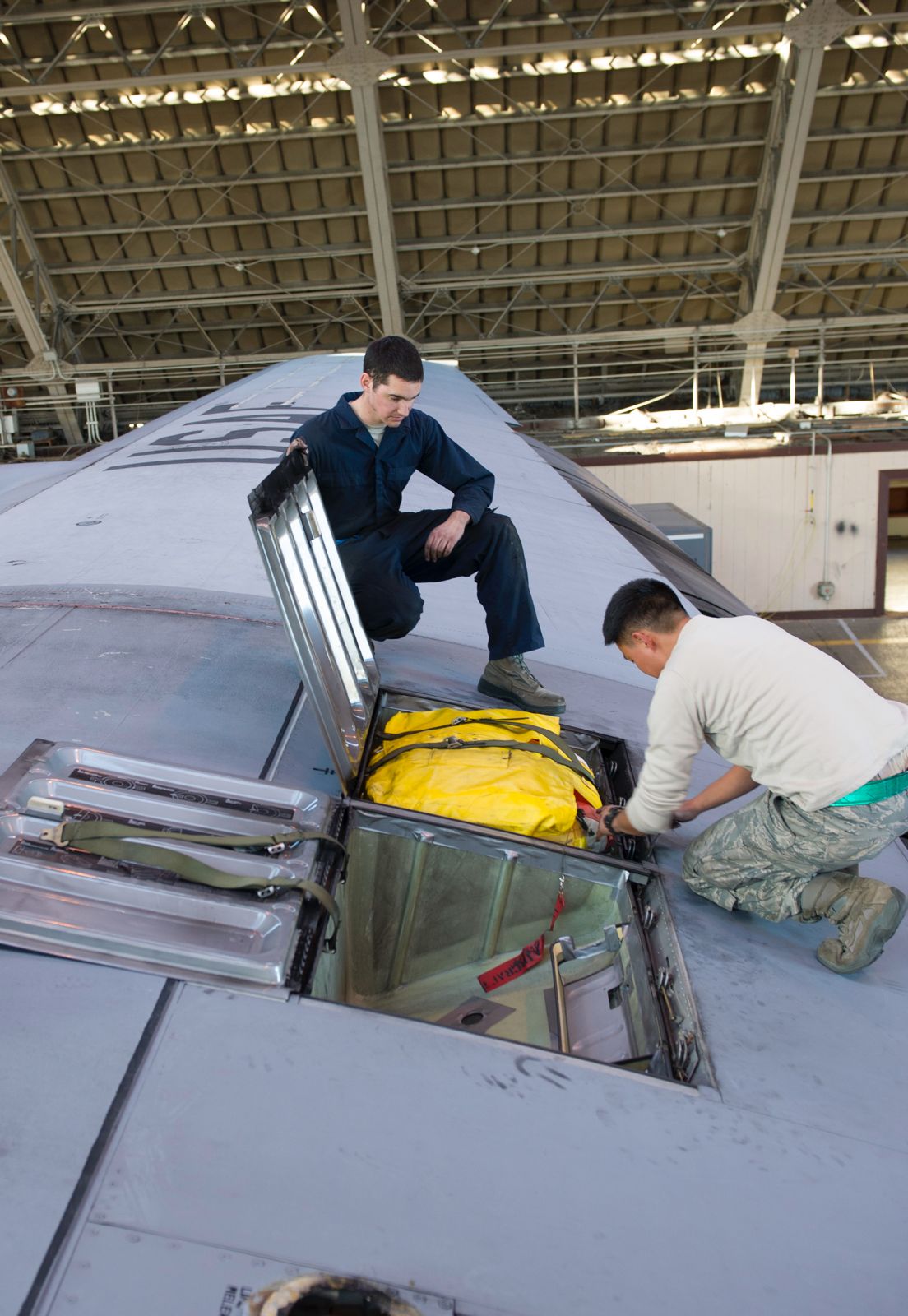
The F-16 Block 30 Structural Improvement Project was initiated with the contract signed between the SSB and Main Contractor TUSAŞ on August 10, 2015 in order to increase the structural life of 35 F-16C/D Block 30 Aircraft in the inventory of the TurAF from 8,000 hours to 12,000 hours. Since more than 7,000 hours of flight were conducted with the F-16 Block 30 fleet in service as of 2016, they were worn out in terms of structural life. Lockheed Martin took part as a subcontractor in the project, and the 1st Air Maintenance Factory Directorate (1st AMFD) was assigned for the modernization of 10 out of 35 aircraft. It was planned that the structural reinforcement kits developed by Lockheed Martin were first to be applied to a single-seat and a twin-seat F-16 Block 30 Aircraft and the structural improvement activities on the prototype aircraft were planned to be completed in October and November 2017. Then, with these two prototypes, validation flights would be performed in 2017 and if the flights were successfully completed, the structural improvement activities on the other 33 aircraft would then begin in 2018.
With a post through its official social media account on July 25, 2020, the Presidency of Defense Industries (SSB) announced that the structural improvements of the first F-16 Block 30 Aircraft within the scope of the F-16 Structural Improvement Project had been completed and the aircraft had been delivered to the TurAF. According to the images shared, the aircraft delivered after completing the structural improvement at TUSAŞ Ankara facilities, is an F-16D Aircraft of the 132nd Tactical Fleet Command with tail number 86-0196. Since it was stated by the SSB that the aircraft delivered was the first aircraft to have a structural improvement in the Project, I consider this two-seat F-16D to be one of the two prototype aircraft. In this case, the second aircraft to be delivered soon will be the single-seat F-16C Block 30 Aircraft, the second prototype of the Project. According to the information dated June 2017 on the SSB website, the modernization activities of the first aircraft were planned to be completed by the end of 2018, and the modernization of the final aircraft was planned to be completed in August 2023. Considering such delay, I consider that the structural improvement activities on the final aircraft may be extended to a date after August 2023