An Assessment by Murad Bayar on Turkish - German Defence Industry Cooperation
Germany and Turkey are bound by exceptionally close ties stretching back centuries. Today, these close political, cultural and economic exchanges shape the countries relations. Turkish-German security and defence industrial cooperation dates back to the Ottoman era. After the Second World War, Turkey’s membership to the NATO enabled a multilateral framework for bilateral cooperation between our two nations in security and defence area. However, our efforts to strengthen Turkish defence industries have gained a momentum starting with early 80s. The creation of the Undersecretariat for Defence Industries (SSM) in 1985 is a turning point both for the development of Turkish defence industry and for the increase of our bilateral defence industrial cooperation activities mainly with western countries including Germany.
As already known, the bilateral defense industry relations of Turkey-Germany have started in 1960’s, yet, it has reached today’s large volume with the“cooperation projects” starting from1990.The Mine Hunting Vessel Project is one of the important projects, which is carried out by SSM with German Abeking& Rasmussen and Fr.Lürssen Werft Consortium for the supply of 6 Mine Hunting Vessels and 1 Shore-Based Simulator for the Naval Forces Command.
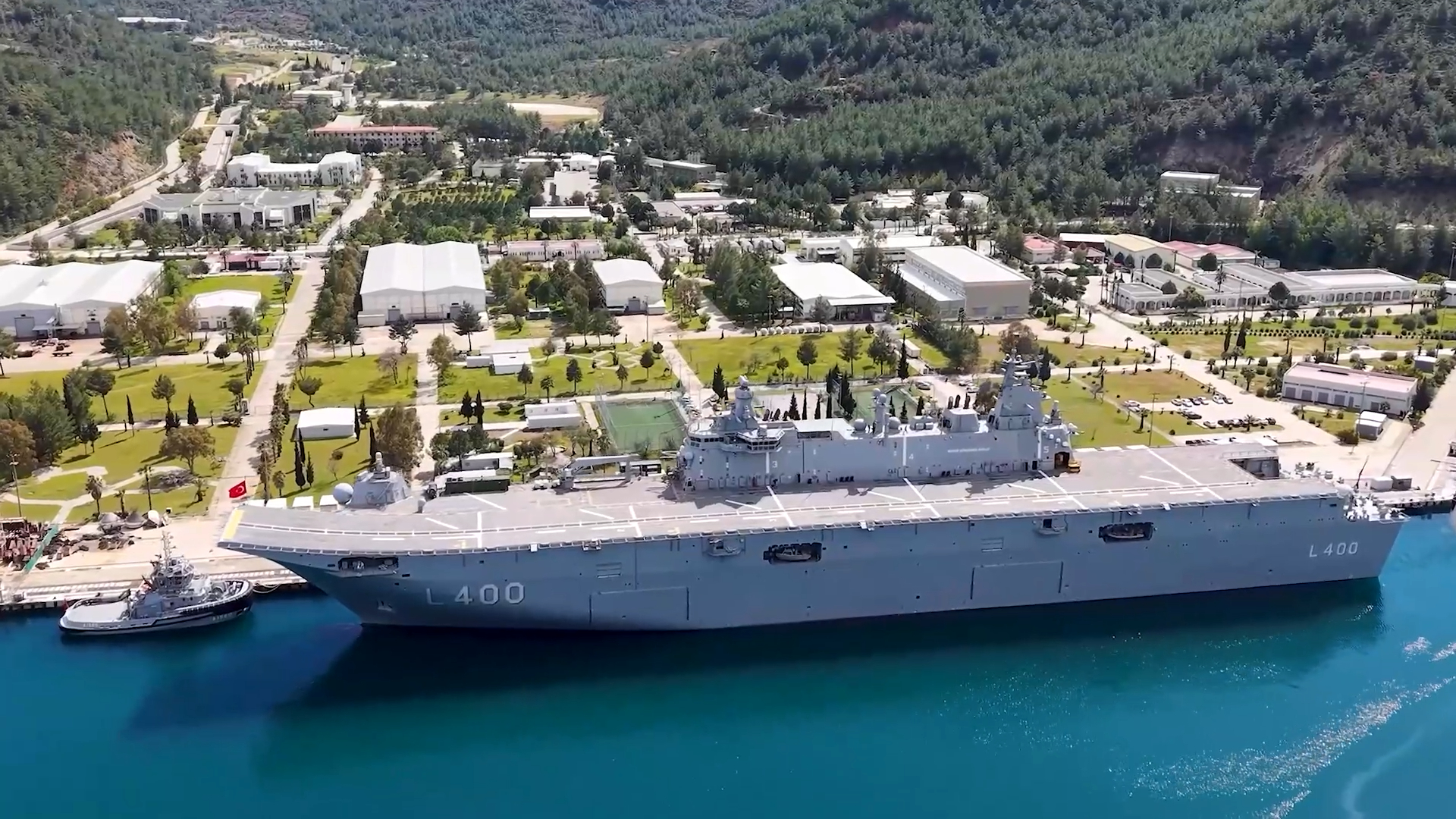
I would like to emphasize that the strong ties established between our countries have undeniably contributed to the development of the Turkish defence industry. I am pleased to say that, apart from cooperation in shipbuilding area, we are executing very successful defence cooperation programmes such as Leopard Main Battle Tanks, Mine Hunting Ships, MİLGEM National Corvette. The current volume of defence trade between two countries is approximately two billion Euros, including the new type submarine program.
At the land platforms, the projects carried out by SSM with German Defense Industry companies are Electronic Target Systems for Tank Firing Project (EHS) and M60 A1 Tank Modernization Project. The fixed and moving target systems have been procured by ASELSAN A.Ş. from Thyssen Company. In addition, within the scope of M60 A1 Tank Modernization Project, the power groups of MTU/RENK Company are installed in modernized tanks. Within the frame of the Missile Warning System Project, through technology transfer from the subcontractor EADS Company (Germany), the establishment of production of test lines at Aselsan facilities for the Missile Launch Detection System (MILDS) and incountry Production under license were realized. Also, Missile Warning System Support Center (MWSSC) that allows software modifications on Missile Launch Detection System was procured from EADS Company.
At the naval platforms, SSM sign an agreement with HDW for the co-production of six Type 214 class air-independent propulsion (AIP) submarines. These submarines will be”co-produced” with “maximum involvement of Turkish industry at Gölcük Naval Shipyard” in Kocaeli,Turkey. In naval and air platforms there are significant projects carried out by German companies such as frigates, submarine,stinger missiles. This agreement provides new cooperation fields between Turkish and German industries regarding joint production, joint research and development and partnership on exporting to third parties.
When we look back at the recent years, the Turkish Defence Industry’s actual size and capacity has increased remarkably. As of 2011, Turkish defence turnover has reached 4,3 billion dollars while our defence exports increased more than 40%, reaching at a level of 1,2 billion dollars. As the product portfolio of the Turkish defence industry widens, Turkey has achieved a rapid increase of defence exports especially over the last few years in the global defence market.
A sustainable and competitive defence industry is one of our main objectives, along with attaining defence technology that will provide the Turkish Armed forces with necessary leverages for future defence oriented competency. We set 2 billion dollar export objective by 2016 that shows the capability as well as industrial and technological base we want to attain in near future.
In fact, it shows the potential of Turkish Defence Industry and its flexible structure that can adopt itself to the recent challenges and changes in the political and commercial environment. Defence export success can help provide resources for continued investment in the critical defence research and development that determines future competitiveness and industry’s ability to produce the leading edge defence equipment necessary to capture military sales. Turkey’s position as a gateway into the promising markets such as the Middle East and Asia, offering a great deal of potential for Turkish companies and their partners, Turkish companies’ export success in these markets clearly shows the significant strides the Turkish Defence Industry has made in recent years.
Taking into account the shrinking defence budgets especially in Europe, co-operation has become vital to obtain cutting-edge technologies. We continue to seek cooperation opportunities and encourage defence industry coordination activities in Europe, owing to the importance we attach to our strategic relationships. Within this concept, the most considerable project, which both nations are affiliated, is the A400M program. Turkey and Germany are members of the A400M consortium, which is a multi-national four-engine turboprop military transport aircraft. TAI has been participating in the design and development activities of A400M with Airbus and EADS. Turkey has %6.16 work share in A400M program. Within this work share, Turkish Aerospace Industries, Inc. (TAI) has level 1 responsibility for Water/Waste System and its ice protection. In the project organization, the Water/Waste System is part of the Utility Systems, which are managed by AIRBUS Germany. In light of the above, we expect German and European aviation companies, namely Airbus, to use Turkey as an engineering services and production base.
It is a well known fact that most international collaboration programmes are not easily implemented. In the past, many of them have been cancelled due to several reasons. Since the beginning of its inception, we see OCCAR with its “global balance” approach as a great platform to collaboratively work together to create economies of scale. Having been a participant of A400M Programme, we view that OCCAR has a potential to be an efficient body to conduct international collaboration projects with its experienced and professional staff. For this reason, we initiated our internal process on the way to membership to OCCAR. It is our firm belief that Germany, as one of the founder members of OCCAR, will support Turkey to join OCCAR.
Turkey has a proven potential and a strong defence industrial base to meet the common requirements, design and produce in co-peration with its European counterparts and contribute to the capability development process in Europe. For this reason, Turkey should be an integral part of these organisations and take place in political consultation and decision making process.
Considering the defence expenditure and budget figures, and the total volume of contracts that were signed between SSM and German companies, Germany is one of Turkey’s strongest partners in the area of defence.
Thus, it is vital that both countries work closely to enhance the co-operation activities to European defence industrial base, but also to NATO.
In conclusion, I believe, Turkey and Germany have a very good level of cooperation in the defence area, and we have all the optimism to take it further as it deserves as traditional partners.
Thank you,