Anatolian Eagle 2023/2 Training Conducted Successfully
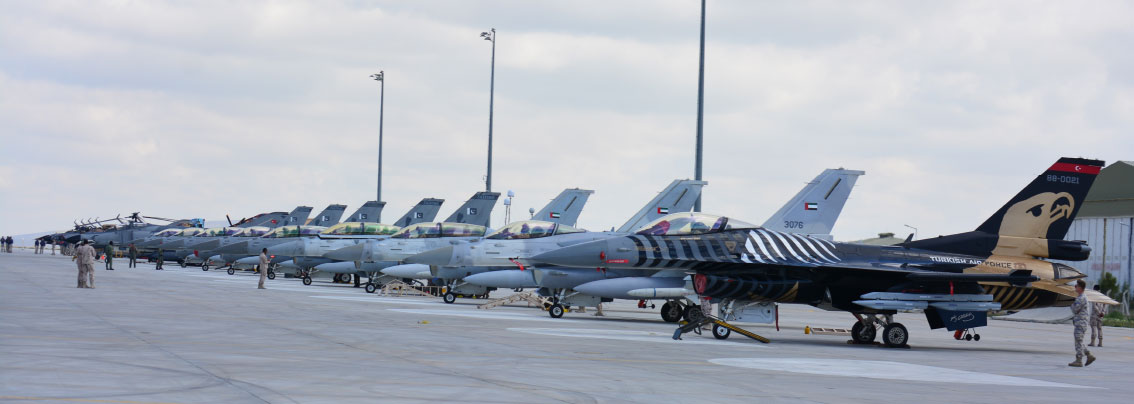
Conducted with 5 international participants alongside the Turkish Air Force (TurAF) and Turkish Naval Forces (TNF) units, the Anatolian Eagle 2023/2 (AE-23/2) Training Exercise was held during May 2-12 at the 3rd Main Jet Base (MJB) Command in Konya. The five international participants of the AE-23/2 were: Azerbaijan Air Force (AZAF), Pakistan Air Force (PAF), Qatar Emiri Air Force (QEAF), the United Arab Emirates Air Force (UAEAF), and the Royal Air Force (RAF). The Royal Saudi Air Force (RSAF) had announced participation in the AE/23-2 Training Exercise with F-15SA Eagles, but for undisclosed reasons at the last moment the RSAF canceled its participation. Observers on the ground comprised personnel from the U.S., Australia, Ethiopia, Morocco, France, Georgia, Sweden, Kyrgyzstan, North Macedonia, Libya, Malaysia and Oman.
The Azerbaijan Air Force (AZAF) participated the AE-23/2 exercise with 2x Su-25Ms (equipped with Talisman Air Defense Suite (ADS) EW Pods) from Kurdamir Air Base, Pakistan Air Force (PAF) with 5x F-16C/D Block 52+ jets belonging to No.5 (Multi Role) Squadron (Call Name: Falcons) based at Jacobabad/Shahbaz Air Base, Qatar Emiri Air Force (QEAF) with 5x Eurofighter Typhoon Tranche 3+ jets from 7 Squadron (1st Fighter Wing) based at Tamim Air Base, Royal Air Force (RAF) with 4 Eurofighter Tranche 3s (from RAF Akrotiri), and the United Arab Emirates Air Force (UAEAF) with 5 F-16E/F Block 60 Desert Falcon aircraft. The NATO E-3A AWACS, based at the 3rd MJB (A Forward Operating Base for NATO’s AEW&C Force) also provided support for the AE-23/2 exercise through command and control of the aircraft.
The Turkish Air Force (TurAF) participated in the training with a total of 42 manned and unmanned aircraft (28 of them were deployed at the 3rd MJB and 14 of them participated in AE-23/2 from their main bases) including; 4x F-4E 2020s from the 111th Squadron, 34 F-16C/Ds from the 113rd (6x), 132nd (10x, 8 of them performed Aggressor role and 2 of them flew multi-role), 151st (3x), 152nd (4x), 161 (5x), 181st (3x) and 191st (3x) Squadrons, 1x E-7T Airborne Early Warning and Control (AEW&C) aircraft of the 131st Squadron and 1x KC-135R Stratotanker aircraft of the 101st Squadron as well as 1x ANKA-S UCAV from the 302nd Squadron and 1x AKINCI UCAV from the 341st Squadron.
Taking a similar format to Red Flag, which the TurAF attended in 1997, AE is designed to simulate a high threat environment, with both air and ground threats. There are two forces - Red Force (defending) and a Blue Force (attacking). The Blue Force comprises both the visiting nations and most of the participating TurAF squadrons, while the Red Force comprises both the TurAF’s 132nd Squadron (Call Name: Daggers) flying with F-16C/D Fighting Falcons deployed at the 3rd MJB and ground based mobile air defense weapon systems as well as threat generators at the EHTES/EWTTC. A NATO E-3A Sentry and the TurAF flew E-7T Peace Eagle Airborne Early Warning and Control aircraft coordinated the AE-23/2 Training Exercise from the air. An E-3A Sentry and an E-7T Peace Eagle from the 131st Squadron of the TurAF provided ‘eye in the sky’ radar coverage for the Blue Force, whereas, the ground-based radar assets provided similar coverage for the Red Force. UAVs also played an important role in AE-23/2, as both BAYRAKTAR AKINCI and TUSAŞ ANKA-S UCAVs provided reconnaissance information to the Blue Force. An RAF Voyager (A330 MRTT) tanker aircraft, on the other hand, provided air-to-air refueling to enable the RAF FGR4 Typhoons to remain in fight for longer. Designed to test and develop the pilots’ capabilities and to develop international partnerships, the 10-day AE-23/2 Exercise saw the Blue Force employed in multiple realistic combat scenarios. They conducted a series of composite air operations against simulated adversary aircraft (8x F-16C/Ds from 132nd Squadron) and ground-based air defense systems that deployed at the EHTES. In the context of the AE Training, at the Electronic Warfare Test and Training Range (EHTES/ EWTTC) in Konya, a wide array of threat emitters and mobile air defense weapon systems including ZSU-23/4 Gundish, SA-6 Gainful, SA-8 Gecko, SA-11A/B Gadfly, Skyguard/Sparrow and a variety of threat emitters such as SA-8 TES and 3 x MTS, integrated with recognized air picture and ACMI System were used to expose aircrews to a high threat environment.
The first edition of Anatolian Eagle tactical live flight training in 2023 (AE-23/1) was executed during March 20-24, 2023 with TurAF units that took off from 8 different bases simultaneously. Planning and command-control of the AE-23/1 training was carried out by the Anatolian Eagle Training Center Fleet Command located at the 3rd MJB in Konya.
Anatolian Eagle Training
The Anatolian Eagle (AE) Training has been carried out nationally and/or internationally every year to improve the capabilities of national and foreign participants, to test new tactics and techniques, to develop joint and combined operational procedures, and to maximize mission effectiveness in a realistic combat environment by increasing mutual support between forces. Aims for the AE Training are to Reduce the loss of unexperienced fighter pilots, Keep up readiness of pilots and Ground Control Intercept (GCI) radar operators, Decrease the loss of aircraft in operations and to Exchange experience and increase interoperability by creating a simulated coalition air combat environment.
As a large multinational exercise, the AE Training program is held at the 3rd Main Jet Base Anatolian Eagle Training Center (AKEM/AETC) in Konya. The AETC is a high-level training center, providing realistic combat training opportunities to TurAF Squadrons and friendly countries in a high threat environment, more sophisticated than the unit level trainings on aspects such as the size of the airspace, tactical ranges, threat emitters and number of participants. The AETC is one of four tactical training centers (Maple Flag/Canada, Red Flag/US, ACE/Pakistan and Anatolian Eagle/Türkiye) around the world, but the only one in Europe.
Anatolian Eagle Training has been organized since June 2001 (AE-01 was held during June 18-29). Turkish Air Force squadrons frequently rotate through this exercise, which is held multiple times a year, but only allows for foreign participation once a year. This year, foreign participants were invited to participate in Anatolian Eagle 2023-2 between May 2 and 12.
Hosting both NATO and Russian standards fighter jets and air defense systems, AE Training provide participating air forces pilots the opportunity to refine their skills with familiar aircraft and air defense systems and learn more about less familiar aircraft and air defense systems.
With training aids such as the Air Combat Maneuvering Instrumentation (ACMI) System and the Post-Mission Analysis System, which are used to evaluate the training performance simultaneously or in a very short time, Anatolian Eagle provides an advanced joint training environment for participating elements to increase their combat readiness level. Command and Control of AE Training is performed via a real-time ACMI System. The TurAF operates both the indigenously developed ACMI System (SDT’s ACMI System) and IAI/BVR Systems’ EHUD III ACMI System. As of May, 2023 SDT has completed deliveries of 4 ACMI Pods, 2 Data Link Ground Units and 1 Ground Station to the TurAF. As per TurAF request, SDT performs some improvements on the ACMI Pod design so the delivery of the improved ACMI Pods will take place during the second half of 2023. The first phase is said to cover deliveries of 60 ACMI Pods to the TurAF. During AE-23/2 some PAF F-16C/D Blok 52+ jets also flew with SDT ACMI Pods obtained from the TurAF for training/testing purpose. PAF had selected SDT for its new generation ACMI System requirement for both F-16 and JF-17 jets and was awarded a contract in March 2023 for the procurement of an undisclosed number of ACMI Pods. SDT performed a successful flight test onboard a PAF fighter jet in April 2023 in Pakistan.
The AETC consists of three main elements: White Headquarters (C2), Red Force (Training Aid), and Blue Force (Training Recipients). White Headquarters is responsible for preparing and also developing the training scenario, determining the level of training, monitoring and commanding and also analyzing the exercise (assess the crew’s obtained results). The Red Force is the training aid for Blue Fighters and consists of 3 parts; Aggressor Pilots (HANÇER/DAGGERS, display good picture, apply Red tactics, punish Blue mistakes, run reconstruction/validate shot), Air Defense Personnel (HAMMER, apply Red tactics, punishes Blue mistakes) and REDEYE (assists Daggers and monitors the whole area). The 132nd Hançer (Dagger) Squadron has been performing aggressor missions successfully for many years. Personnel from the Red Force could not enter other buildings, they could only plan and carry-out briefings at their Red HQ. Blue Force is the primary target audience composed of national and international units.
Within the scope of Anatolian Eagle Training, two separate Eagle Sorties are flown, one in the morning (Composite Air Operations [COMAO] conducted against the targets on the Redland defended by the SAM systems and fighter aircraft simulating aggressor tactics) and one in the afternoon (non-COMAO operations - such as intercepts, electronic warfare [EW] training and dissimilar air combat training are carried out). Each Eagle Sortie lasts around 3 hours (air combat is performed in a 35-minute portion) and involves at least 40 Blue Force aircraft. At the Eagle Sortie if a Red Force aircraft is shot down during a simulated air combat event, it can go to the area called Revival and rejoin the air combat from there. Thus, more Red Force elements can be kept in the air, as well as saving fuel and time that would be spent by returning that aircraft to the runway and rejoining the flight. All visiting units along with most TurAF units formed the Blue Air (Blue Force), whose aim it was to attack tactical and strategical targets in realistic war scenarios, while avoiding surface-to-air missiles and eliminating aircraft from Red Air (Red Force).
A typical Anatolian Eagle Day starts at 7:30am with briefings, each Eagle Sortie requires a total time of 8 hours for briefings, flight and debriefing. A pilot spends almost 13 hours each day preparing for an Eagle Sortie, including 5 hours of planning the next day. After each phase of the AE Training all participating pilots gather in a huge auditorium at the AETC to meticulously review the combat successes. This identifies the results of each force, aircraft and pilot.
Within the scope of AE the training scenario, which does not reflect any political and/or historical situation, consists of two imaginary nations: Blue (democratic, with a strong military power) Red (a poor country but with a good military power and growing as a regional power) and runs in a large surface area of 50,000 square miles and an airspace extending 180nm x 215nm wide, and up to 50,000 feet from the ground. The AE airspace allows for more than 60 aircraft to employ their flight tactics without any limitations and without being affected by civilian air traffic. There is also a secondary 140nm x 75nm Maritime Operations exercise area in the Eastern Mediterranean.
Since its establishment in 2001, 49 Anatolian Eagle Training programs have been performed. 38,969 personnel and 3,135 air platforms participated in 25,692 sorties that lasted 40,650 hours during these exercises. Up to this year, 15 countries including France, Italy, Germany, the United States, Spain, Israel, Jordan, Qatar, Pakistan, Saudi Arabia and Azerbaijan as well as NATO participated in the various training events.
AE Training is not only an important step taken in meeting the training requirements of Türkiye, allies and friendly countries but also in taking the initiative to contribute to international reliance and cooperation by sharing its resources, such as its unique geographic situation. The AETC has a vision to be the most prestigious and preferred Tactical Training Center in the world.
AE-23/2 Training Press Briefing
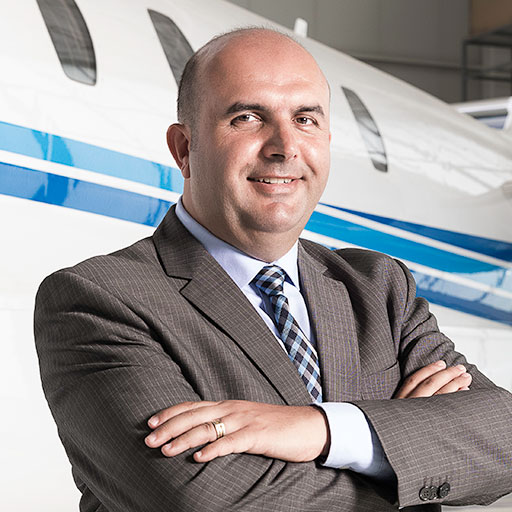
During the Press Day event held on May 8, 2023, a comprehensive briefing on Anatolian Eagle Training and AE-2023/2 was held in the morning by the Commander of the Anatolian Eagle Training Center, Lieutenant Colonel Hakan GİRGİN, at the Anatolian Eagle Training Center (AKEM/AETC) Briefing Hall.
At the beginning of his address AETC Commander Lieutenant Colonel Hakan GİRGİN provided information on Anatolian Eagle Training and the AETC and underlined that the Anatolian Eagle Training Center, established in 2001, is one of the 4 tactical training centers throughout the world but the only one in Europe. Regarding the historical background of the AETC, Lt. Col. GİRGİN noted that the establishment phase started in 1997 through participation in Red Flag and then was completed in 2001, in 2003 electronic warfare capabilities were gained and by setting up the eagle ramp (Eagle Parking Area and Maintenance Facilities) in 2007 the training center took its final structure. Lt. Colonel GİRGİN disclosed that since AE-01, which was held during June 18-29, 2001, the TurAF executed 49 Anatolian Eagle Training programs at the AETC. He underlined that in addition to AE Training, the AETC also executes different types of other multinational exercises such as Bilateral Training I Know Kung Fu (with China in September 2010), Anatolian Falcon (in March 2012 with the U.S.), TUSAP Raiders (with Pakistan in September 2014), Anatolian Phoenix (the last iteration of Anatolian Phoenix-2023 was held in June 2023 with the participation of Turkish Land, Naval and Air Forces, Gendarmerie General Command and General Staff Special Forces Command and Azerbaijan, Qatar and TRNC) and NATO Tiger Meet (in May 2015), which demonstrated the capacity and ability to plan and execute different training and exercises. According to Lt. Col. GİRGİN, as of May 2023, the AETC conducted 35 Other Training programs (with Anatolian Phoenix 2023 held during June 5-16, the number increased to 36) and 3,912 personnel and 410 air platforms have participated in these multinational training programs, with a total of 2,592 sorties having been conducted.
“Our Mission is to provide the most realistic operational training domain and enable fighters to execute their tactics, to provide a platform to exchange ideas and to keep fighters and CGI controllers combat ready, and to teach the participants how to survive,” said Lt. Col. GİRGİN.
“Mission types executed during Anatolian Eagle Training include OCA-A, OCA-G, SEAD, SMP, TAL, RECCE, HVAA-Offensive, HVAA-Defensive, ASUW Maritime, CSAR, TST, DT, CP, CAS and EWT. In the exercises we prepare a scenario, and always a scenario that is a live scenario that updates itself day by day, we can also add any missions to the exercise at any time according to the scenario and according to the Blue Fighters’ success,” Lt. Col. GİRGİN added.
Lt. Col. GİRGİN underlined that all the missions during AE Training are flown on a large surface area of 50,000 square miles and an airspace extending 180nm x 215nm wide long up to 50,000 feet from the ground. “This is exactly the point that makes us unique and the most preferred, we can do any kind of mission in this area,” Lt. Col. GİRGİN said.
At his address Lt. Col. GİRGİN also provided information on AE-23/2 Training. He noted that deployment of both cargo and participating aircraft started on April 24, the Familiarization (FAM) Flights were executed on April 28 and the first Eagle Sortie was conducted on May 2, 2023.
Lt. Col. GİRGİN pointed out that the objectives of the AE-23/2 Training are to exercise tactics and procedures for the employment of air power in order to increase proficiency and the level of standardization for; Composite Air Operations (COMAO), Time Sensitive Targeting (TST), Dynamic Targeting (DT), High-Value Airborne Asset Protection (HVAA-P), and Anti-Surface Forces Air Operations (ASFAO) and to exchange experiences among participant nations.
AETC Commander Lt. Col. GİRGİN continued his briefing with the following words: “We prepared the scenario and then we prepared some targets for the Blue Fighters. For example, for this exercise we have planned 240 sorties and 110 Target DMPIs (Desired Mean Point of Impact) for the Blue Fighters. These are the percentage of the success criteria (80% for the air-to-ground mission and 20% for the air-to-air mission) we will see the mission success or not at the end of the exercise. For the execution phase, the aircrew of each participating nation is responsible for its own tactical planning, briefings and execution of their missions. AE-23/2 is designed to give the maximum freedom to the aircrew in order to solve the problems presented by tactical scenarios. Participants also have the opportunity to fly missions during non-Eagle sorties in accordance with their training needs, such as Tactical Intercept, Duel in EWTTC and DACT (Dissimilar Air Combat Training). The AE is not a competition but an opportunity to facilitate an exchange of ideas among all participants. This is important for us… As a conclusion, AE is a training center that provides air-centric joint training to Turkish & Allied Armed Forces Personnel with the most realistic live simulation of the operational environment. It is a laboratory in which needs are determined and solutions are developed. The scenarios and missions conducted at the AE Training are continuously updated with modern technology. AE Training is “the right and best place to be at” giving the opportunity to compare/improve capabilities & tactics, techniques and procedures for all the participants. So, Anatolian Eagle is the best place to transform a little bird to an eagle”