Another Success for “Hürkuş” EASA and DGCA Certification Process is Completed
The EASA (European Aviation Safety Agency) and the Turkish DGCA (Directorate General of Civil Aviation) Design Organization Approval (DOA) holder TAI-Turkish Aerospace Industries Inc., was awarded on July 11th 2016 by DGCA with the “TT32 Aircraft Type Certificate” for its New Generation Basic Trainer Aircraft “HÜRKUŞ”, which was also validated on the same day by the EASA with the “EASA Validation Type Certificate”.
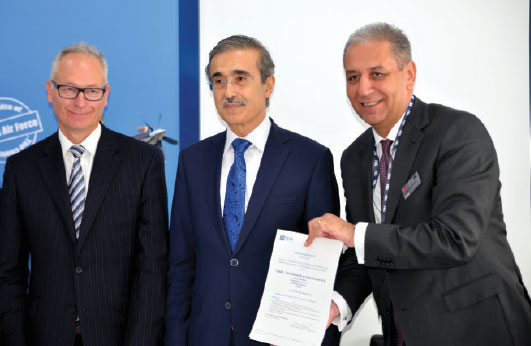
Under a thorough design, testing, documentation and verification process, following the Turkish DGCA Type Certificate, TAI received the EASA Validation Type Certificate at the Farnborough Airshow during a ceremony hosted by TAI Chairman of BOD Mr. Nejat Bilgin and General Manager Mr. Muharrem Dörtkaşlı. The certificate was handed over by Certification Director of the EASA Mr. Trevor Woods who is responsible for the certification; organization approvals and rulemaking for all EU designed aircraft, engines and equipment. The ceremony was honored and witnessed by Deputy MoD Mr. Şuay Alpay, Undersecretary for Defence Industries (SSM) Prof. İsmail Demir and distinguished guests.
Hürkuş is the first aircraft to be certified by the DGCA, and the first Turkish aircraft to be certified by the EASA. On the other hand, the certification of the canopy fracturing system and ejection seat on the same aircraft is the first for the EASA as well.
TAI applied for Design Organization Approval to both the EASA and the DGCA in Feb 2007. The DOA certificate was issued by the EASA on July 19th, 2012 and the DGCA on Dec 26th, 2014, according to the EASA Part21 and SHY/SHT-21 rules respectively. TAI also applied for Type Certificate approval for HÜRKUŞ on Dec 22nd, 2008 and the application was accepted on Jan 13th 2009.
Through the Working Arrangement between the EASA and the DGCA, 11 specialized joint panels are formed to audit the design of Hürkuş New Generation Basic Trainer Aircraft and its verification to rules and regulations.
During the Type Certification process, the EASA CS23 airworthiness requirements; applicable environmental protection requirements and additional high performance aircraft special condition requirements have been verified by the EASA and the DGCA.
The certification process was an intensive, hardworking period with around 500+ hrs of flight testing, 4000 hrs of equivalent full scale fatigue testing, extensive functional qualification and ground testing of subsystems, over 500 compliance documents and 5000 technical drawings.