Augmenting Turkish Industry Through Establishment of Successful Relationships
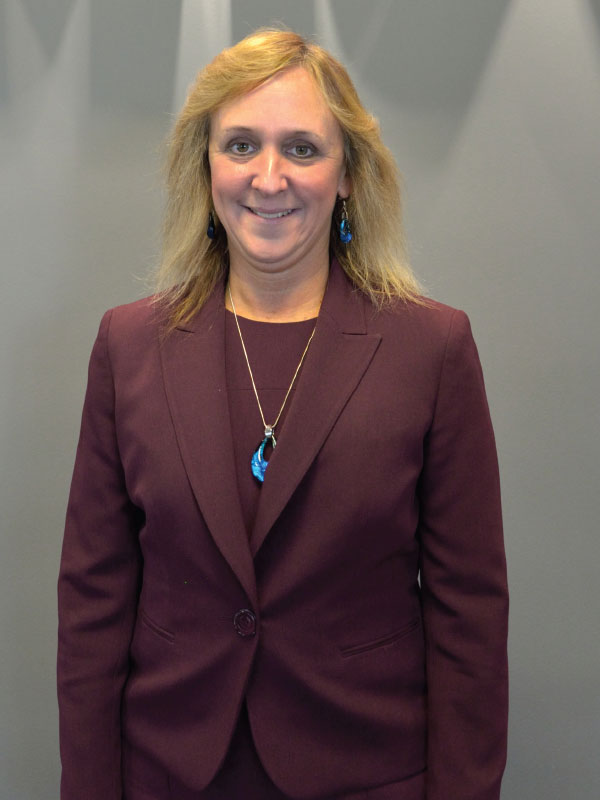
Defence Turkey: Firstly, Ms. Carey Smith, thank you for the time you’ve set aside for us. Could you please enlighten us regarding your company’s unique strengths and expansion inhome and international markets?
From a broad perspective at the Honeywell level, about 55 percent of our sales are outside of the US. We are an extremely global company, set up around the world in over 100 different countries. In addition to our sales we have about the same representation in terms of employees. Within defense and space, international has been a major focus. We’ve been very focused in Turkey. From a company perspective, we have over 250 people in Turkey, we have operations in both Istanbul and recently set up an office in Ankara which I’m excited about because this is where our customers are for defense, and we have had a long presence here, we’ve been doing work for many years and have very well established relationships with many other Turkish companies.
Defence Turkey: How did Honeywell and Honeywell Turkey specifically perform operationally in 2015?
We’ve been growing as a company in Turkey and we expect the growth to continue. This is in addition to the recent agreement that we received through our Light Helicopter Turbine Engine Company (LHTEC), a 50/50 partnership between Honeywell International and Rolls-Royce plc. being awarded the CTS800 engine, which is a continuation of providing the engine to the “Atak” helicopter, so we are very excited about that.
Defence Turkey: The Leader of Turkish Aerospace Company, TAI Selected LHTEC’s CTS800 to Power Turkish Light Utility Helicopter Program. Could you please inform us about the production model? How will it be processed and what are the details of the model such as work-share, local content and program schedule?
Right now we’ve sold about 500 of these engines internationally, so we are already on many of the AgustaWestland platforms including the Super Lynx, the Lynx and the “Atak” platform, we are also on the Japan US-2 platform with this engine. We feel the engine itself has a lot of potential for the future, so being able to have this solid base is very important for us.
Defence Turkey: Honeywell has a long-standing and reliable partnership with the Turkish Defense Industry for many years. Could you please share with us more about your strategy in Turkey and your activities or plans with Turkish Defense Industry companies in the coming period?
For the “Atak” program, the Turkish industry is manufacturing one of the critical components (Power Turbine Module) for the engine, with this program, collaboration will increase. We are looking at several different licensing options, so once those details are worked out, we will know exactly how the Turkish industry will participate. We signed the first phase of the contract with TAI, for the next 5 years, TAI is developing the helicopter and we are going to help them to have a successful product. We expect the relationship with the Turkish industry to be formalized by the first quarter of 2016. We recognize the need for indigenous content and also the aspirations to become a global partner with Honeywell.
Defence Turkey: Can you provide some details about the TLUH program schedule?
In 2018 we will see the first flying prototype and in 2020 the EASA certification is scheduled to occur, after that point serial production will start.
Defence Turkey: The Turkish industry contributes to the engineering of the CTS800 at a local level in Turkish Light Utility Helicopter program. Could you please provide details about the work-share ratios of the Turkish industry on this program?
At this time, we’ve had some discussions with companies but there’s no committed ratio at this time.
Defence Turkey: Any other major players?
Actually, we are engaging with most companies, we are looking for the candidates’ capabilities, maybe others will come into the picture, and now work share figures are under discussion.
There are many opportunities for Honeywell in the Turkish market, what are the future plans for Turkish programs such as TFX or Turkish Regional Jet?
We’re interested in both of those programs. The Turkish Regional Jet program is very important to us, Honeywell is the incumbent today on the Dornier 328 aircraft, we provide the avionics system, the auxiliary power unit, the environmental control system and the air turbine starter system. Our objective is to continue to provide the products that we’ve provided in the past, and likewise, similar to what we talked about with the CTS800, to establish relationships with companies from Turkey, to be able to do some localization aspects to the projects, which is going to be very important, particularly as the project moves to the 628.
Defence Turkey: Regarding the Dornier aircraft, you are getting accustomed to working together, will you use this experience for the Turkish Regional Aircraft projects?
Most definitely, being an incumbent on a current aircraft provides a huge advantage because we understand the aircraft, we understand all the interfaces, we developed the interface control documentation, and we did all the installations, so we have a significant strength in knowing that aircraft, we’ve been working on it for many years.
Defence Turkey: Is TFX an opportunity for you as well?
The current statusis that we’ve responded to several subsystem RFIs – request for information –from TAI and we are looking at both applications of our avionic systems, as well as our mechanical systems.
Defence Turkey: Turkish industry partners with BAE systems; what type of relationships do you have with BAE systems, what type of projects?
We support BAE systems quite a bit, particularly on the aircraft side but we also work with their naval division as well. We have long-standing relationships with BAE systems.
Defence Turkey: Could this be an advantage for future projects?
I think what’s beneficial is that we know each other, the companies have worked together, there’s a lot of trust and collaboration so I think that will definitely help again with relations. They will be more in the role of a technical consultant, looking at the aircraft as well as the subsystems.
The real benefit will come via our broader portfolio, such as thefifth generation fighter development; there are many complex systems both mechanical and avionic. We can bring our variety of solutions to that platform.
Defence Turkey: What is your approach on cooperation with the Turkish Defence Industry to export to third countries?
We view Turkey as the hub for the central Asia region, we see this as a very important location. We mentioned the fact that on the CTS800 we’re potentially looking at companies getting involved in our supply chain. So, if companies start to participate and build part of our product offering in certain part numbers, then they will be part of supply chain and will be able to offer that product to the world on the global market.
Defence Turkey: Can you share some success stories or activities regarding this?
We have formed several relationships in Turkey and many more will be announced in the near future, so we are certainly achieving success in the country with more to come.
Defence Turkey: Any specific regions?
It wouldn’t be a specific region, for example if we partner with a company to build a part number for one of our products, and we sell that product anywhere in the world, they then become part of that supply chain, being able to offer it to the global market.
Defence Turkey: There is strong demand for retrofit and upgrade technologies and Performance-Based Logistics (PBL) services in the market today and Turkey is willing to become a hub in its region. What are your comments on this issue?
We’ve been involved in performance based logistics programs since their inception, they really started based in the US.
We see that as important for Turkey, it’s a very good business model, a cost efficient business model, it really provides the government a huge advantage.
Defence Turkey: Honeywell has great experience in Cyber warfare and security field in all over the world. Cyber Security is a primary issue in Turkey. Do you have any plan to expand your presence in the future?
We have cyber capabilities in all three of our business groups: Aerospace, Automation and Control, and Performance Materials Technology. We pulled together what we call the Critical Infrastructure Protection team, and that team focuses not just on cyber security but also on physical security solutions.
From a cyber perspective, we took a look at the critical infrastructure protection sectors that have been identified by The Department of Homeland Security, there are about 16 of those sectors, and we identified where Honeywell could best participate and offer the most value. We looked at areas where we had a current install base, at areas that were high threat driven which we will have the most need for cyber capabilities, and we looked at areas that were the most regulatory driven because that’s where Honeywell does the best.
We decided, out of those sectors, that the areas that we were going to focus on were Transportation (that’s everything from cars, airlines, port security, all those aspects) Information Technology, Government Facilities, Healthcare (which we already have many contracts for) Energy and Chemical (we do industrial control systems that we provide to powerplants). We’ve won contracts in all of those vertical markets, and those are the areas that we can best offer our capabilities.
Defence Turkey: What are your activities right now in Turkey related to cyber warfare?
We are exploring various opportunities in Turkey and we are under discussion with several companies. We focus on cyber defense not cyber offense.
Defence Turkey: In next decade, within the context world military needs, what type of vision has the Aerospace and Defense Department of Honeywell identified for itself and where will it position itself?
From a world perspective terrorist threats will continue and that is important regardless of where you go in the world, coming up with technologies and capabilities to help there, we will need improved intelligence personnel tracking, cyber security and much more. Other areas that we intend on participating in are intelligence, surveillance and reconnaissance. Also included, which is not part of ourdefense portfolio,is commercial helicopters which is going to be a growth area as you start to see the oil and gas market turn around over time. We fortunately have been growing in that area regardless of the market so we expect that that’s going to be significant play for us.
The other area I would mention would be retrofits, modifications and upgrades, we have many systems that are deployed for which we can provide enhanced capabilities. For example, if we deployed a cockpit system, like we have the Primus Epic 2.0 cockpit and we have a certain software release, we can add new features and enhancements to that, such as integrated visual environment capabilities. Retrofits, modifications and upgrades worldwide, to all of our platforms, are going to be important.
Defence Turkey: In addition to Technological development, Honeywell places great importance on Education, as demonstrated with Honeywell’s Educators and Space Academy. This year many teachers have attended this program from Turkey in the second quarter of 2015. Do you plan to spread training and education programs with the relevance of Space, Aerospace and the DefenseIndustry with the cooperation of Turkish Academies, Institutions and Universities?
I’ll describe a couple of areas, there’s actually three that come to mind. One that we do is a program called FMA Live! The show is an interactive, traveling hip-hop concert that teaches Newton’s Universal Law of Gravity and Three Laws of Motion. Named after Newton’s Second Law of Motion [Force equals Mass times Acceleration], the show connects science and engineering to everyday life. This show has also gone outside of the US as well. It basically teaches young children about getting interested in science in a way that they will resonate with.
Another program is Honeywell Educators @ Space Academy (HESA), it provides educators with the opportunity to reinvigorate their classrooms with ideas, lessons, and other materials to create an unforgettable learning experience for the next generation of scientists. We bring teachers every year to NASA, and we help them learn about better ways of teaching their students back in their classrooms. There have been 12 teachers from Turkey that have attended that session.
The third way, that I’ve had the opportunity to participate in myself, is we take students to NASA for a week and they work on projects and compete against each other on teams, focusing on science, technology, engineering and math (STEM). It’s a tremendous opportunity for them to learn from the ground up and get them interested in science at a young age plus work with experts from NASA and Honeywell. We have students and teachers already participating from Turkey.
Defence Turkey: Any R&D technologies, activities for the next year?
Currently we have a program on going with The Middle East Technical University – METU/ODTU, a corporate grant through which we donated an experiment set last year to their Electrical Engineering faculty. Students can now simulate a factory and a refinery and simulate the process and apply process automation technologies. This year we are working with ODTU again, but with the Mechanical Engineering faculty. We donated another experiment set for HVAC (heating ventilation and air conditions system) and students are able to see and work on a HVAC unit and run experiments; these activities have been more related to automated and control solutions but of course in the future there may be some projects related to aerospace with the universities. We started with ACS (automation control solutions) but that doesn’t mean we will always work on those systems, of course we can enhance the types of projects that we do.
Defence Turkey: Would you like to add something and give a message to our readers?
We look forward to continuing our business in Turkey. It’s a high growth region country for us, with Mr. Orhan Genis as our appointed President for Honeywell Turkey & Central Asia. It’s very important, so it is one of a handful of countries that we are extremely focused on. We recognize the criticality of having indigenous Turkish capability. Our effort is to really work with local companies to ensure collaboration and make sure that we are augmenting Turkish industry, also helping to give the Turkish industry access to the global marketplace which we understand is very important to companies.