Changing World, Changing Strategies Prof. Dr. Nafiz Alemdaroğlu, METU Aerospace Engineering Department
Unmanned Aircraft Systems have significantly changed the world during the last decade by changing the classical concept of defense and attack [6, 7]. UAS are first used in the former Yugoslavia during the Kosovo conflict and then later used in Iraq and Afghanistan, by the US and NATO forces. Balkans were a test case and a proving ground for the application of UAS for NATO Forces. Unmanned Aircraft Systems such as Hunter and Predator were extensively used during the operations by the NATO forces for providing surveillance of targets and for battle damage assessment of strike attacks by the NATO Air Forces. Today, other nations continue to operate UAS in the Balkans such as the German Luna and the French CL - 89 systems,
International Security Assistance Force, ISAF, in Afghanistan, African Union Air lift Mission in Sudan (AMIS), NATO Training Mission in Iraq, (NTM-I) are some of the missions of NATO that have increasingly more potential uses of UAS for force protection operations. One of the most important application of UAS in ISAF and NTM-I missions is countering the Improvised Explosive Devices (IED) that have been extensively used along ground lines of communication. So far UAS have proved to be very effective in countering against these activities [6]. With increasing use of UAS, NATO has started new initiatives to look for further possibilities and established the NATO Joint Capability Group UAS, JCGUAS. This group looks into further possibilities of employing UAS and disseminates the lessons learned from previous experiences to all the nations of the alliance.
Global Hawk systems are being systematically flown in Afghanistan remotely by the ground control station (GCS) located in the USA. To avoid the difficulties arising from the time delay due to communication through satellite systems, the controls for piloting the system during take off and landing is transferred to the local GCS at Launch and Recovery Element located somewhere in the world, like Italy and South Cyprus. During all other phases of the flight the controls are being carried out remotely from the GCS located in the USA (such as Fort Bragg, North Carolina and Creech AFB at Nevada). This is by itself a revolution or better a breakthrough in air defense strategies and operations, to be in the theater scene without being in the theater scene. If this concept has not changed the air defense strategies of many nations so far it will not be late that it will in the very near future. The permanent bases established around the world are now being replaced by bases suitable for operations and control of UASs.
Military operations other than war have become the primary role of most of the military organizations around the world and NATO is not exempt from this. NATO peace keeping operations and Defense Against Terrorism (DAT) as well as humanitarian aid missions are among these operations where extensive use of UAS are made [6, 7].
Not only for military but also for civil applications as well:
Most nations are working on integrating Unmanned Aircraft Systems into the civilian air space. By the end of this decade, UAS will be flying in civilian air space at the same time with the manned air systems. Although this is not an easy task to realize it is an inevitable future to have both the manned and unmanned systems to operate in the same civilian air space. The scenarios put forward by many futuristic movies will soon be a reality. Manned and Unmanned Aircraft Systems will be taking off and landing in the same air field. There are numerous researches on forecasting the possible integration of unmanned systems into the civilian air space. A study made by the Foster and Sullivan group [10] predicts that by the end of 2017, airworthiness authorities in Europe and in the USA would have already approved all the requirements for integrating the unmanned systems into the civilian airspace.
Among possible civilian usage of the unmanned systems one can list a diversity of applications: ranging from security to traffic control, from fire protection and observation of environmental pollution, to usage against Chemical, Biological, Radiological, and Nuclear (CBRN) attacks [10] or incidents, such as the nuclear incident in Fukushima, Japan (see Figure 9)
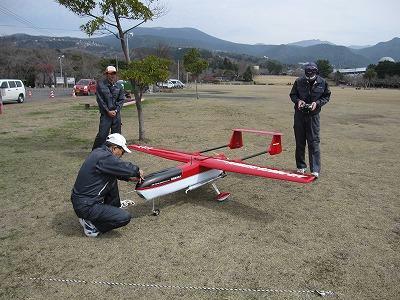

Figure 9 - Fukushima Nuclear Reactor incident (left) It is possible to see the hole on the roof of reactor no 3.
UASs are systems of systems
UASs are system of systems, composed of many subsystems as shown in Figure 10. The control and the transfer of data between the ground and the air platform is performed through a link system having both the uplink (sending control commands) and downlink (receiving real time data and video images) components. In case of operations beyond line of sight (BLOS) there is a third subsystem in the loop, a satellite system, which acts as a relay station for transferring the data between the ground control station and the air platform, (Figure 8). The control of the air platform is performed by the remote pilot located inside the ground control station. Most of the flight of the air platform is performed autonomously by the onboard autopilot system. The mission to be performed is either preloaded to the mission computer or updated on line during the course of the mission.
The payload of the UAS platforms are generally sensors such as the infrared (IR) and the electro optical (EO) cameras for thermal and visual images and in other cases multispectral sensors for special tasks requiring special spectral applications for remote sensing and target identification. Today, UAS are equipped with SAR (Synthetic Aperture Radar) systems which provide all weather observation and reconnaissance capabilities to the UAS.
Weaponization of the UAS systems is also possible [8, 9]. Besides weaponizing the actual UAS, such as the Predator and the Reaper systems, there are special classes of UAS, called the Unmanned Combat Air Vehicles (UCAV), which are originally conceived for combat purposes. Taking the pilot out of the cockpit of a fighter plane provides a tremendous amount of freedom to the aeronautical designer, since all the restrictions imposed on the design by the human factors will be released. The air platform can be designed to withstand much larger G-forces which provide high agility and acceleration capability to the platforms. Besides, since there is no risk of losing the pilot, the maneuvers and actions performed by the platform will have no limitations. With increasing autonomy integrated to the control systems soon UCAVs will be even more intelligent and will able to take decisions autonomously as a function of their increasingly improved situational awareness capability. Besides, these systems will be much cheaper and cost effective than the sophisticated manned combat aircraft of today, such as the F22 and the F35. This, however, does not mean that man will completely be out of the loop. On the contrary there will always be a man in the loop but not in the cockpit.
There are major UCAV programs in the world. USA has two major programs: The Boeing X-45 and the Northrop Grumman X-47 programs. These two programs have made significant progress since their inception and have already demonstrated their technologies. In June 2003 DARPA (Defense Advanced Research Programs Agency) announced the Joint Unmanned Combat Air Systems (J-UCAS) program which combined the DARPA / USAF UCAV and the DARPA / USN UCAV-N programs. In early 2003, the X-45B program was cancelled and a new program for the development of a larger and improved UCAV system, the X-45C system was approved.
The X-45 is air transportable to forward areas of operation. The wings are detachable from the fuselage so the air vehicle can be stored and transported in a storage container. A single C17 Globe Master transport aircraft can carry up to six X-45A containerized UCAVs.
Europe’s answer to America’s UCAV programs came with the preliminary works of SAAB of Sweden with SHARC (Swedish Highly Advanced Research Configuration) and FILUR (Flying Innovative Low-Observable Unmanned Research) demonstrators (see Figure 14), followed by the Italian Sky-X demonstrator of Alenia Aeronautica.
In 2003, Europe started the Neuron program under the leader ship of French Direction Generale d’Armement, (DGA), who awarded a contract to the Dassault Aviation as the prime contractor to construct the Neuron UCAV system with the participation of Sweden, Germany, Italy, Switzerland, Spain and Greece. First flight of the Neuron system is scheduled for 2012. Flight tests will begin in France followed by tests in Sweden and then in Italy. The UCAV will be able to launch precision-guided munitions from an internal weapons bay and will have a stealth airframe with reduced radar and infrared signatures.
It seems that the future combat aircraft will be influenced to a large extend from the unmanned concepts and it is very likely that the F35, Joint Strike Fighter (JSF) program will be the last manned fighter program. This shift in paradigm will soon be reflected in all the military doctrines of the Air Force. The air force of the future will be a much faster and much more agile force, where deployment of aircraft to the theater will be a much faster and easier task. Future unmanned systems will be deployed to the arena in cargo aircraft within container boxes rather than by flying.
Where is Turkey in this race?
Turkey is not behind this race of UAS and is in pace with the world wide change of defensive concepts [11]. Turkey’s first experience with the UAS has started with the preliminary attempts of TAI during 80’s with UAV-X1 and continued later on with the successful target drone system "Turna", (see Figure 16), [11]
Without doubt, TAI’s major success came with the recent MALE system, ANKA (see Figure 17). ANKA is still undergoing flight tests successfully. Turkish military and defense against terrorism (DAT) needs initiated several other industrial attempts.
BAYKAR – KALE partnership was the first Turkish private initiative to be awarded a contract by the Undersecretariat of Defense Industries, (SSM) for providing a mini class, man-portable man-launchable UAS system for the Turkish Land Forces.
This was followed by the awarding of two separate contracts by SSM, to VESTEL Defense in 2010 and to BAYKAR-KALE partnership in 2011, for the design and manufacturing of tactical class UAS. These two systems are supposed to be demonstrated during 2012. Turkey’s involvement with UCAV class UASs has not yet started.
Challenges awaiting us:
During the future 20 to 30 years, world aviation will undergo tremendous changes. The air forces of all nations will be principally composed of Unmanned Aircraft Systems. Although the piloted fighter aircraft will still be flying, their number will be gradually diminishing with time leaving space for cost effective, efficient and easily deployable Unmanned Aircraft Systems. The UASs will be more autonomous and will be equipped with more capability. Therefore, the biggest challenge awaiting the UAS in the near future will be to increase their autonomy and decision taking ability. The UAS will be equipped with more sensor suits and as a result, they will be more situational aware and more capable to take preventive actions. With increased situational awareness and autonomy, the UAS will be flying in non-segregated civilian air space. In addition to their military usage, UAS will be extensively used by the civilian sector and the UAS will be fully integrated into the civilian airspace. Furthermore UAS will be flying in swarms for more effective missions. Interoperability between manned and unmanned systems will be solved thoroughly and it will no longer be a problem.