Coasts will be Safer in Every Aspect Agreement for the very First National Coast Radar Signed
The first and the most important phase of the Coast Surveillance Radar System (SGRS) Project carried out by Havelsan together with the Undersecretariat for Defence Industries (SSM) was put into effect with the award of the agreement. The first phase of the project constitutes the SGRS command control software and within the scope of the project a total 10 coast surveillance stations that will provide continuous coverage will be established in the Seas of the Aegean and Marmara and West Black Sea and a total of 5 control centers with an operation base in Ankara will be founded by the end of the next 30 months. Integration with various public institutions may also be provided in the system through which all Turkish coasts will be monitored on 7/24 basis via radars and electro-optical sensors by the time all phases are accomplished.
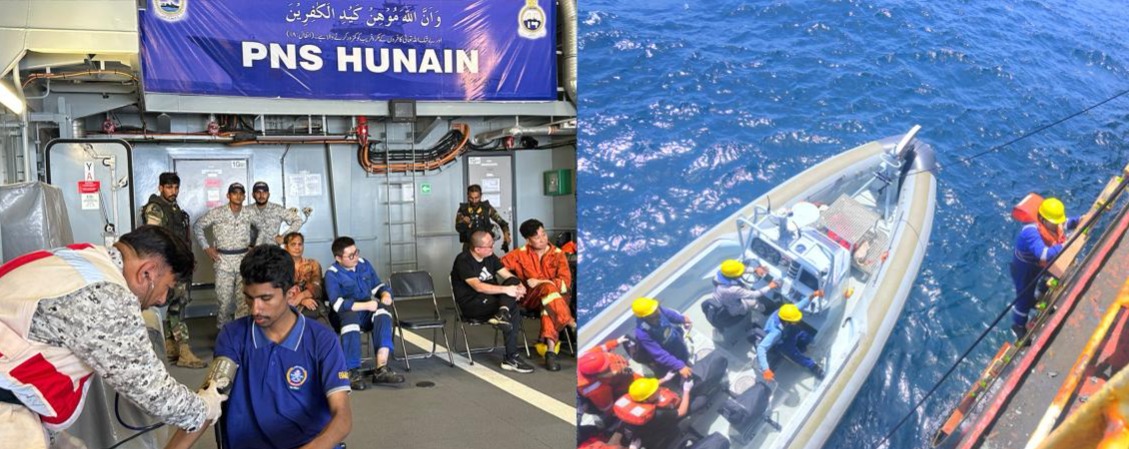
Together with Aselsan, MilSOFT and Ayesaş, many domestic Defence companies are involved in the project executed under Havelsan’s leadership as a prime contractor and the first phase is planned to be completed within 45 months. Prevention of smuggling, illegal migration and illegal fishing in the coasts is expected to be accomplished through the project. Additionally, by increasing the efficiency of search and rescue operations, protection of the maritime boundaries and its surroundings, surveillance of the suspicious vessels and identification and recognition of the surface elements operating within the Coast Guard Command’s responsibility field will be achieved with this project. The national contribution to the system is considerably high and the Command Control software within the first phase is completely indigenous. 2 night and day electro-optical cameras and radar stations will be used over the system and for the infrastructure of communication, Turkish Telekom will be benefited from.
National Defence Minister: “With the help of this project, no illegal action will be permitted in the country”
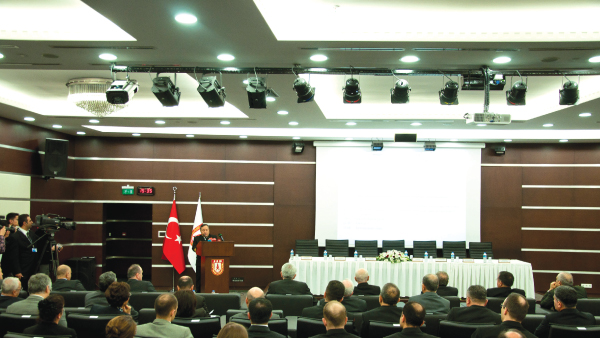
In his speech at the signing ceremony, National Defence Minister İsmet Yılmaz reminded the audience of the fact that such projects were assumed by foreign companies in the past and said: “VTS system was accomplished by the Americans, the second system namely AIS the automatic identification system was undertaken by the Australians and a Turkish firm was assigned as one of the assisting sub-contractors. First project was completely international and the latter was composed of Australia and Turkey. Now, for the first time we assigned a Turkish prime contractor to a project. To simplify the project for a better understanding we may call it the “Sea Mobese”. A country is not just composed of lands. The seamen refer to as the ‘blue country’”.
Kuloğlu: “We will have an integrated nationwide information system”
Havelsan’s Business Development and Marketing Director Alparslan Kuloğlu mentioned that the software will be developed together with Ayesaş and MilSOFT and said that they took the export aspect of the project and added: “From now on, within the framework of the agreements made with our sub-contractors, we will act together in our studies abroad. This is a first; some of our colleagues are working on certain things required by the project already in Philippines and Brazil. This project covers a grave market share. We believe that we will strengthen our country’s stance in the international markets.”
In the example he presented regarding the system, Kuloğlu said: “The case identified by the coast surveillance radar system will be queried in the smuggling database of the Customs Ministry and the same data will be simultaneously transferred to the coast surveillance information system. Therefore, with both systems operating in an integrated manner, identification could be done through the coast surveillance information system. The same information could also be processed by the naval information system.”
Explaining the software in detail, Kuloğlu pointed out that numerous data was transferred from the coast stations to the identification and surveillance centers and added that one of the most important components regarding the software is the implementation of inner layer architecture with high technology. Regarding the inner layer architecture, Kuloğlu said: “While one searches for a user, on the other hand there exists application servers and database servers in different locations. This provides a capacity of expansion, meaning one could install an installer over the system. It enables flexibility and thus increases the performance.”
Kuloğlu: “This station could be completely controlled remotely.”
Havelsan Business Development and Marketing Director Alparslan Kuloğlu presented information on the coast station as well. He mentioned that the system has the capacity to execute trainings and military exercises while executing its existing activities and continued: “Aselsan radar at the top, 2 electronic radars composed of 1 day camera and 1 night camera and 2 systems below will exist. One of them is the counter system and the other is the generator system that does not require a personnel. Cameras could be completely controlled remotely. There will be systems that could perceive motion. From the surveillance centers one could provide the security here as well as controlling with remote radars and obtain information in cases of failures. The communication with the remote vessels could be achieved through radios.”
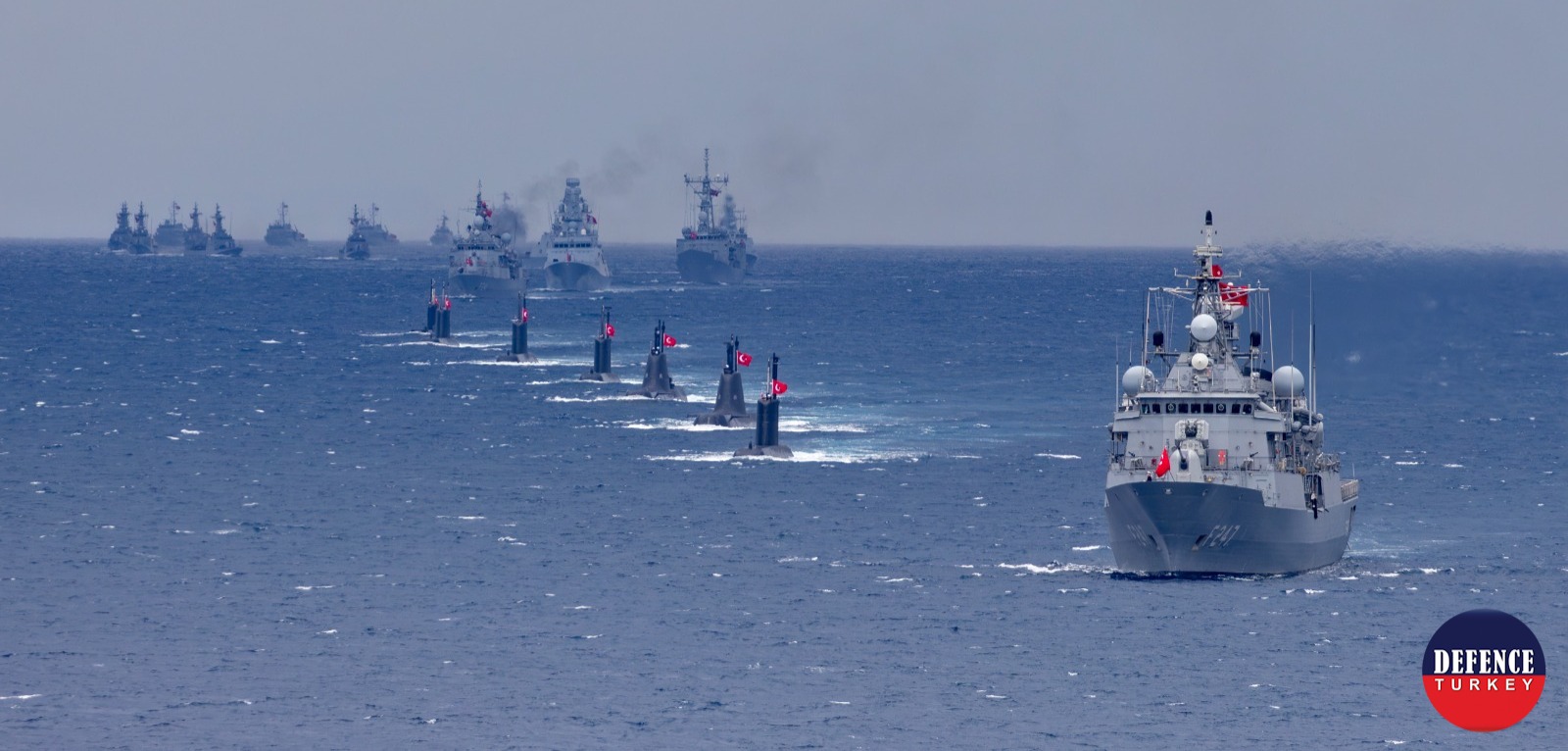
Naval Forces Commander Rear Admiral Hasan Uşaklıoğlu stated that the high economic value of the marine vessels and their loads attract the acts of piracy and said that marine monitoring is harder than surveillance in land. Uşaklıoğlu added that terrorist groups are becoming more and more interested in piracy acts as these acts towards the marine vessels are creating tremendous impact. He told that the reason for the increase in illegal acts in seas is the opportunity of obtaining great volumes of gain in a single attempt in smuggling and the relatively convenience in hiding the smuggled goods at the seas.
Uşaklıoğlu said that in order to prevent crimes in seas the traditional methods such as patrols become insufficient and stated that with the data sharing through the vessel traffic management system of the Ministry of Transport, Maritime Affairs and Communications, both the efficient control of the maritime traffic will be achieved and the cooperation in search and rescue activities will be strengthened.
Undersecretary for Defence Industries Murad Bayar gave a speech at the ceremony and underlined that the most important aspect in the preparatory work is the integration of the Turkish institutions’ infrastructures with this project and expressed that within the scope of this study, 661 fields were examined and after the seas of Marmara and the Aegean in the advanced phases Black Sea and the Mediterranean will be covered.
A great obstacle will be created against illegal actions with SGRS
With the Coast Surveillance Radar System (SGRS), Turkey will have a significant capability. With the first phase to be activated within the task zone of the Naval Forces Command, a boat engaged in smuggling or illegal human trafficking will be identified by the radar at the coast surveillance station. Following the first contact with this illegal element, this data will be transferred to the identification and surveillance center for identification purposes. This identification procedure will be supported with the data obtained from the center in Ankara or from other public institutions. If the target is identified as a suspect, then the identification operator will direct the coast security patrol boat to the smuggler through combat net radio.
Also with this project the deterrence of smuggling activities is aimed as stipulated by the EU Harmonization Process. Besides, speed will be the most important component of this system. The best aspect of this is that in case of accidents or disappearances, the victims will be identified rapidly with the help of this surveillance network. Quick accomplishment of the searching phase and allocation of more time and resources to the rescue phase is aimed.