Defense & Aerospace Media Representatives Hosted at TUSAŞ Media Day, Sharing 2023 Goals and Expectations
TUSAŞ, which currently (as of January 2023) has 13,000 employees (6,000 of whom are engineers) and aims to increase this number to 16,000 with 3,000 new employees to be recruited in 2023, has hired 8,000 personnel in the last 5 years while investing $150 million in new infrastructure and new facilities. In this regard, facilities such as the MMU/TF-X Engineering Center, MMU/TF-X Aerostructure Test Center (with an investment of TRY 220 million-US$ 11.5 million), HÜRJET Aerostructure Test Center, Composite Manufacturing Building, and auxiliary facilities (TRY 412 million- US$ 21.7 million) and Space Systems Engineering (USM) Center (TRY 31 million – US$1.6 million) were commissioned. The construction and equipping of the Subsonic Wind Tunnel Facility of the Turkish Fighter, Lightning Test Facility, Electromagnetic Compatibility and Electromagnetic Interference (EMC/EMI) Test Facility, and Near Field Radar Cross Section (RCS) Measurement Facility for the various test requirements were underway as of January 2023.
Celebrating its 50th anniversary this year, TUSAŞ, Türkiye's leading aerospace company and one of the top aerospace companies in the world, held a Defense Industry Press Conference on January 11, 2023, hosted by Prof. Temel KOTİL, TUSAŞ President and CEO, in order to provide information on the latest developments of the projects conducted under the leadership of the Presidency of Defense Industry Agency, and to share its goals and expectations for 2023 by evaluating the year 2022. We met with Prof. Temel KOTİL, TUSAŞ President and CEO, Dr. Ali GENÇ, Press Consultant, Bertan KURT, Vice President, Corporate Marketing and Communications, and Muharrem YILMAZ, Corporate Communications Team Manager, at the Press Conference, which was held at TUSAŞ facilities at the Kahramankazan Campus, where aerospace technologies are developed and where cell phones and cameras were not allowed inside.
During the first session of the event, Prof. KOTİL gave the press a quick introduction to TUSAŞ before evaluating the year 2022. He shared the company's objectives for 2023, TUSAŞ's ambition to become one of the top 10 global aerospace giants by 2030, with 10,000 engineers and a revenue of $10 billion, and the actions to be taken within the framework of the 10-Year Master Plan developed to achieve this goal. KOTİL's presentation was further deepened by the questions from the press members attending the event regarding the ongoing projects and the targets set. Afterwards, Bertan KURT, Vice President, Corporate Marketing and Communications, and Muharrem YILMAZ, Corporate Communications Team Manager at TUSAŞ gave us a facility tour with the time allocated to us. We had a lunch break in the 65,000 square meter Turkish Fighter (MMU) Engineering Center, which was officially launched in January 2022, and the event ended with a visit to the TF-X/MMU 270 Engineering Simulator Hangar there.
Defense Industry Press Conference
President & CEO of TUSAŞ Temel KOTİL: "We Are Neither Doing Anything Miraculous nor Doing Anything Simple!"
President & CEO Prof. Dr. Temel KOTİL, who has completed his 6th term at TUSAŞ and entered his 7th year, attended the Press Meeting held on January 11, 2023, with the participation of 30 reporters and talked about the company’s past and present and the 10-Year Master Plan, which aims to place TUSAŞ among the top 10 giants of the global aerospace sector by 2030 with 10,000 Engineers and US$10 billion in Turnover.
Addressing members of the press at the beginning of his speech, KOTİL said: "We actually wanted you to see the company completely and to picture what you see" and summarized the work they carried out at TUSAŞ. "We are neither doing anything miraculous nor doing anything simple here, but we are gradually gaining talents that Türkiye has not had until now. We don't actually build aircraft, we build TUSAŞ, and the company makes those planes..."
Explaining in his speech why TUSAŞ should be in the top 10 among the world's aerospace giants, KOTİL said: "It is possible to be among the top 10 aerospace companies. It is not something impossible. However, it doesn't happen in a day." KOTİL explained the importance of being in the top 10, "Why is the top 10 important? When you enter the top 10, you must hold on to the new technology level. If you are at the bottom, then you cannot know what is done at the top. This is called the 'head table.' You cannot follow the world if you are not at the head table. We aim to be on the 'head table' in aerospace." KOTİL listed the essential conditions for being on the 'head table' as physical infrastructure, human resources, facilities (design, manufacturing, testing, and certification capabilities), and products to crown them.
Pointing out that TUSAŞ needs to increase its turnover from US$2 billion to US$10 billion and reach 10,000 engineers to enter the top 10, KOTİL stated that they expect their current turnover to increase very rapidly thanks to exports. Explaining that the number of engineers is approaching 10,000, but they need to gain experience, KOTİL said: "Our indigenous products must also be on the market. We think we should do that by 2028. We had a 10-Year Master Plan. US$10 million in turnover, 10,000 engineers, 10,000 technicians, but all experienced. After that, introducing these indigenous products to the market, especially MMU, brings us to the top 10..." Noting that they really aim for the top 10 among aerospace companies in the world and do what is necessary, KOTİL said: "It means people, it means engineers, it means infrastructure. To be in the top 10, TUSAŞ will also have to enter the civilian sector (design and production of civil passenger aircraft), but it is not right to talk about this while the MMU process continues. Let me tell you what I saw in this company; we have no problem with capability. In other words, we have no problem with manufacturing..."
Stating that TUSAŞ, which was established in 1973, used the advantage of being a newcomer in the aerospace field, KOTİL showed HÜRJET as an example, which was designed not as a classic 2-engine trainer aircraft but as a single-engine new generation advanced trainer and light attack aircraft. In this way, instead of being one of the 10 similar aircraft in the market, it became the third competitor of the single-engine T-50A Golden Eagle and T-7A Red Hawk aircraft. KOTİL pointed out the layout of TUSAŞ facilities as another example of the advantages of a newcomer company. "We have set up all the facilities in a compact way. In other words, an MMU engineer can walk and see the wind tunnel test, mechanical test, lightning test, or electromagnetic reflection test."
In his speech, KOTİL also referred to the projects, production models, and experiences of TUSAŞ from past to present and said that thanks to the Final Assembly of the F-16s at TUSAŞ facilities a significant number of technicians were trained, but they could not train engineers because they did not have design responsibility in the F-16 Project. KOTİL then talked about the capabilities TUSAŞ gained from the T129 ATAK Project, which was initiated with AgustaWestland (now Leonardo Helicopters). "ATAK Helicopter attracts the most attention from our customers. Even though it is a semi-indigenous product, the feedback from the field provided us with abnormal capabilities." KOTİL reminded that Airbus Defense & Space (ADS) Company gave TUSAŞ the design and manufacturing responsibility of the Front-Mid Fuselage in the A400M Project of which Türkiye is the participant partner and TUSAŞ is also a shareholder. KOTİL said that they did not take part in the concept design of the aircraft, but TUSAŞ manufactured the Front-Mid Fuselage by making the structural analyses and tests of the external geometry, the thickness and cross-sections of the airframe, and the dimensions of the coatings. "The method here is not ours from end-to-end. If we had built the 400M from end-to-end, TUSAŞ would be in a very different place."
Stating that 'you cannot train engineers unless you have a project with an indigenous design concept,' KOTİL listed the indigenous projects initiated by TUSAŞ in the period before he took office as ANKA, HÜRKUŞ, and T625 GÖKBEY. KOTİL then shared information about the GÖKBEY Project and its importance. "GÖKBEY is an indigenous project designed from scratch. In fact, it is the beginning of all the indigenous helicopter projects of TUSAŞ today. We will deliver 3 helicopters to the Gendarmerie at the moment. Making a helicopter actually means producing the transmission of the helicopter. The transmission transfers power from the engine to the gearbox, which propels the main and tail rotors. This whole system is called the 'powertrain.' If you can make this, you can be a helicopter manufacturer. GÖKBEY's powertrain was designed in Türkiye, manufactured by TUSAŞ teams, and has made its first flight. This is an indigenous project end-to-end. Of course, when an indigenous product comes out, it boosts morale; people say we can do it..."
KOTİL also talked about the HÜRJET Project, one of the indigenous projects initiated during his term. "While designing HÜRJET, we planned it to be the best seller in the world. Among the recently developed jet trainers, there is Boeing's T-7A aircraft, which won the tender for the U.S. Air Force. There is also the T-50 aircraft made by South Korea. If I'm not mistaken, Lockheed Martin provided technical support for T-50. These are single-engine trainers; as far as I know, there are no other single-engine trainers, and they use the F404 Engine. Our aircraft is also in this category. The jet trainer of Korea Aerospace Industries and TUSAŞ are in the same class. There is also a similar plane in India, but I don't know how good it is. We designed this aircraft as a concept aiming for the top..."
KOTİL also mentioned TUSAŞ's offices abroad in his speech and drew attention to the fact that they use them both for promotional purposes and as a source of engineers. "We use quite a lot of engineers from Malaysia and Pakistan. As you know, for example, countries like the United States can attract people very easily. On the other hand, we go to them, and instead of bringing those people here, we open an engineering office in their country. For example, HÜRJET's Flight Control Computer is being developed in Malaysia. We are also competing in a tender in Malaysia. They want to buy 18 light jet trainers. We continue the campaign in that tender. We are also making HÜRJET's computer there right now."
KOTİL emphasized that approximately 1,300 engineers are still working on the MMU/TF-X Project, another indigenous project initiated during his term. KOTİL pointed out that the real reason behind the faster-than-expected progress of both HÜRJET and the MMU/TF-X Projects is the experience of the personnel. "The know-how from the 2000s, the knowledge, and experience from the F-16, showed itself here. They installed the MMU's engines. I was here when the engines were mounted for the first time. They installed the engines in just a few hours. They may have installed engines for the 100th time so far. So, our biggest asset is not these planes but the ones who make them. The real reason behind the faster-than-expected progress of both HÜRJET and the MMU/TF-X is our experienced personnel. In other words, our capital, experience, and people..."
Noting that the National Combat Aircraft (MMU/TF-X) Project allowed TUSAŞ to build extra facilities, KOTİL said that if the MMU Project did not exist, they would not be able to make substantial infrastructure investments such as the 95,000 square meters composite facility and the MMU Hangar, which can house 2 MMU/TF-X Aircraft at the same time. Reminding that additional facilities will be built under the MMU Program, KOTİL said: "MMU's hangar, which we will show today, can accommodate 2 aircraft at the same time. But of course, it is not enough to produce 2 aircraft per month. To make 2 aircraft per month, you also need to assemble 10 planes there. So, in the coming years, we will need a production hangar.” The Near Field Radar Cross Section Measurement Facility, which is designed to be the largest in Türkiye and the 5th largest in the world in terms of capacity and capability, is expected to start its operations in the second quarter of 2024. The Near Field Radar Cross Section Measurement Facility, designed to detect the visibility and size of the MMU/TTF-X on radar, will be one of the most modern facilities in the world with its state-of-the-art infrastructure.
KOTİL noted that while they had 600,000 square meters of indoor space before, they have exceeded 700,000 square meters today and have no indoor space problems. Stating that TRMotor company, which is 100% owned by TUSAŞ and was established for the design and development of new generation engines to meet Türkiye's need for aircraft engines, has built a large facility in TUSAŞ's Kahramankazan Campus, KOTİL said that HAVELSAN also constructed its own building next to the MMU facility with the decision of the Board of Directors. "We want Foundation companies to establish facilities here because MMU is not only a project of TUSAŞ, but also of Türkiye."
KOTİL explained that TUSAŞ has two sides; product development, which is the difficult part of the job, and serial production and sales, and emphasized that what is essential for the company is actually the serial production and sales. "The first part eats resources, and the second brings money. That's why we are accelerating GÖKBEY's serial production. Hopefully, HÜRJET's production will start in 2025, and we will also deliver the aircraft in 2025. ATAK II will also be delivered in 2025. As I said, it's a thrill to make one prototype and show that it works but delivering is the second big thrill. In fact, our company has come so far, but we have not accomplished everything."
Emphasizing that MMU/TF-X is by far the most challenging project among the ongoing projects, KOTİL underlined that the difficulties of these projects are not technical but organizational. "You must manage so many people, infrastructure, and facilities together. What's challenging for countries is managing large technological projects. You need to bring people together, you need to set up infrastructure, and you need to make them work together. Of course, at the top of this, you should have competent leaders who will lead all the operations. Thank God it looks like we have it. That's why we can achieve all our goals."
Explaining that TUSAŞ not only produces aircraft, helicopters, and UAVs but also produces surveillance satellites (such as GÖKTÜRK-III and GÖKTÜRK Replacement Satellite) and communication satellites (such as TÜRKSAT 6A), KOTİL said that they won a tender to produce a modern communication satellite for the Argentine national telecommunication company ARSAT S.A. and that this modern communication satellite, which is still in production, will be sent to orbit within 2 years. TUSAŞ will export HTS Communication Satellite technologies with high output power for Argentina's national telecommunication company ARSAT S.A. and has established the Joint Venture Company GSATCOM Space Technologies Inc. in partnership with Argentina-based INVAP S.E. in Ankara METU Technopolis. The ARSAT Communication Satellite will have 24 transponders and will weigh 1-1.5 tons since it will need less fuel thanks to its electric propulsion system. KOTİL shared information about the electric propulsion system and its advantages. "Typically, classical communication satellites weigh 4-5 tons. They contain a chemical called hydrazine. That means nearly 2 tons of fuel in a 4-ton satellite. Satellites keep themselves in orbit for their 15-year lifespan using small thrusters, and those thrusters use hydrazine as fuel. Because satellites don't stay in their orbits perfectly and deviate from their orbits, they periodically correct their trajectory. Also, after the launch, when the carrier rocket releases the satellite, it slowly gets into orbit with its own propulsion. As you know, communication satellites must stay a certain distance over Türkiye in their position because it disrupts the broadcast of the other satellites. This is the case with classical communication satellites such as the TÜRKSAT 6A. But as TUSAŞ, we said we need to build a modern satellite. That's why we agreed and partnered with the Argentinean company INVAP to develop a Small-GEO satellite. It uses electric propulsion; you don't use that much hydrazine fuel. Why? Because the thrusters are driven mostly by electric power. This is called the ion thruster. It creates a very high temperature with electrical power, and solar panels provide electricity. Then the satellite goes from 5 tons to 1.5-2 tons; this is the modern approach. A field that is new for Airbus, new for Thales..."
Question & Answer Session
After his speech, the President & CEO of TUSAŞ Temel KOTİL, answered press questions. Responding to our question if there would be a twin-engine version of HÜRJET in the future, considering TEI started the development of the TF-10000 Turbofan Engine with 10,000lb thrust, KOTİL pointed out that single-engine is the modern approach for Light Attack and Trainer Aircraft such as HÜRJET and since the aircraft is not twin-engine, a similar engine such as the F404 with 17,000lb thrust should be developed as the domestic counterpart. "Of course, it is not on our agenda right now because we have to build the MMU engine first."
In response to our question on whether the MMU/TF-X could perform joint operations with Unmanned Combat Aircraft such as ANKA-3 as part of the 'loyal wingman' concept and whether the two-seat version of the MMU/TF-X is on the agenda, KOTİL pointed out that both HÜJET and MMU/TF-X are fly-by-wire aircraft (the movements of flight controls are converted to electronic signals transmitted by wires, and flight control computers interpret the pilot's control inputs as a desired outcome and calculate the control surface positions required to achieve that outcome), and digitally controlled aircraft can also be converted into unmanned if desired. Explaining that the MMU/TF-X can land on its own (autonomously) even if the pilot faints, KOTİL said: "The MMU is a manned but fly-by-wire aircraft. It's digitally controlled, an autonomous aircraft. There is no need to put a co-pilot in this plane. In other words, you don't need a pilot to control the aircraft and a co-pilot to control the weapon systems. Why? Because 5th Generation fighters engage from far away. That's the concept. The MMU can go on its own; the pilot only tells the plane whatever maneuver it needs to do. There is also a multiple, powerful computer system called the IPU, which handles all the tasks. These (flight control system and mission computer) are integrated with each other."
TUSAŞ has previously produced a total of 308 F-16C/Ds, of which 262 were for the Turkish Air Force under the PO-I, PO-II, and PO-IV (Peace Onyx) and 46 for the Egyptian Air Force under the Peace Vector IV Program. In response to our question on whether TUSAŞ will play any role in the procurement of 40 new F-16V Block 70s and the modernization of 79 F-16C/Ds in the TurAF’s inventory to Block 70 level, which is still under negotiation with the USA, and whether TUSAŞ's existing production infrastructure and engineering capabilities are sufficient for this job, KOTİL stated that they have already notified Lockheed Martin that they want to carry out the Final Assembly of the F-16s if there is such an option. "Teams from Lockheed Martin visited our facilities. We even have the whole fasteners used in the Final Assembly of fuselage parts and components of F16s, and we showed it to Lockheed Martin. If they let us, we can do it; we would like to do it. We don't have any redundancy because we continue to hire about 1,000 engineers a year. We hired 1,500 engineers last year. This year, we are hiring 1,200 engineers. We're hiring just as many technicians. We have passed 13,000. At the end of the year, our total number of personnel will be around 16,000. We started with 5,000, and we're about to reach 16,000. Therefore, we both hire and train people and accomplish more work. But not all, only the ones that suit us..."
KOTİL gave the following answers to questions from other members of the press.
Q:What is the local content rate in the MMU/TF-X Aircraft?
The engines, ejection seat, side stick, valves, and a few other parts that will not cost a lot of money are procured from abroad. These parts and subsystems do not exceed 15%.
Q:What will be the fate of the Turkish Utility Helicopter Program if you cannot get permission from the US Government for the second batch after the production of the first batch of 38 T70 helicopters is finished?
A license extension is required when the production of 38 T70 Helicopters under the Sikorsky license is completed. Sikorsky is working on that, and TUSAŞ believes Sikorsky will get the license. If the license cannot be obtained, TUSAŞ believes it can produce a new and better utility helicopter than the T70, using the local powertrain, avionics, and flight control system, with the know-how and infrastructure from the ATAK II (6,000hp powertrain) and T625 GÖKBEY Projects (GÖKBEY's Flight Control Computer and Avionics Suite is produced by ASELSAN, 1,600 hp Engines are developed by TEI, and the powertrain is designed by TUSAŞ, cockpit glass/canopies are made by Turkish companies). KOTİL said: "I believe GÖKBEY, with up to 12 seats for passengers, will be a successful helicopter in its segment. Of course, we are also developing the big one carrying 22 people (T925). So, we are creating a family of helicopters that will meet the needs of everyone with 4 domestic helicopters."
Q:Does the use of commercial software create any security problems?
The entire design team of TUSAŞ works on the Red Network, which is closed to the outside and has no access. That's why TUSAŞ engineers cannot work from home; they must come to TUSAŞ. All designs and the design software are kept on the Red Network. Of course, there is no security problem because the Red Network is not open to the internet and cannot be accessed from the outside. The Black Network is used in company management, payroll transactions, and routine communication activities. TUSAŞ uses several networks like this.
Q:Will ŞİMŞEK be used as a High-Speed Target Drone and Cruise Missile?
ŞİMŞEK is a successful system designed as a target drone. It can reach hundreds of kilometers when launched from ANKA or AKSUNGUR UAVs. Thanks to its warhead, it can also be used as a kamikaze drone or a simple cruise missile. Different versions are currently being developed; they will be introduced soon.
Q:Will there be a new development in the Supersonic Target Drone Project this year?
No, this year we are focused on ANKA-3.
TUSAŞ Facility Tour and Notes on HÜRJET & MMU/TF-X Programs:
HÜRJET Jet Trainer and Light Attack Aircraft Project
As part of the TUSAŞ Facility Tour we were also taken to the HÜRJET Hangar, home of the first flight prototype P1 of HÜRJET, whose production was completed as part of the Jet Trainer Development Project, which was launched with the company’s own resources in August 2017, and which is getting ready for its first flight (scheduled for March 18, 2023), and the number two full-scale mock-up, which was produced for fair displays and painted in red-white colors. The number one mock-up, painted in digital camouflage colors, was stranded on a ship in Ukraine while being transported to Malaysia for the exhibition, whereupon the number two mock-up was manufactured by NURUS in a short time.
According to the information we have received, General Electric (GE) will start the delivery of the F404-GE-102 Turbofan Engines with a thrust capacity of 17,000lb for the HÜRJET prototypes in January 2023 (According to unconfirmed information, the first engine arrived during the second half of January and was installed on the P1). The engines were supposed to be delivered in November 2022; however, the delivery date was postponed to January 2023 due to a technical problem in the production of a critical subsystem (the APU). Following the necessary controls, the first production prototype of the HÜRJET Jet Trainer and Light Attack Aircraft, P1, has begun the ground testing phase in January 2023 ahead of a first flight planned for March 18, 2023, the 107th anniversary of the Battle of Çanakkale (Gallipoli) and performed its first engine run-up test successfully on January 30, 2023. Powered by a General Electric F404-GE-102 turbofan engine the P1 prototype is equipped with a 20”x8” high resolution large-area cockpit display (VSCF-LAD 208) delivered by STG.
The HÜRJET Jet Trainer, the first of which is expected to be delivered to the Air Forces Command in 2025, will be capable of performing tasks such as Combat Readiness Training, Air Patrol (Armed and Unarmed), and Aerobatic Demonstration. With a speed of Mach 1.4 and +8/-3G limits, HÜRJET will be able to operate at an altitude of up to 45,000ft and carry a payload of nearly 3 tons. With its advanced human-machine interface (HMI), digitally controlled flight system, and internal tactical and virtual training systems, HÜRJET will offer a new-generation aircraft flight experience.
Parts production started in January 2021 within the scope of the HÜRJET Jet Trainer Development Project, which successfully completed Conceptual Design in April 2018, Preliminary Design in July 2019, and Critical Design in February 2021. On January 12, 2022, at the Defense Industry Executive Committee Meeting, a decision was taken for Serial Production for HÜRJET, and in the first phase, orders were placed for the first batch of 4 aircraft (+12 options) for the Air Forces Command. As of August 2021, component-level assembly activities started in the HÜRJET Project, and the first forward fuselage of the aircraft (consisting of 350 parts) was rolled out of the production line to the final assembly line on June 11, 2022. As part of the project, three HÜRJETs and two mock-ups were produced, including the Static Test Aircraft to be used in strength tests as of January 2023 (the aircraft was rolled out of the hangar on December 24, 2022, with a towing vehicle), the P1 prototype that will make the first flight, and the fuselage to be used in the Iron Bird Test System. In addition, an HÜRJET cockpit fuselage was shipped to the ejection seat manufacturer Martin Baker for canopy tests.
According to the information we have obtained, the single-engine and tandem seat HÜRJET Jet Trainer consists of approximately 10,000 parts (the information shared previously was that it would consist of nearly 8,000 parts in total). HÜRJET is anticipated to enter the national inventory in 2025, and it is aimed to produce two HÜRJETs per month during the serial production phase.
The HÜRJET P1 prototype is a prototype manufactured by TUSAŞ using its own resources. TUSAŞ has planned to produce four prototypes (P1, P2, P3 and P4) for flight tests under the HÜRJET Jet Trainer Development Project, a Static Test Aircraft (Full Size Structural Test Aircraft), and a HÜRJET fuselage for the Iron Bird Test System. In addition, an Engineering Simulator called "HÜRJET 270," which has a 270-degree field-of-view visual system, has been produced to be utilized for tests in a virtual environment. The HÜRJET 270 Simulator contributes to improve the ergonomics of the HÜRJET design with the feedback received from test pilots, while also enabling data collection for the HÜRJET Training Simulator to be developed in the future. As of January 2023, it was not yet clear whether the P1 prototype would be one of the four aircraft ordered for the Air Forces Command. Following the production of four flight prototypes for the Trainer version, TUSAŞ plans to produce a new prototype for the Light Attack Aircraft version. The final decision will be made after discussions with the Air Forces Command and the SSB. HÜRJET was first offered by TUSAŞ in the international tender held by the Malaysian Air Force in 2022 for its 18-aircraft Light Attack Aircraft requirement. The information we obtained during the tour indicates that as of January 2023, the winning bidder has not yet been announced.
The HÜRJET Static Test Aircraft, which has the same configuration as the P1 prototype, will undergo static strength tests on a specially constructed Full-Size Static Load Test Rig before the first flight, which is scheduled for March 18, 2023. All types of aerodynamic loads that the aircraft may be exposed to during flight will be applied on the fuselage on the ground. In this way, the accuracy of the calculations made by TUSAŞ engineers will be verified before the flight. It is anticipated that the planned test campaign for HÜRJET will last three years.
During our visit, we also had the opportunity to see the HÜRJET Static Test Aircraft, which is located in a separate building together with the Full-Size Static Load Test Rig, and the Iron Bird Test System, which is located in the same building as the HÜRJET 270 Simulator and is used for testing the Flight Control System. The Iron Bird Test System (HÜRJET Iron Bird System Integration Test Rig), the most sophisticated aviation test system ever developed in Türkiye, was developed by the engineers of TAAC for the HÜRJET Jet Trainer and Light Attack Aircraft. TAAC, a TUSAŞ and ALTINAY Technology Group Joint Venture Company, is also producing an Iron Bird Test System for testing the Flight Control System of the Turkish Fighter. The Turkish Fighter Iron Bird Test System is expected to be completed shortly. The Iron Bird Test System, HÜRJET 270 Simulator, Full-Size Static Load Test Rig, and Static Test Aircraft are being utilized to speed up the HÜRJET Project’s progress and the aircraft is rapidly getting ready for its first flight. While the avionics system tests of the aircraft can be performed on the HÜRJET 270 Simulator, all actuator, landing gear, and hydraulics tests of the aircraft are carried out on the Iron Bird Test System, and the static strength tests of the fuselage are carried out on the Full-Size Static Load Test Rig before the first flight.
During the facility tour, Cihan GENCER, HÜRJET Structural Testing Manager, informed us about the HÜRJET Static Test Aircraft and the Full-Size Static Load Test Rig, which are planned to be completed by the end of January, and pointed out that the HÜRJET Static Test Aircraft, which will undergo static strength tests in the Full-Size Static Load Test Rig, has exactly the same configuration as the P1 prototype, which will make its first flight on March 18, 2023. GENCER also provided the following details on the Full-Size Static Load Test Rig: “In the tests we do here, we will simulate the exact same forces that will affect aircraft that will fly. There are 3,500 gauges available on it, so we will collect 3,500 pieces of data from the aircraft. There are 106 pistons. With 106 pistons, we will apply loads to this aircraft from nearly 300 points. The same conditions this aircraft will encounter in the air will be applied on the ground. In order to get permission for the first flight, we have seven different cases that will cover what the aircraft will encounter during the flight. In this regard, we will load 30 different loads in total. We can consider that these 30 different loads cover the entire capacity of the aircraft. In static terms, this means that this aircraft will endure. After these 7 cases, we are now in parallel with the first flight. As we apply cases, other envelopes will be opened. If there are Service Life Tests later, we will exhibit 3 times the service life of the aircraft. However, we have yet to decide whether the Service Life Tests will be on a Static Test Aircraft or another aircraft. For static tests, we can say that we have a campaign that will cover all the forces that will affect HÜRJET while flying. We call it Limit Load Testing. Then we'll go higher and see the Ultimate limits (Ultimate Load Testing). This is a certification requirement. The plane needs to resist until the Ultimate; we need to show it. The aircraft should not break (permanent deformation) during the Ultimate Load Testing. Then it can fail. To put it another way, if the G limit of the airplane is 9G, the fuselage should not be damaged and should be able to endure x1.5 times. We can say that we will completely finish the HÜRJET Static Test Aircraft this month, take it to the Full-Size Static Load Test Rig, connect it to the pistons you see, and start the cases. Following these tests, the aircraft will be granted its maiden flight permit. A configuration that we demonstrate on the ground is already proven in the air.”
In addition to the Full-Scale Static Testing, which tests the strength of critical points such as the connection points of the landing gear, the places where the wings are connected to the fuselage, and the connections of the engine, the HÜRJET Static Test Aircraft also undergoes nearly 50 different tests, ranging from bird strike tests to wing tests and rudder tests. The indigenously designed and manufactured HÜRJET Full Size Static Load Test Rig is currently the largest test rig in Türkiye in terms of piston capacity and size. The aircraft's systems (electrical, avionics, hydraulic, propulsion, fuel, flight control system, air conditioning, and landing gear) will all go through ground testing prior to takeoff in addition to the structural and ground vibration tests that must be completed as part of the first flight permit.
The HÜRJET Full-Scale Static Load Test Rig is 1.5 times the size of the 40-piston Full-Scale Static Load Test Rig designed by TUSAŞ engineers for the HÜRKUŞ Trainer Aircraft in 2013 and manufactured by an SME company in Türkiye. During the Full-Size Aircraft Static Testing, which lasted for 1.5 years on the Full-Size Static Load Test Rig as part of the HÜRKUŞ Structural Test Campaign and which was conducted for the first time in Türkiye, the HÜRKUŞ Static Test Aircraft (2nd prototype) was subjected to a variety of critical loads that HÜRKUŞ could encounter during flight, and the tests were completed in January 2015. The knowhow acquired through the HÜRKUŞ Program was then transferred by TUSAŞ to the T625 GKBEY Full-Scale Static Test in 2021. In this context, a test rig was developed in which the helicopter fuselage could be loaded at 96 different points and directions thanks to the 96 pistons used, 32 different test scenarios were included, and sensor data could be collected from roughly 2,000 channels.
The Turkish Fighter Full-Size Static Load Test Rig is being designed by TUSAŞ engineers and will be utilized in the comprehensive static testing that will be conducted with the Turkish Fighter Full-Size Structural Test Aircraft. Nearly 200 pistons are anticipated to be used in the Turkish Fighter Full-Size Static Load Test Rig, which is planned to be roughly twice as large as the HÜRJET Full-Size Static Load Test Rig. By the end of 2023, before the first flight, which is planned to be performed with the Turkish Fighter Development Test Aircraft prototype, it will be decided from an engineering point of view whether static testing will be carried out and whether it is necessary (possibly component-based tests will be conducted), but it was noted that comprehensive tests will be conducted on the Turkish Fighter Full-Size Static Load Test Rig before the flight in 2025.
MMU Assembly and Test Building No. 1030, Block A (MMU Hangar)
After getting comprehensive information about the HÜRJET Advanced Jet Trainer and Light Attack Aircraft Project and seeing the completed aircraft and test articles on site, we took the bus to our next stop, the MMU Hangar. During our ride, we had the opportunity to see the first HÜRKUŞ-C Light Armed Reconnaissance/Attack Aircraft produced for the Chad Air Force as it was being prepared for a test flight outside the Hangar, while the second batch of Super Mushshak Trainer aircraft ordered for the Turkish Air Force were being unloaded from a civil cargo plane with the wings removed.
HÜRKUŞ-C Aircraft that will be delivered to Chad are fitted with the MX-15D Electro-Optical system. A total of 5 HÜRKUŞ-C Light Attack Aircraft (3 for Chad and 2 for Niger) are modified and exported from HÜRKUŞ-B New Generation Basic Trainer Aircraft produced for the Turkish Air Force (the wings and landing gear are reinforced and fitted with FLIR and weapon systems). We also learned that negotiations are also being held with two more countries for the sale of HÜRKUŞ. At the request of the Chad Air Force, the CİRİT Missile is being integrated into the HÜRKUŞ-C Aircraft. In this context, the first firing test was carried out on April 20, 2022, and TUSAŞ Test Pilot Murat ÖZPALA shared the images of this test on his social media account in September 2022. According to some sources, Chad is planning to order 10 additional aircraft if they are satisfied with the results of the CİRİT integration. It is claimed that Chad paid around €50 million for the 2 HÜRKUŞ-C planes in the first batch, including the CİRİT integration activities. 15 HÜRKUS-B Next Generation Basic Trainer Aircraft were produced for the TurAF (but not completely finished), and one crashed in June 2020. Of the remaining 14 aircraft, 2 will be given to the 135th Squadron in Air-to-Ground Integration Aircraft configuration, 2 or 3 to Chad, and 2 to Niger, so 6 or 7 of the 14 aircraft have found customers. It was said that one of the two countries that requested the HÜRKUS-C would be selected in the near future, but the country name was not shared. With the contract signed in October 2021, Niger became the first export customer of HÜRKUŞ-C. In the meantime, TUSAŞ officials stated that there is no export restriction for the PT6 engines used in HÜRKUŞ Aircraft since they are civil/commercial engines.
Under the TurAF's Basic Trainer Aircraft Project, which includes the procurement of 52 aircraft, the first 3 Super Mushshak trainers produced by Pakistan Aeronautical Complex (PAC) Company were delivered to TUSAŞ facilities by cargo plane from Pakistan in October. After the acceptance activities were completed, Super Mushshaks entered service with the TurAF at Yalova Air Base on October 31, 2022. However, TUSAŞ didn't share information on how many Super Mushshak Trainers were delivered in the second batch. TUSAŞ carries out the preliminary checks and maintenance of the Super Mushshak Aircraft brought from Pakistan by plane (with their wings removed) and makes them ready for acceptance. The aircraft are then flown from TUSAŞ facilities to Yalova Air Base. Super Mushshak Trainers are expected to replace the T-41Ds currently stationed at the Yalova and Afyonkarahisar Air Bases.
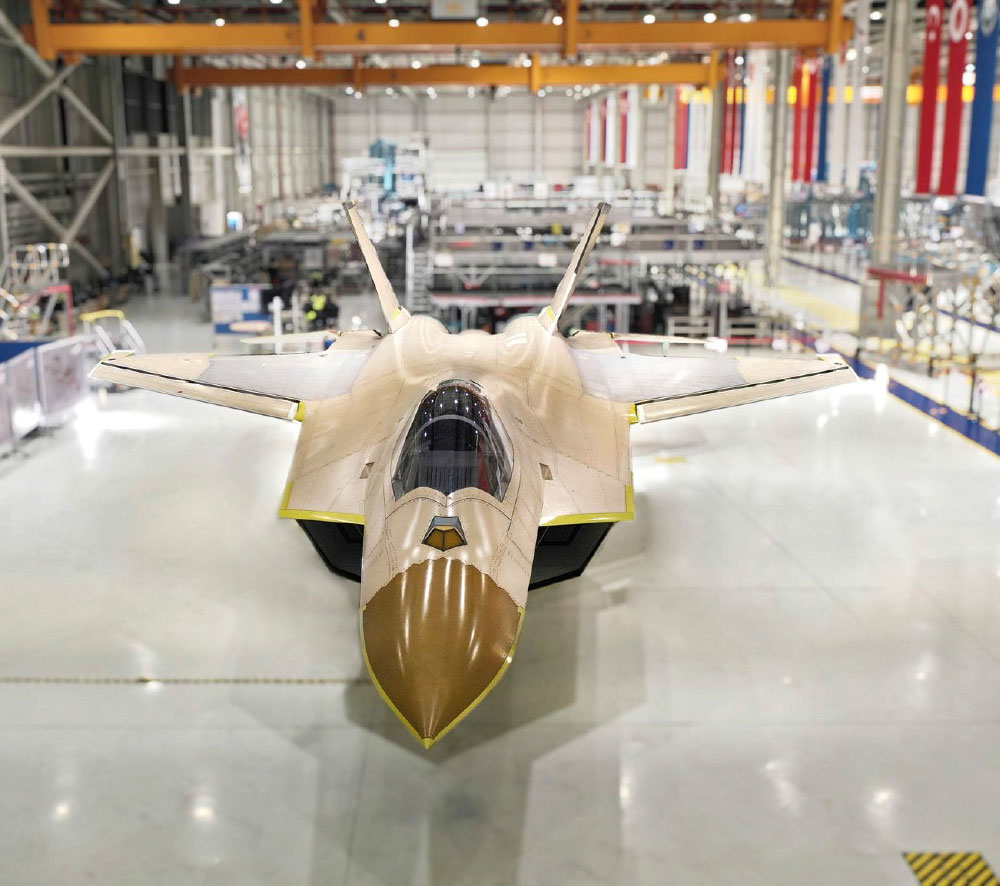
MMU Assembly and Test Building Block A (MMU Hangar), the construction of which were completed in March 2022, is used for the production and final assembly of MMU/TF-X prototypes. It was stated that two MMU/TF-X Aircraft can be produced at the same time in Block A. TUSAŞ started the assembly of the first prototype of the MMU/TF-X, which is expected to replace the F-16s, which are planned to be gradually retired from the 2030s and to remain in TurAF service until 2070, at the MMU Hangar on April 30, 2022, and the Development Test Aircraft (abbreviated as GTU in Turkish and also called Prototype 0) was moved to the Final Assembly Line on November 21, 2022. MMU/TF-X GTU/P0 will be used in different tests throughout the program as an internal prototype produced with TUSAŞ resources. Until 2030, TUSAŞ will produce 7 more prototypes, which will be improved gradually and have additional equipment and capabilities apart from the GTU/P0 prototype. The Serial Production of MMU/TF-X, which is expected to start in 2029, will be carried out at a new facility, which is announced to be built right next to the MMU Assembly and Test Building, and where final assembly and production of 10 aircraft can be carried out at the same time. In his statement on December 8, 2022, President & CEO of TUSAŞ Temel KOTİL announced that starting from 2028/2029, TUSAŞ will begin the production of 24 MMU/TF-X Aircraft per year (2 per month) under the Serial Production Phase.
At the MMU Hangar, we had the opportunity to see the GTU/P0 prototype with its radome, engines, and vertical stabilizers removed. GTU-0 was initially developed for the MMU/TF-X ground tests but was decided to be used in the first test flight in 2023. It was stated that the MMU/TF-X GTU-0 prototype was disassembled for fuel line and hydraulic tests and will be disassembled and reassembled several more times until April 2023, when the Roll-Out Ceremony will be held.
TUSAŞ MMU/TF-X Assembly Manager Celal ONUR, who welcomed us at the MMU Hangar, shared the following information about the ongoing work on the National Combat Aircraft (MMU/TF-X) and the Final Assembly Line: “We are inside the MMU Assembly and Test Building No. 1030, Block A. Block A is where the structural assembly, system integration, and Final Assembly Line operations are carried out at all component levels. The total area is 9,000 square meters. Right next to it is Block B. In Block B, we have our assembly engineers and colleagues from design and the MRV Department. The others, Block D and Block C are used for Iron Bird and Static & Fatigue Tests. Our plane is standing on its landing gear now. To give very general information, the MMU/TF-X Aircraft consists of 4 main components; Forward Fuselage, Forward Center Fuselage, Wing Module, and Aft Fuselage. All structural elements of the aircraft have been completed at the component level. For example, you don't see the radome at the front, but the radome is ready for installation. The canopy is also ready. We had to remove the canopy again, as we put some reinforcements in it. We have friends working in the ECS Line, we have friends working in the fuel and hydraulic line and performing their tests, and our friends you see below are trying to complete the laying of the cabling. 2 weeks ago, all these control surfaces, radome, canopy, and even the engines were on the plane. We installed the engines to test whether there was any inconsistency in the main frame of the aircraft, or as we called it, 'under structure.' After confirming that there was no problem, we removed them. Right now, we are working on the fuel and hydraulic lines."
Answering a question as to whether fuel and hydraulics were pumped to the MMU/TF-X GTU/P0 prototype, which is still on the Final Assembly Line, ONUR stated that the fuel line consists of 3 main lines, the Deck Line, Vent Line, and Feed Line, and the Deck Line and Vent Line tests were completed successfully without encountering any leaks. ONUR stated that the Feed Line Test procedures would be completed after the pipe assembly, which arrived two days ago, and an interim 'gasket' solution. "The integration of the pipes in the hydraulic line is ensured with a special method, which we call 'permeation.' We will start the hydraulic test process at 5 o'clock in the evening with a pressure of 4,500 PSI."
Apart from the GTU/P0 prototype, TUSAŞ will also produce the MMU/TF-X Full Length Structural Test Aircraft, which will be used in comprehensive static tests. Martin Baker product ejection seats will be used in the MMU/TF-X and HÜRJET Programs. Both the MMU/TF-X and HÜRJET cockpit/canopy frames were shipped to the Martin Baker facilities in 2022 for testing. Developing indigenous ejection seats was abandoned due to costs and lengthy testing processes. The MMU/TF-X's canopy is supplied by VOLO Composite, the main and nose landing gear, landing gear control system, wheels and brakes and test systems by TAAC, Wide Area Display (touchscreen) by STG, the Mission Computer known as Integrated Processing Unit (IPU) and the Avionic Interface Unit (DCU) by TÜBİTAK BİLGEM, Power Distribution System by İŞBİR, Batteries by ASPİLSAN, 122kW APU (Auxiliary Power Unit) and ATSS (Air Turbine Start System) by TRMotor. VOLO Composites also delivers structural composite parts, and TAAC provides flight control systems (actuators) for the MMU/TF-X.
An impressive Roll-Out Ceremony is planned for the GTU/P0 in April 2023. It has been announced that the first flight of the GTU/P0 prototype powered by F-110-GE-129E Turbofan Engines will be carried out by the end of 2023. However, in his speech on December 8, 2022, the President & CEO of TUSAŞ Temel KOTİL had previously stated that the first flight would be on October 29, 2024. At the MMU Hangar, I had the opportunity to look at one of the F-110-GE-129E Turbofan Engines with 29,500lb thrust capacity right next to the GTU/P0 prototype during the routine inspection. 'October 26, 2022' was written on the engine. F110-GE-129E engines were installed on the MMU/TF-X GTU/P0 prototype on December 21, 2022. We also had the opportunity to watch a short video of the engine installation process on the large LCD screens at the entrance of the National Combat Aircraft (abbreviated as MMU in Turkish) Engineering Center, where we took a lunch break. It was truly an impressive sight.
Meanwhile, according to our sources the GTU/P0 prototype performed its first engine run-up test with F110-GE-129E Turbofan Engines on February 21, 2023.
The F110-GE-129E engines are expected to be used in GTU/P0, Block 10 aircraft (2028/2029) and Block 20 (2032) aircraft and then switch to the indigenous 35,000lb turbofan engine from Block 30 onwards (2035). According to the information I have received, TUSAŞ ordered a large number of additional engines from GE for the MMU/TF-X Program in the second half of 2022. F110-GE-129E Turbofan Engines are expected to be used in the first 40 serial production MMU/TF-X Aircraft. It is also planned to manufacture the engines at TEI facilities if an agreement can be reached with GE and the US Government. TEI Chairman and CEO Mahmut AKŞİT pointed out that the studies are continuing for the production of F110-GE-129E engines in Türkiye, which are planned to be used until the domestic engine with a capacity of 35,000lb is ready. "We are working on locally producing F110-GE-120 engines at our Eskişehir facilities by TEI. In this context, we are focusing on a business model with the platform manufacturer TUSAŞ and the main engine manufacturer GE that will keep domestic production at the maximum level." I believe that around 100 F110-GE-129 engines with spares can be procured for the first 40 aircraft, which are expected to be in Block 10 and Block 20 configuration.
The MMU/TF-X Program was planned to be carried out in three phases: the Preliminary Design (Phase-I Stage-I), the Detailed Design and Qualification (Phase-I Stage-II), Initial and Full Operational Capabilities (IOC/FOC, Phase-II), and the Serial Production (Phase-III). A Preliminary Design (Phase-I Stage-I) Contract was signed between TUSAŞ and the SSB on August 5, 2016. This was followed by a US$156 million agreement signed on January 28, 2017, between TUSAŞ and BAE Systems, which was selected as the Foreign Technical Support Provider for the Preliminary Design Phase of the MMU/TF-X Program. The Cooperation Agreement between TUSAŞ and BAE Systems entered into force on August 25, 2017. The Project officially started (T0) on September 17, 2018, following the selection of TR Motor Power Systems as the Main Contractor and Supplier for the turbofan engines that will power the MMU/TF-X Aircraft. In October 2018, TUSAŞ chose General Electric's (GE) F110-GE-129E turbofan engine to be used in the MMU/TF-X prototypes and first batch production aircraft (due to twin-engine configuration).
The Critical Design Review (CDR) Phase of the MMU/TF-X GTU/P0 prototype was completed in 2022. It was stated that the Preliminary Design Review (PDR) of the first Block 10 aircraft (also called Block 1) will be completed by the end of January 2023 (Block 10 aircraft were initially planned to be delivered to the TurAF in 2030, but Temel KOTİL announced by that they will be delivered in 2028). The PDR of the Block 10 aircraft was submitted for approval in December 2022. It was also stated that the CDR Phase of the Block 10 aircraft was brought forward from October 2024 to September 2023. During the TUSAŞ Facility Tour, it was announced that the production of the 2nd prototype aircraft would start soon. In this context, I believe that the production of the 2nd prototype aircraft can begin in February after the completion of the PDR Phase of the Block 10 aircraft. With the completion of the PDR (Block 10 aircraft) in January 2023, the Preliminary Design Phase of the MMU/TF-X Program which started (T0) in September 2018, with a budget of US$1.3 billion, will be officially completed.
The contracts for the Detailed Design and Qualification Phase (Phase-I Stage-II), which is planned to be completed by the last quarter of 2028, are expected to be signed during the DSEi 2023 Exhibition to be held in England in September (between the SSB and TUSAŞ and between TUSAŞ and BAE Systems) when the CDR process of the First Block 10 aircraft will be completed. It is estimated that the Detailed Design and Qualification Phase (Phase-I Stage-II) and IOC/FOC will cost approximately US$7.3 billion, while an additional US$14 billion will be required for the Serial Production of the 5th generation MMU/TF-X. Unit cost for a prototype aircraft is estimated at US$120 million, while Serial Production TF-X Aircraft is estimated to cost US$80 million.
In June 2021, the President & CEO of TUSAŞ Temel KOTİL, stated that the MMU/TF-X consists of over 20,000 parts. The materials used in the under structure of the MMU/TF-X Aircraft, which consists of 4 main components excluding the control surfaces, are as follows:
Forward Fuselage: 7050 T7451 (aluminum alloy commonly used in aviation).
Forward Center Fuselage: 7050 T7451. It is 5m wide, 4.2m long and 2.2m high, with a structural weight of 1,470kg.
Wing Module: Titanium. The Forward Center Fuselage of the MMU/TF-X Aircraft is manufactured vertically in one piece with wings and it weighs 2,125kg.
Aft Fuselage: Titanium. Its total weight is 3,945kg.
Uni-Directional (UD) epoxy resin-impregnated Carbon Prepreg composite material is used as the coating of the MMU/TF-X. The monolithic Air Intakes of the aircraft with S-Duct geometry are made of composite material by hand-laying. It starts from the forward fuselage and extends to the rear engine section. The Horizontal Stabilizers of the plane, which is as big as the wing of an F-16, are 2.9m wide, 4.1m long, 0.4m high, and weigh 235kg.
Responding to our question about the MMU/TF-X GTU/P0 prototype's weight and size, TUSAŞ officials stated that they do not have any definitive data because the figures change as the design becomes clear and the newly produced domestic subsystems are delivered. For example, since the main and nose landing gears have not been made before, there is no weight information available for the landing gear, and there may be an increase or decrease in total weight as the quality of the materials changes during production, testing, and delivery processes. Therefore, there may be differences between the previously shared technical specifications of the aircraft and the technical specifications of the GTU/P0 and the next 7 prototype aircraft. Previously, it was stated that the MMU/TF-X is 21m long, 6m high, has a wingspan of 14m, a service ceiling of 55,000ft, a top speed of Mach 1.8, and can pull +9/-3.5G. According to the posters in the MMU Hangar, the maximum speed of the aircraft is Mach 2, the maximum ceiling altitude is 60,000ft, the service ceiling is 55,000ft, the maximum payload capacity is 20,000lb, the G limit is +9/-3G, and turn rate is 9G at Mach 0.9 and 15,000ft and 4G at Mach 0.9 and 30.000ft.
Conclusion
Looking at the archive, the last time I visited the TUSAŞ facilities at the Kahramankazan Campus was on September 2, 2014, on the occasion of the last 4 F-16A/B Block 15 Aircraft delivery ceremony as part of Pakistan Air Force's Peace Drive II Program. During the Facility Tour, I witnessed the massive change between the old and the new TUSAŞ with my own eyes. With the new investments made in the past, almost every square meter has been utilized at the Kahramankazan Campus, plans for new facility investment have already been made for a few vacant areas, and the construction timeline has already been set. Of course, the infrastructure growth due to the projects also increased the number of personnel, and TUSAŞ reached 13,000 employees, including 6,000 engineers. In response to our question at the Press Conference, Temel KOTİL stated that around 400 employees leave TUSAŞ every year; half of them go abroad, and the other half switch to other companies in Türkiye. This is extremely high for a company like TUSAŞ working on critical aerospace projects for the Turkish Armed Forces. TUSAŞ is doing its best to keep its experienced engineers, which is defined as the biggest "asset" by CEO Temel KOTİL, and to strengthen its staff even more with the recruitment of new engineers. However, in addition to the steps that facilitate the work life of the employees, it has to offer an environment that is emotionally and financially satisfying to the employees.
As I pointed out at the beginning of our article, TUSAŞ, which operates in 6 main groups: Aircraft, Helicopters, Unmanned Aerial Vehicles, National Combat Aircraft (MMU), Space Systems, and Structural, has recruited 8,000 new personnel in the last 5 years, depending on ongoing the project. Additional 3,000 personnel will be added in 2023. However, it is not possible to accelerate the projects immediately by increasing the number of personnel and engineers/technicians. Based on this fact, TUSAŞ takes advantage of advanced computers, simulations, and test environments to accelerate the HÜRJET Advanced Jet Trainer and Light Attack Aircraft and National Combat Aircraft Programs, which will give it a significant leap in terms of engineering, production infrastructure and turnover in the next 10 years.
In this context, to create the digital twin of the MMU/TF-X for the end-to-end design of the aircraft, TUSAŞ purchased special commercial off-the-shelf (no source code available) software programs, which are known as the 'Digital Wind Tunnels' and can provide CFD (Computational Fluid Dynamics) analyses (preliminary and detailed) of the aircraft with results that are the closest to real-life wind tunnels, from Dassault Systèmes and Siemens Companies. Thanks to special software used for Digital Twin Technology, such as Dassault 3DExperience PLM (Product Lifecycle Management), all designs and tests of MMU/TF-X in the development phase could be done in a simulated environment. In addition, a computer system with a total of 70,000 cores (1 x 50k and 2 x 10k cores) was purchased from abroad to run these special software programs. Thanks to this advanced computer system and special software, CFD analyses of MMU/TF-X could be verified down to the last detail in a simulated environment in a shorter time and with a higher level of detail and precision; thus, the development process was accelerated. To quickly prepare the prototype aircraft, which was developed, verified, and produced with the Digital Twin Technology, for the flight tests, critical test environments such as the Full-Scale Structural Test Aircraft and Full-Scale Static Load Test Rig for use in comprehensive static tests of the airframe, Engineering Simulator with a 270-degree visual system to be used in virtual environment testing and evaluation of aircraft avionics, and the Iron Bird Test System, which will be used in the tests of all Flight Control System including actuators, landing gear, and hydraulics, before the aircraft's first flight, was established with national means and put into use. Additionally, the construction of the MMU/TF-X's new test environments, such as the Subsonic Wind Tunnel Facility, Lightning Test Facility, Electromagnetic Compatibility and Interference (EMC/EMI) Test Facility, and the Near Field Radar Cross Section (RCS) Measurement Facility, are ongoing as of 2023. Thanks to these technologies and new generation, modern test infrastructures, TUSAŞ was able to move the MMU/TF-X Program timeline forward 3 years, and thus the first flight date, which was initially determined as the last quarter of 2026, was updated as March 18, 2025, October 29, 2024, and finally the end of 2023 on January 9