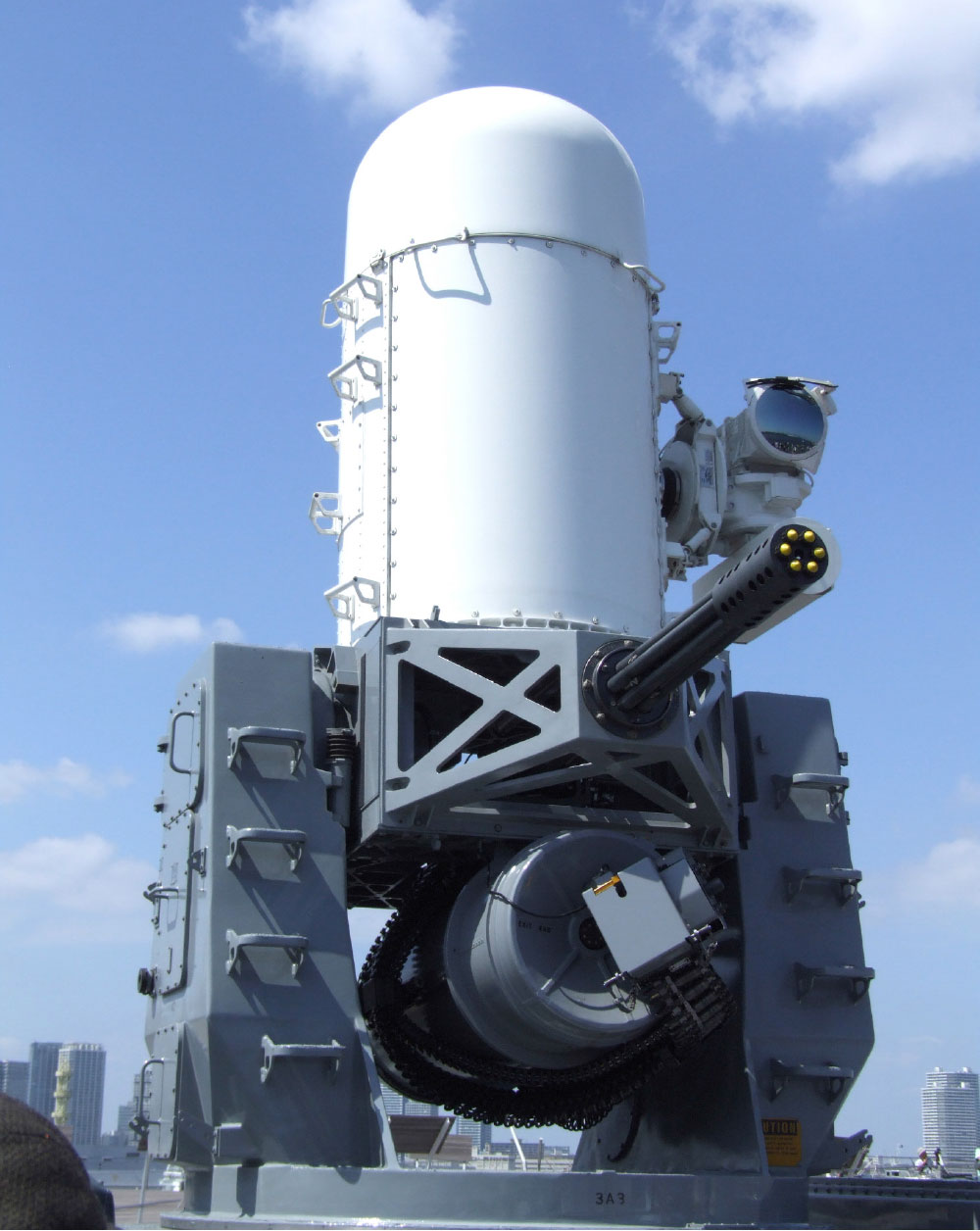
Delivery of Modernized Phalanx Mk-15 Block 1B (Baseline 2) Close-In Weapon Systems (CIWS) Completed!

The delivery of 20mm Phalanx Mk-15 Block 1B (Baseline 2) Close-In Weapon Systems (CIWS) modernized in the USA under the CIWS Modernization and Procurement Project, initiated by the Presidency of Defense Industries (SSB) in 2014, has been completed.
The Project was launched through the Foreign Military Sales (FMS) channel and approved by the U.S. Congress in May 2015. The Project aims to upgrade the 17 Phalanx Mk-15 Block 0 (Mode 1) close-in weapon systems in the Turkish Naval Forces inventory to the Phalanx Mk-15 Block 1B (Baseline 2) level. However, according to the information I have learned, the number of systems to be upgraded, which was previously planned as 17, was later revised to 11. In the first phase, only 11 Phalanx Mk-15 Block 0 (Mode 1) CIWS were sent to the USA. The systems underwent a comprehensive maintenance and repair overhaul and were later delivered to Turkey in batches after being upgraded to the Phalanx Mk-15 Block 1B (Baseline 2) CIWS level. To meet the other 6 CIWS needs, either the existing six Mk-15 Block 0 (Mod 1) systems are planned to be sent to the USA for modernization, or six new production Phalanx Mk-15 Block 1B (Baseline 2) systems are expected to be purchased. However, no concrete progress could be made due to the political tension between the two countries and the open/hidden embargoes (CAATSA sanctions).
Within the scope of the project with an estimated value of US$310 million (announced in May 2015), four new production Phalanx Mk-15 Block 1B (Baseline 2) CIWS were delivered, albeit delayed (the first 2 in November 2016), and installed on the TCG Bayraktar and TCG Sancaktar Tank Landing Ships (LST).
Carried out under the coordination of the SSB, the Close-In Weapon Systems (CIWS) Modernization and Procurement Project aims to ensure the survivability of the Turkish Navy elements, to modernize the close-in weapon systems in the inventory and to be included in the inventory, and to procure additional systems for new shipbuilding projects. Within this framework, it was aimed to modernize the 17 Phalanx Mk-15 Block 0 (Mode 1) systems in the Turkish Naval Forces inventory by upgrading them to Block 1B level and to procure an additional 4 Block 1B CIWS (Baseline 2) Weapon Systems for new surface platforms.
The 20mm, 6-barrel Phalanx Mk-15 Block 0 (Mode 1) Close-In Weapon System entered the Turkish Naval Forces inventory for the first time in July 1993 with the TEPE-Class frigates (former Knox, eight ships). The Phalanx CIWS was also installed on the A-595 TCG Yarbay Kudret Güngör Fleet Support Ship, which was delivered to the Turkish Naval Forces in early 1996 and officially commissioned in May 1997. With eight GABYA-Class frigates (former FFG-7 Perry) that joined the Navy from July 1998, the number of Phalanx Mk-15 Block 0 (Mode 1) CIWS in the inventory increased to 17 (8+1+8). One of the Phalanx Mk-15 Block 0 (Mode 1) CIWS, which was removed from the TEPE Class, was installed to the TCG Akar (A-580) Fleet Support Ship and the other to the TCG Osmangazi (NL-125) LST. The other 6 Phalanx Mk-15 Block 0 (Mode 1) CIWS are believed to be in storage.
Eight of the Phalanx Mk-15 Block 1B (Baseline 2) systems to be modernized at that time were planned to be used on the LHD Anadolu Multipurpose Amphibious Assault Ship built at Sedef Shipyard (L-400, 2 CIWS), DIMDEG Fleet Replenishment Ship (TCG Derya, 2 CIWS, however ASELSAN’s GÖKDENİZ will be installed instead of Phalanx) and ISTIF-Class Frigates (4 CIWS in total, 1 CIWS per ship, however ASELSAN’s GÖKDENİZ will be installed instead of Phalanx). Meanwhile according to recent plans within the scope of BARBAROS MLU Program the aged Sea Guard CIWS with three Sea Zenith four-barrelled 25mm gun mounts on the BARBAROS Class frigates are to be replaced with one Phalanx Mk-15 Block 1B Baseline 2 (to be deployed over the helicopter hangar) and one GÖKDENİZ 35mm CIWS (to be deployed in front of the bridge). In July, a photo of the Phalanx CIWS installed on the LHD Anadolu Ship, which is still under construction at Sedef Shipyard, was posted on social media.
The Phalanx Close-In Weapon Systems in the Turkish Navy inventory are in the basic model Block 0 (Mode 1) configuration. With the GENESIS Combat Management System (CMS) modernization, the Phalanx Mk-15 Block 0 (Mode 1) Systems on GABYA Class frigates has been fully integrated into the ship's CMS, allowing the CIWS radar to detect and track targets beyond its range/angle (the CIWS has two antennas, the search subsystem and the tracking subsystem located inside the radome, the white-painted portion). In this way, the Phalanx Mk-15 Block 0 (Mode 1) CIWS on ships gained a 'remote designation' capability, enabling the system to engage surface targets, especially asymmetric threats, even without a FLIR sensor. Thus, for example, if an incoming anti-ship missile breaks the tracking lock of Phalanx's illumination/fire control radar by performing a 'passive ranging' maneuver, the CIWS can relock/track the target again with the help of other radar and E/O systems on the ship (when a missile is approaching its target at high speed, it quickly moves left and right, then suddenly increases and decreases its altitude to break the radar lock).
The Phalanx Close-In Weapons System (CIWS) was developed in the early 1970s as the last line of automated weapons defense (terminal defense or point defense) to protect the U.S. Navy warships against incoming anti-ship missiles (AShM). The first prototype system was delivered to the U.S. Navy for evaluation by General Dynamics (now Raytheon Missiles & Defense) and installed on the Farragut-Class Destroyer USS King (DDG-41). Production of the Phalanx in Block 0 (Mode 1) configuration started in 1978, and the system was first used in 1980 on the U.S. Navy Aircraft Carrier USS Coral Sea (CVB-43). The improved versions of the Phalanx CIWS, Block 1 was first used in 1988 on the Iowa-Class Battleship USS Wisconsin (BB-64), and Block 1B was first used in 1999 on the Perry-Class Frigate USS Underwood (FFG-36).
The Phalanx Mk-15 Block 0 (Mode 1) CIWS is equipped with a Ku-Band radar for target detection and tracking and armed with the six-barrel 20mm M61A1 Vulcan Gatling-style rotary cannon. The Block 0 CIWS configuration has a fire rate of 3,000 rounds per minute (holds 989 rounds in the magazine drum), and the Ku-Band radar can track targets between 0-5° vertically (has two separate antennas for search and tracking). The Block 1 version is capable of engaging and intercepting hostile anti-ship missiles and aircraft that can perform high G maneuvers with low radar cross-section (RCS) up to +70° elevation (the old generation computer was replaced with a new one with higher processing speed). The Block 1 version still has a firing rate of 3,000 rounds per minute, but the ammunition capacity was increased from 989 to 1,550. With Block 1A, the rate of fire was increased to 4,500 rounds per minute while preserving the same ammo capacity.
The Block 1B version is equipped with a stabilized FLIR sensor to enable the Phalanx CIWS to engage low RCS air targets and surface threats. Block 1B has improved features such as an Automatic Acquisition Video Tracker (AAVT), Optimized Gun Barrels (OGB), and Mk-244 Enhanced Lethality Cartridges (ELC, which has a 48% heavier tungsten penetrator) for additional capabilities against asymmetric threats. Since 2015, the U.S. Navy has upgraded all Phalanx systems to the Block 1B variant. The most recent improvement on Block 1B is the Baseline 2 upgrade, which includes a next-generation digital radar to improve detection performance, increase reliability, and reduce maintenance (has a Commercial-Off-The-Shelf/COTS signal processor). The Baseline 2 configuration also has a surface mode that can automatically detect, track, and destroy threats closer to the water's surface, such as fast-attack boats and sea-skimming anti-ship missiles. As of 2019, the Baseline 2 upgrade has been installed on all U.S. Navy Phalanx system-equipped vessels.
The Phalanx Close-In Weapon System (CIWS) can fire 4,500 rounds per minute (75 rounds per second) against incoming anti-ship missiles and aircraft, and 3,000 rounds per minute against asymmetric threats (like speedboats), and it can operate fully autonomously thanks to its radar, FLIR sensor, and ammunition capacity (1,550 rounds).
The Block 1B variant weighs 6,120kg, while the previous configurations are around 5,700kg. While the 1,520mm long L76 barrel was used in Block 0 and Block 1A, the 1,981mm long L99 barrel was preferred in Block 1B due to the Mk-244 ELC ammunition, which is specifically designed to penetrate new generation anti-ship missiles.
In open sources, the unit price of the Phalanx Mk-15 Block 1B CIWS System ranges from US$11.6 to 13.6 million. For example, on February 24, 2014, Raytheon signed a US$123 million contract with the Republic of Korea Navy (South Korean Navy) for the procurement of 9 Phalanx Mk-15 Block 1B CIWS under the Direct Commercial Sale (DCS) model to use on the 2nd batch of FFX Frigates (Incheon-Class) and AOE-II Class Fast Combat Support Ships. Deliveries will be made between 2016-2022. South Korea had previously signed a direct commercial sale agreement worth US$65 million in September 2011 for 5 Phalanx Block 1B CIWS to use on Ulsan-Class frigates. In October 2012, the United Kingdom (U.K.) signed a £42.8 million contract with Raytheon for the sale of 5 Phalanx Block 1B Systems, and again in 2012, Australia signed an agreement worth US$35 million for the procurement of 3 Block 1B Systems used in the Hobart Class Air Warfare Destroyers (AWDs) built for the Royal Australian Navy (RAN)





