Deniz Kurdu 2025 Showcases Türkiye’s Expanding Naval Power and Unmanned Strike Capability
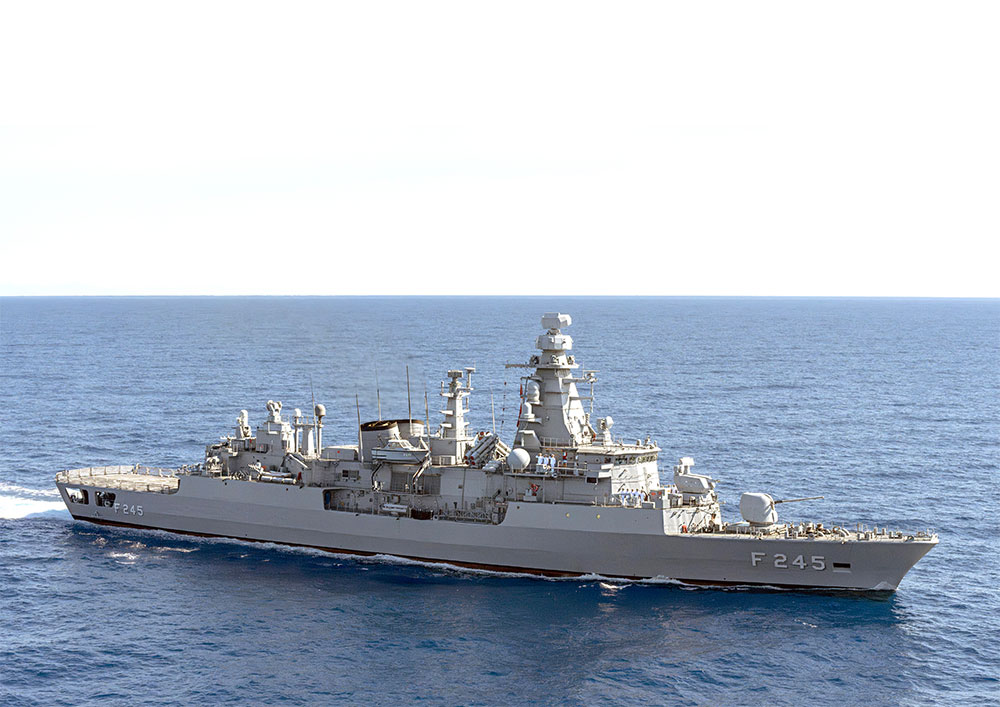
Türkiye’s armed forces staged one of their largest and most comprehensive maritime exercises to date with Deniz Kurdu (Sea Wolf) 2025, held across the Black Sea, Aegean, and Eastern Mediterranean between 6 and 12 October. The multi-phase exercise brought together elements from all four services — the Naval Forces, Land Forces, Air Force, and Coast Guard Command — and showcased the Turkish Navy’s growing operational reach, unmanned capabilities, and indigenous defence technologies.
According to official information released by the Turkish Ministry of National Defence, Deniz Kurdu-I/25 involved a total of 92 vessels, including 78 surface ships, six submarines, and eight Coast Guard assets. In addition, 66 air platforms participated — 50 from the Naval Forces, 12 from the Air Force, and four from the Land Forces — along with one Underwater Attack (SAT) and two Underwater Defence (SAS) teams.
The exercise was conducted in several phases: preparatory and readiness training on 6 October, followed by multi-threat operational drills from 7 to 9 October, a live-fire demonstration on 10 October, and port visits between 11 and 12 October. The scale of participation and the level of inter-service coordination highlighted Türkiye’s ability to conduct complex, joint maritime operations in multiple theatres simultaneously.
The undisputed highlight of this year’s exercise was the first at-sea launch and recovery of Baykar’s TB-3 unmanned combat aerial vehicles (UCAVs) from the amphibious assault ship TCG Anadolu. Two aircraft, prototypes PT-1 and PT-3, took off from Anadolu’s flight deck, conducted live-firing tests with different munitions, and successfully landed back aboard the ship. The demonstration marked a significant milestone in Türkiye’s ongoing effort to integrate unmanned strike systems into naval aviation operations.
During the demonstration — conducted before observers and media on 10 October — PT-1 carried two MAM-L lightweight smart micro-munitions, while PT-3 was armed with a single MAM-T precision munition. Both weapons, developed by Roketsan, are designed for UAV and light-attack aircraft use against fixed and mobile targets. The smaller MAM-L, with a range of about 15 km, uses inertial and semi-active laser guidance, while the heavier MAM-T extends the reach to beyond 30 km and can be equipped with blast-fragmentation, thermobaric, or anti-armour warheads.
The integration of TB-3 operations aboard Anadolu marks a major step in Türkiye’s bid to develop an indigenous shipborne unmanned strike capability, allowing the Navy to project precision firepower at greater distances without risking crewed aircraft. Officials said follow-on testing will refine deck procedures, communication links, and mission planning systems.
Deniz Kurdu 2025 was designed not only as a fleet readiness event but also as a systems-integration and training exercise across the services. The scenario aimed to assess the command-and-control effectiveness of subordinate naval commands, improve the staff’s decision-making and situational awareness under complex threat conditions, and test interoperability procedures with other components of the armed forces.
Speaking during Distinguished Observer and Press Day of the exercise, General Metin GÜRAK, Chief of the Turkish General Staff, underscored the broader purpose of the exercise:
“Today we witnessed the successful execution of the Deniz Kurdu exercise. It was particularly pleasing that the event was carried out in coordination with our land and air forces. The exercise raised the Navy’s training level, enhanced its command awareness, and demonstrated the effective use of new weapons and systems,” he said. “For the first time, we observed a TB-3 system taking off from a ship and engaging targets — a capability that does not yet exist elsewhere. We also witnessed our newly developed TEBER, TOLON, and long-range KEMANKEŞ munitions striking their objectives accurately. This exercise has therefore been valuable not only in training personnel but also in testing new weapon systems in an operational environment. I congratulate the Commander of the Naval Forces and all personnel for their success.”
In turn, Admiral Ercüment TATLIOĞLU, Commander of the Turkish Naval Forces, emphasized the Navy’s growing strength and self-reliance:
“Türkiye’s geostrategic position demands a strong navy — and we are a strong naval force,” he said.
“Today, simultaneously in the Black Sea, the Aegean and the Mediterranean, 92 warships, 66 naval-air elements and nearly 17,000 personnel took part in the exercise. This morning, we conducted firings with our torpedoes, fast attack craft, shipborne helicopters, and ship-launched TB-3 unmanned aircraft. The inclusion of these systems in our inventory has enabled us to develop new tactics. We now build our own frigates, corvettes, patrol vessels, landing ships, and soon our national submarines and aircraft carrier. We have also developed indigenous systems such as the Atmaca anti-ship missile, the Malaman naval mine, and the Akya torpedo. The Turkish Navy is a strategic instrument supporting diplomacy, demonstrating strength in the Black Sea, the Aegean and the Eastern Mediterranean — and it stands ready to fulfil its missions.”
The scale and scope of Deniz Kurdu 2025 underscored Türkiye’s intention to solidify its position as a regional maritime power through the integration of indigenous technologies and unmanned systems.
With the TB-3 now entering the testing phase at sea, Ankara has moved one step closer to achieving a fully nationalised shipborne UAV strike capability — a development that could significantly reshape future amphibious and littoral operations in the Eastern Mediterranean and beyond.
As Türkiye continues to pursue indigenous shipbuilding programmes, from frigates and corvettes to submarines and the nation’s first aircraft carrier, Deniz Kurdu 2025 demonstrated not only current readiness but also the country’s determination to sustain an independent and technologically advanced naval force





