Dutch Wildcats Celebration
It has been 25 years since the first of the 17 brand-new AS-532 Aérospatiale Cougars of the Royal Netherlands Air Force (RNLAF) landed for the first time at Soesterberg Air Base, home base for the 300th Squadron at that time. The initial contract was signed on the 23rd of October 1993. The first ‘Cougar’ was delivered on the 3rd of May 1996 and all 17 deliveries were completed in the subsequent two years. Currently, the 300th Squadron operates out of Gilze-Rijen Air Base as part of the RNLAF Defense Helicopter Command (DHC), established in 2008.
‘In Mobilitate Vis Nostra’
The ‘Wildcats’, their usual callsign when operating in the Netherlands, of the 300th Squadron have completed more than 55,000 flight hours to date which, since 1996, enabled them to participate in a very respectable number of major deployments and exercises. Active deployments all around the world, consisting of ship- and land-based operations, demonstrates that mobility is clearly within the DNA of the squadron. Something that is also embedded within the squadron’s motto ‘In Mobilitate Vis Nostra’ (in mobility lies our power)
New Commander
In the beginning of September 2020, LtCol. Roy HEMMELDER became the new Commander of the 300th Squadron. He has been with the unit flying the Cougar helicopter ever since the beginning of this millennium. The only time he was away from the squadron was while he was broadening his rotary wing experience flying the NH90 for several years for the maritime 860th Squadron and learning the ropes as a flight instructor at the 131st squadron. Having been deployed to Bosnia, Iraq and Afghanistan numerous times, he proudly elaborates; “The 300th Squadron just breathes agility. Its people combined with the Medium Utility Cougar helicopter operate in multiple domains, over land and water, supporting conventional, maritime and special forces. The Defense Helicopter Command has many capabilities up its sleeve, of which agility and versatility are definitely a major part of the 300th Squadron’s trademark”. This also shows in the squadron’s numerous partners, simultaneously operating with special forces, Navy Marines and Air Mobile Infantry during various exercises and deployments. LtCol. HEMMELDER adds; “Such diversity fits perfectly within in the 5th generation air force concept, where integrating and sharing knowledge between joint assets and operating in a multi-domain battlefield is vital”. After serving in various staff functions at the Airforce HQ and Armed Forces HQ, LtCol. HEMMELDER finished his Advanced Staff Training during 2019-2020. One year in as Commander of the 300th squadron he reflects: “So far this has been one of the most rewarding jobs I’ve experienced, mainly due to the 300th Squadron’s people and esprit the corps, but also the diversity. I’m enjoying every day and looking forward to what the future has in store.”
History
The squadron’s history dates back to 1962, at the time operating out of Ypenburg Air Base, close to the city of The Hague. First, they started operating in a training role with the H-23 Raven. By august of 1965 the transition was made to the Alouette III. From this point on the squadron also operated the L-21B Super Cub and the DHC 2 Beaver. With the retirement of the last Super Cub in 1976 and Ypenburg Air Base losing its operational state, the squadron moved to Deelen Air Base and operated there from 1968 to 1995. From 1996 to 2008 the Squadron was based at Soesterberg Airbase after which it was relocated to Gilze-Rijen Airbase during the establishment of the Dutch Defense Helicopter Command.
Shocking News
In 2011, after another round of Dutch Defense cuts, it was decided that the 300th Squadron would be decommissioned. This came as a huge shock to the squadron, especially since its continuous record of accomplishment since the introduction of the 17 Cougar helicopters in 1996. The decision was (partly) reversed in the same year due to a shortage of SAR-helicopters (due to replacement of the Lynx for N90 and the retirement of the three AB-412 helicopters, which had a dedicated SAR task). The plan was to continue to execute tasks with three ‘Cougars’ (in a dedicated SAR role) in anticipation of future maturity of the NH-90 fleet. The squadron would stay operational until 2012. However, in the same year the decision was rolled back further by increasing the number of operational AS-532 ‘Cougars’ to eight and prolonging the squadrons task up to 2018. In 2015 four more where made operational which leads to the current fleet of twelve Cougars that remain in service of the squadron. In 2018 it was decided that the squadron will stay operational with the Cougar helicopter until at least 2030. ‘Being uncertain about our future, as a team, we had to endure a lot the last decade. I believe flexibility and teamwork was key in dealing with this situation’ Lt Col HEMMELDER adds. But I also believe the Medium Utility Helicopter in itself has contributed significantly, in this regard. ‘In the end we are like an oiled Swiss Army knife, which has proven its added value over the years, and is quickly available when called upon”.
Deployments
Since the 1990s the ‘Wildcats’ have been deployed during numerous conflicts and humanitarian missions all over the world. In 2001 and 2002, the 300th Squadron took part in the Stabilization Force (SFOR) in Bosnia. For this mission five Cougars operated out of Divulje Barracks, Croatia, for a period of one year. The primary tasks were Air Mobility; transporting cargo and troops but also operating as an Incident Response Platform from Sipovo Hospital throughout the AOO.
In 2004, the 300th Squadron took over the duties in Iraq as part of the Stabilization Force Iraq (SFIR). For this operation three ‘Cougars’ operated out of Tallil Air Base. Again, in the transport and MEDEVAC role.
The ‘Cougars’ of the 300th Squadron also were deployed to Afghanistan several times for Operations during 2006 to 2010 that took place out of Kandahar Airfield in support of the Task Force Uruzgan. Besides a transport role of supplies also missions to support Special Operations Forces (SOF) where executed.
The 300th Squadron also supports humanitarian missions like fighting forest fires (Fire Bucket Operations – FBO), in 2004 the squadron deployed two Cougars to Portugal, and in August 2007 towards Greece to support the firefighting there.
From Wildcats to Seacats
Furthermore, the Cougars have also been involved during Anti-Piracy missions off the coast of Somalia operating from the Royal Netherlands Navy vessel, Hr. Ms. Rotterdam. A wide variety of tasks were carried out ranging from Reconnaissance Flights, transportation of boarding teams (Marines), drug encounters and even blocking suspicious ships. The unit has been involved in Anti-Piracy missions during 2012 until 2017 under various mission names; ‘Atalanta’, ‘Ocean Shield’ and ‘Carib’. For these amphibious overseas missions, six Cougars (serials S-419, 441, 442, 445 and 447) are available with maritime equipment like floats to prevent the helicopter from sinking when it contacts the water.
The incorporation of maritime capacity in the “toolkit” gives 300th Squadron personnel, technicians and aircrew alike, the opportunity and challenge to adapt to a new environment. “Operating out of a small working place and not having the experience of being at sea for a long period of time were the biggest challenges”, Captain Dominique added. She is one of the experienced pilots these days within the 300th Squadron, putting her rotary wing experience to good use at the Airforce HQ.
Until 2015, the squadron was tasked as patient transport (Air Ambulance) from the Wadden Islands, which are located at the upper north of the Netherlands in the Wadden Sea, to hospitals on the mainland. In 2019, the 300th Squadron deployed two Cougars for ‘Hurricane Disaster Relief’ after Hurricane Dorian hit the Bahamas. A naval exercise towards the Bahamas went from training towards a real mission overnight. In 2020 the ‘Cougars’ operated from the Royal Netherlands Navy vessel ‘Hr. Ms. Karel Doorman’ in the Caribbean for “COVID Support 2020”. Though COVID-19 continues to have an impact on global society, the 300th Squadron has been adapting to this new situation. Indeed, in mobility lies their power.
Mission Qualification
Training (MQT)
As international training and exercises were largely cancelled during 2020 due to COVID-19, the unit organized a six-week Mission Qualification Training (MQT) including a tactical electronic warfare exercise (TAC EW) itself in the Netherlands. Captain Jimmy, one of the 300th Squadron’s Flight Commanders, adds; “this all is part of the continuous learning curve we enjoy during our careers, to train as new pilots towards operational (combat) readiness takes about two years, but the learning never stops”. The MQT took place during January and February of 2021. Following that precious training, in April 2021 the exercise ‘Port Defender’ took place in the Port of Rotterdam with a dedicated focus on Dutch Counterterrorism activities during which the 300th Squadron was further able to hone its skillset. LtCol HEMMELDER adds; “before the year is through, we’ll also have trained our environmental skills in Degraded Visual Environments during EDA HOT in Beja Portugal, and Mountain Training in Aviano Italy. Furthermore, valuable joint training is coming up during the International SOF-exercise Nighthawk in Denmark and the maritime amphibious exercise Joint Warrior near Scotland and Ireland. The MQT serves its purpose, in laying a firm bedrock for our crews to build upon when training towards those various mission sets”.
Maintenance
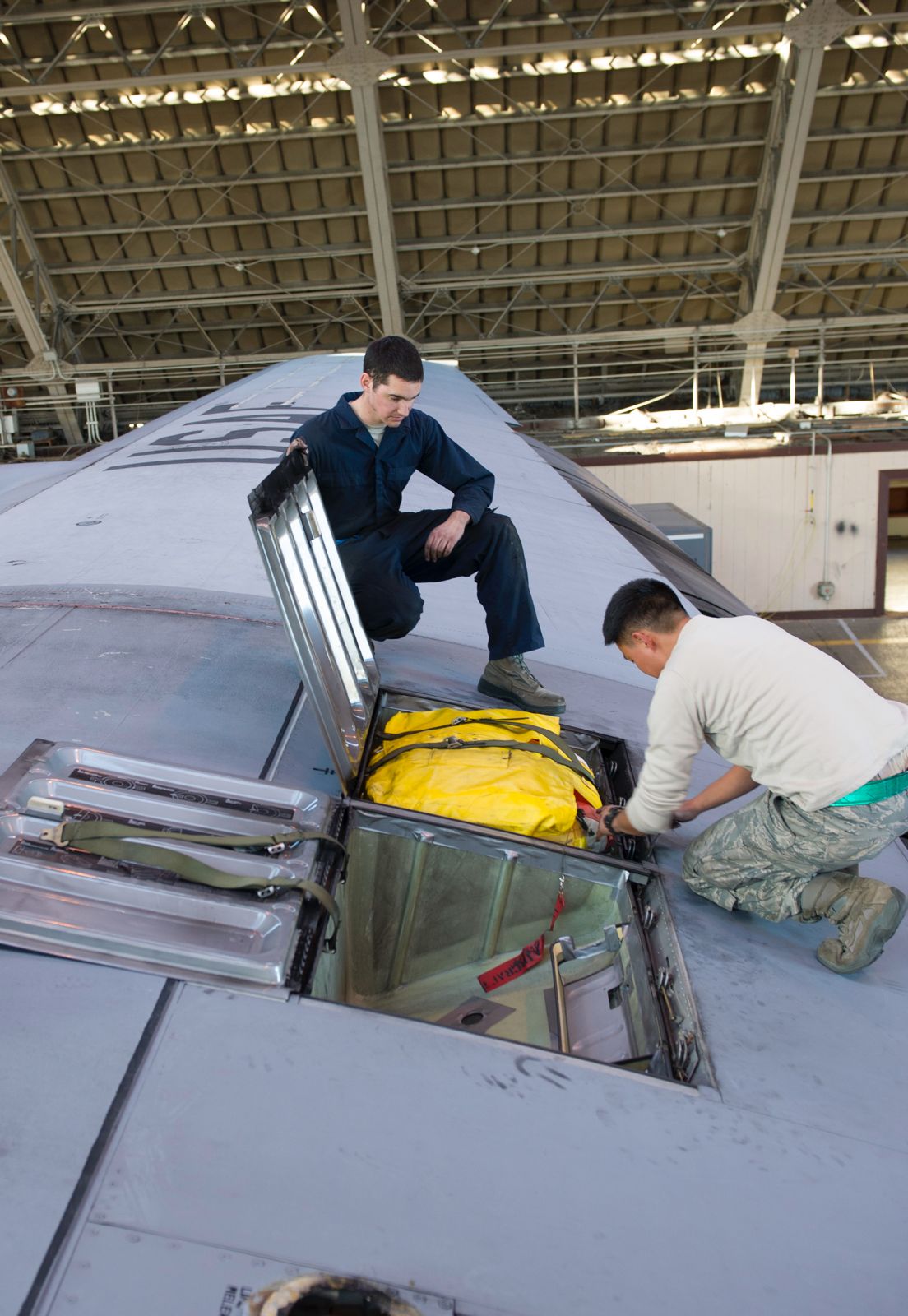
Currently 300th Squadron maintenance crews are performing a ‘Base Maintenance Inspection’ on one of the Cougars. According to 1st Lieutenant Niels HENDERSON, Chief Helicopter Maintenance of the 300th Squadron, this is a unique opportunity. During early 2018 Heli-One (based in Richmond, British Columbia, Canada), a leading provider of Helicopter Maintenance, repair, and overhaul (MRO) services signed an agreement with the Royal Netherlands Air Force (RNLAF) to provide on-site Intermediate/Depot-level maintenance on the twelve AS-532US Cougar helicopters and to support five additional aircraft in storage. A staffing facility at Woensdrecht Air Base with project managers, technicians and support crew from Heli-One Poland was established at that time. The agreement covers Inspections and Maintenance beyond the 750 Hours/2-year interval, Engine Makila 1A2 inspections, Corrosion Prevention, and support to the Operational Level Maintenance organization upon request.
To be able to continue operations until at least the year 2030, a so-called Obsolescence Prevention Program has been acquired for the Cougar fleet, primarily in order to update the twelve Cougars on maintainability en serviceability. Since the introduction with the Royal Netherlands Air Force (RNLAF) no major investments have been made to the ‘Cougar’ fleet. A number of essential parts of the Weapons System have aged and spare parts have become difficult to obtain. In the past, this has already had a negative impact on the availability of the 300th Squadron fleet. The Obsolescence Prevention Program will focus primarily on upgrades to the Cockpit, Engine Instruments, Communications Suite, Navigation System, Interoperability and the Head Up Display (HUD) system.
The Dutch Cougar helicopters are equipped with an extensive Self-Protection Package, the Integrated Self Protection System (ISPS). This Computer-Controlled System consists of the Missile Approach Warning System (MAWS), the Radar Warning Receiver (RWR) and an Advanced Counter Measures Set (ACMS). The MAWS ensures that the crew is warned in the event of a rocket attack. The RWR ensures that the crew is warned when they are followed by a Radar System. The ACMS ensures that the appropriate countermeasures are taken. In addition, the AS-532 has flares (linked to the MAWS) and chaff (linked to the RWR).
Recent Exercises
This year again a number of international training exercises were planned explains Jimmy, the 300th Squadron’s flight Commander. “We started off in July 2021 with ‘Hot Blade’ in Portugal to retain proficiency in brownout operations. Lt Col HEMMELDER adds “It has been a valuable multiship and multi type training for us. We are able to improve and further standardize our military cooperation with our European partners who took part during Hot Blade”.
This year we also have planned the ‘High Blaze’ exercise again taking place at Aviano Air Base in Italy. This exercise will be important for our crews to catch up with operations in mountainous areas operations. In preparation for the mentioned exercise, late July 2021, we deployed to Laupheim in Germany where we organized an initial mountain training before heading to Italy.
The rest of 2021 will bring the four weeks ‘Hebrides Archer’ exercise out of the Royal Netherlands Navy vessel ‘Hr. Ms. Karel Doorman’ with 2 Cougars together with one NH90 starting in the middle of September. The final exercise for 2021 will be the three weeks SOF ‘Nighthawk’ exercise held in Denmark out of Aalborg Air Base, starting in the last week of September.
SOF-Exercise Nighthawk
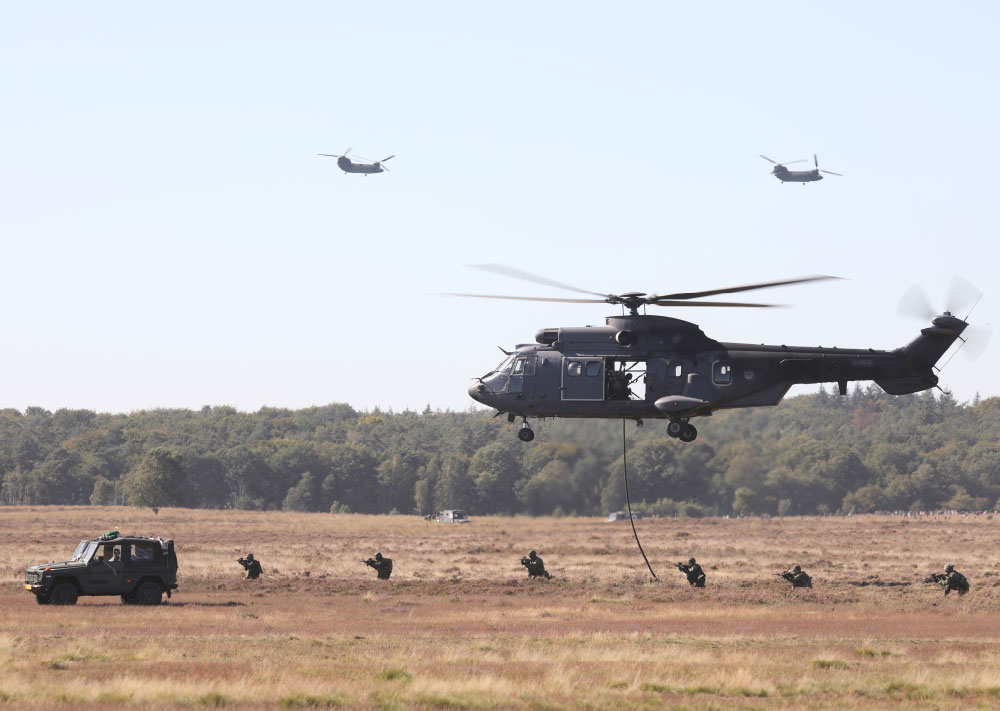
Captain Jimmy states ‘in order to improve our conventional support tasks and capabilities towards the Special Operations Forces (SOF), we will be involved in the large scale SOF-exercise “Nighthawk” which will be held in Denmark later this year. The ‘Wildcats’ of the 300th Squadron will be in direct support of the Special Operations Forces (SOF) of the Netherlands and various other partners present at that exercise.
During 2013, a dedicated Program was started to build up SOF Air capabilities within NATO. This Program was initiated by the Supreme Headquarters Allied Powers Europe (SHAPE) as part of the NATO Special Operations Headquarter (NSHQ) in Mons, Belgium. In the Netherlands, on the 5th of December 2018, the Netherlands Special Operations Command (NL SOCOM) was established as a dedicated Command for all Special Forces activities. These forces comprise of Commando’s (Korps Commando Troepen, KCT) and Maritime Special Operation Forces, (MARSOF).
LtCol Hemmelder adds; “Obviously much effort is being invested into the further development of SOF. Although we are no SOF-unit ourselves, throughout the year we support the Dutch SOF (amongst other partners) with our rotary wing capabilities. We work to better our tactics, techniques and procedures while at the same time increasing the habitual relationship with various partners. It’s a valuable combination, and it gives us experience on a steep learning curve. Experience we directly incorporate to the benefit of our other partners as well. We are therefore looking forward to participating in this year’s Nighthawk exercise.