Enhancing Military Capabilities with Hybrid-Electric Propulsion Technologies

Both the military and original equipment manufacturers (OEMs) globally have been investing in vehicle electrification and developing and testing hybrid variants of their vehicles. Electric vehicles offer several tactical advantages over traditional diesel engines, including higher torque at lower speeds, enabling silent tracking missions, and lower acoustic and thermal signatures. However, recent research and studies indicate that the widespread use of such technology may not be feasible until the 2030s, or perhaps ever. This suggests that all-electric (fully electric) ground combat platforms and tactical supply vehicles may not be practical now or in the foreseeable future despite their potential advantages.
Even though commercial vehicle companies have made strides in electric technology, the military has unique challenges. For example, military power packs are expected to meet very severe environmental requirements such as cold weather starting (cold start at -32°C) and operation (at -45°C), hot weather operation (+55°C), storage in harsh conditions, and drive through water (water penetration). In military vehicles, fuel (in this case, the battery) can be exposed to temperatures between -46 and +88 °C in the engine compartment. Due to their nature, the performance of batteries in cold operating conditions is significantly reduced. Likewise, both cold and heat adversely affect electronic systems and the thermal management of the battery. Thus, commercial electrification technology cannot be applied directly, as it is for military land vehicles. However, commercial vehicles don't typically get shot at on the highway, but military land vehicles do. So, suppose you have a lithium-ion battery system. In that case, you need to be able to take rounds without starting a fire or explosion.
Unlike commercial passenger vehicles, it is considered that the feasibility of fully electric propulsion/drive systems in military land vehicles is low in the short, medium, and long term. The main reasons are the battery pack weight/volume, battery density & charging speed.
According to recent studies carried out by a committee composed of members of the US National Academy of Science and the US Army Research and Development Department, the energy density of batteries today is roughly two orders of magnitude less than JP-8, which results in excessive package weight and volume to meet Armies' mobility requirements even though such advances in battery energy density would be not enough to offset that magnitude of a disadvantage. When the roadmaps of specialized institutions and organizations are examined, it is considered that it is possible to double the mass-energy densities of batteries until 2035. Even if battery energy densities increase 2-3 times by 2035 since such advances in battery energy density would not be enough to offset that magnitude of a disadvantage, fully electric armored vehicles cannot be a viable alternative at least through 2035.
The calculation made by Committee members J. KOSZEWNIK and P. SCHIHL for the M1 Abrams Main Battle Tank, an all-electric Abrams MBT with the same range as the conventional propulsion system (power pack) would require a battery pack weighing 33 tons and a volume of 45 m3. Moreover, a 29 Megawatt (MW) electrical power source would be needed to charge a battery of this size in 15 minutes. As a result, the Committee concludes that even if battery energy densities increase by 2-3 times by 2035, fully electric armored vehicles will not be a viable alternative.
Recharging fully electric military land vehicles in a short period of time would require massive quantities of electric power that are not readily available on the battlefield. The US Army Tank Automotive Research, Development and Engineering Center (TARDEC) states that for all-electric propulsion systems to be viable, the current 100 kW charging rate must increase to 6 MW levels or 60 times. Similarly, battery power densities should increase from 0.15 kW/liter to 0.6 kW/liter, that is, four times. There is no solution that promises the potential to reach these values in the near and medium term. Considering the weight, requirements such as ballistic protection, water passage, cold start, and logistics support problems, it becomes clear that unless there is a significant technological leap in battery technologies, full electrification in military land vehicles is a risky proposition.
For fully electric ground combat platforms, the added weight from the battery would be much greater than a hybrid vehicle. Larger military vehicles and MBTs would require even larger batteries, so electrification is only an option for smaller, lighter military vehicles.
Thus, in contrast to conventional military vehicles, it is seen that fully electric propulsion systems are widely used in small and medium robotic vehicles that are deployed against improvised explosive devices (IED) and explosive ordnance disposal (EOD), reconnaissance, communications, CBRN (Chemical, Biological, Radiological, Nuclear), defence and rescue missions in military, law enforcement, and first responder applications. However, although small Unmanned Ground Vehicles (UGVs) are generally battery-electric driven, diesel-electric-hybrid propulsion turns into the preferred propulsion system, especially when carrying capacity and range are required. In the short term, it is recommended that all-electric propulsion systems for mid-range UGVs be developed and scaled up to level II in the medium term. For heavy-class UGVs, continuing with battery hybrid propulsion systems is recommended.
Is Hybrid Propulsion the Happy Medium?
While the electrification of ground combat platforms and tactical supply vehicles is a highly desirable goal, recent studies suggest that all-electric vehicles may not be practical and feasible until at least 2035. Therefore, the Army's future inventory should prioritize hybrid-electric vehicles with internal combustion engines, which offer significant advantages such as increased operational duration, onboard power for advanced technologies, and silent tracking operations.
Interest in hybrid-electric military vehicles has increased in recent years. A hybrid-electric system would offer the Army increased operational duration through fuel efficiency, added onboard power for technologies such as directed energy weapons, advanced sensors and high-powered communications, and silent tracking operations.
However, hybrid drive systems do come with some trade-offs. They can be costly, adding weight and volume to the vehicle, and pose safety concerns.
High cost: The propulsion system in hybrid vehicles is quite complex compared to existing systems due to subsystems such as control mechanisms, support systems, and the blending of the control of the two engines. The initial cost and long-term maintenance of hybrid systems are higher, as they are complex systems that include an internal combustion engine, electric motor, control electronics, battery, and battery cooling package.
Weight and volume: Hybrid propulsion systems are generally heavier and bulkier than a comparable conventional system. Thus, the useful load capacity of the vehicle or the number of personnel it can carry will decrease, and due to their nature, they are affected by environmental conditions.
Safety: Li-ion batteries (LiBs) are at risk of catching fire and/or explosion due to thermal leakage if they are struck by a bullet under combat conditions. Batteries can be made more protected against attacks with ballistic casing and cassette systems, but in this case, the energy density (Wh/kg) decreases.
Electrification in Aviation & Marine Industries
Electrification is also expected to play a key role in both the aerospace and shipping industries' which are under immense pressure to decarbonize. According to recent research, aviation's contribution to global emissions is about 2.5%, and marine vessels are responsible for around 2-3% of global CO2 emissions. Regarding transportation emissions, while passenger vehicles contribute about 45%, the aviation sector contributes about 12%, and shipping contributes around 11%, which is projected to increase to 17% by 2050. Electric and hybrid electric will play a role in aviation, but the battery density and the limitations around physics will not allow aircraft OEMs to fly long missions and long durations on battery.
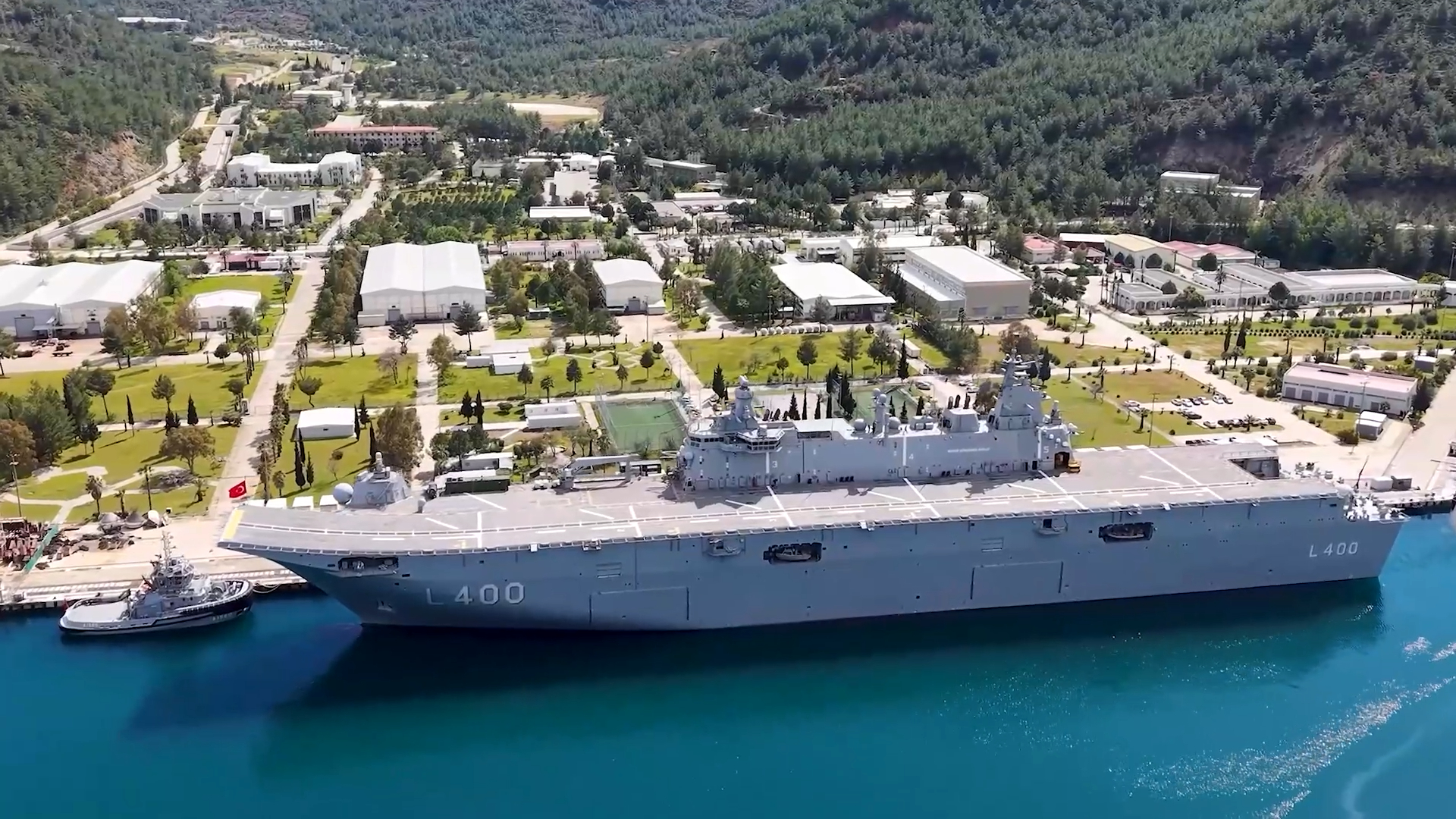
Electric propulsion technology has been utilized in the shipping industry for more than 100 years. The Navy's first electrically propelled ship, the aircraft carrier USS Jupiter, was commissioned in 1913. In the US Navy's 2019-2037 technology development roadmap for naval power and energy systems (NPES), naval electrification was called "a critical part of the kill chain" based on its electrification needs for high-power radars and networks, directed-energy weapons, mainly lasers (only an all-electric fleet can provide) for counter-unmanned systems and missiles, and prime mover propulsion for silent running and the severing of the logistical chain for refueling. In order to reduce fuel consumption on its Arleigh Burke (DDG-51) Class Destroyers since 2011, the US Navy has purchased 6 Hybrid Electric Drive Systems. In June 2020, the first full-electric stealth destroyer, the USS Zumwalt (DDG-1000, which has an onboard 78 MW power station supplying electricity to an advanced integrated power system), was delivered to the US Navy. With the first delivery of the DDG-1000 Zumwalt Class Guided Missile Destroyer (DDG(X)) in 2020 and the ongoing development of the Columbia Class Ballistic Missile Submarine, the US Navy is for the first time leaping into the use of electric drive propulsion and battery systems for warships, as opposed to just for support vessels. There are several factors that are affecting the Navy's drive toward platform electrification.
Designed and developed by a Spanish engineering genius Isaac Peral y Caballero, and launched on September 8, 1888, PERAL was the world's first electrically operated submersible in the 1880s that paved the way for more futuristic submarine designs to be developed across various countries in the world. On March 5, 2020, the Japan Maritime Self-Defence Force (JMSDF) commissioned its 11th Soryu-class diesel-electric attack submarine (SSK) SS-511 JS Ōryū in Kobe. JS Ōryū (SS-511) is the first-in-class boat to feature lithium-ion batteries. Previous submarines use Lead-acid batteries. Designed by GS Yuasa, the high-performance Li-Ion batteries are said to store about double the power. Korea is the second country in the world to field submarines equipped with lithium-ion batteries. South Korea's KSS-III Batch 2 Submarines also feature both AIP and Li-Ion Batteries (LiBs). The construction of the first submarine - the Lee Bong-Chang, began in August 2021 and is scheduled to be delivered to the ROKN in 2026. The construction of the second submarine began in December 2021 and is scheduled to be delivered to the ROKN by 2028.
Electrification of Military Vehicles in Türkiye
The propulsion systems used in land vehicles are one of the most important subsystems of the platforms, and the number of countries that have managed to develop these systems in the world is quite limited. Due to the embargoes experienced in the procurement of engines in important military vehicle projects such as ALTAY MBT and FIRTINA Self-Propelled Howitzer (SPH), both the Secretariat of Defence Industries (SSB) and Turkish Ministry of National Defence (MoND) have started to support indigenous military engine development and the electrification studies, including the ones covering the development and testing of hybrid variants of Armored Combat Vehicles (E-ZMA) and the FIRTINA SPH (E-FIRTINA). In this context, hybridization and electric propulsion system development studies are seen as a complement rather than an alternative, and studies within this scope have been supported by the SSB and the MoND, which have already launched manned or unmanned military vehicle programs featuring either fully electric propulsion system or a hybrid powerpack. Türkiye has made very important progress in this regard with the studies carried out in the last five years. When the existing powerpack projects are completed with all their variants, it will be possible to meet the needs of almost all land vehicles from 5 tons to 70 tons.
In March 2023, the SSB Engine & Power Transmission Systems Department issued the "Land Vehicles Powerpack Technology Roadmap Final Report," which covers all issues related to land vehicle powerpacks, including electrification technologies and hybrid propulsion, under one roof.
Turkish Land Platforms Sector companies such as Otokar, BMC, and FNSS have been making investments in the electrification of vehicles and developing and testing hybrid variants of their vehicles in recent years.
FNSS KAPLAN HYBRID
FNSS introduced the new version of its KAPLAN-10 Armored Combat Vehicle, integrated with a hybrid powerpack, at the IDEF 2023 16th International Defence Industry Fair. The Hybrid Powerpack development project began in 2021 at the FNSS R&D center. FNSS has completed the assembly of the first prototype vehicle, and activities for the development and improvement of control software are ongoing. The project aims to commence critical validation tests by the end of 2023. With this project, FNSS aims to develop an indigenous hybrid powerpack solution that can be integrated into future tracked vehicles, including modernization projects. There is even a possibility of having the Hybrid Powerpack in the 3rd batch of the APC modernization project.
FNSS aims to provide a reliable alternative solution for tracked vehicle transmissions, which are largely dependent on foreign suppliers and have a limited number of producers. The company also aims to resize the Hybrid Powerpack for tracked vehicles of different weights in the near future. Developed for tracked vehicles up to 20 tons, the FNSS Hybrid Powerpack could be adapted to new tracked vehicles and modernization programs according to user needs. FNSS' next step is to use our Hybrid Powerpack in 30/40-ton tracked vehicles like KAPLAN-MT. After completing the medium weight in the next 3-4 years, the project roadmap includes the possibility of developing a Hybrid Powerpack that can be used in Main Battle Tanks between 60-70 tons without depending on foreign suppliers within approximately the next ten years.
FNSS used the most commonly available and reliable commercial products, which are not subject to any export license, in their first prototype to make some validations faster. They also work with local solutions for electrical motors, including battery systems. Since electric motors provide incredibly high torque, KAPLAN HYBRID vehicles accelerate much faster than diesel-engine vehicles. For example, while the diesel-engine KAPLAN-10 Anti-Tank Vehicle reaches from 0 to 32 km/h in 9-9.5 seconds, KAPLAN HYBRID reduced this time to 5.5 seconds. The Hybrid Powerpack also provides a significant advantage in terms of fuel consumption. There is a 10% increase in the total range compared to diesel powerpacks. The average range in a diesel powerpack is 550km, while the vehicle's range can go up to 650km with a hybrid powerpack. Moreover, the vehicle's battery thermal management system allows all batteries to operate under desired conditions at -32 to +49°C.
FNSS SHADOW RIDER
Debuted for the first time by FNSS at the IDEF '21 Fair and based on the M113 Armored Personnel Carrier (APC), SHADOW RIDER is a family of modular autonomous Unmanned Ground Vehicles (UGVs) designed to meet the multi-operational needs of the modern battlefield and to support soldiers in complex and challenging terrains. FNSS aims for SHADOW RIDER to be a system solution that will reduce the human soldier's burden on the battlefield by becoming a force multiplier in full-spectrum missions. This is made possible by its advanced artificial intelligence-supported autonomy kit, which includes a comprehensive sensor suite for enhanced situational awareness and decision support systems for rapid and informed decision-making. These systems, combined with its positional and situational awareness systems, make the SHADOW RIDER a highly capable and intelligent platform.
The SHADOW RIDER, with its advanced autonomous mobility and remote command capabilities, is a game-changer in the modern battlefield. It can be deployed for a wide range of missions, including reconnaissance and surveillance, logistic support, tactical deception, communication relay, medical evacuation, and, most importantly, fire support. Its design allows for the integration of payloads suitable for these diverse tasks. The SHADOW RIDER also offers optional manned use, providing flexibility in operations. With a combat weight of 13.500 kg and the ability to carry a 4.500 kg payload, the SHADOW RIDER is a robust and versatile platform. It measures 5.5 m long, 3 m wide, and 2 m tall and can be transported by A400M or C-130H aircraft. The SHADOW RIDER can reach a speed of >50 km/h on asphalt roads, climb a 60% gradient and 30% side slope, cross 60 cm vertical obstacles, and have a trench crossing capability of 160 cm long ditches. It can be armed with multiple types of Remote-Controlled Turrets and Missile Systems, making it a formidable force on the battlefield.
FNSS has strategically planned the development of the SHADOW RIDER UGV. The SABER-25 turret system, also developed by FNSS, will be integrated into the vehicle. The company aims to develop 5 SHADOW RIDER prototypes in different configurations in the first stage of the project as part of the contract awarded by the SSB. These prototypes, currently featuring a diesel engine drive system, are expected to be equipped with a hybrid drive system in the later stages of the development.
Hybrid Powerpack Development Project
A Memorandum of Understanding was signed between BMC Power and FNSS on July 27, 2023, under the Hybrid Powerpack Development Project for Tracked Armored Vehicles. This memorandum is about developing hybrid powerpacks for tracked armored vehicles weighing over 20 tons (both manned and unmanned). Under this agreement, technical teams from FNSS and BMC Power will collaborate to determine the areas of cooperation. Initially, it was decided to develop a hybrid propulsion system because existing battery technology does not fully support an all-electric structure. This move also aims to solve the transmission issues in tracked armored vehicles. BMC Power's internal combustion engines for up to 20 tons do not meet FNSS's needs as Gensets. Under this agreement targeting cooperation for larger transmission and engine needs for the hybrid propulsion system to be used in manned and unmanned tracked armored vehicles weighing over 20 tons, technical teams from both companies will come together to work out details like how to drive with electric motors. This project is exclusively for tracked armored vehicles because a "Military Hybrid Propulsion System Development Project" had already been initiated by the Defence Industry Agency (SSB) under the Technology Acquisition Obligation (TKY) for the Powerpack Development Project for New Generation Light Armored Vehicles (UTKU) in 2021. In the project with a 36-month timeline signed in September 2021, BMC Power serves as the Main Contractor, ASELSAN as the TKY Project Executive, and BASE Studio as the Subcontractor.
AKREP IIe
In collaboration with AxleTech, which committed to providing innovative electric powertrain systems, OTOKAR unveiled the fully electric variant of the vehicle AKREP 4x4 New Generation Wheeled Armored Vehicle on April 24, 2021, at its facilities in Arifiye, Sakarya. Developed by OTOKAR as a private venture (funded from OTOKAR's own resources), the AKREP IIe prototype also debuted at the 14th IDEF '19 International Defence Industry Fair for the first time. Dubbed 'AKREP IIe, the prototype vehicle, technology demonstrator, was equipped with an innovative electric-based power and propulsion solution that consists of a highly efficient and powerful electric motor, advanced battery pack, and smart power control algorithm. Combining the advantages of greater maneuverability with a low acoustic and thermal signature, AKREP IIe is an excellent choice for conducting stealthy military operations.
As Türkiye's first fully electric light armored vehicle, the AKREP IIe features an infrastructure that will accelerate the transition to autonomous vehicles. Otokar already developed different configurations of the AKREP IIe, such as the Armored Reconnaissance Vehicle, Fire Support Vehicle (90mm gun), Light Weight Infantry Support Vehicle (25mm gun, the model displayed at the Fair), and Laser Gun Vehicle.
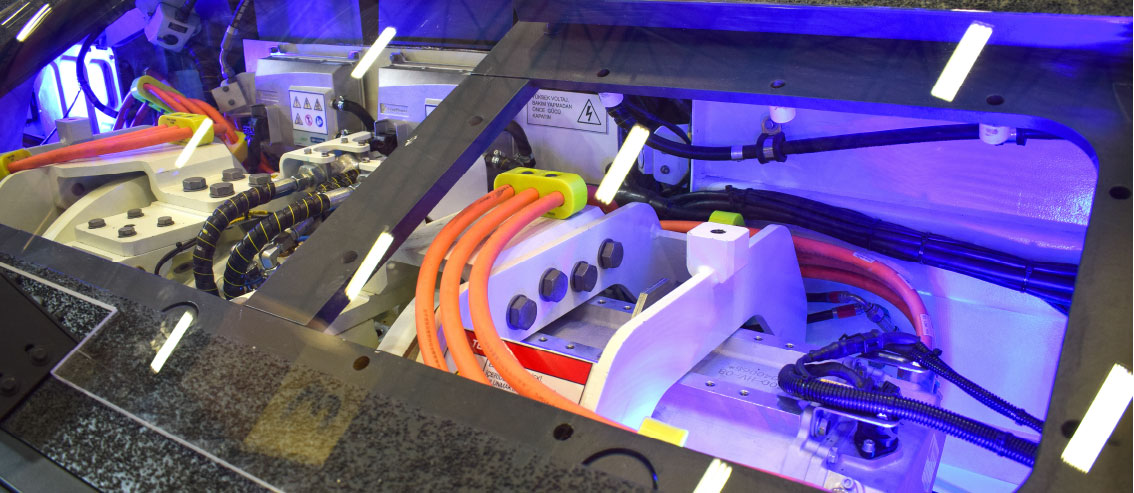
The novel fully electric drive/propulsion system on board the vehicle consists of a pair of alternators/DC motors (procured from AxleTech and each generating 180 kW, around 250 hp) and a pair of NMC540 Series new generation Li-Ion Battery packs manufactured by ALTINAY (which can be mounted both in the front and in the rear of the vehicle) and generate around 500 hp. With ALTINAY's NMC540 Series LiB packs, AKREP IIe has a range of 250 km on a single charge, and the battery packs can be recharged within 3 hours. The second version of the AKREP II is fitted with a 360 hp diesel engine.
Having a combat weight of 13.5 tons, the AKREP IIe offers similar ballistic protection capability to COBRA-II (according to open sources, the baseline vehicle is STANAG 4569 Level 3 compliant). Its armored monocoque hull is fabricated from high-hardness armor steel. The AKREP IIe also uses several common subsystems with COBRA-II and is being considered as a first step of OTOKAR into the field of unmanned combat vehicles.
E-ZMA & E-FIRTINA Debut at EFES-2024 Exercise
MKE showcased the hybrid drive E-FIRTINA Self-Propelled Howitzer (SPH) and Armored Combat Vehicle DAĞHAN H-620 for the first time at the EFES-2024 exercise. Within the scope of the project, the design, production, mechanical and electronic integration of the hybrid drive system, and the software development activities were carried out under a contract signed between MKE and ANZATSAN Engineering Inc. The E-FIRTINA Project aims to produce combat vehicles equipped with a hybrid propulsion system supported by next-generation software and systems, which are highly fuel-efficient, long-lasting, and have low maintenance costs. This initiative seeks to eliminate foreign dependency, particularly in engine and transmission, thereby strengthening the power of the domestic and national defense industry.
E-FIRTINA Project covers the integration of the Hybrid Propulsion System into the T-155 FIRTINA SPHs in the Turkish Land Forces inventory. MKE debuted the previous iteration of the E-FIRTINA prototype during the IDEF '21 Fair. According to the MKE Product Catalogue, the E-FIRTINA has an electric engine (2P2S) that weighs 680kg and can generate 1.300 hp (1.000 kW), a battery pack with a capacity of 387 kW as well as a pair of 30 kW diesel generators (the generators are automatically activated when the battery is at 60% capacity). E-FIRTINA's max torque of 3.000 Nm has more than tripled to 10.000 Nm thanks to the electric motor. Having a combat weight of 49 tons, the E-FIRTINA can reach a maximum speed of 65 km/h and accelerate from 0 to 30 km in 6 seconds. E- FIRTINA has a maximum range of 500 km at 15 km/h speed and 300 km when fully loaded, and the batteries onboard the vehicle can be recharged in 4 hours. According to MKE, the power/weight ratio of E-FIRTINA is 26 hp/ton, whereas the 49-ton FIRTINA SPH with diesel engine power pack (MT-881 Ka-500 diesel engine and Allison X1100-5 automatic transmission) has a power/weight ratio of 20 hp/ton. Full electrification of the vehicle also allows the removal of the APU (Auxiliary Power Unit) on the turret, further reducing weight. Using only the electric drive allows for silent movement of the vehicle or silent watch operations. In 2021, during the IDEF Fair, MKE's former General Manager Yasin AKDERE disclosed that the prototype vehicle would undergo 26 tests, and necessary modifications would be carried out based on user feedback.
The hybrid drive armored combat vehicle DAĞHAN H-620 was introduced for the first time at the exhibition. Displayed with the ASELSAN-produced 25mm NEFER turret, DAĞHAN can optionally be integrated with different caliber remote-controlled weapon systems according to operational requirements. Featuring a hybrid propulsion system that enables silent movement capability, the DAĞHAN can self-charge through its onboard generators. According to the MKE Product Catalogue, the DAĞHAN H-620, which falls within the 18 - 20 tone class, has an electric engine that can generate 630 hp, a battery pack with a capacity of 258 kW as well as a pair of 20 kW diesel generators (the generators are automatically activated when the battery is at 60% capacity). DAĞHAN can accelerate from 0 to 30 km in 4 seconds. The DAĞHAN boasts a range of up to 830 kilometers at full load and 860 kilometers at an empty weight. The batteries onboard the vehicle can be recharged in 4 hours. It was noted that the field tests of the DAĞHAN were completed very recently, highlighting its readiness for operational deployment.
Before debuting the DAĞHAN H-620, MKE previously had begun the development of the E-ZMA Hybrid M113 Armored Combat Vehicle (ACV) as a company-funded project in cooperation with the 2nd Main Maintenance Factory Directorate (MMFD) in Kayseri and unveiled a technology demonstrator prototype, to the then Minister of National Defence Hulusi AKAR and the accompanying delegation on October 2, 2020. Former MKE General Manager Yasin AKDERE has disclosed that the E-ZMA prototype has successfully passed 26 different tests, and thus, the development phase was completed. During IDEF '21 Fair, a contract was signed between the General Directorate of Military Factories and MKE Inc. on August 19, 2021, for the serial production and delivery of 50 E-ZMA Hybrid M113 ACVs to be fitted with a 25 mm Remote Controlled Stabilized Weapon System.
With the E-ZMA Project, MKE aimed to meet the new powerpack requirement of the venerable M113 Armored Personnel Carriers in the Turkish Land Forces inventory with national resources without being dependent on a foreign supplier and to reduce the operating costs and logistics expenses of these vehicles. The diesel engine power pack is replaced with a hybrid power pack comprising a pair of electric motors (generating 320 hp in total) and a battery pack with a capacity of 150 kWh. Having a combat weight of 15 tons, the E-ZMA could reach a maximum speed of 50 km/h and accelerate from 0 to 30 km in 6 seconds. E-ZMA had a maximum range of 650 km, and the batteries can be recharged in 4 hours