Flying Labs in the Skies: The Critical Role of Test Bed Aircrafts

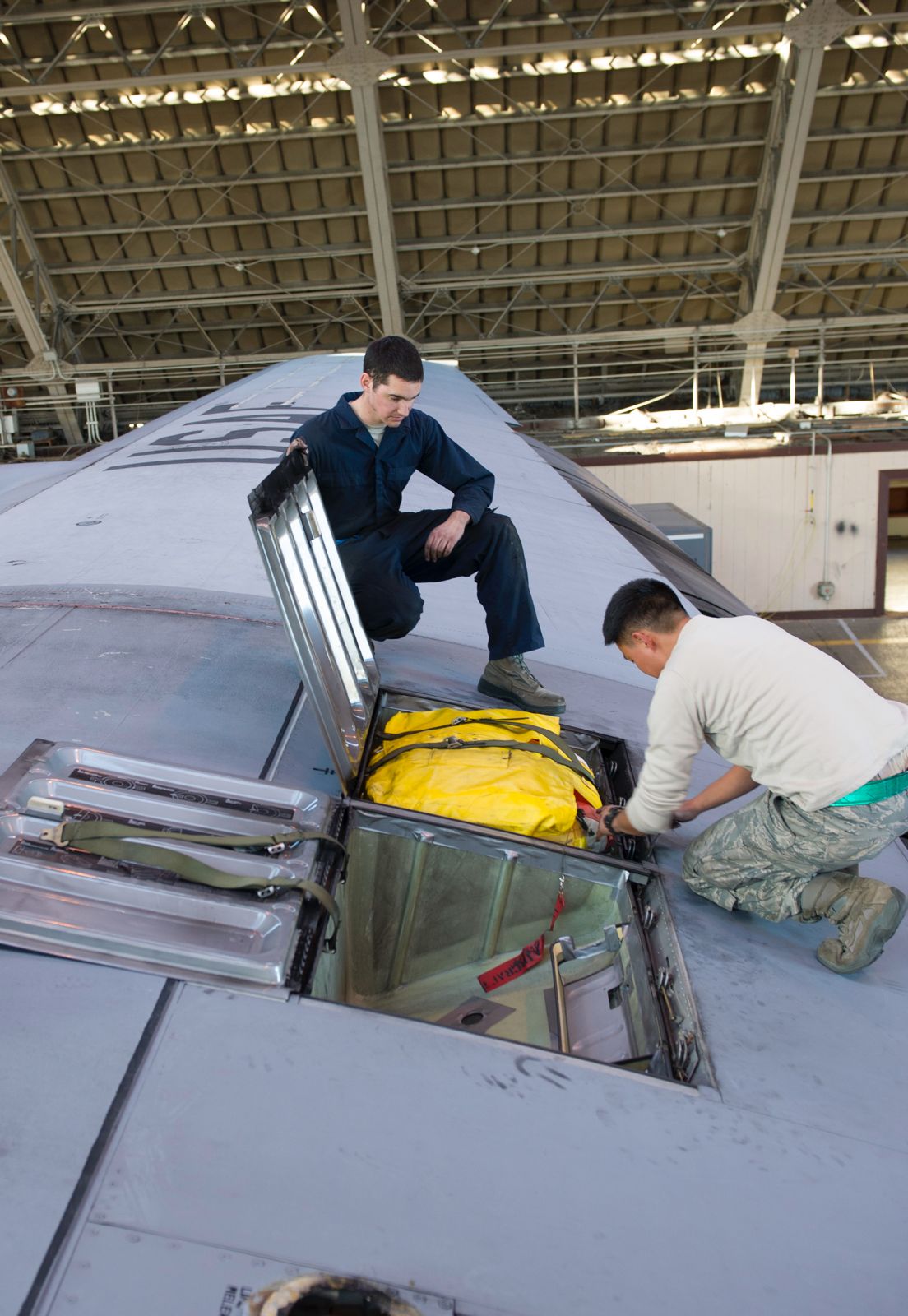
A test bed aircraft is defined as a specialized airplane used for developing, testing and evaluating new technologies, systems, components, or theories related to military or civilian aircrafts in a real-time flight environment. The term “test bed” is used because these aircraft serve as a platform for developments and testing of these forementioned technologies similar to how a ground-based development and testing laboratory provides a controlled environment for testing of these systems.. Simply, a test bed aircraft is essentially a 'bed' where new technologies and systems are “installed” and “tested” in real time flight conditions.
One of main usage of the test bed aircraft is to provide sufficient space (for hardware and engineers), cooling and electrical power to replicate flight conditions which require for those aforementioned systems to be tested under required flight conditions. Basically, a test aircraft provides a real-time environmental (attitude, speed, meteorological conditions etc.) conditions where the developmental systems (radars, avionics, or targeting pods, EW suites or a new operational software etc) can be tested under actual flight conditions. This helps in understanding how the new system/software performs in different flight regions or threat levels or environments such as bad weather, high or low altitude, temperatures etc. Moreover, certain scenarios of the flight testing might require testing of the new systems under specific flight or electromagnetic interference conditions that replicate the enemy’s capabilities. It is crucial to validate the functionality and performance of the new systems in a dynamic environment where a wide range of arial, naval or ground targets are presented from a military perspective. This validation includes checking the system’s operational accuracy, effectiveness or reliability in real time flight conditions. resolution, and ability to track and identify targets.
Moreover, a test bed aircraft allows for testing the integration of the new radar system with other onboard systems such as IFF, avionics, communication systems, and pilot HMD (Helmet Mounted Displays), EW (Electronic Warfare Systems). This integration activity in real flight conditions is critical for seeing the overall performance and usability of the new radar system in a new aircraft either a military/civilian plane or helicopter or an unmanned system. In addition, flight testing in a test bed aircraft helps in identifying any safety or reliability issues with the new systems. This is essential to ensure that the system’s reliability and performance meet the military mission requirements. For example, if a new radar system is being tested, the test bed aircraft can be used to observe the radar’s performance of detecting small or large radar cross section aircrafts in different flight conditions (high or low altitude) or in bad weather conditions such as rain or snow or cloudy conditions. Test flights generate a large amount of data which is crucial for analyzing the performance of the new systems or software. This data is used to refine the system’s operational software, fix any issues, and optimize its required performance parameters.
A Brief Survey of Major Test Bed Aircrafts Around the World
Major aerospace companies around the world employ test bed aircrafts for their projects that can range from the development of a fighter jet to a turbofan engine. All of these projects that employ a test bed aircraft have one common goal which is to simulate real flight conditions to observe the performance of their developmental systems or sensors or software and make necessary fixes and corrections to satisfy the requirements of the users. So, we looked at the test bed aircrafts of Raytheon, Northrop Grumman, Lockheed Martin, Boeing, Korean Aerospace Industries, SAAB, and BAE (British Aerospace Systems) and their current flight test activities.
Northrop Grumman Corporation: In recent years, Northrop Grumman has been actively involved in testing its AN/APG-83 AESA radar and NGEW (Next Generation Electronic Warfare system for F-16 Block-70 customers using its Bombardier CRJ-700 test bed aircraft.
The AN/APG-83 Scalable Agile Beam Radar (SABR) is an advanced AESA radar that enhances the F-16's capabilities by providing greater bandwidth, speed, and agility. This radar allows the F-16 to detect, track, and identify a higher number of targets more quickly and at longer ranges, and it supports high-resolution synthetic aperture radar (SAR) mapping for better target identification in all weather conditions.
Northrop Grumman's AN/ALQ-257 Integrated Viper Electronic Warfare Suite (IVEWS), called Viper Shield, has also been rigorously tested using CRJ-700 test aircraft. During the Northern Lightning exercise in 2021, the Viper Shield EW system was demonstrated to work seamlessly with the APG-83 radar in a high-density radio frequency environment. This integration showcased the ability of the Viper Shield to detect and counter advanced threats using advanced jamming techniques. This suite provides comprehensive protection and offensive capabilities through a software-defined architecture that can adapt to various threats. It was reported that the Viper Shield has successfully passed integration tests and is slated for further testing and production. All of these activities are accomplished with CRJ-700 test bed aircraft.
Raytheon Corporation: Raytheon’s Boeing B727 has historically been mostly associated with the development of advanced radars, which it can carry on flight tests in its distinctly modified nose (as seen above). This includes development and testing of new generation, GaN based, AN/APG-82 AESA radar which is used on the USAF’s new F-15EX Eagle II fighters. Raytheon's Boeing 727 testbed also carries a fairing under the forward fuselage that could accommodate various kinds of sensors, such as synthetic aperture imaging radars and multi-spectral cameras, and other systems that need flight testing.
Lockheed Martin Corporation: Lockheed uses a highly modified Boeing 737-300, Cooperative Avionics Test Bed (CATBird), for carrying the mission systems suite of the F-35 Joint Strike Fighter.
The CATBird is heavily used for integration and verification of the F-35's systems, including its Northrop Grumman APG-81 radar, electro-optical tactical targeting system, distributed aperture system, communications-navigation-identification system and electronic warfare suite.
Korean Aerospace Industries: Korea Aerospace Industries (KAI) is utilizing a modified Boeing 737 test bed aircraft as part of the development and testing program for South Korea’s KF-21 Boramae fighter jet. The primary purpose of this test bed is to evaluate various avionics and mission systems critical to the
KF-21's performance. This includes testing the Active Electronically Scanned Array (AESA) radar, which is essential for the aircraft's advanced targeting and detection capabilities. The B737 test bed is equipped with a range of sensors and electronic warfare systems, enabling comprehensive real-world testing in various flight conditions. The B737 test bed plays a vital role in ensuring that the KF-21 meets its design specifications and performance benchmarks. By conducting these tests on the modified Boeing 737, KAI can validate the integration and functionality of critical systems before their implementation on the
KF-21 prototypes. This approach helps to mitigate risks and streamline the development process, ensuring the fighter jet's systems are fully operational and reliable when deployed.
Lincoln Laboratory of MIT: On the contrary to previous examples of testbed aircrafts, a civilian institution, the Massachusetts Institute of Technology (MIT) ‘s Lincoln Laboratory, owns a SAAB 340 radar testbed aircraft to perform tests related to civilian/military radar projects that the Lincoln Lab is contracted by external sources or internal research and development projects of MIT. The Lincoln Laboratory is founded for designing and developing radar signal processing algorithms or related airborne research activities. One of the well known contracted involvements of the Lincoln Laboratory was about Northrop Grumman’s MESA L band radar which is installed on Boeing E-7 AEW&C aircraft (TuRAF also uses 4 E-7T Baris Kartali AEW aircraft). The Lab is contracted by the Australian Government who ordered six E-7 AEW aircrafts from Boeing in 1999 to perform certain performance tests on the MESA radar to make sure that the radar performance is satisfactory to its design parameters as promised by Northrop Grumman.
Rolls Royce (RR) Testbed Aircraft: One of the jet engine producers of the world, Rolls Royce Company, owns a Boeing B747-200 aircraft for airborne engine test activities. Airborne engine testing activity is the most critical part of the new engine development process before receiving a final flight certification from the authorities. Newly developed engines are initially tested in a land based jet engine tests facilities but eventually final testing activities are carried out using a civilian aircraft which is integrated with the new engine. Usually, one of the original engines of the aircraft is replaced with the test engine and it is taken to a different flight level on the testbed aircraft. All performance data are collected real time during these flights.
Turkiye’s Aviation Projects and Test Bed Aircraft Requirements
Turkish Defense Industry has been on the headlines recently and getting the attention of many defense analysts, journalists or militaries from around the world.
One of the defense projects that have been on the spotlights is Turkiye’s 5th gen national fighter aircraft project, or called KAAN nationally. Without a doubt it is the most ambitious aviation project of Turkiye since the establishment of the Turkish Republic in 1923. The aim of the project is to design, develop and produce a 5th gen. fighter aircraft for Turkish Air Force requirements. TUSAS is the main contractor of the project while other Turkish defense companies such as Aselsan are working as a subcontract to supply avionics, mission systems, and other aircraft subsystems. It wouldn’t be wrong to say that it is the most strategic and challenging project of the Turkish Defense Industry.
As it is stated in the previous section of this article, the design and development of avionics and mission sensors of the KAAN project would require flight testing and certification of the operational flight software, flight control systems, radar, electro optical sight systems, and electronic warfare systems before actual flight tests and deliveries to the Turkish Air Force. A certain aspect of the development and flight certification process can be done on the ground using system integration labs or digital copy of the aircraft but to observe actual performance of those mentioned systems in the air with real flight conditions and also to check software and sensor improvements after initial flights and operational use require extensive flight testing. Since it has been revealed that the KAAN project will progress with block by block approach, we would be seeing flight software and sensor improvements in each block. So, the TUSAS’s test bed aircraft would be busy to complete necessary flight testing activities of the software and sensor improvements before handing over each block to the Turkish Air Force. We should expect to see the following systems which could be integrated and functionally tested on TUSAS’s test bed aircraft:
KAAN’s MURAD-600A AESA Radar
IRST (Infrared Search and Tracking System)
EOTS (Electro Optical Targeting System)
Complete EW (Electronic Warfare Suit including RWR, MWS, LWS)
Mission Computers and Operational Flight Software
During the flight testing process, it would be possible to observe TUSAS’s test bed aircraft to conduct flights near Konya’s EHTES Electronic Warfare Training area or even Roketsan’s Sinop test field. These test flights in those mentioned locations would perform functional tests of the software and sensors under actual electronic warfare/ radar threat conditions or in some cases test bed aircraft can be flown against after military aircraft to observe software and sensor performance. All of these activities would have one common goal: complete and check the performance of the software and sensors before fully installing them into the prototype jet ( or related block of the KAAN). In fact, we would expect to see the flight testing and development activities of the software and sensor even after the delivery of the initial block KAAN aircraft to the Turkish Air Force.
Similar to the other international fighter jet projects, we should expect TUSAS (and ASELSAN) to procure a flying test bed aircraft and modify it for those flight test activities. As it is seen in similar projects, most aviation companies procure second hand hand aircraft for this role. Selection of this test bed aircraft is also based on certain needs of the project and must provide necessary performance requirements for the project. One of those requirements could be that the test bed aircraft must produce enough electrical power for those developmental systems. Other requirements could be having enough internal space, speed, and flight altitude capability ( such as being able to reach to 45-50,000 feet of altitude).
In addition to be used on the KAAN project, we would see TUSAS’s testbed aircraft that could potentially be used for testing activities of the F-16 ÖZGÜR-II Project as well. TUSAS and ASELSAN are currently developing on F-16 ÖZGÜR-II modernization project that covers integration and development of Aselsan’s MURAD-100 AESA radar, new MFDs, Aselsan Mode-5 IFF, mission computers, EW and Operational Flight Programing (OFP). As one may recall, in 2012, one of the ASELPOD targeting pod prototypes developed by Aselsan was installed on the TurAF CN-235 Light Transport aircraft, and test flights were carried out for engineering verification purposes. Similarly, TUSAS can use the testbed aircraft in the testing processes of new generation reconnaissance/surveillance, targeting, or EW pods to be developed for the F-16 aircraft under the ÖZGÜR project.
Considering TUSAS’s experience with working on Bombardier’s G6000 SOJ EW Aircraft project, a selection of a second hand G6000 or similar business jet would make sense from operational needs and also from maintaining/flying the test bed aircraft for a long term. TUSAS have trained flight crew members already certified to fly G6000 and have ground personnel to maintain it. Not just for the KAAN project, the Turkish aviation industry would definitely need to operate test bed aircraft for future projects as well