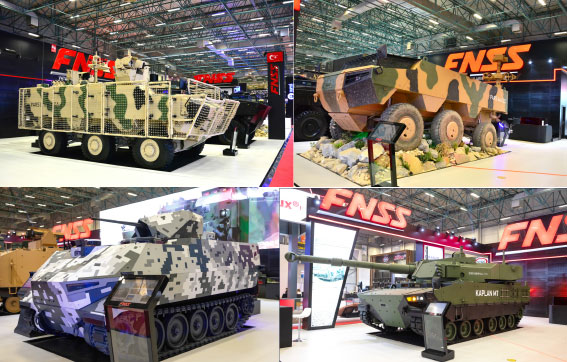
FNSS` Press Meeting for 4th Generation Armored Combat Vehicles, Autonomous Unmanned Ground Vehicle, and Turret Systems
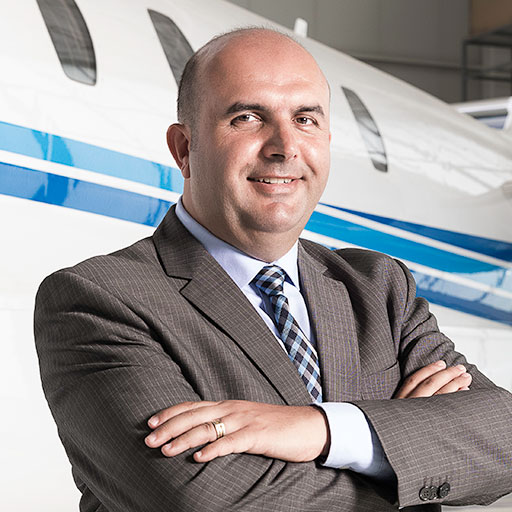
Speaking at the press meeting, FNSS Defense Systems General Manager and CEO Nail KURT stated that FNSS continued intensive efforts for the indigenization of critical subsystems on tracked and wheeled armored combat vehicles ranging from 10 tons to 35-40 tons in its product portfolio and said, "Minimizing foreign dependency in critical systems has always been our sole goal." KURT shared the following information about the ongoing indigenization efforts:
"In the vehicles we produce, we achieved record local content rate in land systems of their own class in Turkey. Beyond that, we have taken important steps for the localization of critical systems and subsystems, which are difficult to procure due to the developments in international relations, especially in the last three to five years. To briefly talk about these, we are using an increasing number of domestic engines. Also, together with our next-door neighbor Miilux OY, qualified armors of specific thicknesses, especially in terms of manufacturability, by giving them full support. We continue to work on extending this capability to a full spectrum.
On the other hand, you know the gun/cannon issue is quite critical, and we are working on the use of domestic cannon in one of our domestic projects, especially the 25mm, which is one of our first embargoed products. I will briefly mention the details a little later. I can say that in the last two or three years, a new stage has been passed. While a large number of sub-components have been produced to date, we have, of course, increased the local content rate both in terms of workmanship and materials, but it would be appropriate to say that we have entered a new era in critical subsystems. Buying all powertrains from abroad, considering the production quantities, was generally a cost-effective option in the automotive industry. Almost all the powertrains of our PARS class vehicles, including several critical gearboxes, were redesigned and indigenized due to the embargo. In this new era, we will see that all these systems are produced domestically."
KURT underlined that they received quite critical feedback from the field due to the fact that the Turkish Armed Forces (TAF) is a very active and effective army, it has been actively functioning in three different regions for about five years, and that it sometimes undesirably engages in conflicts, and noted that all such feedbacks from the user were integrated into the new design vehicles. KURT: "We strive to respond to every issue that our customer or user has a problem with and feels threatened, and we try to make the vehicles more resistant against them. Furthermore, the environment is not a symmetrical environment; it is asymmetrical. Therefore, both symmetrical and asymmetrical counter-elements were taken into account in all of our newly designed vehicles. We designed our new vehicles in a highly open architecture where we are able to integrate new countermeasure systems that can be developed to at least against them."
KURT also gave information about the PARS IV 8x8 New Generation Wheeled Armored Vehicle, which they developed to meet the 8x8 vehicle needs, constituting the first stage of the New Generation Light Armored Vehicle (YNHZA) Project that was launched for the first time at the IDEF '21 Fair.
"The power unit of the vehicle, with a total weight of just over 35 tons, was designed to meet this need without compromising mobility and even to provide superior mobility. Again, the vehicle was designed with an open architecture to enable the integration of various armor and protection systems and according to the requirements stipulated by the Presidency of Defense Industries, in fact beyond the protection requirements defined so far. The two-man driver's cab in front, providing more than 180° of visibility and high situational awareness both to the driver and commander, which has become almost a standard in the PARS Family, is also available in this vehicle as standard. We attached great importance to the modular structure. With an open architecture, it is a vehicle that can perform any tasks to be defined, including Combat Vehicle, Reconnaissance Vehicle, Command Control Vehicle, Personnel Carrier, and can easily operate day and night in all terrain and weather conditions. Situational awareness is extremely high. Front and rear vision systems are commanded directly by both the commander and the driver. We also have a vehicle that can make it 360° or provide vision beyond armor. They will certainly be defined and determined as per the user requirements. The mobility of the vehicle increases more thanks to the extremely balanced load distribution of the vehicle between the axles. Again, on account of the graded, height-adjustable suspension system, which we design and manufacture domestically in Turkey (not an imported material anymore), we also achieve significant improvements in the mobility of the vehicle. Thanks to the all-wheel steering system, which we have also made a standard in the PARS Family, the turning radius of the vehicle is extremely low. The vehicle has the ability to turn in a radius of its own length. I leave it to your appreciation of how important it is to operate in urban areas, especially considering the asymmetrical environment.
Again, it is a vehicle, the design and development activities of which were entirely conducted by FNSS, and the IP rights completely belong to us. On the other hand, although it was designed according to TAF's needs, we are confident that it will achieve critical export success. A huge turret is available on top of the vehicle; this is the 35mm TEBER 35 Remote Controlled Turret. Again, it was designed as per the requirements of our user. It also has an open architecture, which allows the use by both the commander the gunner and can provide an independent vision system to the commander when necessary. It has a dual ammunition feeding system, depending on the threat definition. The user will be able to choose and use one of two according to his needs. Since the turret has no basket and due to its remote-control system, it is quite beneficial for in-vehicle positioning. Commander and gunner will be able to sit wherever they want and use the system however they want. And TEBER 35 is certainly the highest caliber gun turret we have ever produced..."
KURT also gave information about the PARS IV 6x6 Special Operations Vehicle, which was right next to the PARS IV 8x8 Next Generation Wheeled Armored Vehicle at the booth. The PARS IV 6x6 Special Operations Vehicle, developed within the scope of the 6x6 Mine Protected Vehicle Procurement Project signed between FNSS and the Presidency of Defense Industries, was designed as a vehicle beyond the existing vehicles with its firing capability for special operations, effective protection against IEDs, its survivability infrastructure including high-level mine and ballistic protection, and its new generation technology mission equipment. The 12.7mm SANCAK Remote Controlled Turret System, designed as part of FNSS's PARS III 8x8 and 6x6 export project and first included in the inventory of the Oman Armed Forces, also constitutes the main firepower of the PARS IV 6x6 Special Operations Vehicle.
KURT said the following about the PARS IV 6x6 Special Operations Vehicle:
This vehicle is more privileged because it started its journey through a direct order received from Land Forces. We developed this vehicle in line with the requirements identified by our Land Forces for special operations. Why PARS IV? Because it is a very special vehicle in terms of active/passive protection measures and structure. In its weight category, no vehicle in the 6x6 class with such protection is available in the world. In particular, mine and IED protection was achieved at the desired level, and the related tests were conducted. I also want to proudly say that it has a higher level of mine protection than any MRAP vehicle. As I mentioned previously, it is a vehicle designed for special operations, enabling maximum connection between vehicles and situational awareness. It has two turrets (SANCAK Remote Controlled Turret). They are equipped with different weapons as per the request of our user. There is a 50-caliber machine gun at the front and a 40 mm grenade launcher at the rear. In addition, a 7.62 mm machine gun can be mounted on the turret, if requested. Again, we have developed a vehicle, weapons of which can be changed flexibly according to the threat definition of our user. The mission equipment of the vehicles consists of high-tech systems, including simultaneous safe, uninterrupted communication between subordinates and superiors, high situational awareness, effective command, and control capability. ASELSAN subsystems were utilized to a great extent in this vehicle. Our Sniper Acoustic Sound Detection System operates in coordination with the turret. It informs the turrets about the threats it receives and automatically ensures that the turrets are directed to the related threats. Again, the most advanced systems developed in Turkey regarding jammer systems were integrated into this vehicle. In addition to the armor protection, as you can see, there is a protective net which we call RPG-Net. It has considerable protection against RPG threats. These can certainly be changed as per the terrain they are used at. It was designed to be easily detached and disassembled. There is again a ride-height adjustable independent, hydro-pneumatic suspension system available on it. It provides over 180° of visibility and high situational awareness both to the driver and commander. All-wheel drive and all-wheel steering also make the turning radius of the vehicle extremely effective, especially for use in asymmetrically threatened areas. It is a vehicle that can be easily utilized in residential areas with a quite low radius. It is a very good example of a vehicle designed to be utilized in an asymmetrical environment. It was also subjected to rigorous tests. We even conducted two mine tests and 1 IED test on the same day. If you come to FNSS, you will see the hull is still in very good condition. Indeed, our user is also struggling under very difficult conditions, and we strived to develop a vehicle worthy of them; I believe it was quite successful. The turrets on it were designed in such a way that all kinds of 7.62 - 40mm weapons can be easily disassembled and mounted. We, as FNSS, define both PARS 8x8 and 6x6 as the 4th generation. When the height of power groups, mobility capacity, and protection capability is considered, I confidently express that both vehicles have more pluses than minuses compared to the new generation vehicles designed abroad, especially in the West."
The third vehicle introduced by FNSS General Manager and CEO Nail KURT at the press meeting was the heavy class GÖLGE SÜVARİ/SHADOW RIDER Unmanned Ground Vehicle (UGV) built on the M113 ZPT platform. GÖLGE SÜVARİ Unmanned Ground Vehicle is a project carried out by SSB, and at the SSİK meeting held before the IDEF Fair, a decision was taken to purchase 5 vehicles. In the first stage, the autonomous capability was not requested. Since this capability was later included in the requirements, it was considered that the previously foreseen budget would not be enough, so it was decided to publish a new Project Definition Document. As of August 2021, the related document had not yet been published. The GÖLGE SÜVARİ UGV can currently be commanded in line of sight with the help of a radio link but will have beyond-line-of-sight command capability in the future. There is a cover at the rear of the vehicle so that it can perform a task such as evacuating the wounded during the residential area conflict or at the battlefield, if necessary.
KURT shared the following information about the GÖLGE SÜVARİ UGV:
"At the last Fair, we exhibited the SHADOW RIDER (GÖLGE SÜVARİ) concept on an M113 vehicle that was equipped with a very simple remote-control system. It attracted far more interest than we expected, and then it turned into a project. We worked together with the Presidency of Defense Industries. It turned into a project with a very low budget. Detailed studies were carried out with our user on what could happen according to the requirement list obtained from the field. As a result, we realized that this defined project would not be sufficient. The project has significant requirements for weapon systems, different turret integration, expanded mission envelope, and a need for a certain degree of autonomy, which we did not consider at the beginning of the project. This excites us. Therefore, we envision a vehicle that will also provide a certain degree of autonomy. This can be realized in different ways. When communication is lost, the vehicle can return to its base in a predetermined manner or return after performing a reconnaissance mission on a predetermined route. Various definitions are currently being prepared. I think the scope of the project will become more definite at the beginning of next year. The base vehicle design and infrastructure is progressing with an open architecture to respond to all these requests. We designed the vehicle to incorporate all kinds of infrastructure in the communication network. Therefore, we have all kinds of options, from a very simple line-of-sight (LoS) command that can be connected to any integrated network, to any integrated network that our Land Forces, Armed Forces, and security forces will use, to a level that can be connected to a much higher-level umbrella communication network. This will also be provided as per the request of our user, our Armed Forces. Situational awareness is quite high. If you ask why there is no user in it, it's because there are 360-degree vision systems and sensor systems to convey all kinds of information to the user at the base. This also applies to the vehicle itself when it operates autonomously. We believe it is able to fulfill any task in this sense. When you see the Weapon Turret, the reconnaissance-in-force mission may come to the fore, but it can fulfill several tasks in terms of logistics, support, transportation, and supply. It can participate in combat engineering missions. Once the patrol mission is defined, it can do this autonomously and transmit the information it has obtained to the base. It can fulfill convoy tracking. In very risky areas, it can go ahead and take the role of the victim against various explosives and traps for the safety of personnel and elements behind. We think that it can evolve towards a design suitable for all kinds of missions, and our negotiations continue within this framework. As you see, the possibilities are unlimited, so we need to define them well. The process took a little longer, but I hope that in 2022, we will be able to announce that the definition of the project is finalized, and the contract is signed. The 25mm SABER Unmanned Gun Turret is available on the vehicle, which is much smaller than the turrets we produced before, and it was designed specifically for this vehicle. It is remote-controlled, but it is very important to have the necessary safety elements since this time it would be really remote-controlled. The remote-controlled vehicle fails and stops, but the unintentional movement and firing of the gun turret can create very undesirable circumstances. Another element that arises as we work on such vehicles is user security/safety. Vision systems, sensors, detection systems, and the elements defined in the software become quite critical in terms of the safety of the personnel and other vehicles next to the vehicle while operating with live-friendly elements, not the security/safety of the remote user. In this respect, our aim is to develop a vehicle able to make all kinds of detections and have all kinds of awareness around it. In this regard, I am pleased to express that all such elements have already been defined."
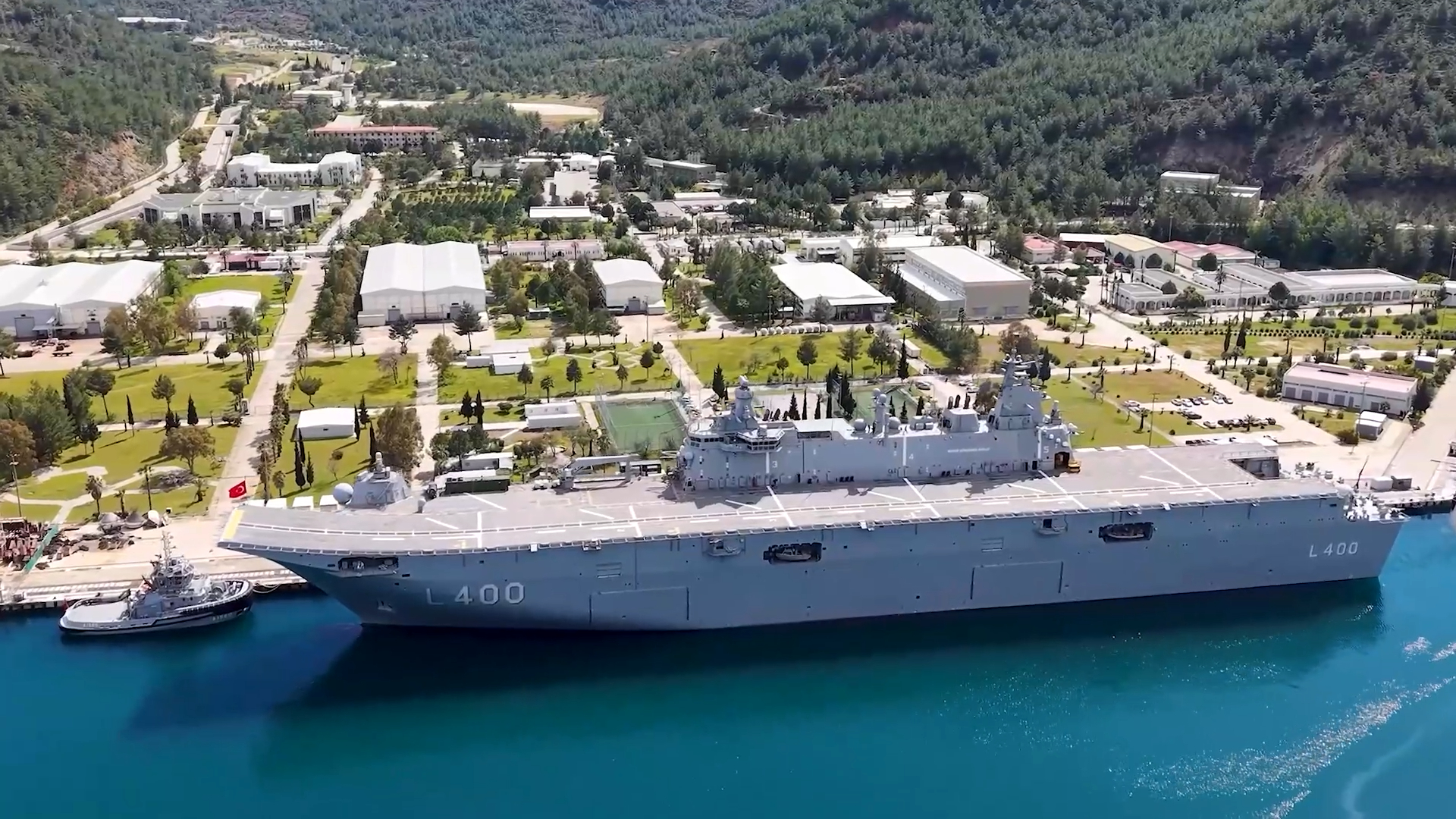
In his speech, KURT also talked about the Armored Amphibious Marine Assault Vehicle (MAV), which was developed within the scope of the project, the procurement activities of which were carried out by the SSB to meet the amphibious armored vehicle needs of the Turkish Naval Forces Command. The ÇAKA Remote Controlled Turret System, named after the great Turkish sailor, ÇAKA Bey, attracted quite an attention at the FNSS booth. ÇAKA Remote Controlled Turret System, which was produced according to design requirements, MAV technical specifications, and conditions of use, was designed to offer the most appropriate solution for its intended use.
KURT shared the following information about the Armored Amphibious Marine Assault Vehicle (MAV):
"We had launched the MAV Vehicle at the previous Fair, this time a new Gun Turret is available on MAV which we could not demonstrate at the previous Fair. It was named after the great Turkish sailor, ÇAKA Bey, which we decided together with our user. In accordance with the user's requirements, two separate guns, a 50-caliber heavy machine gun, and a 40mm automatic grenade launcher were mounted on it. The turret was designed like a marine system. As you know, the MAV is able to operate under extremely difficult sea conditions. In this respect, we prioritized the suitability of the systems on the turret with these difficult conditions. It differs from our other turrets in terms of both corrosion resistance and sealing. It was developed to survive long-term conditions in the sea and on land and to resist salty seawater. The tests were successfully completed, and the tests of the MAV are about to be finalized. The final Qualification Tests are currently in progress in Izmir with our user. We will start MAV deliveries in 2022. As you know, the MAV delivery schedule has to be in parallel with the LHD Anadolu delivery schedule as the vehicles will be used on our LHD ships."
Q&A Session
FNSS General Manager and CEO Nail KURT answered our questions about the vehicles following his speech.
Defence Turkey: Could you inform us about the power group used in GÖLGE SÜVARİ (SHADOW RIDER)? Is it a diesel engine or a Li-ion battery set? Could you give information about the service life of the vehicle? Is there any request for armor protection on the vehicle? Does the vehicle have a self-destruct feature if captured by enemy elements in urban missions?
Nail KURT: This is a project we kicked off with a very modest budget. We have a certain number of M113 ZPT vehicles that came from the U.S. free of charge, and we started this project from there. That's why we made an M113 vehicle and a vehicle powered by the original diesel engine remotely controlled. There is currently no hybrid or electric use. It may be in the next stages, but there is no battery in the vehicle at this point. This is all about the project economization. We could have made it for the KAPLAN series, we could have produced a vehicle from scratch, but this is completely in line with our customer and SSB, and also, the project budget was prepared accordingly. Here, the base vehicle is now a box, considering the developed and newly designed electronic infrastructure, situational awareness, and communication systems. This box can turn out to be a new box, a new vehicle if the requirements are specified. We haven't touched the vehicle part much; there is also the option of manned use. Therefore, we had to arrange the structure in which a man fit when necessary, so we left the vehicle as it is. The protection level is the same as in the M113. It can certainly be increased, intensified, or reduced. Here, the mobility as well as the information flow -the ability to obtain information and transfer it to the base- are at the forefront. Definitions were not made much on the protection side. High protection may not be requested because, in some scenarios, it will play the "victim vehicle" role, aiming to detect the enemy's position and to see who is firing from where. As far as I remember, even base protection was not defined. If it is used with a human inside, the base protection of the M113 will remain; we do not touch it. The self-destruct capability was also discussed; we can also make it with a single button if requested. This feature is actually being discussed for other vehicles because similar situations have occurred in the past two years, but we haven't received any requests about it yet. Applying this feature isn't that difficult compared to other subsystems I've mentioned. We can apply basic features, for example preventing the restart and mobility rather than completely destroying the vehicle because the other option will lead to the risk of carrying a large amount of explosives in the vehicle. Then again, it can be realized if requested by the user.
Defence Turkey: Is it possible to have a software-based capability to prevent the turret from being reused after the vehicle has been abandoned?
Nail KURT: If I remember correctly, this issue was discussed, but it was not concluded. This can also be easily achieved.
Defence Turkey: You mentioned the New Generation Armored Combat Vehicle Project. What would you like to say about the vehicle needs and requested configurations? You also mentioned the 35mm gun. Did the user define other caliber guns, for example, 25mm, 90mm, 105mm, etc.?
Nail KURT: The requirements related to the first part of the tender and the RFI have been published. Only the 35mm gun is defined there, but as far as we know, other weapon systems are also being discussed. The total number of vehicles is quite high, both wheeled (6x6) and tracked vehicles.
FNSS to Supply Additional Vehicles in Weapons Carrier Vehicles Project
The Presidency of Defense Industries signed with FNSS the contract amendment for the supply of additional vehicles within the scope of the Weapon Carrier Vehicles Project during the IDEF '21 Fair.
As per the decision taken at the Defense Industry Executive Committee (SSİK) meeting held on December 2, 2020, the supply of additional Weapons Carrier Vehicles in line with the needs of the Turkish Armed Forces (TAF) was approved. Accordingly, at the ceremony held at IDEF '21 on August 19, 2021, with the participation of representatives from the Presidency of Defense Industries (SSB) and the Ministry of National Defense, the Contract Amendment for the Supply of Additional Vehicles within the Scope of the Weapons Carrier Vehicles (WCV) Project was signed.
On April 30, 2021, the Ministry of National Defense announced on its social media account that within the scope of the WCV Project, 208 tracked KAPLAN vehicles from which KORNET-E or OMKTAS ATGM can be fired, and 136 wheeled PARS anti-tank vehicles will be supplied. Accordingly, the number of KAPLAN-10 WCV will increase from 184 to 208, and the number of PARS 4x4 WCV will increase from 76 to 136. Consequently, the number of vehicles to be delivered under the WCV Project will increase from 260 to 344.
A total of 260 amphibious tracked and wheeled vehicles, which are being produced as part of the WCV Project main contract, will have high ballistic and mine protection as well as the mobility to perform joint operations with armored units. Developed to quickly adapt to the needs that may arise in the future with the modular mechanical and electronic infrastructure, the vehicles carrying anti-tank weapon systems were designed as platforms that can be used for different missions with their armor-protected light structure compared to their equivalents in the world armies.
Within the scope of the project, the prototype qualification process was completed on October 18, 2019, and the first deliveries to the TAF started on January 19, 2020. As of August 19, 2021, nearly 200 KAPLAN WCV and PARS 4x4 STA vehicles were delivered in total. As of April 30, 2021, this figure had been announced as 113 vehicles, 94 of which were KAPLAN. In the project, the first phase of which is planned to be finalized in February 2022, the deliveries of additional vehicles are expected to start in 2023