Foreign Winds: International Players in Turkey
The presence of multinational companies is crucial in bolstering developing economies’ technological know-how all over the world. In its efforts to build indigenous capabilities, Turkey too has subscribed to coproduction and technology transfer policies. Such directives are especially necessary in the highly specialized and technical aerospace and defense (A&D) industry, and have been fuelled by the government’s strategic offset requirements and investment incentive schemes.
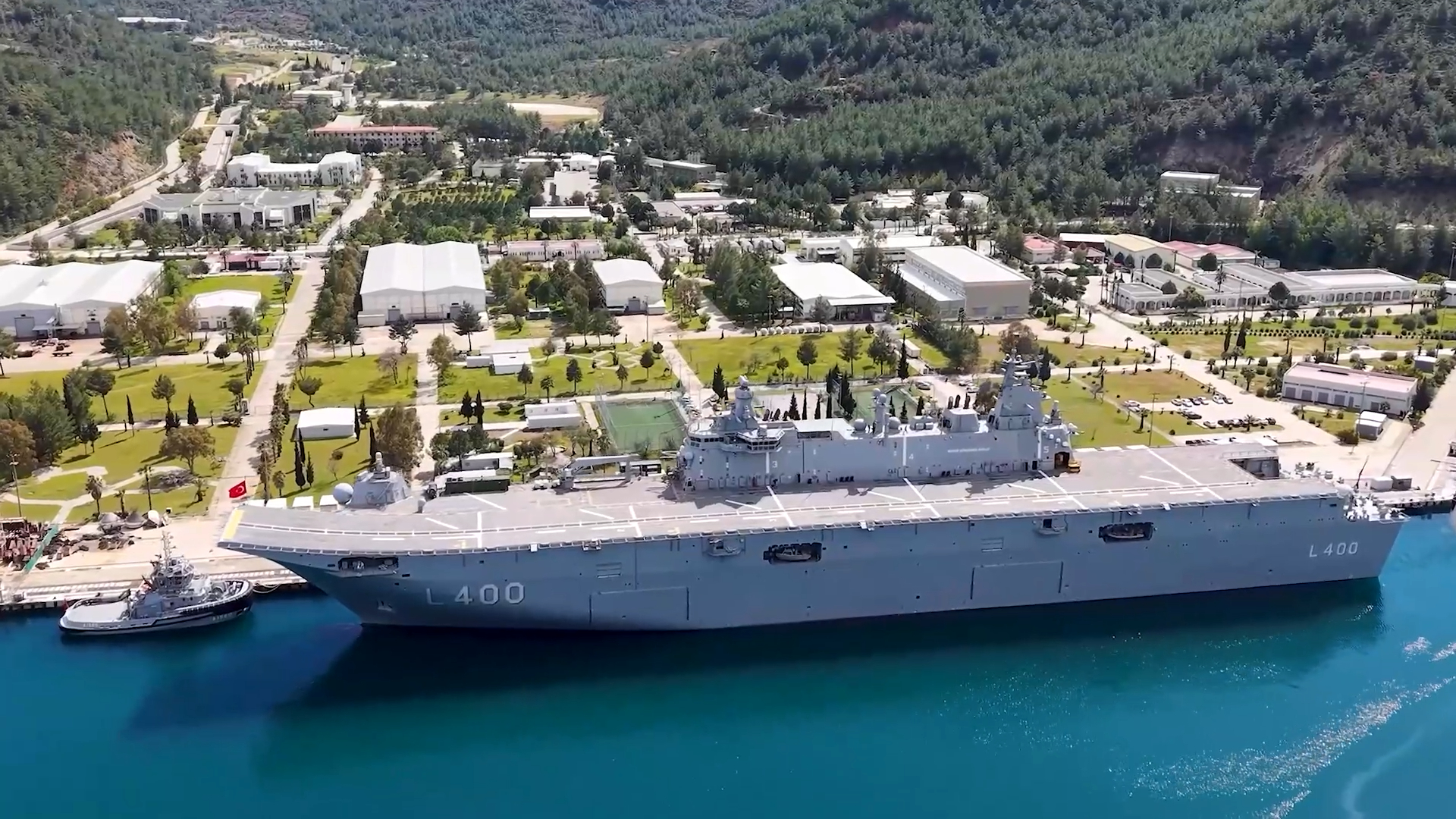
“During the process of the establishment of the domestic defense industry infrastructure, for the production of military weapons, vehicles, and ammunition, Turkey preferred to cooperate and co-produce with countries and companies that were seen as the leaders in this sector. This enabled many defense projects like MILGEM (the Turkish warship program), the ALTAY main battle tank, attack helicopter program, ATAK, and several unmanned aerial vehicle (UAV) projects to be successfully executed by our national defense industry,” said Investment Support and Promotion Agency of Turkey (ISPAT) president Arda Ermut.
Major players including Boeing, Airbus, BAE Systems, General Electric (GE), Sikorsky Aircraft, Fokker Elmo, PFW Pratt and Whitney, Rolls Royce, Honeywell and Bodycote have all penetrated the Turkish market, resulting in a dynamic local industry. Many of these international players benefit from Turkey’s export-oriented incentives such as VAT exemption, custom-duty exemption, and corporate-tax reduction, as well as social security-premium and interest rate support.
Turkey’s most notable international partners include both the world’s largest original equipment manufacturers (OEMs), Airbus and Boeing, whose presence has a tremendous impact on the local supply chain.
“Turkey is a huge market for both Airbus and Boeing, who are both selling a large number of aircrafts to the local industry. As Airbus and Boeing cannot simply sell aircraft and have to provide work to the local industry through offsets, local companies will strengthen their positions as aircraft sales increase,” said managing director of PFW Aerospace Werner Kuntze.
Both OEMs have developed longstanding relationships with Turkey, resulting in greater business volumes for local and international companies in the country. German company and subsidiary of Airbus, PFW Aerospace, for example, has grown its presence in Turkey by threefold in the last three years due in part to the extensive work it does with Airbus. Boeing too has maintained an important relationship with Turkey since the mid-1940s, and over the years built its network of local suppliers and partners up to 2,500 people, generating a business volume of more than 1.2 billion USD.
Another strong multinational partnership with Turkey’s A&D sector dates back to 1985, when GE made a strategic investment in the country. The world’s renowned engine manufacturer entered the Turkish market through a joint venture with local contractor Turkish Aerospace Industries, Inc. (TAI), the Turkish Armed Forces Foundation and the Turkish Aeronautical Association in Eskisehir. The resulting company is known today as Tusaş Engine Industries Inc. (TEI).
“GE Aviation made its first investment in the 1980s in establishing TEI and continued with TTC in 2000. Today TEI is a world class aviation company manufacturing over 700 high-tech, complex parts for 39 military and commercial engine programs and also provides MRO and AIT services for certain military engines regionally. TTC is focused on promoting aviation-related research & development and innovation for our aircraft, marine and industrial engines throughout their lifecycle with over 350 highly skilled Turkish engineers,” said GE Aviation’s regional general manager Ismail Sami Özdemir.
GE has announced a $900-million commitment to Turkey, $500 million of which has already been invested. The engine giant has also established its eighth Innovation Center in Turkey, as well as an aviation engineering technology center. Most recently, GE worked together with its local partner TEI on the development of its new LEAP engine, helping to grow Turkey’s local knowledge base.
Engine rival Rolls Royce has also made significant strides in Turkey, today holding close to 10% of the total local defense market share. The British power systems manufacturer supplies aero engines to the Turkish Armed Forces, power plants for the A400M and ATAK helicopters, and soon the engine for Turkey’s Light Utility Helicopter program. But aside from their commercial endeavors, the firm is investing heavily in Turkey’s research and development capabilities. Late last year, Rolls Royce signed a memorandum of understanding with the scientific and technological research council of Turkey, TÜBİTAK, to establish an Advanced Manufacturing Technology Center (AMTC). The initiative is part of its broader strategy for Turkey that includes building relationships through involvement in Turkey’s indigenous programs as well as developing strong local technological capabilities.
“To the extent we are able to, we aim for a designed-in-Turkey, built-in-Turkey approach, focusing on high-localization content and as much of knowledge transfer as possible,” said president of Rolls-Royce Turkey and Central Asia, Patrick Regis.
In a similar manner, international aerospace pillar Fokker Elmo has contributed its unique electrical wiring expertise to the Turkish market. The Dutch firm has established itself firmly within the Turkish A&D ecosystem, boasting a quarter century old relationship with the country.
“We are continuously adding more capabilities to our Turkish facility and by doing so introducing responsibilities and programs that otherwise would not have the ‘made-in-Turkey’ sign on it, and will further evolve to be able to serve customers directly without assistance of our parent company,” said general manager Mischa Baert.
Fokker Elmo performs specialized development and production of electrical wiring integration systems for various defense projects including the Airbus A400M, Boeing P-8A, Lockheed Martin F35 and AgustaWestland AW 159 and AW 101 helicopters. On the commercial side, the firm is beginning work on the Bombardier Cseries and Airbus A330neo.
As Turkey continues to invest in the development of its defense industry in line with its 2023 vision, international A&D players will continue to play a crucial role in its strategy. Having recognized the opportunities the country offers, many multinationals have already been drawn to its borders. “We are by far the largest economy in the region with a huge domestic market, a highly qualified labor pool and an advanced infrastructure. With these traits, Turkey is an excellent location as a manufacturing hub as well as a regional headquarters for international investors looking for new growth markets to tap into or manage their current regional operations,” said Ermut.
Moreover, Turkey’s offset policies and status as a NATO member serve as further incentives for foreign firms to consider entering the market. These factors can promote a favorable mutual exchange for investors and Turks, and help the republic realize its ambitious 2023 vision.