IDEF` 23 Gathers Industry Giants and Business Partners Under One Roof for its 30th Anniversary, Connecting them with Potential Customers in Emerging Markets

First organized in 1987 under the name IDEA and renamed IDEF under the aegis of the Turkish Armed Forces Foundation (TSKGV) starting in 1993, the International Defense Industry Fair celebrated its 30th anniversary this year. TÜYAP Fair Organization Group has successfully organized 12 of the 16 IDEF Fairs held in the last 30 years, contributing to the fair's development.
Since being organized in Istanbul in 2009, IDEF has also been known as the 'Eurasia Meeting.' It is the largest fair in the Eurasian region and the fourth largest Defense industry fair in the world in terms of the number of participating companies. The IDEF Fairs aim to introduce the national Defense industry to the world and bring domestic and foreign Defense industry professionals under one roof.
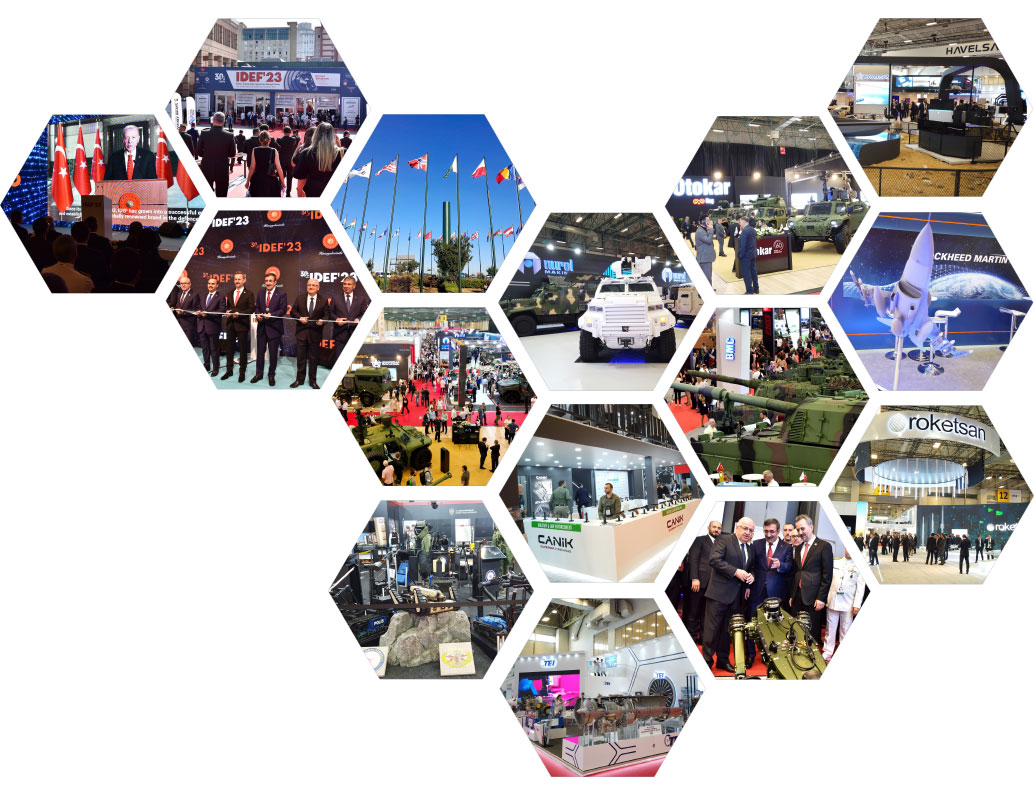
The IDEF '23 Fair has set a record in its 30th year in terms of visitor numbers, delegation numbers, participant numbers, and the number of signing ceremonies held. Lasting four days and featuring participation from 81 different countries, along with NATO, the African Union, and the Turkish American Business Council, IDEF '23, the 16th International Defense Industry Fair, hosted 689 local and 772 foreign companies from 54 countries active in Defense, security, maritime, aviation, and aerospace industries, totaling 1,461 firms. Visited by 94,198 people (15% foreign) from 107 countries, the IDEF '23 Fair saw official delegation invitations sent by the senior officials of the Ministry of National Defense, Ministry of Interior, and Defense Industry Agency to the Defense Ministers and top-level civil and military procurement officials of friend and ally countries. As a result, 187 delegations and 738 delegation members from 78 countries and 3 international organizations participated. Throughout the Fair, where the Turkish Defense Industry virtually showcased itself, nearly 200 systems and subsystems were introduced in various categories. During IDEF '23, 31 meeting offices were opened by the procurement authorities of the Ministry of National Defense, Ministry of Interior, and Defense Industry Agency, and 5,397 bilateral meetings were conducted with participating companies and delegations, along with 141 promotional programs, collaboration protocols, and contract signing ceremonies. On the 2nd, 3rd, and 4th days of the Fair, 5 Panels and 8 Presentations were organized.
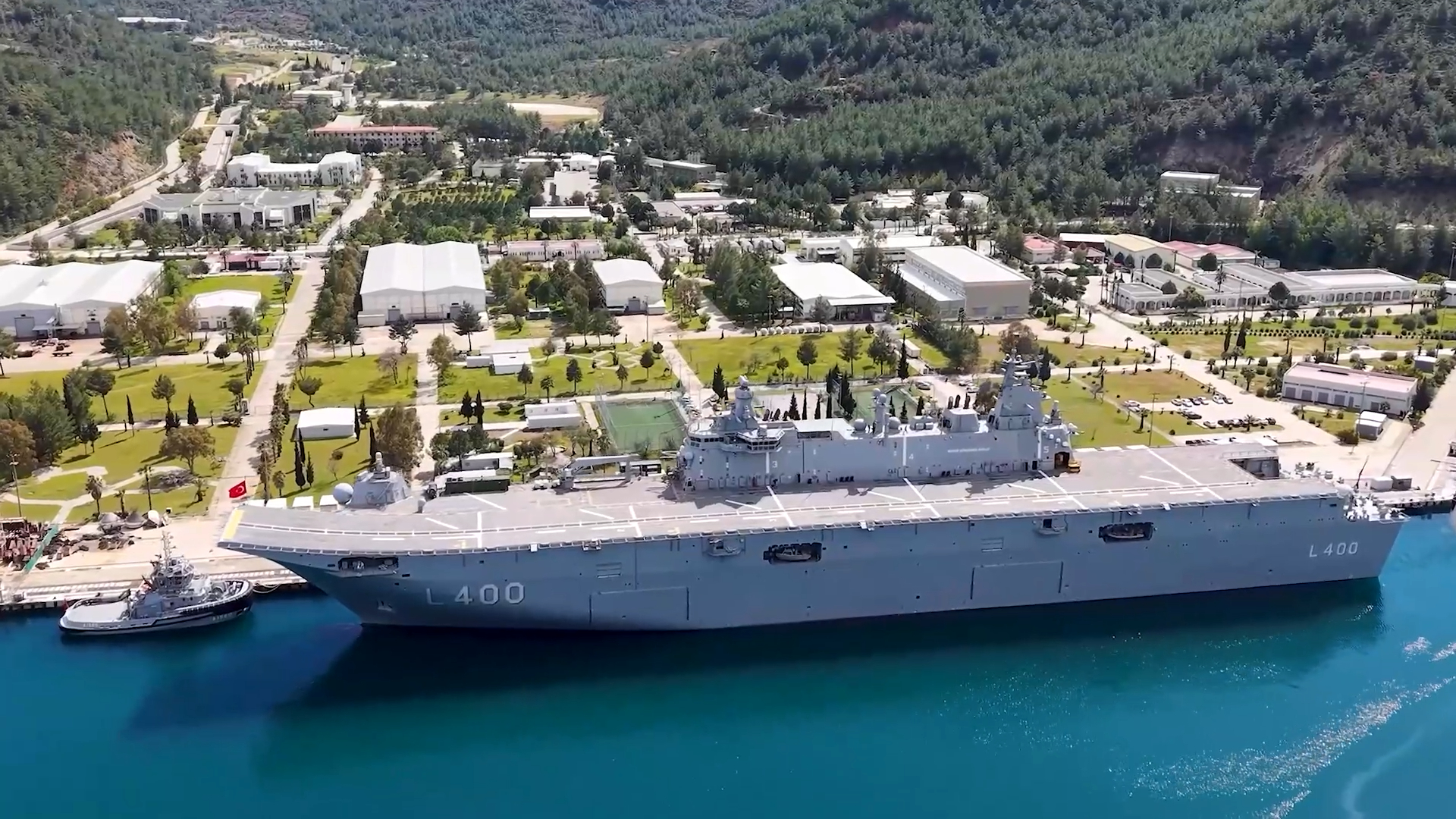
The Turkish Naval Forces Command's TCG Anadolu Multi-Purpose Amphibious Assault Ship (LHD), TCG Sancaktar Landing Ship Tank (LST), and TCG Heybeliada Corvette, all built in Turkish civil and military shipyards, participated in the fair by anchoring offshore in the West Istanbul Marina area in Büyükçekmece Bay. During the fair, 23 foreign delegations and/or ambassadors toured the ships and received information about their capabilities from the authorities. The TCG Istanbul Frigate, undergoing Sea Acceptance Tests (SAT) and planned to be commissioned before the end of 2023, also anchored offshore in Büyükçekmece Bay for a while but did not accept visitors.
For the first time in the history of the IDEF '23 Fair, a closing ceremony was held on July 28, 2023, with the participation of President Recep Tayyip ERDOĞAN. Reminding that he had participated in the Opening Ceremony via a video message, President ERDOĞAN expressed his desire to be especially present at the closing of the Fair. Wishing that the Fair brings good fortune, ERDOĞAN congratulated the Ministry of National Defense, the Turkish Armed Forces Foundation (TSKGV), and the Defense Industry Agency (SSB) for successfully organizing the Fair after an intense preparation period. President ERDOĞAN announced the total value of the contracts signed during the IDEF '23 Fair as TRY 56.5 billion.
In recent years, Türkiye, which has made significant strides in the Defense industry and is beginning to secure a solid place in the market, currently exports Defense industry products to 170 countries. The variety of exported products has reached approximately 230, primarily including Armed UAV solutions, land vehicles, and maritime platforms. The IDEF Fairs, which have turned into a significant international platform for promotion, marketing, and collaboration in Defense, security, maritime, aviation, and aerospace industries over the past 30 years, have made a significant contribution to sustaining the interest and demand of current and potential buyers in target export markets for Turkish Defense and Aerospace Industry products.
The IDEF '23 Fair left a positive impression in terms of showcasing the progress and future potential of the Turkish Defense and Aerospace Industry. Notably, the number of delegations, particularly from Africa and the Middle East, drew attention. Both the Middle East and Africa are two significant markets for the export of Turkish Defense and Aerospace Industry products. Topics such as partnerships in the Defense industry, local production, and technology transfers came to the forefront in bilateral meetings with delegations from African and Middle Eastern countries. Due to its high-quality products meeting NATO standards, competitive pricing, and openness to technology transfer, Türkiye has been garnering considerable interest in Middle Eastern and African countries. In recent years, triple-digit contracts have been signed for the export of Defense and aerospace products between countries in these two markets and Turkish Defense and Aerospace Industry companies. Information obtained from the discussions indicates that Turkish Defense and Aerospace Industry companies are now increasingly seen as long-term solutions partners in the fields of Defense and aerospace by some countries in Africa and the Middle East. Over the past 30 years, the IDEF Fair has evolved into a leading brand in the sector, and there was also substantial interest from China. More than 70 Chinese companies participated in the fair, operating in various fields ranging from military textile products to air Defense systems.
The next Fair IDEF '25, the 17th International Defense Industry Fair, is expected to be held in Istanbul in 2025.
Notes from Company Booths at
IDEF '23
ASELSAN
In recent years, ASELSAN has become a highlight of the IDEF Fair, participating with the largest exhibition area. As in IDEF '21, the company attended this year's fair with a 7,000 square meter booth area, showcasing nearly 500 products, 200 of which are new. These span various domains including naval, aerial, air Defense, border-coastal security, communications, electronic warfare, electro-optics, and weapon systems, demonstrating its engineering prowess in these areas.
Under the concept of "The Golden Age of Indigenization," ASELSAN unveiled several innovative solutions at IDEF '23. At its indoor exhibition space in Hall 11 and at its outdoor booth 1100-A20, the company introduced a range of novel solutions for the first time, gaining global attention. These included the GÖKDEMİR Air Defense System, EREN Forest Surveillance Radar, GÖKBERK Mobile Laser Weapon System, YILDIRIM-100 Directional Infrared Countermeasure (DIRCM) System, GÜRZ Air and Missile Defense System, GÖKSUR Close-in Weapon System (CIWS), KORKUT Self-Propelled Anti-Aircraft Gun System mounted on ARMA 8x8, ERALP Portable Early Warning Radar System, EJDERHA Electronic Warfare System (mounted on ARMA 6x6), SÖKMEN Electronic Support System, ERTUNGA Medium-Class Second Level Unmanned Ground Vehicle (UGV), and TUNGA Medium-Class Second Level UGV. Additionally, scaled models of the AKINCI UAV Stand-Off Electronic Support/Electronic Attack (ES/EA) System (UAV SOJ) in both REDET and ELINT/SIGINT versions were showcased. Systems like Integrated AYI and OPKAR Portable Electronic Attack Systems mounted on the AKSUNGUR Armed UAV model, and the GÖKKUBBE Modular Fire Control System were also among the products introduced for the first time at IDEF '23.
The ASELSAN booth, representing a company that exports its nationally engineered systems to 84 countries, drew considerable attention for its life-size, moving model of the GÖKSUR Close-in Weapon System (CIWS) in its Autonomous configuration. Previously, a scaled model of this system was introduced under the name GÖKDENİZ ER. ASELSAN is developing the GÖKSUR system in collaboration with TÜBİTAK SAGE, positioning it as a competitor to ROKETSAN's SUNGUR MANPADS-based LEVENT-I/II CIWS solutions for naval platforms. The fully Autonomous GÖKSUR CIWS is designed to operate either independently or integrated with the ship's Combat Management System (CMS). It features 12 IIR-guided BOZDOĞAN-DH (Surface-to-Air) Missiles equipped with a two-way RF data link from TÜBİTAK SAGE, providing mid-course guidance capabilities. The system has a 360-degree rotation capability for threat interception/destruction. It is equipped with EO sensors on an independently moving gimbal, four AESA antennas on both the front and rear, and a central 12-cell launcher. Several improvements/modifications are being made for the BOZDOĞAN-DH Missile for shipboard use. The Autonomous configuration of the multi-target capable GÖKSUR CIWS will use the AURA AESA radar for target detection and tracking. This next-generation multifunctional AESA surveillance radar operates in the S-Band, featuring GaN-based Transmit/Receive (T/R) Modules, and has a detection range of over 20km for air targets with a 1m2 RCS. Each face of the AURA radar weighs around 30kg, and each fixed AESA antenna can provide 120-degree azimuth and 90-degree elevation coverage. Additionally, ASELSAN is planning to produce a Mid-Size configuration of GÖKSUR that can work integrated with the ship's CMS but will not be equipped with its own AESA radar and EO systems. This version will feature just a 12-cell launcher (though the number of missiles could increase). It is designed for smaller surface platforms like patrol boats with limited air Defense capabilities. For these platforms, instead of rotatable launchers, fixed-angle launchers carrying missiles will be used.
One of the products presented to visitors in ASELSAN's open exhibition area was the ERALP Transportable Early Warning Radar System (T/EIRS), developed and manufactured by ASELSAN under the management of the Defense Industry Agency (SSB) to meet the needs of the Turkish Air Force (TurAF). After the completion of Factory Acceptance Tests, the ERALP T/EIRS, it was installed at its at its first position in Adana. During the conducted tests, it was claimed that ERALP, operating in the S-Band frequency range, achieved target detection ranges far beyond those of existing early warning radars in Türkiye. Mounted on the SEYIT 8x8 Tactical Wheeled Vehicle, ERALP T/EIRS has also served as a Fire Control Radar with its antenna in a fixed 60-degree position during firing tests of the SIPER Project Long-Range Air and Missile Defense System. Using Gallium Nitride (GaN) chips in AESA sensor technology, the T/EIRS Project is considered a groundbreaking venture for ASELSAN in terms of long-range radars, as the output power and algorithms will now be under ASELSAN's control, thus eliminating range limitations. The initial delivery date for the first ERALP T/EİRS to TurAF was first announced as early 2021, then shifted to October/November 2021. Signed between the SSB and ASELSAN on June 20, 2016, the Early Warning Radar Systems (EIRS) Project Phase-I Contract (estimated value TRY 285 million) was expected to cover the delivery of 4 ERALP T/EIRS units (with a total of 22 units, including 18 fixed and 4 transportable configurations) capable of detecting and tracking Short/Medium-Range Ballistic Missiles, in addition to airborne targets. The former President of the Defense Industry Agency, Ismail DEMIR, stated in an interview in March 2023, "We have signed a new contract for the ERALP Long-Range Early Warning Radar." ASELSAN announced on February 17, 2023, that a contract amendment was made related to the contract signed on June 20, 2016 (Phase-I), without specifying the radar type, and an additional radar order was placed with a value of TRY 976.5 million and US$97 million. According to the Public Disclosure Platform (KAP) announcement, deliveries under this contract will occur between 2025 and 2030. ASELSAN, in an announcement made to the Public Disclosure Platform (KAP) on May 17, 2023, stated that it signed a contract with the SSB for the Fixed Early Warning Radar System (S/EIRS) Project with a total value of TRY 500,801,109 and US$27,029,473, and deliveries under this contract will occur between 2026 and 2027. Each S-band ERALP T/EIRS consists of a total of 6 separate vehicles: the Radar Subsystem, Control and Communication Subsystem, Radar Static Uninterrupted Power Supply Subsystem, Radio Link Subsystem (2x), and the Radar Generator Subsystem. ERALP, with its next-generation radar algorithms, digital antenna architecture, electronic beam-steering capability, and GaN-based T/R modules distributed across the entire antenna surface, can detect and track all air targets from very long distances. The two-axis AESA architecture of ERALP T/EIRS, its high output power allows for the detection of targets with low Radar Cross Section (RCS), such as stealth aircraft and UAVs, within a certain range. Dr. Mustafa AKKUL, Deputy General Manager of ASELSAN, said in a speech at the 4th Military Radar and Border Security Summit held in March of this year that they had started using the first S-Band domestic transistors produced by AB Micronano in T/EIRS. The AESA antenna, which has GaN-based and digital beam-forming architecture, is integrated with a high-gain IFF antenna and a long-range Mod 5 IFF interrogator on to support operational modes.
At ASELSAN's large indoor booth, scaled models of the CENK-S 3D Shipborne AESA Search Radar and the MURAD AESA Nose Radar were introduced to visitors. The CENK-S, which features a rotating antenna and employs two-axis AESA technology, is currently undergoing Sea Acceptance Tests (SAT) and is expected to be delivered to the TNFC on the TCG Istanbul Frigate in October. The S-Band CENK-S 3D AESA Search Radar, which previously featured liquid-cooling, weighs 1,700 kg and is said to include 4,000 GaN-based T/R modules. It has been stated that it will have an air/surface target detection capacity of over 1,000 and will offer double the range performance compared to the SMART-S Mk2 Radar. In a presentation made last year, it was revealed that each S-Band GaN-based MMIC element produced in the AB MicroNano Factory has a capacity of 100W and can operate with 65% efficiency.
The full-scale mock-up of the X-Band MURAD AESA Nose Radar, consisting of the Transmit/Receive and Signal Processing Unit (GASIB), Connector Unit, and Antenna Sub-systems, was first introduced during the IDEF '21 Fair. At the IDEF '23 Fair, it was notable that real LRUs (Line Replaceable Units) were used in the MURAD F-16 AESA Nose Radar mock-up, which was placed on a chassis manufactured in the exact same dimensions as the real F-16 AN/APG-68(V)9 nose radar chassis. While the top shelf reserved for the placement of other equipment was empty, the bottom shelf allocated for AESA electronic equipment had real electronic equipment and cooling system units. To show the desired performance, the cooling system must successfully perform its task for MURAD, which is a very powerful nose/fire control radar (FCR) with 1,152 T/R modules based on GaN technology.
In open sources, while the standard power value for the APG-83 SABR AESA Nose/Fire Control Radar, consisting of X-Band, GaAs-based T/R modules, is given as 10kW, one source lists the input power for the mechanically scanned APG-68(V)9, which has 5 LRUs, as 5.6 kW, peak power as 18 kW ([V]5 version 18.5 kW), and transmission power as 600 W. Another source gives the peak power for the APG-68 radar as 17.5 kW, beam width as 3.25 degrees azimuth and 4.25 degrees elevation, noise figure as 3.25 dB, weight as 172 kg, power as 5,600 VA (5.6 KVA), and antenna diameter as 740mm x 480mm. MURAD will first be tested on one of the Block-30 Aircraft that have undergone the ÖZGÜR Avionic Modernization.
In this context, integration work has begun, and according to the Ministry of National Defense's 2023 Annual Financial Status and Expectations Report, the first flight with the F-16 Block-30 ÖZGÜR Aircraft is planned to be carried out in September 2023. Speaking at the TEKNOFEST event held in Ankara between August 30 and September 3, 2023, about the MURAD Radar, ASELSAN General Manager Ahmet AKYOL said, "Prototypes are currently being integrated into both our aircraft and our drones, and integration continues. In the next few years, we will see our drones and aircraft flying with this radar in our skies." The MURAD AESA Nose/Fire Control Radar is also being integrated into the AKINCI UCAV. In this context, the first radar was delivered in the first half of 2023 for testing on the AKINCI. Haluk GÖRGÜN, who was serving as the Chairman of the Board and General Manager of ASELSAN at that time (he took over the role of President of the Defense Industry Agency from Ismail DEMIR in June 2023), stated in an interview in late May 2023 "The AESA Radar will first be used in AKINCI. The radome arrived, and we have conducted tests on it. We are working closely with BAYKAR. We will start flight tests. We are producing our radar for several products simultaneously." Thanks to MURAD AESA, F-16 Block-30 ÖZGÜR Aircraft, and AKINCI UCAVs will be able to use national air-to-air and air-to-surface/ground missiles at maximum range and effectiveness. Meanwhile, a protocol aimed at the Serial Production Phase (F-16C/D Block 30 ÖZGÜR-II) was signed with the SSB, ASELSAN, TUSAŞ, TÜBİTAK SAGE, ROKETSAN, and the General Directorate of Military Factories (1st Air Maintenance Factory Directorate) during the IDEF ‘23 Fair on July 26, 2023, for the F-16 Block-30 National Mission Computer and Avionic Suite Development (ÖZGÜR) Project, where prototype application was carried out on one single-seat F-16C and one two-seat F-16D Block-30 Aircraft, and the acceptance of the prototype aircraft was completed after qualification tests in May 2023.
At its large indoor booth, ASELSAN introduced its Electronic Warfare solutions developed for drones to visitors with scaled models. One of these was the Mini Electronic Attack (EA) Pod developed for Tactical Class Unmanned Aerial Vehicles (UAVs), which was quickly transformed into a product following the identification of needs. The Mini EA Pod, which does not have Digital Radio Frequency Memory (DRFM) capabilities, was first displayed at the IDEF '21 Fair and subsequently at the ADEX 2022 International Defense Industry Fair. However, the model displayed at the IDEF '23 Fair differed from the previous version by also featuring an omnidirectional antenna in addition to the directional antenna (the flat part at the top) that was previously an option. Capable of receiving (conducting detailed signal parameter identification and recording) and transmitting (automatic and operator-controlled threat jamming), the Mini EA Pod with high output power, operates in narrow band and is particularly effective against the search and illumination radars of an unspecified type of short-range air Defense missile system, posing a threat to Armed UAV platforms, by performing Noise Jamming within certain frequency bands. According to the information I gathered during the IDEF '23 Fair, the Mini EA Pod can be used on many different Armed UAVs, not just the BAYRAKTAR TB2. Labeled as an exportable product due to its ITAR-Free feature, the Mini EA Pod is currently ready for product with completed trials. Two separate Mini EA Pods, one facing forward and the other backward, can be carried on an Armed UAV. The cooling needed for the Mini EW Pod is provided through the RAM Air method.
Another EA Pod showcased as a scaled model at the booth was the UAV EW POD Electronic Warfare System developed for the AKINCI UCAV, also capable of receiving (conducting detailed signal parameter identification and recording) and transmitting (automatic and operator-controlled threat jamming) for self-Defense purposes. With its compact size and low weight, the UAV EW POD can easily be integrated into Unmanned Aerial Vehicles and will have the capability to apply various jamming techniques. Expected to have a multi-target jamming capability and broader frequency coverage (said to cover all bands) compared to the Mini EA Pod, as well as higher output power, Prof. Dr.Haluk GÖRGÜN, who was serving as the Chairman and General Manager of ASELSAN at that time (he took over the Presidency of the Defense Industry Agency from Ismail DEMIR in June 2023), shared in an interview with Anadolu Agency at the end of December 2022: "We have developed electronic support units that will allow our Armed UAVs to approach the target more closely and retreat after completing its mission by jamming the radar of the air Defense system from a distance of nearly 100 kilometers. These have started being tested; 2023 could be the year when these are delivered, serial production begins, and exports are made…"
Developed by ASELSAN, which has been active in the field of Electronic Warfare for over 30 years, the HF and V/UHF frequency band oriented AYI (HF) and OPKAR (V/UHF) Portable Electronic Attack Systems with electronic attack/jamming capabilities were introduced on a scaled model of the AKSUNGUR Armed UAV at the indoor booth. Communication Electronic Support and Electronic Attack (HEDET) Systems require much lower electrical power compared to Radar ES/EA Systems. With their compact design, the newly introduced AYI and OPKAR Portable EA Systems will simultaneously give the AKSUNGUR Armed UAV Communication EA Capability in two different frequency bands. AYI, operating in the HF frequency band, has Single, Multiple, and Barrage Jamming Modes. OPKAR, covering V/UHF frequency bands, also has Single, Multiple, and Barrage Jamming Modes, with increased output power thanks to an additional power amplifier. Designed to jam or compromise threat communication elements, the Operator-Free Jammer (OPKAR) EA System had previously entered service with the Turkish Land Forces Command alongside the Communication Jamming and Deception Simulator (MUKAS).
Another EW System solution aimed at UCAVs at the ASELSAN booth was what I evaluate as the UAV SOJ - UAV Mounted Stand-Off ES/EA System, a version with much lower output power values of the Airborne SOJ System to be configured on the Bombardier Global 6000 Business Jet, which is still under development for the TurAF. Displayed on AKINCI UCAV scale models, UAV SOJ consists of two separate systems: Radar Electronic Support (REDET) and Communication Electronic Attack (HEDET). Unlike Airborne SOJ, REDET and HEDET are installed on two separate aircraft in UAV SOJ. It was noteworthy that changes were made to the wing and horizontal tail design of the AKINCI UCAV model equipped with the HEDET System to achieve better antenna performance (for higher system sensitivity).
ASELSAN will produce one prototype each of REDET and HEDET related to the UAV SOJ System and will deliver them to the Turkish General Staff. According to the information I obtained, the UAV SOJ HEDET with SIGINT/COMINT/COMJAM capabilities is in the Development Stage, whereas REDET is in the Concept Design Stage and will soon move to the Detailed Design Stage. The ASELSAN official emphasized that there is no need for AKINCI UCAVs equipped with UAV SOJ REDET and HEDET Systems to fly together; remote control of both aircraft/systems will be provided through the Ground Control Station (GCS), and in this context, the standard AKINCI UCAV Ground Control Station can be used (in this case, special consoles will be allocated for UAV SOJ and the command and control of both systems will be provided remotely by common operators), or a GCS specific to UAV SOJ can also be planned.
The AKINCI UCAV, equipped with a Communication Electronic Attack (HEDET) System capable of precise direction-finding (DF), will have antennas placed in various locations on its fuselage (horizontal tail, nose section, sides of the fuselage, below the fuselage, between the FLIR and directional LoS Data Link Antenna, under the wings) for COMINT (COM-ESM) and COM-JAM functions in HF, V/U/SHF frequency bands. The HEDET System will have 360-degree horizontal coverage capability with narrowband and wideband phased array antennas. It will be able to perform Communication ES (COM-ESM). With its directional transmit antennas, HEDET, which will have High Output Power, will be able to perform List Jamming (Continuous Jamming and Intermediate Jamming), Barrage Jamming, and Reactive Jamming within the frequency bands. HEDET will be capable of Coordinated Jamming in HF/VHF-CNR Bands and Directional Jamming in V/U/SHF Bands.
In the UAV SOJ Radar Electronic Support (REDET) System, new generation Radar Electronic Support (R-ES) Pods with 240-degree single-pulse interferometer-based precise direction-finding capability, featuring narrowband digital receivers and phased array direction-finding antennas will be placed on the wingtips of the AKINCI UCAV. A high output power Radar EA System Pod with wide frequency coverage, AESA-based phased array antenna, and electronic beam steering features will be designed in the form of an external fuel pod located under the fuselage. An Instant Frequency Measurement (IFM)-based wideband omni-directional Radar ESM antenna (receiver) will be situated behind the fuselage (between the FLIR and directional LoS Data Link Antenna). The R-EA System will have a Digital Receiver and Digital RF Memory (DRFM) architecture and will be able to produce and apply both Coherent and Non-Coherent Electronic Attack techniques. The quick response R-EA System will be able to apply EA against broadcasts whose locations have been identified by the R-ES System. The R-EA System will also have Mission Data File-based operation and MDF update capabilities.
Another impressive Electronic Warfare System displayed at the indoor area of the ASELSAN booth was the KORAL-II (Next-Generation Koral) Land Platform Remote Radar ES/EA System. Initiated on November 12, 2020, under a contract signed in 2020, and expected to enter the inventory of the Turkish Armed Forces in the first half of 2025, KORAL-II aims to address higher requirements in terms of frequency range and output power compared to its predecessor KORAL-I, which consists of GaAs-based T/R modules. Thanks to the use of GaN-based HEMT (High Electron Mobility Transistor) and MIMIC (Monolithic Microwave Integrated Circuit) architecture, KORAL-II is designed to cover a broader frequency band (said to cover all radar frequencies) and deliver higher output power (thus more extended range). Equipped to perform both Radar ES and Radar EA roles, KORAL-II will have a wider frequency aperture and the capability to detect the direction and location of threat radar broadcasts more precisely. Consequently, it will allow the user to identify and jam/degrade target elements from greater distances. Designed as a modern Stand-Off Jammer System to counter new-generation threats, KORAL-II can create a safe air corridor up to a certain depth into enemy airspace, enabling our fighter jets to enter enemy territory undetected, like stealth aircraft, execute their missions, and safely exit thereafter. KORAL-II, equipped with both lower and upper band Radar ES and EA Systems, can be remotely controlled through an Operational Control Unit. The system can also be controlled from any sheltered environment, allowing remote control, for example, from Ankara. Incorporating advanced algorithms developed using artificial intelligence and housing the highest technologies in terms of software, hardware, and RF design, secure communication with the KORAL-II System is possible both via fiber-optic cable and RF data link. In its standard configuration, each KORAL-II Land Platform Remote Radar ES/EA System set consists of a total of 4 R-EA System Vehicles, 2 of which are Lower Band and 2 are Upper Band, a Lower Band R-ES System Vehicle, an Upper Band Radar-ES System Vehicle, a Maintenance-Repair Unit, Life Support Unit Vehicles, and a portable Operational Control Unit mounted on a trailer. However, depending on user requirements, different combinations can be created from this set (the number of R-ES or R-EA Systems can be increased according to user demand), and the number of vehicles can be increased.
When a Radio Link is used between the R-ES and R-EA Vehicles and the Operational Control Unit in the KORAL-II System, which is an anti-radar system that can operate in the communication band, there will be no distance limitation within the line of sight (LoS). For example, the system could be controlled from another city. However, if communication is to be established via fiber-optic cable, the maximum distance between the vehicles will be limited to 1km.
Taking into consideration the dimensions of the antennas used in the KORAL-I Mobile Radar EW System, their operating frequencies, output powers, GaAs T/R (Transmit/Receive) modules, phased array antenna technology, and electronic beam steering capabilities, it was estimated that the KORAL Radar EA System could be used up to a range of 150-200 km, and the KORAL Radar ES System could be used up to a maximum range of 300-500 km, depending on the elevation of the vehicle's location above sea level and the power of the enemy radar. I assess that alongside a certain degree of range increase, higher levels of both detection sensitivity and jamming performance will be achieved in KORAL-II, thanks to the use of GaN-based HEMT and MIMIC architecture.
AYESAŞ
At IDEF '23, AYESAŞ shared Booth 202 in Hall 2 with its sister company, LENTATEK, showcasing innovative solutions developed with domestic resources. Among the products displayed were the new generation Radar Operator Console (ROPKON), which is offered as part of the Turkish Mobile Radar Complex (TMRK) Modernization Project; the ADVENT-SYS compatible New Generation Combat Management System Console; the Digital Engine Control System (SMKS), which was developed under the Turboshaft Engine Development Project and contains the control functions of the engine and monitors its health, making its first appearance at the fair; and the New Generation Mobile Radar Complex with innovative features such as radar control, radar video display, and presentation of radar status and In-Device Test results. AYESAŞ revisited its TMRK solution, initially developed in the 1990s and provided to the TurAF, bringing it up to date with modern technologies to meet the needs of the Armed Forces. Designed by AYESAŞ engineers using the latest software technologies, the New Generation MRK made its first appearance at IDEF '23. Additionally, AYESAŞ signed a Letter of Intent with HAVELSAN on July 27th to supply subsystems for the combat systems to be delivered by HAVELSAN for MILGEM 6-7-8 Ships.
BMC Group (BMC Otomotiv, BMC DEFENSE and BMC Power)
One of Türkiye’s leading military vehicle manufacturers, BMC, showcased its Defense industry vehicles at IDEF 2023 in Exhibition Hall 3, spanning a booth area of 1,425 square meters. As the export leader among Turkish Defense Industry Land Vehicle Manufacturers in 2022, BMC displayed 9 military vehicles with varying configurations at the 16th edition of IDEF '23, ranging from advanced technology tactical wheeled vehicles to tracked vehicles. BMC Power, established in March 2017 to develop powerpacks using domestic and national resources—one of Türkiye's most important strategic goals—displayed diesel engines, transmissions, and powerpacks developed and produced by 100% Turkish engineers after extensive R&D efforts.
In the early months of 2023, BMC delivered the FIRTINA-II T-155mm Howitzer and the ALTAY Main Battle Tank to the Turkish Armed Forces, among other vehicles. These include VURAN 4x4 Multi-Purpose Armored Vehicle, integrated with Türkiye’s first domestically produced TUNA Diesel Engine (4-cylinder, 400 hp) developed by BMC Power; the KIRPI-II Ambulance, a fully-equipped ambulance version of the legendary KIRPI, thanks to its superior protection level; members of the New Generation Armored Vehicle Family including ALTUĞ 8x8 Armored Personnel Carrier and Armored Combat Vehicle; the new generation AMAZON 4x4 Multi-Purpose Armored Vehicle with its renewed ergonomic design; the camouflaged TULGA 4x4 SUV for traffic police, making its first appearance at the fair; and the renewed 10 Ton 6x6 Tactical Wheeled Vehicle with TUĞRA cabin.
At its Booth No. 301, BMC Power introduced Powerpacks including the 4-cylinder, 400 hp TUNA Diesel Engine integrated into the VURAN 4x4; the 6-cylinder, 600 hp AZRA Diesel Engine for military transporter trucks; the 8-cylinder, 1,000 hp UTKU for tracked Armored Combat Vehicles and the FIRTINA Self-Propelled Howitzer; and the 1,500 hp BATU Powerpack developed for the ALTAY MBT. Furthermore, BMC Power presented for the first time the marine-optimized version of the 600 hp AZRA Diesel Engine, known as AZRA Marin, at IDEF '23.
Although AZRA was initially capable of being used as a generator, it was adapted for use in marine platforms as SEFINE Shipyard preferred to use it as an engine. As a result, AZRA Marin will be first used in MARLİN AUSV, developed in collaboration between ASELSAN and SEFINE Shipyard. Mustafa KAVAL, the General Manager of BMC Power, commented on the subject, saying, "We will deliver this to SEFINE Shipyard by the end of the year, and it will be installed in an unmanned boat. Starting from 2024, we will no longer import engines from abroad." While BMC POWER plans to complete the AZRA Marine Engine to be used in the MARLIN AUSV by October, the 600 hp version to be produced for tugboats operating in the port area is expected to be integrated into a tugboat by the end of the year. The AZRA Marine Engine will undergo a series of sea trials and stress tests on the MARLIN AUSV, followed by the certification process. Measuring 14.75m in length, 3.85m in width, and weighing 26 tons, the MARLIN AUSV is powered by two diesel engines and has two counter-rotating propellers. Therefore, two AZRA MARIN prototypes have been initially manufactured. The engine's current power level of 450 kW (603 hp) is planned to be increased to at least 650 kW (871 hp) over time. Featuring inline 6-cylinder and 4-stroke diesel engine technology, AZRA Marine has a 12-liter capacity and both turbocharging and air-cooling aspiration systems. With its Common Rail Injection System and water-cooled structure, the AZRA Marin Engine will fill an important gap in the sector under the command of the Blue Homeland. In the future, a marinized version of BATU that can be used underwater by submarines is planned to be developed. The prototype engine will be prepared for integration into a marine platform, and BATU Marin will be first tested in a submersible.
The development and test/certification process of the UTKU Powerpack is planned to be completed by mid-2025, and from mid-2025 onwards, the UTKU Powerpack is planned to be used in FIRTINA-II Howitzers. Production of two BATU Powerpack prototypes has been completed, and field tests are planned to begin before the end of this year, to be completed by the end of 2025. The qualification process for the BATU Powerpack is expected to be completed by mid-2026 for serial production. BMC POWER General Manager KAVAL stated about the BATU Powerpack, "Tests for engines, transmissions, and cooling systems are ongoing at our test center, either separately or combined. God willing, by mid-2026, this Powerpack will power our ALTAY Tank and be used for serial production."
BMC Defense General Manager Mehmet KARAASLAN shared the following information related to the ALTAY Program in his statement to Ihlas News Agency (IHA) on July 26: "Our goal is to complete the tests related to the ALTAY Main Battle Tank by the end of 2024 and to start serial production within the same timeframe. We plan to offer new ALTAY tanks to our Army in 2025... The development process of our domestic engine and transmission is being conducted by BMC Power and is progressing rapidly. After the serial production of ALTAY Tanks starts, we intend to attach our domestic powerpack to our tank as soon as it is ready and free it from all restrictions. We plan to manufacture a tank that is entirely under our control and can be modified according to the needs of our Armed Forces."
Additionally, BMC Power has taken the first step for several important strategic projects through signing ceremonies held at the IDEF Fair. Within this scope, agreements were signed between BMC Power and BMC for the BATU Powerpack Serial Production Project, İŞBİR Elektrik for the First Electric Generator Development Project (using a domestic engine), WAT Electric Motors for Electric Motor and Alternator Development Projects aimed at Hybrid and Electric Vehicles, Radarsan for Motor Line Autonomous Quality Control System, and FNSS for the Hybrid Powerpack Development Project for Tracked Armored Vehicles.
A Memorandum of Understanding was signed between BMC Power and FNSS on July 27, 2023, under the Hybrid Powerpack Development Project for Tracked Armored Vehicles. This memorandum is about developing hybrid powerpacks for tracked armored vehicles weighing over 20 tons (both manned and unmanned). Under this agreement, technical teams from FNSS and BMC Power will collaborate to determine the areas of cooperation. Initially, it was decided to develop a hybrid propulsion system because existing battery technology does not fully support an all-electric structure. This move also aims to solve the transmission issues in tracked armored vehicles. FNSS had already unveiled its solution for hybrid propulsion systems developed for tracked armored vehicles up to 20 tons (a new version of KAPLAN-10 Armored Combat Vehicle integrated with a hybrid powerpack, named KAPLAN HYBRID) on July 26 at the IDEF ’23 Fair. Hence, FNSS has decided to work with BMC Power for the over 20-ton class. According to the information I have obtained, BMC Power's internal combustion engines for up to 20 tons do not meet FNSS's needs as Gensets. Under this agreement targeting cooperation for larger transmission and engine needs for the hybrid propulsion system to be used in manned and unmanned tracked armored vehicles weighing over 20 tons, technical teams from both companies will come together to work out details like how to drive with electric motors. This project is exclusively for tracked armored vehicles because a "Military Hybrid Propulsion System Development Project" had already been initiated by the Defense Industry Agency (SSB) under the Technology Acquisition Obligation (TKY) for the Powerpack Development Project for New Generation Light Armored Vehicles (UTKU) in 2021. In the project with a 36-month timeline signed in September 2021, BMC Power serves as the Main Contractor, ASELSAN as the TKY Project Executive, and BASE Studio as the Subcontractor.
Making a short speech at the signing ceremony, BMC POWER General Manager Mustafa KAVAL said the following: "As you know, hybrid vehicles are increasingly becoming widespread in the military field. In this area, our platform manufacturing companies also have some solutions. In fact, FNSS is displaying an example right here. They are showcasing a sample project for small class, 10-20 ton armored vehicles (the 20-ton class KAPLAN HYBRID). For the next stage, similar studies will continue for larger vehicles in the 30-40 ton range. The Memorandum of Understanding we will sign today aims to establish a collaborative environment for work directed towards vehicles in this middle range, the 30-40 ton class. As BMC Power, our fundamental role in such a project is to provide the diesel engine and to match the required powerpacks with the transmission. As we develop and produce these on one hand, entering into such a collaboration with FNSS, which is one of the well-established companies in our industry, is an honor for us as well. We thank them for their cooperation."
Expressing great pleasure in working alongside BMC Power in the project, FNSS General Manager K. Nail KURT shared the following information: "We are very pleased to work together with BMC Power, which has high engineering capability, on this project. We closely follow new technological developments and sometimes even get ahead of the examples in the world. In this context, we launched our 20-ton solution (KAPLAN Hybrid) yesterday, which we started working on four years ago. I mentioned yesterday that this could extend to 40 and 60 tons. Initially, it can be applied to a 40-ton medium tank (KAPLAN-MT), and it seems like the New Generation Armored Combat Vehicle will also be in this weight class, so it can be applied there as well. In Türkiye, we often face embargoes, especially in the area of transmissions, although engines are relatively easier. Frankly, we want to overcome this transmission issue by joining hands in the Defense industry with this hybrid solution. We may still buy [transmissions] if they sell them, but we should have Plan B. Hybrid vehicles not only offer the advantage of avoiding transmission embargoes but also provide numerous benefits for the user in the field, such as rapid acceleration and range extension. It's like carrying a power generator with you because you don't just use these vehicles inside your barracks. You go out into the field. There are benefits like carrying an incredible power source with you. Therefore, we also want to provide these benefits to our users. BMC Power can do this alone. They can fit into any vehicle. We can also do it ourselves with our vehicles, but we believe that there is a lot of benefit to the Turkish Defense Industry from working together and joining forces, as I said at the beginning. In this sense, we are very pleased to collaborate today with BMC Power under the management of Mustafa KAVAL, whom we have known for a very long time. Hopefully, at the next fair, we will have the opportunity to showcase the same powerpack in a new 40-ton vehicle, this time with a domestic engine, a BMC product. I actually believe that. Once we intend to, we will definitely do it!"
Turkish Aerospace
Among the largest global companies in the defense and aviation industry, Turkish Aerospace (TUSAŞ) showcased its broad range of products in the 16th International Defense Industry Fair IDEF 2023, located at hall 11, booth 1105 - A205, including fixed and rotary-wing air platforms, Unmanned Aerial Vehicles (UAV), and space systems.
TUSAŞ's key programs include the ANKA UAV System, AKSUNGUR UAV System, HÜRKUŞ Advanced Training Aircraft, T129 ATAK Assault and Tactical Reconnaissance Helicopter, T625 GÖKBEY Utility Helicopter, HÜRJET Jet Trainer and Light Attack Aircraft, KAAN National Combat Aircraft (MMU/TF-X), fixed and rotary-wing aircraft modernization projects, satellite design, production, and testing, as well as satellite assembly integration and test center.
TUSAŞ achieved a significant milestone in 2023 with the Jet Trainer and Light Attack Aircraft Project, as part of which the HÜRJET completed its first 10 flights. Test flights are now ongoing with landing gears retracted and a two-person crew as flight envelopes expand. The successful prototype of the HÜRJET, which first took to the skies on April 25, 2023, will also contribute to the development of the national combat aircraft. The HÜRJET is powered by the F404 engine, also used in South Korea's successful T-50 Golden Eagle aircraft. Given the T-50 Golden Eagle's recent international success, including a sale to Poland, it can be said that HÜRJET also holds significant export potential. The most fundamental factor that enhances HÜRJET's market chances is the nearing end of the service life of currently used jet trainer aircraft.
The 10-ton T925 Utility Helicopter, currently under development by TUSAŞ (Turkish Aerospace), represents the sole option to fulfill the heavy lift helicopter requirement. T925 will share a common Powerpack with the T929 ATAK-II helicopter and is expected to be equipped with TV3-117VMA engines manufactured by Ukraine Motor Sich. Incorporating modern avionics systems based on those used in the T625 GÖKBEY helicopter, the T925 aims to streamline the development and production process while providing ease of maintenance, repair, and overhaul for users. With an estimated take-off weight of 11 tons, the T925 will have the capacity to carry up to 22 personnel and accommodate large cargo, including cannons and military vehicles, in its ramped cargo compartment. The first flight of the T925 helicopter is planned for 2024, with delivery to relevant users scheduled for 2026.
Recently, it has been reported that the General Directorate of Forestry and Turkish Aerospace will enter into an agreement to supply 10 helicopters with a water-carrying capacity of 4 tons. The total value of the contract is estimated to be US$208 million. According to the announcement, these helicopters will be based on the ATAK-II platform, indicating they will likely be the T925 helicopters. Therefore, the General Directorate of Forestry is expected to be the first customer to acquire the T925 helicopters.
T625 GÖKBEY Light Utility Helicopter aims not only to end our country's dependence on foreign rotary-wing air vehicles but also to become one of Türkiye's significant export products in the aviation field. GÖKBEY, our country's first indigenous helicopter development project, has passed numerous tests, and the localization process for its subsystems continues. One of the most critical components of the GÖKBEY Project is the TEI-TS1400 engine, developed under the leadership of the Defense Industry Agency (SSB) Subsystems Department and holding the title of the first national helicopter engine. The turbine blades to be used in the high-pressure turbine of this turbo-shaft type engine are being produced by TÜBİTAK MAM. TEI-TS1400, which will make our country join the league of countries with turbo-shaft engine design and production capability, was tested on the GÖKBEY helicopter in 2023. This engine will serve as the serial production engine from 2024. The domestic utility helicopter T625 GÖKBEY made its first flight with the TEI-developed TS1400 turbo-shaft engine on April 19, 2023. The first GÖKBEY helicopters are expected to be delivered to the Gendarmerie this year, while the first helicopters equipped with the TEI-TS1400 engine are expected to be delivered in 2026.
FNSS
At the IDEF '23 International Defense Industry Fair, FNSS welcomed its visitors in Exhibition Hall 3, at booth number 311-C. The company showcased various products, including the GÖLGE SÜVARİ (SHADOW RIDER) Heavy Class Unmanned Ground Vehicle (UGV) equipped with a 12.7 mm SANCAK Remote Controlled Turret and the PARS İZCİ 8x8 developed under the Special Purpose Tactical Wheeled Armored Vehicles Project, equipped with ASELSAN's NEFER Remote Controlled Turret. The PARS 4x4 developed under the Anti-Tank Vehicles (ATV) Project and the SANCAK Remote Controlled Turret equipped with the VENOM LR 30 mm gun developed by CANIK Arms (Samsun Yurt Savunma) were also displayed. Additional vehicles included the KAPLAN Medium Tank fitted with ASELSAN's AKKOR PULAT Active Protection System, ZAHA (MAV) and PARS IV 6x6 Special Operations Vehicle equipped with FNSS-designed ÇAKA Remote Controlled Turrets, and the newly launched KAPLAN Hybrid. Additionally, the PARS IZCI 8x8 was displayed at the ROKETSAN booth with the BURÇ Mobile Air Defense System, and the PARS IZCI 6x6 was displayed with the Pedestal Mounted CIRIT (PMC) System. On the other hand, the modernized Armored Combat Vehicle (ACV), which FNSS carry out the ongoing deliveries and platform modernization, turret, and mission equipment integration, were displayed at the ASELSAN booth.
During the fair, FNSS General Manager Nail KURT stated that the Heavy Class UGV GÖLGE SÜVARİ developed by FNSS participated in an exercise conducted by the Turkish Land Forces Command (TLFC) for the first time as a wingman vehicle equipped with a weapon turret. KURT also announced that the KAPLAN Medium Tank is equipped with a domestic active protection system (AKKOR PULAT).
Kale Arge
Kale Arge welcomed visitors to its booth No. 1213 in Exhibition Hall 12, where they showcased the live models of their domestically developed turbojet engines, KTJ-1750 and KTJ-3200. Additionally, they displayed scale models of the ÇAKIR, ATMACA, and SOM Cruise Missiles, highlighting the engines that power these systems.
The highlight of the booth was the renovation project of the Kale Arge Tuzla Development and Test Center, featuring the Altitude Test Rig/System, the only one of its kind in Türkiye. This renovation project, expected to be finalized by 2024, was introduced to visitors through a scale model on display at the booth. It aims to substantially expand the facility's existing capacity and indoor space with a significant investment, approximately doubling its size. This expansion is undertaken to equip the center with the necessary capabilities for forthcoming engine projects.
Kale Arge, on its path to becoming a recognized 'Center of Excellence for Gas Turbine Systems,' introduced real models of the KTJ-3200 and KTJ-1750 Turbojet Engines. These engines, currently in the Serial Production and Delivery phase for SOM (TÜBİTAK SAGE) and ATMACA (ROKETSAN) Missiles, made their debut at SAHA EXPO 2022 and later marked their international launch at the Paris Air Show 2023. Notably, they are engineered to run on JP8 and JP10 liquid jet fuels. What distinguishes these engines is their 'ITAR Free' status, facilitating their sale to potential international clients for applications in SOM, ATMACA, and ÇAKIR Cruise Missiles, as well as missiles of similar caliber designed by other countries, all without encountering export restrictions.
As part of the 'Turbojet Engine Development Project,' Kale Arge has established the Altitude Test Rig/System covering an approximate area of 2,000 m2 within the Kale Arge Tuzla Development and Test Center. This sophisticated system has the capability to simulate diverse flight and mission conditions, including the critical High Altitude and Flight Speed Initiation Test, which is a critical requirement for missile engines. Operating with an active power consumption of 6 MW, the Altitude Test Rig/System can accurately simulate weather conditions at altitudes of up to 5,000 m above the ground. Moreover, the ongoing renovation of the Kale Arge Tuzla Development and Test Center, scheduled for completion in 2024, includes a substantial expansion of the current capacity of the Altitude Test Rig.
KoçSavunma: MALAMAN and UÇA Smart
Sea-Bottom Mines
KoçSavunma is a technology company that operates with an R&D-based approach in the Turkish defense industry, contributing significantly to Türkiye's objective of becoming one of the most competitive economies globally. They specialize in the development of electronic systems for naval platforms, with a particular focus on underwater acoustics solutions. KoçSavunma, at booth number 714B in Exhibition Hall 7 during IDEF '23, showcased a range of products and systems to visitors. These included their unmanned sea cleaning vehicle, branded as Smartium Clean (SC), which was initially introduced at SAHA EXPO 2022 and developed entirely in-house. Additionally, they displayed products currently available or in active use, such as the SORTAM Underwater Environment Model, Sonar Beacon System, Emergency Underwater Telephone, Acoustic Monitoring and Detection System, and Diver Detection Sonar, while also introducing new products and systems to end users. Furthermore, KoçSavunma unveiled the MALAMAN Smart Bottom Mine and Electronic Module, a collaborative effort with MKE and TÜBİTAK SAGE as part of the MALAMAN Project. This project, initiated with a contract signed in December 2018, focuses on the development of National Bottom Mines with GRP (polyester reinforced with fiberglass) fuselage. Also on display was a scale model of the UÇA Air-Launched Smart Bottom Mine, which represents a significant milestone in the UÇA Project and will grant the Turkish Armed Forces the capability to execute precision sea mine deployments from the air for the first time. Additionally, aside from the KoçSavunma booth, the Ministry of National Defense booth featured exhibits of the MALAMAN Smart Bottom Mine and the Smart Mine Firing Mechanism. Meanwhile, the MKE booth showcased a one-to-one scale model of the UÇA Air-Launched Smart Bottom Mine, housed within the shell of the 2,000lb class Mk84 General Purpose Bomb and complemented by the Winged Guidance Kit. Notably, the MALAMAN Smart Bottom Mine is named in honor of Colonel Selçuk MALAMAN, the former Commodore of the Mine Fleet Command who tragically lost his life during the Gölcük Earthquake.
In the MALAMAN Project, KoçSavunma assumed the role of the lead executor, collaborating with MKE and TÜBİTAK SAGE as partners in their designated capacities. KoçSavunma's principal objective entailed the development and production of an electronic decision-making block, encompassing the MALAMAN Electronic Module and Smart Mine Firing Mechanism, equipped with sensors, including acoustic, magnetic, and pressure sensors. Utilizing these sensors, the MALAMAN Smart Bottom Mine demonstrates the capability to detect and identify targets from extensive distances and depths. Furthermore, it can discern the nature of passing vessels, distinguishing between friend and foe, and even identifying their class. This is achieved through the advanced algorithm within the Electronic Module, which leverages various data sources, including the acoustic signatures of known enemy ships stored in the threat library, unique acoustic characteristics of specific vessels, propeller count, and rotational speed. Using the counters on the MALAMAN, it can be pre-programmed to detonate strategically, such as beneath the most valuable ship within a convoy. For instance, MALAMAN could be triggered as the fuel tanker in the third row passes after the two assault boats. Additionally, in narrow passages like straits, it can be remotely and visually detonated through cable control.
MALAMAN is a highly versatile and scalable smart bottom mine designed for deployment from various platforms, including aircraft, surface vessels, submarines, and unmanned platforms. It boasts advanced features such as visual and acoustic stealth protection, making it suitable for diverse seabed structures. This mine exhibits exceptional resilience, remaining insensitive to rapid heating and projectile impacts, housing a Plastic Banded Underwater Explosive. According to the MALAMAN product brochure, with dimensions measuring over 1,800mm in length, a 533mm diameter (compatible with deployment from submarine torpedo tubes), and a weight exceeding 600 kg.
The MALAMAN Smart Bottom Mine, an entirely indigenous and state-of-the-art design, is set to significantly enhance the Turkish Naval Forces Command's capacity for executing its maritime control mission within Türkiye's maritime jurisdiction and areas of interest. This advanced mine relies on the KoçSavunma Electronic Module and Smart Mine Firing Mechanism to identify and categorize ships within the target range. Subsequently, it strategically triggers the warhead at the most optimal location, effectively damaging the keel and causing the target ship to sink. Upon detonation of insensitive explosive (a TÜBİTAK SAGE product), it triggers a "blast" effect in the water, which then transitions into a "bubble" effect—a phenomenon characterized by the formation of a double-layered giant air bubble post-explosion. This immense air bubble ascends to the surface, initially lifting the ship from its center and subsequently creating a void beneath. Unable to withstand this force, the ship's keel fractures in two, leading to the vessel's sinking. KoçSavunma also took charge of the complete design, including the GRP composite outer hull of MALAMAN. Thanks to this GRP composite outer hull, it boasts exceptional stealth characteristics against mine search and scanning sonars. The outer hull is meticulously crafted using a specialized casting technique and is sheathed in neoprene, an effective acoustic absorber. These measures combine to make MALAMAN a challenging target for mine detection sonars. Additionally, MALAMAN's external coating can be tailored to match the specific natural environment of its deployment area. For example, in sandy locales, the outer coating is tailored with a sand pattern. In mossy environments, the coating is adjusted accordingly. This adaptability significantly heightens the challenge of detecting MALAMAN both acoustically and visually. Notably, MALAMAN lacks its own propulsion system and remains deployed on the seabed, awaiting activation for its pre-programmed duration.
The initial phase of the MALAMAN Project concluded upon the successful verification of the Smart Mine Firing Mechanism, developed and produced by KoçSavunma. In the subsequent project phase, a consortium was formed in coordination with KoçSavunma, encompassing TÜBİTAK SAGE and MKEK. This phase saw the completion of the design for the composite body and insensitive ammunition. Following this accomplishment, a significant milestone was reached with the inaugural full-scale blasting test, conducted in Karapınar, Konya. As per the TÜBİTAK 2022 Annual Report, by December 2022, the Critical Design Phase of the MALAMAN Project had been successfully finalized. This pivotal development led to the production and detonation of the first mine in real dimensions, achieved through a comprehensive full-scale firing chain test in Karapınar, Konya. As per the details I obtained during IDEF '23, it is projected that the qualification process for MALAMAN will conclude by November 2023. Subsequently, sea trials will be conducted using a retired vessel from the Turkish Naval Forces Command for MALAMAN testing. This sea-based ship blasting demonstration signifies the conclusion of the project's second phase. Furthermore, by the close of 2023, MALAMAN Bottom Mine prototypes are set to officially enter the inventory of the Turkish Armed Forces (TAF) as ready-to-produce ammunition, with serial production slated for November-December 2023. Subsequently, the project will advance into its third phase, the Serial Production Phase, which will operate under a separate contract. It is anticipated that KoçSavunma will take the lead in executing this phase through an agreement to be inked with the Defense Industry Agency. Additionally, MALAMAN exhibits substantial potential for international exports. As per the information I've received, several countries are already engaged in significant negotiations. Some countries express interest in acquiring complete MALAMAN Bottom Mines, while others plan to procure the Electronic Module situated at the rear and upgrade their existing inventory of older analog bottom mines to digital and smart configurations.
At the IDEF '23 Fair, a critical development took place on July 26 with the signing of the MALAMAN Smart Bottom Mine Serial Production Cooperation Framework Protocol. This protocol outlines the collaborative efforts that will be undertaken by the involved parties in the event of serial production for the MALAMAN Smart Bottom Mine. This marks a significant milestone, as it signifies a concerted effort to enhance the already robust mine warfare capabilities of the Turkish Naval Forces. Furthermore, a Framework Protocol for Development and Serial Production Cooperation concerning the Airborne Precision Maritime Mining Concept Solution (UÇA) was signed. This protocol is aimed at fostering collaboration in the development and production of a highly efficient guided munition concept. This munition is designed to be deployable beyond the effective range of low to medium altitude air defense systems, with the primary objective of immobilizing enemy ships and submarines within a specified area, consequently establishing secure zones for friendly systems. The protocol was signed by Celal Sami TÜFEKÇİ, Deputy Minister of National Defense; Haluk GÖRGÜN, President of the Defense Industry Agency; Prof. Hasan MANDAL, President of TÜBİTAK; Gürcan OKUMUŞ, Director of TÜBİTAK SAGE Institute; İlhami KELEŞ, General Manager of MKE; and Mehmet Hakan ÖKTEM, Managing Director of KoçSavunma.
Mines pose considerable challenges and can be expensive to detect and counter, yet they remain a relatively affordable weapon system. Once a mine, known for its asymmetrical, cost-effective, and potent nature, is deployed in an area, it necessitates subsequent mine countermeasure operations to clear the contaminated zone. In response, the enemy or hostile country must deploy forces to secure the area and restrict its use until the cleanup operation is successfully executed. Mine operations are typically categorized into two main types: Protective and Offensive Mine Operations. Protective Mining refers to a country's defensive mine operations conducted within its own territorial waters, maritime jurisdiction areas, and particularly on its continental shelf. These operations are typically executed during times of tension or war and are often carried out using vehicles. Given the advantage of air and sea superiority within one's own defense area, mines can be deployed from ships equipped for mine-laying purposes. However, once a mine is deployed, international law mandates that the country responsible must publicly declare the contaminated area within its sovereign territory. Additionally, when a mine is laid, it is pre-programmed to neutralize itself at a specified time. If circumstances require early deactivation, divers can access the Electronic Module near the mine's location, modify the program, and retrieve the mine without detonation. In cases where cable-controlled mines are deployed, such as at the entrance to the Straits, their remote control and program adjustments can be continuously managed from a Control Center.
Offensive Mining entails the covert deployment of mines at the exits of an adversary's ports or the entrances to critical sea passages during periods of tension or war. This type of mission can be executed by submarines, aircraft, and unmanned naval and aerial vehicles. The MALAMAN Smart Bottom Mine, equipped with parachute connection points for deployment from surface vessels, submarines, and aircraft, serves a defensive role. In contrast, the UÇA, named in honor of Levent Kerim UÇA, who retired from the Turkish Armed Forces in 2020 with the rank of Rear Admiral and now is the Secretary General of SAHA Istanbul, is designed as an offensive bottom mine.
The UÇA, designed to fit within the Mk-84 General Purpose Bomb shell, enables precise air mining operations from a remote distance of over 70 km into enemy waters. Inside the UÇA, the Electronic Module is positioned at the fuselage and tail junction. Once released from the aircraft or UAV, the UÇA follows a predefined flight path using GPS coordinates until it reaches the designated point over the sea. Upon water impact, its wings and possibly the tail section detach, causing it to sink swiftly to a predetermined depth, where it settles on the seabed. Recognized as a game-changing ammunition, the Air-Launched Smart Bottom Mine UÇA is stated to be undetectable by enemy radars while flying in the air after being dropped, thanks to its composite body structure. It's anticipated to become a production-ready product within the next 1-3 years.
METEKSAN SAVUNMA: FELIX On-The-Move Counter UAS System and Retinar AESA Radar
METEKSAN SAVUNMA, who welcomed visitors at booth 722A in Hall 7 of the TÜYAP Fair and Congress Center, showcased its range of products. These offerings included the NAZAR Laser Electronic Warfare System, designed with laser dazzling and soft-kill capabilities to counter electro-optical (EO) and infrared (IR) guided missiles, the SEYMEN Navigation Electronic Warfare System, the MERTER Portable Electronic Attack System, and the upgraded MILSAR with its new features. These products have either completed their development process or are currently at the delivery stage. In addition, the exhibition also featured products such as the new Navigation Simulator developed for ULAQ, Türkiye's first Unmanned Surface Vessel Family, and the game-changing ULAQ KAMA USV, along with the YAKAMOS Patrol Boats, Türkiye's first exported hull-mounted sonar system, which has operated successfully alongside MİLGEM ADA Class Corvettes. Visitors explored the YAKAMOS-RT Submersible Sonar System, designed to enhance anti-submarine warfare capabilities for smaller platforms like USVs in shallow waters where hull-mounted sonar systems cannot be accommodated. The exhibit also included the MERT Portable Electronic Attack System for intercepting long-distance communications in the V/UHF frequency bands, the redesigned Laser-Based Helicopter Obstacle Detection System (HETS), the FELIX On-The-Move Counter UAS System, and the S-Band Retinar AESA Radar, a product entirely developed and manufactured using national capabilities.
Retinar AESA, the latest addition to METEKSAN SAVUNMA's successful Retinar Perimeter Surveillance Radar Product Family that has garnered substantial recognition both in Türkiye and internationally, is an advanced active electronically scanned radar system featuring a MIMO (Multiple Input Multiple Output) structure—an innovative radar system design that includes multiple antennas. Retinar AESA incorporates GaN technology within its Transmit/Receive (T/R) modules, featuring a two-axis AESA design that allows simultaneous beam steering in both axes. This capability enables target tracking at maximum range, even when the radar antenna isn't directly focused on the target. Moreover, it facilitates rapid target data updates, as quick as 1 second, during continuous tracking. This, in turn, enhances the precision of target engagement. Each Retinar AESA antenna panel, providing wide 90x90-degree coverage, incorporates a dual antenna panel structure with dedicated modules for transmission and reception. The utilization of quad radar panels extends its coverage to a hemispherical 90x360 degrees. The Retinar AESA Radar, boasting an instrumented range of up to 24 km, excels in concurrently detecting both air and land targets over long distances, thanks to its expanded target set, and it ensures precise tracking with its high-frequency update capability. Operating in the S-Band, the Retinar AESA Radar can function 24/7, unaffected by adverse weather conditions due to its frequency. Designed not only to detect and track mini/micro UAVs (drones) but also Kamikaze UAVs and Tactical UAVs, Retinar AESA serves as a critical force multiplier for our security units during escort, convoy, and VIP protection missions, thanks to its ability to operate in motion, enabling target detection and tracking. Although not officially disclosed, it is estimated that the Retinar AESA Radar System is also deployed on the BURÇ Mobile Air Defense System and LEVENT CIWS, both developed by ROKETSAN.
The FELIX On-The-Move Counter UAS System, first unveiled on a scaled model of a Tactical Wheeled Armored Vehicle at IDEF '23, is the result of METEKSAN SAVUNMA's profound expertise in radar and electronic warfare systems. This system comprises three main components: the Retinar AESA Radar System a Portable Electronic Attack System (featuring a rear-facing antenna mounted on the vehicle), and Command and Control Software. With its expanded elevation coverage of 90 degrees and rapid update rate of 1 second, FELIX represents a cutting-edge close-in air defense system with soft-kill (functional destruction) capabilities, purpose-built to counter threats from drones and kamikaze UAVs. To further enhance its effectiveness against these threats in the field, it can also be complemented by a hard-kill platform like the BURÇ Mobile Air Defense System, developed by ROKETSAN, which is believed to incorporate the Retinar AESA Radar System, another product by METEKSAN SAVUNMA.
While the majority of Anti-UAV/Counter UAS Systems worldwide are designed for stationary use and mounted on vehicles, nearly 95% of them require the vehicle to come to a stop for operation. In contrast, FELIX offers the capability to protect convoys or VIPs from drone threats thanks to its Retinar AESA Radar, Electronic Attack System, and newly developed Command and Control Software. This means that FELIX can effectively carry out escort, convoy, and VIP protection missions while on the move.
With its 4 Retinar AESA Radar antennas FELIX provides hemispheric coverage (90-degrees in elevation coverage and 360-degrees in azimuth). It transmits only on the frequency of the detected drone or UAV, posing a threat, thanks to its Electronic Attack System, capable of target-specific reactive jamming. In contrast to standard RF jammers that disrupt all frequency bands with barge jamming technique, this system allows personnel inside the vehicle to maintain communication with friendly elements while it operates. This enables seamless communication within the convoy during jamming missions. The Electronic Attack System distinguishes itself with broadband reactive jamming, dynamic spectrum management, and target-specific jamming capabilities, extending its protection range significantly beyond that of standard active jamming systems.
Thanks to the S-Band Retinar AESA Radar System developed in cooperation with users and refined based on their feedback, the FELIX On-The-Move Counter UAS System can detect small drones posing a threat at distances of up to 4 km, kamikaze drones at 10 km, and larger drones and UAVs similar to Tactical UAVs at distances ranging from 14 km to 20 km. However, VIP/convoy protection missions typically occur in residential areas with relatively small coverage requirements, so there's no need for extremely long target detection ranges. The effective range of the Electronic Attack System in jamming missions is specified as 'a certain times the distance between the drone's command and control panel (controller) and the drone.’ According to the information I've obtained, the Electronic Attack System can actively jam the detected target or threat at the same distance as identified by the Retinar AESA Radar. It has been reported that FELIX has garnered substantial attention both within the domestic market and on the international stage.
LENTATEK Showcased Its Latest Technologies
LENTATEK, a prominent Turkish manufacturer excelling in various domains such as unmanned and autonomous systems, hydrogen and fuel cell technologies, space technologies, critical facility and border security technologies, as well as digital healthcare technologies, presented its cutting-edge innovations at booth No. 2022 in Exhibition Hall 2 during the 16th International Defense Industry Fair. At the Fair, LENTATEK unveiled its advanced KARAYEL-SU and KARGI Unmanned Aerial Vehicles, including versions equipped with a FLIR payload and Passive RF Seeker. Additionally, they showcased their hydrogen fuel cell technologies and introduced the 'Military Health Kit' developed as part of their digital healthcare technologies portfolio to industry stakeholders. LENTATEK showcased informative videos on LCD screens adjacent to their products, detailing the operational capabilities of KARAYEL-SU and KARGI's camera and Passive RF Seeker variants. During the Fair, LENTATEK inked an agreement on July 27, 2023, with the Kazakhstan R&D Center to collaborate on joint R&D efforts focusing on unmanned systems and fuel cell technologies.
At the Fair, in addition to the Military Health Kit, LENTATEK showcased the latest configuration of the KARGI National Anti-Radiation UAV System, featuring an Electro-Optical/Infrared (EO/IR Camera) payload. Remarkably, LENTATEK was responsible for the comprehensive design and development of systems, including ground systems, navigation, automatic flight control, and system software, for this configuration. The new version of the KARAYEL-SU UCAV, equipped with Satellite Communication (SATCOM) capability for day/night operations beyond the line of sight (BLoS) and in all weather conditions (the SATCOM antenna is integrated into the airframe), and featuring a Synthetic Aperture Radar (SAR) payload beneath the airframe for imaging and moving target detection, was also unveiled for the first time at IDEF '23. The latest version of KARAYEL-SU has been equipped with an Automatic Identification System (AIS) tailored for maritime operations. This upgraded KARAYEL-SU UCAV, featuring Satellite Communication (SATCOM) capabilities, was unveiled during the EFES 2022 Combined Joint Live-Fire Exercise. While the standard KARAYEL-SU provides communication and control within a Line of Sight (LoS) range of up to 200 kilometers, the incorporation of SATCOM has significantly extended its communication capabilities to include satellite-based control. KARAYEL-SU has four hardpoints located beneath its two wings, each capable of carrying up to 30 kilograms of weapons, allowing for a total ammunition load of 120 kilograms. The modular design of these wing-mounted external load stations enables them to carry various payloads, not limited to ammunition, when necessary. Furthermore, KARAYEL-SU, with its automatic take-off, flight, and landing capabilities, boasts a payload capacity of 70 kilograms, facilitating the deployment of equipment such as FLIR, AIS, SAR/ISAR, and SATCOM.
The 'KARGI Loitering Munition System with Camera' is the camera-equipped version of the KARGI National Anti-Radiation/Land Attack Unmanned Aerial Vehicle (UAV), developed as part of the KARGI Project under the leadership of LENTATEK in collaboration with ASELSAN, TÜBİTAK SAGE, and TEI. It had previously been showcased at defense expos in Azerbaijan, South Africa, and Indonesia. The initial prototype of the KARGI System, developed for the Turkish Air Force (TurAF) using LENTATEK's own resources, was integrated with an EO/IR camera gimbal sourced externally. In the initial phase, the EO/IR gimbal/camera was supplied from abroad. However, LENTATEK has initiated efforts to develop an indigenous camera. The inclusion of the EO/IR gimbal significantly extended KARGI's targeting range. While the standard KARGI System, equipped with a Passive RF Seeker/Receiver in the nose section, is designed to engage RF-emitting threats, the new configuration, enhanced with the EO/IR gimbal, can effectively engage an additional 18 different target/threat types. It's important to note that the camera version omits the Passive RF Receiver. As part of the ongoing efforts to indigenize KARGI's foreign components, various subsystems, including the flight engine, first launch engine (rocket engine), link system, propeller, and fuel tank, have been successfully developed domestically.
NOVA Power Solutions
NOVA Power Solutions has been a regular exhibitor at IDEF Fairs, with a booth presence since IDEF '13. The only exception was during IDEF '19 when they attended as visitors due to COVID-19 travel restrictions. Süleyman BAYRAMOĞLU, Business Development Manager for the Europe, Middle East, and Africa Region at NOVA Power Solutions, shared his insights on the fair with the following statement: “We've been actively participating in this fair for 10 years since 2013. Our journey in Türkiye began in 2012, and we officially established our Türkiye office in 2015. Three years ago, we expanded our presence by opening a Maintenance Support Office in Ankara, serving as a key support hub for the entire Europe and Middle East region, North Africa, and Asia. What truly fills us with pride is our ability to provide solutions that contribute to the systems developed by the Turkish defense industry. We are involved in projects ranging from the smallest platforms like attack boats and hunter boats to major ones like the TCG Anadolu, covering both surface and underwater operations for the Turkish Naval Forces. This achievement brings us immense satisfaction. During this fair, we've received overwhelmingly positive feedback from our customers and end-users, and this has not only made us happy but also motivated us further. I say this with utmost sincerity, as we've interacted with individuals at all levels, from the highest-ranking officers to the dedicated end-users. This, in essence, has been the most valuable outcome of our presence here.
TÜMOSAN Aims Türkiye’s Technological Independence with Indigenous Engines
In this exclusive interview, TUMOSAN Technology and Engineering Group Manager Volkan GÜN shares details about TUMOSAN Engine and Tractor`s projects, current affairs, evaluation of IDEF’23 fair, upcoming period & goals for defense industry. ….. draws attention to its newly developed marine engines, PUSAT HYBRID tactical land vehicle and new generation engines with Stage-5 emission level. These projects will increase Turkey's defense product range.
Defence Turkey: Founded in 1976 as a Turkish public economic enterprise to manufacture in the engine, transmission and driveline. TUMOSAN Engine and Tractor entered the defense industry in 2017 with PUSAT tactical land vehicle at IDEF fair. TUMOSAN Engine and Tractor manufactory facilities in Konya. Company headquarter and R&D center in İstanbul. Could you briefly introduce us to TUMOSAN Engine and Tractor? What can you tell us about the goals set for the defense industry and the projects realized so far?
TÜMOSAN: Its full name is Türk Motor Sanayi ve Ticaret Anonim Şirketi. Founded on June 26, 1975, this factory was privatized in 2004 and sold to Albayrak Holding. It was established based in Ankara. At the same time, its two big shareholders are the Machinery and Chemical Industry Corporation and the Development Bank of Turkey. TÜMOSAN, which produces tractors and engines, is Turkey's first domestic tractor factory.
TÜMOSAN establishment purpose is produce domestic tractors, tractor engines, truck engines and minibus engines by making know-how agreements. But has concentrated its activities on diesel engine and tractor production. TÜMOSAN possesses the distinctive quality of being Turkey's first diesel engine manufacturer.
Some licenses were obtained and started to operate. Licenses obtained;
Fiat license in Konya to manufacture tractors and tractor engines
Mitsubishi license in Düzce to manufacture pickup truck – minibus engines
Daimler Benz and Volvo license in Aksaray to produce truck engines
After all these engine, driveline, transmission and tractor production experience, TÜMOSAN decided the start of defense projects in own resource. First projects were 4-6 cylinders new generation engines and PUSAT tactical land vehicle. Automated Manuel transmission and automated transmission with torque convertor projects followed the engines and PUSAT. Also, TÜMOSAN completed several defense projects with own industrial engines: Aircraft Arresting Barriers Rewind Engine, Range Extender Systems, Generator. Marine projects are the new product family of TÜMOSAN. TÜMOSAN will continue the increase at Defense Industry next years.
Defence Turkey: It is known situations, TÜMOSAN attach importance to IDEF fairs. You present almost all TÜMOSAN defense industry products and inform the attendees about your new projects at every fair. How did you find the IDEF’23 fair? Could you share essential notes the about IDEF’23?
TÜMOSAN: We have been participating in the IDEF since 2015. First of all, it is a great opportunity to demonstrate Turkey's defense power to all stakeholders. We are proud of every small or complex contribution made by TÜMOSAN to the Turkish Armed Forces. It is a pleasure for us to exhibit these contributions at IDEF fairs. Secondly, IDEF provides the interactive relationship of all defense companies. We can discuss any possible cooperation at IDEF fairs. And finally, if we pay attention to the last IDEF organization, we presented the new configuration and finished products. This is the main difference from IDEF'21. We started the delivery of marine engines to the General Directorate of Shipyards. Another important development is that we successfully completed the performance tests of the marine engine on the test cell and the ULAQ Armed Unmanned Marine Vehicle. We gathered and negotiated the future projects with our stakeholders at the IDEF’23.
Defence Turkey: TÜMOSAN made a quick start to the marine industry. We know that you launched present firstly 105 HP TÜMOSAN marine engine at Boat Show 2019 fair. What did happen since 2019?
TÜMOSAN: We launched marine projects firstly with our industrial engines. These engines purpose is usage in standard boats which up to 12 meters length. General Directorate of Shipyards requested a marine-engines which 352 kW power to TÜMOSAN at fair. Of course, our mainly goal was to develop domestic and national products and contribute the technological independency of Türkiye. It was the beginning of TUMOSAN marine engine journey at upper ranges. We delivered the 352 kW power, quantity of 2 marine engines to Gölcük Shipyard Command. As a signing agreement between TÜMOSAN and National Defense Department, TÜMOSAN will deliver 10 sets marine powerpack. It is including marine engine, marine transmission and electronic control units. 1 set TÜMOSAN marine powerpack has been running on the boat for 3 years. All these positive references brought ARES and TÜMOSAN together. As a I said, we completed the tests and delivered the marine powerpack to ARES. This project has a one important difference, TÜMOSAN contributed the unmanned system in related engine and transmission subsystem requirements with METEKSAN leading. We are also looking forward to the delivery of ULAQ.
Defence Turkey: Could you summarize that exhibited products in IDEF'23; What would you draw attention to?
TÜMOSAN:TÜMOSAN’s focus has always been Turkey’s technological independence. PUSAT tactical land vehicle was only vehicle of has a national engine and transmission at the fair. Our automated manual and fully automated transmissions are critically products the Turkish defense sector. On the other hand, participants had a chance the only domestic engine with stage-5 emission level at the TÜMOSAN stand during IDEF’23.
OTOKAR
OTOKAR, a member of the Koç Group and a globally recognized land systems manufacturer in Türkiye, showcased an impressive lineup of 11 military vehicles, each boasting distinct features and capabilities. Additionally, they introduced their indigenous turret systems, along with the cutting-edge ARMA 8x8 Driver Marksman Training Simulator to the event attendees. Notably, the ARMA 8x8 Tactical Wheeled Armored Vehicle (TTZA) equipped with the KORKUT Self-Propelled Air Defense Gun System and the ARMA 6x6 TTZA featuring the EJDERHA Electronic Warfare System (HPEM Vehicle) were exhibited at the ASELSAN booth during the fair.
The Reconnaissance and Surveillance Vehicle variant of ALPAR, a heavy class tracked Unmanned Ground Vehicle, which was initially unveiled to the press at the Arifiye facilities on July 13, 2023, made its debut at the fair. This vehicle is outfitted with an array of features, including 12 separate cameras providing 360-degree imaging for effective surveillance in challenging conditions. It also boasts a 3D LIDAR system positioned at the front and rear four corners, enhancing situational awareness by comprehensively monitoring the surroundings. Additionally, ultrasonic sensors enable distance measurement, particularly in narrow spaces. The ALPAR UGV Reconnaissance and Surveillance Vehicle is armed with the ASELSAN NEFER-L Turret, featuring a 25 mm automatic cannon and a 7.62mm machine gun. The turret is further equipped with the mini SEDA Acoustic Target Detection System. At the rear of the vehicle, an integrated laser electro-optical ASELSAN KARAKURT System is mounted on the mast.
The ALPAR UGV, unveiled during a press event in Arifiye, was equipped with a 30 mm unmanned MIZRAK-30 Gun Turret, two ROKETSAN OMTAS ATGMs, and a drone system. This UGV can be remotely operated by two individuals—a driver and an operator (marksman/commander)—from a control center or command and control vehicle situated up to 5 km away, depending on the terrain. ALPAR is designed with a minimal thermal and acoustic footprint, capable of achieving a range of 500 km when operating in hybrid mode (utilizing both a diesel engine and electric/battery power). When running solely on electric propulsion, ALPAR can silently cover 50 km, with no thermal or acoustic signature. Moreover, ALPAR is equipped to deploy a Mini UGV, carried in a pouch at its front center using a marsupial concept, and retrieve it upon mission completion. This Mini UGV is capable of handling tasks such as bomb disposal or kamikaze missions as needed. The ALPAR UGV is specifically designed to seamlessly follow modern Armored Combat Vehicles like Main Battle Tanks and TULPAR in the field, matching their off-road speed, performance, and trench-crossing capabilities. It offers a total of 6 different configurations, including the Relay Vehicle, Logistics Service Vehicle, Anti-UAV Vehicle, Anti-Tank Vehicle, Reconnaissance and Surveillance Vehicle, and Armored Combat Vehicle. With an empty weight of 12 tons, a payload capacity of 3 tons, and a fully loaded weight of 15 tons, the ALPAR UGV can achieve a maximum speed of 70 km/h. Additionally, it has the capability for air transport via aircraft, can navigate slopes with gradients of up to 60%, adeptly handles side slopes of 30%, and can effortlessly overcome trenches measuring up to 1.8 meters in width.
The ALPAR UGV is designed with a rear-drive configuration, featuring a diesel generator, cooling system, and electric motors at the rear. The well-protected central section of the vehicle houses the mission equipment, while the front accommodates the batteries and battery packs. Equipped with a Serial Hybrid Electric Propulsion System, the ALPAR UGV can incorporate a total of 4 sets of Li-Ion battery packs into its electric propulsion system. While the battery cells are supplied from abroad, their packaging and production are carried out by OTOKAR. Leveraging its expertise in battery technology, OTOKAR has ventured into battery production and packaging. This knowledge was initially applied in the development of a civilian vehicle, the 7-meter, 100% electric e-Centro microbus, which accommodates 32 passengers and is also exported to Europe. Unlike the e-Centro, ALPAR's battery pack is designed in compliance with military standards and for use in tracked vehicles. Currently, there are two sets of batteries (69x2) installed, but the vehicle has the capacity to accommodate up to four battery packs. This flexibility allows for the option to double the range from 50 km to 100 km if necessary, albeit with an additional weight of 480 kg. Due to OTOKAR's battery design, quick replacement is feasible, with the ability to swap out the vehicle's battery pack in under 20 minutes. While the main systems within the vehicle operate at high voltage, certain automotive components like headlights function at lower voltage (24V). Moreover, the vehicle can regenerate electricity and recharge its batteries autonomously when it applies the brakes. Additionally, it incorporates the Adaptive Driving Support Systems developed by OTOKAR.
The ALPAR UGV is designed with a modular infrastructure comprising Line Replaceable Units (LRUs), facilitating swift and hassle-free maintenance and repairs, even in field conditions. This robust UGV boasts the capability to navigate through waters up to a depth of 1 meter. Currently, intensive efforts are underway to develop advanced environmental sensing and decision-making algorithms, granting the ALPAR UGV a high degree of autonomy. This autonomy empowers it to distinguish potential threats, accurately identify various bodies of water (be it a pool, lake, river, or sea), and make decisions regarding its ability to traverse these obstacles safely. Achieving these capabilities necessitates the utilization of cutting-edge algorithms, machine learning proficiency, and artificial intelligence. Furthermore, the ALPAR UGV is equipped with seamless communication capabilities, including Satcom. In the event of a communication disruption, the ALPAR UGV can autonomously activate a return to home mode, allowing it to autonomously navigate back to its base. OTOKAR has set an ambitious goal to finalize the development of the ALPAR UGV by 2027, with ongoing endeavors concentrated on the development of the environmental sensing and decision-making algorithms for the ALPAR UGV.
OTOKAR had entered into an agreement with MILREM Robotics back in 2021, which might raise questions about whether the ALPAR UGV is a result of this collaboration. However, based on the information I’ve obtained, the ALPAR UGV is not a direct outcome of this particular agreement. This is because the partnership with MILREM primarily centered on artificial intelligence and machine learning, rather than the development of a complete platform. OTOKAR has been actively engaged in these areas for a considerable duration. Currently, OTOKAR's focus is on further advancing and achieving a certain level of proficiency in artificial intelligence and machine learning capabilities domestically. Consequently, the collaboration with MILREM in this specific domain has been suspended. Nevertheless, potential opportunities for future cooperation with MILREM in alternative areas remain open.
At IDEF, OTOKAR showcased the TULPAR New Generation Armored Combat Vehicle featuring the Cockerill XC-8 105 mm armed turret and the unmanned KORHAN Turret System, complete with the ASELSAN 35 mm cannon, which includes ASELSAN AKKOR AKS launcher and radar antennas. Designed as a versatile tracked vehicle with the capability to adapt to future demands, the TULPAR comes in three distinct versions, each equipped with various power units and drivetrains, spanning a weight range from 28,000 kg to 45,000 kg. TULPAR, displayed at the booth with the Cockerill XC-8 105 mm armed turret, was outfitted with an 800 hp German MTU diesel engine and an automatic transmission supplied by RENK. The engine's ventilation grille was situated on the left side of the chassis/body. On the other hand, the version of TULPAR equipped with the 35mm unmanned KORHAN Turret System and domestically built multispectral Mobile Camouflage System was propelled by a Caterpillar turbocharged diesel engine producing 720 hp. TULPAR also offers an alternative version weighing around 32-35 tons, which is fitted with a power pack featuring a Scania diesel engine (DSI 16) generating approximately 850bhp, along with an SG-850 automatic transmission from SAPA Placencia. The TULPAR's chassis and fuselage are purposefully engineered to accommodate a combat weight of up to 45 tons, and its power pack compartment is designed with versatile dimensions, facilitating the seamless installation of different power packs. OTOKAR is actively participating in international tenders with the TULPAR New Generation Armored Combat Vehicle. According to obtained information in my sources, OTOKAR, General Dynamics and Hanwha (Redback ZMA) were shortlisted in an undisclosed country.
While watching the video showcasing the ARMA Tactical Wheeled Armored Vehicle (TTZA) Family on the large LCD screen at the booth, I had the opportunity to witness the ARMA 8x8 TTZA successfully launching a Spike LR Anti-Tank Missile, hitting its target with precision from a distance of 2,5 km. This impressive demonstration was part of field tests conducted in a southern African region. In response to market demands, OTOKAR has seamlessly integrated a 2-cell OMTAS ATGM system into the unmanned MIZRAK-30 turret, which is their proprietary product. This turret is mounted on the ARMA II TTZA, a 40-ton class vehicle featuring a 720 hp power pack. Within the turret, two OMTAS missiles are readily available for firing, while an additional two spare missiles are stowed inside.
The data link antenna, necessary for RF Data Link communication between the turret and the OMTAS ATGM, boasting an impressive effective range of 4 km, is located inside, just under the left side of the Electro-Optical Vision System.
The vehicle that caught my attention the most at the OTOKAR booth was the Armored Rescue Vehicle, based on the ARMA II 8x8 TTZA platform, making its debut at IDEF '23. This vehicle, with a capacity for 40 passengers, is propelled by a 720 hp diesel engine (either domestic Ecotorq or foreign Caterpillar) paired with a 6-speed automatic transmission and one reverse gear. The ARMA II Armored Rescue Vehicle boasts a dual-speed transfer case and a fully independent suspension system, with all eight wheels capable of steering. It can comfortably accommodate four personnel, including the driver, commander/shooter, and two operator/technicians.
The hardware and equipment utilized in the ARMA II Armored Rescue Vehicle, currently in the prototype phase, have been developed in collaboration with domestic companies. In this regard, OTOKAR partnered with HIDROKON, a Konya-based company. This collaboration extended beyond the crane design, encompassing various other mission equipment as well.
The ARMA II Armored Rescue Vehicle is primarily designed for Maintenance, Repair, and Rescue operations. It features a front-mounted dozer blade that can be raised and lowered, providing flexibility in its movements. This dozer blade can adjust its angle and move laterally, making it suitable for various tasks such as road clearing, barricade removal, and trench filling. Impressively, even with the dozer blade attached, the ARMA II Armored Rescue Vehicle can navigate slopes with gradients of up to 60%. Furthermore, the vehicle is equipped with a 'Crane Boom' boasting a 25-ton/meter lifting capacity, extendable up to 6 meters horizontally. The primary role of this crane is to facilitate tasks such as power group replacement, tower repositioning, and the loading, unloading, or relocation of objects within the specified weight capacity at the field. In its most challenging scenario, this boom crane can hoist weights of up to 3.7 tons when fully extended to 6 meters. This capability allows it to handle tasks like lifting power packs and tower components at maximum reach. Additionally, as the boom crane retracts towards the vehicle, its lifting capacity increases even further. During crane operations, the vehicle employs four support legs, positioned both in front of and behind it. These support legs are deployed flat on the ground for added stability.
The ARMA II Armored Rescue Vehicle is equipped with a 35-ton capacity Main Rescue Crane located at the rear. Utilizing the hoist within the vehicle, this crane's capacity can be extended to an impressive 70 tons. This capability enables the ARMA II Armored Rescue Vehicle to effectively tow and recover other ARMA TTZA vehicles damaged by landmines on the battlefield or assist in the retrieval of vehicles that may have become submerged or overturned in various scenarios. To optimize the effectiveness of the Main Rescue Crane during operation, the vehicle needs to be securely anchored to the ground. For this purpose, the support legs are designed to pivot and firmly embed themselves into the ground, ensuring the vehicle's stability. These support legs feature a wide structure to accommodate various types of terrain, ranging from soft sand to mud, while effectively supporting a vehicle like the ARMA TTZA.
The ARMA II Armored Rescue Vehicle is equipped with an exclusive OTOKAR-designed Towing and Lifting Equipment, a feature not commonly found in other vehicles of its class (8x8). Typically, a vehicle with an intact front axle and steering can be towed using a tow hook and tow arrow, whereas a vehicle with a damaged front axle and impaired steering requires lifting for towing purposes. OTOKAR has developed Towing and Lifting Equipment to address such requirements. This equipment is connected to the distressed vehicle, whether it's an 8x8 or 6x6, lifting the damaged vehicle for towing to a secure location where it can be loaded onto a trailer. Additionally, it is designed with the capability to transport a backup power pack to the field when not in use for towing. For instance, if a vehicle experiences a breakdown in the field, necessitating a power pack replacement, and another vehicle with matching mobility under the same geographical conditions is available to transport a spare power pack, the ARMA II Armored Rescue Vehicle can efficiently carry the required spare power pack to the field. Furthermore, the ARMA II Armored Rescue Vehicle offers the option of integration with remote-controlled gun turrets in 7.62 mm and 12.7 mm calibers for self-defense purposes.
ROKETSAN
ROKETSAN made a significant presence at IDEF '23 with one of the largest booths at the fair, featuring an impressive array of 30 products, including seven that made their debut. As the company celebrates its 35th anniversary this year, ROKETSAN, Türkiye's foremost manufacturer of rockets, missiles, and ammunition, unveiled the following new products to industry stakeholders at IDEF '23: The UAV-230, Türkiye's first supersonic air-to-surface ballistic missile, launched from Unmanned Combat Aerial Vehicles (UCAVs), with a maximum range of 150 kilometers depending on launch speed and altitude; the UMTAS-GM Block-I missile that can reach a range of 1 to 16 kilometers when fired from ground vehicles and 1 to 25 kilometers when launched from helicopters, can be equipped with integrated IIR and SAL seekers, and having a flight speed between Mach 0.3 and 0.7; the UMTAS-GM Block-II missile that has the capability to reach a range of 1 to 32+ kilometers when launched from ground vehicles and up to 50+ kilometers when fired from helicopters, featuring a Hybrid Seeker that provides the user with high-resolution battlefield images at various wavelengths, both day and night; the MAM-L IIR (with a range of 25+ kilometers) and the MAM-T IIR (with a range of 50+ kilometers, but this capacity can be further increased with an opening wing attachment for use with faster aircraft), which will offer a cost-effective solution for engaging critical targets, thanks to their extended range achieved with the IIR head and 2-way RF Data Link; the SİPER Block-I Long Range Air Defense System; the BURÇ Mobile Air Defense System; the LEVENT Close-In Air Defense System (CIWS), scheduled to undergo firing tests before the end of this year; and the KMC-U Weapon System, the serial production contract of which was signed with the Defense Industry Agency on August 15, 2022. Following its first firing test in recent months, UMTAS-GM Block-I is slated to join the national inventory in the first quarter of 2024 with the SAL Seeker, while UMTAS-GM Block-I featuring the IIR Seeker is set to enter the inventory in the last quarter of 2024. The UMTAS-GM-Block-II Project, currently in the design phase, aims to commence tests by 2025 and introduce the missile into the inventory. As part of the ongoing effort to enhance the capabilities of the MAM-T IIR Munition, the first flight tests with the Dual Seeker (a Hybrid Seeker incorporating IIR + CDTV features) are scheduled for launch in 2024. The rapid integration of MAM-L IIR and MAM-T IIR into UCAVs using the existing MAM infrastructure is expected to result in their inclusion in the inventory by 2024. The RF Data Link used in the missiles is being developed by ROKETSAN with its own resources and together with domestic subcontractors.
The first firing test for the LEVENT CIWS Project, developed in two distinct blocks, is set to occur before the year's end. In response to our question regarding the significant size and height of the SUNGUR MANPADS-based LEVENT Block-I CIWS—showcased as a one-to-one scale moving model at the exhibition—we were informed that the launcher's length was extended in tandem with the missile, necessitating the elevated position within the body to accommodate an 80-degree angle engagement. The LEVENT Block-I CIWS is equipped with an 11-cell launcher, and the SUNGUR-based missiles boast an impressive range of 11 km. Notably, among the four S-Band Retinar AESA Radar antennas positioned on the frame—located at the front, back, and both sides—three are dedicated to detection, while one handles tracking functions. It's worth mentioning that the radar's detection range extends twice the missile range. Furthermore, a 360-degree rotating EO/IR Suite (FLIR gimbal) is mounted on the pedestal. During the fair, the LEVENT Block-I CIWS was showcased in action, engaging five different virtual targets consecutively, providing a live demonstration of its performance to visitors.
The product that caught my eye the most at the ROKETSAN booth was the HISAR-D RF Block-II Missile, showcased on a 1/9 scale model of the National Vertical Launch System (MIDLAS). MIDLAS was firstly installed on the TCG Istanbul Frigate, whose Sea Acceptance Tests (SAT) are currently ongoing and expected to be commissioned in late October 2023. The first sea firing test from MIDLAS in full integration with the HISAR-D RF Block-I Missile, of which development studies have been completed successfully, will be carried out in October or November, depending on the availability of the ship's schedule. Initially, one HISAR-D RF Block-I Missile will be placed in each cell in the 16-cell MIDLAS Vertical Launch System. A series of improvements have been made within the scope of sea adaptation efforts on the HİSAR-D RF Block-I Missile, which is the sea-adapted/navalized version of the HISAR-O RF Missile, which is capable of load limits of 60 G in its terminal phase. For instance, during the development of the RF Seeker to detect and engage missile threats flying close to the sea surface (super-sea skimming), the missile was also equipped with an RF Data Link featuring both uplink and downlink capabilities. The HISAR-O RF Missile utilizes an uplink Data Link. MIDLAS, which has garnered substantial international interest, is set to be integrated with various domestic and foreign missile systems (for the export market) in the future, alongside the HISAR-D RF. Prior to the fair, General Manager Murat IKINCI of ROKETSAN announced during a press conference on 24th July in Istanbul that MIDLAS will also have the capacity to launch Cruise Missiles and Ballistic Missiles, with plans to incorporate soft-launch and hot-launch capabilities in line with the current roadmap. In this context, the system is expected to acquire the capability to launch two-stage SIPER-D missiles, the naval-adapted version of SIPER Block-I, for air defense purposes, with a range of 100 km. This will be followed by single-stage SIPER Block-IID missiles, boasting a range of 150 km. According to information disclosed at the ROKETSAN press conference, the SIPER Block-I missile measures 235 mm in diameter and 5.3m in length, while the SIPER Block-II missile, with folding tail fins, features a 420 mm diameter and spans 6.2m in length. With the increased missile diameter and radome size (nose cone) for the seeker in the nose section, it is anticipated that a larger and more powerful RF seeker will be employed in the SIPER Block-II. ASELSAN's roadmap outlines the achievement of anti-ballistic missile capability with the SIPER System by 2028, with data link antennas to be installed on the bridge and main mast of the I-Class Frigates for HISAR-D RF Block-I and SİPER-D Air Defense Missiles, featuring two-way RF Data Link.
Another indigenous guided missile intended for use in MIDLAS is the HISAR-D RF Block-II Guided Missile (G/M), stated to be equivalent to the RIM-162 ESSM (Block-I and Block-II) Guided Missile but with superior performance compared to the ESSM. With a diameter of less than 250 mm and the quad-pack capability afforded by its folding fins and control surfaces, each MIDLAS cell can accommodate four HISAR-D RF Block-II G/Ms. Consequently, a total of 64 HISAR-D RF Block-II G/Ms can be housed in 16 MIDLAS cells, assuming there are no weight or budget constraints. The design work for the HISAR-D RF Block-II G/M, which has been in progress for some time, is reported to have reached a certain stage. Initially, the plan was to deploy the RIM-162 ESSM Guided Missile on the TCG Istanbul and other I-Class Frigates. To enable this integration, an "umbilical port" (a connection system between the missile and the launcher, known as the umbilical port) was needed for the ESSM. Approximately two years ago, during a seminar, I was informed that ROKETSAN had developed a system akin to the required umbilical port for ESSM integration with MIDLAS, as per the request of the Turkish Naval Forces Command. However, it appears that for various reasons, this process encountered delays or extensions, prompting consideration of the development of an indigenous missile similar to the ESSM. In this regard, the introduction of the HISAR-D RF Block-II Guided Missile was one of the notable surprises at the fair for me.
The ESSM G/M boasts an overall length of 3.7m, with a diameter measuring 20.3 cm (inclusive of the nose section featuring an 8-inch warhead and guidance section) and 25.4 cm (covering the rear section comprising control and propulsion components). It weighs in at 295 kg and attains an impressive speed exceeding Mach 4. With these specifications, the ESSM G/M can achieve a range exceeding 50 km, with a 39 kg Mk140 warhead. It's worth noting that open sources suggest that the RIM-162 ESSM G/M can maximize its range and effectiveness through the utilization of the MCG CWI/MCG ICWI technique, complemented by AEGIS radar and a two-way S-Band data link, or alternatively, with APAR AESA radar and a one-way X-Band data link.
Türkiye (ROKETSAN) also contributed, holding a 2% participation share, to the development and production of the ESSM Block-II G/M. This version represents an enhancement over the ESSM Block-I G/M, notably featuring a new 10-inch diameter guidance section housing both a Semi-Active Radar Seeker and an X-Band Active Seeker, along with a redesigned warhead section also measuring 10 inches in diameter. Under the ESSM Block-II G/M Memorandum of Understanding, Türkiye's requirement was set at 145 ESSM Block-II G/Ms. With the integration of the X-Band Active Seeker, providing the ESSM with fire-and-forget capability, it is no longer reliant on the illumination radar during the terminal phase. This enables it to engage targets within a more versatile and expanded flight envelope, resulting in a claimed maximum range of 80 km. The Mk-41 Vertical Launch Systems (VLS) on the BARBAROS and GABYA Class Frigates employ the quad-pack Mk-25 Mod 0 canister, while the ESSM Block-II G/Ms necessitate the Mk-25 Mod 1 canister. Furthermore, the integration of the ESSM Block-II necessitates several software-intensive modifications to the ship's Combat Management System (CMS).
Given the similarities between MIDLAS and the Mk-41 VLS, it is reasonable to assume that each MIDLAS cell or canister has a total width of 25 inches (635 mm), akin to the Mk-25 launch canisters utilized in the Mk-41 Vertical Launch System (VLS), with a diameter of 22 inches (558 mm) in the section where the missile is accommodated. Due to its square structure, it's reasonable to expect that the diameter of the missile to be accommodated in each cell for the quad-pack feature should not exceed 25.4 cm. For reference, the RIM-7M SeaSparrow and ESSM Block-I G/Ms, which can be quad-packed in the MK-41 VLS, have a diameter of 8 inches (20.3 cm), whereas the ESSM Block-II has a diameter of 10 inches (25.4 cm). While the Strike version of the Mk-41 VLS measures 7.696m in length, the total length of the MIDLAS is reported to be approximately 8m