MALAMAN Made-in-Türkiye Smart Sea Bottom Mine & REİS Class Submarines

TNFC’s upcoming order for the MALAMAN Made-in-Türkiye Smart Bottom Mines marks a significant step in Türkiye's efforts to enhance its naval warfare capabilities with indigenous smart mine technology. This move underscores Türkiye's commitment to self-sufficiency in defense production and its focus on strengthening naval deterrence. The order will pave the way for large-scale production of advanced bottom mines, boosting Türkiye’s indigenous mine warfare capabilities.With an order expected in the triple digits and initial deliveries planned for 2025 and full-scale production expected to continue until 2033, the Turkish Naval Forces is making a long-term investment in next-generation maritime defense. This project will gradually strengthen Türkiye’s maritime defense capabilities.
MALAMAN is a highly versatile and scalable smart sea bottom mine designed for deployment from various platforms, including aircraft, surface vessels, submarines, and unmanned platforms. It boasts advanced features such as visual and acoustic stealth protection, making it suitable for diverse seabed structures. This mine exhibits exceptional resilience, remaining insensitive to rapid heating and projectile impacts, housing a Plastic Banded Underwater Explosive. According to the MALAMAN product brochure, with dimensions measuring over 1,800mm in length, a 533mm diameter (compatible with deployment from submarine torpedo tubes), and a weight exceeding 600 kg.
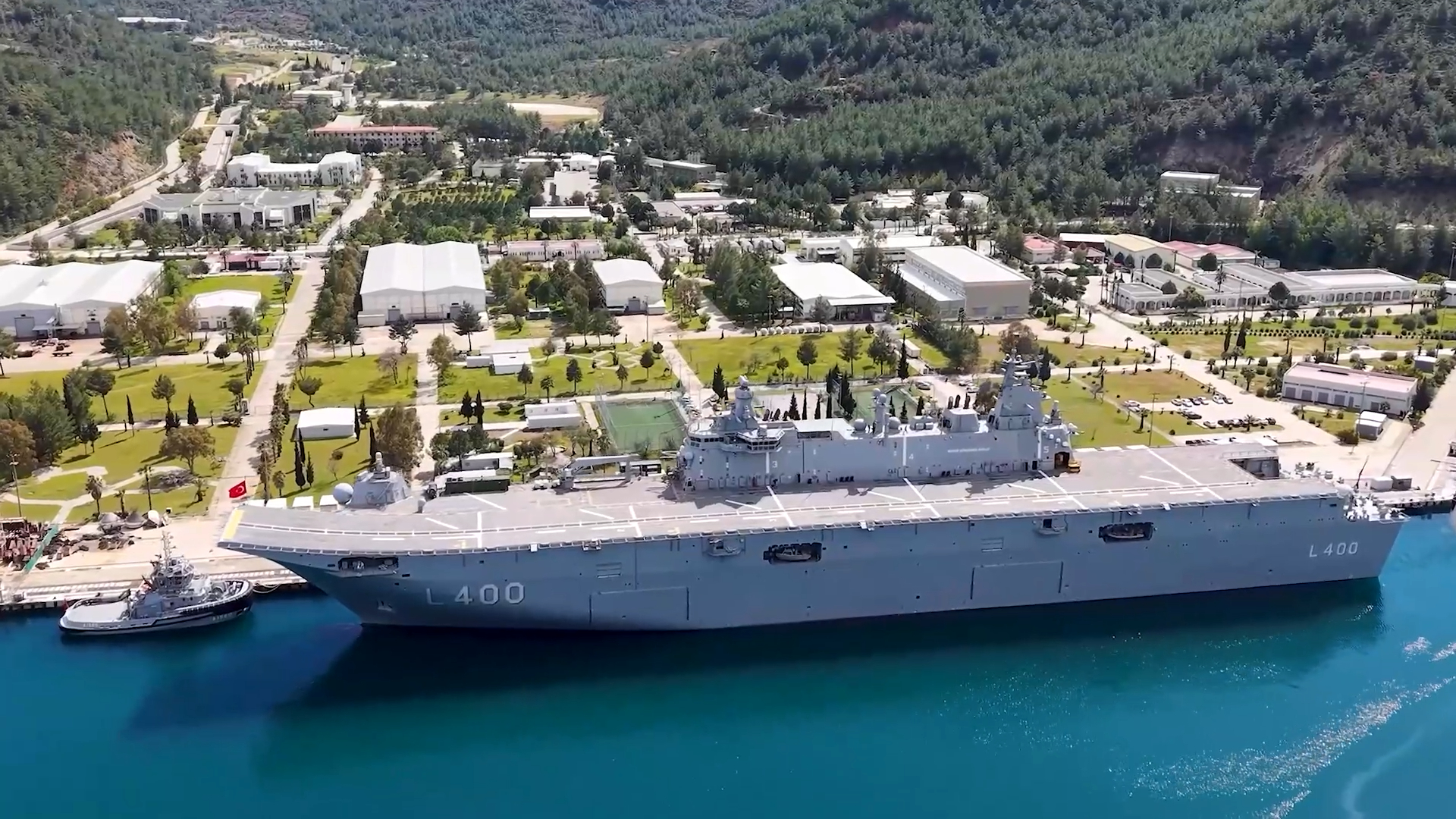
During the Sea Acceptance Test (SAT) phase of the TCG Pirireis (S-330) Submarine—the first submarine of the REİS-Class, commissioned in a formal ceremony on August 24, 2024—two MALAMAN Smart Bottom Mines were loaded into and removed from one of the torpedo tubes as a trial to verify their fit. Following this assessment, it was determined that each torpedo tube could accommodate three MALAMAN Smart Bottom Mines. A new loading and unloading test is planned based on this finding. Of the eight torpedo tubes on the REİS-Class Submarines, four were manufactured with the capability to carry and deploy naval mines such as the MALAMAN. Additionally, MALAMAN mines can be deployed from the TCG Bayraktar and TCG Sancaktar LST ships in the TNFC inventory. It is also anticipated that the ability to carry and deploy MALAMAN Smart Bottom Mines will be integrated into PREVEZE and GÜR-Class Submarines in the future.
The MALAMAN Smart Bottom Mine and its Electronic Module—developed under the MALAMAN Project initiated with a contract signed in December 2018 for the development of GRP-Cased National Bottom Mines—were created in collaboration between KoçSavunma, MKE, and TÜBİTAK SAGE. The electronic module, which acts as the "brain" of the mine, is also capable of acoustic intelligence, collecting and analyzing acoustic signatures in the waters where it is deployed for intelligence purposes. After approximately 1.5 years of qualification tests, including planned detonation trials, the system successfully completed the process. As of August 2024, it has become a proven, shelf-ready product.
KoçSavunma is a technology company that operates with an R&D-based approach in the Turkish defense industry, contributing significantly to Türkiye's objective of becoming one of the most competitive economies globally. They specialize in the development of electronic systems for naval platforms, with a particular focus on underwater acoustics solutions.
In the MALAMAN Project:
KoçSavunma is responsible for the design of MALAMAN, the design of its GRP (Glass Reinforced Plastic) composite outer casing, and the production of the electronic decision-making block, which includes smart sensors (MALAMAN Electronic Module and Smart Mine Firing Mechanism).
MKE is tasked with preparing and filling the insensitive explosive in the warhead at the DUPAT facilities using specialized equipment. Consequently, MKE will deliver fully assembled MALAMAN units to the customer following the filling of the warhead.
TÜBİTAK SAGE is responsible for developing the PBXN-111 type insensitive explosive.
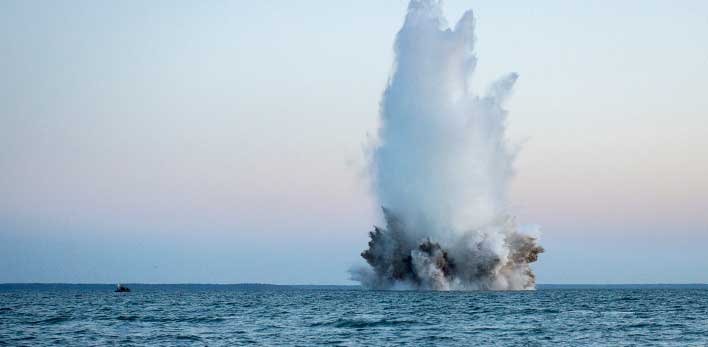
Under the MALAMAN Project, the first detonation test was conducted on land in December 2022, while the second and third detonation tests were carried out at sea in the first half of 2024. As a reminder, the initial phase of the MALAMAN Project concluded with the validation of the Smart Mine Firing Mechanism, developed and produced by KoçSavunma. During the second phase, a consortium led by KoçSavunma, in collaboration with TÜBİTAK SAGE and MKE, completed the design of the composite body and insensitive munitions. Subsequently, by December 2022, the Critical Design Phase was finalized, and the first full-scale mine was produced and detonated in a full-scale firing chain test conducted at Konya Karapınar. In February 2024, the second full-scale detonation test of the MALAMAN Smart Bottom Mine was successfully conducted at sea, during which the underwater effectiveness of the MALAMAN warhead detonated at a specific depth was observed. In the third full-scale detonation test, conducted conducted on June 11, 2024, another full-sized MALAMAN mine was detonated at a specified depth to assess its impact on a surface combat ship. A decommissioned ship provided by the Turkish Naval Forces Command was used for the test, and the ship, sustaining severe damage from the explosion, sank afterward.
The MALAMAN Smart Sea Bottom Mine, an entirely indigenous and state-of-the-art design, is set to significantly enhance the Turkish Naval Forces Command's capacity for executing its maritime control mission within Türkiye's maritime jurisdiction and areas of interest.
Equipped with the Electronic Module and Smart Mine Firing Mechanism developed by KoçSavunma, the MALAMAN detects and classifies vessels in target categories and detonates its warhead at the optimal point to break the target ship's keel to ensure its sinking. When the insensitive explosive, designed by TÜBİTAK SAGE, detonates, it first generates a blast effect underwater. This is followed by the creation of a bubble (cavity) effect, a massive dual-layer air bubble that expands and rises to the surface. As this bubble surfaces, it lifts the ship from the middle, creates a cavity underneath, and causes the ship’s keel to fracture under its own weight. This sequence results in the vessel breaking apart and sinking.
Protective and Offensive Mine Operations
Mines pose considerable challenges and can be expensive to detect and counter, yet they remain a relatively affordable weapon system. Once a mine, known for its asymmetrical, cost-effective, and potent nature, is deployed in an area, it necessitates subsequent mine countermeasure operations to clear the contaminated zone. In response, the enemy or hostile country must deploy forces to secure the area and restrict its use until the cleanup operation is successfully executed. Mine operations are typically categorized into two main types: Protective and Offensive Mine Operations. Protective Mining refers to a country's defensive mine operations conducted within its own territorial waters, maritime jurisdiction areas, and particularly on its continental shelf. These operations are typically executed during times of tension or war and are often carried out using vehicles.
Given the advantage of air and sea superiority within one's own defense area, mines can be deployed from ships equipped for mine-laying purposes. However, once a mine is deployed, international law mandates that the country responsible must publicly declare the contaminated area within its sovereign territory. Additionally, when a mine is laid, it is pre-programmed to neutralize itself at a specified time. If circumstances require early deactivation, divers can access the Electronic Module near the mine's location, modify the program, and retrieve the mine without detonation. In cases where cable-controlled mines are deployed, such as at the entrance to the Straits, their remote control and program adjustments can be continuously managed from a Control Center.
Equipped with parachute connection points for deployment from surface vessels, submarines, and aircraft, the indigenously developed MALAMAN Smart Sea Bottom Mine serves a defensive role. In contrast, being developed by KoçSavunma, MKE, and TÜBİTAK SAGE under a protocol signed at IDEF ‘23 Fair, the Airborne Precision Maritime Mining Concept Solution (UÇA) is designed as an offensive bottom mine. The Air-Launched Smart Bottom Mine UÇA is designed to fit within the Mk-84 General Purpose Bomb shell, enables precise air mining operations from a remote distance of over 70 km into enemy waters. The UÇA is stated to be undetectable by enemy radars while flying in the air after being dropped, thanks to its composite body structure. It's anticipated to become a production-ready product within the next 1-3 years