Marine Assault Vehicle Delivery & Advanced Armored Personnel Carrier Modernization Project Inked

The program started with the opening speech of K. Nail KURT, General Manager and CEO of FNSS. Commenting on the programs undertaken by FNSS under the coordination of the Defense Industry Agency over the last 8-9 years, KURT made the following remarks: “The 2250 Armored Combat Vehicles we delivered between 1990 and 2005 are still the backbone of our infantry. Since 2014, we have been actively engaged in various projects for the Armed Forces. We signed the Weapon Carrier Vehicles (STA) project with the Defense Industry Agency in 2016, and with the signing of the second contract, around 340 PARS 4x4 and KAPLAN Tracked vehicles, with OMTAS and KORNET Remote Controlled Turret systems designed by FNSS have entered and continue to enter the national inventory. The deliveries of the KORKUT serial production platform, initiated by Aselsan in 2016, have been substantially completed. Furthermore, today marks the occasion of the delivery ceremony for the Marine Assault Vehicle (MAV/ZAHA) project, which was signed in 2017. Our Marine Assault Vehicle (MAV/ZAHA, considered the most advanced of its kind globally, has successfully met the qualification standards set by the Defense Industry Agency (SSB) and the Turkish Naval Forces, and our first batch deliveries have launched. As another example, I would like to emphasize that the PARS 6x6 Special Operations Vehicles, for which we signed a contract with the Defense Industry Agency in 2018 and developed for our Special Forces Command, stand out within their class due to their exceptional features in areas such as mine protection, ballistics, resistance to improvised explosive devices (IEDs), and mission-specific equipment. These vehicles have been delivered and are currently in use. In May 2019, a contract was signed with the Defense Industry Agency for the acquisition of Special Purpose Tactical Wheeled Vehicles in both 6x6 and 8x8 configurations. These vehicles will be delivered to the Land Forces and the Gendarmerie General Command, albeit in a limited quantity. The development of these vehicles is still in progress, and they are expected to be delivered due in next year. It is anticipated that these vehicles will boast the highest indigenization level among the vehicles delivered thus far. During the period between 2005 and 2014, there was a noticeable gap; however, this interval witnessed a remarkable export growth rate ranging from 90% to 95%. Within this period, we also successfully undertook the development of two challenging projects: the Rapid Deployable Amphibious Wet Gap Crossing System and AZMIM, through an agreement with the Defense Industry Agency, both of which were successfully delivered. Starting from 2014, a significant focus was placed on developing numerous indigenous and special weapon systems, marking a period of notable advancements in this domain.”
Providing information about the KAPLAN Lightweight Tank Project, KURT said: "We believe that the joint development of this project with Indonesia is a great success for both countries. The project was successfully executed under the leadership of the Defense Industry Agency. We delivered the vehicles to Indonesia with a ceremony last year. It is our greatest desire that this Lightweight Tank will assume duty in our Land Forces Command."
K. Nail KURT also provided an update on the New Generation Armored Combat Vehicles Modernization program, confirming that the deliveries within the project, initiated in 2019 with ASELSAN as the main contractor, are progressing according to the program schedule.
Providing additional information, K. Nail KURT stated that three prototypes of the KAPLANs, developed as part of the Weapon Carriers Project, have been delivered through the KMC-U Project led by KMC-ROKETSAN. These platforms garnered high appreciation following extensive trials, leading to new orders being placed. “Our KMC-U project is progressing under the leadership of ROKETSAN, the main contractor. We delivered our first vehicle to ROKETSAN in a record timeframe of eight months, and it will soon be put into the service of Turkish Land Forces.”
K. Nail KURT highlighted that the primary objective of these projects is to enhance the capabilities of the Turkish Armed Forces by harnessing FNSS's engineering prowess. “Under the recently signed AAPC-GZPT modernization project, all vehicles will undergo modernization and will be swiftly delivered to our Land Forces Command within an impressively short timeframe of 24 months.”
In his closing remarks, K. Nail KURT expressed his gratitude to the Defense Industry Agency and the military officials who contributed to the project and provided their unwavering support. He conveyed his belief that with the backing they receive, FNSS will achieve a significant milestone in the realm of Heavy Class Unmanned Vehicles. KURT further mentioned that the comprehensive testing and verification processes for the fully autonomous driving capabilities of the FNSS “Shadow Rider” Unmanned Heavy Class Ground Vehicle are currently in progress.
During the ceremony, Prof. İsmail DEMİR, President of the Defense Industry Agency, delivered a concise speech, highlighting the capabilities that will be achieved with the delivery of MAV/ZAHA vehicles. “These vehicles can rightfully be considered the finest in their class. Only a select few countries possess such a system. It is safe to say that our vehicle stands out as the best, incorporating the latest modern advancements. As part of our General Defense Industry program, we consistently emphasize the importance of deploying platforms with superior firepower and operational capabilities, developed independently without reliance on any other country, to foster self-sufficiency, particularly in strategic domains. In line with our objectives, we continue to develop not only conventional combat vehicles but also those capable of meeting the demands of new generation technologies and requirements. I extend my gratitude to all the stakeholders who have contributed to these endeavors."
Following the opening remarks, FNSS program managers made presentations on the MAV/GZPT and MAV/ZAHA programs.
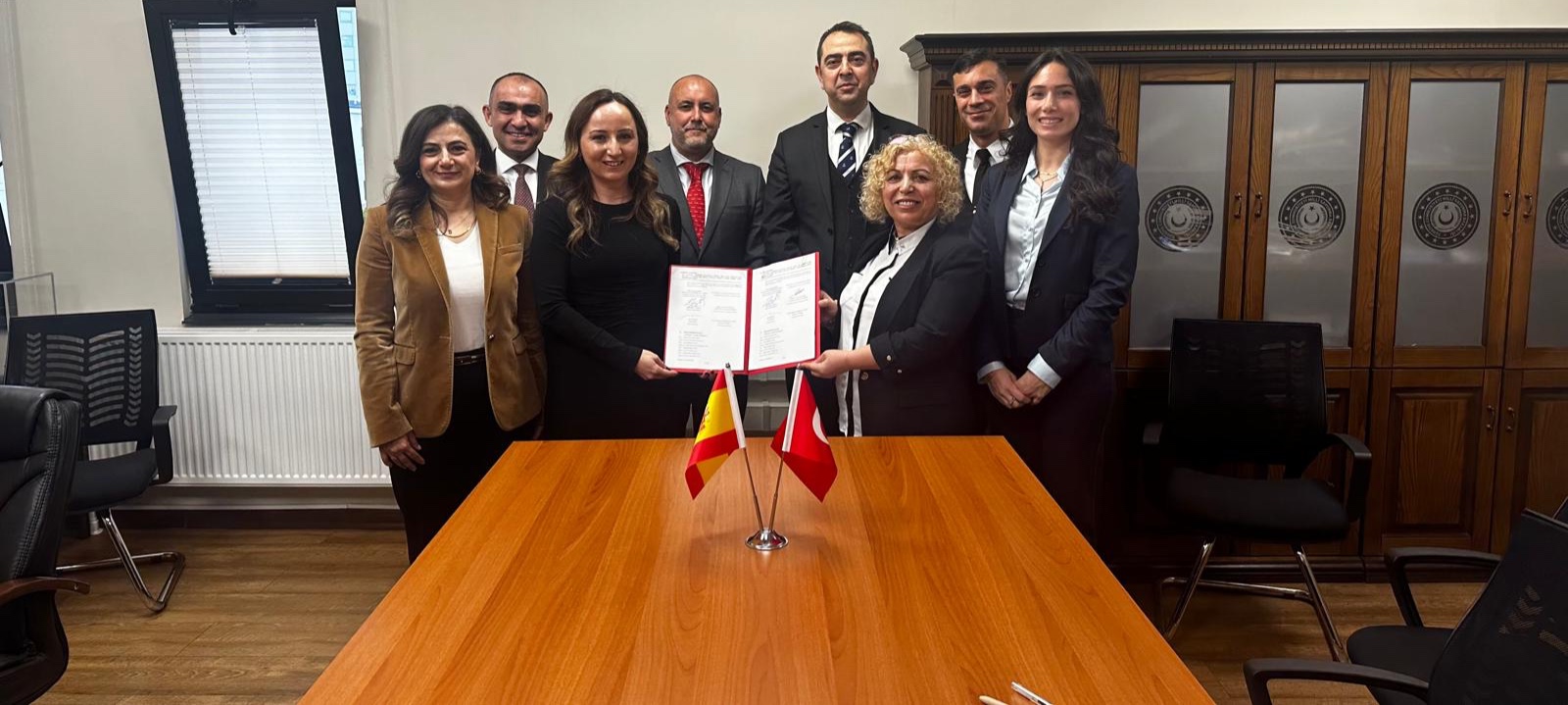
Afterwards, FNSS conducted the AAPC-GZPT Modernization Signing Ceremony, during which a plaque was presented to commemorate the contract signing. After the ceremony, the attention turned to the MAV/ZAHA vehicle, which took center stage on the FNSS test track. Defense and military officials, along with members of the press, gathered to witness the vehicle's capabilities firsthand. The MAV/ZAHA showcased its prowess through various demonstrations, including steep climbing, side landing, acceleration, and controlled stops on the test track. İsmail DEMİR, President of the Defense Industry Agency and his delegation moved to the vehicle and the vehicle entered the water in the test pool section and performed a short demonstration.
Marine Assault Vehicle a Force Multiplier for the Marine Corps
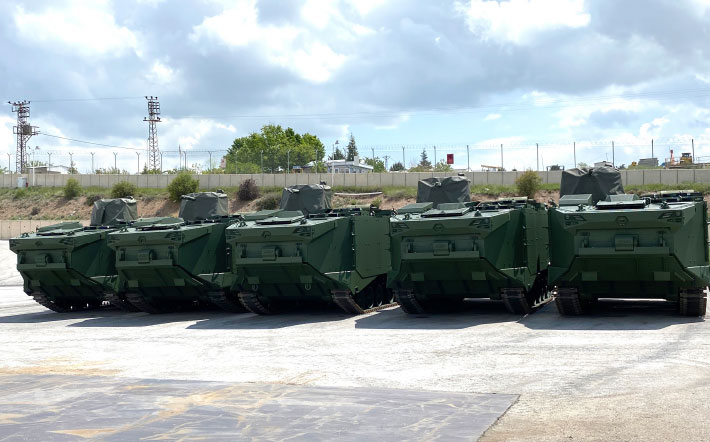
The Marine Assault Vehicle (MAV/ZAHA) project, initiated in 2017 under the leadership of the Defense Industry Agency and FNSS as the main contractor, aimed to fulfill the armored Marine Assault Vehicle (MAV/ZAHA) requirement of the Turkish Naval Forces Command. The project involved the delivery of a total of 27 vehicles, including 23 Personnel Carriers, two Command and Control vehicles, and two Recovery vehicles. The kick-off meeting for the project took place on March 31, 2017, followed by the critical design review meeting on October 19, 2019. Within approximately two years, subsystem and qualification tests were conducted, and prototype vehicle production was completed. On March 4, 2021, a test preparation and review meeting was held. Over the course of two years, a total of 44 system level qualification tests were successfully carried out. On February 7, 2023, the qualification process for the vehicles was finalized with the approval of the Defense Industry Agency. Subsequently, on February 20, 2023, serial production acceptance activities commenced with the participation of officials from the Defense Industry Agency and Naval Forces Command.
In the first quarter of 2023, the delivery process of MAV/ZAHA vehicles started, and to date nine vehicles have been delivered to the Naval Forces Command Amphibious Infantry Brigade. The deliveries were conducted in two batches, with four vehicles in the first batch and five vehicles in the second batch. The remaining deliveries are scheduled to be completed until July 2023.
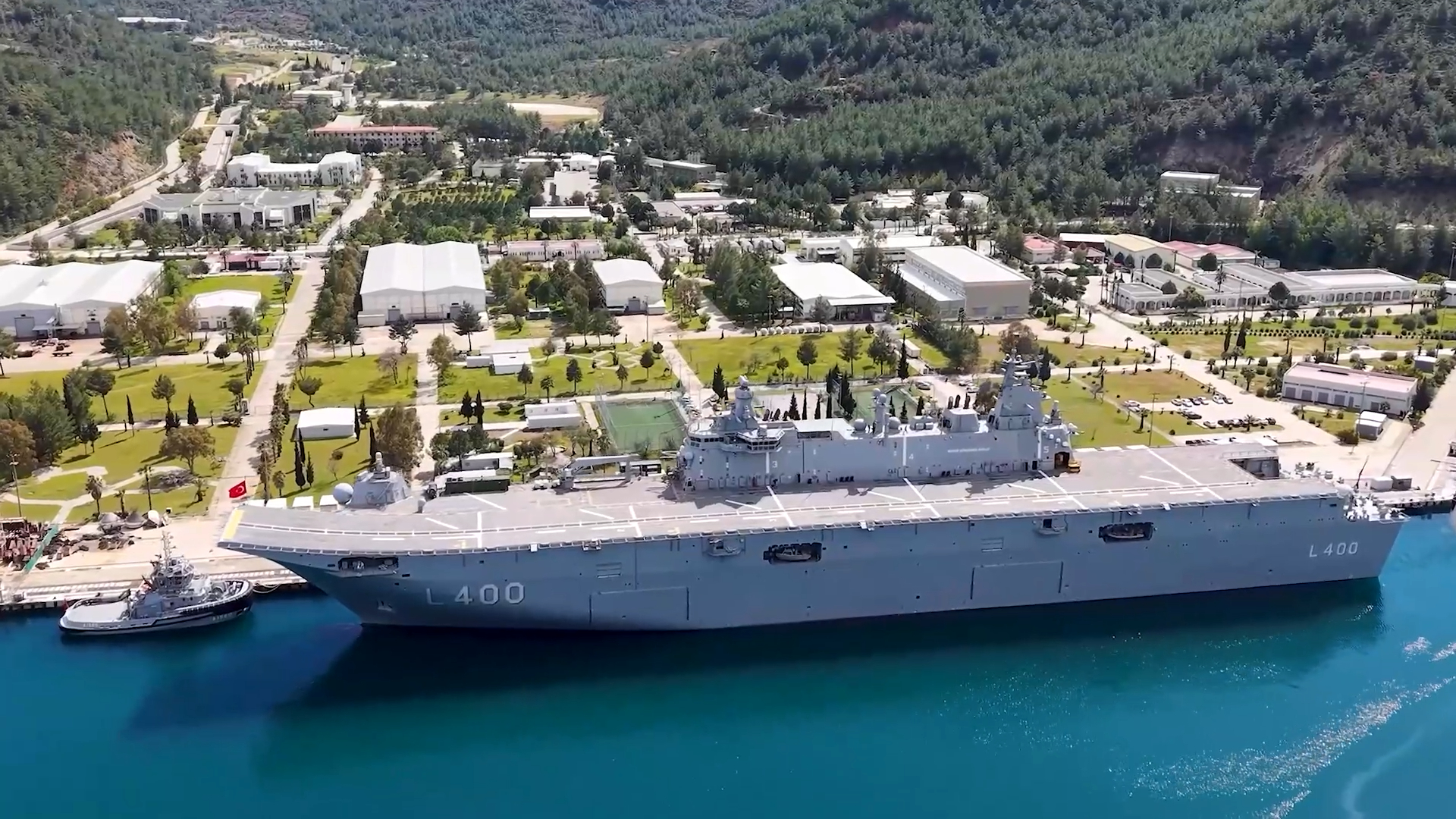
FNSS has developed the state-of-the-art Marine Assault Vehicle (MAV/ZAHA) to cater to the specific requirements of amphibious operations. This advanced amphibious vehicle plays a crucial role in expediently covering the distance between the ship and the hostile shore during amphibious landing operations. It can be launched from the Multi-Purpose Amphibious Assault Ship (LHD), allowing it to swiftly cover the distance with exceptional speed. This capability ensures that troops can safely and expeditiously land with the necessary protection and fire support. The MAV consists of three variants: Personnel Carrier (equipped with a single antenna), Command Control Vehicle (equipped with four antennas) and Recovery Vehicle (integrated with recovery crane apparatus). However, according to user requirements, at least six vehicles (Personnel Carriers) are also expected to be fitted with mine clearing line charge systems. The AAAV-ZAHA Personnel Carriers also can transform into Command-and-Control Vehicles (C2) if required.
The Marine Assault Vehicle features a water-resistant hull which demonstrates superior amphibious characteristics. The completely sealed unique hull design offers self-righting capability and improves mobility in water. It does not utilize a double or V-hull as it will drastically affect the performance of the vehicle at sea. The MAV weighs 30 metric tons and is equipped with a 600hp front-mounted diesel engine power pack. The engine has a fully automatic transmission system. The vehicle is propelled by two powerful rear-mounted water jets in amphibious mode, which can handle up to sea-state 4. The maximum amphibious speed of the vehicle is 7 knots, while the maximum road speed is 70 km/h.
The MAV is capable of maneuvering on a 60% vertical and 40% horizontal gradient, climbing obstacles 90 cm-high and crossing 200 cm-wide trenches. The 8.3-meter-long and 3.3-meter-wide vehicle features a reinforced hull bottom armor, and the thickness of the bottom plate is adjusted to maximize energy absorption. The protection level of the MAV can be further improved with add-on applique armor plates. The vehicle is also fitted with a coaxially mounted smoke grenade launcher, automatic fire extinguishing system, and a dedicated CBRN (Chemical, Biological, Radioactive, and Nuclear) protection system. Notably, the MAV holds several distinctions within the inventory of the Turkish Armed Forces. It is the first and only personnel carrier designed for both land and sea operations. Furthermore, it is the second vehicle of its kind in the world, showcasing its cutting-edge amphibious capabilities.
The MAV’s fire power is provided by the purposely designed CAKA dual remote-controlled turret that can be armed with a 12.7 mm MG (50 Cal) and a 40 mm AGL (Automatic Grenade Launcher).
The CAKA Remote Controlled Turret (RCT) that is named after the esteemed sailor Mr. CAKA, a turret system that is specifically designed and only manufactured by FNSS for MAV. The CAKA was developed to be the firepower of the MAV, with its ability to carry a maximum load of ready-to-fire rounds, and it is also ballistic protected. The CAKA RCT, which stands out with its corrosion resistance and sealing at the highest level, can be used safely in all weather and sea conditions. Designed as a naval system for harsh sea conditions, this turret incorporates several notable features that distinguish it from ground-based platform turrets, particularly in terms of corrosion resistance and impermeability. CAKA is built to withstand the corrosive effects of salty sea water, ensuring its longevity and performance both at sea and on land. Compared to similar manned turrets in service with US Marine Corps’ Amphibious Vehicles, the FNSS CAKA RWS offers greater advantages with its lightweight, better protection for the gunner, target acquisition, reliability, accuracy, and it occupies less internal volume inside the vehicle.
The MAVs are equipped with ASELSAN's Battlefield Management System, allowing for continuous tracking and communication of troops. The MAV Command and Control vehicles, responsible for managing amphibious operations on the battlefield, can establish simultaneous communication with 27 MAVs. They also ensure uninterrupted communication with TCG ANADOLU, the Amphibious Assault Ship (LHD) CMS, enabling joint operations. ASELSAN has developed indigenous troop tracking and communication systems, along with several other subsystems such as periscopes, tracks, road wheels, and speed reducers as part of the project.
The ACV-15 AAPC Capability Enhancement & Life Extension Program to Beef Up Turkish Land Forces Operation Capability
Under the ACV-15 AAPC Capability Enhancement & Life Extension Program, the contract of which was signed between the SSB & FNSS. The main contractor, FNSS will modernize 52 ACV-15 AAPCs in the inventory of the Turkish Land Forces Command. These vehicles will undergo upgrades with new technology subsystems. The AAPCs that will be upgraded are ACV-15 configurations that were delivered to the Turkish Armed Forces in the early 2000s by FNSS. The program is aimed to increase the performance, capabilities and lifecycle of the vehicles for an additional 20+ years.
FNSS has devised a solution package for the AAPC T1s that considers evolving threats, technological advancements, expertise gained from previous modernization projects, especially the modernization of Armored Combat Vehicles, and user feedback. The aim is to enhance the combat capabilities of the Land Forces Command through the integration of new technology subsystems. Through FNSS' modernization package, the AAPC-T1s will be transformed into contemporary vehicles capable of effectively countering present threats. This upgrade will not only extend their service life but also equip them with cutting-edge mission equipment.
Which Systems will be Renewed in the Modernization Program?
Due to emerging threats and new technologies in mission equipment and weapon systems, the aim is to upgrade the AAPCs with selective equipment and systems. The FNSS package covers upgrade areas such as improvements in mobility, protection levels, life support, electronic systems, situational awareness and firepower. Within the scope of the capability enhancement program, the vehicles will be fitted with a dual gun remote controlled weapon system with close-range surveillance system, auxiliary power unit, A/C system, automatic fire suppression system, spall liners, driver vision system and navigation system. In addition, the necessary engineering efforts will be carried out for the integration of the gunshot detection system. A complete vehicle overhaul including engine & transmission will also take place under the scope of contract. The 2nd Main Maintenance Factory Directorate and FNSS will collaborate to enhance the mobility of the AAPCs and upgrade the existing engine and transmission systems.
All these improvements in reliability and durability will increase mission capabilities while minimizing maintenance services during operational deployments.
In Phase 1, a total of 52 AAPCs are scheduled for extensive modernization, and these upgraded vehicles will be delivered to the relevant authority between 2024 and 2025. The remaining 551 AAPCs, which were manufactured by FNSS and delivered to the Turkish Armed Forces from 2002 to 2005, will undergo modernization in subsequent phases in the upcoming years