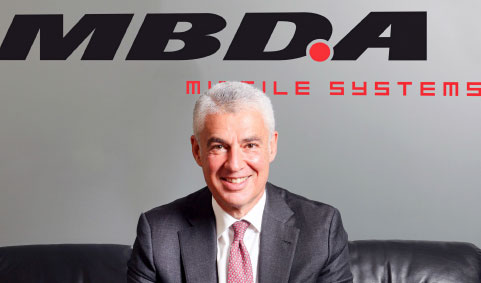
Mr. Lorenzo MARIANI: “As member of two partnerships producing Next Generation Future Combat Air Systems (Tempest / FCAS), MBDA will continue to mature capable, affordable, upgradeable, connected, and cooperative effectors for future air dominance.”
Defence Turkey: Can you describe MBDA's current activities and provide some key facts about the company for our readers? What are MBDA's strong points and how does it differ from its competitors? Could you elaborate on the structure, responsibilities, and number of personnel working at MBDA?
Lorenzo MARIANI: MBDA today represents the only European defense industrial group conceived with an integrated managerial structure: a successful example of integration and cooperation at a European level, which over time has really given excellent results. It is remarkable that when MBDA was born, the volume of production was around €2 billion, today it has substantially doubled it with growth also in terms of employees. Furthermore, despite a very strong domestic base, over half of this turnover has come over the years from exports. MBDA’s model is based on an integrated organization built beyond any nationality. Its "governing body" is in fact the Executive Committee with a CEO, today Eric BÉRANGER, and eight other figures organized by function not by the nationality of the individuals. Furthermore, four of these figures also hold a statutory role for each single nation, for statutory tasks reserved to each nation, serving as the contact with domestic customers and all the statutory obligations of the civil codes that must be observed. Just to give a more recent number of employees, which were declared during the annual press conference, MBDA nowadays can rely on about 12,000 permanent employees. In 2020 it recruited about 1,100 people. This will continue in 2021 when the company is planning to recruit a further 1,200 people: this is further evidence that MBDA has been resilient and is in a growth pattern.
Defence Turkey: Can we get an assessment of 2020 from MBDA's perspective? Could you please summarize the 2020 MBDA highlights?
Lorenzo MARIANI: We did very well in 2020 despite the COVID pandemic. We were impacted, of course, especially in exports, in terms of order intake, but all in all the performances are quite remarkable: we achieved €3.6 billion in terms of revenues. In terms of order intake, we reached €3.3 billion, and we now have a backlog of €16.6 billion. Also, during this specific period, we could see how much solidarity exists inside our defense ecosystem to support each other and make sure that we deliver on our missions.
As far as orders are concerned and starting from our domestic markets, I can mention for the UK the upgrade of the Brimstone 3 and the production of Brimstone missiles. We also got, from the UK MOD, a production order for SPEAR mini-cruise missiles. Just to have a glance on France, we received a contract for the midlife refurbishment of Aster missiles and for the Future Tactical Air-to- Surface Missile (MAST-F) program as the main French Army air to ground arma¬ment for the Tiger combat helicopter. In Italy, we were contracted for the new generation anti-ship missile TESEO MK2/E, while in Germany for a high-energy laser demonstrator for the German Navy. I can also mention the participation in the Beyond-Line-Of-Sight initiative, which we are running among 5 nations and 13 partners. Export sales include, among the others, a naval package for Senegal and a contract signed for our Albatros NG, and a new naval surface-to-air defense system based on the CAMM-ER missiles for an undisclosed customer.
Defence Turkey: The COVID-19 pandemic has caused huge global disruption on critical defense operations and programs. Can you elaborate on whether you experienced any delay or postponement in your annual activity plan/schedule for 2020 due to the COVID-19 pandemic? How and to what extent has the COVID-19 pandemic impacted your business operations including production, manufacturing, and supply chain as well as your domestic and international programs?
Lorenzo MARIANI: We underwent some delay at the beginning of 2020, everybody was taken by surprise. Indeed, we recovered very quickly thanks to the capability of guaranteeing business continuity. We were very agile and reactive, innovative also in the way of working, adapting very quickly to this “new normal” and the results are clearly visible. Also, considering that in the first part of 2021 we successfully recovered about 90% of our activities, be them contract subscriptions or deliveries that were delayed last year because of COVID-19. The pandemic has affected all of us, but we have been definitely able to guarantee business continuity, and in this process, we included support to our suppliers who were themselves facing difficulties.
Defence Turkey: Can you list the most important defense programs currently carried out by MBDA and the envisaged time frame for the realization of these programs? What are the most prominent projects that you expect to be realized in 2021?
Lorenzo MARIANI: MBDA believes that 2021 will be a decisive year for several defense capabilities in Europe. I would start by mentioning the SAMP/T NG contract awarded by OCCAR in March. SAMP/T NG is the air defense system that handles ballistic missiles or very fast cruise missiles, and within the end of this decade it will give France and Italy an enhanced capability to guarantee their airspace protection and protect their people and territories as well as their troops in operations from new emerging threats. At the beginning of the year, an important goal was the commercial launch of the VL MICA NG, which will be supplied to Egyptian vessels. Another contract obtained in these first months of 2021 relates to the SEA CEPTOR installation for an undisclosed customer. We also intend to continue with the future cruise and anti-ship weapon, the so-called FC/ASW program between the UK and France. Here the topic is to replace the SCALP Storm Shadow Family, but also EXOCET and HARPOON. We are now closing the concept phase and we anticipate that we will start the assessment phase, which is a risk reduction phase, this summer. MBDA will continue to invest in cooperation for the endo-atmospheric interceptor that could be the backbone of the wider TWISTER (Timely Warning Interceptor with Space-based TheatER surveillance) program launched under the EU PESCO framework, to provide a European contribution to NATO Ballistic-Missile Defence (BMD). As a member of two partnerships producing Next Generation Future Combat Air Systems (Tempest / FCAS), MBDA will continue to mature capable, affordable, upgradeable, connected, and cooperative effectors for future air dominance.
Defence Turkey: MBDA is taking part in the SAMP-T Air & Missile Defense System Program. Can you elaborate on the current status of the SAMPT/T Program?
Lorenzo MARIANI: As mentioned, in March the ministers of the armed forces FR / IT announced the signature of a contract for the development of SAMP / T NG (New Generation Ground-Air Medium Range / Earth) awarded by OCCAR to EUROSAM, a joint venture of MBDA France, MBDA Italy and Thales. It is a continuation of the Franco-Italian contract notified in 2016, which aimed at the development and integration of a new Aster 30 Block 1 NT ammunition. The new development guarantees the continuation of cooperation for several years and will allow France and Italy to rely on updated capabilities able to defeat new emerging threats. The contract will also finance the navalization of the new Aster 30 Block 1 NT Enhanced Capability ammunition standard, in order to benefit the naval systems of the Aster family. I would like to point out that this is the only European program to have intercepted (on multiple occasions since 2010 in force training tests and firing) targets simulating ballistic missiles and supersonic anti-ship missiles.
Defence Turkey: What can you share about MBDA’s approach towards R&D efforts to develop and obtain new technologies considering the very demanding and ever-changing threat environment? What are your thoughts regarding the financing of R&D?
Lorenzo MARIANI: As a policy we don’t give the exact figures of our investments in Research and Development even if it is an important amount. R&D is for sure also part of our cooperation with our customers, because, of course, when we develop new capabilities, it is very often at the edge of technology and very often research and development programs are “shared” with them. An example of this is the new TESEO MK2/E. It is the result of a long-standing relationship with the Italian Navy. Moreover, for larger innovative programs we rely on the most important European research programs: from PESCO to the EDF which is going to help fund the research on the hypersonic technologies. So, funded research is fundamental to provide innovative and strategic products to maintain technological sovereignty; and I would like to stress how important cooperation is in this field, a single nation alone would go far but together we can evolve and grow.
Defence Turkey: How would you summarize MBDA’s involvement in Turkey over the last decades? Could you give us a recap of the company’s experience in Turkey over the last three decades?
Lorenzo MARIANI: In the last decade, Turkey has made a significant leap in technology by heavily investing in the national defense and aerospace industry. This quantum leap took place in a short time compared to other contexts and was largely possible thanks to substantial investments in national programs, which left less space for cooperative programs.
The experience gained by observing the world scenario is that this approach is a valid initial entry point, but when it comes to developing technological capabilities and "major projects" in the field of fighter aircraft, missiles, and future systems (anti-ballistic, hypersonic, etc.), it becomes quite natural to converge towards international cooperation programs. If Turkey wants to become a global player in the Defense & Aerospace sector, it can be fundamental to plan its inclusion into cooperative programs. It is now largely clear that, except for very few countries in the world, single countries do not have the critical mass to support the economic and technological weight of "big" defense programs by themselves. In this context, Europe in general, and MBDA in particular could be an important and less cumbersome partner than other players on the global stage.
Defence Turkey: On January 28, 2017, BAE Systems and Turkish Aerospace signed a Heads of Agreement to collaborate on the first development phase of the indigenous MMU/TF-X Program. Later, in 2019, Turkish Aerospace unveiled a full-scale model of TF-X, which was showcased together with MBDA’s Meteor, ASRAAM, and SPEAR munitions. Considering BAE System’s involvement in the project, have there been any meetings or negotiations between MBDA and Turkish Aerospace regarding MBDA's participation in the TF-X Program?
Lorenzo MARIANI: MBDA has been in contact with both Turkish Aerospace (TUSAŞ) and the Turkish Air Force for the TF-X program and has declared its willingness to integrate its products on this aerial platform. The perception is that the main interest concerns the Meteor missile and the added value that this missile could give to the platform on the global market. The experience gained by MBDA on various aerial platforms and with a look at the world context, the consensus is that the Meteor constitutes a real "game changer" for customers who use it. At MBDA we can perceive the Turkish desire to cooperate with the European consortium when the platform development program enters the active phase of arms integration. The priority, at the moment, is probably to be able to carry out the first demonstration flight of the TF-X as soon as possible.
Defence Turkey: As part of Turkey's efforts to develop a national Long-Range Air and Missile Defense System, EUROSAM, Aselsan, and Roketsan signed a Heads of Agreement (HoA) on July 14, 2017, to launch in-depth cooperation in the field of air and missile defense. Following this agreement, the Turkish, Italian, and French defense ministers signed a Letter-of-Intent (LoI) on November 8, 2017, to further strengthen their relationship in defense matters. Previously, there have been some statements about setbacks in the project due to political tensions between Turkey and France. Can you elaborate on the latest status of activities performed under the Concept Definition Study contract?
Lorenzo MARIANI: Activities are on-going, but they have certainly lost that energetic push that they had at the very beginning a few years ago. COVID-19 was a factor that slowed it down, but not the only one. MBDA perceived a change of priority in the country towards indigenous products, but also products that could soon find use in conflict situations involving Turkey.
MBDA remains interested in participating in an ATBM program with Turkey, bearing in mind, however, that Italy and France have now entered the active phase of the development of the SAMP/T NG and that in these programs, it is always important to seize the opportunity when they come through. In any case, MBDA is involved in several further development programs in which, if Turkey is willing to participate, and with intergovernmental agreement, we would be glad to find the way through for Turkey and its National Industry.
Defence Turkey: What are the aspirations of MBDA towards a long-term presence in Turkey through cooperation? Can you elaborate on the other programs that MBDA would like to pursue in Turkey and cooperate on with local industry? What is the extent of your collaborations in Turkey?
Lorenzo MARIANI: MBDA continues to cooperate with Turkey on many tactical initiatives (Aspide boosters, Otomat boosters, on-board systems for third countries). When it comes to strategic programs, MBDA is in any case the mirror of Europe and cooperation is possible if supported by an intergovernmental approach, which in the future is conceivable, considering that Turkey is a member of NATO and an important player in the Middle Eastern and Mediterranean basin.
Defence Turkey: On February 11, 2020, MBDA acquired a stake in French software company Numalis, which focuses on the industrialization of Artificial Intelligence (AI) research to promote global AI standardization. For more than ten years, MBDA has been studying Artificial Intelligence and its potential applications in missile systems, given the nature and the criticality of their role during operations. Having deep expertise in artificial intelligence, what can you tell us about MBDA's studies on AI, and how does the company envisage AI’s impact on the battlefield, today and in the future?
Lorenzo MARIANI: As our CEO declared, when the agreement was signed, the investment in Numalis is part of MBDA’s open innovation policy, aimed at leveraging the best innovative technologies and expertise from the civilian sector. Numalis will give MBDA access to essential building blocks of the future validation – and ultimately certification – processes for the Artificial Intelligence-based applications used in our missile systems. Moreover, MBDA has been studying Artificial Intelligence in order to ensure continuous improvement in the capability of our products. We will make use of AI, but it will have to be explainable, secure, and robust against cyberattack risks and surely include the human factor; the human being, the operator in the end, must remain at the heart of the decision-making process, and the only one who can take critical decisions. The development of automaticity must help increase the reliability of systems and help with decision-making to improve operational performance, so it is going to be an accelerator.
Defence Turkey: As one of the leading companies in the world in the field of missile systems, you are doing business in an ever-increasing competitive defense market. In exports, the Middle East is one of the most important regions, along with Asia-Pacific. In the last years, MBDA set up several local joint ventures to meet the demands in these regions. In 2016, MBDA signed a contract in Doha to supply coastal defense systems for the Qatari Emiri Naval Forces (QENF). In 2019, MBDA opened its first missile engineering facility in the UAE in cooperation with Tawazun. This year MBDA was awarded a contract from the Egyptian Navy for the VL MICA NG (New Generation) air defense system to equip its corvettes. You are also active in India together with Rafale for the induction of Rafale fighter jets into the Indian Air Force (IAF). What can you tell us about your current activities in the Middle East and the Asia-Pacific region? When compared to the market in Europe and the USA, what are the ratios in your annual turnover in the Middle East and Asian-Pacific markets? What can you share about your future goals in these regions?
Lorenzo MARIANI: We have an important presence in Qatar as you mentioned. We have been providing systems for the Qatari corvettes and missile costal defense systems and during 2021 significant deliveries will take place. In the Asia Pacific region, we keep supporting our customers with Meteor missiles. Our missile systems are also operational in many maritime platforms with VL Mica, Aster and Mistral, just to mention some of our products, which are well appreciated in the area.
Defence Turkey: Dear Mr. MARIANI, thank you very much for the interview and your valuable contributions.