NAVAL OPERATIONS DURING EFES 2024
Amphibious operations are the most complex military operations containing sea borne and air borne ship to shore operations of land air and naval units. We were able to observe these type of manoeuvres during the Efes 2024 Combined Joint Live Fire Exercise.
The goal of the exercise was to enhance the military capabilities of joint headquarters and units formed with participating countries for combined and joint operations. This includes covering all assigned missions and maintaining combat readiness. One of the objectives of the exercise was testing and improving the joint use techniques, methods, and tactics, as well as the capabilities of combat weapons and vehicles of the Land, Naval, and Air Forces of participating countries in combined and joint operations.
The first phase of the amphibious operations is to infiltrate to the landing area either from the sea or by jumping from an airplane. 0n 29 May 2024 we were able to watch the special forces teams of different nations to conduct these operations. The next step is to search, find and identify any natural or manmade underwater hindrance that would make the passage of the landing craft impossible. The most of obvious version of such obstacles are the mines. Mines laid between the shore and 10 meters of depth are difficult for mine hunting vessels to find and neutralise. Therefore, special forces teams are needed to identify any mine on the approaches to the landing area. These teams also must neutralise these mines.
When the landing area has been infiltrated by the special forces and the approaches to the landing beach has been cleared from mines and other obstacles, small RHIB type boats loaded with marine infantry are landed in the first wave. They are lightly armed but highly mobile and crate the first line of defence around the beach head. Since these RHIB are small and fast this first wave of assault looks more is more like a raid rather than the D-day landing. Such raids are also important to confuse the enemy and the keep them uncertain about in estimating the real intended landing zone. 45 RHIB were used for this training during Efes 2024. Yonca-Onuk made MRTP type small fast craft used by Turkish naval special forces carrying the infiltration team fired its machine gun mounted on a remote-controlled weapon station at the targets on the shore to supress them.
Helicopters carrying more troops and some artillery or mortars are brought in. Their landing zone is intended to block the enemy to send reinforcements to the actual landing beach and engage with the targets of opportunity in the inland and if possible, to find and engage with rear echelons and/or supply depots of the opposing force. For this training 4 AS-532 Cougar, 5 SH-70 Blackhawk and 3 CH-47 F Chinook helicopters were used. They were escorted by 4 T-129 Atak attack helicopters.
Two Ada class corvettes TCG Büyükada and TCG Burgazada fired their 76mm Oto Melera main guns to the target at the shore. When the World War 2 area destroyers were in service these ships could fire from their front and aft twin turrets. This meant four 127mm shells impacting at the target area. Nowadays accuracy is more important and faster firing guns can delivery no less ammo to the target area. This firing is intended to suppress the enemy and prevent them to fire against the incoming landing force.
In the meantime, on the sea, the first part of the second wave was carried by Marine Assault Vehicles made by FNSS. At the first glance these vehicles resemble the AAVP type used by the USMC. However the Turkish vehicle is a new and independent design. Turkish Navy bough 27 of these vehicles. They can carry 21 troops in an enclosed and safe environment and provide fire support for them with their 40mm AGL and 17,5mm MG. The MAV can create smoke curtain to hide the new wave of the landing force from the enemy.
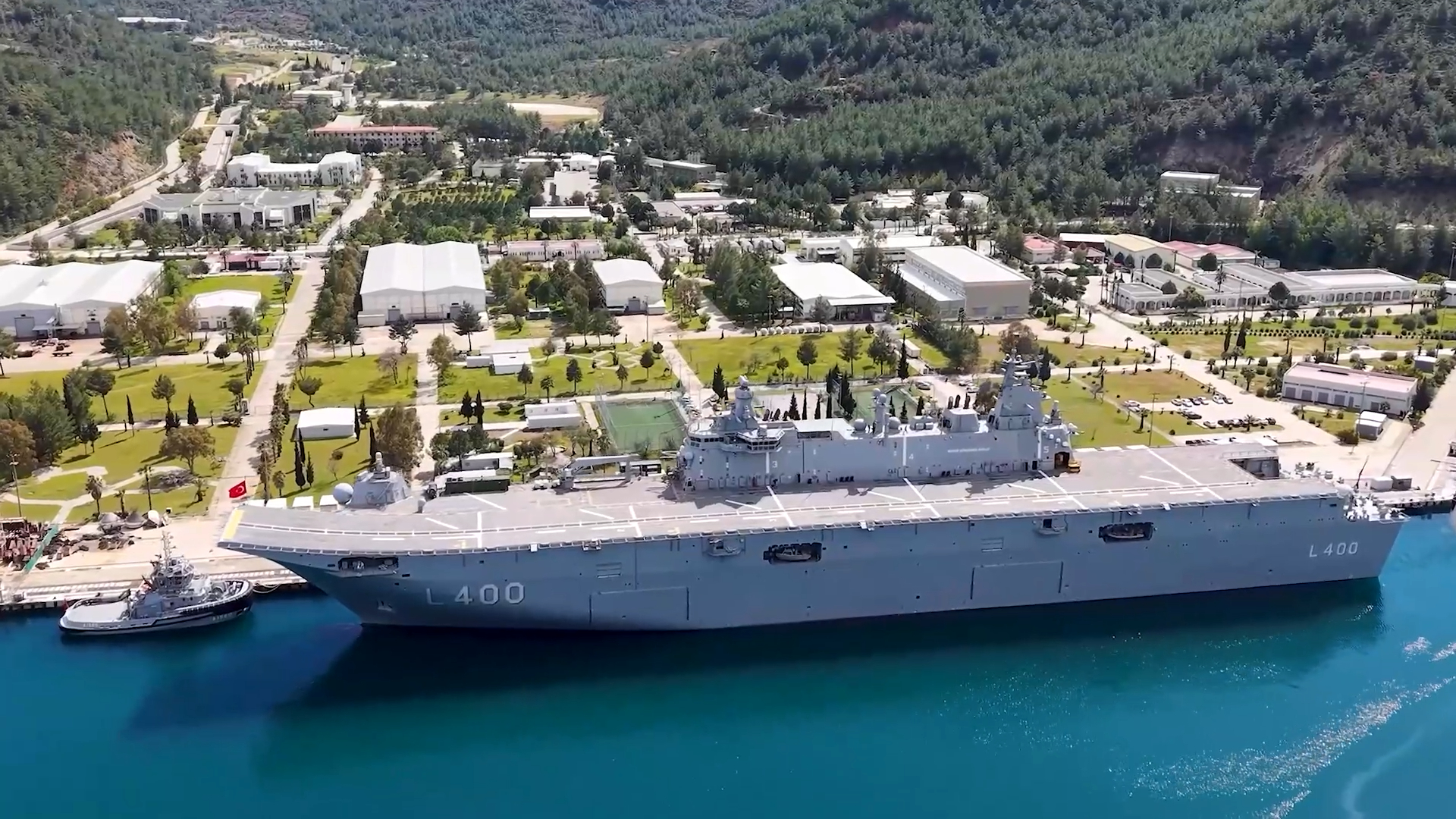
The arrival of the MAVs was immediately followed by LCVP’s from the two landing ships tank, (LST) TCG Bayraktar and TCG Sancaktar and from the landing helicopter dock (LHA) TCG Anadolu, taking part in the exercise. These vessels capable of cruising in speeds more than 30 knots brought the second wave to the beach.
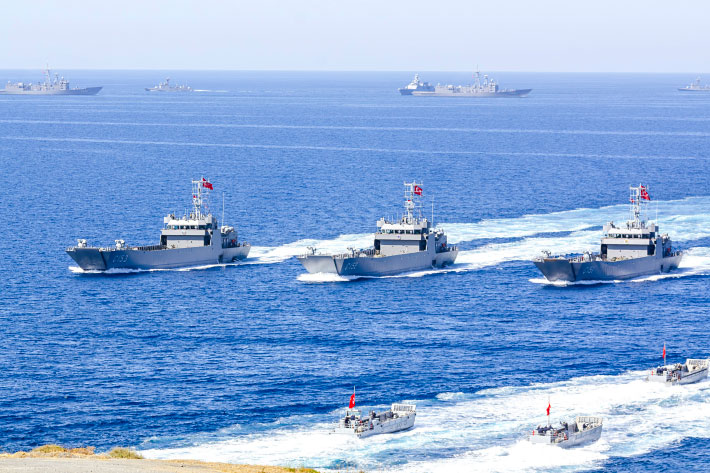
Next came the large landing craft tank with heavy armour. 8 LCT’s were contracted to ADIK Shipyard in June 2009. In 2007, Undersecretariat for Defence Industries (UDI), submitted a Request for Proposal for 8 LCT’s. These new vessels were to be built in Turkey and had to be fast. From the four companies that submitted to the tender, ADİK shipyard was chosen. The exact value of the contract was not made public, but it is estimated to be around 100 million EUR.
These LCT’s can carry two main battle tanks and troops with ease. Their nominal cargo load is 320 tons or 250 troops. With the arrival of these LCT’s and the MBTs the ground assault got some punch to knock through the defensive lines.
The navy was not only concentrated in bringing troops, vehicles and suppled to the shore. They were also active in protecting the task force. Type 209 class submarine TCG Preveze acting as an enemy vessel tried to sneak up to thew task force and attach valuable targets. She was detected by SH-70B Seahawk helicopters by their dipping sonars. Once located TCB-752, a P-72 ASW airplane of the Turkish Naval Forces dropped a torpedo on the target. P-72 is the maritime patrol and anti-submarine version of the ATR-72. The Turkish Navy operates 6 of these planes in addition to six P-235 ASW planes.
Another training that was conducted on sea was to find someone who fell into water and rescue this person by helicopters. This is a very like scenario in an event of a large amphibious operation. It is very much likely that for a sailor or a troop to fall into the sea during the heat of the combat. For this training one AB-412EP SAR helicopter of the Turkish Coast Guard and one SH-70 Blackhawk helicopter of the Turkish Gendarmerie were used. They located the dye on the surface of the water indicating the shipwrecked person and lowered their rescue swimmers by hoist. They were able to secure the survivor and hoist back to the safety of the helicopter in a short time.
The Press was presented with the details if the landing operations during the second day of the Press and Distinguished Observer Day on 30 May 2024. However, in the previous night the first wave of the amphibious landings and infiltration happed under the cover of the darkness. The helicopters and the LCT’s arrived at their intended landing zones in total darkness.
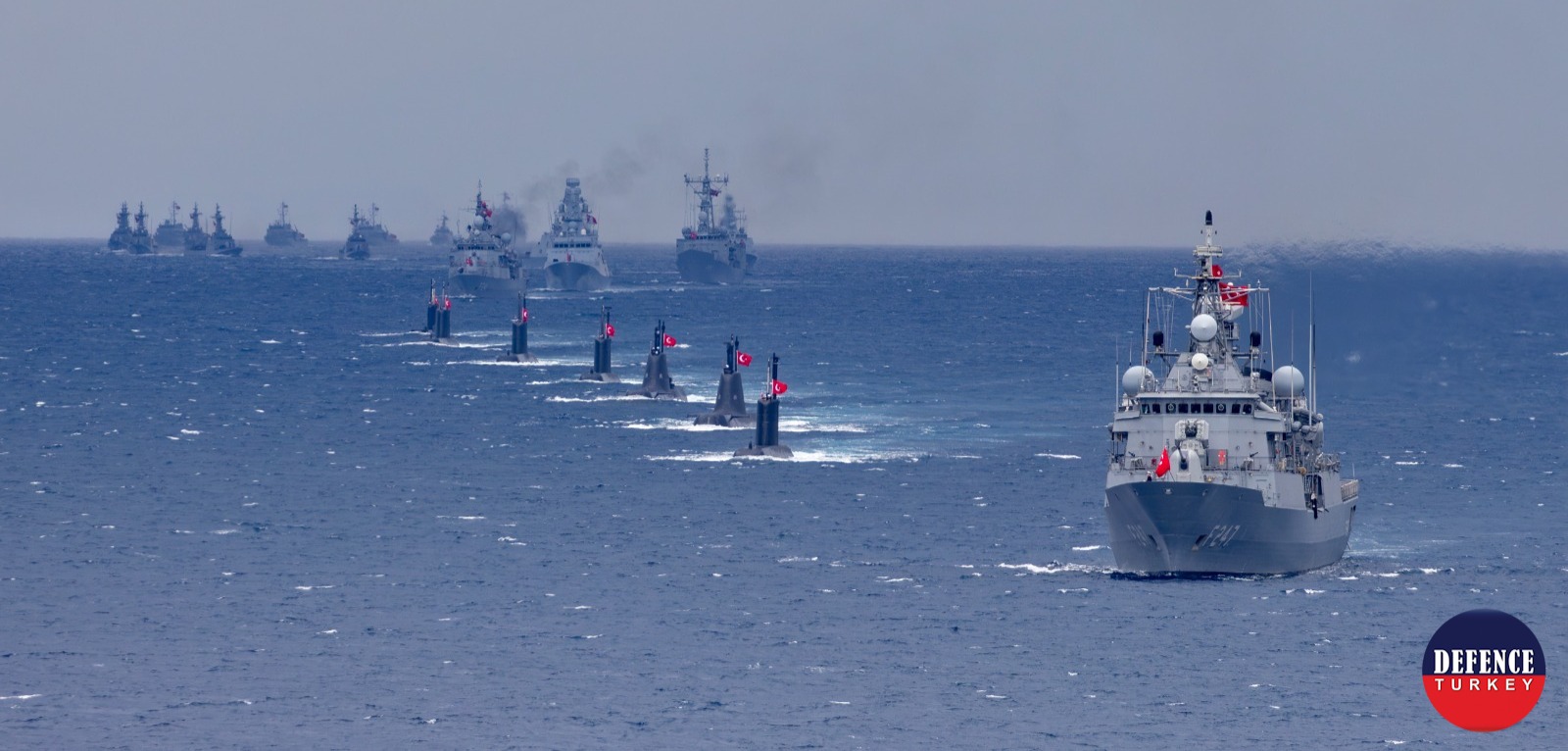
50 naval vessels of all types and one submarine took part in the last two days of the Efes 2024 Combined Joint Live Fire Exercise. Two of them were foreign. One was the Libyan fast attack craft Shafak. She was completed by CMN Cherbourg shipyard in May 1982. She is the sole survivor of a class of 9 boats. She is armed with one 76mm Oto Melara gun and 4 Oto Melara Otomat Mk2 anti-ship missiles. The other foreign warship participating to the exercise was the Italian destroyer Luigi Durand de la Penne. She was in Istanbul in august 2023. Our visit to the ship was largely reported in our previous issues.
Most of the Turkish naval units taking part in the exercise were large landing ships and smaller landing craft. Frigates and corvettes were either used to bombard targets at the landing zone or to provide protection against airborne or sea borne threads. During the landing operations the landing ships are very almost stationary and have very low level of movement. This makes these large ships ideal targets. Therefore, the protection of the landing task force is very important.
In Efes-2024 two very important aspects that were there but not obviously observable were the logistics and the planning. Keeping a fighting force of different nations with different equipment on the field for 30 days is a logistics challenge.
The seat of purpose is on the land. Fleet engagements are not fought in a vacuum but always are connected to and ultimately support operations on land. This is more true in amphibious operations when the target of the whole operation is on the land. We were able to witness the complexity of amphibious operations as it need the expertise and equipment of the naval forces to carry the troops, vehicles, howitzers and equipment of the land forces to the beach while the air force attacks the targets and provides a protective umbrella. It is a daunting task for one nation to coordinate a joint operation for its own three-armed forces. Doing such difficult operations with allied nations each having different military traditions, capabilities and concepts is daunting. Efes-2024 showed us that the Turkish Armed Forces is capable of performing these challenging tasks with perfection