NUSRET-2018 INVITEX Completed
The aim of the NUSRET-2018 INVITEX was to conduct an exercise that provides training for planning, executing and the assessment phases of maritime mine warfare, and to enhance cooperation & interoperability between the navies of allied and friendly nations.
Participating in the NUSRET-2018 INVITEX exercises were;
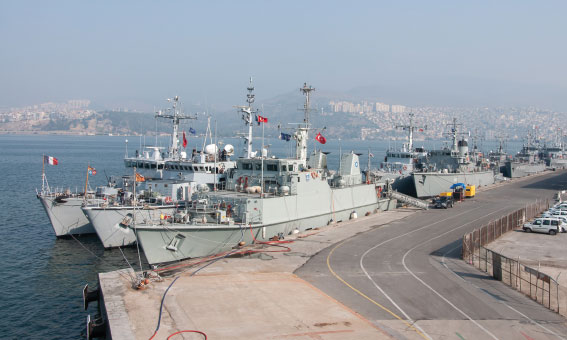
7 Mine Hunters, 1 Command & Control Ship (Mine Layer), 1 Corvette, 1 Patrol Boat, 1 Helicopter, 1 EOD Task Unit, 1 AUV Team, 2 Coast Guard Boat, 2 TurAF sorties and 1 TurAF C-130 from Turkey. As part of the Standing NATO Mine Countermeasures Maritime Group Two (SNMCMG-2); 1 Command & Control Ship from Germany, a total amount of 7 Mine Hunters, each from France, Bulgaria, Spain, Italy, Greece and Turkey. 1 Hydrographic survey ship and 1 Light Autonomous Underwater Vehicle (AUV) Team from Romania. Explosive Ordnance Disposal (EOD) Teams from Romania and Greece. A total of 52 Observers (1 NATO CMRE, 1 Azerbaijan, 1 Georgia, 2 Bahrain, 36 Qatar, 3 Republic of Korea, 2 Kuwait 2 Pakistan, 2 Saudi Arabia and 2 from the USA) and 3 Staff Officers, 1 from Bulgaria and 2 from Romania.
NUSRET-2018 INVITEX was planned by the Southern Sea Area Command and directed by the Commander of Turkish Mine Group Rear Admiral (LH) Ahmet Tunç VEYİSOĞLU at the Mine Warfare Operation Center onboard the TCG Bayraktar (L-402) LST vessel. The Turkish Mine Group Command is located at Erdek, Balıkesir.
On October 16, 2018, a press conference about the exercise was held at the TCG Bayraktar, anchored in Alsancak Harbor and subsequently, companies from the underwater defence industry displayed their products at their stands that were established in the hangar section of the TCG Bayraktar LST vessel and provided information to VIP guests. Fleet Commander Vice Admiral Ercüment TATLIOĞLU, South Sea Area Commander Rear Admiral (UH) Aydın ŞİRİN, Aegean Sea Region Commander Rear Admiral (LH) Cemalettin BOZDAĞ, Commander of the Western Task Group Rear Admiral (LH) Yalçın ÖZKÜTÜK, Commander of Turkish Mine Group Rear Admiral (LH) Ahmet Tunç VEYİSOĞLU and Commander of the Standing NATO Mine Countermeasures Maritime Group Two (SNMCMG-2) Captain Frank MAGINSKY of the German Navy and foreign soldiers participated in the exercise as observers and attended the press conference.
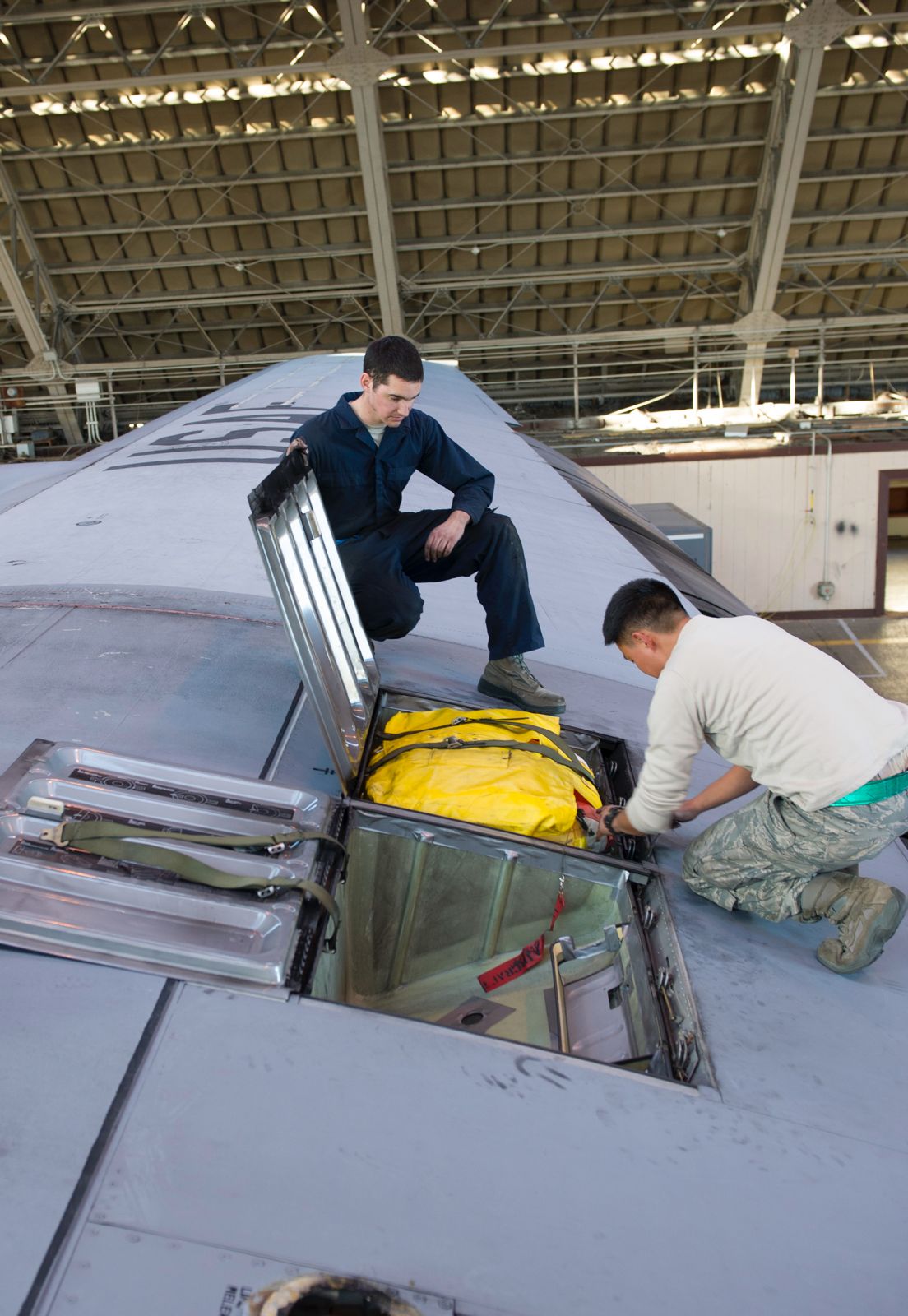
As of October 16, the execution of the first stage activities of the Exercise started and from the air, a C-130 Hercules transport aircraft belonging to the Turkish Air Force air-dropped training type bottom mines at sea and the Command & Control Ship TCG Bayraktar LST Vessel deposited training type bottom mines and moored mines to the previously specified areas.
Press Meeting
Speaking at the Press Conference, Commander of Turkish Mine Group Rear Admiral (LH) Ahmet Tunç VEYİSOĞLU stressed that NUSRET is a Mine Warfare Exercise which is executed in order to enhance cooperation and interoperability between Turkey and the navies of allied and friendly nations.
At his address Rear Admiral (LH) VEYİSOĞLU shared the following information regarding the NUSRET-2018 INVITEX:
“NUSRET INVITEX is named after Turkish Mine Layer “Nusret”, which laid 26 moored mines in the Çanakkale Strait on 7-8 March 1915 that changed the fate of World War I. This operation is still being taught as an “Exemplary Mine Laying Operation” at the NATO Naval Mine Warfare Center of Excellence in Belgium. NUSRET-2018 is hosted by Turkey and I will be conducting it. 1 Command & Control Ship (FGS Rhein) and 6 Mine Hunters (BGS Tsibar, EPS Turia, HS Evropi, FS Orion, ITS Termoli and TCG Erdemli) from SNMCMG-2, 1 Auxiliary Ship (ROS AlexandruCatuneanu) from Romania and 2 EOD Teams from Greece and Romania will participate in the Exercise as Guest Units.
Participating Units from Turkey consist of; 1 Command & Control Ship (TCG Bayraktar), 1 Corvette (TCG Büyükada), 1 Patrol Boat (TCG Karşıyaka), 7 Mine Hunters (TCG Alanya, TCG Amasra, TCG Akçakoca, TCG Akçay, TCG Edincik, TCG Enezve TCG Erdek), 2 Coast Guard Boats, 2 sorties of F-16 Fighter Jets and 1 C-130 Transport Aircraft from the Turkish Air Force, 1 S-70B SeaHawk Helicopter from the Turkish Naval Forces, 1 Explosive Ordnance Disposal (EOD) Task Unit, 1 Autonomous Underwater Vehicle (AUV) Team and 1 Photography Team. All will be under the command of the Commander of the Turkish Mine Group, Commodore of Turkish Mine Division-1, Commodore of Turkish Mine Division-2 and Commodore of the Turkish Training Division.
Participation of allied and friendly nations in the Exercise indicates the remarkable contribution of NUSRET-2018 in the cooperation and interoperability among those nations.
NUSRET-2018 INVITEX will be executed in three consecutive phases including Mine Laying Operations, Mine Counter Measures Operations and Port Visits. The first Phase includes Harbor Training, Surface and Aerial Mine Laying operations. Mine Counter Measure operations will be conducted during the Second Phase of the Exercise. During this Phase, mines (Bottom Mines and Moored Mines) will be detected by Mine Hunting Vessels. These mines will be identified and neutralized by Mine Clearance Divers or Remotely Operated Vehicles (ROVs). During this Phase, AUVs will be used effectively for detection and identification. Force Protection Training will be conducted against asymmetric surface vessels and aerial targets. During the Third Phase of NUSRET-2018 INVITEX; on 24 October PHOTEX and an Exercise Evaluation Meeting (Hot-Washup), an Izmir Port Visit and Social and Cultural activities will be conducted. The Exercise will be concluded on 25 October 2018.”
TCG Bayraktar LST Vessel
Following the press conference, Commander of the TCG Bayraktar (L-402), which was assigned as the Command & Control Ship of the NUSRET-2018 INVITEX and laid several training type bottom mines and moored mines in accordance with the exercise plan the day before, Captain Bülent GÜNGÖR, gave information about the vessel to press members and showed them around the ship. The displacement of the TCG Bayraktar LST is 7,254t, each vessel has an overall length of 139m and can reach a maximum speed of 18+ knots. The ship is constructed as a mono-hull, displacement type with full steel construction. The vessel has 10 decks with 2 elevators, its height from the top of the SMART-S Mk2 radar to the bottom of the keel is 34 meters and 29 meters from top of the SMART-S Mk2 radar to the waterline. Both the superstructure and ship’s bridge windows have ballistic protection against 7.62mm bullets. Constructed by Anadolu Deniz İnşaat Kızakları Sanayi ve Ticaret AŞ (ADİK Shipyard); the vessel has full crew protection against Nuclear, Biological and Chemical (NBC) attacks.
The Chemical Biological Radiological and Nuclear (CBRN) Protection System installed on the TCG Bayraktar and the TCG Sancaktar LST vessels, is the biggest system within the Turkish Naval Forces Command in terms of protection capacity. The system, which has a 97% (only one foreign origin biological sensor and filter) local content share, was developed by TÜBİTAK, Turkish Atomic Energy Authority and Matell cooperation. There are three different entry points on the ships, (at the main deck, at the flight deck, and at the tank deck) for CBRN decontamination. The ship also has an Automatic Outer Wash System (a raw-water washdown system), which allows the washing of the exterior surfaces after chemical contamination. The ship’s hull and the superstructure can be washed with the sprinklers fed by seawater pumps. It was observed during the tests that the system was activated within three minutes following the start command. “Washdown” capability cannot be used for IR suppression since such a system is not mounted on the ship’s chimney. Sensors are installed in different parts of the ship to detect and alert of CBRN contamination and when one of these sensors detects a CBRN agent it activates an alarm. TCG Bayraktar and TCG Sancaktar LST Vessels are equipped with the Sea Sentor Torpedo Countermeasures System (TCMS) from the company Ultra Electronics against torpedoes threats. Because Aselsan’s Hızır TCMS solution was not ready at that time, the Sea Sentor system, which was used in the first two corvettes of the ADA Class, was ordered. Sea Sentor is able to counter torpedo threats both by using expendable decoys that are deployed from the launchers located on the port and starboard and by applying a magnetic field. There are both acoustic and magnetic (it includes a magnetic device that can cause the torpedo to detonate prematurely) sensors on the fiber optic array, which can be deployed into the sea within 20 minutes.
The ship features a large flight/helicopter deck (it has the largest and highest capacity available on the vessels currently serving in the TNFC with dimensions of 36mx20m) with a single landing spot that enables landing and take-off operations of 15-ton utility helicopters. However, the helicopter deck is not equipped with the ASIST helicopter landing and take-off system although there is a lighting system for easier landing and take-off. The ASIST system allows the helicopters that will be deployed onboard the ship to perform safe landing and takeoff both day and at night even in high weather and sea conditions. Although the platform has yet to be certified for the CH-47F Chinook helicopter, the 12.5-ton Chinook Helicopter can land on board if it’s not carrying cargo, but it is not possible to land on the ship when its loaded, so Chinook has to perform refueling while hovering above the ship. The ship can operate seamlessly at Sea State-5 conditions and can also be operated at Sea State-6 or higher, with limitations. Additionally, it will support limitless helicopter operations at Sea State-4 conditions.
For embark/disembark operations, the vessel features bow, stern and port-side doors. The ship also has three self-propelled pontoons and four indigenously designed and constructed LCVPs (Landing Craft, Vehicle and Personnel), each capable of carrying 8 tons of cargo or 40 personnel, and able to achieve a maximum speed of 40 knots (at full load 27 knots). They are lowered and raised by two large hydraulic cranes mounted just forward of the superstructure, one port and one starboard. According to our information, although the target time was set as 20 minutes during the EFES-2018 Exercise, the 4 LCVPs on board was launched in 15 minutes and the first landing was performed with these 4 LCVPs. LCVPs are designed to carry up to 8 tons of cargo, for example, during a landing operation on an island this allows the vessels to carry Pedestal Mounted Stinger (KMS) Systems to the shore which can provide close air support for the island and the soldiers participating in the operation. In addition, as a preliminary training for the TCG Anadolu LHD Ship, in the upcoming days, training will be carried out for the transfer of the vehicles directly from the TCG Bayraktar’s deck to the LCVPs by marrying the LCVPs to TCG Bayraktar’s stern door. Under normal conditions, 13 Main Battle Tanks (MBT) can be carried on the ship’s Tank Deck, it is possible to increase this number up to 19 by changing the other weights inside the vessel (such as by carrying less fresh water and/or fuel). According to our information, the basic criterion for the carrying capacity of the vessel is the volume and weight of the MBTs. A Turn Table, with mounting points for the safety of the MBTs, while cruising, is used for the rotation of the tanks on the Tank Deck, with this system, MBTs can point turn on the Tank Deck without damaging paint during loading and unloading.
TCG Bayraktar, which has the ability to carry and lay bottom mines and Moored Mines, performed its first mine-laying operation during NUSRET-2017 INVITEX which was planned and executed by the North Sea Area Command between November 24 - December 3, 2017. The stern door can be operated in two separate modes, which allows both MBT loading/unloading and mine laying. At the aft of the Tank Deck, there are two separate hatches on the floor. When these hatches are lifted, a hydraulic system raises from the bottom and takes mines from the rails at a pre-programmed rate based on time and distance then automatically deploys these mines at intervals. Both software and hardware of The Automatic Mine Laying System are produced locally.
The TCG Bayraktar LST Ship, which was delivered on April 22, 2017, with a 70.68% local industry participation rate, can stay at sea for 40 days with 140 personnel (previously 30 days, but with improvements made during the SAT phase, this period was extended by 10 days) and 20 days with a maximum capacity of 565 personnel.
There are more than 3,600 valves, 600 of which can be monitored and remotely controlled via the Shipboard Monitoring and Control Station on the bridge. During landing operations, the forward draft of the vessel can be adjusted to the water depth in the landing area. For example, if needed, liquids in the forward part of the ship can be moved aft of the ship with the help of valves, so that the bow of the vessel can be raised upwards. This capability also allows the ship to recover the ramp if it gets stuck on the beachhead during landings. The TCG Bayraktar, has two tunnel-type bow thrusters which can be rotated to both port and starboard side of the vessel. There are 68 motion-sensitive (starts shooting when it perceives motion) CCD (Charge-Coupled Device) cameras on board the ship and which 5 of them can be rotated. The ramps on the ship were produced by British company MacGregor and used for moving the vehicles to the upper deck of the ship.
One of the areas we visited on the ship was the Combat Information Center (CIC), where the information from different sensors on the ship is collected, analyzed and, if necessary, the “Fire” command is given by the Commander of the ship. The locally designed and produced GENESIS Combat Management System (CMS) which runs on the consoles in the CIC, includes national software consists of 3.9 Million lines of source code. With GENESIS CMS, more than 2,500 air, surface and submarine contacts can be monitored automatically simultaneously. When in automatic mode during the engagement phase, it automatically displays 8 prioritized threats on the engagement screen with the help of an algorithm within the system and starts a countdown for 3 of them (since the CMS accepts Phalanx as a single unit, it plans a maximum of three engagements for the threats from the front, back and sides) assigned to the weapons on the ship. When threats are in range, the GENESIS CMS issues a Ready to Fire Warning. The ship starts firing with the authorization of the Commander of the Ship. The TCG Bayraktar is equipped with two Leonardo (former Oto Melara) 40L70 Single Fast Forty naval guns with stealth turrets and two 20mm Mk-15 Phalanx Block 1B Baseline 2 Close-In Weapon Systems (CIWS). The Bayraktar Class LSTs, are the first Turkish warships that received the Mk-15 Phalanx Block 1B Baseline 2 CIWS configuration. The TCG Bayraktar entered the TNFC service without the Phalanx systems, which were installed (this time without gun barrels) almost four months after the commissioning. When we visited the IDEF-17 Fair in May, there was no Phalanx console in the Combat Information Center, however, this time we noticed that the Phalanx operator console was installed. According to our information, Phalanx CIWS has been fired recently, and as of October 16, the system integration for the Phalanx CIWS into GENESIS CMS is still in progress. The CIC, which consists of two separate sections, also include the SAMAN Infrared Countermeasure Systems console against guided missile threats. The system is able to deploy flares (SAMAN) against IR Guided Missile threats and chaff (KALKAN), against RF-Guided Missile threats. All operator consoles include a joystick which allows the 40L70 Fast Forty guns to be controlled from each console as required. The second part of the CIC is designed for multi-purpose use with a Remote Interview Device (the other one in the Captain’s Cabin) and 2 large LCD screens, commander console and 10 desktops. During an Amphibious Operation or a Mine Laying Operation like the way it executed in NUSRET-2018 INVITEX, the second part can be used as a Joint Operations Command Center. In case of a natural disaster, this section, which operates independently from GENESIS CMS and includes Microsoft-based commercial computers, can also serve as a Natural Disaster Management Center. Representatives of the relevant institutions can connect their satellite phones and external broadcast devices to their internet networks via computers here during earthquakes or natural disasters.
Underwater Defence Industry Exhibition
In the afternoon session of the event, Fleet Commander Vice Admiral Ercüment TATLIOĞLU, South Sea Area Commander Rear Admiral (UH) Aydın ŞİRİN, Aegean Sea Region Commander Rear Admiral (LH) Cemalettin BOZDAĞ and Commander of Turkish Mine Group Rear Admiral (LH) Ahmet Tunç VEYİSOĞLU, visited the booths of the underwater defence industry companies at the Tank Deck of the TCG Bayraktar LST and received information about the products from company representatives. In this section of our article, we will share information about Armelsan, Aselsan, Teledyne Gavia and Hoytek Demre, companies that participated in the event.
Armelsan
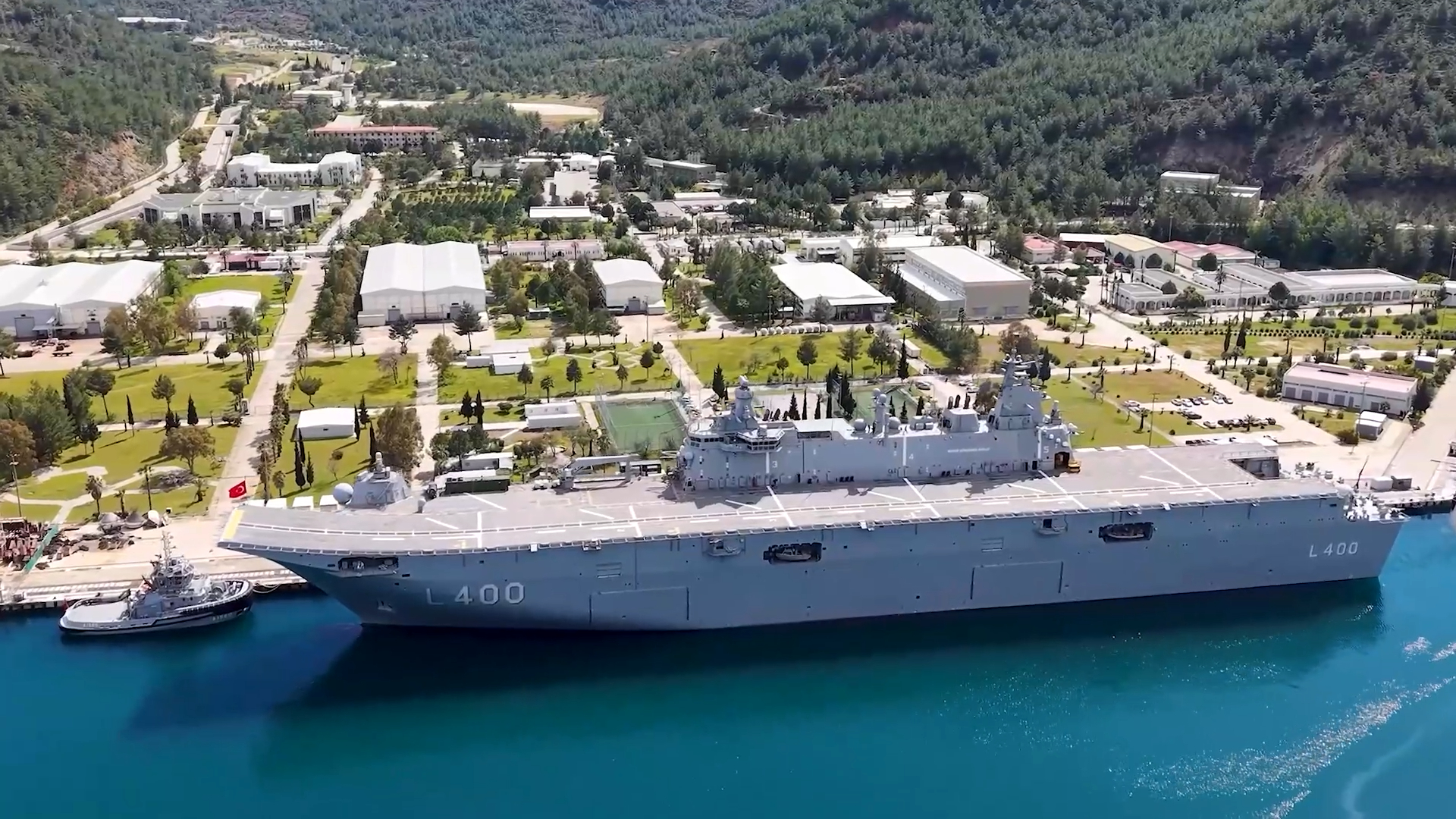
Armelsan, which introduced its Mine Hunting Sonar (NUSRAT-1915), Hull-mounted Anti Submarine Warfare Sonar (MELİS-2071) and Diver Detection Sonar solutions at the exhibition area, will deliver two Diver Detection Sonars (ARAS-2023) which will be placed at the bow and stern of the TCG Anadolu (L-400) Multi-Purpose Amphibious Assault Vessel under a contract signed in 2015. Together with the sonars, three separate cranes will be placed on the ship so that the user can operate the sonar at the desired location. According to the company official, the ARAS-2023 Diver Detection Sonar (DDS) will be able to detect a diver with a closed-circuit breathing system from 450m (900m diameter), a diver with an open-circuit breathing system from 800m (1,600m diameter) and Swimmer Delivery Vehicles (SDV) from 1km (2km diameter). During the tests conducted last May with the participation of TNFC officials, the ARAS-2023 Diver Detection Sonar was able to detect a diver with a closed-circuit breathing system from 420m and an open-circuit breathing system from 700m. According to the company official, the detection distance of 700m gives 15 minutes preparation time for the necessary reaction and intervention. The “wet end” of the ARAS-2023 DDS weighs 40kg, has deployment depth of 5-50m and has an operational frequency of 70kHz with a 360-degree acoustic coverage area. The ARAS-2023 DDS, which will be integrated to the CMS on board, can be deployed from a crane as well as by hand or it can be secured to the desired location by connecting it to the bottom of the sea with a tripod for port security tasks. Sonar’s communication with the ship (digital data) and energy needs are provided via cable. According to our information, the electronics and software used in the prototype system are national, but cables and sensors are of foreign origin. The company official pointed out that they are currently studying the nationalization of the sensors. According to the Armelsan official, the ARAS-2023 DDS is included in the BARBAROS MLU contract as an option and it is on the agenda for all new generation surface platforms. As the BARBAROS Class Frigate (118m) has a smaller hull compared to the TCG Anatolia (232m) and only one sonar is necessary to provide necessary protection against diver and SDV threats.
Armelsan will also replace the AN/ASQ-56 hull-mounted active/passive sonar onboard the vessels under the BARBAROS MLU Project with the National Hull-Mounted Sonar in cooperation with Aselsan. Within the scope of this project, a contract was signed between the Main Contractor Aselsan and the SSB in June 2018. Later, Aselsan signed a sub-contract with Armelsan in August 2018. According to our information, Aselsan/Armelsan competed in the tender with Meteksan Defence, which provides the YAKAMOS-1 hull-mounted active/passive sonar system for the ADA Class Corvettes and proposed the YAKAMOS-2 sonar under the BARBAROS Class Frigate Mid-Life Upgrade (MLU) Project. Under the contract signed in June 2018, Aselsan/Armelsan will deliver 4 hull-mounted sonars in a 60-month calendar and the deliveries will start on the 24th month for the first vessel and once every 12 months for the following vessels. BARBAROS Class Frigates will also be equipped with GENESIS ADVENT CMS. Under the contract, the Aselsan/Armelsan partnership will unveil the sonar prototype in the 12th month and start the Factory Acceptance Tests (FATs) in the 18th month. It is stated that the Aselsan Hull-Mounted Sonar System, which will operate in the medium frequency band (1kHz-10kHz), will use the same sonar array with the YAKAMOS-1 so it can replace the existing sonar systems when needed. According to an Armelsan official, the same sonar array design is planned to be used on I Class Frigates and TF-2000 Anti-Aircraft Warfare (AAW) Destroyers. Within this framework, the proposal for I Class has been submitted and the decision of the SSIK (Defense Industry Executive Committee/DIEC) on the selection of the company is expected. However, according to our information, the first I Class Frigate TCG Istanbul will not use the Aselsan/Armelsan sonar system. The procurement authority for the TCG Istanbul Frigate has been granted to the SSB with the decision made at the last SSIK/DIEC meeting held on 11 October 2018. Sonar is the most power-consuming system in the underwater acoustic world. The performance of power amplifiers plays an important role in the sonar’s performance. If the power amplifiers are not efficient enough, for example, 60% efficient, to emit 50kW pulses 40kW of energy will be released into the air, this situation not only creates an overheating problem but also lowers the performance of the sonar. According to the company official, the new sonar can emit up to 50kW pulses in water and will have 97% energy efficiency. As only 1kW of the energy will be released into the air, it will have better cooling and have much better performance than the YAKAMOS-1. Due to the high energy efficiency, more energy can be released into the water than the YAKAMOS-1, this allows the sonar to emit longer pulses which enables target detection at longer ranges.
Under the R&D contract signed with the SSB in October 2017, Armelsan is developing a new type of mine detection and classification sonar for Mine Hunting Vessels in the service of the TNFC. The new Mine Hunting Sonar, NUSRAT-195, will be able to detect and classify both bottom mines and moored mines. The Sonar, which is intended to perform its duty at a speed up to 8 knots and with sea level 5, will operate at a 70kHz frequency band in detection mode and 420kHz frequency band in classification mode. Depending on environmental conditions it will be able to detect moored mines up to 1,000m and deep mines up to 750m with 2m accuracy. The classification range is aimed to be 250m with 1m accuracy. According to the information given by the company official, the sonar systems onboard the Mine Hunters in the service of the NFC have only detection mode, so they cannot classify the detected mines but with the installation of the NUSRAT-1915 they will gain the capability to classify them. Since Engin Class Mine Hunters have analog sensors the existing sonar system will be compatible with the NUSRAT-1915. However, since Aydın Class Mine Hunters have a digital sensor system, the NUSRAT-1915 will not be compatible with these ships and will require a complete replacement of the system. The project contract has a 4-year schedule including 3 years of sea trials. Within this scope, it is aimed to carry out the detection tests in 2019, the classification tests in 2020 and the delivery of the sonar prototype in 2021.
According to our sources studies have been launched to develop a national dipping sonar system which will have similar features with the long-range DS-100 Helicopter Long Range Active Sonar (HELRAS), which has been in the TNFC service since 2001 and almost led the carrier S-70B SeaHawk ASW/ASuW helicopters to crash several times in the past (helicopters were saved from the crash by cutting the HELRAS sonar wet end cable). Within this scope, a proposal submission is expected from TüBiTAK SAVTAG (Defence and Security Technologies Research Support Group) under the 1007 Program in the upcoming days. Aselsan is expected to take part in the project. It aims to locally develop a dipping sonar which will have similar features to the DS-100 HELRAS by utilizing national resources. On the other hand, as a separate study, a Technology Acquisition Obligation (TKY) Project was started for the Helicopter Sonar by the SSB Naval Platforms Department. Even though the contract has not yet been signed with Armelsan as of 16 October, under the project, studies are expected to start sometime this year.
Operating at a frequency of 1.38kHz, the HELRAS ‘wet end’ comprises a receiver array of eight hydraulically driven arms which expand to a diameter of 2.6m when deployed and a transmitter array of seven projector elements (plus an Underwater Telephone [UWT] Transducer) suspended below the submersible unit (wet end) to form a 5.2m vertical projector array. Weighing 155kg (system’s total weight is 326kg) the maximum operating depth of the HELRAS ‘wet end’ is 500m. The cable of the DS-100 HELRAS, used during descending and ascending (up to a depth of 500m), caused some technical problems in the past and was replaced by the company L3 Ocean Systems together with a software update. According to an Armelsan official, because it operates in a low-frequency band HELRAS is designed to perform tasks in high seas/oceans, it is not suitable for use in shallow waters surrounding Turkey. A sonar system operating at a frequency of 10kHz is a more convenient solution for Turkey. Armelsan, which was founded in 2011 and started its R&D activities in 2015, is also overseeing the development of the Low-Frequency Active Sonar System (DÜFAS) under the Project initiated by the SSB R&D Department (now Technology Management Department). Armelsan, entering the tender with Aselsan, competed with TüBiTAK MAM and Meteksan Defence. The aim of this project is to introduce active sonar/detection capability in addition to the passive sonar/detection capability that still exists in the Aselsan product, the HIZIR Torpedo Countermeasure System. Aselsan and Armelsan will sign a contract in October (according to the company official during the week of October 22nd). DÜFAS, operating below the 5kHz low frequency band (3kHz) in active mode, will be designed as a replacement for the Towed Decoy (TD, located at 650m of the TA) on the Towed Array (TA, a passive sonar array with a total length of 800m, it includes a magnetic device that can cause the torpedo to detonate prematurely) of the Aselsan made HIZIR CMS. To accomplish this the DÜFAS sonar array and acoustic transducer (the transducer will be developed by Aselsan, and the power system on it will be Armelsan) must be small enough to fit inside the 10cm diameter of the towed array. If it can be accomplished the Tower array will be able to operate in both active and passive modes and through the active mode it will be able to detect targets (submarines) from much longer distances. In case of demand, HIZIR TCMs in the inventory can also be upgraded with DÜFAS capability, and for this purpose the towed decoy on the HIZIR TCMS towed array needs to be replaced (only available at the factory level) with DÜFAS. Although the TF-2000 AAW Frigate was selected as the target platform of the project, if the tests to be conducted with the prototype were successful and the product got an approval from the TNFC, this ability could be brought to other ships in the service equipped with the HIZIR TCMS. It is planned to develop a prototype within 3 years and to make a technology demonstration (demo) to the TNFC. According to the current schedule, sea trials with DÜFAS will be carried out in the 24th-26th month of the project.
Aselsan
Aselsan showecased a model of the Mine Detection Sonar System (MATESS), which has been integrated on the TCG Edincik (M-260) Mine Hunter Vessel in the service of the TNFC and is still being tested as of 16 October. Following the completion tests in December 2018, MATESS is expected to officially enter the TNFC service in the first quarter of 2019. MATESS, consisting of a Transducer Array, Transmitter and Receiver Unit, Signal Processing Unit and User Interface Unit, is a Mine Detection and Avoidance Sonar providing automatic detection, localization and classification capability for underwater objects. MATESS integration efforts on Engin (former Circe) Class TCG Edincik Mine Hunters started in 2017 to replace old generation DUMB 20B mine hunting sonar on board. Another product developed by Aselsan and introduced at the event was AselBuoy, a Passive Directional Sonobuoy which operates on a VHF band and is capable of broadcasting 20km away. It can be deployed from Maritime Patrol Aircraft (MPA) and surface ships and the AselBuoy can operate at two different depths (30m and 150m) and to provide directional acoustic information in the 5 – 2,400Hz frequency band on the horizontal plane. As an expendable system, the AselBuoy can send this acoustic information to MPAs and surface ships via one of its 96 VHF communication channels out to a distance of 20km. During SAVTEK-2018, the 9th Defense Technologies Congress held at the METU Culture and Congress Center in June 2018, we had the opportunity to meet with an Aselsan official who stated that AselBuoy launch tests were recently carried out from a launcher attached to a Cessna aircraft and listening tests will be carried out in 2018. Aselsan is also developing an active mode AselBuoy. This will bring forth the ability to detect stationary and silent submarines that is not possible within the passive mode.
Teledyne Marine
Teledyne Marine exhibited its Gavia AUV system which has been operational on board the TNFC’s Aydın Class Mine Hunters Vessels (MHVs) since 2016 under the name of ÇAKABEY. 4 Gavia/ÇAKABEY AUVs have been supplied by the company to be used on 6 Aydın Class MHVs in TNFC service. With this order, the TNFC has become the first user of the Gavia AUV, which can operate in a depth up to 1,000 meters. The Gavia AUV, which performs wireless tasks, can go to the previously defined area and take pictures underwater with its camera. The captured images/photographs and the obtained sonar data are transferred to the computer via Wireless LAN/internet network and Wireless LAN after the Gavia AUV is returned to the ship. The Gavia AUV, which operates around 4 hours with a single battery and 8 hours with two batteries, has a normal cruising speed of 3 knots and a maximum speed of 5.5 knots. The Gavia AUV can descend to a depth of 1,000m in 15-20 minutes depending on currents and sea conditions. The Gavia AUV is 200mm in diameter and depending on the configuration has a length of 1.8m-4.5m and 50kg-130kg in weight. The Gavia AUV, which can be deployed and operated by 2 personnel, also served during NUSRET-2018 INVITEX.
Hoytek Engineering
Hoytek Engineering was established in 2015 with the aim of developing robotic systems solutions by designing and building work class Remotely Operated Underwater Vehicles (ROVs) and Autonomous Underwater Vehicles (AUVs) to provide complete solutions to meet customer requirements. The company with its FİNİKE, DEMRE, MYRA, and LYRA ROV solutions, in the ROV product range, delivered a work class ROV System to the Turkish Naval Forces Command (TNFC), which is being used onboard the Rescue and Towing Ship TCG Işın (A-583). The ROV Worker-77 (ArgusWorker) produced by Argus Remote Systems for the Turkish Naval Forces can operate at depth of 3,000 meters