Offshore Patrol Vessels: Versatile & Cost-Effective Platforms for Naval Forces

On the high seas navies are not only a warfighting force but also a constabulary force. It has been difficult for most navies to balance and carry out these two different roles. Some smaller nations have decided to channel their modest means in favor of a naval constabulary force or a coast guard instead of buying expensive warships.
However most naval nations do not have this luxury. The maritime security challenges continue to evolve, navies and coast guards around the world are seeking cost-effective solutions to safeguard their territorial waters and exclusive economic zones (EEZs). Offshore Patrol Vessels (OPVs) have emerged as a versatile class of warships that fulfill a range of operational concepts while offering significant cost savings. These vessels are typically smaller and less heavily armed compared to larger warships such as destroyers or frigates.
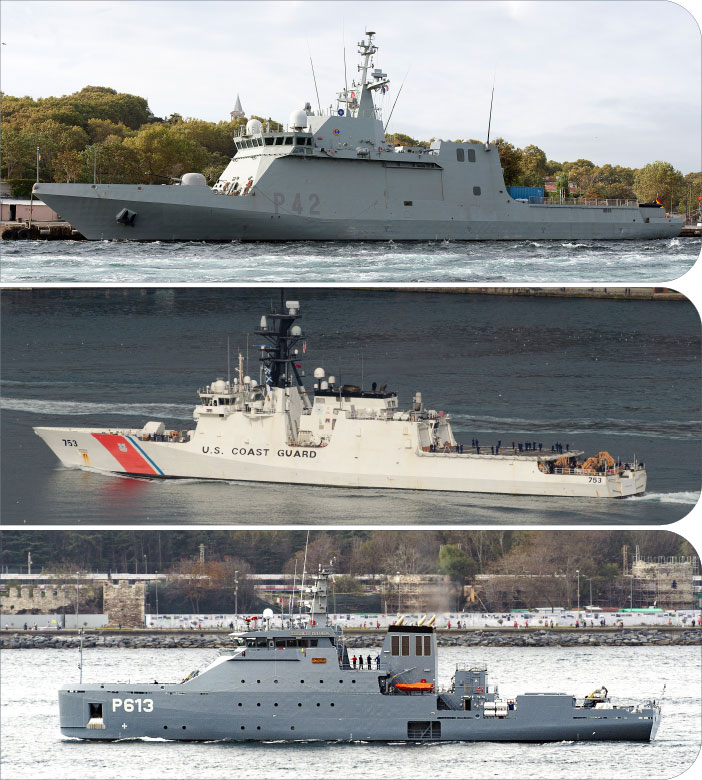
The primary purpose of an OPV is to conduct various maritime security operations, including law enforcement, anti-smuggling efforts, counter-piracy operations, fisheries protection, and search and rescue missions. OPVs are often utilized by navies, coast guards, and other maritime security agencies to safeguard territorial waters, deter illegal activities, and maintain maritime domain awareness.
Although there are some examples of high end OPVs where the naming these vessels as OPV instead of light frigates or corvettes is politically motivated. The procurement of purpose-built ships, for low-cost deployment in constabulary duties in place of expensive warships designed to combat peers has been attractive both to navies and treasury departments.
One of the key advantages of OPVs lies in their cost efficiency. These vessels are typically smaller and less complex than traditional warships, resulting in lower acquisition, operating, and maintenance costs. The reduced crew requirements, simplified systems, and lower fuel consumption contribute to overall savings, making OPVs an attractive option for nations seeking to maximize their defense budgets.
Additionally, OPVs offer operational flexibility, capable of fulfilling multiple roles such as patrol and surveillance, law enforcement, search and rescue, counter-piracy operations, and humanitarian assistance. By employing dedicated OPV fleets for these missions, naval forces can conserve their larger warships for more specialized and demanding operations.
The operational concepts for OPVs can vary depending on the specific requirements and objectives of the operating nation or organization. However, there are several common operational concepts that are often associated with OPVs. Here are a few key concepts:
Patrol and Surveillance: The primary operational concept of an OPV is to conduct patrols and surveillance operations in designated areas, such as a country's exclusive economic zone (EEZ) or other maritime jurisdictions. OPVs are designed to maintain a visible presence and monitor maritime activities to deter illegal actions, enforce laws, and ensure maritime security.
Law Enforcement: OPVs are frequently employed for law enforcement tasks at sea, including combating illegal fishing, smuggling, drug trafficking, and other illicit activities. They can perform boarding operations, inspections, and apprehension of vessels suspected of engaging in illegal actions. OPVs often carry law enforcement personnel, equipment, and facilities to support these operations.
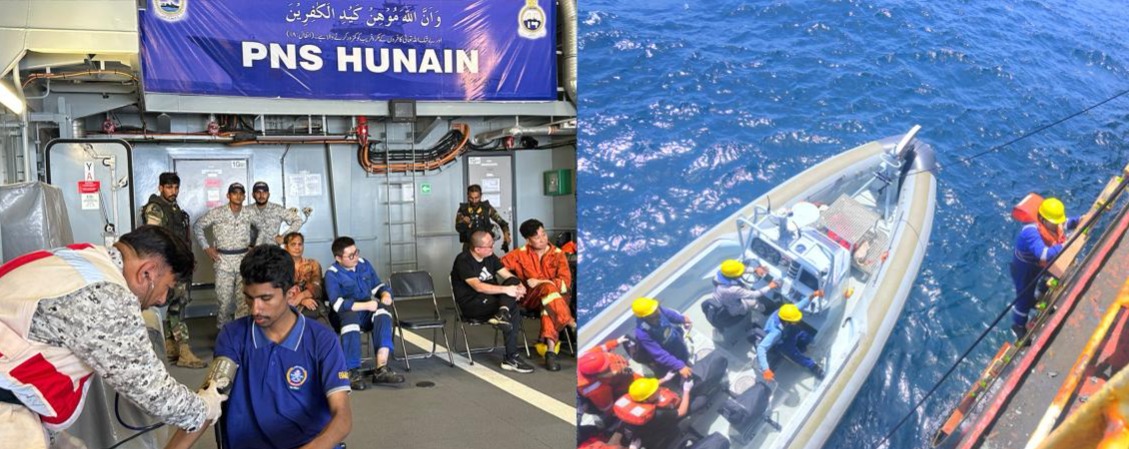
Search and Rescue: Many OPVs are equipped with capabilities for search and rescue operations. They can respond to distress calls, coordinate rescue efforts, and provide assistance to vessels or individuals in distress. OPVs may have medical facilities, rescue boats, and trained personnel to handle various SAR scenarios effectively.
Counter-Piracy Operations: OPVs are also involved in counter-piracy efforts, particularly in regions where piracy is prevalent. They can patrol high-risk areas, deter pirate attacks, and, if necessary, engage in maritime interdictions and boarding operations to suppress piracy activities.
Maritime Domain Awareness: OPVs contribute to maintaining maritime domain awareness by collecting and analyzing information related to maritime activities. They monitor vessel traffic, conduct surveillance missions, and share information with other maritime security agencies to enhance situational awareness and maritime security.
Humanitarian Assistance and Disaster Relief: In times of natural disasters or humanitarian crises, OPVs can be deployed to provide assistance and support. They can transport relief supplies, evacuate affected populations, and serve as a platform for coordinating humanitarian operations in coastal areas or remote islands.
While the tasks required from the OPVs are very similar throughout the navies not all OPV are created equal. Navies tend to interpret the missions differently and there are different types of OPVs. We can put OPVs into two categories. Basic vessels ships intended for lower intensity policing and advanced vessels equipped for a warfighting role.
The basic vessels are in general the more sought-after type as they fully meet the definition of an OPV. However, some navies facing increasing geopolitical tensions tend to invest in high end ships with advanced combat management systems and sensor suites.
It is a balancing act between investment in manpower, ships, weapons and sensor for the all the parties involved in an OPV development project. Using an OPV instead of a regular warship for certain operational concepts can result in cost savings for a naval force. However, the exact savings will depend on various factors, including the specific warship being replaced, the size and capabilities of the OPV, and the operational requirements of the mission.
The basic simpler OPVs are generally smaller and less complex compared to larger warships, such as frigates or destroyers. As a result, they tend to have lower acquisition costs. Such ships have lower operating and maintenance costs compared to larger warships. They require smaller crews, which means reduced personnel expenses, including salaries, training, and accommodation.
Moreover, OPVs generally have simpler systems and equipment, leading to lower maintenance and lifecycle support costs. The fuel consumption of OPVs is also typically lower due to their smaller size, resulting in reduced operational expenses.
OPVs are designed to perform a variety of roles and missions, as mentioned earlier. Their versatility allows them to be deployed for tasks like patrol, surveillance, law enforcement, and search and rescue. By having a dedicated OPV fleet for these specific tasks, a naval force can avoid deploying larger warships that may be more expensive to operate and maintain, thus saving on operational expenses.
European shipyards are leading the OPV market both in terms of design and ships delivered. Since OPVs do not need to be constructed to the high military ship building standards and tend to be smaller than frontline warfighting ships, some smaller specialized shipyards that are not usually associated with naval shipbuilding are giving good competition to larger naval ship building companies.
Here is a short look into some of the OPV projects from around the world:
Naval Group (France): Naval Group is a leading naval defense company that offers a range of OPVs. One of their notable OPV designs is the Gowind-class OPV. The Gowind-class OPVs are available in different sizes, with lengths ranging from 87 to 111 meters. These vessels feature advanced command and control systems, high-performance sensors, and communication suites. They have a maximum speed of 20+ knots and a range of approximately 3,500 nautical miles. The Gowind-class OPVs can accommodate a helicopter and are adaptable to various missions, including surveillance, anti-piracy operations, and humanitarian assistance.
Fincantieri (Italy): Fincantieri is a prominent Italian shipbuilding company known for its OPV designs. Their Thaon di Revel class also known as PPA -'Pattugliatore Polivalente d'Altura / Multipurpose Offshore Patrol Vessel – OPV represent the very high end of this class of warships. The Italian Navy intends to replace four Soldati class light patrol frigates and eight Minerva class corvettes between 2021 and 2035.
The Thaon di Revel class is designed with a high level of modularity and automation. The ships will be delivered in full, a light+ and a light configuration in terms of different sensors and equipment and can perform multiple functions, ranging from patrol with sea rescue capacity to civil protection operations. It will be very difficult to call this ship in its Full version as an OPV.
Damen Shipyards Group (Netherlands): Damen Shipyards is a renowned Dutch shipbuilding company offering a diverse range of vessels, including OPVs. One of their notable OPV designs is the Damen Stan Patrol Vessel (SPV) series. The SPV series includes vessels of various lengths, ranging from approximately 40 to 75 meters. These OPVs feature robust construction, adaptable layouts, and modular designs, allowing for customization based on customer requirements. The vessels are designed for long-duration patrols, have a top speed of around 25 knots, and offer excellent seakeeping capabilities.
Bharati Defense and Infrastructure Limited (India): Bharati Defense, an Indian company, offers the Saryu-class OPVs. These vessels, in service with the Indian Coast Guard, have a length of approximately 105 meters, a maximum speed of around 25 knots, and a range of 6,000 nautical miles. The Saryu-class OPVs are equipped with advanced sensors, communication systems, and self-defense armament. They feature helicopter decks and can undertake missions such as surveillance, patrolling, anti-piracy operations, and maritime law enforcement.
Lürssen (Germany): While Lürssen is a German company, it has a significant presence globally and has designed OPVs for various countries. One of their notable OPV designs is the Darussalam-class OPV, built for the Royal Brunei Navy. The Darussalam-class OPVs have a length of approximately 80 meters, a top speed of around 22 knots, and a range of about 7,500 nautical miles. These vessels feature advanced surveillance and communication systems, self-defense armament, and the capacity to operate helicopters. They are versatile platforms suitable for patrolling, surveillance, and maritime security operations.
Garden Reach Shipbuilders & Engineers (India): Garden Reach Shipbuilders & Engineers (GRSE), an Indian company, offers the Kamorta-class OPVs. These vessels, in service with the Indian Navy and Sri Lankan Navy, have a length of around 110 meters, a maximum speed of 25 knots, and a range of approximately 6,000 nautical miles. The Kamorta-class OPVs are equipped with state-of-the-art combat systems, advanced sensors, and self-defense armament. They can accommodate helicopters and are designed for multi-mission capabilities, including anti-submarine warfare, anti-surface warfare, and coastal defense.
In 2020 Türkiye started its own OPV project. A contract was signed between ASFAT and Naval Shipyards for the construction of 2 OPVs based on the famous Milgem ship design. Therefore, these OPVs will have a very similar hull and superstructure to the 4 Ada class corvettes in the Turkish Naval Forces, 4 Pakistani Babur class corvettes and two Ukrainian Ivan Hetman class corvettes.
The construction of the first ship Akhisar started in April 2022 and the work on the second ship Koçhisar commenced a few months later.
The ships will have one MKEK 76mm main gun and two 12,7mm Targan RWS as weapons. According to ASFAT however the following weapons systems might be fitted on if the end user wishes: one Aselsan Gökdeniz CIWS, 8 Hisar air defense missiles in VLS, 8 Atmaca anti-ship missile, 2 ASW rocket launcher with 6 rockets each. If all these mentioned weapons are fitted on board the Hisar class OPV they would be more heavily armed than Ada class corvettes thus defiling the logic of an OPV.
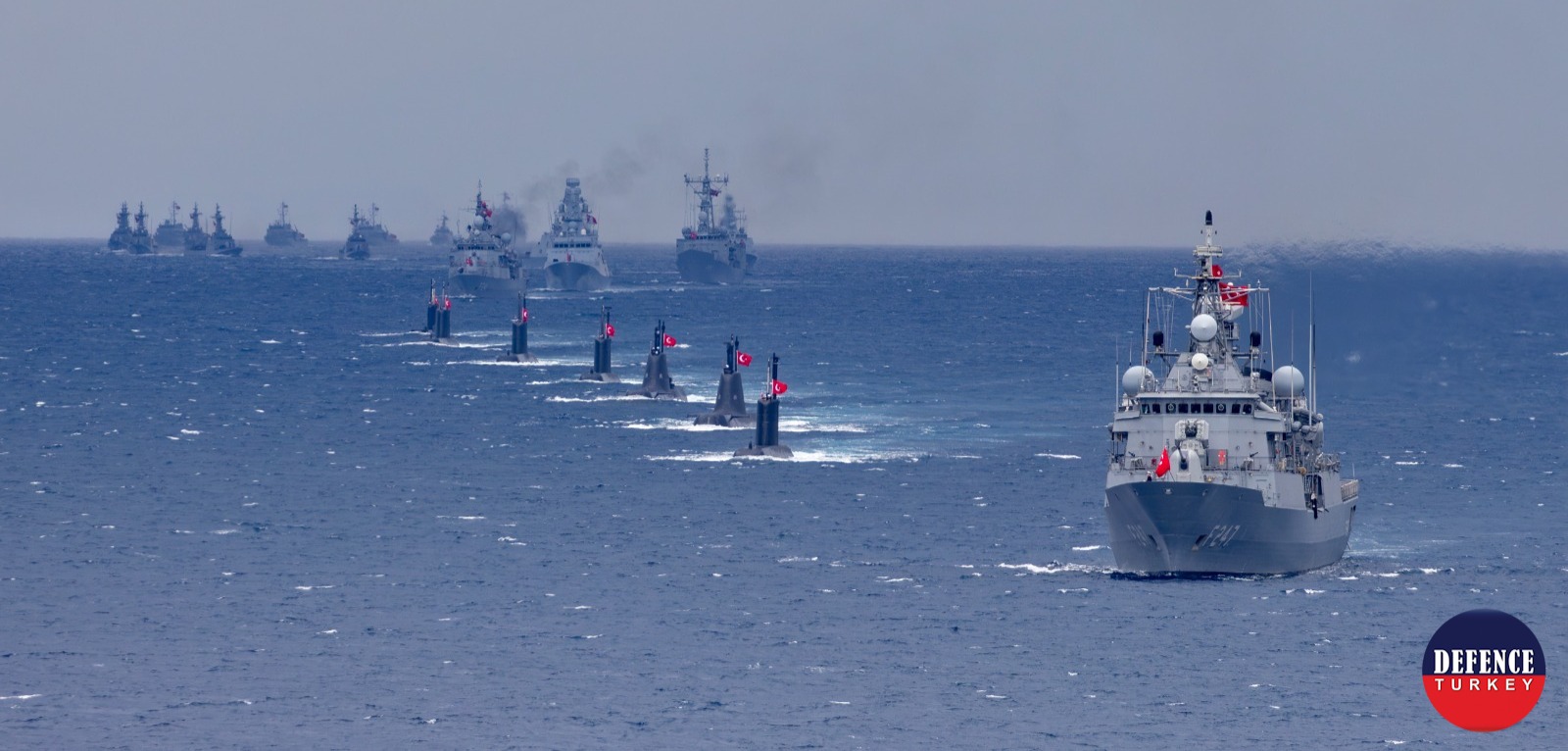
The first ship is planned to be launched in July 2023 and the scheduled delivery to the Turkish Navy forces is in 2024. The second ship will follow her sister in a few months’ time. There is an option for 8 additional ships as two OPVs will not be enough to cover the maritime interest areas of Türkiye. The Turkish Navy forces have 16 Tuzla class patrol craft for constabulary duties and protection of important shore facilities and the approaches of the Turkish Straits. These boats do not have long sea legs and are not designed for operations on high seas. Therefore, Turkish Naval Forces are using frigates and corvettes for policing duties and these low intensity duties have been taking their toll on the existing platforms. The commissioning at least two OPVs and if the options are taken the following 8 units will free high-end units for more serious operations.
Conclusion
Offshore Patrol Vessels (OPVs) have emerged as cost-effective solutions for naval forces seeking versatile platforms to address a range of maritime security challenges. The examples highlighted in this report demonstrate the success and diversity of OPV class warships around the world. By opting for OPVs, naval forces can achieve significant cost savings in terms of acquisition, operating, and maintenance expenses while maintaining operational flexibility and in meeting their mission requirements effectively. As maritime security continues to evolve, OPVs are poised to play a vital role in safeguarding territorial waters, combating illicit activities, and enhancing maritime domain awareness in a cost-efficient manner