Potential Impacts of CAATSA Sanctions on the Turkish Defense & Aerospace Industry
The US Government had been conducting diplomatic negotiations for a while to dissuade Turkey regarding the purchase of the S-400 system, yet the Turkish Government did not retreat from its decision. On July 16, 2019, Turkey’s participation in the F-35 MTU/JSF Lightning II Program as a Level 3 Partner was suspended indefinitely, only four days after the launch of the delivery of the first group of equipment of the first TurAF S-400 Triumph Area Air and Missile Defense System Battery to Mürted Airfield Command (about 30km to the northwest of the capital, Ankara) and the delivery of F-35A aircraft to the TurAF was halted. In fact, the suspension of F-35A deliveries in response to Turkey’s purchase of S-400 systems had been the first signal of the US sanction imposed on Turkey under CAATSA. The call on applying CAATSA sanctions on Turkey was supported both by the Democrats and the Republicans, enacting the imposition of CAATSA for the first time upon a NATO ally.
On that note, the Presidency of the Defense Industries of the Republic of Turkey (SSB) has been targeted due to the role it played in the purchase of the S-400 Triumph System and as per Article 213 of CAATSA the decision was made to impose sanctions on the Presidency of Defense Industries and four SSB officials, including President of the SSB Prof. İsmail DEMİR, Vice President Faruk YİĞİT, Head of the Air Defense and Space Department Serhat GENÇOĞLU and Program Manager of Area Air Defense Systems Directorate Mustafa Alper DENİZ. However, since these officials are not only assigned at the SSB but also in charge of critical duties in Turkey’s leading defense industry companies (for instance, SSB’s DEMİR at STM and MilSOFT companies and Vice President of the SSB as the Chairman of the Board in Roketsan), difficulties are likely to emerge for the organizations, where these SSB officials on the list of sanctions are employed, in obtaining export licenses or renewal of the existing licenses from the US for the execution of both domestic and international projects as a result of the political and technical interpretations if the tension between the two countries grows in the future. CAATSA containing sanctions of a commercial nature that focus on legal persons is based on a rather quite political ground in addition to its technical and legal aspects. Prior to his assignment as the US Secretary of State by the new US President Joe BIDEN who took the chair on January 20, 2021, Antony BLINKEN hinted that Turkey who he defined as a “so-called strategic partner” would be subject to new S-400 sanctions while he responded to questions from senators at the Foreign Relations Committee of the US Senate. Responding to a question on Turkey’s purchase of the S-400 from Russia, BLINKEN said, “One of our strategic, so-called partners’ being in line with one of our greatest strategic rivals Russia is not acceptable… I believe that we initially need to observe the effects of the existing sanctions. And then we need to determine if more sanctions are required.”
Upon the SSB’s purchase of S-400 Triumph Systems from RosoboronExport company, which is one of the companies listed in Article 231(e) of CAATSA stipulating the imposition of sanctions to the persons transacting directly with the Russian Government or persons acting on behalf of or representing the Russian Government as part of the Russian Federation Government’s intelligence or defense sectors. The SSB’s management of the procurement process, having consulted with the US Treasury Secretary, the US Secretary of State resolved to impose the following 5 clauses as part of 12 sanctions listed by Article 235 of CAATSA:
Export License Control: New licenses, permits or authorizations by the US Government for the export and technology transfer to the SSB are prohibited. Yet, the sanctions do not obstruct the US Government to conduct procurement activities from the SSB. On principle, export licenses for the US made components, parts, devices and technology required by a project executed by Turkey and for the systems/platforms required by the Turkish Armed Forces (TAF) and Security Forces are obtained from the US Government with the end-user information by the related Main Contractor US Company (as in the case of Sikorsky Aircraft acquiring the license required for the T70 TUHP). Therefore, in fact the US Government grants the export license to its own companies. With the imposition of sanctions, this licensing mechanism will not be applied in projects where the SSB is the end-user. Formerly, the end-user was mentioned as the related Force Command, but due to concerns about delays in the projects based on the rather slow progress of the signing and approval processes in the TAF, a conclusion was made to have the SSB sign the licenses as the end-user, with the aim of facilitating a more rapid process for the approval of US authorities. And now obtaining new export licenses or renewal of the existing ones will not be possible. Each export license includes an end-user, project name, quantity and contact information. For example, if a license contains the delivery of 1,000 pieces to Turkey, then acquiring a new license or renewing the existing one will be required in case more pieces are needed when the specified quantity is completed. Sometimes the licenses include a quantity cap or a cost cap and sometimes a limit on the capacity is identified instead of quantities. These types of “blanket” licenses constantly require renewal. This sanction in question does not only stipulate the restriction of exports from the US to Turkey but also prohibits the export of the US-origin products from Turkey to third countries (re-exportation). Additionally, export licenses are also required for the parts sent to the US for maintenance, repair and improvement processes for their delivery to Turkey after the process. The parts regarding the platforms procured by the FMS may be excluded from the sanctions, but there is a pessimistic picture for the parts belonging to platforms procured through commercial channels (T129 ATAK Helicopter, KT-1T Trainer Aircraft, P-235 MELTEM II Aircraft, E-7T AEW&C Aircraft and F110-GE-129 engines/engine parts and IFF Systems procured for the TF-X/MMU, etc.).
Prohibition of Loans from US Financial Institutions: Excluding the persons involved in activities to relieve human suffering and the loans or credits provided for such activities, US financial institutions are prohibited from granting loans or credits to the SSB totaling more than US$ 10 million in any 12-month period.
Prohibition of Export-Import Bank Assistance for Exports: The US Export-Import Bank’s assistance (issuance of any guarantee, insurance, extension of credit) is prohibited in connection with the export activities conducted to the SSB.
Ban on Loans from International Financial Institutions: The US representatives (or executives) with a say and vote in international finance institutions will oppose or vote against loans from international financial institutions that would benefit the SSB.
Sanctions on Principal Executive Officers: All the aforementioned sanctions will be imposed on SSB President İsmail DEMİR, SSB’s Vice President Faruk YİĞİT, SSB Air Defense and Space Department Head Serhat GENÇOĞLU and SSB Regional Air Defense Systems Directorate’s Program Manager Mustafa Alper DENİZ and their travel to USA will be restricted.
As a result of the focus on the SSB’s legal entity and the SSB principals being targeted, the public perception is that the most reasonable clauses regarding CAATSA sanctions were selected (US President is obliged to select a minimum of 5 sanctions from a group of 12 sanctions listed by the 235(a) of CAATSA and to apply them as per Article 231) and that the sanctions would be eluded with minimum damage. Yet, the procurement processes of the systems, equipment and platforms required by public bodies such as the Gendarmerie General Command (GGC/JGnK), the Coast Guard Command (CGC/SGK) and the General Directorate of Security (SGD/EGM) under the Ministry of Interior, the National Intelligence Organization (MIT), Ministry of Agriculture and Forestry and General Directorate of Mineral Research and Exploration (MTA) in addition to the Turkish Armed Forces (TAF) entail the SSB’s involvement as the procurement agency managing both in domestic and international processes (manufacturer companies need to obtain export licenses from the relevant governments for such procurement, this sanction bears a distinct importance since the SSB is identified as the end-user in many licenses). Therefore, I believe the sanctions targeting the SSB will adversely affect the TAF’s ongoing projects in the short and medium term and will have a negative impact on Turkey’s production and export activities in the defense and aerospace industry.
Presently, the SSB is carrying out around 700 projects in various areas composed of land, naval, air, space, electronic systems and weapon systems and the size of these projects exceeds US$ 60 billion (the total worth reaches US$ 75 billion with the new projects currently under tender process). These include critical projects that require export licenses of the US government and many ongoing national projects that contain numerous systems and sub-systems of US origin that are subject to US State Department’s International Traffic in Arms Regulations (ITAR) restrictions. Therefore, it will not be false to claim that the US government, with this move, throttles the Turkish Defense and Aerospace Industry and threatens to block its airway.
CAATSA sanctions leaves the SSB in a difficult position in obtaining new export licenses and renewing existing ones. The US Department of State, Directorate of Defense Trade/DDTC announced that it would not approve any export licenses for new contracts where the SSB is a party. This mostly impacts projects where the SSB is identified as the end-user, though the SSB is likely to experience difficulties in acquiring new export licenses in projects which it is not the end-user. There is also a severe risk potential for the Turkish Defense and Aerospace Industry’s platform-based export projects (for instance, the export license required for the CTS800-4A Turboshaft Engines needed for the export of T129 ATAK) which gained momentum in the last five years. Although it has been stated that the existing contracts would not be affected by the CAATSA sanctions, the US Department of State’s Directorate of Defense Trade (DDTC) made a statement revealing that the annexes to the existing contracts may be rejected and the transactions of the SSB’s affiliates may be assessed specifically for each case.
In this context, I believe another point that needs to be considered as part of the CAATSA sanctions open to political-technical interpretation is the SSB’s affiliates and its subsidiaries (SSTEK, STM, TUSAŞ, Sabiha Gökçen Airport, Teknopark Istanbul and Roketsan). In the upcoming period, the affiliates where SSB has the majority of the shares will likely experience difficulties in obtaining licenses for the export from the US and in money transfers via the SWIFT system due to the CAATSA sanctions.
CAATSA sanctions may also result in apprehension from foreign companies and finance institutions, causing them to backing off from projects or cooperation with the SSB and the Turkish Defense and Aerospace Industry companies to maintain good relations with the US. Even though no direct pressure is applied to them by the US government, these third parties may put distance between them and Turkey and Turkish Defense and Aerospace Industry Companies for avoiding risks. On the other hand, conducting business with a country or a defense and aerospace industry company subject to sanctions applied by the US government, which is regarded as the most superior supply agency, may not be an attractive alternative. In the meantime, the export license restrictions towards the SSB will essentially be applied in line with Article 235 of CAATSA and the broad interpretation of this article includes the US State Department’s ITAR licenses, US Treasury Secretary’s OFAC (Office of Foreign Assets Control) and the US Secretary of Commerce’s EAR (Export Administration Regulations) licenses. Thus, such sanctions may lead to an extensive export restrictions regime in defense, in the near future (in a way to include military and civilian dual-use systems and sub-systems as well as technology and implementations).
In conclusion, the CAATSA sanctions which were held off for nearly 2.5 years officially entered into force on December 14, 2020 upon the approval of the then US President TRUMP. In my opinion, the clauses selected are not as smooth as claimed by the mainstream media and certain political circles, and the fact that the SSB is the direct target is a critical message both to the Turkish Defense and Aerospace Industry and this sector’s current and potential foreign partners. At this point, discourses of valor should be avoided, and extensive risk estimation should be conducted, and strategies should be identified, short, medium and long term to minimize the impact of such sanctions. Since the CAATSA clauses announced on December 14, 2020 do not include the procurement processes executed by the Ministry of National Defense (MoND), the execution of future urgent/direct procurements required by the TAF and Security Forces through the MoND would be useful. On the other hand, it is would also useful to change the SSB’s end-user status for new projects. As a result of these sanctions, perhaps the projects previously transferred to the SSB by the MoND will be conducted again by the MoND.
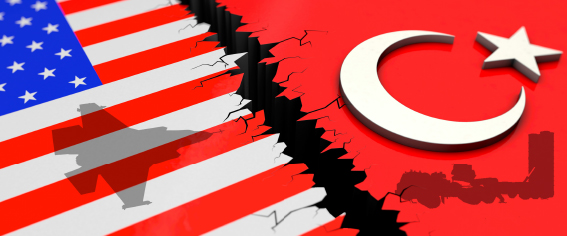
In fact, the problems arising after Turkey’s procurement of the S-400 Triumph Area Air and Missile Defense System from the Russian Federation is the embodiment of more critical problems that have emerged between the US and Turkey. In this respect, it would not be false to regard the S-400 Triumph System as an avatar of the fault line or the tip of the iceberg within the context of the political relations between the two countries. So, even if the S-400 crisis is resolved, as long as the circumstances that led to such a crisis exist, and the fault line between the two countries is not reconciled, new conflicts and problems will come up on the agenda in the near future. Crises similar to the S-400 crisis between the two countries will be inevitable due to both countries’ different priorities and strategies in international issues that directly affect Turkey’s survival and interest, Syria (PYD/YPG) and the East Mediterranean in particular. Turkey’s export turnover in the global defense market exceeding US$ 3 billion is a reflection of the development of the Turkish Defense and Aerospace Industry in recent years and the completely different defense priorities of Turkey and the US.
On the other hand, even though the CAATSA sanctions were announced in December 2020, there were also efforts by four US Congress members to block critical military sales to Turkey that had been ongoing since 2018. The situation was convoluted by the S-400 purchase and the operations conducted on PYD/YPG units which Turkey regards as the Syrian branch of the PKK terrorist organization. The Arms Export Control Act of 1976 entitles congress members to reject arm sales that are offered. The number of contracts/deliveries blocked by Congress in this process is unknown. According to US legislation, Congress approval is required prior to sales/deliveries of military vehicles and equipment of US$ 14 million and over to another country. In this context, congressional notification is essential for Major Defense Equipment (MDE), Significant Military Equipment (SME) and Excess Defense Articles (EDA). To my knowledge, the existing notification limits are for a project over US$ 50 million and for a single piece of equipment over US$ 14 million as well as all EDA transfers are subject to congressional notification. Regarding the military equipment and systems notified to Congress, an approval period of 15 days for NATO member countries, 30 days for non-NATO countries and 30 days for EDA demands is required.
Within this scope, the second-second batch CH-47F Chinook Heavy-Lift Helicopter was delivered without the EW Self-Defense Systems due to the lack of Congress approval. Despite the manufacturer BAE Systems’ efforts, the export license required for the LHTEC CTS800-4A Turboshaft Engines for the T129B Mk-I ATAK Helicopters ordered by Pakistan and the Philippines could not be acquired and as of January 7, 2021, delivery of the additional 2 DB-110 Pod and related data link systems was not accomplished. (IR Suppressor, AN/APR-39[V]1 and AN/AAR-57[V]8 CMWS were installed in the first group of helicopters, therefore the EW Self-Defense System arrangement was placed in a separate package for the procurement so that it would fall below the notification threshold that required Congress approval.)
The order for the additional DB-110 Pods and data link systems to fulfill the TurAF Command’s increasing reconnaissance demands was placed to Collins Aerospace in the first half of 2018 for US$ 23 million, the production stage of these systems was completed, and Factory Acceptance Tests (FATs) stage was launched. However, the delivery was not realized due to the sanctions imposed on the SSB (the parties of the contract were Collins Aerospace and Main Contractor Aselsan, but the delivery stage was affected by the CAATSA sanctions since Aselsan originally signed the main contract with the SSB). Moreover, during this period, problems were encountered due to the sanctions applied by the US Congress for the purchase of critical defense systems from the US such as the Phalanx Mk-15 Block 1B (Baseline 2) CIWS, Mk49 Mode 3 Launcher and RIM-116 Block 2 Missiles and the Mk-41 Vertical Launching System (VLS) with 16 cells to be employed by the ISTIF Class Frigates. Regarding the purchase of 4 Mk-41 VLS to be used in ISTIF Class Frigates from the US, a contract was signed between the SSB and Roketsan on February 14, 2018 and the project schedule was launched on March 15, 2018. Since the SSB was listed as the end-user of this contract (Roketsan signed the main contract with the SSB), the delivery was included in the CAATSA sanctions. Thus, a decision was made for the utilization of indigenous National Vertical Launching Systems (MDAS) in the warships, starting from ISTIF Class first ship TCG Istanbul Frigate. Furthermore, as the Phalanx Mk-15 Block 1B (Baseline 2) Close-In Weapons System (CIWS) could not be received, Aselsan’s GÖKDENİZ CIWS will be used in the ships.
CAATSA & the Sanctions
The US’ Countering America’s Adversaries Through Sanctions Act/CAATSA is a federal law that officially entered into force upon the approval of the then US President Donald J. TRUMP on August 2, 2017 (he has since left the Presidency to Joe BIDEN on January 20, 2021) due to peer pressure from Congress after it was approved by the US House of Representatives and the US Senate in July 2017. The 3,364-page CAATSA document contains a group of sanctions to be imposed as part of US implementations against countries qualified as enemies. It essentially aims to secure the sanctions that went into effect during Obama’s Presidency in response to Russia’s attempt to interfere the US elections, annexation of Crimea by the Russian Federation and its support to the separatists in the east of Ukraine. CAATSA foresees the enhancement of the sanctions imposed against Iran, North Korea and the Russian Federation, which qualify as threats to US national security.
As per Article 231, the US President is entitled to apply 5 or more of the 12 sanctions listed in Article 235(a) of CAATSA. These sanctions are as follows:
1. Ban on US Export-Import Bank’s Assistance
2. Export Sanction
3. Prohibition on Loans from the US Financial Institutions
4.Prohibition on Loans from International Finance Institutions
5. Prohibitions of Finance Institutions
6. Procurement Sanction
7. Sanctions on Foreign Exchange
8.Sanctions on Banking Transactions
9. Sanctions on Property Transactions
10. Ban on Investment in Equity or Debt of Sanctioned Person
11. Exclusion of Corporate Officers of Sanctioned Entities
12. Sanctions on Principal Executive Officers
Article 231 of CAATSA stipulates the imposition of the sanctions and there is no right to delay or waive prior to the resolution on the imposition of the sanctions. That being said, if required by US national security interests, the US President may waive the application of sanctions with a written determination submitted to the appropriate Congress Committee for their review. Additionally, after the documents proving a substantial decrease in the transactions requiring the CAATSA sanctions are submitted to the relevant Congress Committee by the US President, the US President may decide on a delay or waiver of the application of the sanctions following relevant Committee’s review of the request to delay as well as the data, documents and evidences it entails.
Turkey’s Purchase of S-400 Systems and the Process Leading to CAATSA Sanctions
CAATSA sanctions were initially applied to the People’s Republic of China that procured S-400 Triumph Systems and Su-35 fighter aircraft from the Russian Federation before Turkey (PRC was the first customer of both products). The People’s Republic of China signed a preliminary contract in the first quarter of 2014 with the Russian Federation for the export version of the S-400 Triumph (NATO code SA-21 Growler) Long Range Area Air and Missile Defense System and announced it in April 2015. Under this contract with a financial value around US$ 3 billion, a total of six S-400 Triumph batteries were ordered in a way to equip two regiments. China made the down payment in 2016, the delivery of the first S-400 regiment started in January 2018 and was completed in May 2018, and the completion of the batteries to be included in the second S-400 regiment (with over 120 different missiles) was announced on January 27, 2020. On the other hand, China’s People’s Liberation Army Air Forces (PLAAF) received the first group of four aircraft out of 24 Su-35 ordered in November 2015 with a cost of US$ 2.5 billion in December 2016, and the second group of 10 aircraft in December 2017 and the deliveries were completed in April 2019.
Even though China completed the aforementioned procurement processes before the enactment of CAATSA, as the deliveries were executed when CAATSA was effective, China’s related institution assigned for the procurement processes (China’s department in charge of defense technology, the Equipment Development Department of the Central Military Commission of China’s Liberation Army) and its Director Li SHANGFU were exposed to sanctions. The application of sanctions to China in line with CAATSA took nine months. Delivery of the first S-400 system was completed in January 2018 and nine months after, on September 20, 2018, the then US Secretary of State Mike Pompeo declared that due to China’s procurement of S-400 systems and Su-35 aircraft from one of Russian Federation’s prominent exporters in the defense industry, RosoboronExport, China’s related companies were exposed to sanctions.
Though some of Turkey’s Defense and Aerospace Industry officials and Government members/Ministers pointed out that Turkey’s purchase of S-400 Systems was held before the enactment of CAATSA and declared that the CAATSA sanctions could not be imposed, clearly the case with the People’s Republic of China in 2018 applies to Turkey as well. Because, as I previously emphasized, CAATSA is actually predisposed to be based on politics rather than on its technical and legal aspects. The US Secretary of State’s statement clearly notes that imposition of CAATSA sanctions was triggered by the Republic of Turkey’s procurement of S-400 Systems.
Turkey’s official negotiations with the Russian Federation on the purchase of one final and one optional 2 S-400 Triumph Long Range Regional Air and Missile Defense Systems comprising of 2 Batteries with 8 Transporter Erector Launchers (TEL) from RosoboronExport for the Turkish Air Force (TurAF) started in October 2016, the US$ 2.5 billion official agreement (the cost of the first System is projected as US$ 1.3 billion and cost of the second System as US$ 1.2 billion) was signed on April 11, 2017 and the down payment was made in September 2017. First of the 4+ Generation S-400 Triumph Systems that were purchased and accepted officially despite all the objections and warnings of the US authorities and that substantially advanced the Turkish Air Forces in terms of air and missile defense capabilities is being utilized by the 1st S-400 Squadron with the call name ZAFER (Triumph in English) presently deployed at Mürted Airfield Command. Delivery of the first S-400 Triumph Batteries of the ZAFER Squadron Command was completed on June 12-25, 2019 and the second battery between August 27 and September 15, 2019. Following the installation and training activities, the first test with the first S-400 Battery was carried out in the company of F-16 and F-4E 2020 aircraft and a helicopter on November 25, 2019 at Mürted Airfield Command in Ankara and footage of the event was provided through the state agency. During the test activity, claims were made that results beyond the expectations were achieved, social media platforms announced that the aircraft’s endurance was eight hours with flight refueling. ZAFER Squadron Command attained the Initial Operational Capability in December 2019 and Full Operational Capability in April 2020. The Fleet was deployed to Sinop - a city on the Black Sea shore on October 5, 2020 for comprehensive radar and firing tests conducted on October 14-17, 2020, at the Sinop Test Range.
Within this scope, a military convoy of nearly 50 vehicles containing the S-Band 91N6E Big Bird Target Acquisition and Battle Management Radar (1x), X-Band 92N6E Grave Stone Engagement and Fire Control Radars (2x), C-Band 3D 96L6E Surveillance and Tracking Radars (2x) and 55K6E Mobile Command Control Center and 5P85TE3 Missile Launcher based on BAZ-64022 tactical vehicle chassis and 51P6E Missile Launcher based on the MAZ-79100 series tactical wheeled vehicle chassis left Mürted Airfield Command on October 5, 2020 and headed to Sinop. Footage of the convoy approaching Sinop were shared via social media platforms on October 6. According to the information I obtained, such a test was planned to try the S-400 System and for the user staff to conduct a firing test (not covered in any clause of the contract), and it was carried out successfully. As part of the tests, where the Banshee Target Aircraft were flown for the acquisition and engagement tasks against low-speed air threats, and TUSAŞ ŞİMŞEK High-Speed Target Drones were operated for the acquisition and engagement of high-speed air threats, and successful firing against ŞİMŞEK High-Speed Target Drones were performed (missiles with proximity fused fragmentation warheads exploded quite near the target aircraft and effective results were achieved) by three different missile models composed of 9M96E2 (120km), 48N6E3 (250km) and 40N6E (380km) serving the Fleet.
The TurAF has achieved a series of groundbreaking accomplishment with the inclusion of the 4+ Generation S-400 Triumph System into the inventory. Following are some of these accomplishments: Becoming the second user of the new 51P6E Missile Launcher after the Russian Aerospace Forces, the first export customer and first user conducting firing tests of the 9M96E2 and 40N6E missiles after the Russian Aerospace Forces, and shooting simulated targets successfully in the firing test executed through the inclusion of the active and semi-active radar guided missiles with modern air and missile defense capabilities with ranges of 120km, 250km and 380km for the first time.
In fact, the TurAF is a user having first-hand experience with the efficiency of the S-400 Triumph System. As may be recalled, the Su-24M attack aircraft of the Russian Aerospace Forces crossed Hatay province’s Yayladağı region and violated Turkish Airspace (10 times in 15 minutes) on November 24, 2015. The Su-24M was shot down by an AIM-9X Missile from a patrolling F-16 fighter jet (which was carrying out a combat air patrol task) of the TurAF’s 182nd Fleet Command. The Lieutenant Colonel jumping from the ejection seat lost his life but the weapons system officer who is a Lieutenant was rescued. The same day, Russian Ministry of Defense announced that the S-400 System was going to be deployed at the Khmeimim Air Base in Latakia. On November 28, 2015, the footage of the S-400 Launching Unit deployed at the Khmeimim Air Base was shared with the world. The two S-400 Launching Units deployed at the Khmeimim Air Base, 80 km off the Hatay border, were comprised of 4 Launching Systems. These two systems locked the Turkish Air Forces’ fighter jets taking off from Diyarbakır (470 km distance with bird fly) and Adana (70 km distance with bird fly) Air Bases right after they departed the runway and blocked the execution of CAP tasks in the region near the Syrian border. The lock blocked the passage 20 miles east of Adana province causing the cancellation of certain flights and leading to Return to Base (RTB) cases. This also resulted in the failure to maintain air support to the combat elements on the ground in the operations of the Turkish Armed Forces in Syria. Russian-Turkish relations deteriorated by the shooting-down of the Russian Su-24 attack aircraft by the TurAF in November 2015 but rapidly recovered after the Coup Attempt on 15 July 2016 and Turkish fighter jets were allowed to enter Syrian Airspace. Additionally, as an extension of this process, the purchase of S-400 Triumph Area Air and Missile Defense Systems from Russia had also come up at this time.
The US Congress brought up the topic of Turkey’s intention of buying S-400 Systems from Russia in 2018 for the first time at the NDAA (National Defense Authorization Act) talks and requested a report on this issue from the Secretary of Defense. The report submitted to Congress in November 2018 revealed that Turkey’s purchase of S-400 Systems was final and added that this would affect Turkey’s bilateral relations with the US and its role within NATO. Congress in return restricted the supply of F-35 aircraft to Turkey in the draft NDAA of 2019 and in August 2018 TRUMP signed the NDAA 2019 draft bill, which suspended F-35 aircraft’s delivery to Turkey. The news on negotiations held for the imposition of sanctions as per CAATSA to the persons and companies of Turkish origin due to the procurement of the S-400 Triumph air and missile systems from RosoboronExport Company gained traction in the summer of 2019 summer when the delivery of S-400 Systems to Turkey started but the sanctions were not applied by the US President at that time, Donald J. TRUMP. On October 29, 2019, US House of Representatives voted in favor of the Protect Against Conflict by Turkey Act/PACT to give a “proportional response” to Operation Peace Spring conducted by Turkey in Syria. The vote was overwhelmingly lopsided in favor, 403-16. However, since the PACT act that featured provisions on the imposition of a minimum of 5 sanctions among the sanctions laid by CAATSA was not enforced as it failed to pass in the Senate. During the talks on the NDAA 2020 draft bill, Congress qualified Turkey’s acceptance of the S-400 systems in July 2019 as a “critical financial transaction” conducted with the Russian defense and intelligence sector within the scope of CAATSA and requested that the President impose upon Turkey a minimum of 5 sanctions among the 12 CAATSA sanctions within 180 days. Therefore, even though they had not been mentioned since 2017, the CAATSA sanctions against Turkey became official with NDAA 2020 which became effective in December 2019. On December 4, 2020, two wings of the US Congress, the House of Representatives and the Senate agreed on the 4,500-page National Defense Authorization Act 2021 (NDAA 2021) valued at US$ 740 billion. Drafted for the defense budget of 2021, NDAA 2021 included provisions stipulating the imposition of sanctions against Turkey in line with CAATSA due to its procurement of S-400 Systems. Resisting against the imposition of CAATSA sanctions to Turkey for 17 months, on December 8, 2020, President TRUMP announced that he would be vetoing the US 2021 Defense Budget (NDAA 2021) that featured provisions entailing the application of CAATSA sanctions to Turkey. Yet, the NDAA 2021 draft bill passed with the votes of a vast majority of 335-78 in a veto-proof manner in the voting held on December 9, 2020. This result has been a major failure for President TRUMP who lost the race for presidency as the Republican Wing supported the bill almost as the whole group. On the other hand, in the voting held to override TRUMP’s veto on the NDAA 2021 bill, there were 322 votes in favor and 87 votes against in the House of Representatives, and in the Senate, there were 81 votes in favor and 13 votes against. Thus, the veto was invalidated.
President TRUMP, according to the US law, could waive the application of sanctions with respect to the related persons or organizations, delay the application of sanctions for 180 days (and extended the delay for another 180 days at least 15 days prior to the termination of the initial delay and this process would continue) or abolish certain sanctions. Whichever alternative he selected, TRUMP had to persuade the Congress and submit evidence on specific cases. Despite all the pressure applied by the Congress, for 17 months, TRUMP managed to delay the imposition of CAATSA sanctions against Turkey. TRUMP even made statements supporting Turkey’s position in S-400 systems (in June 2019, at the G-20 Summit in Japan, TRUMP noted that his predecessor Barack Obama’s refusal to sell Patriot missiles had left no other choice for Turkey and made statements supporting President Recep Tayyip ERDOĞAN). However, since NDAA 2021 featuring provisions that stipulated the application of the CAATSA sanctions on Turkey was passed by a vast majority in US Congress with a substantial support of the Democrats and Republicans, it obligated the imposition of the sanctions, and as Turkey did not retreat from its views and claims on the purchase of S-400 systems throughout this process (as it could not take any steps to reduce its dependence on Russian military equipment and document it), President TRUMP had no choice but to pass the bill due to the lack of any actions left, besides the delay of the application of the sanctions or waiving the related persons or organizations of the sanctions. Ultimately, upon signing the resolution of the Senate on December 14, 2020, TRUMP enabled the imposition of CAATSA sanctions, and the application of sanctions on the SSB as per Article 231.
Why no CAATSA Sanctions Against UAE, Egypt and India?
The United Arab Emirates (UAE) is believed to make substantial amounts of payments to the Russian Federation to keep the Russian Wagner mercenaries in Yemen and Libya with Egypt buying billions of dollars’ worth of T-90 AMT, Su-35 and MiG-29M/M2, second-party fighter jets and purchasing millions of dollars’ worth weapons from Russia to support the units fighting on its behalf despite the military assistance of US$ 1.3 billion it receives yearly from the US Government (this assistance has been received since 1985, and the bill on the military assistance of US$ 1.3 billion in the 2021 Fiscal Year passed the House of Representatives in July 2020). However, no CAATSA sanctions have been imposed against the UAE and this is perhaps one of the most concrete examples of CAATSA’s political basis along with its technical and legal aspects. Furthermore, at the last moment, the TRUMP administration approved the sale of Directed Infrared Countermeasure (DIRCM) Systems valued at US$ 104 million for the presidential airplane and 22 advanced targeting pods valued at US$ 65 million for fighter jets to Egypt along with the sale of 50 F-35A JSF fighter jets, with a total value of nearly US$ 23.4 billion (estimated value US$ 10.4 billion), 18 MQ-9B Reaper Armed Unmanned Air Vehicles (AUAV, with an estimated value of US$ 2.97 billion) and a significant amount of air-to-air and air-to-ground ammunition (estimated value US$ 10 billion) to the UAE.
Under the contract valued at US$ 2 billion signed on March 18, 2019, Egypt has been procuring Su-35K fighter jets from the Russian Federation (the second export customer of the product after China). A total of 24 Su-35s will be delivered and the delivery process of the first group of five aircraft in the Russian Federation was held on August 5, 2020. Arrival of the first group of five aircraft in Egypt is expected to take place in Egypt in 2021 and the deliveries are anticipated to be completed by 2023. Moreover, 46 Mig-29M/M2 fighter aircraft valued at US$ 2 billion and modern air-to-air missiles and ammunition such as the R-77 RVV-SD version with a range of 110 km were purchased for the Egyptian Air Forces from the Russian Federation. Again, the news on the agreement between Egypt’s Ministry of Defense and Russia’s Uralvagonzavod (UVZ) and RosoboronExport Companies on the licensed production of 500 T-90 Main Battle Tanks remained in the global press in July 2020.
Signing a contract valued at an estimated US$ 5.43 billion on the procurement of five S-400 Triumph Systems in 2018 with the Russian Federation, India was warned by the US Government several times to not make this purchase and was threatened with sanctions. The size of India’s projects executed with Russia amounts to US$ 12 billion. Still, news on the US Government’s efforts towards enabling a series of flexibilities and waivers to countries that are critical for US interests were previously reflected in the press. Because, as underlined earlier, CAATSA features a provision for countries in the scope of sanctions to prove to the US President that they are taking steps towards reducing their dependence on Russian military equipment. This provision enables a delay in the imposition of sanctions or waivers of the application of sanctions in the event that a reduction in dependence to Russia is sufficiently proven and documented.
India’s Defense Acquisition Council approved the procurement of 21 Mig-29 fighter jets valued at US$1 billion (approximately) from the Russian Federation and the modernization of the 59 Mig-29s in the inventory by Russia, along with the manufacturing of 12 Su-30MKI fighter jets valued at US$ 1.4 billion (approximately) at HAL facilities and their procurement occurred in the beginning of July 2020. The Sukhoi Super 30 Modernization Project (modernization of Su-30MKI Aircraft) with an estimated value of US$ 6 billion is on the table. In the beginning of September 2020, India signed an agreement with the Russian Federation for the procurement of nearly 770,000 AK-47 203 infantry rifles and for their licensed local production (100,000 of them will be a direct procurement and the remaining are to be manufactured locally).