Selex Galileo:A leader in Surveillance
Defence Turkey: Surveillance is key to many of the Turkish Armed Forces’ ongoing programmes, as well as those currently under development. How does SELEX Galileo position itself?
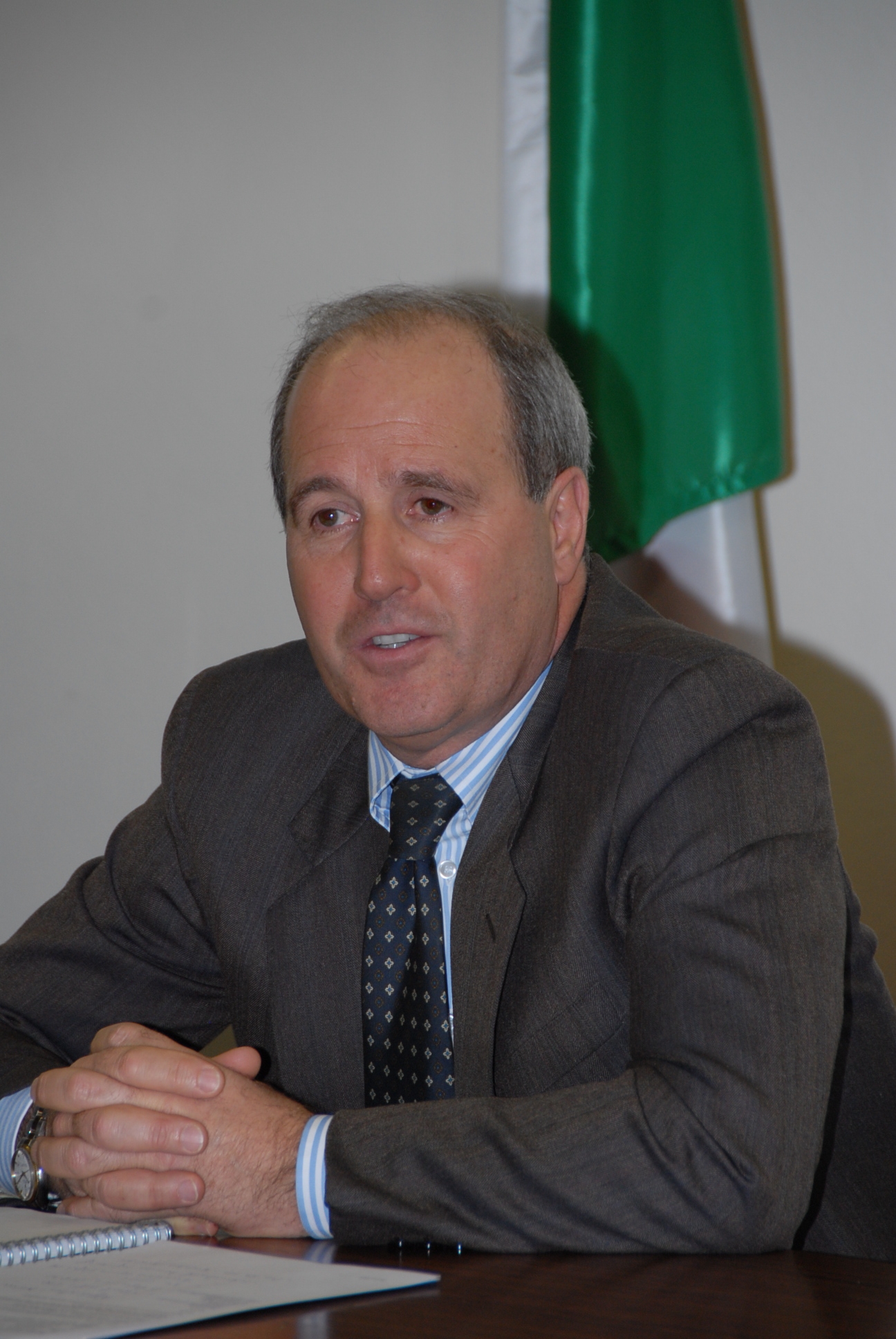
Fabrizio Giulianini, CEO of SELEX Galileo: “Let me begin by saying that SELEX Galileo has 7000 people and has particular expertise in defence and security, as well as in the Space sector. Our revenues in 2009 were 1.7 Billion Euro, 15% of which we invested back into research and development. Over the years we have served more than 70 different customers in 5 continents, and can claim that ‘customer intimacy’ is at the heart of our business approach.
Surveillance and situational awareness are our core competencies and today we’re one of only a few companies who can deliver complete turnkey solutions to our international customers. To give an example, we can offer our field-proven Falco unmanned airborne tactical system, where we integrate a variety of advanced sensors that significantly improve the awareness of the end user.
We’re also particularly proud of our Airborne Tactical Observation and Surveillance (ATOS) mission system. It’s one of the best systems in its class, and we’ve sold more than 40 over the last 10 years.
As you know, surveillance activities take place across several domains: sea, air, land and space. We can offer manned and unmanned solutions in each of these domains. Essentially, our approach is to tailor our solutions to the needs of each individual customer, leveraging on a vast portfolio of sensor systems that exploit the latest technologies.”
Defence Turkey: Going into more detail, could you please specify what exactly the ATOS solution is about?
Fabrizio Giulianini: “A maritime patrol aircraft without a reliable surveillance mission system is like a sports car without a powerful engine; it's the absolute heart of the capability. If you require a surveillance capability, it's fundamental to have an effective and user friendly mission system that’s able to provide critical information to crews.
That’s why we’ve worked over the course of several years to perfect our ATOS system. It’s been selected by 9 different customers, and integrated onto both fixed and rotary wing platforms including the ATR 42, DASH – 8, CN235, Beech KingAir 200/350/350ER, Piaggio 166 and AW109, AB 412 and AS300B3 helicopters.
Today, the Australian Coastwatch is operating our Surveillance Information Management (SIM) system which is a version of our ATOS technology. The Coastwatch has recently taken delivery of the tenth system, installed onto on their ‘Project Sentinel’ DHC-8 aircraft, and they’re using them for a variety of purposes including gathering forensic-quality information to prosecute vessels involved in illegal activities.
In addition to the Australian Coastwatch, we’ve also supplied our solutions to demanding end-users around the world who have chosen our ATOS technology due to its ease of use, performance and reliability. Some examples: last year the Italian Navy selected the ATOS for its ATR 72 long range maritime patrol aircraft, and we’ve recently completed the training of the ATOS operators of the Nigerian Air Force who will be using the system on their ATR 42 MP aircraft.
Today, we’re able to deploy a number of our most advanced sensors into the ATOS system. We have integrated our Seaspray Active Electronically Scanned Array (AESA) and Gabbiano mechanically scaned X-band pulse doppler radars, which are designed for a variety of all-weather surveillance missions over ground, along coasts and at sea, and deliver superior detecting capabilities, including spotting small targets at sea. For surveillance in the E/O spectrum, we can integrate our EOST turrets, which can be fitted with a number of different payloads to address the customer’s needs.
The core of the ATOS is of course the mission management system, which provides full management of all mission phases and an enhanced human-machine interface. Since it is based on a MIL STD-1553B data BUS and Ethernet LAN for data communication, the system is flexible and expandable to allow for further roles or missions and can be installed on a wide range of aircraft due to its flexible nature.
Defence Turkey: In the past the Seaspray radar has been sold to the Turkish Navy. Are there new opportunities today?
Fabrizio Giulianini: "As you rightly mention, the Turkish Navy aquired our Seaspray mechanical scan surveillance radar a few years ago and fitted it to their AB-212 helicopters. Over the past few years we have been involved in an upgrade programme, designed to enhance the processor while retaining the existing scanner. This has solved obsolescence problems, as well as improving the man-machine interface of the system. We now are in a position to offer an upgrade to their capability with state-of-the-art AESA technology, which is a distinctive part of SELEX Galileo's offering. In fact, we are currently promoting the AESA Seaspray 5000E with the support of UKTI, but I’m afraid I can not disclose further details at this stage".
Defence Turkey: Does SELEX Galileo provide capability for rotary wing platforms?
Fabrizio Giulianini: “Our product portfolio includes innovative avionic solutions for all types of fixed and rotary winged platforms. Because we design all of our systems with flexible architectures, it allows us to respond to the needs of many different customers and platforms.
Turkey has a number of aircraft programmes, both fixed and rotary wing, and we are working with key companies, for example Aselsan and Havelsan, to determine how best to meet their needs for enhanced avionic capabilities over the next decade.”
Defence Turkey: Can we enter into greater detail on SELEX Galileo’s UAS and target drone portfolio, which is quite extensive?
Fabrizio Giulianini: “SELEX Galileo has at least six decades of experience in the Unmanned Air Vehicles (UAV), Systems (UAS) and target drone domains. Today we have a centre of excellence in Ronchi dei Legionari, in the northeast of Italy, and a UAV testing facility in ParcAberporth, in Wales in the UK. We were among the first in the world to manufacture UAS and have worked hard and invested significantly to continuously improve our expertise and technology base.
Selex Galileo is in the unique position of being able to offer a wholly owned, fully European, ITAR free solution for Tactical and Medium Altitude unmanned system requirements. This is particularly attractive when addressing the Industrial Returns and Offset expectations of international customers.
With our Falco, we've developed a superior tactical and medium altitude solution which has been sourced by two international Customers. Our family of Mirach target drones has also been extremely successful, with over 600 sold since 1979, many of which were the Mirach 100/5 model. For both of these assets, we're continuing to invest to retain and improve our competitive advantage.
There is a requirement for target drones in Turkey and we are convinced that the Mirach would be an ideal fit. We've also been in touch with the Turkish Aerospace Industry (TAI) and I think that there are areas, especially in UAS, where we could establish beneficial collaborations in the future.”
Defence Turkey: I understand that Turkey has reached agreements to set up a domestic UAS capability. Is there also room for SELEX Galileo?
Fabrizio Giulianini: “Aside from our discussions with TAI relating to the target drone, we are working with other companies in Turkey with a view to the possible utilisation of their products and capabilities to compliment our product portfolio.”
Defence Turkey: Can you tell us more about your Electo Optic (EO) offering? What about SASS?
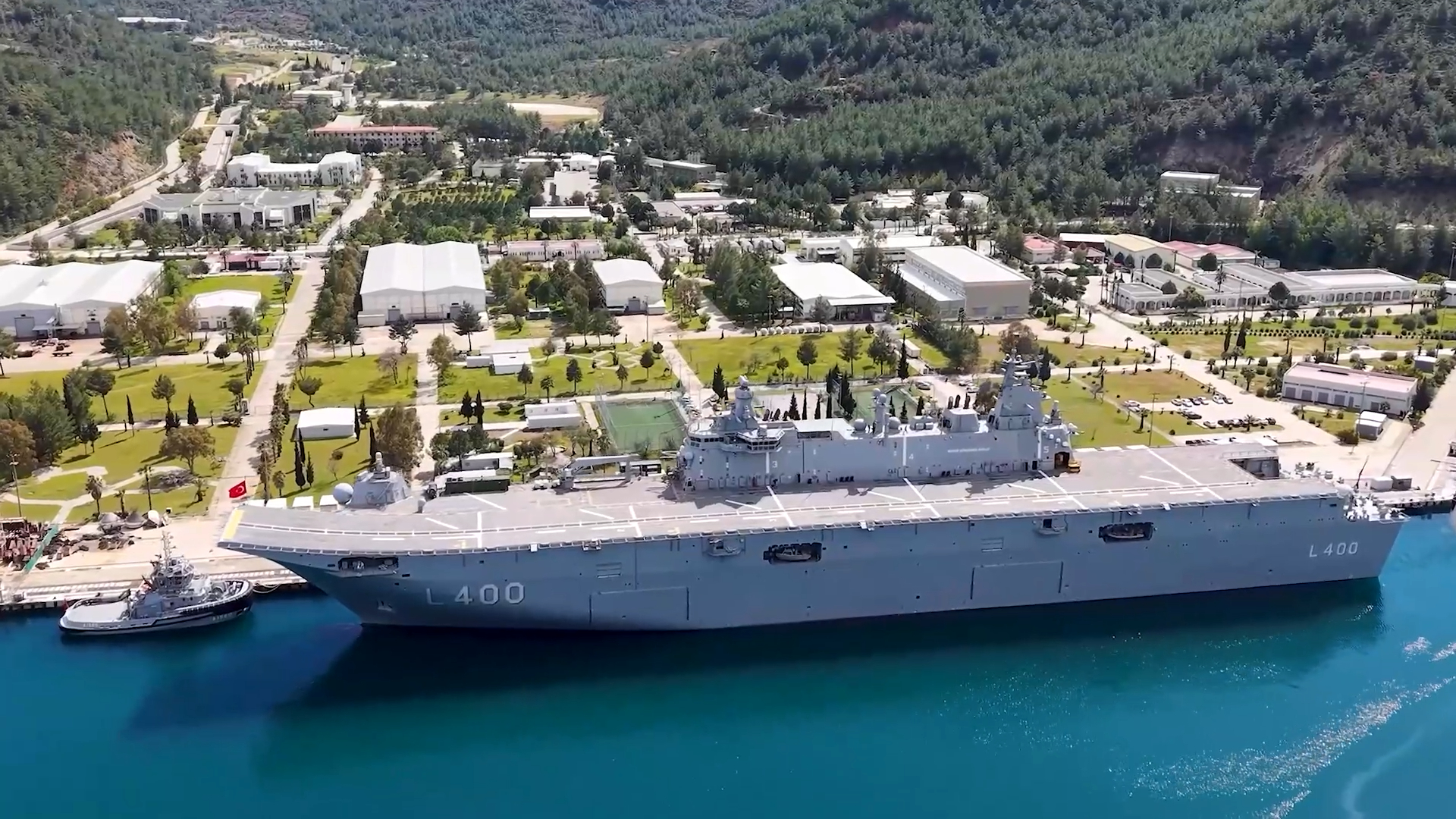
Fabrizio Giulianini: “Currently, we’re involved in the Turkish Navy’s Landing Ship Tank (LST) programme, the requirement for which is two Silent Acquisition Search and Surveillance (SASS) systems for two new vessels.
We’ve proposed our state-of-the-art SASS system, which is capable of detecting and tracking low-elevation air and surface threats by their infrared (IR) signature, thus providing an important adjunct to radar in situations where radar performance may be degraded or an alternative where electromagnetic discretion is required. Used for surveillance, search and track operations, the system scans the area and tracks intercepted objects, as well as enabling the operator to perform visual panoramic surveillance around the platform.”
Defence Turkey: Turkey will be aquiring the Joint Strike Fighter, but there is still the possiblility that they could also choose the Eurofighter Typhoon. What is SELEX Galileo's role in the Typhoon programme?
Fabrizio Giulianini: “SELEX Galileo is a key player in the Eurofighter Typhoon programme, and we lead several international consortia to deliver some of the Typhoon's most critical systems. Indeed, SELEX Galileo's activities bring Finmeccanica's share in the programme up to 60%.
Specifically, we lead the EuroRADAR consortium to supply the Captor-M radar, the primary sensor of the Typhoon, as well as the EuroFIRST consortium who delivers the advanced Pirate InfraRed Search and Track (IRST) sensor. To provide the highest level of protection to the pilots and the platform, we also lead the EuroDASS consortium to supply the Praetorian Defensive Aids Sub System (DASS), over 200 of which we have sold to date. The success of the Captor-M, Pirate and Praetorian, together with the trust pilots place in them, were recently highlighted with the award of the Tranche 3A contracts of the four nations Typhoon programme.”
Defence Turkey: When working with export customers, does SELEX Galileo work with local in-country industries?
Fabrizio Giulianini: “Definitely, we’re very keen on working with local industries in Turkey and our other overseas partners. As well as collaborating on in-country contracts, we’re also currently pursuing discussions with a number of Turkish companies to work together on overseas opportunities. We recognise the capabilities that Turkish Industry has to offer, and we feel we can use these to enhance our offering to win contracts in other countries.
We’re particularly looking to work with Turkish companies, especially Foundation Companies, on domestic programmes in Turkey. We’re also looking to identify products, services and capabilities that these companies offer that we can include in our offer for overseas programmes.
In addition, as small and medium sized domestic companies emerge in the Turkish defence market, we’ll be looking for further opportunities to collaborate with these companies as they grow.