SİPER Will Enter Service in 2023

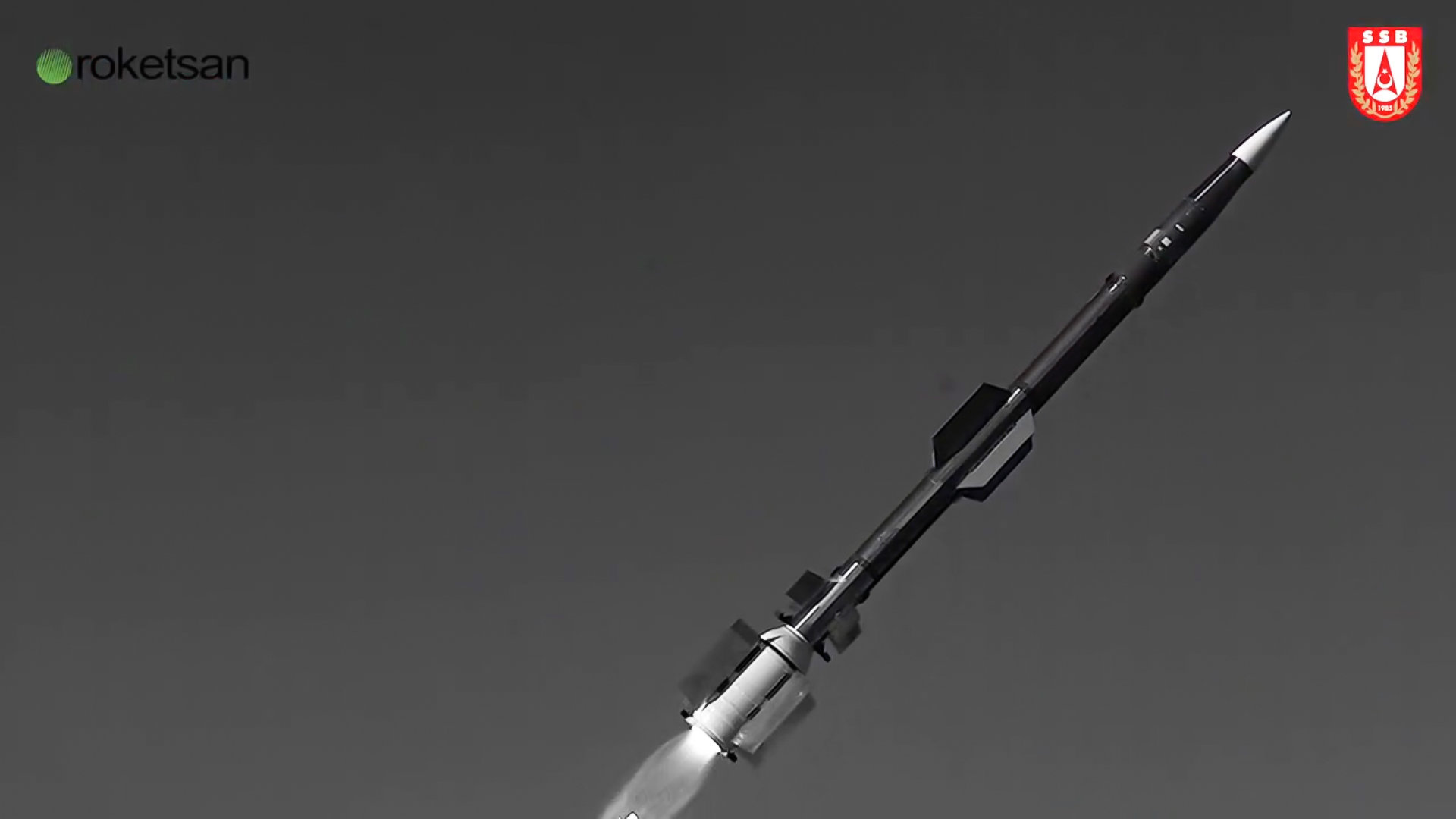
Announced by the President of Defense Industries Prof.İsmail DEMİR on November 6, previously determined maneuvers were performed during the test with the Controlled Test Missile (CTM) version of the SİPER Block-I missile. The CTM is not equipped with a live seeker or the Thrust Vector Control (TVC) in the tail section but features an auto-pilot control capability.
Following the test, President of Defense Industries Prof. İsmail DEMİR shared the following statements on his social media account on November 6: "We have successfully completed one more phase in the development of the SİPER Long-Range and Multi-Layered National Air Defense System. Planned to enter service in 2023, SİPER will eliminate all threats against our homeland." On the other hand, in a previous statement, Prof. İsmail DEMİR said they would develop an intermediate product with an effective range of up to 100 kilometers and an altitude of over 20 kilometers before the SİPER Air Defense System. Stating that SİPER will follow this missile, Prof. DEMİR said that SİPER will become operational in 2023. In a statement to the Anadolu Agency on November 23, 2021, SSB Prof. DEMİR shared the following information about the delivery schedules and test activities of the Turkish Air Defense System projects. "We will start the delivery of HİSAR O+ Air Defense Systems. We may see a new test with SİPER before the end of this year." The SİPER Block-I CTM version or the Guided Test Missile (GTM) version with a dual-pulse rocket motor and TVC capability can be used in the new firing test.The SİPER will allow Area Air Defense of Strategic Facilities against enemy attacks at Long Range and in distributed architecture. It is planned to use more than one type of missiles with different range and intercept altitude capabilities in the long-range and multi-layered national air defense system SİPER, which is expected to be actively used in the field as of 2023. The SİPER Block-I Missile is effective against air-breathing targets at a range of 70+km and up to an altitude of 20+km, and its range is expected to increase to 100+km (SİPER Block-II) by 2023. Subsequently, the development process of new models that can be effective against both air-breathing targets and ballistic missiles up to a range of 150 km (SİPER Block-III) will be completed and become operational. Therefore, SİPER missiles in different configurations will enter service with the Turkish Armed Forces (TAF) in 2023 and beyond.
Within the scope of the SİPER contract signed on January 15, 2018, Aselsan is responsible for the Long-Range Search Radar (S-Band AESA, based on the T/EİRS Radar), Multifunctional Fire Control Radar (S-Band AESA, expected to have similar capabilities to the Weapon Locating Radar [STR] and Low Altitude Radar [AİR]), RF Seeker, Fire Control Center, and RF Datalink. Each SİPER Squadron will have 2 Batteries, each with 4 Launchers.
HİSAR-RF & SİPER Block-I Missile
The development activities of the HİSAR-RF, the new member of the HİSAR Family with an active RF Seeker, continue. In this context, 2 different tests were conducted in July 2021. Normally, the testing process starts with the Ballistic Test Missile (BTM) and continues with the Controlled Test Missile (CTM, autopilot/autonomous control but no IIR seeker and TVC), Guided Test Missile (GTM, Dual-Pulse Rocket Motor with TVC capability), Seeker Guided Test Missile (SGTM, with live seeker but not fitted with a live warhead), and lastly, prototype missiles armed with live warheads similar to tactical configuration.
However, since the HİSAR-RF is based on the HİSAR-O+ missile, the firing tests were first started with the Controlled Test Missiles (CTM). The tests were not conducted against a target but to demonstrate the missile's maneuverability and whether the missile could be successfully directed or not. Aselsan HİSAR Projects official, whom I had the opportunity to meet at the Teknofest 2021 event, stated that they plan to complete the ongoing testing and qualification process with the HİSAR-RF Missile by the end of 2022 and make the first delivery.Thanks to the close cooperation of Aselsan, TÜBİTAK-Sage, and Roketsan and the experience and infrastructure gained from the HİSAR Air Defense Missile System Projects, the SİPER Block-I Missile could be developed quickly. Thus, it was possible to create a new solution according to the needs by combining the already existing developed technologies (booster, dual-pulse motor, datalink, etc.) without a new design. With the use of existing solutions and capabilities, it is aimed to shorten the development time and reduce the cost to a reasonable amount.
Featuring a longer body due to extended range requirements compared to the existing HİSAR missiles, SİPER Block-I has high G-tolerance and maneuvering capability, a Dual-Pulse motor, and the same RF Seeker used in HİSAR-RF. In the short video of the firing test shared on November 6, the SİPER Block-I was equipped with a booster similar to the one used on the ATMACA Anti-Ship Missile. The booster has folding fins and is separated from the missile approximately 7 seconds after the launch. There are also a number of differences between the HİSAR-RF Missile, which was previously tested without a seeker, and the SİPER Block-I CTM. It features a different control surface and tail fin design. The effective range for HİSAR-RF was estimated as 30km. It is possible to reach a range of 70+km thanks to the addition of the booster, the extension on the body, and the alterations in the design of the control surfaces. A larger booster will be required for the 100+km range. Since different types of seekers will also be used in the future, SİPER missiles will have a two-way data-link capability, unlike HİSAR missiles featuring only one-way data-link capability. Thanks to the two-way data-link capability, even if the missile does not transmit images with the RF seeker, it would be able to transfer its position and speed information to the ground control center and thus to eliminate the need to track the missile with the radar throughout the flight. In this way, it would be difficult for the target/hostile aircraft to detect the incoming missile since there would only be an RF data link between the Launcher Vehicle and SİPER during the flight.It is stated that SİPER missiles can also be launched from the National Vertical Launching System (MİDLAS), which will be 30 cm longer than the Mk-41 Vertical Launching System (VLS) in the inventory and is planned to be used on İSTİF Class Frigates for the first time. However, a number of modifications will be required to the SİPER missiles for shipborne use (SİPER Naval). In line with the request of the Turkish Naval Forces, Roketsan is currently conducting a study to make MİDLAS cells compatible with the ESSM Block 2 Missiles. When the work is completed, both ESSM Block 2 and HİSAR Naval Missiles will be used together with MİDLAS. According to the planning of the Naval Forces, the 16-cell (8x2) MİDLAS can be loaded with up to 64 quad-packed (16x4) ESSM Block 2 or 16 HİSAR Naval missiles in total, or 32 quad-packed (8x4) ESSM Block 2 and 8 HİSAR Naval missiles in a mixed configuration. Since the MİDLAS is a national launcher, an umbilical connector (the connecting system between the missile and the launcher) is required for ESSM integration. In this context, Roketsan has also started the development of an umbilical connector system required for ESSM integration to MİDLAS.