SOLOTURK Welcomes Defence Turkey on its 10th Anniversary
The SOLOTURK Demo Team is celebrating its 10th anniversary with several events throughout the year. It has been ten years since the first flight was made in the 100th year of the Air Force Command. For ten years, there have been hundreds of flights, many memories, and changing teams, but the only thing that doesn’t change is that SOLOTURK shines bright like a star in the sky. 10-year anniversaries have always been special. It is a significantly important step towards permanence.
We, as the Defence Turkey team, would like to give you some more details about SOLOTURK’s rise over the last 10 years, to better inform our readers.
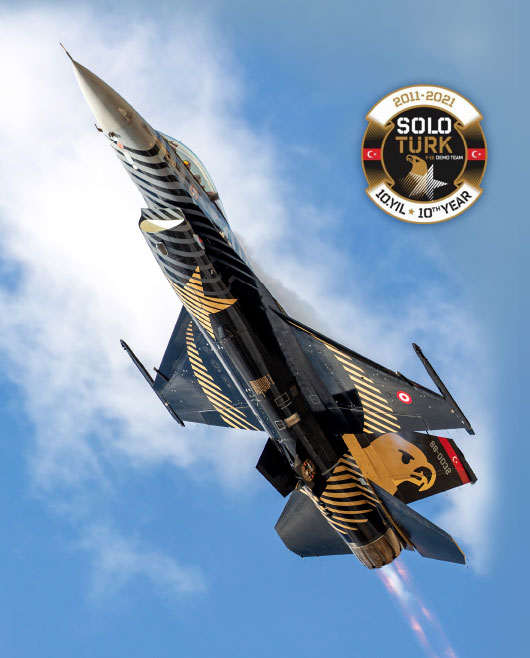
With the special permission obtained from the Ministry of National Defense, we visited the SOLOTURK team at their home, the 132nd Weapons and Tactics Squadron Command of the 3rd Main Jet Base Command in Konya. We asked the SOLOTURK team about everything that you have wanted know about them. Of course, we also had the opportunity to closely view the special paint changes made on the aircraft for the 10th anniversary, and we got some great shots. But first let's take a moment to look back to the past… How did this story begin?
The "Demonstration Flight with a Solo F-16 Aircraft" program, initiated by the Air Force Command on November 25, 2009, was put into practice with the selection of the constituting team on January 14, 2010. The name SOLOTURK was chosen among more than 300 names suggested by Air Force personnel.
On the 100th anniversary of the Turkish Air Force Command (TurAF), SOLOTURK was first introduced on April 15, 2011, and this date is also accepted as the establishment date of the SOLOTÜRK team. The team made its first show open to the public in Samsun on May 19, 2011, as part of the Commemoration of Atatürk, Youth and Sports Day events. Initially, an F-16C Block 40 tail number 91-0011 was used as the main demonstration aircraft, and an F-16C Block 40 aircraft, tail number 90-0011 was the backup.
There is an eagle motif on the wing and tail of the aircraft, representing the Turkish Air Force. Under the body, there is a crescent star motif representing our country. No modifications were made on the aircraft, except for the graphic design and the smoke devices on the edges of both wings. In this way, these aircraft can also join combat missions when necessary. One of the most important features that distinguish SOLOTURK pilots from other demonstration pilots is that they are still combat-ready pilots. Aside from demonstration flights, they continue to assume combat missions. Another distinctive feature is the demonstration flight training.
SOLOTURK Demo Team describes itself as follows:
"Other solo teams around the world often receive training from previously established teams (the U.S.) at the foundation phase, and as a result their performances are based on typical choreography. SOLOTURK Pilots, on the other hand, prepared a unique choreography by benefiting from the centuries-old experience of the Air Force and its pilots with advanced training level, without any support from any country. Each year, new choreographies are added to this performance, and a show specific to that year is planned."
Of course, to become a SOLOTURK Pilot, one needs to endure a challenging process. To execute a performance that is difficult to describe even on paper and to realize the untested in the sky by blending it with experience is tough and challenging. Following the four-year undergraduate education at the Air Force Academy, they receive flight training at the 2nd Main Jet Base Command in Çiğli/İzmir. Afterward, the pilots who receive the Combat Readiness Training become the 2 and 4 ship formation leaders in the squadrons they are assigned to. This is, in fact, a standard procedure to become a pilot in the Turkish Air Force. After 1,000 hours of flight in the F-16, they are eligible to become SOLOTURK Pilot candidates on a voluntary basis. Under normal conditions, the duty period of the demonstration pilot and SOLOTURK Wing Commander is two years. In the second year of the 1st Demonstration Pilot duty, the candidate pilots selected by the Air Force Command among the F-16 pilots who meet the above criteria begin to receive training from the 1st Demonstration Pilot. Following training, the pilot takes part in the team as the 2nd Demonstration Pilot. In this training, the candidate pilot in the two-seat F-16D aircraft fulfills all the performances in the SOLOTURK demonstration package in the airfield under the leadership of the instructor demonstration pilot. The training of the candidate pilot, who has mastered all the performances, continues with training over the sea. In addition to the Demonstration Pilot training, the flight safety observer training (every demonstration pilot must take this training), which is the duty of the other demonstration pilot on the ground during the demonstration, is also received at this stage.
A Flawless Flight is Possible with a Distinguished Team
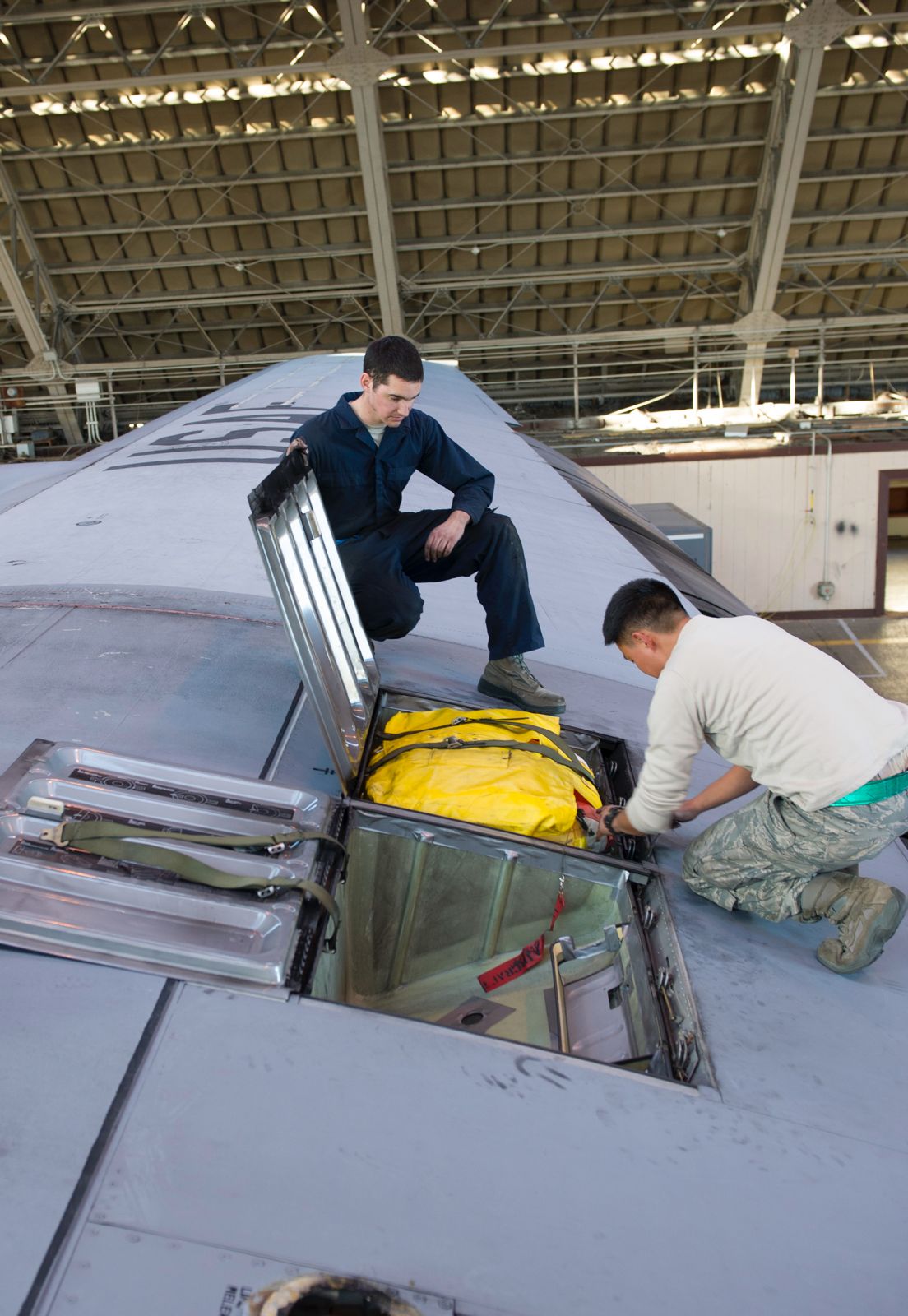
We should also mention the technical maintenance team working seamlessly in the background supporting the show. With great dedication the teams behind the scenes are essential for the demonstration pilots so that they can perform their choreographies flawlessly and the aircraft can be ready at any time. The team that maintains the F-16s and always keeps them ready for duty is an inseparable part of SOLOTURK. The maintenance team consists of a total of 9 personnel, including 1 Maintenance Officer and 3 Jet Mechanical Technicians, 1 Jet Engine Technician, 1 Aircraft Fuel Systems Technician, 1 Aircraft Weapon Systems Technician, 1 Aircraft Electrical and Air Conditioning Technician, and 1 Avionics Systems Technician. Those who do not know aviation may only consider it as the plane and pilot, but in fact, aviation is grounded in great teamwork. For a 20-minute show, the maintenance team carries out a total of 6 hours of maintenance activities, 3 hours pre-flight and 3 hours post-flight. During such maintenance activities, 251 different points over the aircraft are checked in detail. The forces that the aircraft is exposed to during a demonstration flight, at low altitude, high speed, and high G-forces, are quite different from those during typical mission flights. This directly affects the maintenance activities. The maintenance team always keeps the aircraft flight ready by combining their knowledge and experience with devotion and precision.
Another part of the pillar is the press and public relations team. The primary task of the team, which consists of a Press and Public Relations Officer and a Press and Public Relations Petty Officer, is to carry out promotional and coordination activities of the show.
Well, what can we do if we want to invite the team and watch the SOLOTURK show in our city? The best method to get started is to submit a request to the Governor's Office in the province of residence. The team pays special attention not to hold demonstrations in the same place for two consecutive years and puts on shows according to important days and weeks. The team explains how the show schedule is set as follows:
"In order to set the SOLOTURK demonstration schedule, requests are collected from all provincial governorships for the next year's demonstrations with the coordination of the Ministry of National Defense (MoND) and the Ministry of Interior. Governorships submit the requests collected from municipalities, schools, and other institutions to the Ministry of Interior. All such applications are collected and then forwarded to the Ministry of National Defense. The draft show schedule is set with the evaluation of the applications by the Air Force and SOLOTURK team and the approval of the Force Command. This draft is submitted to the Chief of General Staff and the Ministry of National Defense, respectively. Upon the necessary changes, the next year's show schedule is set. Following the finalization of the show schedule, the Governorship of the Province where the show will take place is informed. Then the show venue is selected as per the examination of the pilots to ensure flight safety. As the show date gets closer, plans are made for the necessary infrastructures (stage, tribune, sound system, etc.) that will be set up at the venue. Then the demonstration flight show is announced to the public both on social media and in particular via local media. The maintenance team and the press and public relations team are transferred together with all the necessary materials by transport aircraft to the most convenient airport close to the venue where the show will be held. When choosing the airfield, primarily military airfields are preferred due to logistical convenience, but civil airports can also be used. Both demonstration pilots, together with the main and backup aircraft, are transferred to the relevant airfield after the maintenance team. In the meantime, a surrounding check flight is conducted above the demonstration venue. Obstacles around the show venue, directions of approach to the airfield, and what to do in an emergency are determined through this flight. The press and public relations officer and the flight safety officer arrive at the show venue two days before the show and flight readiness review is conducted on site, and then the demonstration aircraft arrives at the airfield for rehearsal."
The SOLOTURK Demonstration Team works for hours on details, ranging from choreography to be performed, to weather conditions, from flight safety to the coordination of the whole team, in preparation and putting the final checks on all checklist boxes.
"The shows consist of two different packages determined according to weather conditions. These are the low and high packages. The high package consists of 21, and the low package consists of 19 breathtaking maneuvers. Some of these are signature maneuvers specific to SOLOTURK. Different maneuvers in different seasons are included or removed from these packages within limits allowed by the aircraft. The cloud base determines the package selection. When the Demo Pilot arrives at the show venue, they check the cloud base height before making their first maneuver and decides which package to choose. The pilot informs the flight safety observer about this. The demonstration package is rehearsed by the flight safety officer's direction from the ground. During this rehearsal, the information regarding the surrounding obstacles, the altitude, direction of the maneuvers, maneuvers where flares are fired (Flare is a high-temperature heat source ejected from aircraft that mislead heat-sensitive or heat-seeking missiles. It is used during shows due to its visual effect.) is transferred to the demonstration pilot with the inputs of the flight safety officer. After the rehearsal, while the aircraft leaves the venue, the press and public relations officer and the flight safety officer stay in the venue and continue the preparations for the show by providing coordination with the organization that organizes the show. On the day of the show, at least two hours pre-flight, the press and public relations officer, as well as the flight safety officer, initiate the related activities at the show venue. After determining that all preparations are completed, and there is no obstacle for the flight, they give authorization to the demonstration pilot. Before and during the demonstration, the press and public relations officer informs the public about the demonstration and the purpose of the event. One of the most difficult parts of this task is the narration made in the language of the country where the show is held. It is a challenging process to rehearse the prepared text for days and to pronounce it correctly, but these challenges are appreciated and tolerated with a smile and good reactions received in the related country. The first-rate promotion of our country and the Turkish Air Force is accomplished in the best way."
The entire dedicated team spends long hours in the static area next to the aircraft to observe how the crowds react to the demonstration and to communicate more closely with the public. (Unfortunately, this activity has been temporarily canceled during the pandemic process due to social distancing rules.) This period is reserved for activities such as one-to-one chats and photo shoots. The next day, with the pleasure and pride of performing the show successfully, the team is transferred back to their home, to the 3rd Main Jet Base in Konya.
15 Countries, over 60 Cities, and more than 200 Performances in Ten Years
SOLOTURK has performed more than 200 shows since its establishment. So far, 60 such shows have been held abroad in 15 countries, and the remaining have taken place at over 60 destinations in Turkey. Among these, there are big international organizations such as the Istanbul Air Show, Teknofest, Formula-1, and IDEF. The SOLOTURK Performance Team has received various awards for its international performances. The most prominent of them are as follows:
The "Best Flying Display" award among 29 show teams at the Royal International Air Tattoo – RIAT held in England in 2011
The "Best Outdoor Design" award given by the Graphic Designers Professional Organization in 2012 for the paint of SOLOTURK aircraft
The "Best Demonstration Flight" award at Slovak International Air Fest – SIAF held in Slovakia in 2017
The "Best Solo Jet Demonstration Flight" award at the Royal International Air Tattoo – RIAT held in England in 2018
As it can be seen, in the first year of its establishment, the SOLOTURK Demonstration Team participated in the Royal International Air Tattoo, one of the most important air shows in the world and received an award.
The team, which has further developed its corporate identity with the experience it has gained over the last ten years, achieved success in having become a well-known and reputable brand among solo show teams both in our country and in the world. Watching the SOLOTURK's show is very impressive and has an unforgettable effect that lasts a lifetime, even for those not interested in aviation. The skills of our demonstration pilots, the incredible maneuverability of the F-16 aircraft, the tremendous sound of the F110 engine, and of course, the visual effects of the flares during the show come to the fore in this success.
While our SOLOTURK pilots, the shining stars of the Turkish Air Force for a decade, exhibit their know-how, experience, and skills to the audience with their choreography, the maintenance and public relations teams also demonstrate the professionalism of our army to the public. The SOLOTURK Demonstration Team instills a passion for aviation in tens of thousands of youngsters, the boys and girls who look skyward and dream of being in their place one day. Through demonstrations and public relations activities on the ground, and by setting an example for youngsters across the globe who are ready to pursue their passion, the SOLOTURK Team will continue to make us proud, representing our country at the highest level in the world.
Happy 10th Anniversary to the SOLOTURK Performance Team! They certainly have come a long way in a short period of time!