STM TDL Capabilities and Solutions
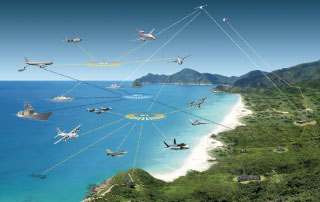
In modern warfare, there are various communication systems integrated with various platforms generating different types of information. In this complex environment, common and shared situational awareness between the decision makers and the operators is the key for successful operations. This need is the point, which stimulated the use of tactical data links and brought in the term "network enabled capabilities" into the world of defence. Advanced TDL solutions bring in significant operational advantages; however, nations should be aware of the complexities in acquiring these capabilities. STM offers complete TDL solutions for TDL management cell establishment, test centre installation, TDL requirements management systems engineering support, consultancy services and professional TDL training programs, to pave the way for nations seeking for improved TDL capabilities.
Why Advanced TDL Systems?
With the deployment of advanced TDL systems, Armed Forces acquire great improvement in terms of tactical information exchange. These systems provide common situational awareness and flexibility, and reduce the OODA loop (for observe, orient, decide, and act) facilitating shorter reaction times. Link 16 is the most sophisticated tactical data link that is actively employed in the battlefield today. It is widely used in the world, by both NATO and non NATO nations, and by various services. Link 16 facilitates improved situational awareness through a real time tactical picture, real time mission management and weapon control, secure voice channels and ECM-resistant communication. However, all these advantages are available only with interoperable platform implementations. In addition, Link 16 network management is complex and requires sophisticated tools and trained personnel. Without proper planning, design, management, and analysed, tracked interoperability, Link 16 brings in serious costs and operational weaknesses. Therefore, countries acquiring advanced TDL systems should be aware of the training and infrastructure requirements, and the importance of acting early in terms of preparing the personnel and the systems.
Challenges in Employment of Advanced TDL Systems
Countries usually fail to recognize the upcoming interoperability challenges for Link 16 in the acquisition process. In order for a platform to acquire Link 16 capability, the integration of the Link 16 Terminal (MIDS) is not enough. Besides, a platform-specific data link processor (DLP) should be developed and correctly integrated to the system with an appropriate human machine interface (HMI). DLP systems are expensive; in order to eliminate redundant costs, platform users choose from the vast set of Link 16 messages, the ones that meet their information exchange requirements. However, incompatible message and standard version selections end up with non-interoperable Link 16 implementations causing the conveyed information to be erroneous, incomplete, or irrelevant. Interoperability issues not only preclude the employment of operational advantages provided by Link 16, but also pose the risk of misunderstandings between operators, which may even end up with the loss of friendly forces.
STM TDL Capabilities
STM offers its technical and administrative expertise through technical consultancy and training programs to countries that are acquiring Link 16 capabilities. This expertise is constituted through the Link 16 acquisition process of Turkey, which also coincides with the Link 16 Interoperability Project. Link 16 capability of each Turkish platform that will be equipped with MIDS is defined by STM with an interoperability perspective. STM developed its own systems engineering procedures for Tactical Data Link requirements management. National and platform level Link 16 requirements are defined in accordance with these procedures, from concept to bit implementation level. However, identifying the requirements correctly is only a step to be taken; those requirements need to be tested to truly assure interoperability. For this reason, two identical IO Test and Analysis Laboratories are established by STM. Network design, terminal initialization and test, Link 16 simulation, data recording, online and offline Link 16 message analyses, offline Link 11, IJMS, Link 16, Link 22 and VMF message analyses capabilities are combined in each laboratory. The tools accommodate the setup of a real Link 16 network and communication with real platforms that enable detailed IO and Link 16 functionality tests for the real platforms.
STM TDL team conducted many interoperability tests and analyses and contributed to platform acceptance tests for technical support. The team has been delivering TDL trainings to Turkish Armed Forces (TAF) and Undersecretariat for Defence Industries (SSM) including project managers, operators, pilots and maintenance personnel. In addition, the team provides consultancy to TAF and SSM for TDL related projects, including terminal acquisition and installations, platform modernizations and new platform acquisitions.
STM TDL Solutions
STM comprehends the complexities of modern TDL systems and offers complete solutions as well as individual training, consultancy, and acquisition services. STM provides a complete solution for TDL management cell establishment, test centre installation, TDL requirements management systems engineering support, consultancy services, and professional TDL training programs. TDL management cell is a must for proper and effective TDL communications. TDL requirements systems engineering approach is required for gaining interoperable and cost-effective TDL capabilities. Test centre is essential for national and international interoperability assessments and evaluations. It also facilitates detailed platform acceptance tests. Professional training programs reduces the adaptation period for the new TDL capability.
STM adopts a role-specific training philosophy. Each person attends the specific program, which is designed to meet the requirements of the specific job performed. Different training programs are designed for fighter pilots, operators, decision makers, project officers, maintenance personnel and crypto personnel. In this manner, personnel attain a general understanding of the total system and a deep knowledge about the elements that the new TDL system affects the conducted duties.