Strengthening the Turkish Shipyard Industry – Adopting Strategies to Bolster Market Sustainability
Defence Turkey: Mr. Müjdat Uludağ, first of all we would like to thank you for your time. As the Head of the Naval Platforms Department of the Undersecretariat of Defense Industries (SSM), could you please inform us on the structuring of your department, staff and on your working areas?
These interviews we make with the magazines conducting sectoral publishing such as your magazine offer us an important opportunity to reach our sector. We get the chance to convey our messages to our shipyards and other shareholders through these channels. The evaluations of the sectors’ feedback that we collect in return, these messages help us greatly in shaping the management methods of our projects.
The Naval Platforms Department operates as one of the four departments connected to the Platform Projects Deputy Undersecretariat. We have four directorates: Combat Vessels, Amphibious Vessels, Support Vessels and Patrol Vessels. In each of these directorates, the projects on special vessel classes are being executed. With our team of consultants, we are around 45 staff. Taking into consideration the staff of other departments which support the project groups such as our group and participate in the projects within the SSM, we have the most competent staff in the public institutions simultaneously conducting various types of projects on submarines, amphibious vessels, seismic research vessels, patrol boats, etc. In this sense, we have a structure not only providing services to institutions such as Naval Forces Command and Coast Guard Command but also capable of fulfilling the naval platforms requirements of other units of the public sector. Our call for the public institutions willing to invest in naval platforms is that since we already have the settled staff in terms of technical know-how and experience, do not form a special department for your demands, cooperate with us and utilize our capabilities. Here, there is an exercised procurement system. The contract execution methods are implemented in overall institution, our supporting departments are specialized in their areas and the vast knowledge of the staff of our department provides us the environment convenient for the high-quality execution of our projects.
Defence Turkey: Mr. Uludağ, taking a look at the period of the last five years, as the Naval Platforms Department you have successfully accomplished numerous projects and delivered thevessels to authorities. However, with the completion of many important projects in the medium and short term, we observe a recession in the sector. It is crucial to provide support through domestic programs for the military platform producers in order to establish a sustainable industry. Considering all these points, how do you assess the current status of our sector, its size and structure? Will everyone be able to get a slice of the cake? What are your opinions?
The whole world is going through an economic recession. The impacts of this recession could be observed not only in Turkey but also in America, Russia, Europe and other regions of the world. There is a worldwide decrease in the transportation revenues and as a result of this, the need to build new -vessels reduced compared to what it was 7-8 years ago. This recession will stop after a while and the recovery stage will start. Actually, during such times of crisis, the companies with income and resources usually purchase vessels as the purchase prices hit rock bottom and it is the most convenient time for making investments.
With this crisis, the Turkish mercantile navy fell from 33 million DWT (Dead Weight Tons) transportation capacity to 25 million DWT. As our fleets’ capacity melts down just like others during this crisis period, certain Greek and Chinese ship-owners procured new vessels. So, how does this recession affect us? We are getting affordable prices in the shipbuilding market because the competition conditions are challenging. Throughout such period, both the shipyards and sub-contractors are giving proposals with relatively lower prices. In a sense, we are experiencing a favorable period for the government to make investment in shipbuilding as well as the commercial market. On the other hand, due to the recession in the commercial market, our shipyards started to show more interest in the public projects and this means fierce competition. This case creates a great risk against sustainability. Our shipyards should be further strengthened through adopting correct strategies so that they would be perceived preferable and reliable partner in respect of the foreign proposals. If we fail to establish a sustainable market and structure, we will not be able to create our brand abroad.
Defence Turkey: Mr. Uludağ, is a consolidation in the military ship building sector necessary for Turkey to exist in the world market, where competition increases each day, in a more competitive and stronger position with its branded products? Is there a strategy related to this case in the agenda?
Our shipyards must have a facility security clearance and manufacturing permit certificate in order to join our tenders. The shipyards without such certificates could not obtain even a tender document. Currently, there are ten shipyards complying with these conditions and all of them are placing bids for our tenders. I have been sharing a critical concept for a while now. There is no such tough competition in other sectors such as aerospace, electronics, and informatics or land vehicles as the one endured in naval platforms. Moreover, regarding the main contractor profile, there is no other sector like ours which is mainly composed of private sector. By forming a consolidation, we aim to combine the competency and concentration areas of the companies, spread the financial risk and enable the joint growth of the companies as they complement each other. Surely, suggesting consolidation is not sufficient alone. We plan to ask our shipyards to place bids in our projects with high budgets by commercial partnership. Competition should always exist as it protects us as the procurement authority while preparing our companies for the foreign markets. Regarding the projects that we are able to predict the costs, consolidation will be an implementation reducing the risks rather than affecting the competition adversely.
Defence Turkey: Will there be any classification?
The Defense Industry Strategy Document will be updated again in 2017. But instead of waiting for the paper’s update, we are sharing this study with the public and our shareholders through publishing. Moreover, we are informing the shipyards with which we conduct projects on this new formation and we believe that this concept is being accepted in general. The feedback appears to be quite positive.
When we assess the Defense Industry’s turnover analysis of the last six years on sector basis, we come across a triangle and on the lowest step of this triangle exists the maritime sector. Aerospace, Electronics, IT sectors are lined on the top of the list, and Land Vehicles, Weapon Systems and Naval Platforms follow them. The places of the Aerospace, Electronics and IT sectors vary depending on the years. And the similar alterations are observed extending to years considering the Land Vehicles and Weapon Systems sectors. Yet, the Naval Platforms have been constantly positioned on the last step of this triangle for the last six years. From an external perspective, it is thought that the shipyards are achieving high amounts of turnover, but in reality most of this turnover is collected by our foundation companies such as Aselsan, Havelsan and Roketsan which supply the electronic and weapon systems.
There are no other sectors in which 10 companies are competing altogether. Up to now, we observed in our sector that our companies are duly performing their duties; they accomplished the tasks assigned by the government by delivering strong platforms with lowest turnover. We must give them credit. The Turkish ship building industry is in an esteemed position in the world. Having completed this stage, we expect them to operate businesses in the world market with product references by further specializing in their areas.
Defence Turkey: Mr. Uludağ, according to the data of 2014, the export revenue of the ship building industry located in Turkey was in the level of $1,252 billion excluding the maintenance and repair services. What kind of a change is observed in these figures in 2015? Could we claim that especially the decline of crude oil prices caused stagnation in exports as well?
The static economy is continuing worldwide. From a wide perspective, many parameters indicate that 2016 will be more challenging compared to the previous year. In addition, there are political crises in our geography and we are very close to the war territories. Even the occupation of Crimea adversely affected the shipping in the Bosphorus. The shipping around our straits is a significant resource for both the world trade and for our maintenance, repair and overhaul market. Turkey has been trying to get over the recession in the new ship constructions through its MRO revenues. We can closely observe the effects of this crisis in Tuzla Shipyards Region. Today, many of our shipyards are focusing on MRO activities. On the other hand, the instability in oil prices and sudden falls in the prices affected the investments of oil producing countries as well. When all these parameters are combined, an export portrait with negative tendencies emerges and the entire world is influenced by this. I believe that after this crisis, our producers will be swiftly adapting themselves to the new conditions and offering striking solutions again.
Defence Turkey: How do you evaluate the 2015 export activities of our shipyards?
We are in a good position especially in respect of the Fast Patrol Boats within Patrol Vessels category. At least three of our shipyards reached a significant sales achievement in this area. We have to congratulate these three shipyards which are competent in their areas and have almost completed their branding process.
These shipyards have gained an important prestige regarding the Fast Patrol Boats. We also have a very substantial potential in respect of the Amphibious and Support Vessels. I believe that we will be putting forth significant brands in this area within the next year. We have numerous reference vessels with indigenous designs.
Defence Turkey: Dear Mr. Uludağ, what is the importance of the Government-to-Government Sale and Credit Mechanisms for our Military Ship Building Industry to reach an outstanding export achievement in the world market? Could we offer financial solutions to our focus countries in this respect?
Under current circumstances, our potential customers not only ask for a proposal but also they definitely ask for our financial solutions. We experienced a solid example of this case regarding certain projects conducted by STM in Pakistan. We need to apply these financial solutions not just for STM Company but for our other shipyards because they also collect proposals, a Request for Proposal (RFP) is issued for them as well. At this stage, we have to provide certain financial solutions to them. China is one of the most successful examples of this implementation in the world. Then again, it is not possible to achieve just through providing financial solutions. Political engagements are of vital essence to this end. Both our esteemed President and our Prime Minister surely take these issues to the related authorities and explain our proposals during their official visits to foreign countries. All in all, it is not always possible to open certain doors. We ask for support in order to relay our demand, our proposal to a country’s government. An annotation is always delivered to them for each of their visits abroad; the requirements of our companies are cited in these annotations in addition to their proposals and demands for support. As the support is gained, we are notified through a confirmation. Even if we do not announce it now, in the short term we may hear an announcement declaring the winning of a tender by a few of our companies and among these are some topics brought to the agenda by our President during his visits to foreign countries. Then, this support will be returning to Turkey concretely. If we get the chance to make such an announcement in such a period of economic recession and intense political crises, we will also be providing a moral support to our sector. We will be able to show that we are capable of achieving this. In our opinion, we are capable of catching this momentum and business model we achieved in Fast Patrol Boats in Vessel groups as well. We witness the serious success of Aselsan and Havelsan in combat management systems and electronic systems. They provide support to our platforms in this respect. We have some deficiencies in Weapon and Propulsion systems. We should definitely be capable of putting forth an indigenous alternative in addition to the foreign alternatives in the weapon and propulsion systems with which we will be equipping our naval platforms. We initiated an attempt in Main Propulsion System. It is early to declare this now but we do have an important approach. We are creating a business model. Aselsan is filling a considerable gap in STOP and STAMP weapon systems. In the top segment, we expect Roketsan to reveal groundbreaking products. As soon as these programs are completed, our platforms will become a good alternative in the foreign markets with indigenous solutions and domestic products without being exposed to the export license restrictions. We believe that we are more competent in this area and very close to the result compared to other platform projects.
Defence Turkey: Do you think that the establishment of new models, concepts which would fulfill the urgent requirements in line with the new trends especially through regional analysis for access to new international markets makes the Turkish shipyards more competitive in the worldwide?
There are particular investors applying this model in the world. Our geography has been struggling against the crises for a long while. Besides, certain developments may emerge in this hot region which could not be foreseen. We witness the rapid political transitions in countries such as Egypt, Syria and Ukraine. These are the countries to which we refer as our friends as well as our potential and natural trade partners. The political crises are unpredictable. We faced many demands during these swift transitions. We even came across requests that goes like ‘Could you take out a platform from the inventory of the Naval Forces Command and sell it?’ This shows us that we have to be prepared well to these unpredictable crises. Throughout these crises periods, the funding countries capable of financing the investment can offer the platforms convenient for urgent requirements. These are actually the platforms which you could apply the weapon and sensor structure in basic configuration immediately in accordance with the specifications of the client. I believe that this concept supporting the basic criteria would be successful but we need an investor for funding it. It is not applicable for huge platforms such as the LHD but this model could be favorable for vessels at the size of Fast Patrol Boats and Off-Shore Patrol Vessels.
Defence Turkey: Mr. Uludağ, is it possible for the SSM to develop an approach by foreseeing beforehand the requirements of the regions and countries during times of crises and then directing our private shipyards to the regions where these requirements would occur?
Why would the SSM carry out that task? We should discuss this point. SSM can assume this duty. We host many delegations in our country and we participate in numerous official visits. Consequently compared to all other actors, we are the actor most capable of observing the tendencies. You are right at that point, maybe SSM should be able to state that; or perhaps we should assign our structure in this regard similar with STM’s style and then declare that these our foresight on the potential crisis regions of the world, these are the platforms which could be sold in these regions, we support investments made in this area, etc. Then again, funding structures will be required in the end. We need investors that could determine the areas available for achieving profits; that could own their actual jobs and claim to manage this concept. The sector is not in this status for the time being, but 1-2 models which we will soon establish would be paving the way for this.
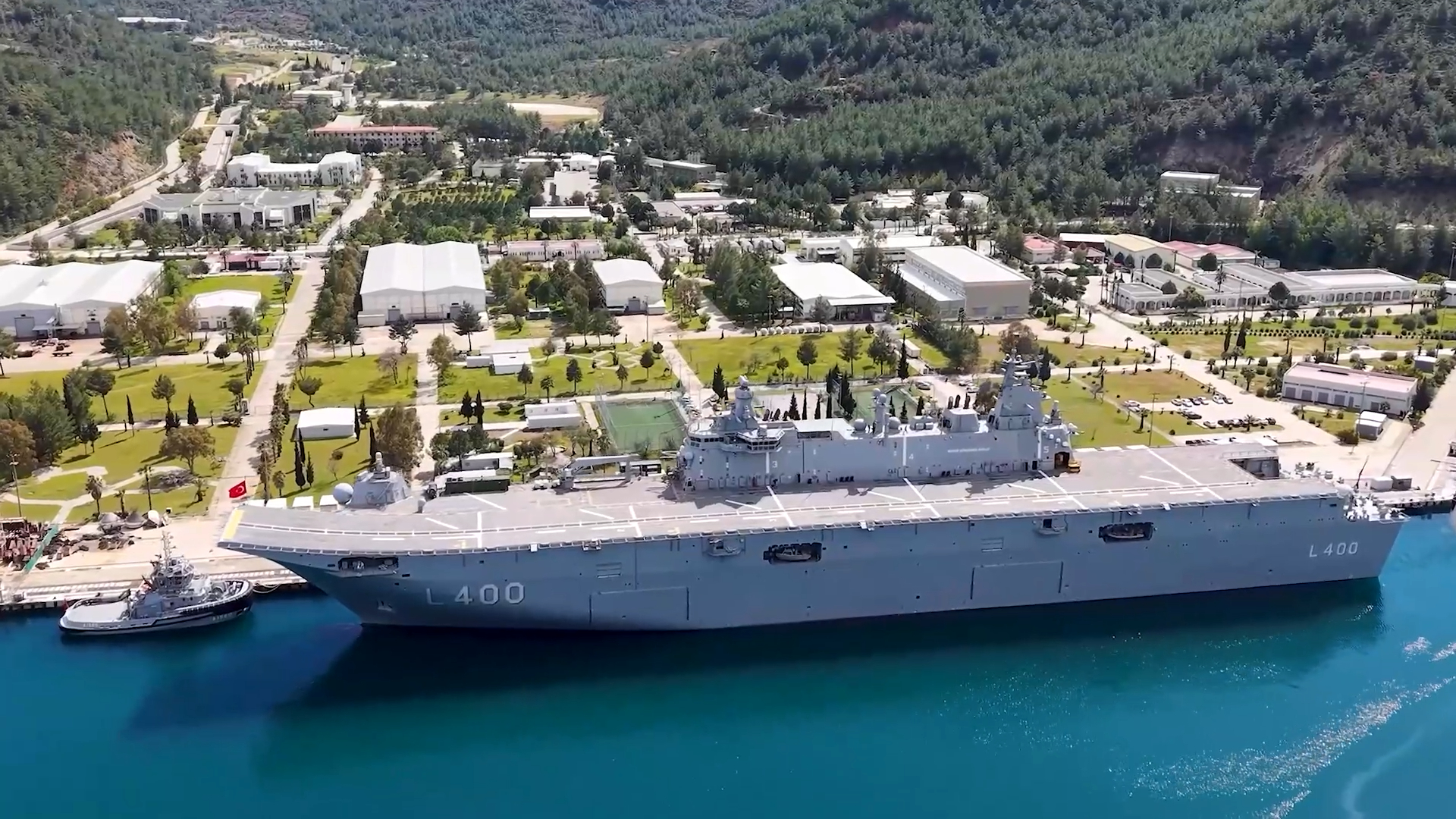
Defence Turkey: Mr. Uludağ, touching on the ongoing programs; the class of platform has been changed into LHD from LPD within the scope of the Landing Platform Dock (LPD) Project. What are your comments on the revision and improvements to be carried out to this end? On the other hand, could you please inform our readers on the up-to-date status of this program?
We signed the LPD contract with Sedef Shipyard on June 1st, 2015 and it became effective on September 18th, 2015. I believe our shipyard will be available for blanking and steel cutting within this May. Maybe we could accomplish this in a ceremony participated by our President. To date, the design modifications requested by our Naval Forces were applied on the platform, and these activities are still continuing. For my part, the shipbuilding schedule which we follow will be gaining momentum with the completion of the design. Sedef Shipyard is well known for its capability of rapid shipbuilding and we believe that they will be conducting this period in an accelerated manner. The class of our platform has changed LHD from the LPD. At the last Defense Industry Executive Committee meeting, we adopted a decision on altering the configuration of the platform as well.
So what are the retrofits in this new configuration? A flight deck which allows the landing of more helicopters was formed. Moreover 12’ Ramp for Aircraft Take-off enabling ski-jump for STOVL operations were not mentioned in Ski-Jump contract, so this has been included in the contract. In the beginning there were no Fore Aircraft Elevators, and now they are in the contract. Besides, an electronic infrastructure supporting the approach of the air vehicles to the platform was included as well. A platform of this size and in this category will be entering into Naval Forces’ inventory for the first time. Our operation concept is also getting mature in time. Therefore, if our Naval Forces Command, our Undersecretariat for Defense Industries and our industry has any opportunity for making improvement on the platform, we do not want to miss that. Because, we will build this platform once and it will be operating as part of our inventory for 40 years. Any neglected detail will be affecting the performance of our operational capabilities for 40 years. That’s why first we need to take care of all the necessary modifications and then move on.
Defence Turkey: Could you please inform us about delivery schedule?
Actually, we gave an extension to our shipyard with the inclusion of these additional specifications. In accordance with the expectation of Turkish Naval Forces, we are willing to commission the first LHD within 2021.
Defence Turkey: Turkey would be initiating the procurement of an F-35B to deploy it on these platforms as part of the LHD program. In this regard, is it technically possible to utilize the STOVL configuration on this platform?
The fleet of NATO allied countries could be deployed during the operations and military exercises. This Configuration is not only compatible with the existing Air Vehicles in our inventory, but also with some of the air vehicles of NATO allied countries. If the ski-jump ramp was not included to the tender specification, we would have thought that Turkey had no such expectation. But with the integration of this ramp into the platforms, Turkey will now own a platform convenient for the air vehicles in short-take off and vertical landing configuration.
Defence Turkey: High speed and high strike power capabilities are expected from the Fast Patrol Boat during surface operations. So, in this respect, will the design of the Turkish Type Fast Patrol Boat be shaped in accordance with the high-speed criteria? Within this framework, should we expect the actualization of a platform with high strike power capable of reaching a high-speed such as 50-60 knots?
As the Undersecretariat for Defense Industries, first of all we request a boat with an indigenous design, a boat which we own all the intellectual property rights. This Project has been in our agenda for a long while. Over ten of our shipyards responded the Request for Information and they are fully aware of these criteria. What we tell them is that since you have the awareness, then do not wait until the Request for Proposal is released by SSM. Immediately launch your design activities and demonstrate the solutions in line with our demands during the proposal stage. In this respect, we do not expect merely the commitment, but instead we expect it having proved to substantially. This means that we expect them to approach us with a mature design. Otherwise, we cannot initiate a project in this size just with the commitments. We are quite determined in that and I try to declare it on all occasions. Our shipyards aiming to be involved in this program should have already started their design activities. We expect more than their commitments.
Defence Turkey: Within the scope of the TF-2000 (Anti-Air Warfare Frigate) Program, joint studies were being conducted with the Naval Forces for a while in order to clarify the Project model and technical requirements. Will any solid steps be taken about moving onto the design stage in 2016?
TF-2000 project has been in Turkey’s agenda for 20 years. This frigate will be the greatest battleship we have ever accomplished. We will be completing the outsourcing contract regarding the design activities of the TF-2000 project in a few months. We have completed documentation; the support we will be obtaining regarding the design has been identified and we have negotiated with the companies providing this support in a few rounds. Therefore, they know what we require and what we identified, so I believe that they would be responding soon. The contract would probably be signed within a couple of months. This process will be regarding the design and then when the design reaches to a certain stage, to certain maturity we will probably be building this first frigate at Naval Shipyard Command. We envisage a scenario that the remaining 2nd-3rd and 4th frigates will be constructed at our private shipyards such as MILGEM 5-8 vessels.
Defence Turkey: What kind of a platform will come to light as a result of the TF-2000 program?
Although we just started, we have some predictions. This frigate is roughly 150 meters length and it will be a vessel with approximately 7-8 thousand DWTs of displacement.
Turkey follows such a road map here: While the MILGEM 1-4 vessels were around 100 meter length corvettes, MILGEM 5-8 vessels will be one size longer. And this model would be defined as a frigate. TF-2000 is approx.150 meters length, so it will be three times bigger than the MILGEM 1-4 configuration.
Defence Turkey: Could you please share with us about the construction activities of the 3rd and 4th vessels proceeding?
Mono-hull of the 3rd vessel was completely revealed. This vessel is being prepared for outfitting activities over the main slipway at our Naval Shipyard Command in İstanbul. The critical equipment of the third vessel is almost completed and in the next stage, the equipping activities will be launched. The block construction of the 4th vessel is underway. In my opinion we are proceeding at the momentum we expected. After all, our shipyard has to initially accomplish the construction of these two vessels so that it could allocate resources for the fifth vessel as part of the MILGEM-S program. Construction of the 5th vessel is intended to be initiated as soon as possible. For this, initially one of the two vessels being built should be launched to sea.
Defence Turkey: How are the design activities proceeding within the scope of the “I Class Frigate” program containing different configurations and operation requirements as a continuation of the MILGEM corvette? Which design updates will be conducted?
The design activities are completed to a large extent. We are planning to launch the tender with a complete design within the first half of the year. This tender will only contain the shipbuilding, instead of design and shipbuilding.
Defence Turkey: Within the scope of this program is there any study for reflecting the dynamic infrastructure of the private shipyards to this program? Or will İstanbul Naval Shipyard Command assume all the responsibility similar with the construction of the 3rd and 4th vessels?
As I mentioned before, we will encourage the establishment of a consolidation in this tender. We foresee the construction of the three vessels to be assumed by a joint venture established by at least 3 shipyards instead of 1 shipyard. Through this program, we envisage a model for our shipyards in which they consolidate, they complement each other under harsh competition conditions and filling each other’s gaps in respect of proposals and finance and in which they share the risks. There will still be competition, but here instead of a scenario in which all ten shipyards propose at once, the winner takes the financial risks and challenges in an atmosphere he will probably endure great difficulties, the risks are shared and a synergy is created. As the government, we are launching a tender for the construction of a vessel of which we have in-depth knowledge on all the stages of its design. Probably, a ship will be built at each of the three shipyards of the winning consortium. Probably, the construction of each vessel will be initiated simultaneously. They will almost start at the same time and enter into the inventory of the Naval Forces Command simultaneously. Therefore our Forces will procure the corvettes faster and in this way we will be able to prepare ourselves further to the tense atmosphere in our region. Since this model has been planned as a joint venture, the stronger ones will have to support the weaker shipyards in the consortium. If we manage to implement this model successfully, then at the end of the tender, Turkey will come out as a country building a brand in Battle Ships Class. I rely on this consortium as it could also assume important roles within the scope of the TF-2000 program.
Defence Turkey: Could you please inform us on the latest status of the Fast Intervention Boat Procurement Project regarding the domestic procurement of 8 fast intervention boats to fulfill the demands of Naval Forces Command?
Currently, in our Patrol Boats Group, we have three active projects, the tender processes of which are ongoing. The Emergency Intervention and Divers Training Boat are going through the evaluation stage. The New Type SAT Boat is also proceeding in the evaluation phase. Within the scope of the Fast Intervention Boat Project, we are waiting for the proposals. The stage is currently in process for the contractors. I hope we will be approaching to the result in at least one of the projects as soon as we receive the proposals. At this point, we have to mention crucial detail. Naval platforms are by definition considered amongst the greatest military platforms. There are various weapons, sensors, electronics and sub-systems on-board the vessel and the equipment on-board the vessel may increase proportionately according to its capabilities. Design, integration and test activities of all these sub-systems require competence and for the perfect management of this process, we have to incorporate experienced technical staff. Our current staff is not as wide enough to simultaneously support all these programs at the moment. Therefore, we have to execute all these projects in an order. However, we strive to utilize our resources in a coordinated manner in order to accelerate the projects.
Defence Turkey: Mr. Uludağ, the construction of the first submarine was launched in October 2015 as part of the New Type Submarine Procurement Project. The detail design activities are being conducted simultaneously. What would you like to say on the latest status of the program?
The contract was signed in 2009, became effective in 2011 and until this year. There were certain points which we could not agree upon regarding the design stage. And we exerted great efforts in order to overcome these issues. In a sense, we shook hands for the second time at the end of the negotiations. Now the steel-cutting and construction activities of the vessel are initiated. So, we were able to start the construction 7 years after the signing of the contract and 5 years after its’ becoming effective. This program brings a heavy load of tasks to all the shareholders from designers to equipment suppliers and to our shipyard conducting the building activities. Therefore, I regard these intense negotiations natural over such a complex platform. We pay regular visits to our shipyard in Gölcük and we closely examine the construction activities. We are proceeding faster than we expected. Our shipyard has gained a substantial momentum. We are all struggling to gain the time we lost during design phase. Almost all the equipment required for the two vessels has arrived. Testing activities and factory acceptance tests will be carried out in the upcoming period. We need to assign a serious amount of human resources for the tests within this process. We signed a contract with the German BwB Company for certain tests. Everything is going on its course for the time being.
Defence Turkey: Is there any feasibility study foreseen in 2016 regarding the MILDEN (Turkish Type Submarine) program regarded as one of the significant programs to represent the Turkish Naval Forces of the future?
We took a serious initiative synchronously with our Naval Forces Command. Within April, with an experienced company in this area which previously constructed a submarine, we will hold a workshop for sharing experiences. The workshop will last for two days. We expect substantial participation from our Naval Forces Command and from our industry. For two days, we will be hearing the experiences of this company in submarine design and construction and its international cooperation experiences. During this workshop, we will have the chance to discuss the problems endured during the design and construction stages, the points to be considered and lessons learnt. Our STM Company embodies the most competent staff in the civil area. We assigned a significant position to them in the management of this business. At the end of May, this time we will be holding another workshop for our own industry. We have issued questionnaires to 120 companies so far and asked them to cite their own competencies. We also sent them a guiding document defining the technologic preparedness level. With the help of this questionnaire, we gathered the competencies and technology levels of the companies through their own declarations. And, we decided to invite nearly 40 of these companies to the latter workshop. During the workshop, the presentations we identified earlier will be made by the companies. Moreover, we informed the companies that we expected literature study from them until the workshop as well. Therefore, they will be able to introduce their competencies through these presentations. Following this process, we will start funding the R&D projects in the areas we determined. We previously selected the areas we will focus on and initiated the addressing in these areas.
Defence Turkey: Lastly, is there any remark you would like to convey to the readers of Defence Turkey?
First of all, I would like to thank our Project teams in our department. They are exerting great efforts to accomplish the projects in the required quality and speed. We are discussing the projects through intense negotiations until the middle of the night around a table. I believe that this amount of effort strived is a significant gain and chance for our maritime sector. Sometimes we endure difficulties caused by the office environment; a Project may start on paper and end there. Our staff is occasionally distanced from the shipyard where the vessel is constructed, but after all their competency is our greatest value. I am trying to keep them in contact with the field especially for the test activities, even if the office work gets hectic from time to time.
On the other hand, our Shipyards are not the places you only hear the welding and grinding noises. There are design and planning offices composed of white-collars conducting precise design, plans and procurement behind this force. Turkish shipyards are composed of great staff that is trained well in this area. We are known worldwide for this aspect. In my opinion, our shipyards will reach significant positions in the post-crisis market. Regarding the commercial market, we have a structure immediately responding to all types of requirements, offering customer-based solutions. I think this type of structure could be established in the Military Ship Building Industry as well. Here we have to consider this point though. Our Foundation Companies assigned as the sub-contractors in Military Ship Building Industry need to strengthen their positions while giving proposals. I advise them to include numerous experts who have field knowledge and experienced in ship construction to their cadres. No matter if your products are based on software, sensor or weapon systems, you still need staff for being comfortable at site.
With the Undersecretariat for Defence Industries’ expert staff in building strategies, the will put forth by our shipyards, the foundation companies strengthening our products with the weapons, sensors and software they provide and with our other supplier companies, I believe that our country is being prepared for a substantial position in the market after the political and financial crises the world is going through. We will continue to create a common sense and carry on our negotiations.
Defence Turkey: Thank you.