TAI: Conquer the Change, Pioneer the Future
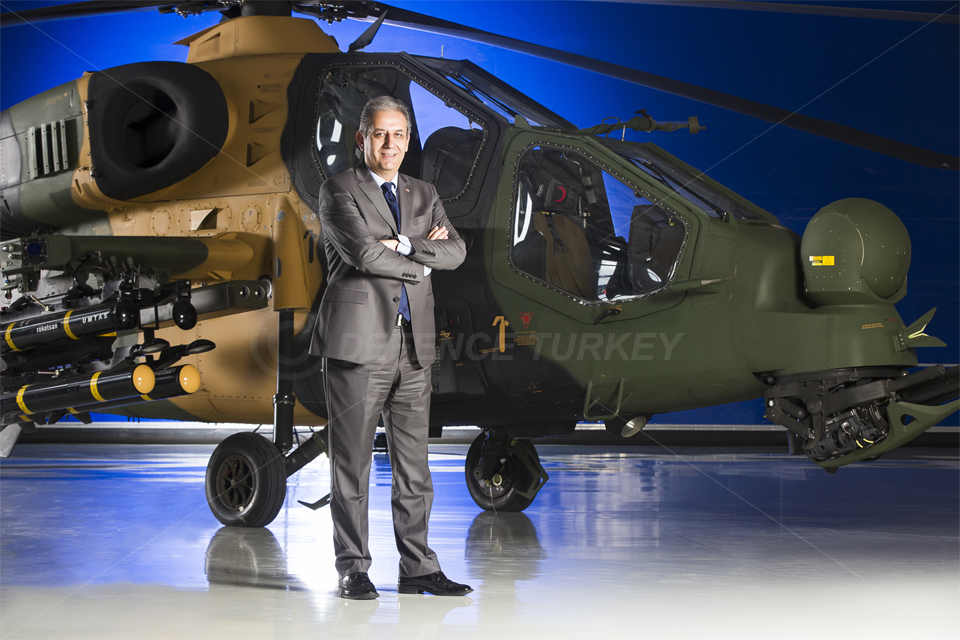
Defence Turkey: Mr. Muharrem Dörtkaşlı, first of all we would like to thank you for your time. TAI had a very efficient 2014. Could you please briefly evaluate 2014 for our magazine?
The most significant highlight of 2014 was the fact that TAI’s turnover exceeded 1 billion USD. Becoming a billion dollar company was a threshold for us and we achieved this goal. These figures stood somewhere between $80-90 million when we embarked on our activities as TAI. We have always been confident in our capacity, yet it was of great importance to us to turn this into a concrete figure to demonstrate vis-a-vis both the sector and our shareholders. A few years ago, we made statements on various platforms regarding TAI’s goal of increasing its turnover to the level of billions in dollars. Today, we mention 2 billion US dollars for 2020s and 2,5 billion dollars for year 2023. Certainly, before such targets are reached, people adopt a wait-and-see approach. This was the case when the target of 1 billion dollars was set, but we managed to reach it. Therefore, we are pleased in this respect. 2014 was a lucrative year. The realizations in a number of projects were gratifying. I can safely say that as a company, we have had good results this year in commercial terms.
For 2015, we prepared a budget that aims to achieve a 15 percent increase in turnover. If all goes well in 2015 and we reach our forecasted numbers, we expect our sales to reach an amount of $1,15 billion. This is obviously the commercial aspect; this target motivates the employees and the shareholders of the company. People have more positive perspectives of the future and hence the level of expectations rises. Certainly, TAI has some missions as a business enterprise. We had to make certain accomplishments in terms of original and independent development projects and in this sense I believe that 2014 was a good year for us. We have had a year where we could complete long-term initiatives and receive a series of contracts in 2014 as a result of our investments in our engineering capacity over the past decade. Looking back at the point where we started off, we were practically a sub-contractor; a company that had no products of its own and allowed foreign OEMs to make use of its capacities. Therefore, regarding 2014, I can say that we indeed had a great year. Still, these achievements boost expectations for similar accomplishments in both commercial and mission projects under tougher circumstances and in more ambitious projects. Frankly, this motivates us and I can say that I am very pleased in this sense. We could have created the impression on the part of the decision-makers that we failed or were forced to revise our policies; or that the risks they took produced unfavourable outcomes. That would have undercut us, both as a company and as the sector in general. The fact that we can discuss brand new and more challenging projects stems from the courage we find from our past achievements. This is a major source of gratification. Although future projects appear more challenging, I believe that the process so far was harder. Our biggest challenge over this period was creating a qualified labour force. We had shortcomings in the number of expert engineers, designers and technicians. Now, we can safely argue that we had a great leap forward in the development of our infrastructure, especially in terms of the creation of the necessary human resources. As I always say, I think is is an advantage for us to be able to proceed with a young but now experienced workforce. We can now be optimistic about the future.
Defence Turkey: Could you please comment on the first quarter of 2015?
As a matter of fact, we are at a point close to the budget we had planned.
Defence Turkey: Is your growth target of 15 percent still valid?
Yes, our endeavours so far justify our 15 percent growth target. Depending on delays in 1-2 projects, there may be shifts towards the second or third quarter. This is a case in point for companies like us, which engage in planning for very long-term projects or feature in challenging or multi-actor projects. Such delays are normal for companies that have such projects in their portfolios. We may likewise be influenced by dynamics out of our control in international projects. Setbacks in their sales may affect our budget as well. Certain delays may occur due to approval and acceptance processes of the national projects we pursue within the country or for other reasons stemming from us as a company. So far, we have experienced no delays in the first quarter. I believe that there would not be a shift to the next year, unless we face delays in the second quarter. Obviously, we would compensate for any delays that may emerge in the first or the second quarter, by the end of the year.
Defence Turkey: There is a very important point, last year TAI went up to the 80th row in the list of worldwide defence industry, leaping up 5 rows. We witness a growth rate of 13 percent in a year when European and American companies went through a decline. This in a sense appears to be compelling the company to sustain this trend of growth. In this respect, you mentioned an increase of 15 percent in your company’s growth. What are the elements of this strategy? In other words, what do you plan to do in order to achieve this target?
First of all, you have to create your infrastructure in advance in order to achieve growth. A considerable part of our export revenues stems from foreign partnerships and international projects that we pursue abroad. Therefore, the required infrastructure and investment for these are already available. We have in fact not had the chance to recover our expenses yet. Therefore, considering the cash and turnover dimensions of the projects we have recently signed, our growth will exceed the growth of the global civil aviation sector. Over the past decade, our growth was four times higher than the growth of global civil aviation industry. In other words, while the average annual growth of civil aviation between 2002-2012 or 2004-2014 was 5.9 percent, our growth was calculated as 23.8 percent. This is a remarkable rate of growth and I believe it will continue exponentially. The infrastructure and the contracts to this end are already there. These could be detected through the contracts we have recently signed. Our deliveries based on these contracts are also ongoing. Therefore, our turnover will keep on increasing even if we make no new contracts. This is how we see the issue. I can make a similar comment on our ranking at the 80th row on the World Defence Industry List: product sales are yet to feature at a satisfactory level in our turnover. This will have a considerable impact on both our exports and our turnover, and our future growth will not be linear because as I mentioned before, our export projects comprises of those where TAI was a partner or a sub-contractor. Now, we have put forth our products as the prime contractor. We have our own products now, and we have successfully completed the processes up to this point. We are about to complete development, test, qualification and certification processes. In the forthcoming period, we will be confident to speak of our products such as our T129 ATAK Helicopter, Hürkuş New Generation Basic Trainer Aircraft and ANKA MALE class UAV System abroad. Exporting these products abroad will obviously have a significant impact on our figures. This will enable us to grow exponentially. The export figures we achieved as the sub-contractor of Boeing or Airbus in the previous years will now be pronounced in terms of product sales. There may hence be radical changes in these figures. Of course our goal is to make the maximum contribution to the export figures foreseen for year 2023 comprising Defence, Aviation and Civil Aviation services. I am not sure whether we can reach it, but I consider this target as an ideal vision. This goal motivates all of us in a single direction. We will try to approach it and reach it. As TAI, we are fully aware that we have assumed an essential task and we are motivated towards this end. Looking forward, I presume that we will be reaching a growth rate that is beyond the usual TAI growth performance, the global average growth, of the sector’s average growth. We can say that now is the time to achieve this level.
Defence Turkey: Does this growth strategy include any mergers or acquisitions abroad?
We have achieved this growth rate in the Kazan plain where we have our facility. There are two ways for corporate growth. The first one is, what we may call organic growth, is similar to the type of growth we have attained so far. The second one, named inorganic growth, with many examples throughout the world, is the growth trend achieved by buying domestic or foreign companies, and thus owning up to their turnover, profits, staff, liabilities, resources and assets. As TAI, we adopted such a target. This has been a goal that we supported with the revenues from public offerings in particular. Although the public offering has been delayed, we have not abandoned this goal. We are capable of accomplishing this through our own resources or with some credit facilities.
Speaking of public offering, there is a standing decision taken by our shareholders for the past two years. We finalized our preparations to this end and using the 3rd quarter results of 2014, we identified the offering schedule as February 2015. We had to accomplish this by mid-February, before the effectiveness of the 4,5-month financial statements expired. To this end, we had to align the company’s financial, administrative and legal infrastructure with the regulations of the Capital Markets Board of Turkey (SPK). We have accomplished these steps and made the required contacts. But before we reached a final decision, we held one last meeting with our shareholders regarding the current status and the appraisal of the company. As a result, a decision was made in this meeting to delay the public offering in order to seize a more convenient conjuncture.
Defence Turkey: How long will this delay last?
We did not set an actual date. For that reason, whenever we seize the convenient conjuncture, and if our shareholders and administration give us the mandate to proceed, we will resume our efforts to this end. We will be losing some time in this process. Then again, we will not have to repeat all the activities we accomplished in the last two years. If it is necessary to spend 100 units of energy in order to bring a company to the stage of public offering, we have already spent the 90 units. We will update our financial statements again, which will be an onus. After this stage, we will proceed with the road show, the 10 units that we had not tackled before. Therefore, we will be able to spin the wheel again as soon as we decide with our shareholders and executives to initiate the public offering process and push the button. At this point, in addition to the circumstances, the financial status and the performance of our company, the financial conjuncture both in Turkey and the world will also prove critical. We expect foreign funds to show interest in some 70 percent of our shares when they are listed in Istanbul stock exchange. When this is the case, the global conjuncture becomes significant. Considering the general elections in Greece, the European Central Bank meeting and the ambiguity ongoing on the part of the FED, we agreed it would not be the right environment for a public offering and decided to postpone it. That’s the gist of the story.
Defence Turkey: Going back to acquisitions, do you have any initiatives to this end?
We have target companies within that scope, composed mainly of two types. The first group includes companies, that have previously invested in engineering and design, that have certain technologies, and would accelerate the pace of our company in existing projects while reducing our risks. Such companies may be in our radar in the sense of supporting our product development activities. The second group includes companies doing the same business we do. They have strong backlogs. Yet, they are experiencing performance difficulties. Buying such companies for their backlogs and converting these backlogs into services through good performance and appropriate margins, we would be able to please the primary OEMs of the global civil aviation industry with our performance as we boost the assets of our company and create additional profits.
.jpg)
Defence Turkey: Is there a certain company that you consider for acquisition? In which fields of business do these companies operate?
Initially, we prepared a portfolio that is compatible with the aforementioned criteria. Then we sifted it through and made a shortlist. Currently, we are pursuing those companies, but there are other companies suitors as well. The range appears to be bigger in terms of the companies with technologies. There are obviously certain issues that we must consult with our customers before we move ahead. There are certain advantages in having something original at hand and the clients tend to have expectations in that sense. In this respect, we need to consider whether we should spend extra time and effort in order to develop and own the technology in collaboration with universities, institutions and industry instead of ready-made technology? Or is it possible to adapt an acquired technology right away? We have to think about it.
Companies in the latter group I just mentioned are mostly based in Europe. These companies provide structural design and manufacturing services at the tier 1 or tier 2 level to Airbus and Boeing, mainly Airbus.
Defence Turkey: In order to develop original, national products and become a global brand, we surely require qualified, specialized labour force. As TAI, you initiated a “Reverse Brain Drain Project” in 2011 in order to enable the return of the prominent Turkish engineers residing abroad to take part in the projects for the production of combat aircrafts, helicopters and satellites with national resources. Taking this four-year period into consideration, what are your achievements in this sense? Were you able to carry out this initiative?
I can say we were. This was one of the issues that we have criticized for years. We could see there was a brain drain from Turkey to foreign countries. When we launched advanced-level development projects, it was necessary to combine the experiences of qualified engineers in Turkey and engineers working in similar projects abroad seeking, waiting for an opportunity to return to Turkey. In order to reverse the brain drain and make good use of our qualified labour force and minimize the national inefficiency, we initiated that programme in 2011. Our Human Resources Department paid visits to various centres abroad and started on site campaigns, regarding who we were inviting and which types of jobs we were offering. Later, we set up a portal and turned this campaign into an ongoing call. I cannot give the exact numbers now but I guess we have interviewed some 70-80 engineers. Not every engineer you interview has the qualifications you seek. The fact that en engineer resides abroad or even has had his or her education abroad does not mean that he or she has superior qualities than the engineers we can recruit here. Therefore, we need to make a thorough assessment. As a result, we made offers to 30 of the interviewees, offered 30 of the candidates to return to their country and start working with us. Perhaps some did not find our wages and benefits satisfactory. Consequently, about half of the engineers we made offers to started working at TAI. We have engineers with overseas experience in all of our business groups.

Defence Turkey: We observe that the inter-state sales mechanism that supports the export and marketing activities works smoothly in countries with strong political and financial relations. There is some draft studies conducted on this issue under the leadership of the Undersecretariat for Defence Industries. If these drafts are ratified into laws, what will change regarding the foreign marketing and sales of the original platforms such as “Anka”, “Atak” and “Hürkuş”? With this law going into effect, in which regions do you think your company will be more active?
We can categorize the products that we develop as first class products. Therefore, we have products that would appeal to everyone in the world, including the United States Armed Forces. But it is natural that our markets include countries that we have geographical and historical ties with, and countries that have not started developing technologies before we did. Some of these countries are financially strong while some are weak. Unfortunately, in our region, most countries do not have strong economies. Western countries and the former Eastern bloc countries successfully operate credit mechanisms while providing systems to these countries’ inventories. We need to adopt the foreign military sales mechanism in order to enter these markets as a new player, to get them to abandon their old habits and to have similar competition conditions with our competitors. These type of export activities do not rely solely on a company’s performance after a certain point; instead, the country’s overall performance becomes key; Defence & Aerospace Systems exports require both the political and the financial support of the government. In my point of view, these initiatives on the part of the Undersecretariat for Defence Industries are perfectly to the point. The Turkish Defence Industry now has its own products. Hence, in such sales, I assume that if we manage to establish such a system against our rivals competing with their credit packages, all our companies will make a great leap forward when we get to the point of selling our products. Lots of Turkish companies are developing first class products; we have no concerns in that sense as we have here in our country a very prestigious and demanding customer profile with high criteria. Perhaps it proves challenging to deliver goods to domestic customers but as soon as you make the delivery, the world’s perception of your products begins to change and improve. We have launched our efforts to this end and continue working on them, we hope to conclude them rapidly. Adopting such mechanisms will surely be advantageous for our industry as we are referring to an industry with a very high level of value added. As far as I am aware, our Ministry of Economy offers a special incentive package for the export of hi-tech products with high value added and I think we may also make use of that opportunity.
Defence Turkey: Are there any initiatives regarding the aforementioned three products in the markets that you have ties with? For example, what chances does our “Atak” helicopter have in the tender launched by Poland for attack helicopters? AugustaWestland has a factory in Poland. Will you be collaborating during this tender process?
Poland launched a tender to meet its need for its attack helicopters. We initiated our activities in this issue. All marketing rights of the T129 ATAK Helicopter, belong to our company. But we have a high level committee convening at regular intervals to discuss the foreign marketing activities with AugustaWestland, and carry outmarket assessments. Our current idea regarding the Polish market is to proceed within the existing structure. But as soon as the RFP’s final version is issued, taking into consideration the domestic participation rate and figures there, if an arrangement that would reinforce our chance of winning the tender is required, we can negotiate these issues with them. If we need to make use of the advantages provided by the fact that our partner has a base in Poland, we will certainly make use of it. In addition, we have markets that do not carry out their procurement processes in the same way, that prefer to establish more private contacts, conduct reviews and start negotiations. In such markets, there are certain issues that have gone beyond the level of the Poland tender. We are in talks with a Gulf Country. Our negotiations are ongoing with an Asian country as well.

Defence Turkey: Do you expect any developments on Anka in foreign markets in the near future?
For the ANKA project, we have a product that has completed the qualification phase but there is another delta before it enters the inventory. More advanced features have been required. Now that the qualification process is complete for Anka-B, new domestic customers have started to emerge, and we are able to deliver this product soon enough and our efforts in this regard are ongoing. With this product’s entry into the inventory, I believe that there will be considerable interest to several versions of ANKA from various markets. Then again, I am aware of the fact that we need to accomplish this rapidly before we lose the interest of the existing markets.
Defence Turkey: What are your comments on the development programme of the New Generation Basic Trainer Aircraft “Hürkuş-A”, its serial production configuration and the platform’s access to foreign markets?
We brought the “Hürkuş” programme to a significant point and received contracts for serial manufacturing of the product. The configuration in the serial production will be different. Studies regarding this configuration are ongoing. The completion of this configuration and its entry into the Turkish Air Forces’ inventory are of great importance to TAI. As you may know, Turkish Air Forces Command is expected to announce the establishment of the international training centre next month. If “Hürkuş” becomes an aircraft of this center, then many pilots from our allies will be completing their training with “Hürkuş”. In my opinion, this will greatly increase recognition of the platform and awareness regarding the product will . I expect that, with Hürkuş’s entry into the inventory, its sales to allied countries will increase. Besides, as you know, we are working on the armed configuration of Hürkuş. The global application of this concept is spreading. As you know, the United States of America has recently initiated a similar project and as far as I am aware the deliveries are not yet complete. This will be an exemplary project as soon as the deliveries are complete and the aircrafts start to be used. We assess that, a new market will be formed for Hürkuş class aircrafts that rest in the same category with respect to their concepts and for “Hürkuş in particular”. In terms of its engine power and design characteristics, Hürkuş is a very convenient platform for armament. Then again, our priority is to receive our Type Certificate for Hürkuş-A from the European Aviation Safety Agency by the end of this year and hence complete the development model phase. After that we are planning to complete the Hürkuş-B model requested by the Air Force and fulfil deliveries. Afterwards, we will be planning the endeavours towards the armament of the Hürkuş-C model.
Defence Turkey: The Defence Industry Executive Committee decided to launch the pre-design phase as part of the TF-X programme. You had already started negotiations with companies on issues such as the platform configuration, motor selection. Taking these into consideration, how will TAI position itself in TF-X project? How will the upcoming process unfold? Has any progress been made in this regard?
You are familiar with the history of the project. There was a period of feasibility reporting that started in 2011 and lasted till 2013. After that, the report we drafted was thoroughly examined by the Undersecretariat for Defence Industries and the Turkish Air Force. Our teams remained involved in the studies throughout these profound analyses. We tried to answer their additional questions and illustrate the points that they had asked to be fleshed out in greater detail. After all, the planning process is a delicate one; you are embarking on a very ambitious project as a country and it is a very long-term programme. This is a very high-cost project. Thus, the planning process needed to be handled in a sensitive fashion. Therefore, it is only natural that the planning process takes longer compared to the other projects.
At the Defence Industry Executive Committee meeting in January, our Prime Minister and members of the committee received information on the current status of the project. As far as we could observe from the press release following this meeting, the leading decision regarding the TF-X was shaped there. As part of the issues to be tackled, the main contractor, the model and the budget needed to be identified. The decisions in this sense were made at the Defence Industry Executive Committee held in late April 2015. As a result, TAI was appointed as the main contractor of the National Fighter Aircraft programme known as T-FX. Upon the notification of TAI, we resorted to special arrangements and re-organizations due to the significance of the Project. Following this decision, we will now have some in-house preparations. We will hold talks with our domestic business partners and stakeholders. On the other hand, there are certain services we need to inevitably enlist from foreign countries at this stage. Therefore, we will be carrying out all these activities within the framework of a timeline and with the discipline that the project merits. Of course, we will be relying on our experiences to this point and invest into this programme all the capacity we have hitherto created and the experiences we gained.
Defence Turkey: Which activities are currently being conducted regarding the selection of the engine and partner country?
For the selection of the engine, at the end of the feasibility stage, we identified three configurations that would fulfill the requirements determined by our Air Force. One of these configurations involves a twin-engine and the remaining two are single engine ones. I believe that the engine selection process would accelerate as soon as the decision is made on the configuration; obviously this is not an easy decision. We have to operate on a competitive basis and adopt a model supporting our national motto and not hindering Turkey’s independent fighter aircraft goal. Therefore, this is not an easy selection, and determining the number of engines is a prerequisite for the selection of the engine company. On the other hand, the selection of the partner will bear significance in certain efforts where we will be configuring our cooperation with our stakeholders. Thus, we are executing all these phases as parallel processes. Afterwards, we will continue each of them in accordance with the workflow and the schedule we prepared and in consultation with the authorized bodies.
Defence Turkey: Is choosing a different modelling within the scope of the Programme being considered?
No resolutions have been made on adopting a different modelling at the Defence Industry Executive Committee meeting. Therefore, we will be proceeding with an existing model where TAI is the main contractor with the participation of a foreign company on a level that will be determined by our government. The aim in here is to indigenously develop the national fighter aircraft, enable its independence and thus cover TAI’s gap in developing an Indigenous fighter aircraft. Meanwhile, we will be conducting activities on issues such as reducing the risk level of the project to the minimum and fast tracking the schedule. Therefore, an optimization will take place here.
Defence Turkey: A 16 months period has passed since the signing of the contract for the Utility Helicopter Programme. Why has this programme not been activated yet?
We are continuing our activities in line with the programme schedule; the schedule has not expired yet. Following the signing of the contract, the Sikorsky Company still has 16 months for acquiring the required governmental licenses. This 16-month period has not expired yet. I did not detect any signs that it would be exceedingly delayed during our meetings at the IDEF 2015. Therefore, Sikorsky Company is entitled to finalize these developments and present the license until the beginning of July.
Defence Turkey: Which type of an investment is planned at the first stage after the permits required for the licence rights are taken? As TAI and Sikorsky, have you started preparing yourselves so as to be available yourselves immediately for the activities of the programme after the permits are taken?
I presume that the partner has launched its preparations during the past 16 months within the scope of the Utility Helicopter programme. The detailed planning studies and investment preparations are being conducted by us. With the project becoming effective in July, we will start proceeding in accordance with the schedule. As you know, within the Utility Helicopter Programme, the whole helicopter including its engine, transmission and dynamic parts will be manufactured in Turkey and TAI and other companies are executing their studies and planning in a way to support the programme schedule.
Defence Turkey: What is the up-to-date status of the indigenous helicopter programme? It seems that the engine selection is finalized in this programme although nothing has been declared yet. What is the latest status?
The negotiations are continuing. We can move onto the second phase at any time. The selection of the engine will accelerate our design as well. We cannot speed our activities up before the engine selection is made and currently we are at that very stage. The Undersecretariat for Defence Industries is involved in the negotiations. The decision will be made collectively. The Undersecretariat prioritized one of the proposals and primarily that party is being negotiated with. If these negotiations are finalized in a positive way, then we will be continuing with that party. Otherwise, a second alternative will be selected.
Defence Turkey: “Anka” and “Atak” platforms will be displayed for the very first time at the Paris Airshow that will be held in June. What are your preparations as TAI for this event where worldwide aviation/aerospace developments are demonstrated? What are your expectations from this tradeshow for the future?
In respect with the aerospace industry, these events that will be held in Le Bourget (Paris Airshow) and Farnborough (Farnborough Airshow) have surely vital importance and we participate in both. Last year, we made a broad participation in the Farnborough for the first time and we rented a Chalet in addition to our regular stand. Moreover, our T129 ATAK Helicopter had made a demonstration flight for the first time. We plan a broad participation in Paris Airshow this year as well and we will have our Chalet once again. We decided that holding a stand will not be necessary.
We are planning to make intensive negotiations throughout the Paris Air Show. We have already completed the planning and scheduled the appointments. Each of our business groups will be conducting negotiations regarding their field of work. The Chalet we rented here will be hosting the participants and visitors form Turkey as well. “ANKA” and “T129 ATAK” will be demonstrated at the Static Display area. As much as we desire to display our “Hürkuş” aircraft, due to the hectic program we cannot take it there. We have a schedule ahead that needs to be completed. We are going through an intensive test campaign regarding our product. The travel of Hürkuş to this fair will cause us losing time and consecutively a delay in the accomplishment of a certain number of test flights. I hope that we will have our demo flight in the next Farnborough or Le Bourget event.
Defence Turkey: Will the “Atak” helicopter hava a demonstration flight at the Paris Airshow?
There will be a ”T129 ATAK” demonstration flight in Poland but not at the Paris Airshow.
Defence Turkey: Within the scope of the ATAK programme, is the delivery of the Advanced Attack Helicopters completed? When will you initiate the mass production in T-129B configuration within the scope of serial production? Could you please summarize the current status of the Programme?
As of today, 8 T129 EDH (Early Delivery Helicopters) version has delivered to Turkish Land Forces. The last one of EDH is planned to be delivered in 2015.
The qualification tests of T129B version are on-going in accordance with the contract with Undersecretariat for Defence Industries and Turkish Land Forces. Due to the qualification schedule T129B version is planned to be delivered by the end of 2015 or Q1 2016.
Defence Turkey: Regional Jet Aircraft Programme is one of Turkey’s top priority issues. Recently, a decision was made by the Defence Industry Executive Committee (SSIK) regarding this issue. Which position is TAI considered to assume within this programme? What are your comments?
We do not know the details of the decision taken by the Defence Industry Executive Committee about the “Regional Indigenous Aircraft Program”. It has not been shared with us yet. But an introductory meeting will be held in Istanbul two days after we conduct this interview. I presume that we would be informed during that meeting about the content of the decision. In my opinion, considering the developments and requirements of the existing markets, our government has a policy of acquiring a regional passenger aircraft through the most rapid and low risk method. Here, we are speaking of adding the aircraft with complete certification into the inventory within 2-3 years. Therefore, I believe that they will be approving the selection of an aircraft which has been previously designed and manufactured, with complete certification and which has entered into the inventories of various airlines. Our capabilities in the aviation industry and aircraft production are evident. At this point, at least at the initial level, an engineering study or developing a brand new design are not expected from us. If these were expected, they are really not possible to be accomplished within 2-3 years. Carry out the design and production, test it and achieve all these steps in 2-3 years. I strongly believe that no aviation/aerospace company in the world could accomplish these stages in such a short period of time. This programme requires a certain process. We can observe it from the examples in the world. If Turkey has such a requirement, then its production in the country with an added value instead of a foreign procurement is good news. At this point, our belief and expectation is that for the actions to be completed in Turkey, our capabilities should be utilised for remaining requirements and required capabilities. Based on our experiences and capabilities gained and our achievements until now, we will be able to assume any tasks deemed necessary in the first stage of the project. Perhaps during the ongoing phases of the project, we may take on greater responsibility in the activities of indigenous design and production.
Defence Turkey: Dear Mr. Dörtkaşlı, at the IDEF 2015 event, you have unveiled the Anka-S Unmanned Air Vehicle that has the mass production configuration and extra capabilities to the participants for the first time. What will be the configuration and capabilities of aircrafts to be delivered within the scope of the Anka-S mass production programme? What are your comments on the development process and delivery schedule?
ANKA-S system, due to its operational concept and technology, is the most important Unmanned Aerial Vehicle-UAV system in Turkey. As it is known, BLOS-beyond line of sight /SATCOM capability demonstrates the operational effectiveness of our armed forces globally. Requirements are well defined for the development stage according to our experience from the existing systems being used by armed forces and to remedy the needs related to this experience.
In addition to the SATCOM capability, ANKA-S will have the following capabilities as; PLS, UHV/VHF Radio Relay, Automatic Moving Target Indication, Multi sensor high resolution electro-optical targeting and surveillance system, encrypted communication systems, GDT handover which controls the aerial vehicles over terrestrial network.
Although ANKA-S is a serial production contract, it includes many development items with it’s new specifications. The design phase was successfully completed so far and production has started. Deliveries will start in 2017, according to our schedule.
Defence Turkey: Dear Mr. Dörtkaşlı, TAI Assembly Integration and Test Center (AIT) has recently been launched with an official ceremony and started its activities. Simultaneously, “Göktürk-1” satellite has been transferred to the facility and activities regarding its test and integration have been initiated. What would you like to say regarding the added value that AIT will be contributing to our country?
TAI – Space Systems AIT Center should be considered as one of the most significant benefits of the Göktürk-1 Project. As an investment of Undersecretariat for Defence Industries and Ministry of Transport, Maritime and Communications – TURKSAT, TAI – AIT Center provides a capability for Assembly, Integration and Test (AIT) activities for multiple satellites up to 5 tons simultaneously.
With almost 3.800-m² integration and test (100.000 Class Clean Room) and 9.800 m²-closed areas in total, the center is now operational at TAI, Akıncı premises. In TAI - AIT Center, spacecraft integration activities will be conducted starting from the equipment level till the spacecraft gains its functionality as a whole system. During the functional tests, the scenarios, which the satellite may come across in space during in orbit operations, are verified.
As a usual procedure for space systems, a complete environmental test campaign has to be executed. During this campaign, we demonstrate that the spacecraft can resist to the launch and space conditions. The objective of all these tests is to ensure the proper operation of spacecraft in space by simulating the environmental conditions on ground, starting from launch until in-orbit operations.
TAI - Assembly, Integration and Test Center is going to be operated by TAI personnel starting with the Göktürk Remote Sensing Satellite environmental tests. TAI’s technical personnel will always be ready to conduct all AIT activities of the spacecraft required by our country, particularly “Göktürk-3 SAR” Satellite, “Göktürk Replacement Satellites,” “TÜRKSAT 6A” and other Military or Commercial Communication Satellites. With such a facility Turkey will be able to assembly, integrate and test the space systems inland and the spacecraft will be delivered to launch center from TAI, Turkey. TAI, as being the Prime Contractor and the Main Integrator in spacecraft projects, we aim to have maximum benefit from the existing know-how of the national industry, institutions, associations, SME’s and universities and use the Assembly, Integration and Test Center in all national space programmes. This center will not only provide services for specifically space related systems but also offer environmental test services for other defense and aviation industries. This value added services inland will also bring financial advantages in meaning of foreign exchange inflow.
Defence Turkey: Will the AIT center function as a centre that merely conducts the test and integration of our own satellites? Or is it planned to become a hub that covers the regional and allied countries’ requirements as well.
With such a facility that merely exists in a limited number of countries, Turkey will become an international actor that provides assembly, integration and test services for the space systems.
In addition to the national satellite and space projects, the purpose of TAI, AIT Center is to provide services to international space projects. We are currently marketing the AIT Center capabilities globally at international events. In addition to TAI’s existing services, the direct connection of taxiway of the TAI - AIT Centre to the airport is a great logistic advantage compared with the similar facilities abroad.
Defence Turkey: How will TAI position itself during the next 10 years period?
Let’s project TAI’s position in the year 2023. As you know, our company is composed of several groups. Our projections for 2023 are as follows;
Our Aircraft Group will market the versions of Hürkuş not only to the domestic customers but also to the foreign clients while it is about to launch the flight of the Indigenous Fighter Jet Aircraft,
Our Helicopter Group will be supplying the “T129 ATAK Helicopter” both to internal and foreign clients and will be supporting them in logistical activities,
Turkish Indigenous helicopter will be certified and delivered to the civilian institutions as well as the military forces and TAI’s Helicopter Group will also initiate and conduct other indigenous projects on alternative categories,
Unmanned Air Vehicles Group will be delivering the alternative versions of Unmanned Air Vehicle, namely “Anka” to the internal and foreign customers. New generation “Anka” models are launched or about to be launched,
Regarding the observation and communication satellites, Satellite Group will be conducting the development, assembly and test activities nationally at AIT center. The Satellite Group will be delivering the satellites both for covering the requirements of the military forces and for civilian utilization (for TURKSAT’s usage) in accordance with the number of shareholders in Turkey nationally yet not “domestically”,
Aero Structure Group will be further increasing its cooperation and its level of collaboration with the civil aviation/aerospace giants of the world, will be signing first level partnership or vendor contracts and will be among the top 5-10 trustworthy companies in their portfolio,
Our company in general will be providing logistical support in addition to the delivery of the accomplished works, establishing and running its own academy in order to succeed in challenging tasks and projects, and for training expert staff in their fields and thus acquiring new capabilities for keeping its trained and experienced staff,
And last but not least we will be a global company that completed its public offering.
In light of these targets, I presume that our place at the global defence industry ranking will be 30 or even higher. In my opinion, we will reach single digit ranks in the list of the Turkish Exporters’ Assembly in which we were the 28th this year. Thus, I strongly believe ten years later, TAI will become a company that is a source of pride for our nation, fulfilling all the tasks assigned.
In the following ten-year period, I am confident that TAI will be pursuing all of its achievements in line with the current trend. This motivation will increasingly continue. Even without exerting any additional efforts, with contracts we have already signed and with programmes we have yet to reflect in our figures, our company will be rising to new heights.
Defence Turkey: As of now, there are products existing in your portfolio. Besides, you are involved in Aero Structural activities as a main contractor. Taking the requirements of the country into consideration, as TAI, do you have a strategy to take part in new fields such as the “Autonomous System”?
As TAI, in our founding charter, we have a mission and vision that we created with our shareholders. Our actual aim and vision is to build and lead a stable aviation and aerospace industry in Turkey. We will be able to meet all Turkey’s requirements with the most indigenous and independent systems. We strive to become a global company through exporting the solutions we created to the world. This is a task assigned to us. Then again, if as a result of our achievements in the projects, a new task of making our experiences available for neighbouring industries and engaging them in our culture is required, and if we perceive any opportunities that would contribute to our country and company’s interests; we will surely consider it with a primarily commercial perspective. This may be the energy sector or the autonomous systems as you have mentioned. Regarding the Main Land Security, I believe that we are fully active in that area with our unmanned air systems.
In order to sustain the industrial growth in our country, our experiences will have to pass onto the leading sectors as well. In my opinion, this leap is inevitable. This will surely be determined by the emerging opportunities, governmental policies, approaches of the shareholders and management styles.
Defence Turkey: Maybe the public offering will lead this process?
As a sector that has accomplished very challenging projects, we would be happy to contribute to the requirements of the other sectors. Yet, I cannot mention a specific area. Defence and Aviation sector always comes to the forefront as a sector that invests in intellect and succeeds in that way. In my opinion, other investing sectors’ utilization of the experiences and know-how in this sector would be appropriate.
Still, it is not easy to build a sector in this area. In a country such as Turkey that has a certain level of industry and engineering capacity, a sector is being formed in order to fulfil the requirements in the most challenging areas. During the formation of the sector, a company may gain certain capabilities and reach to certain levels of turnover, yet this does not indicate that the formation of the sector is completed. In order to form a sector, sub-industry companies-business partners-supply chain mechanism-credit institutions-organizations for export support-NGOs-press organs have to come together. When all the aforementioned elements are united, then we may speak of a sector. Including you, as press, I believe we had a positive experience in the last 10-15 years. We recognized the signals, the importance of the formation of a sector. We took strong steps to this end. It is necessary to continue our activities in mutual friendly and trusting environment in order to enable ascending trend in the sector. In this sense, I am aware of your magazine’s valuable contribution to the sector and on your behalf, wish the continuation in your magazine’s existence in the future years.
Defence Turkey: Thank you for your valued time.