The First Decisions of Turkish Defence Industry Executive Committee (SSIK)of 2013 were Announced
The first Defence Industry Executive Committee meeting was chaired by Prime Minister Recep Tayyip Erdoğan and Chief of General Staff General Necdet Özel, National Defence Minister İsmet Yılmaz and Undersecretary for Defence Industries Murad Bayar participated in the meeting. The meeting lasted for four and a half hours and significant conclusions were formed yet again.
Once more, none of the bidders were awarded for the $4 billion programme T-LORAMIDS the long range regional air defence and missile system. In the Defence Industry Executive Committee’s meeting on 17 July 2012 it was concluded that the talks shall be continued for the improvement of the proposals with the following bidders; Raytheon & Lockheed Martin partnership, French-Italian Concern EUROSAM, China’s CPMIEC and Russia’s Rosoboroneksport. Six months passed and the final decision is still up in the air for no satisfactory progress has been made with the companies on Turkey’s requirements yet. Turkey’s hesitation about the defence system to be opted is considered among the reasons for postponement. However, NATO’s willingness to deploy some of the Patriot (PAC-3) systems that USA, Germany and Netherlands have as a precaution against Syria is regarded as the most important cause of the delay.
RMK Marine is the successful bidder of MILGEM-S Tender
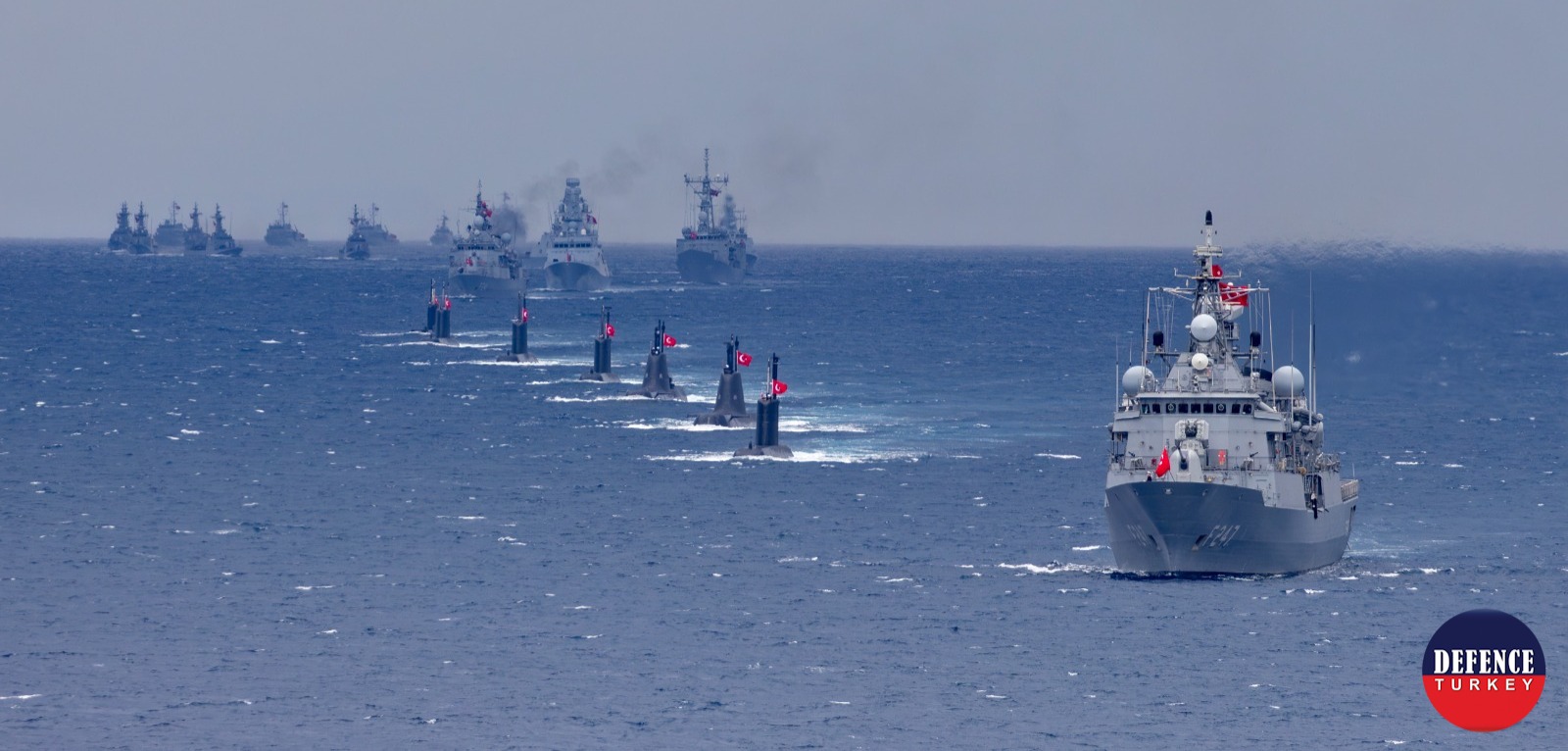
At the SSİK meeting, another decision that concerns Turkey closely was also taken. RMK Marine was found to be the successful bidder of the tender for the mass production of 6 MILGEM corvettes by private shipyards. RMK Marine was competing against Dearsan Shipyard in the tender.
Within the framework of the project of a total of approximately $1.5 billion, the 3rd ship shall be constructed at Pendik shipyard of Turkish Naval Forces Command and RMK Marine engineers are expected to gain the required capabilities during this process. The remaining five corvettes shall be built at the RMK Marine shipyard.
The first ship of MILGEM corvette TCG-Heybeliada (that is in Turkish Naval Forces Command’s inventory and is currently on a mission at East Mediterranean) and TCG-Büyükada’s (of which the system integration and tests are proceeding) platform productions are accomplished at Istanbul Pendik Shipyard of the Turkish Naval Forces Command.
No Winners at LPD Tender
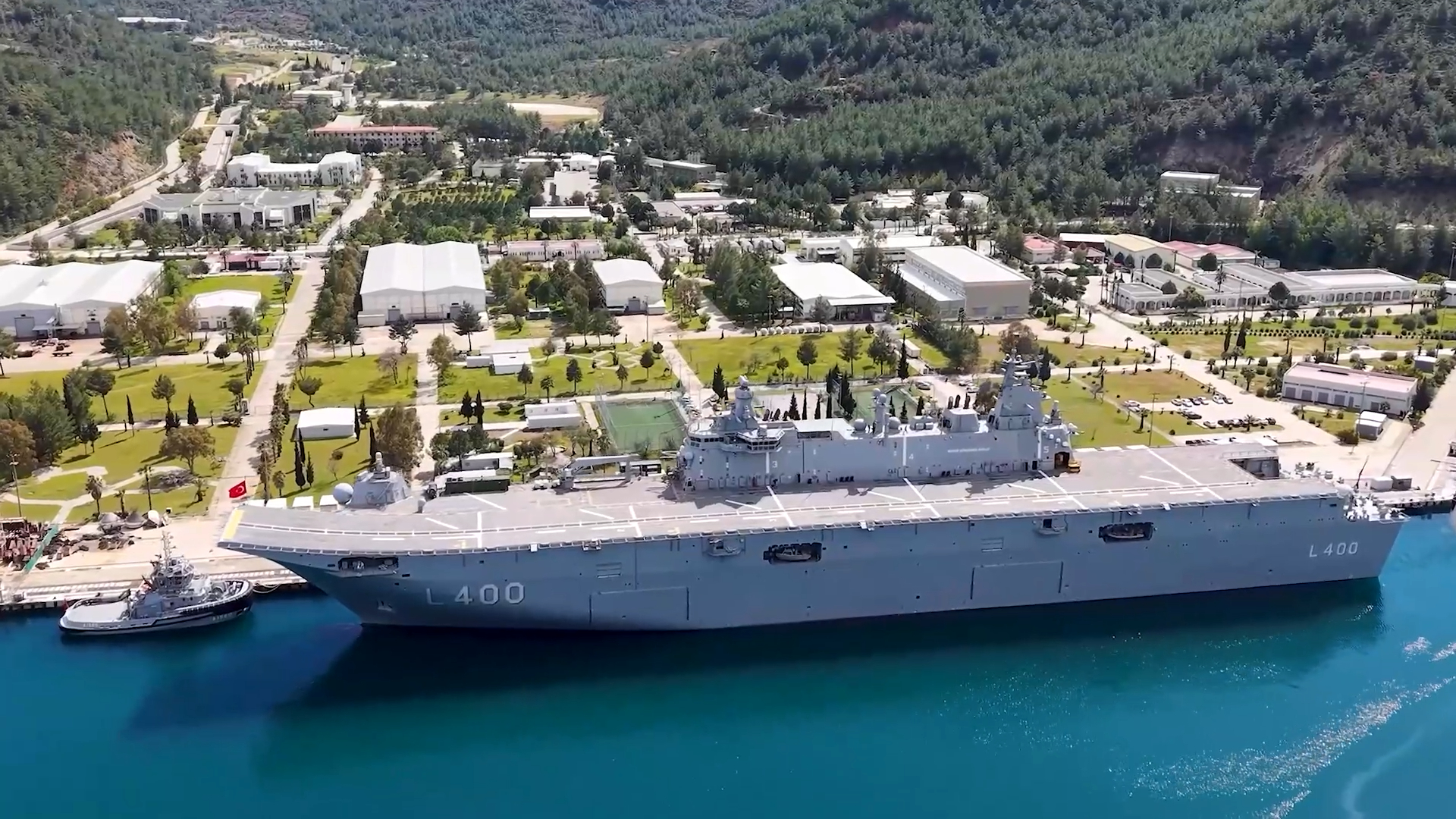
No bidders were awarded for the tender for an amphibious landing platform dock (LPD) that is logistically self-sustaining amphibious vessel able to transport, sustain and land a battalion-size force in the operational areas. According to the SSİK’s decision, RMK Marine, Sedef A.Ş. and Dearsan A.Ş. shall be asked to improve their proposals. 1 amphibious landing platform dock together with 27 amphibious armoured assault vehicles (AAV), 4 landing craft mechanized (LCM), 2 landing craft, vehicle, personnel (LCVP) and 1 Rigid-hulled Inflatable Boat are planned to be supplied through domestic production within the scope of the Project.
Turkey to Produce a SAR Equipped Intelligence Satellite
Many vital decisions concerning Turkey were made at the SSİK meeting. One of them was that Göktürk-3, intelligence-gathering reconnaissance and surveillance satellite equipped with Synthetic Aperture Radar (SAR), shall be manufactured by TAI with Aselsan and TÜBİTAK’s support. With the help of SAR, Göktürk-3 will provide images day or night and under all weather conditions and thus meet the Turkish Armed Forces’ demand of satellite images with high resolution. 1 satellite equipped with SAR, 1 permanent ground station and a spare mobile ground station are planned to be constructed within the scope of the Project.
Aselsan to Produce Mobile Patrols
At the meeting, it was concluded that the talks with Asealsan for an agreement on the Project for the Installation of a Modular Temporary Base Zone Resistant to Terrorist Attacks shall be launched. Studies for replacing the old patrols in Southeast and East Anatolia against terrorist attacks with the high-tech patrols namely "Kalekol" that are resistant to missiles and heavy weapons were being executed by the Turkish Armed Forces under TOKI’s prime contractorship. With SSİK’s decision, Mobile Patrol project that Aselsan has been working on for a while will also be launched in addition to these patrols. These mobile patrols could be installed within 15 days in mountainous regions and steep-lands where construction of permanent patrols is not possible. Owing to its modular characteristic, they could also be transported to other regions by helicopters as well. These mobile patrols would be resistant to rocket launchers such as RPG-7 and long-barrel weapons and they would have a roof made of a special alloy in order to strengthen the resistance. These new bases, featuring the characteristic of a mobile headquarter, shall encompass remote controlled firing systems, thermal camcorders at watch points, nikon binoculars and radars around the patrols. With the help of these radars no living creature shall be able to approach 7 km near the patrol and the radars shall identify whether the creature entering into the safe zone is a human being or an animal. The images shall be monitored through the computers installed in the main command centre within the modular patrol and the soldiers shall watch the surroundings securely through electronic eyes and shall be able to respond to the terrorist attacks with the help of SARP (Stabilized Advanced Remote Platform) developed by Aselsan at the instant of a threat. It could be remotely controlled from a command centre through 12.7 mm and 7.62 mm radius machine guns installed over the SARP systems. SARP offers ballistic solutions with high accuracy by the thermal and TV camcorders and laser distance meters and could be used under both day and night conditions. Besides such features, SARP has firing line and line of sight stabilization, automatic target tracking and improved ballistic algorithms and is capable of accurate firing when in motion.
Turkey Pushed the Button for the Satellite Launching System
Starting the contract negotiations with Roketsan for the Satellite Launching System project to launch the civilian and military satellites to space was among the decisions of the meeting. According to this decision, studies shall be executed for the conceptual design at first stage. Turkey paid more than $20 million to People’s Republic of China as a cost of the launching of Göktürk-2 satellite.
In the meeting, decisions on the following issues were also taken: Starting the talks with Havelsan on the Coast Watch Radar project agreement, initiating negotiations with TAI on the agreement for the authentic design and development of military and civilian light class (4 to 5 tons) helicopters, conducting negotiations on the contract for the Atak Helicopter Simulation project with Havelsan and authorizing the Undersecretariat for Defence Industries for the institution of a technology development zone within the structure of the Undersecretariat for Defence Industries at Kırıkkale University and also taking part in the establishment of an organized industrial zone regarding the Weapon and Ammunition Industry in Kırıkkale.