TÜBİTAK Bilgem; Technology Center of Turkey
Command and control of elements participating tactical field operations from strategic fields and gathering position feedbacks of those, have been highly essential in operational planning. After World War II, communication became highly important issue because of war elements which have advance maneuverability and widely expanded engagement area. The communication between elements which are able to move to different locations within short time period thanks to their high maneuverabilityhas been a significant problem for combat forces since those days.
For the purpose of addressing these needs, several concepts had been developed, especially during Iraq War; those solutions were employed in the field. Within that period,eventhough, several capabilities were gained such as communication over satellite, microwave, short wave and classic VHF/UHF radio communication, some problemsin the field showed up. Possible ways of communication are decided on, according to the positions of elements present in combat zone. In addition, totally different communication solutions would be required considering the next positions of those elements. For this reasons, destroyers are equipped with several communication capabilities such as satellite, HF, VHF/UHF.
One of the lessons learned from Iraq War is that management of this kind of complex and multiple choice communication systems could not be controlled by especially operators who are under a lot of pressures. Each infrastructure is able to provide communication only within special conditions. Providing communication in the ideal way is almost impossible for an operator controlling the system.
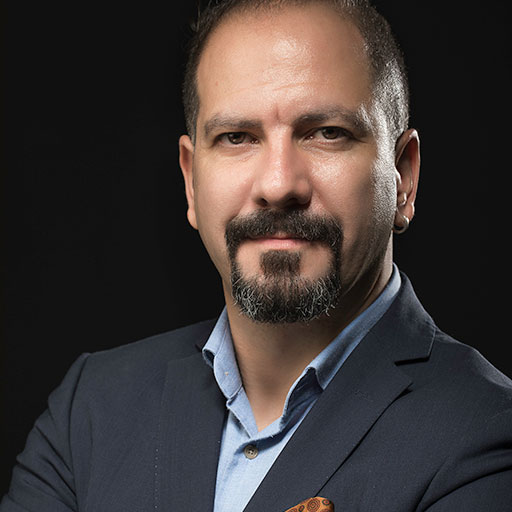
TAHSIS aims to provide tactical field communication solutions for the purpose of figuring out these problems thanks to automation. TAHSIS utilizes the know-how acquired as output of long standing researches and developments about communication technologies within TÜBİTAK and provides innovative, original and national solutions for the problems in the field.
In the context of the TAHSIS, as a beginning there are two concepts which work in tandem with each other. The first one is Barbaros system which provides real time data receiving and transmitting over radio bands with low data carriage capacity like narrow band short wave length.
Barbaros System considers the field as divided into small cells to get ideal receiving conditions. One of the elements present in each cell takes an action as base director of the cell and collects, organizes and processes the data produced by the rest of elements in the cell. Later on, Barbaros sends these data to strategic field. Any other elements present in the field are able to receive the transmitted data by radio communication. Barbaros takes advantage of this fact very well. The radio waves moving in light speed are received by other elements in different times. As an expected result of this fact, background noises are also transferred based on same physic rules. Thus, each element receives separate parts of the data on the basis of their locations. Barbaros combines the different uncorrupted parts of the data acquired by different elements of the cell.
Besides, Barbaros is able to send the combined data to strategic field in a small data package by using effective and private compression algorithm.
Situational awareness and tactical field view are necessary for most of elements in the field. Barbaros is suitable for these kinds of data which are supposed to be sent to and received from almost every node of the field. On the other hand, in conventional systems, those data could be transferred to each node only one by one. By the definition of radio communication, compensation for a loss in received data is a major problem in conventional applications. Thence, for example tactical field view of elements operating naval force could not be possible to share via conventional systems. On the contrary, Barbaros is able to carry out the coordination of elements present in the field and therefore, it collects and shares the real time data through radio communication.
During this process, Barbaros System employs application-dependent compression techniques aside from Time Division Multiplex (TDM) and Frequency Divided Multiplex (FDM) features. It labels every kind of radio infrastructure present in elements such as; HF, VHF/UHF as a separate cell part, according to location knowledge of the elements. Hence, each radio communication infrastructure is used actively in ideal conditions. Barbaros uses VHF for communication with a cell in close-range, at the same time; it uses short wave (HF) transmission for the long range communication automatically. Data collections, rectification of errors and data transmission are carried out withoutany operator support.
Barbaros System provides DLP for interoperability features. This layer supports currentnational and international transmission protocols such as ACP127-RATT messages and STANAG 5066 communication. Thus, Barbaros is able to work with outdated technologic systems within their capabilities.
Barbaros was developednationally, and it is adaptable to each radio infrastructure. Necessary time information for TDM synchronization is provided by GPS and different time sources could be developed and employed where necessary. System, GPS, receiver and modem components are able to be procured together, or currently installed systems such as radio and GPS infrastructure could be used as well.
Other concept developed as part of TAHSIS is MiS and MiS+ (Messaging Operation System). MiS consists of a standard communication server and terminal application enabling integration into conventional communication infrastructure. It provides formal preparation of massages such as X.400 (STANAG 4406) and ACP-127 likewise, carriage of them via current transmission protocols like STANAG 5066. When fulfilling these tasks, it also supports related standards including TCP/IP package transmission, SMTP and Internet CHAT. Additionally, it also includes assistance application enabling operators to calculate necessary parameters required for message transmission.
MiS was developed to present infrastructure as a modern solution which is compatible with current systems. MiS is able to work with many environments such as modems, radio controls, satellite, VHF/UHF and HF. It comes to the fore due to this feature. Itsupports all protocols in communication concepts including STANAG 4406, S’5066, S’4538 ALE. For satellite communication,it also provides national protocols supporting satellite operators such as GlobalStar, Inmarsata and Iridium aside from special environments such as X-Band.
MiS+ are also compatible with standard applications. Additionally, it ensures original and national data transmission protocols in order to provide communication opportunities which are not possible over protocols of current standards. By means of that, elements in the field could be used to send the data to the receivers in fastest and most efficient way. Elements which are under similar conditions process the acquired data collectively and receive them successfully. Terrestrial massage centers, for example, gather the data via land lines by means of combining the signals received from antennas.
An additional featureprovided byMiS+ is automatically detecting the best transmissionwayfordata that will be sent to the recipients. Itautomatically determines parameters such asradio infrastructure, antenna, frequency, transmitter power for the bestdatatransmissionway.The System infrastructure can be adjusted automaticallytothese parameters.Theheadquarterorders can be transmitted asfast and safe to the recipient without any intervention ofan operator.
MiS+ automatically uses other receivers as a relay point that is in more advantageous position to transmit data. The receiver can be accessed with terrestrialwire lineorwirelesslines.MiS+has the ability to automaticallyre-transmit the data tothe actualreceiver with the best transmissionway.
MiS and MiS+ systems are able to be scaled from tablet PCs to systems with high computing performance used in message centers.
Barbaros and MiS Systems includes hardware, software and both present global communication protocols and national ones. Barbaros especially is employed with special hardware thanks to TDM infrastructure. This hardware provides synchronous data and voice receiving via single antenna over desired number of channels. It also ensures sensitive timing features which are suitable for real time data transmission requirements. This system can be integrated to the most ofantenna and radio infrastructure.
MiS and MiS+ systems could be supplied in a manner to provide desired capabilities as a software solution. Besides, they are able to work with hardware providing data receiving features from multiple channels. Required components such as modem and encryption elements could be supplied from current equipment, they could specially be procured with desired hardware as well.
Both Barbaros and MiS+ systems support national and/or standard crypto algorithms for security features. The systems, if required, could be procured with integrated crypto infrastructures and they could be used with NATO, national or similar hardware and software based crypto systems as well.
Barbaros and MIS+ systems use optimized waveforms for their working. Therefore, the most efficient results could be obtained via their internal modem systems. Additionally, they support other modems working with different standard such as MIL-STD-188-110B and STANAG 4539. Working perfectly with other modems is one of the main features of Barbaros and MIS+. The systems having original hardware provide several extraordinary features such as transmitting the data over more than one radio. Hence, wide band and big data transmission is possible over several channels by using narrow band radio infrastructure. On the other hand, the systems are scalable to support further in progress protocols such as waveforms of HF wide band modem.
Likewise, several and widely used and standard wired and wireless communication infrastructure is supported by TAHSIS systems. For example, fiber and standard copper wired Ethernet, SONET, SDH, several DSL (Frame Relay, ADSL, HDSL etc.) applications, satellite systems like DVB-T, DVB-S, general TCP/IP protocols, 3G/4G/WiMAX/LTE and IEEE 802.x etc. TAHSIS systems especially are suitable for every kind of transmission protocols providing TCP/IP support.
TAGEC is a gateway that automaticallyprovides routing the transmission of strategical and tactical messages without operator intervention. It provides services in application layer, advance routing in transport and network layers, protocol conversion and proxy server. TAGEC is a router and gateway device in which messaging data can be obtained from different systems. It is designed for network-based environments, providing tactical data communication services as well.
In addition, TAGEC is a radio communication solution which connects mobile and stationary elements in a single network. Following TAGEC’s integration into a network, it allows real-time data transmission throughout the network. It creates a single network where all elements, whose location and communication capabilities are known, cooperated.
Barbaros, TAGEC, MIS and MIS+ are strongest candidate for being widely used standards of today and futureby means of following capabilities;
working cooperatively with other devices in a present infrastructure
employing present infrastructure in maximum efficiency
being totally national