Turkey Commences to Work on a New Sales Mechanism Similar to FMS
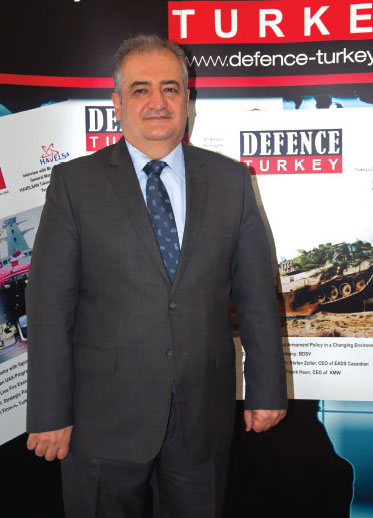
Defence Turkey: Mr. Demirel, first of all we want to thank you for giving us your time for this interview. Could you please assess 2013 in terms of the projects implemented under the co-ordination of the Undersecretariat for Defence Industries?
We can say in fact that 2013 was a year which ended a period and in which we undertook the first step towards a new period. I mention this from two points. The first is that many projects that had been on-going for a long time and some projects that went on due to problems that took place were completed in 2013 or were finally resolved. In this respect I can say that 2013 was a year when we threw away the shackles and became ready to see a new agenda for 2014. The second point is that 2013 was the year when the question as to whether “Turkey can design its own platforms was a “YES” as an answer.” The answer to this “yes” was due to the successful “Hürkuş,” “Altay” and MILGEM projects and the results that were beyond expectations and not due to us. Parallel to this, the technology acquisition projects that are increasingly gaining momentum during the last decade have begun to attain maturity. Thus, the SSM that tried to prove that Turkey can design and produce its own weapon systems until 2013 has entered a new period in 2014 where the detailed design and production of subsystems of weapon systems down to the details of materials that is completely new has perhaps entered a more assertive new period.
Defence Turkey: According to the 2012-2016 Strategy Plan of the Undersecretariat for Defence Industries (SSM) one of the key issues that has been emphasized is the consolidation and merger project that the SSM has been working on involving the military ship building sector. What would you like to say on the work and steps carried by your Undersecretariat on this subject?
Our expectations from the military shipbuilding sector that provides a contribution to our national defence as well as to our national economy is not the delivery of required platforms within the coverage of projects but enabling it to be one of the key players in overseas markets in platforms that are produced as well as being able to contribute to the continuous expansion and effectiveness of the sector. For this reason, specialisation, a sound financial structure and a brand name is of great importance in establishing an entity. Thus, in reviewing the advanced military shipbuilding industry in the world, we note that this type of structuring for the purpose of obtaining the effective use of capabilities and sustainability takes place. In a similar way, bearing in mind our expectations from the industry, the infrastructure, capability and capital strength that have been obtained as of now in military shipbuilding projects that can be used as a whole and work in forming a sustainable structure is still continuing.
Defence Turkey: What would you like to say on the financial size of the programmes implemented in naval vehicles according to 2013 data and on the targets and expectations within the coverage of the 2023 vision?
The financial size of the programmes we are implementing in naval vehicles as of now has exceeded 7 billion dollars and this amount parallel to our Undersecretariat’s mission, aside from the modernisation of the Turkish Armed Forces, has created a great opportunity in the development and sustainability of the military shipbuilding industry. As a result of the projects that have been realised as of now, the performances of platforms that have been put forth and the beginning of exports indicates that this opportunity, in terms of the policies that have been pursued, has been applied correctly. Our next objective is to be able to develop and sustain the gains we have achieved. Towards this end and parallel to our 2023 vision, in addition to the projects we have successfully accomplished, by realising projects such as the TF-2000 Frigate, the continuation of MILGEM, the New Type Gunboat and the National Submarine and by restructuring our military shipbuilding industry we are aiming to reach a position where all domestic needs are met and where we are a competitor and an exporter in the international arena.
Defence Turkey: Mr. Demirel, between 25th and 27th of March Turkey will participate nationally at the DIMDEX 2014 Fair with our defence industry firms under the leadership of the SSM. How do you see Turkey’s effectiveness in Qatar and the Gulf States with respect to our naval platforms and system solutions?
Within the coverage of activities in increasing our exports of defence industry products in the Gulf region, we are undertaking intense work in that region. As you have indicated in your question, the DIMDEX Maritime and Defence Fair in Doha, Qatar takes place every other year and is the largest maritime systems fair in the region. This year we will participate nationally for the third time with our Undersecretariat between 25-27 March. In supporting our defence industry firms and introducing our naval platforms and systems in particular in the Gulf Region, we will participate with 25 firms and a 1,159 m2 area will be leased by our Undersecretariat and allocated to our firms.
We have achieved very important successes in the last few years in the area of naval platforms and our important platforms have made an appearance. These platforms are not just used by our Armed Forces but are carrying out their missions successfully in many countries especially among the Gulf Region nations. Currently the Qatar Naval Forces is successfully using the MRTP-16 and the MRTP-34 that have been produced by the Yonca-Onuk Shipyard. In addition, Yonca-Onuk through joint production has delivered thirty four MRTP-16 boats to the United Arab Emirates. Our Ares shipyard has signed a contract for twelve 18 metre boats with the Bahrain Coast Guard Command and preliminary acceptance has taken place for two of these boats. We are among the most likely candidates to obtain the tenders opened in Oman for our Rapid Response Boats. Additionally, in the Gulf Region our ADIK shipyard with the LCT vessel, our Dearsan shipyard with the New Type Patrol Boat is competing in the tenders of the said countries. Our MILGEM corvette is attracting a lot of interest in the Gulf Region and countries such as Qatar, Saudi Arabia and Kuwait are seriously interested in our MILGEM corvette.
In future years after receiving our LST vessel, the MOSHIP and RATSHIP we will work to increase our activities in the Gulf Region with more platforms.
Defence Turkey: In order for Turkey to further increase its effectiveness in naval platforms and system solutions in the next decade, in particular in the Middle East, the Asia-Pacific region and the Far East and enter among the key players, what path must it follow, in which areas must it increase its depth?
As we all know, with the strategies identified and the successful applications that have taken place, the Turkish defence industry in the last few years has turned into a sector that can develop its own technology and that can export this technology. In our country where the concept of defence industry exports is to a degree very new, in order for us to be among the important players worldwide in the defence sector, primarily an export-oriented integrated approach must be adopted by all organisations and companies related to the sector. Increasing their effectiveness in target markets, can only be achieved by our firms if all stakeholders undertake this focus and establish the necessary institutional relations as a whole.
Another factor in increasing our competitive strength in the international arena is, in my view, revising our legislation according to the present day and towards the export-oriented needs of the sector. As a first step to this, in providing a sale mechanism similar to the FMS that includes state guarantees and ease of payments of Turkish defence industry products to potential customers, we started work on legislation under the name of Inter-State Sale Law (DAS) last year. In the stage we have reached, work on the draft law in developing the DAS national system has been prepared and co-ordination with relevant organisations continues. With the enactment of the law, we will have taken a very big step in meeting the requirements of potential customers. During this period, our work on the mechanisms to be applied after this law comes into effect continues.
Aside from this, within the coverage of the creation of credit alternatives in supporting potential buyers, a protocol has been signed with the Turkish Eximbank on 11 March 2013 and in the sale of non-weapons and non-weapon system products and systems, the opportunity to use Eximbank credits has been made available. Work on creating alternative credit support for weapon system products is continuing.
Additionally, with the completion of current work in creating a structure where the infrastructure, capability and capital strength can be used as a whole and that is sustainable for the military shipbuilding sector, I am of the opinion that our effectiveness in overseas markets will increase even further.
Defence Turkey: As one of Turkey’s important programmes, the MILGEM-S project, it was decided in the last Defence Industry Executive Committee (SSIK) to cancel the tender, that the third and fourth ships be built by the Istanbul Shipyard Command and that a new tender be opened for the remaining four ships. What is the latest situation regarding this new tender? Can we obtain your views?
At present, in line with the decision adopted by the SSIK on 26 September 2013, work continues on adopting the existing contracts for the two ships to be built by the Istanbul Shipyard Command. The project model for the first two ships will be adopted for the third and fourth ships and our target is to start the construction of the said ships during this year. Our evaluation of the remaining ships is still on-going and tender work will be realised within the framework of the model to be identified.
Defence Turkey: One of the important programmes that the SSM is implementing is the Air Defence Frigate Project and we know that the feasibility work has been completed for the TF-2000 programme. What are your views on the project model, national participation and technology acquisition that is planned to be put forth in this programme? Would you provide us with information on the latest work carried out on this subject?
The TF-2000 Project has been planned to be carried out in three phases of design, prototype ship construction and series production. At present, identifying the project model relating to the design phase and the Request for Proposal preparatory work continues. Within the coverage of the project, by using the capabilities gained, in particular with MILGEM, and the above water military ship projects realised domestically, we are targeting to include a national frigate to our naval inventory with maximum local contribution. In this respect, in order to nationally develop the most important sensor of the frigate, the Phase Indexed Radar, the Multi-Purpose Phase Indexed Radar (ÇAFRAD) Project has commenced and currently design work is continuing. Furthermore, in the boat design and construction work, we will certainly make use of the opportunities and capabilities of our Naval Forces Command.
Defence Turkey: As a result of the delays in the MILGEM-S tender in particular, since the third and fourth ships are to be built by the Istanbul Shipyard Command, is there a possibility of creating constraints in the use of location, capability and qualified manpower in the TF-2000 programme? Would you provide us with information on solutions and a roadmap to our readers?
With the existing opportunities we have available, the project calendars for both MILGEM as well as the TF-2000 are being prepared without disrupting the operational needs of our Naval Forces Command and I think that the projects will be completed without any restrictions. As you know, in completing our projects we benefit from the infrastructure of our military shipyards as well as from our private sector shipyards. Within this framework, bearing in mind the choice of dividing certain labour components among the shipyards, I can say that we will not encounter a problem with the current infrastructure and qualified manpower.
Defence Turkey: One of the most important technological gains in the TF-2000 programme is the ÇAFRAD programme that is planned as the main sensor radar and is targeted to be developed and produced indigenously with domestic contribution. What are your expectations regarding this programme and what would you like to say on the present process that is underway?
The ÇAFRAD programme is a concrete example of the stage our industry has reached in nationally developing and completing it and again its use in the TF-2000 Air Defence Frigate that is to be nationally realised. The ÇAFRAD and TF-2000 project calendars are being realised in a compatible manner without disrupting operational requirements and the developed ÇAFRAD will be used as the main sensor in the TF-2000 prototype ship. With the step taken in the phase indexed radar as the highest point reached in radar technology, another important step will have been taken in one of the areas involving foreign dependence.
Defence Turkey: Subsequent to the TF-2000 programme, would you provide us with information on the activities relating to the TF-100 programme to be started next year?
Currently a request as a requirement relating to the TF-100 has not reached our Undersecretariat. However, in the event such a need arises, by making use of the output from MILGEM and the TF-2000 projects, the TF-100 project will be realized within the framework of our country’s opportunities and capabilities.
Defence Turkey: Mr. Demirel, with the last SSIK decision it was agreed to commence contract negotiations with Sedef Shipyards involving the Landing Platform Dock (LPD) programme. What would you like to say on the question of the platform to take place in this programme and the process that awaits us in the period ahead?
The LPD Project is actually a project that we attach great importance and a project that we believe will provide a large contribution in representing our naval power in world seas.
Within the framework of the project, the LPD to be acquired based on the needs of the Naval Forces Command and will be used where necessary within a large geography such as the Indian Ocean and the Atlantic Ocean. The ship, in addition to the main functions of power transmission and amphibious operations, with its a fully-equipped hospital and operating theatre can also be used for medical support in natural disaster assistance, humanitarian aid and refuge discharge operations.
At the present time, in accordance with the decision adopted by the SSIK on 26 December 2013, contract negotiations have started with SEDEF Gemi İnşaatı A.Ş. as of January 2014. In order to fully meet the needs of our Naval Forces Command with a defined ship, negotiations are continuing in a meticulous manner and subsequent to the completion of contract negotiations, contract signing and construction activities will start immediately.
Defence Turkey: Mr. Demirel, lastly, do you have a message that you would like to forward to Defence Turkey readers?
Today, when the defence industry becomes more important day-by-day, the SSM is realising many projects, as I indicated above, in order to advance our national defence. The importance of these projects on a sectoral basis as well as the experienced changes in the defence industry is very important in informing the public. In this respect, the work of Defence Turkey in informing the public of sector-based projects and activities is important. I want to thank Defence Turkey for their contribution and wish readers that are interested in the defence industry to follow more closely the short and long-term developments in our industry.





