Turkish Assembly Defense Commission Hosted SaSaD
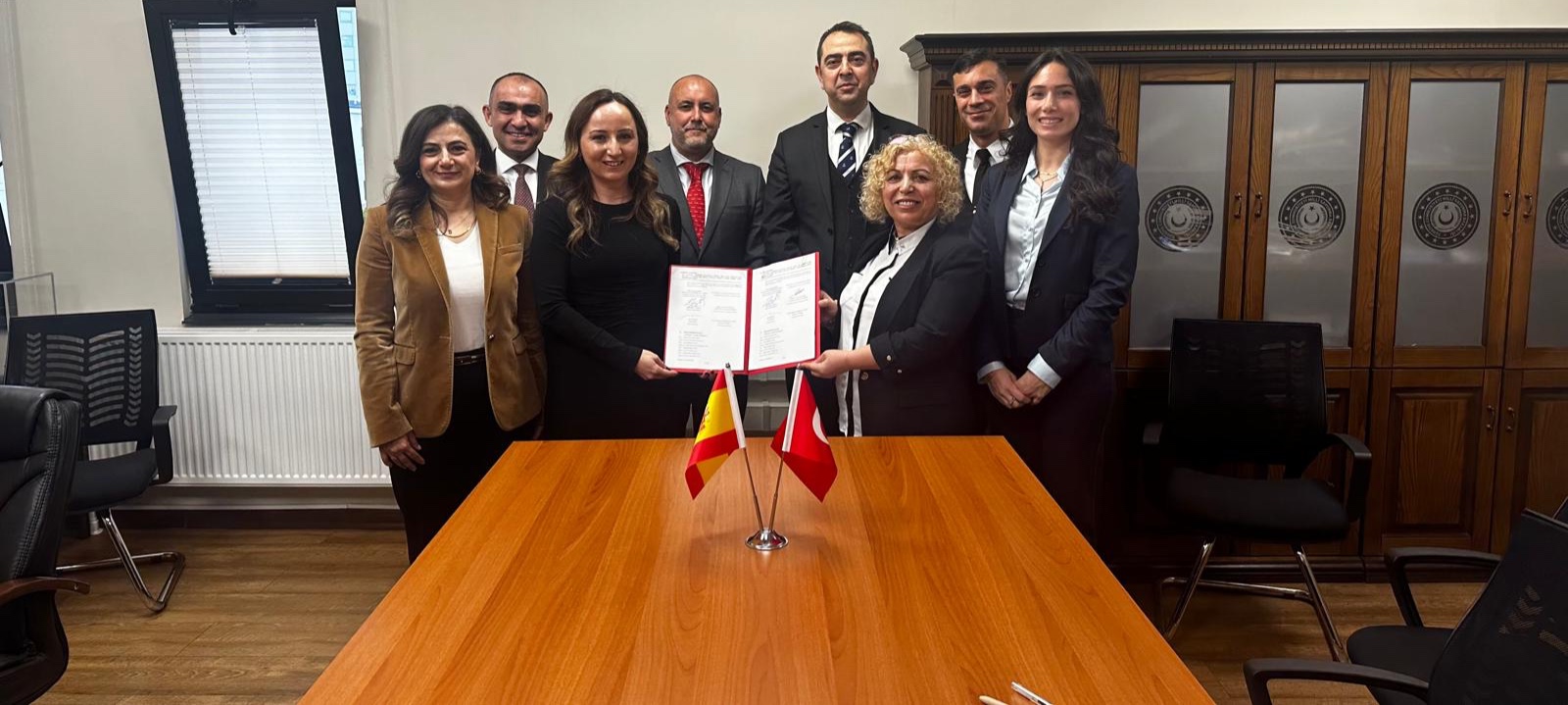
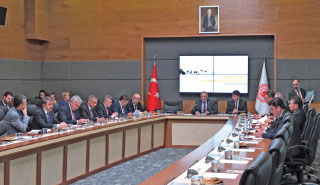
Chairman of the Board of Directors of SaSaD (Defense and Aerospace Industry Manufacturers’ Association) Mr. Nail Kurt and the accompanying Board Members gave an informative briefing to the Grand National Assembly’s Defense Committee on the latest status of the sector, programs conducted at home and abroad and vision strategies for the upcoming period. Stating that as the Defense and Aerospace Industry Manufacturer’s Association, their number of members reached to 183 as of 2016, Mr. Kurt added that their members covered 99% of defense industry sales, underlining that the companies composing SaSaD should be considered as leverage with respect to the development of the Turkish Defense Industry.
Relaying detailed information on the up-to-date status of the national development of the products and ongoing indigenous programs to the commission members, Mr. Kurt stressed the necessity of focusing on the critical technologies required particularly for decreasing Turkey’s foreign dependency. Mr. Kurt presented information on the resources allocated by Turkey to the defense industry in the last five-year-period and continued, “Turkey allocated est. $ 15 billion for defense industry expenses between 2009 – 2014 years. In 2015, due to the dollar parity, a decline may emerge in this rate. When our Gross National Product is considered, the resource allocated to the defense expenses remains at the level of 1.8% – 1.9%. There is a quite important point I’d like to underline here. NATO advised its allies ‘Do not fall under 2%’ and in NATO member countries this rate is around the average level of 2.5% - 3%. But we do not think that we will be exceeding these proportional figures in the upcoming period”.
Mr. Nail Kurt: “Saudi Arabia allocates 10% to defense expenses”
Stating that Turkey was experiencing an increase trend in the world export qualification, Mr. Kurt emphasized that Turkey was the 17th country in the world ranking of countries with the most exports according to 2014 data. Mr. Kurt expressed that the level of imports remained steady in recent years and continued, “This is pleasant news; the gap between imports and exports is now closing. Our export goals are quite ambitious, and if we manage to achieve our sales targets then we will be able to fill this gap”.
Mr. Kurt mentioned that a total of $ 1.75 billion was allocated to worldwide defense expenses and said, “The United States of America allocated $ 650 billion toward their defense budget in 2014. Meanwhile, England, France and Germany are struggling to maintain their existing level of defense spending. They do not intend to leap forward. According to the 2014 data, France allocated $ 52 billion and England assigned $ 66 billion for their defense spending. At this point, we should especially take into consideration the examples of Russia, China and Saudi Arabia. There is a significant increase in Russia’s spending; they spent $ 84 billion in the defense industry. With this momentum, they may reach the level of $ 90 – $ 100 billion. On the other hand, China is now showing indications of its passage into a different level of spending. As of today, their defense expenses are approximately $200 billion. We presume that if this momentum is maintained, they will be reaching the level of America within a short period such as 4 – 5 years. Here, we have to separate the Saudi Arabian case from the others. When the parameters such as surface area, size and population are taken into consideration, a monumental boom is noticed in this example. Saudi Arabia’s population is 20 million and according to the data of 2014, a very striking figure such as $ 67 billion emerges before us. This country allocates approximately 10% of total income to defense expenses and it is the only country acting this way”.
Mr. Nail Kurt: “Our annual domestic market size is around 2.5-3 billion USD”
Underlining that Turkey accomplished total sales of $5 billion and $ 5.1 billion within the last two years, Mr. Kurt touched upon the importance of the increase in the defense budget in order to raise these figures. Mr. Kurt said, “Our Annual domestic market size is around $ 2.5-$ 3 billion and our major players are taking their share from this cake at $ 2.5 billion. Compared with the countries we rival with, there is a substantial difference”.
Export Sales of Middle East Countries Declined
Upon the Chairman of the Parliament’s Defense Committee, Member of the Parliament Dr. Faruk Özlü’s question on the figures foreseen for 2016, Mr. Kurt shared their forecasts with members of the committee. Mr. Kurt said, “We will be very happy to be able to reach $ 5.5 billion in 2016. In exports, we remain under the level of the previous year’s figures. If we achieve to reach $ 1.8 billion, then we will be able to close this year successfully. We do not expect a huge bounce. In order to enable Turkey to accomplish giant leaps, we need to adopt quite special measures and build the correct strategies. It is really difficult to conduct sales to America and Europe in the international markets. Adopting the proper strategy, Europe and America benefit from their own companies at this point. They do not have foreign dependency or if they ever have it, they solve the problem internally. We have been exerting great efforts but gaining access to these markets is not easy at all. We need to increase our presence in the markets of South America, Africa, the Middle East, Asia and Turkic Republics. In the upcoming period, we will focus on Indonesia, Malaysia, Philippines, Taiwan and Thailand and we strive to turn this region into an important market”.
Defense Budget Needs to be Increased to Achieve the Export Target $ 25 Billion
Mr. Kurt mentioned that Turkey’s export target of 25 billion dollars has been determined as part of the country’s vision for 2023, in his briefing and pointed out the fact that in order to achieve this target, Turkey needs to increase its income by 30% each year. Mr. Kurt continued, “In defense and aerospace, in order to reach $ 25 billion, we have to increase our exports by 35 percent each year until 2023. Under the existing circumstances where the internal market remains around $ 2.5-$3 billion, it is not possible to reach such figures. It is not realistic to intend to increase the export by ten units where the size of the internal market is merely 1 unit. You may achieve a yearly leap in the exports but it would not be sustainable. The only way to achieve this is through increasing the size of the internal market and budget”.
Mr. Nail Kurt: “Turkey extends the Joint Production Model”
Chairman of the Defense and Aerospace Industry Manufacturers’ Association, Mr. Kurt also shared information considered to be the concrete steps to be taken toward coping with the risks and problems threatening the growth of the Defense Industry, with the committee members. Emphasizing that the loan mechanism could still not be established robustly in foreign sales, Mr. Kurt said that the government to government (G2G) model had to be legalized immediately. Mr. Kurt also stated that export subsidies should absolutely be provided and continued, “We need to extend the joint production model with the allied countries in line with their requirements. There are friendly and allied nations with vast financial possibilities and they have their own demands which need to be fulfilled. It is possible for them to procure such products from American or European countries, but offering the following proposal would make us advantageous. We may not be able to create funds for developing those requirements but we may develop products jointly with their funds. At this point, I would like to share a precedent with you. Through a government to government contract with Indonesia, we signed an agreement with no cost to the Turkish government. The Indonesian government will be investing $20 million. FNSS will create a fund of $15 million and we will be jointly developing the Medium Weight Main Battle Tank. A significant opportunity arises at this point. An export capacity of hundreds of millions of dollars has been created. If we succeed in turning this vision into a policy under the leadership of our Undersecretariat for Defense Industries, then we will be able to create crucial, new opportunities towards the future.”
Mr. Nail Kurt: “Our ability to gain the Military Factories’ capacities for commercial utilization will render our industry more productive”
Claiming that the military factories were idle for the time being, Mr. Kurt stressed that although these factories were not convenient for commercial utilization, they had quite valuable capacity and capability in terms of infrastructure. Mr. Kurt said, “According to the current legislation, it is not possible to launch these factories for commercial use. If a modification is made in the legislation, we will be able to make use of a very important opportunity. With the activation of these factories, our industry will become more efficient”.
Stating that encouraging the new players to take part in the sector for increasing the competition in the domestic market would not create a strategic advantage in the existing conditions, Mr. Kurt mentioned the following regarding this subject: “With the inclusion of new companies just for increasing competition, we will only be creating smaller and less capable companies. We believe we will witness healthier results by controlling a limited number of companies’ expenses, not in a liberal manner but under governmental control. Our Undersecretariat for Defense Industries has been developing a variety of strategies to this end but we still expect your support as well”.
Mr. Kurt underlined the need to evaluate the logistics issue and said that though not great in volume, the logistic approach would be providing an important contribution to the sustainability of the companies. Mr. Kurt emphasized that the Turkish Armed Forces, supplying products for long years through direct procurement from abroad had a broad capacity on this issue, yet this approach needs to be re-evaluated. Mr. Kurt said, “Turkish Armed Forces support its products’ logistics through its own capabilities. A reflex has been built on this issue. Although presently these tasks may be accomplished by producing companies more efficiently. We observe many examples of this in Western countries, these businesses are conducted quite productively and very advanced services are being offered. The American Armed Forces’ water supply was assumed by a private company in Iraq. Our expectation at the initial stage is of course not in such dimensions but we should at least be able to conduct the maintenance of the parts and products which we produce in the first place. We need model implementations”.
Mr. Kurt stated that one of the most important issues of the sector players and for the sector overall is experienced throughout the product development stage and added, “During product development, standard merchandise contracts are being implemented in the current situation. We may perceive this as a risk for the growth of the industry. We assess the R&D and product development as processes not ruled by standard merchandise contracts. The success rate of product development is around 30% - 40% in the world, 70% of the budget America assigns to product development does not turn into commercial products. At this point, we need to get away from the penalization approach and adopt a more flexible understanding. The product development contracts should not be qualified as product purchases. We continue our negotiations with the Undersecretariat for Defense Industries to this end. Without a doubt this is a technical issue, they too are aware of it, but the government has to protect its interests as well. We hope there would be progress and improvement on this issue in the near future”.
Following the presentation, the Q&A Session started. Members of the Committee asked various questions to the Board Members both on the internal security procurements and on the products currently under development. In this session, Dr. Faruk Özlü, Chairman of the Committee expressed appreciation for the briefing and said that he personally believed that Turkey’s share allocated from the Gross National Product should not be lower than 2.5%, as was also stated during the presentation. On the other hand, Member of the Parliament’s Defense Committee, Member of the Parliament Suat Önal announced the good news on their initiation of a study regarding supporting the R&D activities and stated that with this draft’s passing into a law and with the new incentives to be created, both the defense industry and the other leading sectors would continue to gain momentum.