Turkish Coast Guard Command: “Always Ready to Respond Calls for Help at Sea’’
Defence Turkey : Rear Admiral Uşaklıoğlu, first of all we would like to thank you for spearing your precious time for us. Turkey is situated in a very sensitive region in both geographical and strategic terms. Within this context could you brief us on the duties and responsibilities of the Turkish Coast Guard Command?
Indeed, it is my pleasure to answer your questions. The Turkish Coast Guard Command is the responsible general law enforcement agency in the maritime jurisdiction area of Turkey situated in a critical geography surrounded by seas. In other words, our duties and responsibilities within our maritime jurisdiction area are similar to those enforced by the National Police and Gendarmerie organizations within the Turkish territory.
The Turkish Coast Guard Command enforces its duties assigned within the framework of its establishment law in close cooperation with national and international institutions and organizations in view of laws and regulations related with its area of responsibility. The duties enforced by our professional and specialized staff could be put in a nutshell as:
to protect and promote the security of the Turkish coasts, territorial waters and Exclusive Economic Zone as well as to prevent unauthorized survey and exploitation activities in these areas,
to promote the safety of life and property at sea,
to prevent all kinds of smuggling activities, illegal migration and human trafficking through sea routes,
to operate the Maritime Search and Rescue Coordination Center and to coordinate and conduct search and rescue missions within Turkey’s area of responsibility as well as to support the search and rescue activities not within its responsibility area upon request of civilian authorities.
to secure a safe pass of strategic maritime transportation through Turkish Straits,
to ensure the security of strategic refineries and petroleum terminals located on coastal areas
to carry out inspections in order to prevent illegal production of fisheries,
to inspect maritime tourism activities
to provide protection to the military ships visiting Turkish ports and cargo ships carrying military goods
to provide protection services to very important persons such as the President, Prime Minister and visiting Head of State’s of other countries when needed,
to protect -both the living and still- cultural and natural heritage of Turkish seas,
to prevent all kinds of marine pollution stemming from marine and air vessels as well as coastal facilities,
to carry out its law enforcement responsibilities in all cases concerning public order at our seas.
Moreover, at times of crisis and war; the Turkish Coast Guard Command provides support to national defence under the command of Turkish Naval Forces.
Defence Turkey: The responsibility area of the Turkish Coast Guard Command is spread throughout a wide region. Taking this into consideration could you tell us about the organizational structure of the Command?
The Turkish Coast Guard Command’s main Headquarters is located in Ankara. There are seven major subordinates of the Turkish Coast Guard Command. These are namely; the Black Sea Region Command located in Samsun, the Marmara Sea and Turkish Straits Region Command and also the Coast Guard Logistic Support Command located in Istanbul, the Aegean Sea Region Command and the Coast Guard Air Command located in Izmir, the Coast Guard Training and Education Command located in Antalya and finally the Mediterranean Region Command located in Mersin. Additionally, there are several Coast Guard Group Commands which are subordinates of the Regional Commands.
Our maritime assets spread throughout a 8.484 kilometers-long coast-line, conduct their duties under the responsibility of our Regional Commands. Our maritime assets are tasked by the Regional Commands and supported with Coast Guard helicopters, aircrafts and mobile radar systems.
Defence Turkey : How do you train your officers, petty officers and civilian personnel in order that they are capable to conduct their missions at all circumstances? Could you explain your education system, are there different training paths for example?
There are five different personnel categories making-up the human resources structure of our Command. These are officers, petty-officers, civilian specialists, contracted sergeants and enlistees. Recruitment and training methods of the human resources therefore varies for each category.
Officer Training: The “Coast Guard Branch” and “Supply Branch” officers working for the Coast Guard Command undergo a 4-year training at the Turkish Naval Academy on behalf of the Turkish Coast Guard Command. The Contracted Officers, on the other hand, are graduates of civilian Universities who undergo a “Basic Military Training for Officers” for 10 months which also covers their traineeship period.
The Young Coast Guard Officers who graduated from Turkish Naval Academy are then assigned to an 8-week “Basic Officers’ Training” at the Training Centre of Turkish Naval Forces Education and Training Command. Those who have completed the said training are then assigned to the “Coast Guard Officer Basic Training” for 27 weeks concerning coast guard duties.
The young coast guard officers then participate a 4 weeks on-the-job training onboard of Coast Guard boats.
The officers of supply branch however, following their graduation from the Turkish Naval Academy, attend a 47-weeks’ “Supply Branch Officers Basic Training” before they are assigned to their units.
Petty Officer Training: The Coast Guard Petty Officers graduate from the Naval Petty Officers’ Vocational College which is followed by a 20-weeks’ “CG Petty Officers Basic Course” at the Turkish Coast Guard Training and Education Centre. The Petty Officers who complete the course then attend a 13-weeks’ “CG Petty Officers Orientation Course” followed by a 8 weeks on-the-job-training at their assigned units and in compliance with their branch. The petty officers of aircraft maintenance branch for example are commissioned to Coast Guard Air Command and its subordinate units and/or attend to trainings in their area of specialization.
Civilian Specialist Training: The civilian specialists are graduates of universities in various educational fields. They attend a 2-weeks’ Civilian Specialist Orientation Course at the Turkish Coast Guard Training and Education Centre.
Contracted Sergeant Training: The enlistees (serving their military service) who are successful and prove to be prominent among their peers in their area of specialty could go through a series of exams and be employed as Contracted Sergeants. They attend a 4-weeks’ “Contracted Sergeants Orientation Course”.
Furthermore we do our best to keep up with the global developments and latest Coast Guard practices. In this context we also courage and support our personnel to attend post-graduate programs especially in coast-guard-related departments of universities home and abroad.
Defence Turkey: Admiral, could you provide us with information regarding the activities carried out by the Turkish Coast Guard Command in year 2012 in terms of prevention of illegal activities such as human trafficking, smuggling, terror threats, search and rescue missions and measures taken to protect cultural and natural heritage within the maritime jurisdiction area?
The Turkish Coast Guard Command works hard in tackling and preventing illegal migration by sea routes and takes additional measures within the framework of its patrol and reconnaissance missions carried out on a 7/24 basis.
The number of Coast Guard assets -namely helicopters, surface platforms and mobile radars- stationed at the critical areas which are specified by risk assessment procedures, are increased by 50 %, 30 % and 40 % respectively in the problematic areas in order to prevent illegal migration activities.
The Turkish Coast Guard Boats operates patrolling missions in order to continuously control areas likely to be used as gathering points for illegal migrants. To achieve thorough reconnaissance and surveillance in the subject areas in the context of patrolling missions; coast guard assets such as rapid inflatable boats, helicopters and mobile radars are used other than the CG boats of various tonnages and sizes. In the aim of preventing illegal migration in the Aegean Sea, the monthly average duty period for CG sea vessels is 1850 hours, 30 hours sorties for helicopters and 360 hours for mobile radars. In this way, 2531 illegal migrants were captured by our assets.
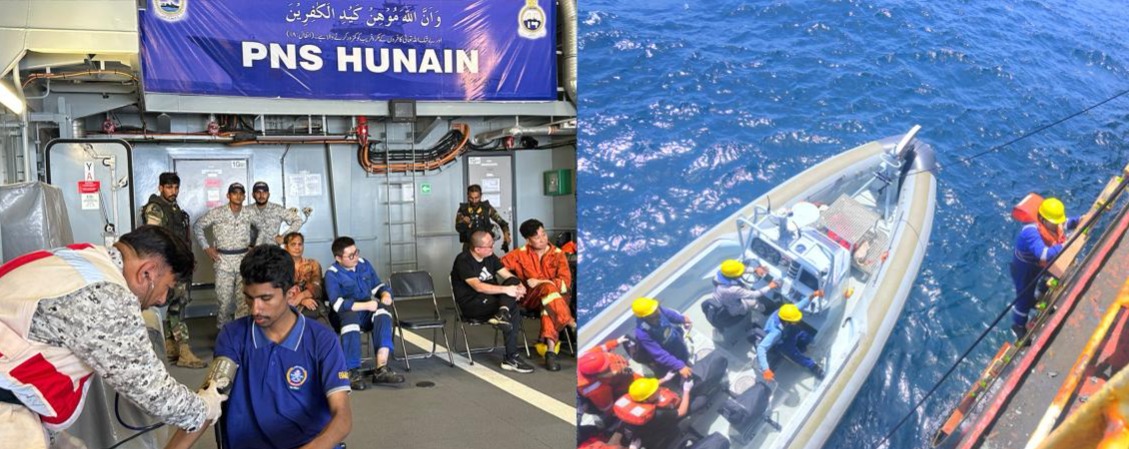
The Turkish Coast Guard Command carries out significant duties in terms of search and rescue missions in compliance with the world-wide tendency to put human life first in national and international waters.
Being the sole law enforcement agency in the national maritime jurisdiction area, the responsibility to coordinate and carry out SAR operations in the Turkish Search and Rescue area is held by the Turkish Coast Guard Command.
In year 2012, within the framework of its primary duty to carry out search and rescue operations; the Turkish Coast Guard Command conducted the 384 search and rescue operations during which: 2205 people were rescued alive and 120 boats/ships in-need were towed.
Furthermore, within the framework of its institutional responsibilities and preventive measures, the Turkish Coast Guard Command has published a variety of leaflets to raise awareness on the relevant laws and legislation with a view to protect the cultural and natural properties of our seas. These leaflets were sent to relevant ministries, governorships, mayor ships, public prosecutor’s office, universities, fisheries associations, civil society organizations, individuals and businesses with the aim to be distributed to our fellow-citizens.
Defence Turkey: The Turkish Coast Guard Command has newly accepted the first CN 235-100-M type coastal reconnaissance and surveillance aircrafts that went-through a modernization period with the Meltem-II Project. What kind of capabilities would these aircrafts provide the Turkish Coast Guard Command and what kind of missions will they be tasked with?
There are three CN 235 100 M type Coast Guard Reconnaissance and Surveillance Aircrafts in the inventory of our Command. These aircrafts;
Have an endurance of 7 to 8 hours,
Collect detailed information about ships by means of their state-of-the-art radar systems,
Detect all kinds of marine pollution by means of the pollution detection craft they are equipped with,
Have the capability to record imagery data which could be simultaneously transmitted to the ground stations.
Could communicate with other aircrafts, ships and ground stations by means of the advanced communication equipments,
The CN 235 100 M type Coast Guard Aircrafts will be tasked with primarily Reconnaissance and Surveillance missions as well as search and rescue operations and other coast guard duties such as detection of marine pollution.
Defence Turkey: Turkey is a transit country in regards with the illegal migration to the EU member states. This reality brings significant responsibilities to the Turkish Coast Guard Command. Are there collective measures taken with the neighboring and regional countries in order to prevent and deter the illegal migration flow?
Illegal migration is not a threat only to the global security, public order and stability of the countries; it also has adverse affects on the international and bilateral relations of effected countries.
Turkey, in cooperation with neighboring and regional countries and related organizations, makes all necessary efforts in fighting illegal migration which requires close cooperation with relevant agencies of affected countries. Therefore, the Turkish Coast Guard Command makes use of all national and international instruments in fighting illegal migration. The readmission agreements are a very useful tool in this sense.
Turkish and Greek Governments have signed a “Readmission Protocol” dated
8th November 2001. Since then, the two countries hold bilateral meetings among relevant authorities on the subject in accordance with the Readmission Protocol.
Turkey also has “Readmission Agreements” with Syria, Pakistan, Ukraine, Kyrgyzstan, Romania, Russian Federation, Moldavia and Bosnia Herzegovina. Unfortunately these efforts fall short in fighting illegal migration. Therefore it is of vital importance to make similar agreements with source countries of illegal migration such as Afghanistan, Palestine and Myanmar
Defence Turkey: Sir, could you inform us on the present situation regarding the “Coastal Surveillance Radar System (CSRS) Project” that is envisaged to improve the effectiveness and overall capabilities of the Turkish Coast Guard Command?
The Turkish Coast Guard Command has been carrying out its duties with conventional methods such as patrolling. However such conventional methods have become obsolete to be used on their own in our high-tech world. Today the success of maritime missions is based on surveillance, intelligence gathering and threat analysis. With this in mind, the Turkish Coast Guard Command devised the “Coastal Surveillance Radar System (CSRS) Project” in 2006.
In Turkey, there are a number of national authorities responsible for different aspects of Maritime Policy. These authorities have developed or acquired a variety of surveillance systems and databases in the interest of their particular duties. Therefore we made a significant decision and designed the CSRS to integrate all the existing systems as well as those still under construction. Towards the end to integrate these institutional systems and to provide an effective information flow, the envisaged communication infra-structure was devised out of the existing Turkish Armed Forces local area network. This could be interpreted as the proof of our commitment towards our goal to establish national cooperation among relevant agencies.
However, the entire Maritime Domain of Turkey could not be covered with the existing surveillance systems and on-going projects. Therefore we had to build new stations to provide radar coverage especially in the Black Sea and the Mediterranean. From year 2007 to 2009, a feasibility study was conducted in order to determine the locations of new stations and system design purposes. The technical specifications document of the Project was finalized in 2010.
Then, we turned our focus from technical issues to budgetary and executive issues. Between 2011 and 2012, we solved the budgetary issues and established the necessary consensus with relevant authorities for integration.
Finally, in the end of year 2012, Call for Tender Document was sent to the selected national firms. The tender process has been conducted by the Undersecretariat for Defence Industries. The contract negotiations are now finalized with Havelsan and a protocol has been signed in March 2013.
In conclusion, we have worked hard and long for this Project, and we believe it will set an excellent example of cooperation within national authorities and will provide advanced command and control capabilities to our Command.
Defence Turkey: Admiral Uşaklıoğlu, could you inform us on the provisional-acceptance and delivery schedule of the 17 additional Coast Guard Boats (25 GT), planned to be acquired by the Turkish Coast Guard Command?
These boats, in line with the needs of the Turkish Coast Guard Command are rapid intervention platforms, designed to be used in prevention of environmental and marine pollution cases as well as Search and Rescue missions. Our first KAAN-19 Class boat, TCSG-19, was built as a prototype in context of a research and development project and commissioned in 2006. As a result of satisfactory outcomes in use of TCSG-19, we decided to acquire 17 additional boats of the same class. The contract for this project was signed on 10th of November 2010 between the Undersecretariat for Defence Industries and Yonca-Onuk Shipyard. The project commenced on 31st January 2011. Up to now the provisional acceptance of 5 boats have been completed. The delivery of remaining 12 boats will be completed by the year 2016.
Defence Turkey: Sir, could you comment on the completed and on-going modernization projects of the Turkish Coast Guard Command? Are there any further acquisition plans in terms of modernization requirements?
The Turkish Coast Guard Command continuously develops and takes firm steps towards our aim of being the most effective coast guard agency in its region. In terms of sustainability of continuous development, it is of great importance that our modernization projects are developed through national resources.
In this context, we conduct a number of projects apart from the 25 GT Coast Guard Boats Project and the Coast Guard Surveillance Radar System (CSRS) Project which I have mentioned earlier in detail.
One of our ongoing modernization projects is the construction of 1700 GT Coast Guard SAR Ships to meet adverse weather conditions and high sea-states. These ships will provide the Turkish Coast Guard Command an advanced capability to effectively conduct our primary duty of search and rescue operations in open-seas. These SAR ships will be delivered in two lots, four in each. TCSG DOST and TCSG UMUT which were in the first lot have been deployed as of 4th April 2013. The construction and equipping process of the remaining two ships in the first lot is continuing at the RMK Marine Shipyard in Tuzla/Istanbul. The second lot of these ships -which are also capable to carry a helicopter on board- is planned to be constructed and come in the inventory between the years 2020 to 2023.
Within the context of Stabilized Machine Gun Platform (STAMP) Project; 11 KAAN 29/33 Class Boats have been installed with the STAMP system. Mounting of the STAMP enables the line-of-sight of the gun to be aimed at the target at all times. The stabilization feature enables the system to perform precise firings on even the moving targets while the platform itself is also moving. It also has a remote gun control feature for protection against counter fire. The system improves the effectiveness of the 12.7 mm guns significantly. Furthermore the camera integrated to the system has night-vision, and its recordings could be used as legal evidence when needed. The STAMP will be installed to 10 other CG boats between the years 2014-2016.
On the other hand, the Turkish Coast Guard Command is continuing its efforts to reach its targets concerning its Organizational Force Structure by the year 2033. To this end, we develop new projects to start in a near-future.
In this regard, the 600-Class-Coast-Guard-Ship Project is planned in order to response especially to the search and rescue events. These ships will be deployed evenly throughout our coast-lines. Apart from their capability to navigate under heavy weather conditions, these ships have low draught and displacement over 400 tons allowing them to operate in shallow waters. Eight other ships of the same type are planned to be acquired between the years 2016 and 2023.
In order to improve our existing air operation capabilities, in addition to the presently operational AB-412 Type Helicopters in our inventory, we plan to acquire “Multi-Purpose Coast Guard Helicopters”
Among our plans there is also the acquisition of Unmanned Air Vehicle’s (UAV). The UAV’s, will further enhance the mission capacity of the Turkish Coast Guard Command by providing air-surveillance of the coastal responsibility areas. They will be supportive in terms of detecting unidentified contact information provided by Coast Guard Surveillance Radar System Stations, fighting marine pollution, illegal fishing and smuggling activities, as well as the Search and Rescue Operations. To this end, acquisition of 12 UAV’s is planned between the years 2015 and 2022.
By means of these projects, the Turkish Coast Guard Command will improve its capabilities to promote maritime safety and security and continue to enforce maritime policies effectively. This way our Command will continue to be a prominent Coast Guard agency in our region.
Defence Turkey: Could you tell us about the national and international military exercises the Turkish Coast Guard Command plans to participate in 2013?
In 2013, the Turkish Coast Guard Command will take part in the “Black Sea Hawk Exercise” hosted by Bulgaria and “SQUALO Search and Rescue Exercise” to be hosted by Italy.
The Black Sea Hawk Exercise is conducted by “The Black Sea Littoral States Border/Coast Guard Cooperation Forum (BSCF)” annually and is hosted in rotation by the member agencies. The exercise aims are:
to test and improve the efficiency of information sharing among the member agencies,
to observe the law-enforcement practices and operation methods used by other agencies as well as their operational capabilities,
to improve the inter-operability of the BSCF agencies,
to provide the personnel of the BSCF member agencies to get acquainted with the intervention methods to be used in cases threatening navigational safety and security in international waters,
to determine the needs in view of common methods to be adopted for active and effective cooperation.
The “SQUALO Search and Rescue Exercise” on the other hand, will be carried out in the Mediterranean with participation of the invited Coast Guard Agencies especially from the Mediterranean Countries and public authorities of Italy at the end of this year. Within the context of the SQUALO exercise, search and rescue trainings both at sea and land will take place upon a scenario of an aircraft crash.
In the context of Turkish Armed Forces Joint Exercises, the Turkish Coast Guard Command envisages to take place in the; Anatolian Star Joint Search and Rescue Exercise, Efes-2013 Exercise, Excercise-2013 in memory of Martyr Lt. Caner Gönyeli.
Among the Exercises and Tactical Exercises carried out by the Turkish Naval Forces; our Command will take part in the Poyraz-I/2013 & Poyraz-II/2013 Exercises, Imbat-2013, the CBRN Exercise and Rapid Intervention to Marine Pollution Exercise.
The Turkish Coast Guard Command also plans to take part in the Eastern-Mediterranean-2013 and Nusret-2013 Exercises in the context of Invitation Exercises (INVITEX) as well as the bilateral and trilateral “International Ship and Port Facility Security Code-ISPS” and “Annual Black Sea Confidence Exercise”.
Apart from the exercises mutual port calls and combined trainings with relevant agencies of Bulgaria, Georgia, Russian Federation, Romania, Ukraine and Albania are scheduled for the year 2013.
Defence Turkey: Admiral Uşaklıoğlu, would you like to add any further comments for the readers of the Defence Turkey?
Thank you for giving me this chance. First of all, I would like to remind the motto of the Turkish Coast Guard Command “Always Ready to Respond Calls for Help at Sea”. In view of our motto, the Turkish Coast Guard Command puts human life ahead of everything as a principle, and works 7/24 to help those in need at our seas. To this end, the coast guard personnel works day and night under harsh natural conditions, at times putting their own life’s to danger. I would like to take this opportunity to express my appreciation and gratitude to the honorable Coast Guard Command personnel for such devotion and reiterate my confidence and belief in them.
The Coast Guard Command personnel goes through a demanding training period to be able to take the right decisions in unexpected situations and respond promptly to emergency cases, and works hard to protect our “blue homeland”. Our personnel take the notifications and calls for help seriously into consideration and necessary action is taken swiftly. In this regard, I strongly courage our fellow-citizens to get in contact with the Turkish Coast Guard Command especially on illegal acts at our seas, and guide our personnel in their demanding mission.
Our fellow-citizens could get in contact with the Turkish Coast Guard Command regarding any reports of crime, complaints, and notifications; either through our e-mail address ihbar@sgk.tsk.tr or call our free-of-charge hot-line 158 to reach the nearest Coast Guard Unit.
With its vision to be pioneer in innovation, giving confidence at our seas as an effective and well-respected Coast Guard Command, and its mission to apply all national and international laws in its jurisdiction area as well as to guarantee the security of life and property at our seas, the Turkish Coast Guard Command is ready to respond to all inquiries and serve the public 365 days and 24 hours with all its available capabilities.