Turkish Defense & Aerospace Industry Exports to Surpass US$3 Billion in 2021
Turkey has managed to quadruple its defense and aerospace exports in the last 10 years and currently it exports 228 different types of defense industry products to 170 countries around the world. Turkey targets becoming a top six country in the world in terms of defense and aerospace exports.
Having closed the year 2020 with export revenue of US$2.279 billion, which represents a 16.8% decrease in exports of defense and aerospace products compared to 2019, the Turkish Defense and Aerospace Industry has managed to increase its exports with considerable figures during January 1st -November 30th, 2021. Meanwhile in November Turkey’s total exports hit an all-time high with US$21.5 billion, which reaches US$203 billion during the period January 1st – November 30th, 2021.
As per the monthly export data announced by the Turkish Exporters Assembly (TIM), Turkish Defense and Aerospace Industry exports increased by 100.9% in November 2021 compared to the same period of the previous year, despite the negative effects of the COVID-19 pandemic. Emerging as a new arms exporter that can provide more efficient, low cost, combat proven, and less problematic products for arms buyers, the Turkish Defense & Aerospace Industry has also managed to increase its exports by 39.7% during January 1st - November 30th, 2021 compared to the same period last year.
According to export figures revealed by TIM on December 2, 2021 Turkey’s defense exports hit an all-time high with US$384.529 million in November 2021, which represents a 100.9% increase compared to November 2020 (US$191.364 million). Meanwhile according to TIM data during January 1st - November 30th, 2021 Turkish Defense and Aerospace Industry exported a total of around US$2.794 billion, while the said figure was at around US$1.999 billion in the same period of last year. This is the first time that defense exports from Turkey exceeded US$2.794 billion during the first 11 months of the year. Export revenues are expected to increase further in December 2021 and will even finally surpass the target of US$3 billion. The US$3 billion export target was previously defined for the year 2019, but according to TIM’s figures during January 1st – December 31st of 2019, the Turkish Defense & Aerospace Industry could only realize around US$2,741 billion in defense and aerospace equipment exports.
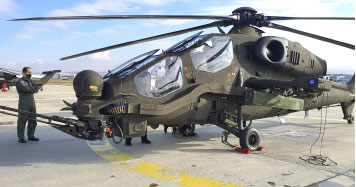
The fact that the deliveries of 36 T129B Mk-I ATAK Multi-Role Light Combat Helicopters signed for the Pakistan Land Forces and the Philippines Air Force could not be achieved due to the USA's failure to issue an export license for LHTEC CTS-8004A Turboshaft Engines also played an important role in the failure to achieve the 2019 target that was set at US$3 billion for defense and aerospace exports. Pakistan signed a contract valued at around US$1.5 billion in 2018 for the procurement of 30 T129Bs from Turkey. In December 2018 Philippines Department of Defense Secretary Delfin LORENZANA confirmed that the Philippines Air Force selected the TUSAŞ T129 ATAK Helicopter. Philippines signed a US$269.389 million contract in July 2020 to acquire 6 T129B Phase II Helicopters for the Philippine Air Force (PAF) and in May 2021 it was disclosed that the US Government had granted export license for the LHTEC CTS-8004A engines. On November 23, PAF Commander Lt. General Allen PAREDES disclosed that first batch of 2 of 6 Turkish-made T129B ATAK Helicopters would arrive in December 2021. The second batch of 2 T129Bs were expected to be delivered in February 2022 and the last batch in February 2023. The first batch of PAF T129 pilots and crew training was carried out in Ankara, Turkey during May 24 – September 03, 2021. These acquisitions were facilitated through Government-to-Government deals/purchases between Pakistan - Turkey and the Philippines - Turkey. Meanwhile on December 6, 2021, speaking at the PAF’s change of command ceremony, Philippines Department of Defense Secretary LORENZANA revealed that plans are afoot to buy more Super Tucano light attack aircraft and more attack helicopters for the PAF. “We have 6 Super Tucanos and 6 attack helicopters coming, and we also plan to buy 6 more of those platforms” he said. So if realized the number of T129B ATAK Helicopters in PAF inventory will increase to 12. The follow-on contract for the purchase of second batch of 6 T129Bs is expected to be awarded in 2022.
According to data released by TIM, the Turkish Defense & Aerospace Industry realized US$166.540 million in defense and aerospace equipment exports in January, US$233.224 million in February, US$246.958 million in March, US$302.515 million in April, US$170.346 million in May, US$221.630 million in June, US$230.941 million in July, US$284.722 million in August, US$251.131 million in September, US$301.436 million in October and US$384.529 million in November.
According to data released by TIM, the total weight of products exported by the Turkish Defense & Aerospace Industry in November 2021 was around 5.765kg, it was 4.789kg in November 2020. The average price of Turkish Defense & Aerospace export products reached US$66.7 per kg in November 2021. It was around US$40 per kg in November 2020. Meanwhile the total weight of products exported by the Turkish Defense & Aerospace Industry during January 1st - November 30th 2021 was around 57.447kg, which represents around 17,000kg increase compared to the same period last year (at around 40.541kg). While the average price of Turkish Defense & Aerospace export products was at US$49.4 per kg during January 1st - November 30th 2020 it decreased to US$48.67 during January 1st - November 30th 2021. Nevertheless, the export figure per kg in the defense industry is much higher than the average of Turkey. Speaking at the Global Strategies in Defense & Aerospace Industry Conference held in Antalya December 4-5, 2021, İsmail GÜLLE, Chairman of the Turkish Exporters Assembly (TIM), said that Turkish Defense Industry exports have an added value per kilogram that is well above Turkey's average as a sector, with high technology products. GÜLLE stated that Defense Industry Exports produced an added value of US$66 per kilogram in October, compared to an added value of US$1.44 on the basis of all sectors, in October.
As pointed out above, thanks to great progress in the development and manufacture of indigenous products, Turkey has notably increased its arms exports during the last decade. To increase its export figures and its share in developing markets further, Turkey has focused on the development of technologically competitive high value-added indigenous products. To that end, Turkish Defense & Aerospace Industry companies continue to invest in defense technologies, aiming at increasing their competitiveness and export capacity in the global defense industry market. Turkey is positioned to become major player worldwide. The per kilogram export value of the ‘T129 ATAK Helicopter’, which is an indigenously developed, high value-add platform solution of the Turkish Defense & Aerospace Industry, is around US$10,000. With the establishment of export promotion mechanisms, it is believed that the Turkish Defense & Aerospace Industry would become more competitive in foreign markets and gain speed in export sales.
According to TIM figures the list of the top 15 countries that imported defense and aerospace products from Turkey from January 1st - November 30th of 2021 is composed of: the U.S.A., Azerbaijan, Qatar, the UAE, Germany, Ukraine, Ethiopia, Morocco, France, Tunisia, Bangladesh, the UK, India, China and Uzbekistan.
As in previous periods, the U.S.A. ranked first in defense and aerospace industry exports during the period from January 1st – November 30th of 2021. Exports to the U.S.A. increased by 50.2% to US$1.033 billion (mainly military and civil helicopter and aircraft parts, and component sales realized under offset commitments). With around US$192.126 million (which represents a 24.8% decrease compared to the same period last year) Azerbaijan is the second largest recipient/importer followed by Qatar with US$180.544 million (which represents a 314.59% increase compared to 2020 and is believed to stem from wheeled armored vehicles and fast intervention boats sales/deliveries to the Qatar Armed Forces). The UAE with US$161.373 million (which represents a 14.3% decrease compared to 2020 and mainly stems from Otokar’s RABDAN 8x8 III ACV deliveries to the UAE Army) ranked 4th on the list and followed by Germany with US$142.817 million (mainly military and civil helicopter and aircraft parts, and component sales realized under offset commitments). Ukraine ranked 6th with a significant increase with 600.4%, reaching US$123.193 million (mainly stemming from BAYRAKTAR TB2 Armed UAV Systems sales which also includes the deliveries of a large quantity of ROKETSAN’s MAM-L and MAM-C smart munitions and Aselsan’s software defined radio set deliveries to the Ukraine Army). These countries were followed by Ethiopia with US$94.618 million (which represents one of the most significant increases of 40,172.7% and is believed to stem from BAYRAKTAR TB2 Armed UAV deliveries), Morocco with US$82.786 million (mainly stemming from BAYRAKTAR TB2 Armed UAV Systems sales which also includes the deliveries of a large quantity of ROKETSAN’s MAM-L and MAM-C smart munitions), France with US$64.190 million, Tunisia with US$63.911 million (which represents a 644.8% increase compared to 2020 and mainly stems from a US$150 million contract awarded during the second half of 2020 and covers the deliveries of 5 Turkish Defense & Aerospace Industry companies’ products including TUSAŞ’ ANKA-S Armed UAVs along with ROKETSAN’s MAM-L and MAM-C smart munitions, NUROL MAKİNA’s EJDER YALÇIN 4x4 wheeled armored vehicles and ASELSAN’s electro-optic systems), Bangladesh with US$62.589 million (which represents a 5,480.2% increase compared to 2020 and mainly stems from ROKETSAN’s TRG-300 Tiger Missiles and Multi Barrel Rocket Launcher Systems and ASELSAN’s radio sets for these vehicles; in October 2021 it was reported that Bangladesh also declared interest to purchase 2 ARES-150 HERCULES OPVs from ARES Shipyard of Turkey for the Bangladesh Coast Guard), the UK with US$46.213 million, India with US$37.683 million, China with US$31.182 million and Uzbekistan with US$29.193 million.
Meanwhile Turkey’s exports to Rwanda in the defense and aerospace sector from January 1st – November 30th of 2021 posted the most significant increase with 23,695,952.5%, reaching more than US$28.672 million. It was only at the amount of just US$12 thousand in 2020. This significant increase is believed to mainly stem from KATMERCİLER’s 4x4 HIZIR, ATEŞ and KHAN wheeled armored vehicles ordered under a Euro39,450 million contracts disclosed on February 1, 2021. In October 2021 it was reported that the Rwandan Army has declared an official interest to procure an undisclosed number of Armed UAV Systems along with smart munitions and ground segment equipment from Turkey for its military operations in Mozambique. Despite no official comment from either side about the Armed UAV Systems sale, Turkey has already developed relations with Rwanda. In 2020 Turkey’s investments in Rwanda amounted to US$400 million, constituting 13% of foreign direct investments. The biggest Turkish investment in Rwanda is the Peat Power Plant investment with an 80-megawatt capacity, which is also the single biggest foreign investment in Rwanda so far. Turkish construction company SUMMA constructed the country’s biggest indoor stadium in its capital Kigali. The state-of-the-art 10,000-seat complex was inaugurated in August 2019.
According to TIM’s figures from January 1st – November 30th of 2021, the Turkish Defense & Aerospace Industry exported US$1.056 billion (which was at around US$705.264 million during the same period last year) in defense and aerospace equipment to North America/US, US$338.121 million (which was at around US$282.765 million during the same period last year) to EU Member Countries, around US$65.307 million to other European countries, around US$381.129 million (which was at around US$356.887 million during the same period last year,) to the Middle East countries, around US$411.017 million (which was at US$313.168 million during the same period last year) to the Commonwealth of Independent States (CIS), around US$149.343 million (which was at around US$152.307 million during the same period last year) to other Asian countries, around US$327.831 million (which was at US$41.092 million during the same period last year, and which represents the most significant increase by 23,695,952.5% in the list of Sectoral Exports by Consolidated Country Groups) to African countries, and around US$30.058 million (which was at around US$59.840 million during the same period last year) to countries in the Far East