5th Defense Industry Meetings Held in Collaboration with ISO and SAHA Istanbul
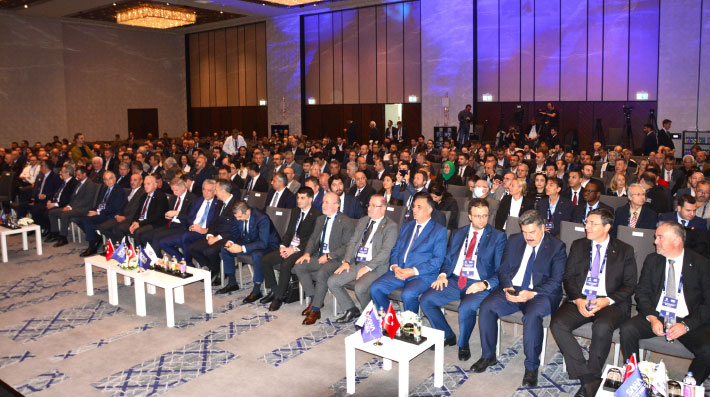
The 5th Defense Industry Meetings, held in collaboration with the Istanbul Chamber of Industry (ISO) and SAHA Istanbul, Türkiye's largest industrial cluster, took place. The event, hosted by Erdal BAHÇIVAN, Chairman of the ISO's Board of Directors, and Haluk BAYRAKTAR, Chairman of SAHA Istanbul's Board of Directors, saw the participation of notable figures, including Davut GÜL, the Governor of Istanbul, and Prof. Haluk GÖRGÜN, President of the Defense Industry Agency. This gathering featured a panel titled “The Role of Our Defense Industry on the Global Stage in the 100th Year of Our Republic.” Moderated by Dr. Celal Sami TÜFEKÇİ, Deputy Minister of the Ministry of National Defense, the panel included esteemed speakers such as Murat İKİNCİ, General Manager of ROKETSAN; Prof. Murat YALÇINTAŞ, Chairman of the Executive Board of BMC; Özgür GÜLERYÜZ, General Manager of STM; and Prof. İhsan KAYA, Vice President of the SSB.
Approximately 1,100 attendees from 600 companies in the sector participated in the 5th Defense Industry Meetings. The event was organized with the goal of enhancing the local content rate in the Turkish defense industry and increasing the contribution of technology-driven manufacturing and high-tech exports. Throughout the event, a total of 1,260 B2B meetings took place with 17 prime contractors.
The Objective: Achieving Full Independence in the Defense Industry
In his opening speech, Prof. Haluk GÖRGÜN, President of the Defense Industry Agency, said, "Economic power is inseparable from the industrial sector, and true economic and political independency cannot exist without a robust defense industry. The defense industry plays a pivotal role in overall industrialization and development."
GÖRGÜN stated that they are actively pursuing the development of the subsidiary industry and SMEs within the sector, aiming to enhance their technological capabilities and competitiveness. "In this regard, we are implementing our Defense Industry Capability Inventory (YETEN) Project, which aims to assess the current capabilities of our defense industry across the country and establish an industrial competence database. Through the Industrial Competence Evaluation and Support Program (EYDEP), we offer financial assistance for training, consultancy, and guidance support to companies. We continue to provide financial support to all companies, including SMEs, in the defense industry under the Defense Industry Investment and Development Activities Support Program. We expedite the national technology initiative by fostering cross-sector technological integration among industries that can mutually benefit from one another. To fortify the defense industry ecosystem and ensure its sustainability, we are bolstering our training infrastructure through the Defense Industry Academy to meet the demand for skilled professionals. We extend our support to sector companies, particularly SMEs, and implement measures to boost exports and foster collaboration within the ecosystem."
19 Companies Listed on the ISO 500
Erdal BAHÇIVAN, Chairman of the ISO, emphasized that the 5th Defense Industry Meetings, organized for the fifth consecutive year, have yielded highly significant outcomes for both our Armed Forces and the secure future of our nation. He added, "We are fully aware that as our defense industry advances, we will approach the future with increased confidence. Türkiye's successful production of its own engine, national tank, warship, attack helicopter, unmanned aerial vehicles, missiles, and infantry rifles is a source of immense pride for all of us."
“Today, the Turkish defense industry stands as one of our country's most vital sectors. It boasts a diverse ecosystem of contractors, universities, research institutions, a wide array of domestic and national technological products, and a successful track record of exports. These remarkable accomplishments shouldn't be confined solely to the defense sector. Over the past 15 years, our industry has significantly reduced its foreign dependency from 80%, embracing a 'co-production mobilization' philosophy that unites the collective intellect and vision of our SMEs, contractor companies, research institutions, and universities. Notably, our 2022 data reveals a robust financial performance in the defense and aerospace sector, with a turnover exceeding USD 12 billion and employment figures exceeding 81,000. Furthermore, we take pride in witnessing consistent growth in our defense industry exports, which culminated in exports valued at USD 3.8 billion during the first nine months of 2023. The sector's evolution is underlined by the presence of 19 companies from the defense industry ecosystem on the 2022 ISO 500 list, marking a significant increase from the six companies listed in 2000. In 2023, the fact that four of our defense industry companies have ranked among the world's top 100 is a matter of immense pride for us.” Erdal BAHÇIVAN, said,
Haluk BAYRAKTAR: "Our Defense Industry Has Become the Rising Star of the Century of Türkiye"
Haluk BAYRAKTAR, Chairman of the Board of SAHA Istanbul, emphasized Türkiye's substantial progress in the defense industry over the past two decades, remarking, “Over the last 20 years, the production volume in the Turkish defense industry has surged from USD 1 billion to USD 12 billion. During the same period, the defense industry budget has expanded from USD 5.5 billion to USD 90 billion. Furthermore, defense industry exports have escalated from USD 248 million to USD 4.4 billion, and we anticipate that our exports will exceed USD 6 billion in 2023. The number of employees in our sector has grown from 9,000 to 81,000. Meanwhile, the number of projects, which stood at just 62 two decades ago, has risen to 850 today."
In the closing part of his speech, BAYRAKTAR provided an overview of SAHA Istanbul's structure and activities, stating, "Today, with a total of 1,001 members, including 26 universities, we have become the largest organization of our kind in Europe. Our members represent companies from 41 cities across 52 diverse sectors, collaborating on projects within 11 committees in our framework, all with the aim of reducing foreign dependence and enhancing domestic capabilities. Additionally, to support our companies' business development efforts, we host SAHA EXPO, a specialized industry exhibition for SMEs involved in sector-related production. Last year's SAHA EXPO was a great success, drawing active participation from 957 companies representing 109 countries, 268 official delegations, 112 trade delegations, and more than 78,000 participants. We are excited to announce that the next edition of this international event is scheduled for October 22-26, 2024, at the Istanbul Expo Center. This event offers a unique opportunity to showcase Türkiye's independent production capabilities in the defense and aerospace industry on the global stage."
“The Role of Our Defense Industry on the Global Stage in the 100th Year of Our Republic” Panel
Following the opening remarks, a panel titled "The Role of Our Defense Industry on the Global Stage in the 100th Year of Our Republic" was held. The panel, moderated by Celal Sami TÜFEKÇİ, Deputy Minister of National Defense, was attended by Prof. İhsan KAYA, Vice President of the SSB; Prof. Murat YALÇINTAŞ, Chairman of the Executive Board of BMC; Murat İKİNCİ, General Manager of ROKETSAN; and Özgür GÜLERYÜZ, General Manager of STM.
Prof. İhsan KAYA, Vice President for Industrialization and Strategic Planning at the SSB, emphasized the immense value of bringing industrialists together and exchanging ideas. During his comprehensive presentation, he outlined the development of the Turkish Defense Industry throughout the Republican Era, covering four key areas: "Turkish Defense Industry in the Republican Era," "Turkish Defense Industry's Global Position," "SSB Activities," and "SSB Objectives." KAYA provided insights into the global standing of the Turkish Defense Industry, citing key metrics like turnover, the number of prime contractor companies, local content rates, employment figures, military expenditures, and exports. He also presented examples of the SSB's initiatives and their Industrialization Policy, characterized by the "Comprehensive Approach" model, as well as Industry Participation/Offset Activities. In conclusion, KAYA summarized both the strategic plan initiatives and the undertakings of the R&D and Technology Management Department, while outlining the objectives of the SSB's Industrialization and Strategic Planning Department.
In his presentation, Prof. İhsan KAYA, Vice President for Industrialization and Strategic Planning at the SSB, highlighted several key points: “In defense industry, the local content rate, which stood at about 20% in 2002, surged to 66.34% by 2018. Projections indicate it will hit approximately 73.40% in 2022 and is set to reach nearly 80% by 2023. Concurrently, the defense and aerospace sector experienced substantial growth, with its turnover increasing from roughly USD 1.62 billion in 2002 to nearly USD 12 billion in 2022. Similarly, R&D expenditure in the sector, which previously hovered around USD 50 million, has significantly advanced to USD 2 billion as of 2022. Despite a slight decrease in defense industry employment in 2021 compared to the previous year, the workforce numbered 81,132 individuals in 2022, marking a fourfold increase over the past decade. On the global stage, among NATO countries, we stand as the 11th largest out of 30 nations, with a capacity of about five per thousand in defense expenditures. The growth is further illustrated in the realm of exports: where defense and aerospace exports were a mere USD 250 million in 2002, they had surged to USD 4.4 billion by 2022. This year, we set an ambitious target of USD 6 billion. In the initial nine months, we approached this goal with exports reaching approximately USD 4 billion, and we anticipate closing the year with a figure of USD 6 billion or potentially even higher.
In 2001, we ranked fifth globally in imports and 31st in exports. By 2016, we shifted to the 15th position for both imports and exports. In 2022, we reached the 10th spot in exports and the 27th spot in imports. Our objective is to maintain this upward trajectory in export rankings while reducing our position in import rankings. Now, let's delve into the activities we're pursuing to achieve these goals. While our Defense Industry Agency managed 62 projects in 2002, today, we oversee 854 projects. Contracts for 80% of these projects have been finalized, with the remaining 20% in the contract signing phase. In 2003, we had 15 prime contractors; today, that number has expanded to 166 prime contractors. When considering subcontractors, the number of contractors registered in our database has reached nearly 3,000.
When developing systems, subsystems, platforms, and products, our guiding principle is to strive for uniform progress across all sectors. As the Defense Industry Agency, our overarching strategy is geared towards strengthening the sector's capabilities, placing a strong emphasis on products and platforms while striving for a local content rate of 80% or higher. Looking forward, our focus for the period spanning 2020 to 2030 will be centered on fundamental design and advanced technologies. Simultaneously, our commitment remains unwavering in the pursuit of enhancing local content and promoting industrialization. We are shifting our emphasis towards prioritizing export contributions over offset and local content practices. In line with our objectives, we are set to revamp the industrialization process. Our vision for a sustainable defense industry policy involves maximizing the turnover of our defense industry companies and fostering a robust ecosystem to boost local content rates. During this phase, our goal extends beyond achieving an 80% local content rate. We are focusing on elevating the qualified local content rate by enhancing technological and export cooperation obligations, with a particular emphasis on advancing technology. To illustrate, as projects advance, we are actively developing critical products through imposed offsets that require domestic contributions from industrialists. For instance, one of these products is the Speed Reduction System in the ALTAY Tank project. Similarly, we can cite the production of main and tail rotor blades for the ATAK Helicopter as another example of industrial participation offsets.
We encourage our companies to closely follow the Defense Industry Capability Inventory Portal (YETEN). Through this portal, we gain comprehensive insights into companies within the defense sector, encompassing financial data, human resources, product specifications, production capabilities, and testing infrastructure. In the upcoming phase, we intend to leverage artificial intelligence for a thorough analysis of this data, ultimately transforming the portal into a platform capable of identifying our current capacities, orientations, and requirements. Simultaneously, our Industrial Competence Evaluation and Support program holds significant importance. This portal serves as the means by which we assess companies operating in or aspiring to enter the defense industry, categorizing them into classes denoted by letters A, B, or C based on their competencies. Companies performing above level C or involved in critical areas or components receive targeted support. Our preference is to channel this support towards SME-type companies whenever possible. Furthermore, the first zone of our Ankara Aerospace Specialized Organized Industrial Zone, established to consolidate aerospace and defense companies, is now fully occupied. We are actively developing the second zone, which is currently hosting the operations of 35 companies. This zone also houses the Tekno HAB Technology Development Zone, designed to facilitate R&D and related activities for resident companies.
Our Department of R&D and Technology Management plays a pivotal role in charting the future course of the Defense Industry Agency. This is a collaborative endeavor that draws upon a wide spectrum of expertise, including representatives from the requirements authority, our Armed Forces, universities, expert personnel from the Technology Development Zone, and accomplished professors from academic institutions. Together, we conduct evaluations to determine the trajectory of technology, explore possibilities in advanced technology projects, and devise strategies to advance the sector's technological capabilities. Currently, our focus areas encompass sensors, advanced materials, energy solutions, information technologies, and projects related to destruction and chemical-biological radiation. Within this framework, we've established six Focus Technology Networks (OTAĞ). In November, we are preparing for our 10th R&D panel. As a result of these panel discussions, we've launched 63 projects that encompass both sectors' needs and the directives from the requirements authority. This collaborative platform includes the active participation of 20 universities, 11 research institutions, 74 companies, and approximately 3,548 individuals.
Additionally, we have initiated a competition focusing on the technologies and concepts that will shape the future operational environment. The results of this competition will be announced in the first week of December. This competition's primary focus is on envisioning the operational environment of 2050, delineating the emerging concepts and technologies in various scenarios, and considering the developmental stages of these technologies. As the Defense Industry Agency, we are committed to advancing pioneering technologies. Our ongoing projects span across a wide spectrum, including advanced functional materials, biotechnology, energy storage, artificial intelligence, information security, autonomy, space, and quantum technologies. As of 2024, we aim to increase our R&D budget in alignment with the national average. Our long-term vision is to establish leadership in the realm of space. We are currently in the process of formulating a strategic plan for the next five years. The principle of dual use is integral in our approach to breakthrough technologies, as leveraging defense industry products in the civilian sector is crucial for enhancing financial sustainability. Our strategic plan encompasses digital transformation, exports, financial resources, industrialization, and provides a blueprint for the years ahead.”
Prof. Murat YALÇINTAŞ, Chairman of the Executive Board of BMC, underscored the significant growth in Türkiye's defense industry projects. He emphasized that, while in 2002, Türkiye was involved in just 62 defense industry projects, by 2023, this number had surged to over 850. This data reflects Türkiye's commitment to achieving not only domestic production in the defense industry but also a high degree of nationalization. “The meaning of nationalization, in this context, is that we possess full industrial property rights. This entails complete ownership of the product, granting us the ability to develop, modify, and freely market the product to any country of our choosing. Consequently, the level of nationalization and indigenization that Türkiye has achieved is of utmost significance.” Highlighting BMC's strong position in the Turkish defense industry, YALÇINTAŞ pointed out that despite their rapid growth, they still face a scale challenge in comparison to foreign competitors who manufacture both civilian and military vehicles. He continued his address, stating, "The primary reason for this scale challenge, as mentioned earlier, is the time gap that separates us. The ALTAY Tank is the result of today's political will, but its development began in the 2000s. If you look at the world's earliest tank production, it was the British during World War I, with the deployment of the Mark I Tank at the Battle of the Somme in 1916. We are catching up, but there remains a significant disparity in scale. This situation presents both advantages and disadvantages. Foreign competitors dominate the market and offer a wider range of products. On the other hand, our advantage lies in our commitment to developing national and domestic products since the 2000s. I can confidently assert that our products are far more modern and superior to theirs.
As a representative of the defense industry, I have the privilege of participating in numerous international fairs. Each time I attend these global defense industry events, I am filled with a profound sense of pride and honor. Without fail, foreign delegations consistently express their admiration for our products, emphasizing their clear superiority over their foreign counterparts. There are three key factors contributing to this success. Firstly, we must acknowledge the crucial role played by our institutions, which have positioned us at the forefront of technology. Secondly, we owe a significant portion of our achievements to the Turkish Armed Forces, renowned as one of the world's most combat-ready armies. The fact that they utilize Turkish defense industry products in real combat environments provides invaluable feedback that enables us to continually enhance our products, ensuring their superior performance on the battlefield and the safety of our soldiers. While other products from foreign countries may appear aesthetically appealing, they often lack the extensive battlefield testing and real combat experience that our products undergo, which are continuously refined. When we say that the Turkish Armed Forces utilize a product, it serves as the most compelling reference for that product, influencing other countries to acquire it. One of the most significant milestones in the Turkish defense industry's journey to this point is attributed to the Defense Industry Agency. Presently, all procurements are overseen by this agency, which places rigorous demands on us, scrutinizing every detail and requirement. This demanding process, however, ultimately results in products that approach perfection.”
Murat İKİNCİ, General Manager of ROKETSAN, underlined ROKETSAN's pivotal role as a leading organization in Türkiye specializing in guided munitions, missile, and rocket technologies. He emphasized that ROKETSAN is dedicated to meeting the smart munitions and rocket missile requirements of friendly and brotherly nations, with the Turkish Armed Forces being of utmost importance. İKİNCİ highlighted ROKETSAN's remarkable achievements, stating, "When we consider ROKETSAN's product range, it becomes evident that the organization excels in producing a wide array of products and technologies. These range from anti-tank missiles, anti-ship missiles, and air-to-ground ammunition to smart ammunition designed for our UCAVs, which serve as a source of pride for us. ROKETSAN is also actively involved in space technologies and exports these cutting-edge technologies alongside its products.”
Murat İKİNCİ highlighted ROKETSAN's substantial presence in the global market, primarily attributing it to remarkable advancements in exports in recent years. He emphasized that the Turkish defense industry has achieved notable success, underscoring that this accomplishment is not exclusive to ROKETSAN but, in fact, represents a collective success encompassing the entire defense industry and its supporting ecosystem. İKİNCİ continued his remarks as follows: “Our primary objective has been to fulfill the requirements of the Turkish Armed Forces using domestic and national technologies, thus reducing our reliance on foreign sources. As a result of recent embargoes imposed on our country, our Turkish Armed Forces have achieved remarkable success in the field, thanks to products manufactured by our domestic companies. All critical operations are now conducted using our indigenous systems, providing us with significant advantages on two fronts. We no longer face restrictions on product availability during operations, and we can leverage field experience to enhance our product development. Our engineers are actively developing technologies to compete on the global stage, supporting our Armed Forces in optimizing the use of these products. I must emphasize that our most significant asset in this endeavor is our robust supply chain, working closely alongside us. Notably, both Europe and the United States have experienced significant disruptions in their defense supply chains, a fact I personally witnessed at a recent NATO meeting I attended two months ago. Türkiye's paramount advantage in this regard is its remarkable success in maintaining a dynamic and functional supply chain. This accomplishment owes much to the dedicated efforts of the Defense Industry Agency, the Ministry of National Defense, the Ministry of Industry, and esteemed institutions such as TÜBİTAK. Moreover, our industrialists demonstrate unwavering commitment to nationalization and indigenization, often surpassing our own enthusiasm in supporting our mission. I extend my heartfelt gratitude to each of them.”
Emphasizing ROKETSAN's advantages and challenges in the context of global competition, İKİNCİ continued his speech as follows: "As ROKETSAN, the first notable advantage in our competitive stance is our robust supply chain. We possess a supply chain that can dynamically adapt to diverse tasks and foster technological advancements. Complementing this, we have a young and highly skilled engineering team, well-versed in conducting research and development across a spectrum of domains, from air defense missiles to anti-tank missiles, and even space technology, relying on our own expertise. Lastly, our products are utilized by the Turkish Armed Forces, which not only leverages this technology successfully but also provides invaluable feedback. Together, these three pillars form the primary driving force behind Türkiye's defense industry. The world's foremost companies, which we regard as our competitors, possess a range of distinct advantages. First and foremost, these companies boast a longstanding track record of product development within this sector. Additionally, they adeptly leverage countries that import platforms developed within their borders as a natural market. Exporting platforms to a nation inherently involves exporting the integrated systems (payload) within them. Currently, our competitors wield significant influence within the existing market, and their presence is strongly felt in most markets. To summarize ROKETSAN's approach to addressing these challenges and setting its strategy, we have strived to achieve a level of nationalization in our technologies that allows us to export them without requiring permission from any foreign country. This places us in an advantageous position, enabling us to offer products without restrictions in various global markets. Türkiye has transitioned into a platform-exporting country. Notably, our UCAVs, MİLGEM Ships, and Armored Vehicles are exported as complete platforms, while the electronic systems, radar systems, ammunition, command and control systems, sensors, etc. incorporated into them are developed using our national and indigenous capabilities, contributing to the sector's overall export efforts. For instance, the export of the AKINCI UAV significantly expands our export potential, encompassing ammunition and various electronic components. In a similar vein, when we export our MİLGEM ships, it opens a new market for our air defense missiles and anti-ship missiles integrated into the onboard Combat Management System. As long as we continue leveraging this advantage and maintain our role as a platform exporter, the Turkish defense industry's exports will experience rapid growth. Lastly, a critical point to note is that our technology now surpasses that of countries with years of product development history. Our products, equipped with cutting-edge technologies and implemented as intelligent systems, have demonstrated their functionality through the utilization by the Turkish Armed Forces, propelling them to attain a prominent standing in the market. For instance, our SUNGUR, a single-soldier portable Air Defense Missile, is in high demand due to its superior seeker technologies, making it more effective and destructive. It outperforms competitors in terms of range and maneuverability. Additionally, our smart munitions like the MAM-L and MAM-T, employed in operations, surpass many other products globally marketed as UCAV munitions in terms of technology. ROKETSAN's exports and overall production capacity have been experiencing rapid growth. Each year, we witness an exponential increase in the demands we receive. We expect a substantial surge in demand over the next five years, necessitating an expansion of our current production capacity and further reinforcement of the supply chain to support this increase. As ROKETSAN, we have already exported to nearly 40 countries and are receiving requests from numerous others. To facilitate this expansion, we will continue our investments in production infrastructure and enhancing the supply chain, aiming to achieve these goals in collaboration with all our partners within the framework of strategic business partnerships.”
Özgür GÜLERYÜZ, General Manager of STM, emphasized the critical role that STM plays in the Turkish defense industry, highlighting various projects and activities that STM has been involved in. “The Vertical Wind Tunnel used by our Special Forces for paratrooper training was produced by STM. The unmanned Coast Guard Radar Stations were also developed by STM. The Cyber Defense Center of the Turkish Armed Forces was established by STM. STM serves as the prime contractor for our 5th MİLGEM ship. Furthermore, STM was responsible for developing the strategic-level software for NATO's Air Command and Control Information System, AirC2IS. This list could go on. The key factor behind our diverse portfolio is that STM is fundamentally an engineering company.” GÜLERYÜZ pointed out that STM, currently employing 830 personnel, 75 percent of whom are engineers, operates across various fields to provide advanced technological engineering solutions essential for the defense industry. He also emphasized that STM's extensive experience and interactions with various sector companies and partners within the ecosystem give them a deep understanding of the industry. GÜLERYÜZ stated that one of STM's primary responsibilities, particularly in platform projects, is to increase the rate of indigenization.
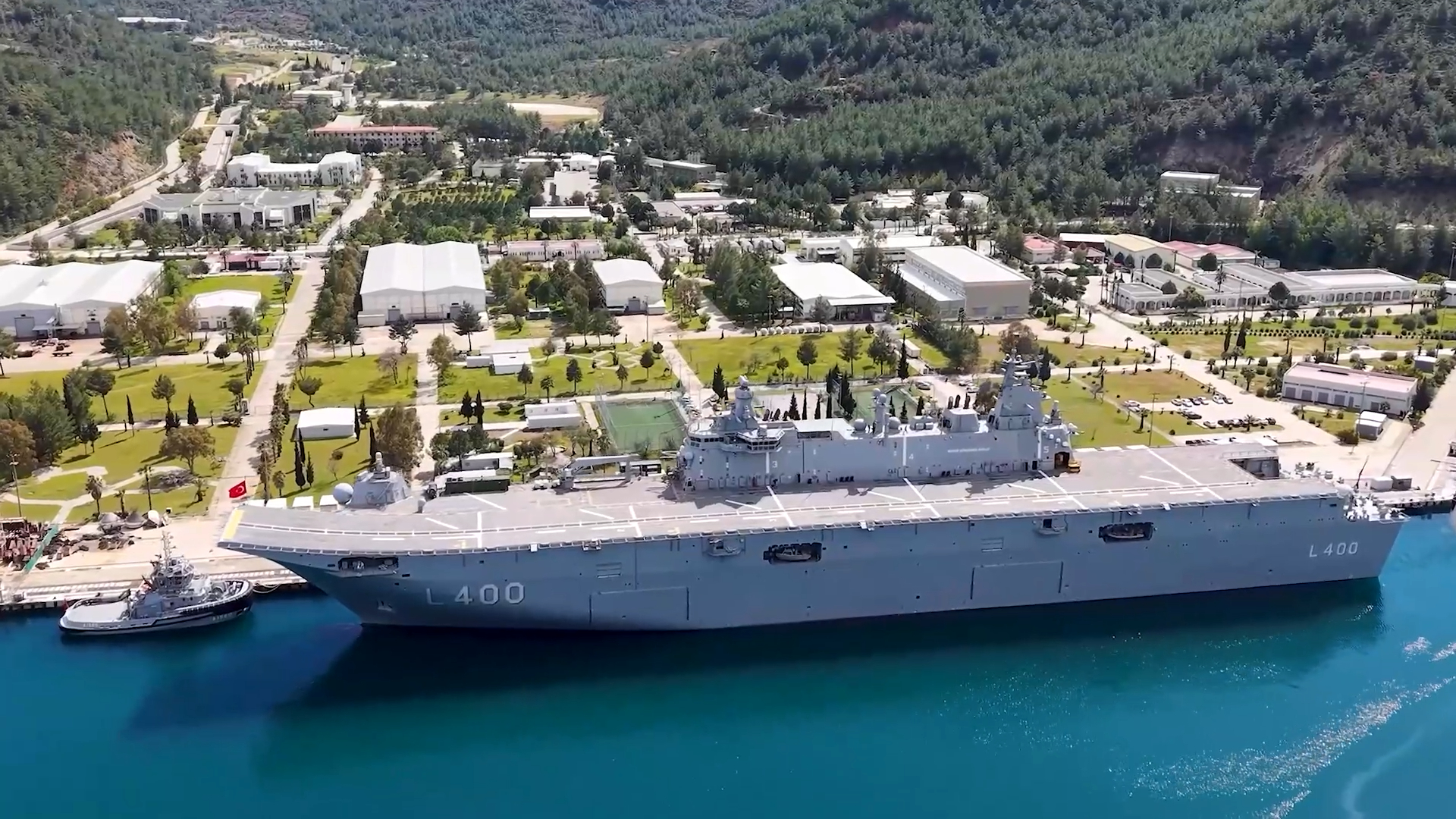
GÜLERYÜZ continued his speech as follows: “I’d like to briefly discuss our three main fields of activity, with the first being Military Maritime. We can proudly assert that STM is Türkiye's largest Military Maritime Company. We serve as the prime contractor for the 5th ship of our MİLGEM Project, the Istanbul Frigate. The MİLGEM design initiatives commenced with our Naval Forces, who initially engaged STM to provide engineering and design support for their ongoing design endeavors. Guided by the SSB's leadership, the goal was to enhance the level of domestic national contribution, expand STM's engineering responsibilities, and encourage other companies within our sector to become involved in military maritime ventures. At the outset of the MİLGEM project, our primary objective was to provide engineering support and to encourage investment in this field. As a result, the local content rate, initially at around 15-20 percent for the first ship, has now surged to 80-85 percent for our fifth ship. Currently, we are collaboratively engaged in the construction of our sixth, seventh, and eighth ships with TAİS and three private shipyards. Despite the progress, there are still areas earmarked for further indigenization. Our commitment to indigenization remains steadfast, with the ultimate goal of achieving 100% indigenization for our ships. We have already indigenized systems that were previously subject to embargoes and continue to do so for systems that might face procurement restrictions in the future. This indigenization drive not only keeps our money within our country but also supports the success of domestic companies, motivating us to persist in this direction. STM plays a pivotal role not only in domestic projects but also in international endeavors. An excellent example of this is the Navy Fleet Tanker (PNS Moawin) designed for Pakistan, a project led by STM. The ship's construction involved shipping materials from Türkiye to Pakistan, where it was built with the assistance of local labor in Karachi, Pakistan, under our engineering guidance. Remarkably, over 100 systems and products from Turkish companies are integrated into this vessel, along with more than 700 Turkish materials and equipment. This highlights a significant aspect, particularly concerning platforms: a ship platform boasts a lifespan of at least 50 years, encompassing over 700 products and systems from more than 100 Turkish companies that are involved in export. In the realm of surface platforms, our MİLGEM project has made substantial strides, gaining competitiveness on a global scale. We are actively engaged in ship production for Ukraine and currently exploring opportunities with several other countries. The outstanding performance and quality of our MİLGEM corvettes establish them as among the most successful ships in their category. The prospects of signing contracts with these countries are promising, primarily due to the exceptional performance of our MİLGEM corvettes, which are among the most successful ships in their class. In Pakistan, we are spearheading the modernization of a submarine originally produced by a foreign manufacturer. We competed with the submarine manufacturer in the modernization tender, and since we offered both the best technical solution and the best price, we won the tender. The modernization of two submarines has already been successfully completed and delivered. To the best of our knowledge, aside from the submarine manufacturers, there is no other company globally capable of executing such extensive modernization projects. Drawing from our rich experience in these endeavors, we have developed the STM 500 mini submarine, marking a significant step toward achieving an indigenous and national submarine. In meetings with foreign countries, we have observed substantial interest in this project. Very few countries globally have the capability to independently design and manufacture their own submarines. With these endeavors, Türkiye is poised to secure a formidable position in this realm. It is our belief that, just as we've achieved significant successes in the UCAV/UAV and surface ship domains, we can also blaze a trail in the submarine sector.”
GÜLERYÜZ provided insights into Tactical Mini UAV Systems, another significant area of STM's activities, with a specific focus on kamikaze strike drones. He mentioned that during urban operations in 2016-17, the Turkish Armed Forces required a strike mini-UAV/drone, and STM was the sole provider for the urgent needs of the Turkish Armed Forces at the time. They could only obtain offers from one foreign company, and the offered price was extraordinarily high. Taking this as a mission, STM developed the KARGU Rotary Wing Attack Drone in just two years and introduced it into the Turkish Armed Forces' inventory. They produced thousands of KARGU units and exported them to more than ten countries. Notably, the foreign company that submitted the costly offer during that period is now often STM's competitor in various tenders, offering prices one-fourth or even one-fifth of their previous proposal