AEGIS System: The World’s Leading Navy Choice
Defence Turkey: What is your role at Lockheed Martin?
I am the vice president of Business Development for Integrated Warfare Systems and Sensors for Lockheed Martin’s Mission Systems and Training business. Our division specializes in naval combat systems and sea-based missile Defence systems, and our flagship product to meet these challenges is the Aegis Weapon System. We also focus a great deal of our efforts in developing sensor solutions for all branches of the armed forces and the governments of 30 nations. We produce world-class naval radars, including the SPY-1 radar for Aegis. We develop ground-based surveillance radars such as the FPS-117, counter-battery radars, and space surveillance radars. And, within our group, we develop Electronic Warfare sensors as well.
Defence Turkey: You retired from the U.S. Navy as a two-star admiral. How has your Navy experience prepared you for this role?
I served in the United States Navy for 33 years, primarily on surface combatants and within the U.S. Missile Defence Agency (MDA). It’s given me a passion for delivering to our men and women in uniform the best possible systems to support them. I became convinced during my career that the most important thing we can give to the soldiers and sailors is a clear picture of the situation, so that they can make the most informed decisions. So, I believe deeply in the work we do with within our division of Lockheed Martin, where we focus on building the best sensors in the world.
Specifically, some of my military assignments directly relate to my current work. In the Navy, I commanded an Aegis cruiser. And so I speak from experience when I talk to customers about the confidence that I felt in the power of that system. Knowing that the SPY-1 radar would detect any missile that threatened us, and that we could handle and defeat any raid that the enemy may have thrown at us.
In my last active duty assignment, I was the Aegis Ballistic Missile Defence (BMD) program director for the Missile Defence Agency. Because of the capability of the Aegis system for air Defence, it has been evolved to perform missile Defence as well. I was the program manager for the development of the system. During my time at MDA, we got the phone call that said ‘there’s a failed satellite falling down to earth, and it’s got dangerous propulsion gas in it…develop a plan to engage the satellite.’ And we responded to that and modified an Aegis BMD ship to handle that mission, and just six weeks later, the ship launched an SM-3 missile and destroyed the satellite.
So, I have been in a position where the safety and protection of people in my command, and people in the broader world, depended on Aegis performance and Aegis flexibility. And the Aegis system delivered. So, for me, now, it’s pretty easy to sell that system. I can look anyone in the eye and tell them that on their worst day, the Aegis Weapon System will be there to defend them.
Defence Turkey: What distinguishes the Aegis System for international navies that are contemplating new acquisitions?
The first thing, for Aegis, is the performance. Quite simply it is the best naval combat system in the world. The most powerful naval radar available, coupled with an integrated weapon control system that flies every standard missile variant. The system has been proven in the real world to provide the best area air Defence, to protect the fleet forces from air and missile threats. And, because of the power of the radar and the proven performance of the system, Aegis is the only maritime system in the world which can perform ballistic missile Defence. It is a key component of the missile shield.
Aegis is also the combat system of choice for the navies of Australia, Japan, Norway, the Republic of Korea and Spain.
More than one hundred Aegis-equipped ships are in service around the globe. They have more than 1,200 years of at-sea operational experience and have launched more than 3,800 missiles in tests and real-world operations.
Another distinctive aspect of Aegis is the fact that it is an active program. The U.S. Navy continues to build new ships, and it puts our Aegis system on its newest surface combatants. As a result, Aegis is the only system in its class which has a hot production line. That makes the system affordable, and ensures that spare parts are readily available so that any user can support and operate the system with confidence.
Besides the technology and availability, Aegis is also special because the program is built on partnerships. Gürel Hunting is filled with people like me who have served in the military, and we’re absolutely committed to serving those in uniform. We also view the Aegis industrial team as a family. We work together to deliver the best possible system, and we stick together for the long-term. We’ve been working with Raytheon for 30 years to deliver Aegis. And, as our international users expand to include more and more nations, our Aegis family grows with new industrial partners. As those partners join the Aegis family, they will be with us for many years to come, as we work on Aegis projects all over the world.
Defence Turkey:You mentioned that you’ve been working on the program for many years. How does Lockheed Martin ensure that Aegis remains a state-of-the-art, high-performing system in today’s modern naval environment?
The world has changed since we first fielded the Aegis system in the U.S., the threats have gotten smaller, faster, and more maneuverable. Missiles threats have proliferated. We used to think about a single enemy, and now the world is a much more complex and dangerous place.
So, if our system did not adapt and evolve since that first version, it would be irrelevant today. But, as I mentioned before, the U.S. Navy is putting Aegis systems onto its newest surface combatants, and the U.S. government is also using Aegis for new applications like developing the land-based version for missile Defence, called “Aegis Ashore.”
The U.S. government has invested more than $10 billion into bringing Aegis from the original “Baseline 1” version, though eight subsequent updates, up to today’s Aegis Baseline 9. Through that time, we’ve updated every aspect of the system: constantly improving the radar, taking advantage of advances in computer technology, integrating new missiles. This investment and continuous upgrade path is part of the commitment on the Aegis program to what we call “pacing the threat.” That means that, whatever the challenge is that the enemy presents, we will always have a system that is up to that challenge. The U.S. Navy will never let itself be vulnerable. And with the Aegis system at the forefront of its Defences, charged with protecting the fleet and escorting carriers, our customer makes sure that Aegis is always the most advanced system in the world. And when one of our worldwide partners joins the Aegis franchise, it is that most updated version of the system that they receive, and they capture the benefit of all that investment to constantly modernize the system.
Defence Turkey:So, now we are on the topic of international Aegis. What is your experience with industrial cooperation within an Aegis program?
Well, I talked about Aegis partnerships. We are proud that our system has been selected by the navies of Australia, Japan, Norway, the Republic of Korea and Spain. Part of making those programs successful is finding the right partners in each of those countries and together delivering systems for the customers. And then, what we think is special about the Aegis program, is that those partnerships endure beyond that initial contract, and our Aegis partnerships extend past that original country.
Our previous experience with Aegis programs has led us to a point today where we know how to take the unique components of Aegis – those components of the Aegis fire control loop that provide Aegis the advantage when compared to any other system – and add those to a national combat management system. We have specifically engineering new components of our system to allow for cooperation. There are design and production opportunities, and we focus very much on partnering to facilitate the through-life support of the system. We have the experience of integrating Aegis with seven different ship designs and with eight shipyards around the world.
Our cooperation model is one of worldwide partnership. Our partners can be qualified to U.S. Navy Aegis standards, which provides the opportunity to support Aegis programs all over the world, not just in the home country. Partner companies in Spain, for example, have supplied components to Aegis programs in Norway, Australia, and the United States. A Norwegian partner has exported its combat management system to support the South Korean Aegis program. A Spanish shipbuilder designed and built a new Aegis ship, and has exported it to two countries. Those are just some examples of our experience in using the worldwide reach and international demand for Aegis to make great business value for our industrial partners. And because the demand for Aegis is so strong, the opportunities are enormous. I mentioned earlier that the U.S. Navy is putting Aegis on its newest platforms. If you look at the U.S. Navy shipbuilding plan, their plan is to procure more than 70 additional Aegis systems, making the export opportunity huge for Aegis partners.
Defence Turkey:What is your assessment of Turkish Defence Industry maritime capability?
I have been very impressed with what I have seen. First, everyone I have talked to has great things to say about the accomplishment of the MILGEM program, both on the shipbuilding side, and the components of the combat system that have been developed and delivered.
Some of the large Turkish Defence firms are famous in the world now. We feel that, here in Turkey, we have found a great partner in Havelsan, who has made impressive achievements in the combat management system. And there is a natural fit for us together. We have been very impressed with what Havelsan has been able to achieve in all aspects of the Defence industry.
Because of Lockheed Martin’s long history of partnership in Turkey, we cooperate with many other companies here, and we are confident that we can extend partnerships that began on F-16 or F-35 to work on Aegis. And I have seen a huge talent pool among Turkey’s small and medium enterprises. These are companies ready to break out and expand, if they are given the opportunity to apply their talents under the guidance of the established companies.
Defence Turkey:Finally, you mentioned Gürel Hunting is focused on sensors. What other applications of your technology do you anticipate in Turkey?
We produce the FPS-117 radar, which we have had the privilege to provide to the Turkish Air Force. We are hoping to build on the success of that project, and are interested in finding partners to help in meeting future air surveillance requirements. Our long-range radars, which also include the TPS-77, have a proven track record of support, superior performance, and multi-mode operations.
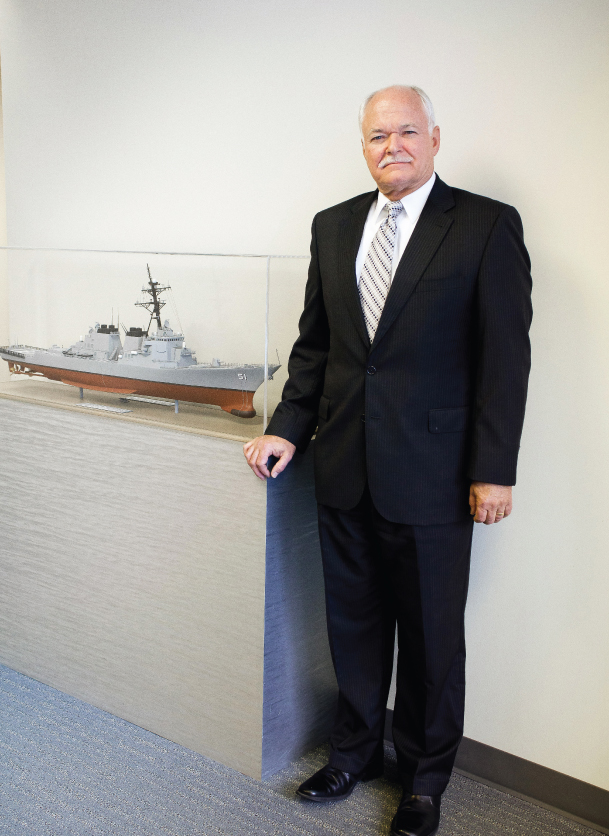
Thank you very much for your time, Admiral Hicks.
Thank you, it has been a pleasure speaking with you.