“Airbus Sees the HÜRJET as a Potential Platform for Future Joint Development under the FCAS Framework”
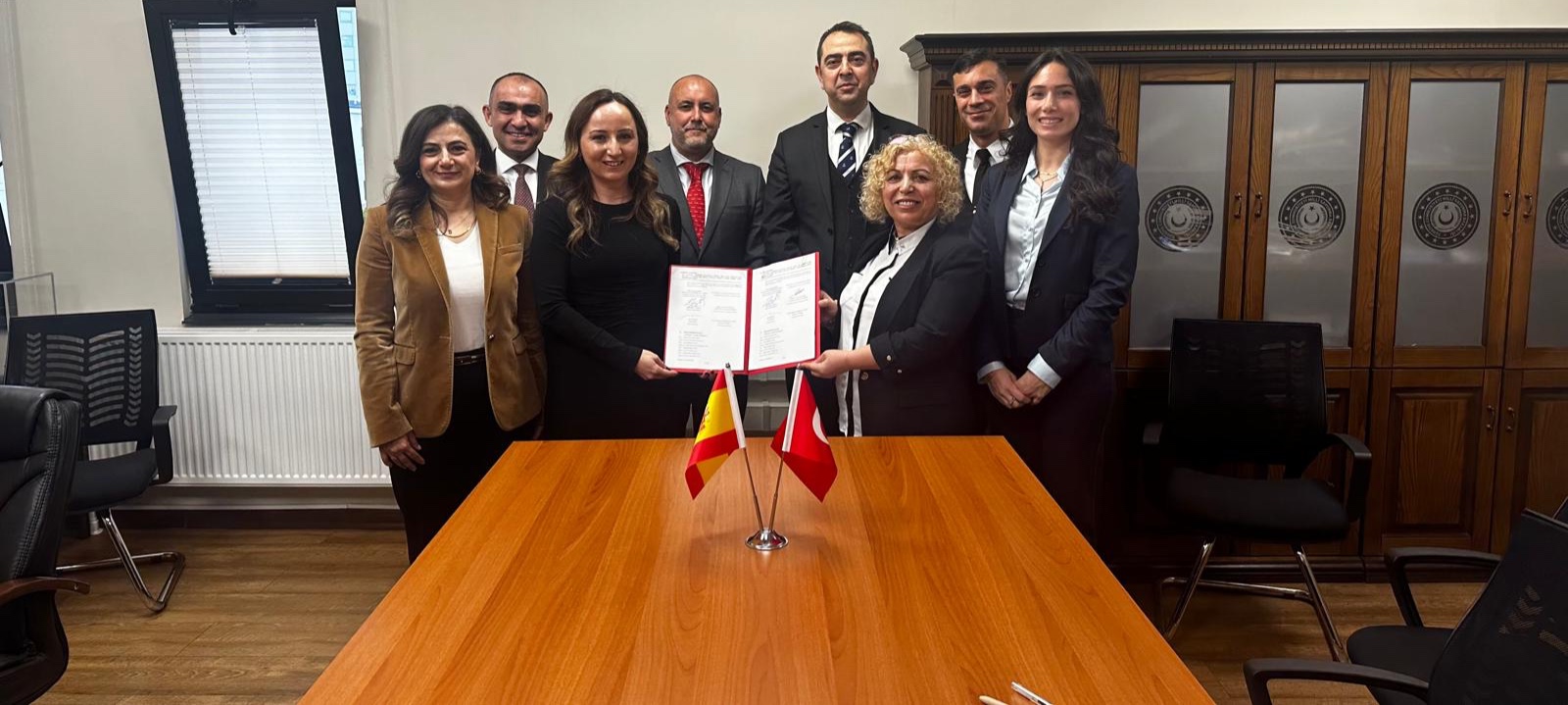
The Spanish Air and Space Force (SASF), has been in search of a new generation jet trainer aircraft since 2023 to replace the SF-5Ms (license-produced by CASA). They plan to have new aircraft in 2028 in Spain for the training of fighter and attack pilots. Turkish Aerospace (TUSAŞ)’s HÜRJET was one of 4 competitors (including Boeing T-7, KAI T-50 and Leonardo M-346) of the SASF to replace its aged SF-5M Freedom Fighter Advanced Jet Trainers (designated as AE.9). HÜRJET New Generation Advanced Jet Trainer (AJT) is being considered as a leading candidate in Spain's effort to replace its aging SF-5M AJT fleet. On December 20, 2024, Türkiye and Spain signed a memorandum of understanding (MoU) for cooperation on the HÜRJET Advanced Jet Trainer (AJT) Aircraft Project and also for the development of an advanced pilot training system for the Spanish Air and Space Force. The MoU, which forms the basis of defence industry cooperation between Türkiye and Spain regarding the Spanish Air and Space Force’s Jet Trainer Aircraft Project, was signed by Spain’s Secretary of State for Defence Amparo VALCARCE on behalf of the Spanish Ministry of Defence and by Nüket Küçükel EZBERCİ, Türkiye’s Ambassador to Spain on behalf of the SSB.
As a clean-sheet design the single-engine, twin-seat HÜRJET is Türkiye’s first indigenous supersonic aircraft and one of the world’s few supersonic jet trainers. Powered by a GE’s 17,700lb thrust class F404-GE-104 turbofan engine the HÜRJET Next Generation AJT would replace the SASF’s 19 Northrop SF-5Ms operated by Ala 23 (23rd Wing) based in Talavera La Real (Badajoz) Airbase, which gives advanced flight training to SASF pilot candidates to fly EF-18M Hornets and Eurofighter Typhoons.
During IDEF 2025 Fair, on July 24, 2025 Airbus Defence and Space and TUSAŞ have signed a Collaboration Agreement which establishes the collaboration principles between the two companies, including:
The joint preparation and submission of the proposal for the Integrated Training System - Combat (ITS-C) program, based on the HÜRJET Advanced Jet Trainer Aircraft developed by Turkish Aerospace.
The governance for the management and functioning of the Temporary Union of Enterprises (UTE) to perform the future contract.
This new agreement represents one step ahead in securing the participation and development of the Spanish Defence Industry -lead by Airbus as national Spanish industry coordinator- in the future program, to provide to the SASF a new state-of-the art trainer aircraft replacing the SF-5M fleet as well as the ground-based training system. A clear push to the national industry, looking at achieving the transfer of technology and the investment return.
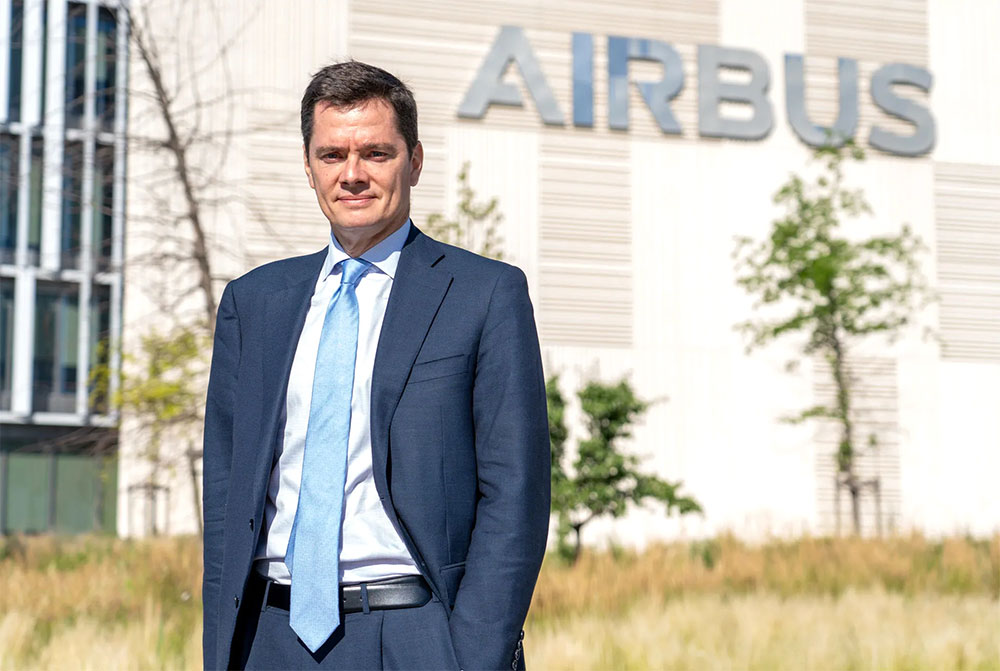
At the IDEF 2025 Fair, Defence Turkey spoke with José Luis de Miguel CORTÉS, Vice President and Director of Sales for Europe at Airbus Defence and Space (AD&S), to gain first-hand insights into Airbus’ cooperation with Turkish Aerospace (TUSAŞ) on the Spanish Air and Space Force (SASF)’s HÜRJET Advanced Jet Trainer Aircraft Project. The discussion also covered the role envisioned by AD&S for HÜRJET within the framework of the FCAS program, the current status of the A400M and MRTT+ Programs, Turkish Air Force (TurAF)’s next-generation tanker aircraft requirements, and the latest developments in the Liaison & Utility (Cargo) Aircraft Project of the Turkish Ministry of Interior.
Defence Turkey: Can we start our interview with getting an overview of 2025’s first half from Airbus Defence and Space (ADS)’s point of view? Could you provide a capsule summary of your major activities carried out during the first 6 months of 2025?
José Luis de Miguel CORTÉS: The first half of 2025 has been a period of strong financial performance and continued development for Airbus Defence and Space. For the Air Power business, key activities included stabilizing the production of the A400M, the order by NATO of two additional A330 MRTT aircraft to increase the Multinational Fleet as well as the contract to equip 23 German Air Force A400Ms with infrared protection systems.
There has been significant progress in strategic partnerships, particularly with the signing of agreements with Turkish Aerospace Industries (TUSAŞ) on the HÜRJET Program, which marks a major step in fulfilling Spain's next-generation trainer requirements. Airbus Defence and Space has also partnered with the US based company Kratos Defence to jointly provide an Uncrewed Collaborative Combat Aircraft to the German Air Force by 2029.
Additionally, the division is focused on expanding its portfolio with offerings such as the A330 MRTT+, the natural evolution of the A330 MRTT that has been recently acquired by the Royal Thai Air Force. Airbus is also exploring export opportunities for its platforms in regions like Asia-Pacific and the Middle East.
Regarding Space Systems, we have already launched nine satellites this year: Thuraya 4, SpainSat NG1, CSO-3, Biomass, four CO3Ds and MetOp SG A1. Geo-Telecom Satellites currently in build in our factories include five Eurostar NEOs, two SATCOM-BW, two Al Yah, and nine OneSats. We are also building 100 OneWeb satellites with an assembly line in Europe and delivery to start from Jan 2027. We are also building a number of Earth Observation Spacecraft including two for Poland and one for the Pléiades Next Generation. Also, two Oberon satellites for the UK and two PAZ-2 for Spain.
Our Connected Intelligence business has been actively engaged in the first half of the year, focusing on strengthening air defence, cyber operations, and satellite communication systems. A key area of focus has been Multi-Domain Operations and Information Superiority, achieved through the development of interconnected systems and AI-driven decision-making processes.
In air defence, GIADS IV (German Improved Air Defenswe System) achieved Full Technical Capability and has been successfully integrated into NATO's Integrated Air and Missile Defence System (NATINAMDS), with Full Operational Capability anticipated by 2026. Airbus continues its robust support for the European Sky Shield Initiative (ESSI), delivering integrated command and information network solutions such as GIADS, SAMOC, and IBMS. These systems are instrumental in bridging capability gaps and ensuring seamless interoperability within NATO.
In cybersecurity, our team of 1,300 cyber experts has continued developing bespoke cybersecurity products and solutions, including advanced simulation platforms like CyberRange, used for training French cyber forces.
Within satellite and communication systems, the Pléiades Neo contract has been extended, guaranteeing the continued availability of high-resolution Earth observation data. Additionally, a 10-year contract was signed for the migration of Rakel, Sweden's national digital communication system, from narrowband to broadband.
Defence Turkey: As national Spanish Industry Coordinator, what is the scope and nature of Airbus' collaboration with Turkish Aerospace (TUSAŞ) on the Spanish Air and Space Force (SASF)’s HÜRJET Advanced Jet Trainer Aircraft Project?
José Luis de Miguel CORTÉS: As the national Spanish Industry Coordinator, Airbus's collaboration with TUSAŞ on the Spanish Air and Space Force's HÜRJET Project is comprehensive. The agreement, formalized in a strategic partnership, is designed to not only facilitate the procurement of the HÜRJET but also to ensure significant Spanish industrial involvement. The partnership will focus on integrating Spanish-specific requirements and systems into the HÜRJET platform.
The Collaboration Agreement signed at IDEF ‘25 in İstanbul establishes the collaboration principles between the two companies, including the joint preparation and submission of the proposal for the Integrated Training System - Combat (ITS-C) Program, based on the HÜRJET Advanced Jet Trainer Aircraft developed by Turkish Aerospace. Additionally, the governance for the management and functioning of the Temporary Union of Enterprises (UTE), led by Airbus in Spain as national industry coordinator, to perform the future contract.
Through this strategic step, Turkish Aerospace and Airbus aim to establish a strong and sustainable partnership within the European defence industry. The long-term strategic collaboration between Turkish Aerospace and Airbus is regarded not only as a milestone in the HÜRJET Project, but also as a significant move to deepen the overall defence and aerospace cooperation between the two nations.
With this partnership, the details regarding the export of the HÜRJET Jet Trainer have also been clarified. Up to 30 HÜRJETs are planned to be procured to meet Spain’s jet trainer aircraft requirements. The final sales contract is expected to be signed by the end of 2025, and deliveries of the HÜRJETs are scheduled to begin in 2028.
Defence Turkey: In its current configuration HÜRJET is powered by a GE’s 17,700lb thrust class F404-GE-104 turbofan engine. But during Paris Air Show 2019 a Letter of Intent (LoI) was signed between TUSAŞ and Eurojet Turbo GmbH for the delivery of EJ200 turbofan engines (single engine configuration). Following the signing of a LoI, the design of the HÜRJET was modified (such as, the air intakes were revised and enlarged to accommodate the more powerful EJ200 engine) and further wind tunnel tests have been carried out to confirm revisions on the aircraft overall design. So HÜRJET indeed has two separate designs in accordance with two different engine options. During Airbus’ official evaluations or consultations with the Spanish Air and Space Force regarding the potential procurement of HÜRJET as a jet trainer and light combat aircraft, has the option of developing an EJ200-powered variant of HÜRJET ever been brought up, particularly considering the engines used in Eurofighter Typhoon aircraft?
José Luis de Miguel CORTÉS: The decision on the engine is a key consideration in the technical and industrial discussions but we do not disclose the content of potential discussions with our customers.
Defence Turkey: Does Airbus see the HÜRJET as a potential platform for future joint development under the FCAS framework?
José Luis de Miguel CORTÉS: Airbus sees the HÜRJET as a potential platform for future joint development under the FCAS framework, but not as a core component of the Next Generation Fighter. Instead, the HÜRJET's role would be as an FCAS-aligned trainer. The FCAS vision is a "system of systems," and HÜRJET could serve as a valuable platform to train pilots for this environment.
Defence Turkey: Can you elaborate on the current status of the A400M Program? How many A400Ms have been ordered by partner nations and international customers as of July 2025, how many production A400M aircraft have been completed and how many remain to be delivered? What are the main upgrade plans or developments for the A400M platform over the next 5–10 years in terms of avionics, self-protection, mission flexibility and interoperability with 6th generation systems that will further widen the A400M applications?
José Luis de Miguel CORTÉS: The A400M Program is currently in a stable and robust phase. As of September 2025, there have been a total of 178 orders from partner nations and international customers. Of these, 133 production aircraft have been completed and delivered, with 45 remaining to be delivered.
Production has been stabilized at an optimal rate of eight aircraft per year until 2029. The focus is now on fulfilling the remaining orders and continuously adding new capabilities to the platform such as providing continued updates to the software and avionics suite to improve mission management, tactical capabilities, and interoperability with other military assets; enable the integration of enhanced self-protection systems, including new missile warning systems and countermeasures; the development of new roles, such as the fire-fighting, air-to-air refueling of helicopters and the A400M's role as a "mothership" for unmanned aerial systems; and focus on the interoperability as the A400M is a crucial node in the future combat air network. Upgrades enable seamless data exchange and command-and-control with 6th-generation systems like FCAS and legacy platforms.
For example, for the firefighting capabilities, last April, French authorities of Entente-Valabre’s Test and Research Centre (CEREN) confirmed during a flight test our initial vision that the A400M solution meets the requirements for building a retardant barrier, through indirect attack on intense fires, with high or low vegetation, in open or close environments. CEREN confirmed also that the way the retardant reaches the ground reveals a very positive behavior of the product with this gravity-dropping kit.
Defence Turkey: Is Airbus exploring autonomous or optionally manned capabilities for the A400M platform as part of its long-term innovation roadmap?
José Luis de Miguel CORTÉS: The A400M is already a highly automated platform, including modern technologies to reduce crew workload, enhance situational awareness, and increase operational efficiency. The A400M is certified to be operated by a minimum crew of just two pilots, including air-to-air refueling missions. It also has an advanced fly-by-wire system and automated aerial delivery.
The next logical step would be to develop the A400M's role as a UAV / remote carrier launch platform and command-and-control hub, which would require an increasing level of autonomous operation. The goal is not to have an entirely unmanned A400M, but rather to use autonomy to enhance crew efficiency and reduce workload, allowing the crew to focus on high-level mission management and decision-making in complex environments.
Defence Turkey: Can you share insights into new potential export opportunities for the A400M, particularly in Asia-Pacific, Latin America, or the Middle East?
José Luis de Miguel CORTÉS: We are working intensively on different fronts for both, existing customers and potential new operators. The current geopolitical scenario has given very positive signs towards the need of having a common and coherent European defence strategy and believe the A400M is extremely well positioned.
In the Asia-Pacific, nations are looking to replace aging fleets and enhance their strategic reach. In the Middle East and Latin America, the A400M's ability to operate from austere airfields and carry heavy payloads makes it ideal for both military and humanitarian missions.
Defence Turkey: Can you elaborate on the current status of collaboration between Turkish Defence and Aerospace Sector companies and 2nd Air Maintenance Factory Directorate (AMFD) and Airbus? Do you have any plan to explore further opportunities to expand the extent of cooperation between Turkish companies and Airbus and to sign further cooperation agreements with other Turkish companies in near future? On April 16, 2024 — marking the 10th anniversary of the A400M’s service in Türkiye — a Memorandum of Understanding (MoU) was signed between Airbus and ASFAT during a ceremony, reaffirming both companies’ commitment to further develop retrofit and maintenance operations in Kayseri for all A400M users. What concrete steps have been taken under this MoU so far? When is the Strategic Maintenance Agreement for the A400M aircraft, expected to be signed between the two companies, likely to be finalized? And what additional capabilities and competencies will the 2nd Air Maintenance Factory Directorate (2nd AMFD) gain under this agreement?
José Luis de Miguel CORTÉS: This year Airbus is celebrating its 40th year in the country. Airbus and Türkiye have a long history of cooperation as Türkiye is Airbus’ 5th biggest global customer at group level with successful projects in defence, commercial aviation as well as space. Therefore, Airbus is ready and willing to fulfil the aerospace and defence needs of Türkiye as a key partner.
Türkiye is the biggest CN235 operator worldwide with 58 aircraft today, and the Turkish Air Force is the operator with the highest availability rate of the A400M fleet. Moreover, the A400M and all Airbus commercial aircraft have “made in Türkiye” parts.
The A400M Program is a cornerstone of this relationship, with Turkish companies serving as key suppliers and the 2nd Air Maintenance Factory Directorate in Kayseri is a central hub for this cooperation.
The MoU signed between Airbus and ASFAT in April 2024 is a testament to this commitment. The concrete step taken so far is the designation of the 2nd Air Maintenance Factory Directorate as a regional maintenance support center for the A400M. This allows the facility to perform maintenance and retrofit operations for the Turkish Air Force's A400M fleet and potentially for other A400M users in the region. We believe this collaboration could also be expanded to other Airbus Defence and Space aircraft types in Türkiye and in the region.
Defence Turkey: Airbus launched the new version of the A330 MRTT called MRTT Evolution, also known as MRTT+ and based on the A330-800neo airframe at the Farnborough 2024 Airshow on July 23rd. When will the first A330-800neo MRTT+ aircraft, which is currently under production, be delivered to the customer?
José Luis de Miguel CORTÉS: At the Farnborough Airshow in 2024, we announced we were preparing the A330 MRTT+ program as a natural evolution of the A330 MRTT, to meet market demand. Following a development phase and after the recent contract signature with Thailand, the A330 MRTT+ is scheduled to be delivered from 2029 onwards.
Defence Turkey: According to the information I have obtained, the Turkish Air Force, which previously planned to replace the existing 7 veteran KC-135R Stratotanker Tanker Aircraft on a one-to-one basis with the New Generation Tanker Aircraft, and in this context considered acquiring 7 second-hand A330 passenger aircraft with GE CF6-80E1 engines from the Turkish Airlines fleet through ASFAT and converting them into A330 MRTT tanker aircraft configurations with Airbus support at the 2nd Air Maintenance Factory Directorate, has abandoned this plan. Instead, it has decided to procure four newly built A330 MRTT Multi Role Tanker Transport aircraft and to base them at a new tanker fleet to be established at Akıncı Air Base (4th MJB). It is stated that the A330s will be acquired to support the newly procured Eurofighter Typhoon and F-35 fleets. Have negotiations with Airbus started in this regard? Are all newly produced A330 MRTTs now being configured on the A330-800neo airframe?
José Luis de Miguel CORTÉS: Airbus is aware of the Turkish Air Force's requirement to replace its KC-135R fleet and its decision to procure newly built A330 MRTT aircraft. We do not comment on confidential talks with our customers but this being said we believe the MRTT offers the best solution for the aging Turkish fleet.
The A330-200 baseline aircraft will be replaced by the A330neo (A330-800), which is expected to reduce the aircraft's fuel burn by up to 8%, allowing for more range and/or offload capacity. After the certification of the new MRTT+, the conversion time would be very similar to the current MRTT since the military configuration is the same.
Defence Turkey: How does Airbus define the core operational objectives of FCAS, and how will it differ from current 4.5 and 5th generation fighter platforms? How will the FCAS platform achieve digital interoperability with legacy platforms like the Eurofighter, A400M, and A330 MRTT during its early deployment phase?
José Luis de Miguel CORTÉS: The core operational objective of the Future Combat Air System (FCAS) is to create a "system of systems" that provides a decisive edge in high-intensity, multi-domain warfare.
While 5th-generation fighters focus on stealth and a fused sensor picture, FCAS is a network-centric system. It will integrate manned fighters, swarms of unmanned remote carriers, and all other assets in a "Combat Cloud." This will allow for the seamless sharing of data, tasks, and responsibilities across the entire battlespace. Furthermore, the next generation fighter will use advanced Artificial Intelligence to enable manned-unmanned teaming, where a human pilot controls a team of autonomous drones to increase firepower and reduce risk.
FCAS will achieve digital interoperability with legacy platforms like the Eurofighter, the A400M, and the A330 MRTT through the Combat Cloud. This platform-agnostic, distributed information system will allow legacy assets to act as networked sensors, effectors, and command nodes. The A400M, for example, could launch and control remote carriers, while the A330 MRTT would provide in-flight refueling to the entire network.
Defence Turkey: The 2nd AMFD, which was formally designated as a “Regional Maintenance Support Center” for CN235 aircraft operating in Türkiye and the region, has been tasked to perform avionics modernization of the CN235 Aircraft in TurAF fleet. The project was initiated in order to enhance flight safety and to equip CN235 aircraft with capabilities required by international air traffic regulations, including TCAS, IFF Mode 5S, ADS-B OUT (Automatic Dependent Surveillance–Broadcast Out), and GPS-based navigation. The prototype phase of the project was carried out between 2021 and 2023. Upon completion of test flights in 2023, preparations began for transitioning to the Serial Modernization Phase, with the aim of implementing the approved design across the entire fleet. In this context, all required Group-A and Group-B components as well as raw materials have been procured, and the designated workshop for the modernization process has been prepared. The Serial Modernization Phase of the CN235 Avionics Modernization Project commenced in 2024. Has a concrete agreement been made between ASFAT and Airbus for cooperation in this regard?
José Luis de Miguel CORTÉS: Some discussions have been initiated in Türkiye about future potential MRO collaborations, where the content and partners are still to be defined and will be also linked to the outcomes on new programs like EF or MRTT.
Defence Turkey: What can you tell us about the current status of Liaison & Utility (Cargo) Aircraft Project of the Turkish Ministry of Interior? As one of the potential bidders of this tender, will ADS propose the C295 solution to meet the requirement?
José Luis de Miguel CORTÉS: On January 15, 2025, we unveiled our C295 Medium Multi-Purpose Aircraft to the Gendarmerie Aviation Command and the General Directorate of Security's Aviation Department at a demonstration event hosted and coordinated by JAVDES Aviation Inc. at the Güvercinlik Facilities.
We believe that the C295 is the perfect fit as it is a robust, reliable and highly versatile tactical transport aircraft designed for missions ranging from troop and cargo transport, maritime patrol, airborne warning, surveillance and reconnaissance, to signals intelligence, armed close air support, medical evacuation, VIP transport and airborne firefighting.
The C295 could support not only police and gendarmerie operations in the future, but also all similar air transport operations of the Ministry of Interior. We are ready to deliver C295s to meet the operational needs of the police and gendarmerie, with cost-effective service support.
Defence Turkey: Mr. CORTÉS thank you for sparing your time for our readers