ARMELSAN Aims to End the Foreign Dependence of the Turkish Navy in Underwater Acoustic Systems
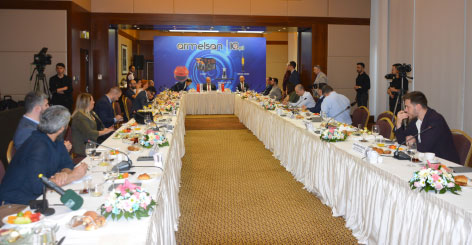
Chairman of the Board of ARMELSAN Yetkin KARAKAŞ, Director of Project Management Erkan HELVACILAR, and Head of Corporate Communications & International Business Development Erdem TÜMDAĞ also attended the press conference where ARMELSAN President Can Emre BAKIM made a comprehensive presentation on how they have progressed in their journey so far, what products they have brought to our country and how they will proceed in the coming period.
ARMELSAN President Can Emre BAKIM, who defined ARMELSAN as a "young and dynamic company established in 2012", summarized the primary purpose of the company as "We are a team of engineers specialized in underwater acoustic technology and together with our solution partners, we want to end the foreign dependency of our Naval Forces in underwater acoustic systems." Explaining that they first developed sonar systems in line with this goal, but after the developments in both remote-controlled devices and autonomous systems in the world in the last 3 years, they started working on remote-controlled underwater vehicles and then underwater autonomous systems. Can Emre BAKIM said that ARMELSAN employs 45 personnel (primarily engineers) and has premises in Ankara (in Hacettepe Technopark) and Istanbul (a new R&D Center with an indoor area of 2,500m2 is being established at Teknopark Istanbul, its official opening is scheduled for September). Stating that ARMELSAN's turnover, which has seen 10-fold growth in 10 years, will continue to grow by increasing in the coming years, BAKIM emphasized that the company allocates approximately 30% of its turnover to R&D every year.
Noting that ARMELSAN, whose main purpose is to develop underwater acoustic systems to meet the needs of the Turkish Naval Forces, carries out more than 10 projects in this context with the Presidency of Defense Industries, BAKIM stated that ARMELSAN's products in underwater acoustic systems include the ORKUN-2053 Dipping Sonar, NUSRAT-1915 Mine Hunting Sonar, MELİS-2071 Anti-Submarine Warfare Sonar, ARAS-2023 Diver Detection Sonar, DÜFAS (Low-Frequency Active Sonar), and SoPeM (Sonar Performance Modeling) Software. Underlining that ARMELSAN has transferred the knowledge and experience gained on the military side to the civilian side through its cooperation with the Turkish Petroleum Corporation (TPAO), BAKIM said: "We have supported Turkish Petroleum for more than a year in underwater drilling activities. In this context, we have also produced our KAŞİF Work Class Remotely Operated Vehicle (ROV). Besides production, we also operate these robots (Editor's Note: ARMELSAN cooperates with HOYTEM Company in both the development and production of the KAŞİF ROV and its operation). Two of them are currently active in the Black Sea, operating at depths of 1,100-1,200 meters right now. KAŞİF-1 has been operational for approximately 10,000 hours. KAŞIF-2 also performed over 5,000 hours in the Black Sea. We produced KAŞIF-1 with a 53% locality rate. It can operate at depths of up to 3,000 meters. It looks small, but it's actually a 3.5-ton vehicle. It is 2 meters high and 3 meters long and has been developed with new generation technology. This is a hybrid system. So, what does hybrid technology mean? The thrusters are all electric, brushless DC motors. Let me tell you the advantages. It has very low downtimes, lower maintenance costs, and shorter maintenance times. In this context, KAŞIF holds Türkiye's record. It has operated at 1,200 meters for 12 days without leaving the water. This is a serious capability. Right now, we are producing our 3rd robot (KAŞIF-3) for our new drilling ship COBALT EXPLORER which will operate in the Mediterranean (the 4th ship was later named Abdulhamid Han). We aim to complete its configuration in the next 1-2 months and integrate it into our new drill ship by the end of July. In KAŞIF-3, we also aim to increase the domestic production rate from 53% to 70%… As you know, currently, the ship FATIH digs wells while the KANUNI drilling ship prepares the wells for production (Editor's Note: the daily operating cost of each drill rig is announced as US$500,000). The next step is to check whether the pipes are correctly placed after the pipeline is laid. After everything is completed, the pipeline is regularly checked, and the necessary repairs are made. Underwater robots will do all these operations for the next 30-40 days. Therefore, we hope to produce underwater robots up to 4, 5, 6, 7, 10, or even 20 underwater robots in the future. Our next goal is to produce autonomous underwater vehicles (AUV) because it is a product that has profound implications for both the military and civilian areas. While the pipelines are being laid, you cannot control every point at the same time; it will be extremely costly. However, if you have an autonomous underwater vehicle, you can automatically scan/check up to 50 km with proper battery modules in approximately one and a half to two days. We aim to produce autonomous underwater vehicles with this capability. This capability also provides a significant advantage in naval mine warfare. Possible threats can be examined first, and then the data collected can be re-evaluated with a remotely controlled autonomous underwater vehicle (AUV) without sending your mine-hunting vessel. Therefore, these systems can be used in both military and civilian fields."
During my meeting with ARMELSAN President Can Emre BAKIM at DIMDEX 2022 Fair, he said the following about ARMELSAN's business potential in Qatar: "There is a demand and interest for Diver Detection systems. As you know, Barzan is the biggest group here. They want to use Turkish products in their security projects, so we had a preliminary meeting. We'll probably have a more detailed discussion tomorrow. They are interested in remote controlled underwater robots (ROVs), but this is a slightly shallower environment; the maximum depth is 100m. So smaller robots will do their job. However, I believe Qatar will be an important market, especially for unmanned surface vehicles."
In his presentation, ARMELSAN President BAKIM also shared information about the foreign companies they cooperate with and the products they work on: "We also represent some foreign companies in Türkiye and the region, which are manufacturers of the products we call RAHAT products. In this context, we have been representing side-scan sonar manufacturer KLEIN, the company that invented it, for about 10 years. We have delivered systems with different features to our Navy. ALERON produces hydraulic manipulators (robot arms) used by our underwater robot. JFD is actually a large holding with different companies (8 separate companies) in different countries. We have been the business partner of JFD both in Türkiye and in the region since 2019. The company has Submarine Rescue Vehicles (SRV), Self-Propelled Hyperbaric Lifeboats (it can accommodate 24 saturation divers for up to 72 hours at a maximum pressure of 50 bar), and SEAL Delivery Vehicles (SDV), which can go both above and underwater (it can transport 6+2 combat-equipped SEALs, has a speed of 30 knots surfaced and 4 knots submerged and can be air-dropped from a plane). The most valuable product of this company for us is the SRV. Because, as you know, our Navy currently operates the Submarine Rescue Mother Ship (TCG Alemdar) and Submarine Rescue and Towing Ships (TCG Işın and TCG Akın). We currently have 12 submarines. In the future, this number will reach 18 and even more with MİLDEN. Türkiye's current capabilities aim to rescue personnel in an accident up to 80m. The SRV, which can be used up to sea state 6, is actually a mini-submarine with a capacity of 16+1 personnel and can go down to approximately 650m. Within the framework of the protocol that we signed with this company, we will, in fact, localize the product as much as possible, and we will be able to bring the technology here to our country. Hopefully, in the future, by completing the missing piece of the puzzle behind the TCG Alemdar (A-582) Submarine Rescue Mother Ship (MoShip), we want to provide a safer environment for our country, at least for our submariners.
In this way, the 1940s product Submarine Rescue Bell (McCann Submarine Rescue Chamber) in the Turkish Naval Forces inventory, which has a limited operating depth and number of divers, will be replaced with a new generation rescue vehicle. The McCann Submarine Rescue Bell, which can operate up to 207 meters and carry 8 personnel in total, including two operators, can dock with the submarine with an internal pressure of 1 atmosphere and recover the submarine personnel to the surface.
ARMELSAN's Solutions in Underwater Acoustic Systems
ARMELSAN has developed and continues to develop solutions with different capabilities against divers, submarines, and mines, which constitute the main underwater threats. The company also develops customized software such as SoPeM (Sonar Performance Modeling) Software (available on both the ARAS-2023 and FERSAH sonar) that runs on these products due to embargoes imposed from abroad. ARMELSAN President BAKIM shared the following information regarding underwater acoustic systems developed by ARMELSAN:
ARAS-2023 Diver Detection Sonar
Introducing the ARAS-2023 Diver Detection Sonar, which consists of three main units: Dry-End, Wet-End, and the Operator Console, as the first portable diver detection sonar developed in our country, Can Emre BAKIM summarized the purpose of the sonar as being "to detect divers with Open-Circuit and Closed-Circuit breathing systems or underwater delivery vehicles, and automatically classify them and provide the necessary feedback to a command-and-control center." (However, the 'Echorium' Diver Detection Sonar, which began development by KOÇ SAVUNMA in 2008 with the support of TÜBİTAK Technology and Innovation Grant Programs [TEYDEB], was put into service first at TÜPRAŞ oil refineries and then at a military facility following its sea trials). Explaining that the ARAS-2023 Diver Detection Sonar Wet-End can be fixed underwater or lowered into the water through a crane, depending on the concept of use, BAKIM noted that the signals coming from underwater are processed via the Dry-End and displayed on the Operator Console. Noting that the ARAS-2023 Diver Detection Sonar can be used to protect surface platforms and military bases such as Aksaz and Foça and prevent infiltration attempts by divers at port entrances or underwater threats against the Akkuyu Nuclear Power Plant, another strategically important facility on the seashore, BAKIM shared the video of the demonstration they performed with the product in the Gebze region.
Stating that the Gebze region was especially chosen because of the heavy ship traffic, BAKIM said: "Ships leave wakes behind. They wanted us to do this demo under the most challenging conditions with maximum noise caused by the ship traffic, and as you can see, the system automatically detected the diver from 250 meters. Information about the detected diver is displayed in the upper right corner. Detection distance and time are automatically generated in the upper right box. But there is a question here. Yes, we have a diver, but how do you distinguish it from fish or, for example, the wake of a boat around 800 meters away? Fish can suddenly change angle and depth, but the diver has no such ability. We use special algorithms. As you can see, a boat actually just passed by, but it didn't trigger the alarm. We made similar demos to both our Navy and other security forces. Another question that comes to mind is what happens when two divers swim side by side. Can the ARAS-2023 distinguish them? We have performed detailed demos for all these different scenarios, and we can say that we have a satisfied customer base.
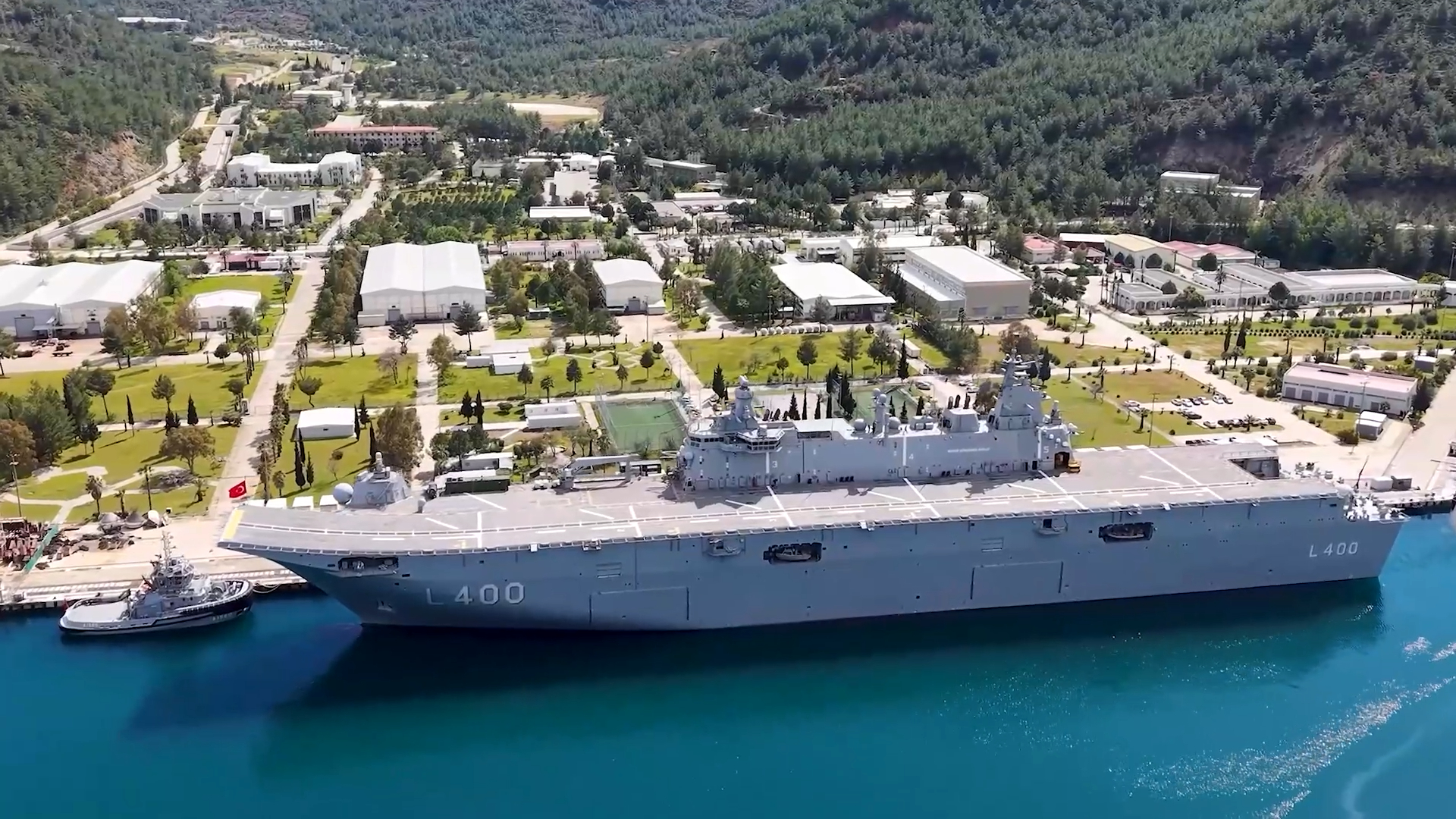
Stating that there will be two ARAS-2023 Diver Detection Sonars on the TCG Anadolu Multi-Purpose Amphibious Assault Ship, BAKIM said that both systems had been successfully delivered, and both the Factory Acceptance and Harbor Acceptance tests have been completed. Explaining that a total of 4 ARAS-2023 will be installed to 4 BARABAROS Class Frigates (one per ship) under the Mid-Life Upgrade (MLU) Project, and the acceptance activities of the ARAS-2023 produced for the TCG Istanbul Frigate will be carried out in the coming months, BAKIM said: "Probably, one system will be added to our DIMDEG Ship. Under the contract, we will deliver 3 + 4 optional systems to our MILGEM 6, 7, and 8 Frigates. We also have a high expectation to sign a contract in the coming months for some of our critical facilities (Editor's Note: A defense system consisting of diver detection sonars and radars is on the agenda for a total of 8 critical facilities, 5 of which are military bases, including Aksaz and Foça). Probably, we will also protect the Akkuyu Nuclear Power Plant against underwater threats with the ARAS-2023 Diver Detection Sonar. As you all know, the world is now heading towards unmanned vehicles. The diver detection sonar to be used in an unmanned surface vehicle for the first time in our country is currently in production, and we will be showing a demo of it by the end of the year. Of course, our business development activities also continue in parallel. We will probably be exporting the ARAS-2023 to one of our friendly and brotherly countries this year. We are now at the final stage. Apart from this, I would like to add that the local production rate of our products, which I will talk about later, is over 90%. In the ARAS-2023, all electronic cards and software were completely developed by ARMELSAN. We have close to a 95% local production rate."
(Editor's Note: Both the ARAS-2023 Diver Detection Sonar, ORKUN-2053 Dipping Sonar, and the Sonobuoy Launchers will be integrated into the armed unmanned surface vessel (AUSV) Anti-submarine warfare (ASW) model, developed in cooperation with SEFINE-ASELSAN, and will be ready for delivery by the end of 2022). A SEFINE Shipyard representative, whom I had the opportunity to meet during the DIMDEX 2022 Exhibition, said: "We are building two Unmanned Surface Vehicle prototypes with aluminum hulls as Concept Development Prototypes, with partial support from the Presidency of Defense Industries as well as with our own internal R&D funds. One of them is the Anti-Surface Warfare (ASuW) model, and the other is the Anti-Submarine Warfare (ASW) model. The first one will be completed by the end of 2022 and ready for use by our Navy. Our second boat will demonstrate its operational capabilities by the end of 2022 and be delivered to our Naval Forces in June 2023. In other words, we will deliver the prototypes with a phase difference of 6 months."
MELIS-2071 (FERSAH) Anti-Submarine Warfare Sonar
Pointing out that the Presidency of Defense Industries (SSB) and the Turkish Naval Forces decided to initiate a modernization program for the Hull Mounted Anti-Submarine Sonars, and the BARBAROS MLU Project was selected as the first application, BAKIM stated that under the tender opened by the SSB in 2018, the ASELSAN-ARMELSAN Partnership was awarded as the supplier of Hull Mounted Sonar systems following technical and administrative evaluations. In his speech, BAKIM shared the following information about the MELIS-2071 (ASELSAN FERSAH) Anti-Submarine Warfare Sonar: "First of all, we signed a contract for the BARBAROS Class Frigates, and then for the 5th MILGEM I-Class Frigate. Factory Acceptance Tests (FAT) of two systems have now been completed (June 2021 for BARBAROS MLU TCG Oruçreis, January 2022 for MILGEM TCG Istanbul). As part of our contract, which started in July 2018 for the BARBAROS Class, we plan to conduct the first Sea Acceptance Tests (SAT) in September this year unless there is a change in the ship integration calendar. As ARMELSAN, we have developed the Power Amplifier Unit, Power Supplies, Operator Console, and the software running on the console. Actually, I have to point out that the 19-inch high 8U unit on the right side that you see here is an electronic unit that generates about 60 kilowatts of energy into the water. Since it has very high efficiency (over 95%), it can operate in all military conditions without overheating. This has the following technological benefits: in the last 5 years, sonar systems have always detected the target by creating a pulse of sound (pulse active), often called a "ping," and then listening for reflections (echo) of the pulse. But there are systems called 'continuous active' in the world. The idea here is to transmit continuously and perform measurements using short segments of the transmission with different types of arrays. This allows you to detect targets at much longer distances and further reduce false alarms by sending more powerful pulses to the water. In fact, one of the new technologies introduced to our country are these high-efficiency electronics. We have already used this technology in our next products. For example, a similar architecture was used in the Low-Frequency Active Sonar DÜFAS. In this way, we provide our Navy with a detection distance of over 50 km for a submarine."
NUSRAT-1915 Mine Hunting Sonar
Noting that when they examined the structure of the Turkish Naval Forces, they came across two products that are highly dependent on foreign sources, BAKIM stated that the first of these is the Mine Hunting Sonar and the other is the Helicopter Dipping Sonar. In this context, he emphasized that they started the NUSRAT-1915 Mine Hunting Sonar Project in 2018 with the SSB and debuted the product at the IDEF '21 Fair.
Pointing out that there are 2 types of mine hunters, ENGIN and AYDIN Classes, in the inventory of the Turkish Naval Forces, BAKIM said, "It is considered that the ENGIN Classes are now at the end of their service life, but we hope to integrate our newly developed hull-mounted NUSRAT-1915 into one of our mine hunting vessels in the near future. If we can do this, we consider that we can extend the service life of the ships for at least another 10 years." BAKIM shared the following information about the NUSRAT-1915 Mine Hunting Sonar, which a foreign country is interested in: "We developed this sonar in a hull-mounted structure. The effective range of naval mines is approximately 80m. That's why we produced a hull-mounted sonar system, as the variable-depth system creates operational difficulties. This sonar has both detection and classification modes. In other words, when detecting a mine or mine-like object with a 100kHz array, another 400kHz array is used to classify the suspected object. Our aim here is to detect and classify both moored and bottom mines. We have an array structure in our product, as you can see on the slide here. This array has a winch mechanism so that it can be retrieved inside the ship while the vessel is underway. Also, this winch mechanism is designed to stabilize our array while the ship rolls, ensuring that it is not affected by the sea condition. The DICING manufacturing process, which is a first in Türkiye, was used in the production of this array. In legacy sonar products, piezoelectric materials (crystals that make sound and vibrate under the influence of electrical energy) are usually stacked on top of each other, followed by electrodes, and then an array is created from them. But as you can see in this new method, a composite material is cut appropriately, and epoxy is laid between them. So, what does this give us, unlike conventional arrays? The Mine Hunting Sonar is essentially an imaging sonar. The higher the resolution you have, clearer and more accurate results can be obtained both for the computer-aided decision mechanism and operators. Therefore, if we look at the resolution on both the "X" axis and the "Y" axis, your resolution on the "X" axis determines your array length, which can be extended within the limits of the ship. Currently, our array length is 2.4 meters. But the resolution on the "Y" axis is all about the bandwidth of your array. With the DICING process, we achieve a bandwidth of approximately 1.5-2 times compared to standard sensors. For example, our current array can listen from 1kHz to around 450kHz. In this way, we achieve a significant increase in resolution in the "Y" axis. When we look at the companies producing imaging sonar, such as the Side-Scan Sonar or Synthetic Aperture Sonar, we see that all of them have developed or aim to develop these technologies. Therefore, one of the new technologies we have brought to our country are these arrays produced with the DICING Method."
ORKUN-2053 Dipping Sonar
Underlining that the design studies for the ORKUN-2053 Dipping Sonar have been completed and the production phase has been started, BAKIM said that integration studies will begin at the end of the summer months. Noting that they started a second project in 2019-2020 when they saw that the remotely controlled Unmanned Surface Vehicles started to use dipping sonars for ASW operations, BAKIM said, "So we are currently developing a dipping sonar for both helicopters and Unmanned Surface Vehicles." BAKIM summarized the advantages of Unmanned Surface Vehicles over ASW Helicopters: "Since helicopters can stay in the air for a limited amount of time (endurance), you can dip sonar in 2 different locations at most, then you have to return to the ship. But USVs do not have such a limitation. Since their power capacity is much higher, they can perform sonar operations in that area for a day or two. In addition, they will not be detected by submarines as easily as ships since they have a lower acoustic and magnetic signature."
Stating that different companies have developed AUSV solutions and what makes these platforms valuable are their payloads, BAKIM emphasized that, as ARMELSAN, they are trying to position themselves as a company that provides payloads for AUSV manufacturers. "In this context, we carry out our first project for the Armed Unmanned Surface Vehicle of the ASELSAN-ARMELSAN Business Partnership with the SSB (Editor's Note: the SSB recently signed an agreement to procure one of each USV solution developed by ASELSAN/SEFINE, METEKSAN DEFENSE/ARES, and Havelsan/YONCA-ONUK, and deliveries are expected within the last quarter of 2022). One of our partners is SEFINE Shipyard. By the end of the year, we aim to integrate both the Diver Detection Sonar and the Helicopter Dipping Sonar on our AUSV, complete the tests and demonstrate it. As I said, unmanned surface vehicles have several advantages but also many complications. For example, while you use a single winch motor on a helicopter, you need to switch to a dual motor on an unmanned vehicle for reliability. While the operator can always intervene in the helicopter when there is a problem in the winding mechanism in case of an emergency, you need to design much more precise winding mechanisms in unmanned surface vehicles. All of these have been developed by ARMELSAN and are currently in production."
According to the information I received during my meeting with ARMELSAN President Can Emre BAKIM at the DIMDEX 2022 Fair, the Wet-End of the ORKUN-2053 Dipping Sonar, on which the transmitter and receiver are located, can operate at a depth of 400m, weighs approximately 100kg and is 1.7m - 1.8m long (but the weight increases when submerged). The DS-100 Low-Frequency Dipping Sonar (HELRAS) in the Turkish Naval Forces inventory operates at a frequency of 1.38kHz, and its Wet-End weighs 155kg. The Wet-End comprises a vertical transmit array with a length of 5.2 meters and a receive array of eight hydraulically driven arms that expand to a diameter of 2.6 meters when deployed. On the other hand, the ORKUN-2053 has a 1.8 meter wide array since its operating frequency is 2.5-3 times that of HELRAS. In the ORKUN-2053, the data collected by the pneumatically controlled 24-arm receive array is processed in the electronic units in the center, then sent up (to the helicopter) via a fiber optic cable and is displayed on the Operator Console.
The ORKUN-2053 Dipping Sonar will be used in the towed configuration on the USV built by SEFINE Shipyard. Similar to an ASW Helicopter that hovers while operating the sonar, the USV will dip its sonar and listen at a fixed point when a submarine threat is suspected. If it cannot detect a threat, the USV will retract the sonar and move to another location. Preliminary negotiations have been started between ARMELSAN and TAI to use the ORKUN-2053 Dipping Sonar in the naval version of the T625 GÖKBEY Helicopter. In this context, it is considered that a smaller version of ORKUN-2053 can be used depending on the carrying capacity of GÖKBEY, which has a take-off weight of 6 tons (e.g., a version with 2 ceramic acoustic transmitters instead of 3 ceramic structure arrays). The ORKUN-2053 Dipping Sonar is also expected to be used in TAI's 10-ton Utility Helicopter T925. On the other hand, ARMELSAN is expected to develop a more compact, lighter, and less powerful model of ORKUN-2053 for Unmanned Helicopters.
Low-Frequency Active Sonar DÜFAS
In his presentation, BAKIM also mentioned the DÜFAS (Low-Frequency Active Sonar) Project, which they initiated under the coordination of the Defense Industry Presidency in cooperation with ASELSAN. He noted that they have developed a low-frequency towed active sonar array and that sea tests have already been carried out with the delivered prototype unit. "In fact, a different number of sensors can be used depending on the size of the ship. Like, one sensor on small vessels or four sensors on large frigates." Explaining that ASELSAN developed both the sensor unit and the outer shell, and ARMELSAN developed all the electronics under the project, BAKIM said: "Our second prototype unit is currently in the production phase. This product will provide a significant capability increase, especially for our ships operating in wider areas such as the Mediterranean and the Black Sea. Because the depth of the standard hull-mounted sonar cannot be changed, the coverage is limited to underwater physics. Therefore, the detection range is generally 10,000-12,000 yards maximum. However, these towed sonar systems can detect a submarine at distances of 50 km or even more if you find the correct layer."
At the DIMDEX 2022 Exhibition, I learned that the DÜFAS System, developed by ASELSAN and its solution partner ARMELSAN, was planned to be integrated on a GABYA Class frigate and to undergo a series of sea trials in 2022. Accordingly, the AN/SLQ-25 Nixie Torpedo Defense System located at the stern of a GABYA Class frigate will be dismantled and replaced with passive (left, HIZIR-TCMS) and active (right, DÜFAS) sonar arrays towed by two separate winches in line with the requirements of the TNFC. DÜFAS will be operated in conjunction with the HIZIR-TCMS (Torpedo Countermeasure System) towed passive array sonar. However, according to the latest information, the testing process could be delayed to next year.
On August 17, 2021, a protocol was signed between the Presidency of Defense Industries (SSB), ASELSAN, and ARMELSAN, at the 15th International Defense Industry Fair IDEF '21 to develop a new generation multi-static sonar suite to be used in TF-2000 Air Defense Warfare Destroyers. Under this contract, ARMELSAN started an R&D study for the development of multi-static sonar capability by using its own resources. Regarding its multi-static sonar capability, BAKIM said: "Conventional sonars transmit and receive using a single active signal source and receiver (mono-static), so there is limited coverage, but if you have multiple active signal sources and receivers operating on the same frequency, you can get a much wider range. We are currently developing the first application of this in Türkiye together with ASELSAN. We will probably be in the TF-2000 with our product."
However, I have learned that the responsibility of developing the Multi-static Sonar Suite for TF-2000 AAW (Anti-Air Warfare) Destroyers was transferred from the SSB to the MSB (Ministry of National Defense), and in this context, the TF-2000 BOSS System Project has been initiated under the coordination of TÜİBTAK MAM with ASFAT as the main contractor. Under the project, DÜFAS will be acquired as an off-the-shelf product and integrated into the BOSS system. It is stated that since the construction of the TF-2000 AAW Destroyers and the Multi-Static Sonar Suite has been passed to the Ministry of National Defense and ASFAT, the serial production of the HISAR Class Offshore Patrol Vessels (OPV) has transferred to the SSB (10+ ships in total. The first two ships are still under construction by ASFAT).
SoPeM (Sonar Performance Modeling) Software
Emphasizing that the performance of systems changes according to underwater physics, BAKIM said: "For example, there are significant range differences between tests at night and day or summer and winter. But of course, ship captains must be aware of these conditions during an operation. Pointing out that performance modeling software is needed for this information, BAKIM explained that a foreign-origin software was used before, but this product was not sold to Türkiye due to the recent embargoes even though they did not officially declare it. "In fact, propagation modeling is a complex mathematical model. We developed it "in-house" with our own resources and then offered this to our Navy. We even asked if they require extra features. We are now delivering our product to our Naval Forces. It is primarily used in ARES-2023. The FERSAH Hull Mounted Sonar, which we delivered together with ASELSAN, also uses this product." BAKIM also stated that they continue to work on analyzing how the coverage and ranges will change in case of multi-static operation to the SoPeM (Sonar Performance Modeling) Software. BAKIM said: "Probably by the end of this year, we will add the multi-static feature to our product. As far as I know, there are one or two Sonar Performance Modeling Software in the world with multi-static features. In this sense, we will have a significant technological contribution to our country."
After his comprehensive presentation, ARMELSAN President Can Emre BAKIM answered the questions from the press about ARMELSAN and its ongoing projects in the question-and-answer part of the event. ARMELSAN President Can Emre BAKIM responded to my questions about whether they would develop a multi-static sonobuoy under the TF-2000 AAW Sonar Suite Project and whether the underwater acoustic systems, which were bought from Kongsberg Company under the AFSUDES Project and installed at Aksaz and Foça Naval Bases, would be replaced with domestic products.
"First of all, thank you very much for your questions, very valuable questions. Let me start with the second question. As you stated, some of the active phase elements under the AFSUDES Project are, unfortunately, foreign systems that do not work. Our Navy has expanded the scope a little more here. They are conducting a study for not only 2 ports but also 5 locations. It will not be a stand-alone system but a comprehensive system that includes additional sensors such as surface radars, as well as Diver Detection Sonars. In this context, as you have stated, we are working with ASELSAN. We did not include them in the presentation because they are medium-term projects. But as you have said, we will soon save our country from foreign systems, especially those that do not work. If I go back to your first question, we, as ARMELSAN, have a workforce of 45 people. That's why we focus on specific areas instead of distributing our personnel to every project at the same time. ASELSAN has studies on sonobuoy systems. We have no intention of doing repeated studies. We have good cooperation with ASELSAN. That's why we're considering a multi-static sonar suite that can operate together with sonobuoys. We even aim to add this capability to Unmanned Surface Vehicles. Because when performing an ASW operation, you can increase your operation area not only with a dipping sonar but also with a sonobuoy. That's why we carry out this study together with ASELSAN. Launching a sonobuoy from a USV will have the following advantage: If you examine sonobuoys, almost half of their body actually consists of a parachute. When you deploy it from a surface vessel instead of an airplane or helicopter, you will not need a parachute, so you can fill the extra space with additional batteries. In this way, sonobuoys will be able to function much longer. So, these would be a significant force multiplier."