ARMELSAN, the Silent Power in the Depths!
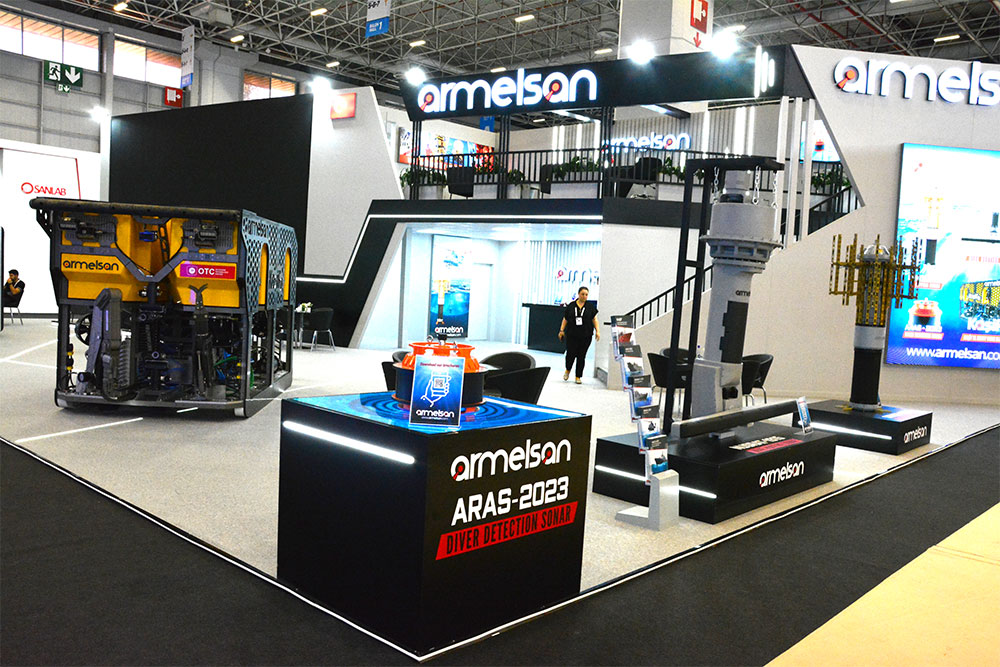
Founded in 2012 by a small team with the goal of “ending the Turkish Naval Forces’ dependence on foreign suppliers for underwater acoustic systems,” ARMELSAN Defence Technologies has since become one of Türkiye’s leading defence technology companies. At IDEF ‘25, ARMELSAN showcased its underwater acoustic systems and KAŞİF X-Large Work-Class Remotely Operated Underwater Vehicles (ROVs) at booth 1-C07.
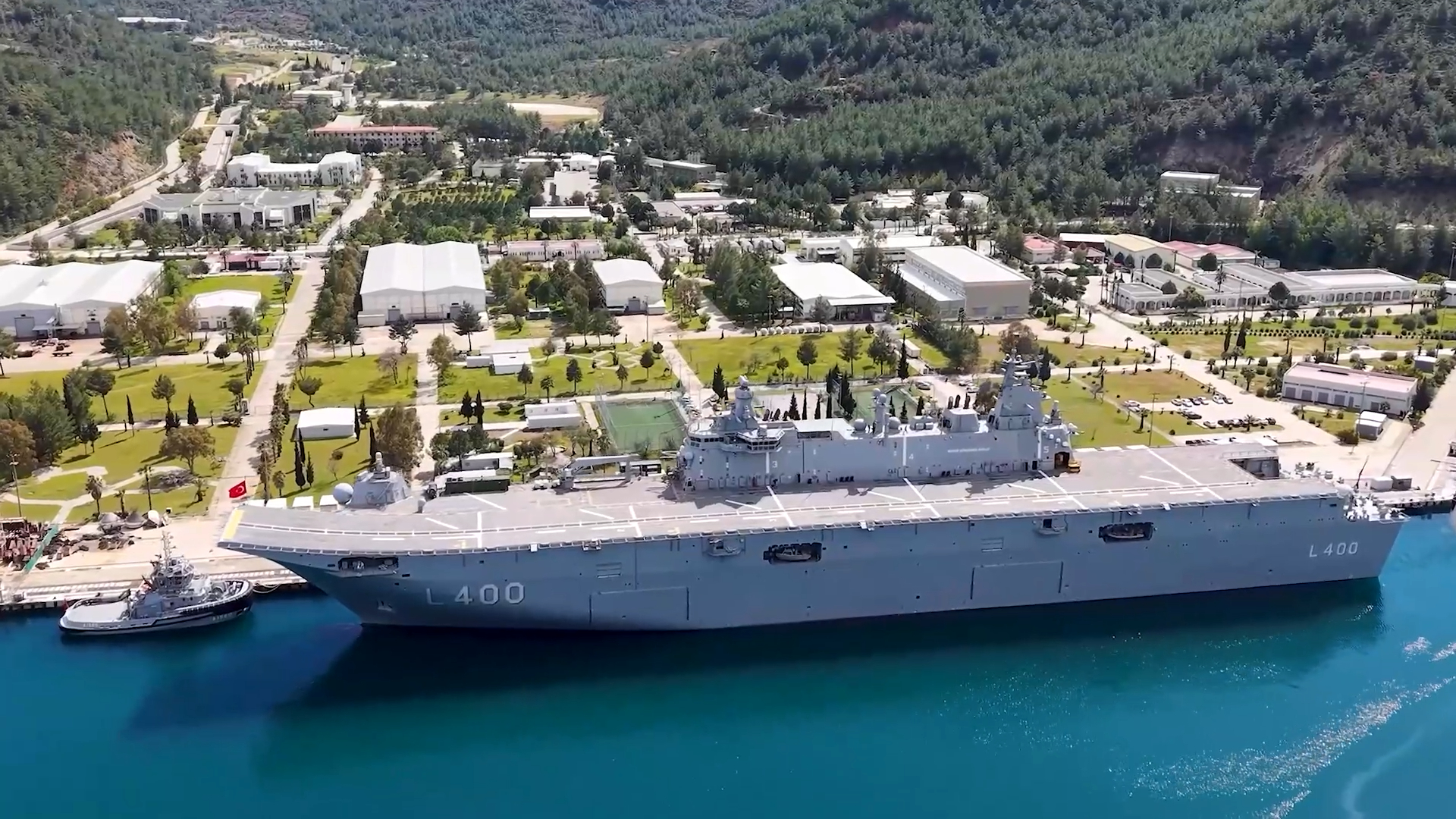
At the exhibition, ARMELSAN highlighted Türkiye’s first indigenous dipping sonar, the ORKUN-2053 Helicopter Dipping Sonar. Prior to the event, the company had integrated the towed version of this sonar onto the MİR Unmanned Surface Vehicle (USV)—developed in cooperation with SEFİNE Shipyard and ASELSAN—and commenced the initial sea trials. The MİR USV also features integration of the ARAS-2023 Diver Detection Sonar and Sonobuoy Launchers. Developed by ARMELSAN, the ORKUN-2053 operates in the 3–5 kHz frequency range, can reach depths of 500+ meters, and weighs 100 kilograms. Within the scope of cooperation with the Turkish Naval Forces Command (TNFC), the system will be installed on an AB212 helicopter for a series of test activities. The ARAS-2023 Diver Detection Sonar, which has already been integrated into the TCG Anadolu LHD and several surface platforms in the TNFC inventory—including the under-construction MİLGEM 6–12 İSTİF-Class Frigates—was also among the underwater acoustic systems presented at the ARMELSAN booth with scale models. Other showcased systems included the MELİS-2071 Hull-Mounted Sonar System (FERSAH, developed in cooperation with ASELSAN)—selected for the BARBAROS-Class Frigate Mid-Life Upgrade (MLU) and MİLGEM İSTİF-Class Frigates—and the NUSRET-1915 Mine Countermeasure Sonar System, which has a hull-mounted configuration. Another highlight at the booth was the KAŞİF X-Large, the largest member of the KAŞİF Work-Class ROV family, making its debut at this exhibition. ARMELSAN’s KAŞİF Work-Class ROV has already proven itself as a domestically developed underwater robot utilized on Turkish Petroleum Corporation’s (TPAO) FATİH, Kanuni ve Abdülhamit Han Drilling Ships in the Sakarya Gas Field of the Black Sea.
During our visit to the booth, we had the opportunity to conduct a brief interview with Can Emre BAKIM, President & CEO of ARMELSAN Defence Technologies, regarding the products on display and the company’s ongoing projects.
Defence Turkey: To begin our interview, could you briefly tell us about ARMELSAN’s participation in IDEF ‘25 and the products you are exhibiting?
Can Emre BAKIM: Since our establishment in 2012, ARMELSAN has been developing systems designed to end foreign dependency in underwater acoustic technologies. In this context, we have developed various products with different features and configurations capable of detecting divers, submarines, and naval mines. Of course, there is also an undeniable global trend toward unmanned and autonomous systems. We are currently working on versions of our products that can be integrated into these platforms. The first example of this is being showcased at IDEF ‘25 — a Dipping Sonar and a Diver Detection Sonar operating on the MİR Unmanned Surface Vehicle (USV).
In the coming period, we aim to integrate our other products into unmanned platforms as well. Hopefully, by the next IDEF, we will be presenting those systems, too. Additionally, we are exhibiting the KAŞİF X-Large for the first time at this fair. Compared to the previous KAŞİF model, the KAŞİF X-Large features significantly enhanced hydraulic systems and higher motor power. In fact, the KAŞİF X-Large ranks among the most powerful hybrid ROVs in the world. For example, while the standard KAŞİF model has four horizontal and three vertical thrusters, the KAŞİF X-Large is equipped with four thrusters on both axes — all high-power AC motors — resulting in a much stronger ROV.
Defence Turkey: Has there also been an increase in its operational depth capability?
Can Emre BAKIM: Yes, as you mentioned, we have made an update in that regard as well. You may recall that the operational depth in the Sakarya Gas Field was around 2,200 meters. Therefore, our earlier ROVs were designed to reach 3,000 meters. However, as we have seen from the statements of our Minister of Energy, Türkiye is expanding its operations abroad and is now set to possess the fourth-largest drilling fleet in the world with the arrival of two new drilling ships. These vessels will be operating in various regions such as the Mediterranean and even Somalia, where water depths can exceed 3,000 meters and approach 3,500 meters. Accordingly, we have designed the KAŞİF X-Large to operate at depths of up to 4,000 meters. I believe this is where the importance of domestic and national companies truly comes to light — because we can rapidly reconfigure and adapt our products according to the specific needs of our government and end users.
Defence Turkey: The product you are exhibiting here is the fourth member in the KAŞİF ROV family, but the first of the KAŞİF X-Large variant, correct?
Can Emre BAKIM:That’s correct — this is the first X-Large unit. We plan to increase their numbers in the near future since there is considerable demand from abroad, as well as major initiatives from our Ministry of Energy. Therefore, we expect the number of KAŞİF units to grow significantly. Beyond the oil and gas industry, we are now also targeting the offshore wind farm sector for the KAŞİF series. In the past, heavy work-class ROVs were used almost exclusively in oil and gas — around 90% of the market — but that figure has now dropped below 50%, as offshore wind farms are rapidly becoming a major global sector. This presents significant export potential for us. As you know, we do not only manufacture the product but also provide operational services. Our goal now is to offer these same services to international clients as well. Of course, as much as the domestic and national nature of our products matters, having domestic and national ROV pilots is now equally important.
Defence Turkey: The personnel issue is indeed crucial because, as far as I know, operators were previously hired from foreign companies at very high rates…
Can Emre BAKIM: Yes, absolutely. Currently, nearly half of our active ROV pilots are Turkish, and we aim to further increase that proportion.
Defence Turkey: For example, UAV pilots have a two-hour operational limit due to eye fatigue and concentration issues. Therefore, for a 15-hour BAYRAKTAR TB2 Armed UAV mission, nine personnel are required in total — including three pilots, four technicians, and two mission coordinators. Is there a similar time restriction for ROV pilots?
Can Emre BAKIM: In our case, the operation is a 24-hour continuous process. Hence, we work two 12-hour shifts. Each shift consists of three people — two pilots and one supervisor. The personnel rotate every 28 days, so to continuously operate a single ROV, you need at least 12 personnel, though in practice this number rises to 15 or 16 to account for possible illnesses or leave periods.
Defence Turkey: There is a significant modernization and sonar procurement initiative underway for the Minehunter vessels in the Turkish Naval Forces inventory. Within this framework, ASELSAN has been appointed as the main contractor for the sonar system to be used on the Next-Generation Minehunter Vessels, the construction of which has already begun. (It is also reported that ASELSAN and Thales UK are in talks regarding the 2093 VDS sonar currently fitted on the AYDIN-Class Minehunter Vessels.) Meanwhile, steps are being taken to resolve the motherboard issues experienced in the 2093 sonar systems of the AYDIN-Class ships—since the obsolescence of certain cards has caused maintenance and spare parts supply problems. (Work is ongoing to refurbish and sustain 16 motherboards from three of the six vessels.) Additionally, efforts are underway to upgrade the sonar’s current medium-frequency operating band to a wideband configuration. On the other hand, it was previously mentioned that ARMELSAN’s NUSRAT-1915 Mine Hunting Sonar would be integrated into the veteran ENGİN-Class Minehunter Vessels. Has there been any progress on this matter?
Can Emre BAKIM: Within the framework of the protocol we signed with the Mine Warfare Group Command, we will be conducting field tests of our NUSRAT-1915 Minehunting Sonar, which is planned to be integrated into the ENGİN-Class vessels in the future. Our goal is to further enhance the system based on its field performance and feedback received from the Turkish Naval Forces’ operational experience. Training the system is also an essential aspect, especially considering that artificial intelligence is now a part of our reality. Of course, in our systems, the final decision will always rest with the operator, but we have integrated an AI-based decision support module to assist them. This module needs to be trained using test targets. Therefore, our initial aim is to train the system with various types of mines and underwater objects. Later, if deemed appropriate by the Turkish Naval Forces, the system will be tested on the platform, and if required, integrated during the modernization phase of the vessels.
Defence Turkey: When do you foresee the first integration of the NUSRAT-1915 Sonar onto an ENGİN-Class Minehunter Vessel?
Can Emre BAKIM: This will take place once the Naval Forces are fully satisfied with the product’s performance. However, our goal is to initiate this process within 2026.
Defence Turkey: You have already integrated the ORKUN-2053 Dipping Sonar onto the MİR USV and completed its first sea trial. Is there a planned timeline for integration and testing on helicopters?
Can Emre BAKIM: We are currently carrying out a study with the Naval Air Command, similar to the one we conducted with the Mine Warfare Group Command. To be frank, our existing system is the first prototype of the Helicopter Dipping Sonar, while we also have another version designed for the USV. However, since helicopters have strict constraints in terms of weight and size, we are currently refining the system — shortening its length and focusing significantly on reducing its overall weight.
Defence Turkey: Will there also be a reduction in the antenna length?
Can Emre BAKIM:Yes, we are making certain adjustments to the antenna structure as well, based on the feedback we received from the Naval Forces. These additions are aimed at improving system performance. Beyond that, as I mentioned, our objective is to make the sonar more compact, lighter, and smaller in overall dimensions. Ideally, our goal is to provide a solution that could serve as a modernization kit for Sea Hawk helicopters.
Defence Turkey: Will it be a one-to-one replacement for the existing sonar, or will it require more extensive modifications?
Can Emre BAKIM: Our initial goal is to revise our system so that it can utilize the helicopter’s existing hoist & winch setup. We aim to replace only the underwater unit and the onboard electronics. In the following phase, we plan to transition to our own hoist & winch system. While we have extensive experience with ship integration and certification, helicopter certification is a completely different and more complex domain. Therefore, although our first step is to make minimal modifications to adapt the sonar, ultimately our objective is to implement the complete indigenous configuration.
Defence Turkey: Mr. Can, thank you for your time on behalf of our readers