ASELSAN`s Perspective on Naval Defense Systems, Products and Technologies
The global defense industry market size was approximately US$ 2 trillion in 2020. We observe that it increased due to cyclical developments and regional tensions, especially after 2013. Here, we see that military expenditures increased by 2.6%, especially from 2019 to 2020, despite the decrease in the Gross National Product of countries across the world. What I want to emphasize with this such noteworthy figure is that when compared with the 1990s, it rose more than three-fold in the Asia-Pacific region. It is not difficult to foresee that it will continue to increase in the upcoming period. In the second place, we see that the expenditures in the Middle East region are also increasing. Since the European and American regions are relatively dominated by the U.S. industry, although the main reason for the increase here is the expenditures of the U.S., we see that a relatively certain volume of defense expenditures continues in Europe. Now, if we look at the naval side, it is necessary to separately analyze it as sub-segments. In 2020, we see that the naval ship market reached US$ 57.8 billion. Upon examination of market analysis, especially that of Frost & Sullivan, in general, growth projections are upwards near 10% between 2022 and 2030, and this varies in sub-segments. For example, while growth of around 3% - 4% is expected in Naval Combat Systems, we see that the growth forecast for Unmanned Systems can be 25% annually. Therefore, I think it is important in terms of addressing the areas in which this sector may need to go. Generally, we can say there is substantial growth forecasted in all sub-segments.
When we look at the Turkish market, as illustrated in the SASAD report, the land systems side has the highest volume of turnover now and the naval systems side seems to have reached a turnover of US$ 673 million in 2020. Certainly, there are components for naval systems in other sub-segments such as missiles and maintenance-repair. It is observed that the business volume on the naval systems side has slightly decreased since 2018 due to the recent cyclical developments in security, land and military aviation. We anticipate that the volume will increase again with new platform projects in the upcoming period. When we look at market analysis, we see that various issues come to the fore, and I would like to highlight them separately. We can see that the multi-purpose platform concept, which can perform numerous tasks together, will gain significant importance in the coming period, especially instead of surface platforms that can perform single tasks. It calls attention to the fact that an important concept is that a platform can act as a network centric mother ship and carry out operations with unmanned platforms around it. New weapons, especially the electromagnetic rail gun, laser gun, hypersonic weapons can change the concept a little more. We can see such weapons have increased their importance a little further, especially in terms of point defense. We also observe this in market analysis reports. Modular architectures are still important, technological advancements are happening rapidly where we see that modularity is of great consequence. Automation and autonomy are observed to be an important concept in terms of both achieving unmanned systems and minimizing the need for personnel on board.
When we look at underwater platforms, the Air Independent Propulsion system is a subject that attracts our attention, especially in all the latest platforms. Again, silent running is also an important concept. It is important data for us showing that the new thrusters, which we call Rim-Driven Pump-Jets, will be used in the new submarines of the Chinese Navy and that submarines quieter than nuclear submarines are aimed to be achieved. We observe a trend towards this technology on such platforms, especially in the U.S. We see that this technology was used on small platforms in the last 10 years, and the fact that the removal of the shaft mechanism in submarines with this technology, the use of this area as an additional torpedo room or its transformation into a room where unmanned systems are used,
draws our attention as an important issue in the coming period. Low frequency multi-static operation is an important concept, a significant threat to submarines. In particular, the fact that surface ships are equipped with low-frequency multi-static capabilities poses a significant threat to the invisibility of submarines. In this sense, we can say that acoustic invisibility is one of the issues that draws attention. Again, unmanned autonomy seems to be one of the important topics in the coming period in submarines as it is in surface platforms.
With its strong and modern structure today, our Naval Forces Command has played quite a significant role both in our country’s defense and in the longest period of peace in our Republic's history. We anticipate it will maximize deterrence, especially with the platforms under construction and those to join the fleet soon. The concept of Blue Homeland has been a topical issue especially recently. Here, our Naval Forces undertake very critical duties in protecting the Blue Homeland, being a deterrent in the surrounding seas, protecting our rights and interests not only in our own seas, but also across the globe, contributing effectively to peace, and ensuring the security of offshore energy lines, especially in the recent period, and we see that this will continue increasingly. Therefore, we need to provide the advanced domestic and national war system solutions that our Navy will need in the coming period, both as a company and as a sector, in the most effective way. We need to continue to serve our Armed Forces at home and abroad, not only in peacetime but also in wartime. As ASELSAN, we have achieved this on many platforms in the recent period, and we are proud of that. To conclude, we believe that we need to achieve sustainable growth based on exports by transforming the technological experiences we have achieved here as a sector into exports.
Today, ASELSAN Naval Combat Systems operate on more than 70 platforms. Currently we perform activities on Weapons and Missile Systems, Integrated Communication Systems, Electronic Warfare and Radar Systems, Naval Air Defense, Artillery Fire Control Systems, Electro-Optical Systems, Navigation and Platform Management Systems, Torpedo and Torpedo Countermeasure Systems, as well as Underwater Acoustic and Sonar Systems.
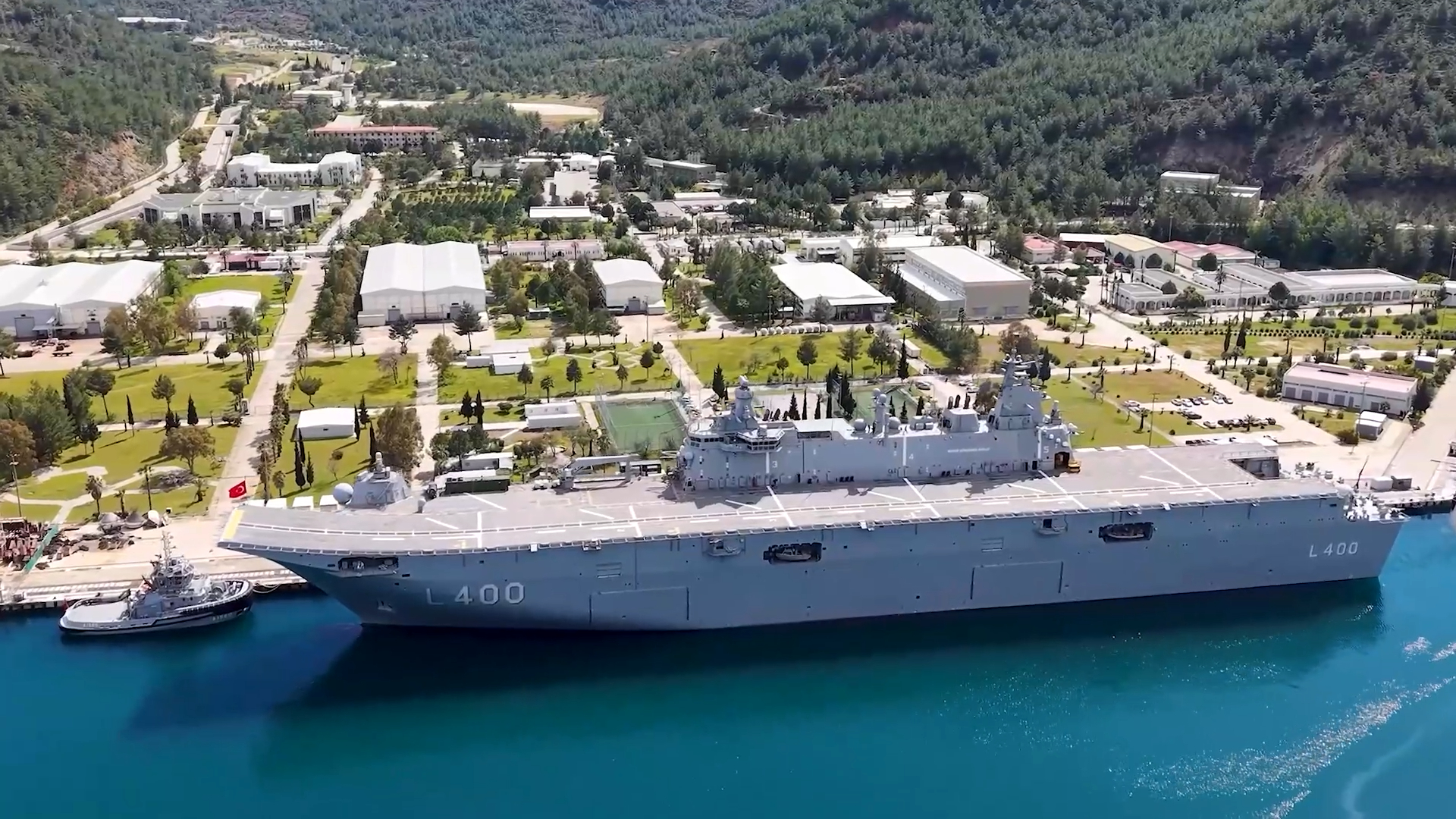
We have been involved in 75 new shipbuilding projects and around 50 modernization projects that have already been completed or ongoing, and we have integrated more than 100 Remote Controlled Weapon Systems on naval platforms. ASELSAN weapon systems operate on more than 230 platforms at home and abroad. ASELSAN Naval Combat Systema are currently used in projects such as PREVEZE Class Submarine Mid-Life Upgrade (YÖM/MLU), MİLGEM, Multi-Purpose Amphibious Ship (LHD) and BARBAROS Class Frigate Mid-Life Upgrade, which is the largest and most comprehensive modernization project for us.
In Naval Electronic Warfare Systems, we are present on many platforms with our ARES Naval Electronic Support (ES) product family, AREAS Radar Electronic Attack (EA) product family and Surface Decoy Launcher System. We will continue to take part in new projects, especially with the National Electronic Warfare Suite (MEHS), which includes our ES, EA and Decoy Launcher Systems. In the recent period, we have carried out many activities in radar systems, especially in terms of search, fire control and surveillance. We consider that our Naval Forces Command will gain key capabilities, especially with the introduction of the AKREP Fire Control Radar in the short run, and with the CENK Search Radar to be launched in 2023. Similarly, the ARDA Search Radar, ÇAFRAD (Multi-functional Phased Array Radar), and radar systems we have developed for surveillance and UAV defense are our other fields of work.
In addition, our Integrated Naval Communication Systems are located on all our platforms, both for external and internal communications. In the field of Satellite Communication System, we continue our work to serve all platforms with our antennas from 38 cm to 1.8 m. Here, I can say that the efforts for the indigenization of products with export restrictions, especially on the submarine side, constitute an important part of our activities. In Naval Electro-Optic Systems, we have reached a wide ranging product family with the activities initiated in the 2010s. Here, I would like to highlight the AHTAPOT System in particular. We have improved this product with the feedback and guidance of our Naval Forces Command, achieving a very effective product. In this sense, we consider our AHTAPOT system to be a substantial example that demonstrates where cooperation has brought our products.
With more than 15 years of experience in Naval Weapon Systems, we currently use weapon systems of different calibers and fire control systems on many platforms. Navigation Systems is another product family of ours. The (W)ECDIS, ANS, our Echo Sounder System and Meteorological Measurement Systems are being used on the platforms. Here I would like to touch upon KAVIS. The Wireless Data Communication System (KAVIS) is a technology acquisition project of ours. We are working on whether we can minimize the cable requirements on ships especially in the coming period. At the same time, the concept of remote maintenance and repair is one of the other topics we work on within this scope. Dynamic Positioning System (DIKONS) is a product which we also displayed at IDEF. It is a newly developed product. DIKONS is a system that enables the dynamic positioning of a ship and that allows the ship to follow the predefined route to a certain extent, together with maneuver control systems, by using the ship's sensors, automatically, semi-automatically or manually.
Our Multi Mission 35mm Weapon System (GÖKER) stands out as one of our new products. This system provides defense capability with ATOM air burst ammunition, especially in the sense of close air defense and Anti-UAV, on the other hand, it can fire with the domestic KDC weapon and with the chain gun we have developed. Especially with HEI (high-explosive incendiary) ammunition, it can be effective against ground coordinates or surface platforms. I would also like to emphasize that it also uses armor-piercing ammunition. Another product of ours is the Close Air Defense Missile System (YHSFS). I previously mentioned the importance of point defense while talking about the market analysis. We continue our activities on the Close Air Defense Missile System, which can operate stand-alone, autonomously, and provides 360-degree coverage with AESA radars. We also continue to work on positioning the short and medium range guided missiles HİSAR-A+ and HİSAR-O+ on ships in different configurations, with portable or fixed launchers.
Unmanned Systems is a field with great growth potential. Therefore, we accelerated our activities in this area. We continue to work on swarm demonstration on these small platforms, both in surface vehicles and autonomous underwater vehicles. Recently, an ASV swarm demonstration was published on the internet. In the coming period, we will continue this demonstration with 8 vehicles. We continue to work on Unmanned Surface Vehicles in different sizes and with different payloads. We believe this area will continue to develop and it will be an adventageous point in our country, as our Naval Forces Command and our Presidency of Defense Industries (SSB) are also closely involved and the export potential is very high in this area. In addition to small platforms, we consider that the autonomous ship concept will become popular both in commercial and military terms in the medium and long term. The developments we follow also prove this. Therefore, we continue to work on the autonomy of not only small 8-10m and 25m boats, but also larger ships.
When we look at Underwater Acoustic Systems, we started our activities in 2007 with a few colleagues by dipping a hydrophone we brought from abroad into a bucket. At that time, we started to work with the vision of becoming one of the world's leading companies in underwater sensor technologies, sonar, torpedo countermeasure systems and torpedoes, in short, in the field of underwater acoustics in the 2030s. What we see here actually shows the point we have reached. We are proud of the point we have reached in nearly 14 – 15 years. We have developed and continue to develop products in several specialties such as Sonobuoy, Intercept Sonar, Submarine Sonars, Hull Mounted Sonar, Torpedo Countermeasure Systems and Torpedoes. To mention a few of them, for example we have eliminated foreign dependency in both submarines and surface vehicles regarding Torpedo Countermeasure Systems. Our KULAÇ echo sounder system and another product, a mine detection sonar product, were completed in 2017. We have the FERSAH Sonar System, Factory Acceptance Tests (FAT) of which were accomplished in 2021. Looking at the ongoing actives, in the field of submarine sonar systems, the development of all sonar systems continues within the scope of the PREVEZE MLU. We are heading towards the completion of all products here.
Sonobuoy is another significant undertaking of ours. I would like to thank our Naval Air Command and Research Center Command here; we are progressing with their support. The Torpedo Tube System (for light torpedoes) is our new product. The Low Frequency Towed Active Sonar System (DUFAS) is our ongoing R&D project initiated by the SSB R&D Technology Department. The ORKA Light Torpedo project carried out as per the protocol signed with the SSB, and initiated by ROKETSAN as the main contractor, we perform as the product supplier of many subsystems. Additionally, our activities on the Autonomous Underwater Vehicle continue. Here, I would like to say that the Torpedo Tube System is a very hot topic, it is a system for launching light torpedoes in NATO standard by compressed air. We have established the test infrastructure at the ASELSAN Gölbaşı Facilities, and we have recently carried out our first tests. We aim to complete the qualification activities in a short time.
I previously touched upon the FERSAH Hull Mounted Sonar System. We have recently completed the Factory Acceptance Tests and it will be on our BARBAROS Class frigates and MİLGEM-5. Here, I would also like to emphasize the indigenization efforts initiated by our Naval Forces Command and Research Center Command together with MILGEMs and prior to it. The underwater sensor used there and the underwater sensor here are exactly the same. Here, the underwater sensor technology in particular, does not evolve rapidly, but unfortunately equipment and electronic systems are the systems that change with dizzying speed in parallel with the developments in technologies.
Another project of ours is the Low Frequency Towed Active Sonar (DUFAS). As I mentioned before, this is a project that we carried out together with the Naval Forces and the SSB R&D department, and we have reached a certain maturity stage. In order to make the console and cabinet structures uniform, we use the architectural structure in the DUFAS Project, which we have standardized with the experiences we have gained in the HIZIR Project. As I mentioned during the market analysis, we can say that with the completion of this product, a new role will be added to the unmanned ASW (Anti-Submarine Warfare) concept. Here, we have an active structure with a towed array that will enable submarines to be detected at long ranges. We aim to provide a significant advantage to surface ships in terms of ASW, by making very strong transmissions at very low frequencies, by receiving transmissions that will be reflected from submarines and underwater targets with receiver arrays.
As I said earlier, when we set our vision in 2007, we aimed to have a say in the sonar world in terms of underwater sensors in the 2030s, in terms of acoustics. We aimed to have a say in the international arena in a way to primarily meet the needs of our Naval Forces Command and Coast Guard Command, and then to meet the needs of both friendly countries and our overseas customers. We progress accordingly. In this sense, the Multi-Static Sonar Suite is an important project for us, and we signed a protocol with our Presidency of Defense Industries during IDEF. Here, we are talking about a suite in which the sonar, towed sonar and torpedo countermeasure systems in the previous projects can work together, also with the integration of the sonobuoy.
The figure you see on the right shows how the monostatic sonar systems work, and the yellow circles show the stand-alone sonar coverage analysis. The red circles show the coverage analysis of bistatic sonar systems, the outermost blue coverage area highlights how wide the sonar coverage areas actually can be when multi-static sonar and platforms work together in a network structure.
If we look at the upcoming period, we see the platforms on this slide that we will take part from 2021 until 2025. We have not written their names here, but we will be involved in many projects from the smallest to the largest platforms. New platforms will also be added here, and I think this is an important source of pride for us as well as the industry. Here, I want to go back and see how we have reached the point where we are today. I would like to commemorate our late Naval Forces Commander Özden ÖRNEK, who contributed much to MILGEM-1 from the idea stage. We consider the MILGEM Project as a critical milestone. With this project, the defense industry also elevated its self-confidence to the highest level. We think this project is perhaps the pioneer of many platforms, many of the indigenized platforms currently available. To see the point we have reached, the number of national products in the first MILGEM Project was nearly what you see on the slide. Today we are capable of producing almost all our combat system components nationally for MILGEM-5. We believe that the leadership and will of our Presidency of Defense Industries and Naval Forces Command is very important here. This willpower will carry the following platforms to a much better point.
Similarly, if we look at submarines, there is a conceptual demo on this slide. As ASELSAN, we took part in AY Class Submarines with the ASIST Passive Intercept Sonar, KULAÇ Echo Sounder and the ES System. With the PREVEZE MLU Project, a higher local content rate is being achieved. In this slide, we could only list ASELSAN's products. But I want to explain the point we want to reach. Ultimately, we aim to see the National Submarine (MILDEN) with the Turkish flag on it and equipped with the systems and products of the domestic defense industry, just like in MILGEM. I consider this to be our most important goal.
Finally, if we look to the future, the figure we see on this slide is the naval operation area that we dream of for the 21st century. Here, we are talking about an operation area where various products operate together, where there are unmanned systems below and above water, there are new weapon systems and space components. Cyber wars and hybrid wars will be critical in this area. Regarding such wars, we are talking about an operation area dominated by unmanned autonomous systems, autonomous swarm systems, 'network-centric' or 'decision-centric' structures. Here, especially with the development of unmanned systems, we anticipate that unmanned autonomous surface, underwater and swarm-capable unmanned systems will be a significant threat, while new systems such as autonomous weapons, hypersonic weapons, laser and electromagnetic launches will also be important components.
Well, if we ask how long it will take to accomplish all of this, it might be useful to remember Joseph SCHUMPETER's Creative Destruction theory. He developed this theory in the 1940s. A theory describing how innovation dismantles the existing components and transforms them into a new structure. He predicted three waves, specifically in the article he wrote in the 1950s, but according to scientists today, we are in the midst of a sixth of wave. The acceleration of these waves continues to increase. Artificial intelligence, the Internet of Things, robots and drones and clean energy seemed to be the most important topics in 2020. With such topics, it can be predicted that this sixth wave will last maybe 20 years, 25 years, or it may be even shorter. Maybe the next wave will be in the 2040s, a wave of digital reality, quantum systems. Based on these predictions, we need to determine our course of action in the coming period accordingly.
It is obvious that we need to be more dynamic. The character of warfare is changing. Those who can adapt to such changes will certainly survive. We need to increase investments in Naval Combat and Mission Systems and technological and complex systems, game-changing technological developments and products. It is inevitable that we must do this, as we foresee that the international market will grow very rapidly in this direction. We may perhaps need to move to more agile methods, including legislation or project training processes. The rapid pace of technological change is dizzying, and we have to adapt to it rapidly. We also consider that the interaction between the procurement authorities and our industry, which is at a certain level, should be elevated. Our efforts to this end will continue to increase in the coming period.
I would like to conclude with the words of Barbaros Hayrettin Pasha: “Whoever Rules the Seas, Rules the World.” Acting with this ideal, ASELSAN, as an important player in the Naval Defense Sector, is ready for any task to meet the needs of the sector and our Naval Forces Command.
Thank you