ASPİLSAN Enerji National Battery/Cell Supplier for National Aviation and Naval System Projects
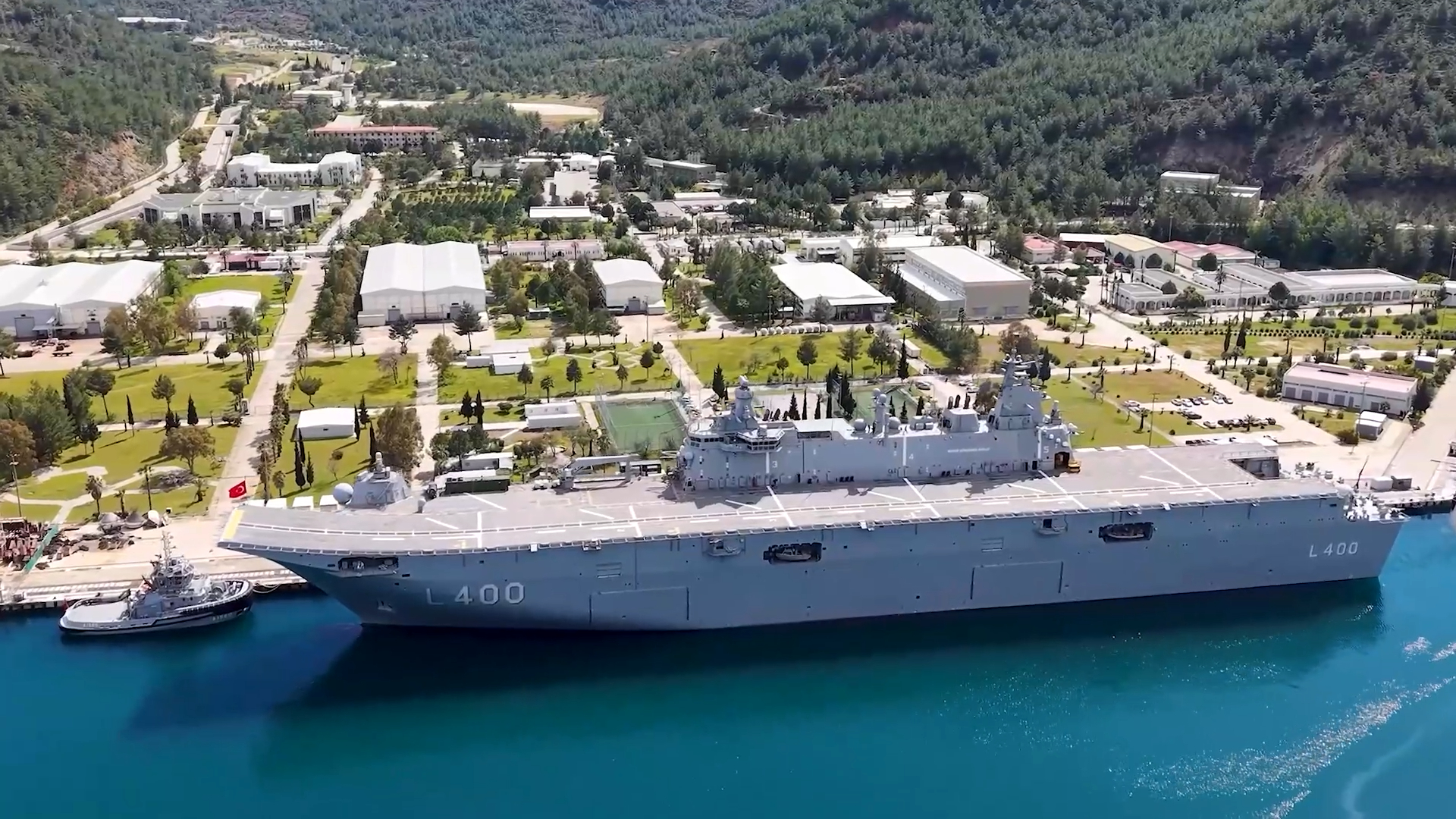
On April 2, 1981, ASPİLSAN Enerji was established in the Kayseri Organized Industrial Zone as a subsidiary of the Turkish Armed Forces Foundation (TAFF). Over the past 42 years, ASPİLSAN Enerji has played a significant role in the development of the defense industry and in reducing foreign dependency by utilizing domestic resources to develop and produce battery and cell solutions to meet the energy requirements of the Turkish defense and aviation industry. Currently, ASPİLSAN is actively involved as a solution partner in projects such as ERCİYES, ANKA UCAV, MİLGEM-5 TCG Istanbul, and BARBAROS MLU. They are also working on the development of Lithium-based technologies for aviation projects including KAAN (National Combat Aircraft), T625 GÖKBEY, HÜRJET, HÜRKUŞ, and T929 ATAK-II. Moreover, ASPİLSAN recently signed a contract on May 7, 2021, for the KAAN Battery Work Package, which was selected by TUSAŞ on November 4, 2020.
ASPİLSAN Enerji is actively engaged in the development of fuel cells in various types including PEM, DMFC, and DEFC. They possess the capability to design fuel cells ranging from 50W to 100kW levels, catering to both military and civilian applications. The company's strategic product portfolio includes System Batteries (BB 2590/U), Energy Storage Systems (for Renewable Energy Patrols), 6T Battery (for tank and armored vehicle systems), UAV/UCAV System Batteries, Electric Vehicle Batteries, Telecommunication Batteries, and Submarine Batteries.
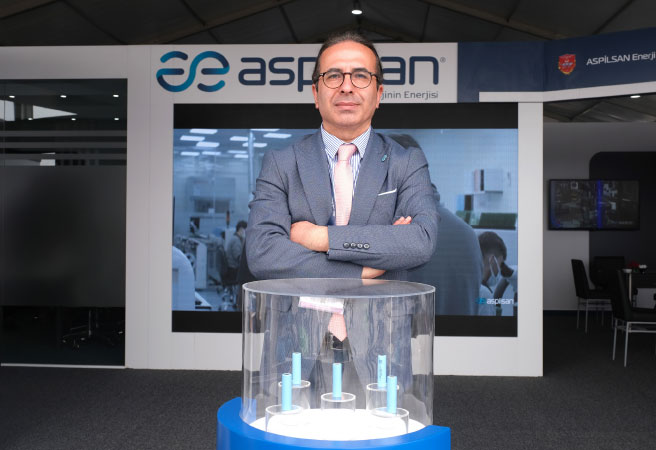
During the TEKNOFEST 2023 Aerospace and Technology Festival, we conducted an interview with key representatives from ASPİLSAN Enerji with Nihat AKSÜT, Deputy General Manager, of ASPİLSAN, Mehmet YURDAKUL, Alternative Energy Systems Project Management and Business Development Manager, and Dr. Can SINDIRAÇ, R&D Engineer (who participated in the interview remotely due to being out of town). The interview focused on ASPİLSAN's production capabilities in the field of battery/cell technology, both for the civil/commercial market and the defense industry, as well as their ongoing activities.
Defence Turkey: Can you give us a brief summary of ASPİLSAN Enerji's progress and achievements in the field of battery and cell production?
Nihat AKSÜT: ASPİLSAN Enerji boasts 42 years of expertise in battery design, development, and manufacturing. With a portfolio of over 500 cell types, the company is capable of designing and producing battery systems. Previously, ASPİLSAN Enerji had experience in battery production from 1985 to 1996, specifically producing cylindrical rechargeable Ni-Cd (Nickel-Cadmium) cells under the VARTA license. Presently, there is no cell production in Türkiye, prompting ASPİLSAN Enerji to embark on a lithium-ion battery production project. This initiative involved the development, establishment of a production line, and manufacturing of NMC 811 batteries, which utilize the widely used lithium-ion chemistry in the industry.
Defence Turkey: As far as I can recall, it was announced during the ceremony that the batteries produced by ASPİLSAN Enerji would be utilized in radios manufactured by ASELSAN.
Nihat AKSÜT: That's right, the ASPİLSAN INR18650A28 battery is used in various battery systems, including but not limited to the radio batteries we produce for ASELSAN. It is also used in some electric and light electric vehicles, electric bicycles, electric scooters, electrical hand tools, robotic systems, medical batteries, and energy storage systems.
Defence Turkey: What can you say about your annual capacity?
Nihat AKSÜT: The annual capacity of the plant is 220 MWh. This corresponds to 21.6 million cells per year. The capacity of the cell is 2,800mAh and the voltage is 3.6V.
Defence Turkey: The batteries displayed here at the booth will also need to be packed separately for each vehicle and each platform. Are you in contact with the manufacturers? How do you proceed?
Nihat AKSÜT: In certain cases, our customers choose to collaborate with us during the development phase of their systems, allowing us to design and develop the battery alongside their product. This approach is highly favorable for us. However, there are instances where we are required to design and develop a battery for a newly completed or finished product. When developing a battery system, an essential aspect is the Battery Management System (BMS). ASPİLSAN Enerji possesses the capability to develop software for the battery management system, which is of great value. This feature is a key factor that distinguishes a battery system as being domestically developed and indigenous.
Defence Turkey: Mr. AKSÜT, you have just mentioned that you used to produce under VARTA license in the past. Today, you have reached a point where you are exporting your products to many countries, including one where VARTA is produced. Are all the cells you now manufacture and sell original designs?
Nihat AKSÜT: Certainly, all the cells we produce and sell are based on our original designs, and we hold full intellectual and industrial property rights over them. It is not just ASPİLSAN that claims ownership, but we also take pride in saying that these rights belong to our country. This aspect is of great significance for us. We are engaged in domestic production using national technology, and our batteries are classified as high technology according to the OECD Technology Level Classification Scheme. Starting mass production in June 2022, we have also initiated exports, particularly to Europe. This is a critical step in reducing our country's foreign currency deficit. We hope to make even greater contributions to our country in the future.
Defence Turkey: Is your success in exporting batteries primarily due to your competitive pricing, the quality of your products, or a combination of both price and quality along with the advantageous location of the country?
Nihat AKSÜT: You have asked an important question. The success of our battery exports primarily stems from the quality of our products. It is worth noting that we started battery development and production relatively late compared to other countries, companies, and brands that have been in the industry for a longer time. While we can compete in terms of quality, it is challenging for us to bridge the gap in cost reduction that other established brands such as Panasonic, Samsung, LG, Sony-Murata, and Molicel have achieved over a longer period. We have obtained quality certification from a neutral and independent laboratory based in the Netherlands, which we believe provides a more objective evaluation. Currently, we cannot compete with these well-established brands in terms of price. However, we are confident that in the future we will be able to compete with them in price as well. Imagine that you produce a battery pack, for instance, from 2.5 USD per cell. Then you mount this battery pack on a platform worth a million dollars. Ensuring high quality is therefore crucial. We have a request from our state to make certain legal arrangements that would enable ASPİLSAN Enerji to compete on price both in the domestic market through supervision of battery imports and in the foreign market through incentives for battery exports.
Defence Turkey: Companies abroad may have the advantage of not being subject to the same taxes and manufacturing costs as ASPİLSAN Enerji, which can allow them to offer their products at lower prices.
Nihat AKSÜT: Indeed, there is a significant issue, particularly with cells imported from China that do not belong to global brands. Some of these cells fail to meet the specified values mentioned in the datasheet. In Türkiye, battery pack manufacturers may opt for imported cells from China due to their lower price.
Defence Turkey: We have recently observed your endeavors in the field of telecom batteries. What would you like to say about this?
Nihat AKSÜT: For one year, ASPİLSAN Enerji has been successfully manufacturing a 48V 100Ah capacity battery specifically designed for telecommunication infrastructure. This battery, along with its software and interface, is entirely domestically designed and produced. As the telecom industry is undergoing a transition to 5G technology, GSM operators have shown a strong preference for our Lithium batteries over traditional lead acid batteries used in base stations. We are proud to have supplied products to major operators such as Turkcell and Türk Telekom, and we have also made significant progress in exporting telecom batteries. We anticipate substantial growth in exports in the near future, which is also a sign of our country’s success.
Defence Turkey: Even though the foreign products you mentioned have lower prices, they lack the long-term quality required for effective performance, making them unable to compete with your batteries in terms of quality. Do you procure raw materials and sub-materials from abroad for producing batteries? Do you have difficulties in this regard? Are you also taking steps to develop an infrastructure or ecosystem for sourcing materials and raw materials as part of establishing a production infrastructure in Türkiye?
Nihat AKSÜT: At present, we import raw materials and sub-materials for battery production. While Türkiye has mines for some active substances and other raw materials used in battery production, the crucial step is processing them into materials suitable for battery manufacturing. ASPİLSAN Enerji has been actively working for approximately three years to create an ecosystem of raw materials and sub-materials for batteries and cells in Türkiye. Our annual Battery Technologies Workshop, which saw its 7th edition last year, has been instrumental in fostering international participation, and we plan to continue organizing it annually. Through these workshops, we engage with companies capable of producing raw materials and sub-materials for batteries and cells in Türkiye. We maintain close cooperation with these companies, and as an example, we have collaborated with a Turkish company to produce aluminum foil, an essential raw material, for mass production purposes.
Defence Turkey: Your production capacity of 21.6 million is quite significant, and the demand for these products is quite high.
Nihat AKSÜT: Yes indeed. Another critical raw material utilized in the production of batteries is aluminum foil, which is employed as a current collector in the cathode electrode. Copper foil is also used in anode electrode production. We have made significant advancements in domestic development and production of copper foil. Additionally, we are actively collaborating with domestic companies to produce cathode active material, specifically NMC (nickel-manganese-cobalt). Major progress has been achieved through our partnership with Eti Maden, a producer of lithium carbonate. They are planning to increase their annual production capacity to around 700 tons in the near future. We are working closely with Eti Maden, procuring lithium carbonate from them, and transforming it into active material. We have successfully produced batteries using this active material in a laboratory setting, and the quality has been exceptional. However, there is a need to scale up production.
Defence Turkey: So, if these indigenization activities you mentioned continue and are completed as planned, will it be possible to minimize our foreign dependency in the production of lithium-ion batteries?
Nihat AKSÜT: In general, the production of a cylindrical lithium-ion cell requires the use of 28 different raw materials and sub-materials. Achieving 100% domestic production for all these materials is not always possible. However, the key objective is to focus on producing the most critical raw materials domestically in battery production.
Defence Turkey: Mr. AKSÜT, thank you very much for the insights you’ve shared. Mr. YURDAKUL, regarding the defense industry, ASPİLSAN has expanded its battery production capabilities to include a wide range of air vehicles, such as UAVs like AKSUNGUR and ANKA, in addition to aircraft and helicopter batteries. We would be interested to hear more about ASPİLSAN's endeavors in the production of batteries, particularly lithium-ion batteries, for aircraft.
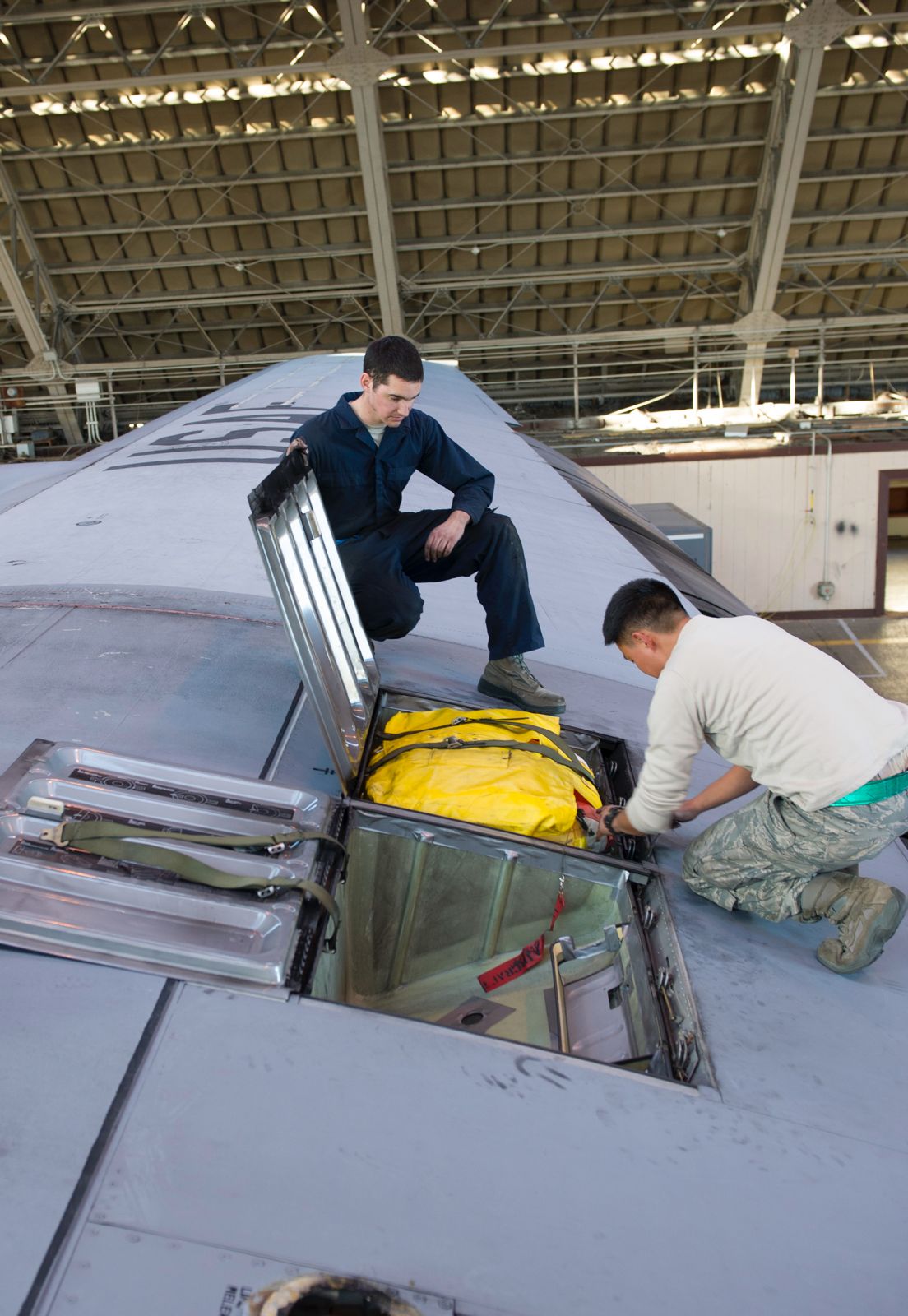
Mehmet YURDAKUL: Since the early 1990s, ASPİLSAN has been fulfilling a significant portion of the nickel-cadmium battery requirements for aircraft and helicopters used by the Turkish Armed Forces. Over time, ASPİLSAN's role has expanded beyond nickel-cadmium batteries to include the development and production of lithium-ion batteries for various aircraft projects. Notably, ASPİLSAN is involved in providing batteries for the National Combat Aircraft, HÜRJET, HÜRKUŞ, GÖKBEY, and the ATAK II Helicopter, all of which are produced by Turkish Aerospace. The batteries used on the National Combat Aircraft, which has already started ground tests, are also designed and produced by ASPİLSAN.
Defence Turkey: These batteries are utilized in what part of the "KAAN" National Combat Aircraft? There are two turbofan engines and APU available on the aircraft. Are the batteries recharged using the energy from the engines and APU? Can you explain the operating principle on KAAN?
Mehmet YURDAKUL: The batteries are used both for the initial start-up of the engine on the ground and to provide electrical power to the avionics in case of emergency. When the battery voltage drops below the specified threshold after use, the Battery Management System (BMS) within the battery and/or the aircraft battery charger are activated to recharge the battery.
Defence Turkey: This also requires serious engineering know-how. There is software consisting of millions of lines on the National Combat Aircraft. Will you be able to connect to that software in some way or have an interface?
Mehmet YURDAKUL: As part of the project, we also carry out the ASPİLSAN-designed lithium-Ion battery BMS designs. Additionally, our engineers have developed software that is utilized in both our charging units and BMSs.
Defence Turkey: Are you also taking part in the HÜRJET Project?
Mehmet YURDAKUL: Yes, we are also involved in the HÜRJET Project, and we have reached the contract signing phase.
Defence Turkey: And do you also have products on the ANKA III UCAV?
Mehmet YURDAKUL: We are currently engaged in the development of lithium-ion batteries with various capacities for Turkish Aerospace. The batteries we are currently developing will be employed in the relevant projects where they are needed. Furthermore, if there are any new requirements, we are ready to initiate new studies to address those specific needs.
Defence Turkey: We also have question for you, Mr. SINDIRAÇ. Can you provide our readers with a quick summary of the most recent advancements in your activities in hydrogen energy?
Dr. Can SINDIRAÇ: During last year's TEKNOFEST, we had the opportunity to conduct another interview with you. As ASPİLSAN Enerji, we have been actively engaged in numerous national and international projects focused on hydrogen technologies. One such project, which is currently in progress at the Izmir Development Agency, is nearing completion. This project is aligned with IZKA's Blue and Green Transformation Program, and it involves the development of an indigenous PEM electrolyzer by ASPİLSAN Enerji. The electrolyzer will be operational for the first time at the campus of the Izmir Advanced Technology Institute. We anticipate the completion of the project by the end of this year. Through the deployment of our small-scale electrolyzer, we aim to raise awareness among university students and provide them with a practical demonstration of this innovative technology, serving as a noteworthy example of successful implementation. Another project where we will deploy a domestic electrolyzer in Izmir is our project named 4D Hydrogen in the Eurogia Cluster, which will be signed soon. We are the coordinator of this project, which involves seven partnerships across five countries. We are collaborating with SOCAR Türkiye. By deploying a 10 kW electrolyzer in İzmir Aliağa, we will be producing green ammonia, which is crucial especially for fertilizers. Together with our other partners, we will be able to demonstrate the pillars of the green ammonia value chain with this project. Another notable project that we signed at this year's TEKNOFEST is in collaboration with the South Marmara Development Agency. In partnership with TÜBİTAK MAM, we will be domestically producing a 30 kW electrolyzer. Furthermore, we are currently in the referee process for our project, conducted in the Eurogia Cluster, which aims to make greenhouses more sustainable by utilizing hydrogen for heating. GAZBİR-GAZMER and Gebze Technical University are among the stakeholders involved in this project. Additionally, we have plans to apply for other national calls in the coming period. Our ongoing efforts are focused on domestically manufacturing the key component of green hydrogen, the electrolyzer, and rapidly expanding our capacities in this field.
Defence Turkey: Once the initial examples and trials have been proven successful, is there any plan to leverage this capability for the application in unmanned aerial vehicles (UAVs) or other types of aerial platforms?
Dr. Can SINDIRAÇ: We have just talked about the electrolyzers used to produce hydrogen. The device that generates energy by using hydrogen is referred to as fuel cells. The adoption of fuel cells has gained significant traction, particularly in the defense industry. Fuel cells are used in various industries, including defense and aviation. Hydrogen, obtained from the electrolyzers, is required to supply the fuel cell with the necessary fuel.
Several companies are engaged in the development of fuel cells for drones. However, only a limited number of companies have achieved commercial maturity in this field. We recently visited Intelligent Energy, a UK-based company known for manufacturing high-capacity fuel cells and conducted an on-site examination. Our roadmap for the near-to-medium term includes establishing domestic production capabilities for such fuel cells. Furthermore, the concept of hydrogen-powered airplanes has gained significant prominence in recent times, primarily driven by concerns regarding climate conditions and sustainability.
Defence Turkey: As far as we know, ASPİLSAN is actively involved in the development of submarine batteries and PEM fuel cells. Is there any plan to civilianize and enhance the capacity of the Battery Factory operating under the Gölcük Shipyard Command under the leadership of ASPİLSAN? Currently, the factory produces the 30PS15B Lead Acid Battery for the Type 214TN REİS Class submarines under a license from Exide Technologies, an Indian-based company. Considering the use of indigenous batteries in MİLDENs, and the intention to use indigenously produced battery sets in small submarines such as STM500 and unmanned submarine/naval platform projects, what can you tell us about ASPİLSAN Enerji's vision and roadmap for the Submarine Battery Factory?
Mehmet YURDAKUL: A visit was organized to the Submarine Battery Factory in Gölcük in 2021, following an invitation from the General Directorate of Shipyards. During the visit, discussions took place with the General Directorate of Shipyards and ASFAT executives regarding various matters, including the modernization of the existing facility, capacity expansion, and meeting international demands.
We have ongoing projects with both ASELSAN and STM in the field of compact submarines. We will be collaborating as a joint stakeholder in the STM500 Project. Due to their advantages in terms of volume and weight, lithium-ion batteries are mostly preferred in compact submarines.
Defence Turkey: Does this concept include both a battery and a diesel engine? Or will it entirely rely on lithium batteries?
Mehmet YURDAKUL: It will include both a diesel engine and batteries. When the battery power is depleted, the diesel engine will be utilized to run the generators and recharge the batteries.
Defence Turkey: What can you say about ASPİLSAN Enerji's vision, objectives, and expectations for the next decade in the field of batteries? What will be the position of ASPİLSAN in 10 years?
Mehmet YURDAKUL: ASPİLSAN can be considered as the leading company in Türkiye when it comes to battery technology, serving as a pioneer in introducing this field to our country. Looking ahead, ASPİLSAN has ambitious plans for further advancements. Presently, we are engaged in the production of nickel manganese cobalt (NMC) lithium-ion cells. However, in the future, we are also aiming to initiate the production of lithium iron phosphate (LFP) cells. In addition to cylindrical cells, ASPİLSAN has plans to produce prismatic and pouch-type cells.
Defence Turkey: Thank you for your time and the opportunity to conduct this insightful interview.