BAE Systems Land & Armaments are Looking Closely at Turkey’s Potential Requirements for Turkish Naval Guns
Defence Turkey: Could you please inform us about BAE Systems Land & Armaments structure, core business, capabilities and technologies?
BAE Systems Land & Armaments is dedicated to the production and service support of armored combat and tactical vehicles, major, medium and minor caliber naval guns and missile launchers, canisters, artillery systems and intelligent munitions. Our core capabilities include modeling and simulation, design and development, support and technical services, global manufacturing and co-production.
Our products and services provide capability to armed forces around the world. We have active contracts with dozens of countries which range from naval gun co-production in Japan, to vehicle upgrades in Brazil, to vehicle production, support and technical services in Turkey through our joint venture FNSS Savunma Sistemleri, A.S.
BAE Systems is the primary naval gun provider to the U.S. Navy and Coast Guard, and ten international navies use our 127 mm Mk45 gun system, including Turkey. We provide 80% of the tracked vehicles to the U.S. Army’s Heavy Brigades, the Assault Amphibious Vehicle to the U.S. Marine Corps, and the BvS10 personnel carrier to militaries around the world. We also produce the M777 lightweight howitzer in service in the United States, Australia and Canada, and selected by India for future fielding.
BAE Systems Land & Armaments is headquartered in Arlington, Virginia. Although based in the United States, Land & Armaments has a strong international presence with a business unit headquartered in the United Kingdom, operations in Sweden, a subsidiary in South Africa, and a joint venture in Turkey, FNSS.
Defence Turkey: In terms of production, investment, export and international projects, how do you evaluate the improvements in figures in 2011? How do you assess BAE Systems Land & Armaments position in 2012? What are 2012 targets?
BAE Systems, like many of its United States counterparts, is operating in a declining market in which the government has already targeted roughly $500 billion in defense savings over ten years. The possibility of additional defense funds being "sequestered" adds great uncertainty for this market going forward.
Our first half year sales in 2012 are at $2 billion, a slight decline from 2011. Having said that, our order book has increased and we have had several major contracts signed this year. On the Armaments, or naval, side, we have won awards for vertical launch canisters, Mk45 Mod 4 (127mm) guns, Mk110 57 mm guns and MK38 25mm guns. We have also had very successful testing of our 155mm Long Range Land Attack Projectile, which is under a development contract with the U.S. Navy. And we have a guided flight test for our 127mm guided projectile planned for later this year.
On the land side, we received $750 million award for CV-90 (armoured combat vehicles) from Norway, $306 million dollar contract from the United States for M2 Bradley (fighting vehicle) upgrades, $100 million contract for BvS10 All-Terrain Vehicles from Sweden, and India has announced that it has chosen the M777 lightweight howitzer with an intent to order 145 systems through a foreign military sale.
Defence Turkey: It is known that BAE Systems is setting the pace in naval armament development with the 155-mm Advanced Gun System for the U.S. Navy’s new DDG 1000 destroyer. Could you please enlighten us about BAE’s naval gun technologies?
We specialize in a number of naval gun technologies, including gun, launching and munitions systems. Our gun systems include large caliber 155 mm and 127 mm guns, a medium caliber 57 mm gun in service with the U.S. Navy and Coast Guard, and a 25 mm gun also in service with the U.S. Navy and Coast Guard. Our 127 mm gun, the Mk 45, is in service with 10 international navies, including the Turkish Navy.
We are a world leader in naval launching systems with more than 50 years experience in design, production and support of launching systems, including pointing launchers and Mk 41 vertical launching systems for the U.S. Navy and Allied nations.
Our Munitions team has significant expertise in designing, integrating and testing several precision fused and guided munitions including:
• 155 mm Long Range Land Attack Projectile (LRLAP)
• 127 mm long range, guided projectile
• 57 mm ammunitions
• Projectile Guidance Kit (PGK) for 105 mm and 155mm ballistic ammunition
• 120mm precision mortar munitions for the U.S. Marine Corps and U.S. Army applications
We are developing a number of new capabilities in these areas. We are under a development contract from the U.S. Navy for long range precision ammunition for the 155 mm. We are using our own development funds to develop 127 mm long range precision ammunition. We have been able to apply some lessons learned from the 155mm program to the 127 mm effort, allowing us to progress this effort farther than similar efforts undertaken by others. We have completed all preliminary development and testing to enable us to conduct a guided flight test later this year.
We are also investing in and developing new naval technologies including an electro-magnetic rail gun, a high powered microwave and a tactical laser system.
Defence Turkey: As you are aware, the Turkish Naval Industry is developing rapidly. What is your interest in Turkey regarding naval guns? Could a joint production be considered in the future?
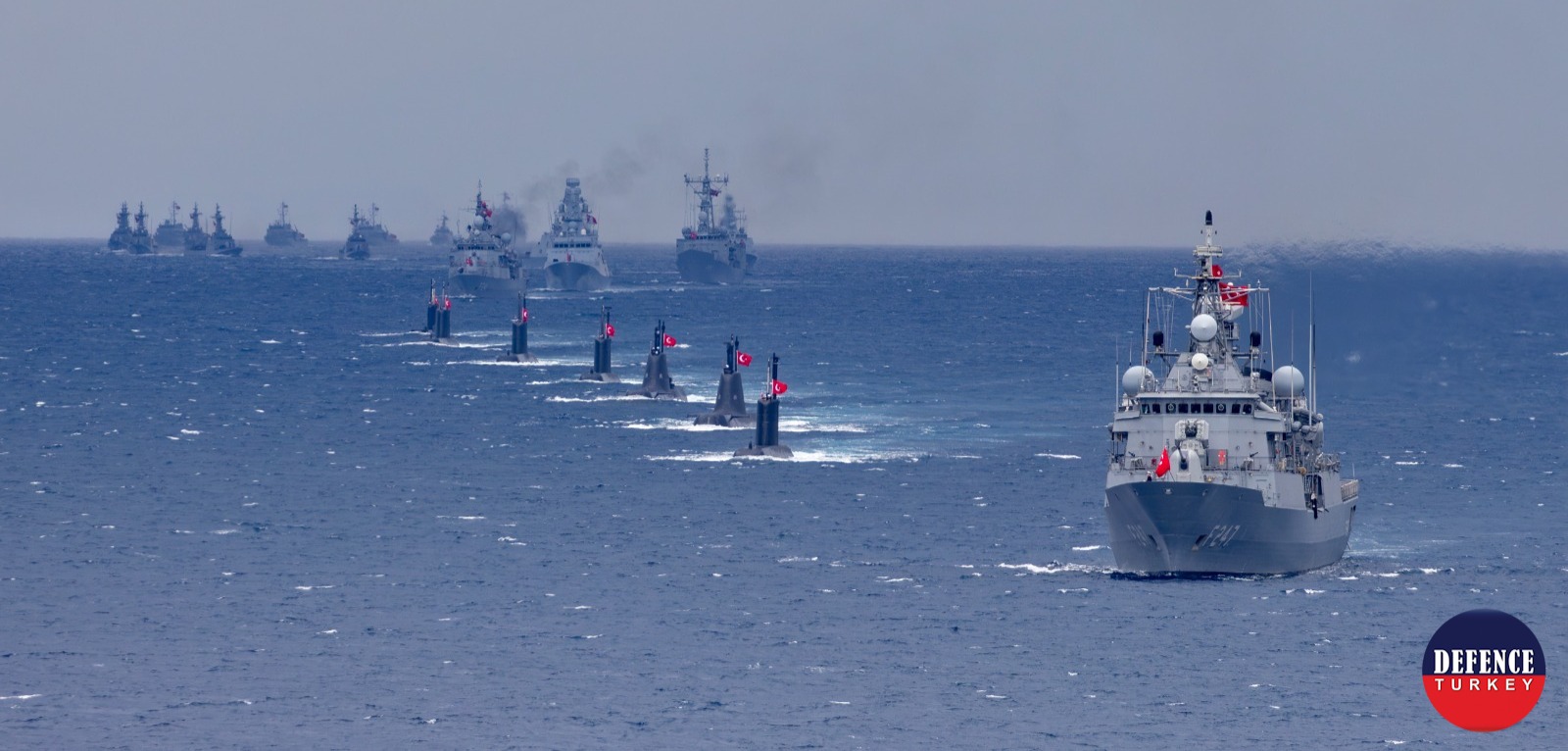
We are looking closely at Turkey’s potential requirements for 127 mm naval guns which could be required for TF-100 and TF-2000 frigates. Turkey has the Mk45 Mod 1 and Mod 2 guns in service today. The newest Mod 4 Mk 45 gun provides added capabilities. In addition to being able to fire long range and precision-guided munitions, it has a fully digitized control system. Currently, 48 of these guns are in service with the U.S. Navy and 22 are in service with international navies, making the gun’s sustainability a low-risk challenge. More Mk 45 Mod 4 guns are on order and planned for the U.S. Navy and international customers.
Turkey has Mk45 Mod 1 and Mod 2 guns in service today with its Yavuz and Barbaros class frigates, and we understand that the Turkish Navy is very satisfied with the performance and reliability of these guns. Many users of these older variants have chosen to upgrade or replace them to achieve a Mod 4 capability and to keep pace with evolving technology. Turkey has several options to do the same should it pursue a mid-life upgrade or new frigates.
Turkey could procure new Mk 45 Mod 4 guns, giving it a 62 caliber barrel, a digital control system, improved reliability and built-in testing, and the potential to fire long range precision munitions more than 50 nautical miles. To reduce cost, Turkey could upgrade its current guns to a Mod 4 gun. This could be done in conjunction with a mid-life upgrade of a frigate or for a new frigate. Turkey could also ask the U.S. Navy for used mounts. When the U.S. Navy produces new Mk 45 Mod 4 guns, it starts with a used mount to achieve a very cost effective capability. Another option is to upgrade the Turkish Navy’s Mod 1 or Mod 2 guns to achieve some Mod 4 capabilities by adopting the digital control system we have placed on the Mod 4 gun. This would allow the upgraded Mod 1 or Mod 2 gun to fire long-range, precision munitions with a fully digital control system, but less than 50 nautical miles.
In addition to Mk45 Mod 4 opportunities, we are also interested in trying to meet any potential requirements for 127 mm long-range, precision-guided ammunition. Our first guided flight test for the 127 mm round is slated for later this year. Up to this point, we have developed this ammunition with our funding and that of some partners. We are hopeful that the U.S. Navy will soon fund a development program, and, when they do, we believe we will be well positioned.
We are always interested in joint production where it makes sense. As an example, FNSS produced over 2,000 vehicles for the Turkish Armed Forces under a licensing agreement with BAE Systems. FNSS has also exported $2 billion of goods and services based on the technical knowledge we were able to share and exchange with them. In recent years, we have helped Canada, Jordan and Brazil perform vehicle upgrades with local depots or private firms. We are currently co-producing naval guns in Japan and Korea and expect to be doing so for some time into the future. We will look to work with Turkish industry if and when we offer the 127 mm. A number of factors will determine the extent and nature of the cooperation.
Defence Turkey: BAE System’s M777, the world’s first 155 mm Howitzer weighing less than 4218 kg. and selected by the U.S., Canadian and Australian Armies. How do you assess M777’s capabilities?
The M777 Lightweight Howitzer gives commanders a new and unique operational capability. Because medium weight helicopters can move the M777, commanders can deploy it in support of remote or geographically dispersed operations. It gives such operations dedicated and responsive fire support in such locations, with the full range and effectiveness of 155 mm artillery, which often times is not available today. This is especially useful if commanders must be prepared to support potential operations in one or more different areas or border regions, or in rugged terrain that is difficult to access by road. It can also fire extended range, precision munitions, making it a good asset for high value targets. In giving new and additional capability, we believe the M777 complements other fire support systems; generally speaking, it is not a substitute or replacement for most of these systems.
Defence Turkey: BAE Systems has tested an ‘invisibility cloak’ that allows a vehicle to blend into its surroundings. Could you please enlighten us about this technology and your other R&D activities?
Known as "Adaptiv," the patented technology is based on sheets of hexagonal ‘pixels’ that can change temperature very rapidly. On-board cameras pick up the background scenery and display that infra-red image on the vehicle. This means that the vehicle can be given any infra-red signature, allowing even a moving tank to match its surroundings. Alternatively, it can mimic another vehicle or display identification tags, reducing the risk of fratricide.
Current work focuses mainly on the infra-red spectrum, as this is most important to the Swedish Defence Materiel Administration (FMV), which funds part of the work. However, BAE Systems engineers have combined the pixels with other technologies, which provide camouflage in other parts of the electro-magnetic spectrum at the same time to provide all-round stealth, which will be developed further over the next few years.
Trials by BAE Systems last July showed that one side of a CV90 could be made effectively invisible or appear to be other objects, including a 4x4 vehicle, when viewed in the infra-red spectrum.
We have already spoken to some of our other R&D activities that might be relevant to Turkey, including the 127mm long range guided ammunition.
Defence Turkey: Could you please inform us about your activities in Turkey? What are your interests, strategies and plans focusing on future opportunities in Turkey?
We have believed for some time, and still do, that Turkey is an important market for BAE Systems. Land & Armaments main presence in Turkey is with our joint venture, FNSS, which was established in 1988. Nurol Holding is the other stakeholder in this joint venture. We are very pleased with FNSS’ performance and look forward to sustaining our strong partnership going forward. We continue to provide technical support as required, and we are active in that area for a number of projects which FNSS is managing.
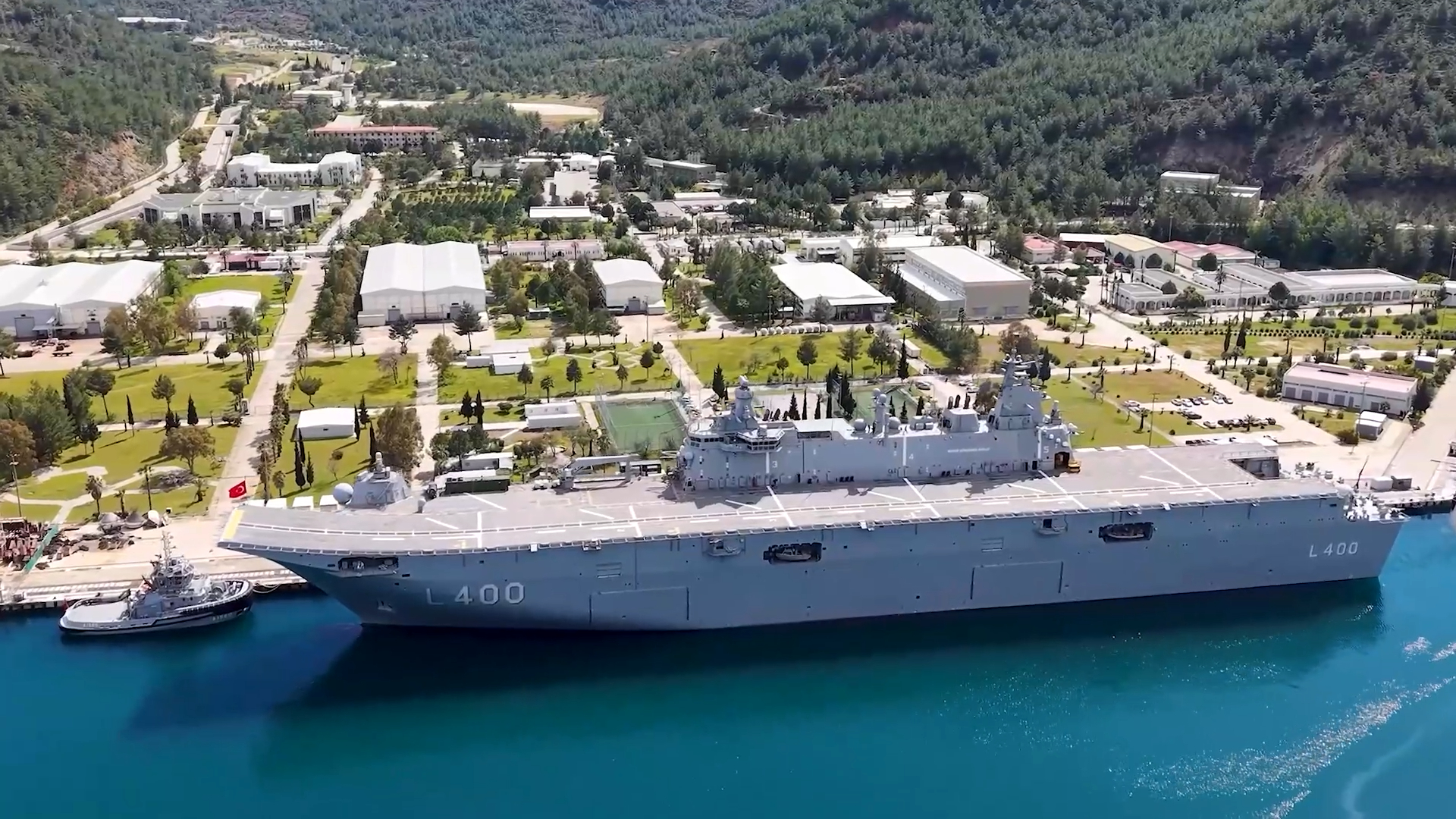
In addition to Turkey’s naval gun and ammunition requirements, we are also interested in the LPD program and its associated amphibious vehicles. We have been designing and developing amphibious systems since the 1940s. More recently, we designed and produced the Assault Amphibious Vehicle in service with the U.S. Marine Corps. This vehicle is the only vehicle in the world which can operate in Sea State 3 and survive Sea State 5 conditions. Working with FNSS, we hope to contribute to Turkey’s efforts to acquire an amphibious assault vehicle.
Another area where we remain hopeful is with the M777 lightweight howitzer, should Turkey have a requirement for such a system.
Defence Turkey: Could you please give more information about your partnerships with Turkish Defence Industry companies in the past and in present? Will you set up new partnerships with Turkish Defence Industry?
We have already given the broad outlines of our partnership with FNSS. We believe it is a model of cooperation whereby all parties have benefitted, including the Turkish Armed Forces, Turkish industry, and the United States industry. We will continue to work with FNSS, but we will also work with others parts of Turkish industry if it makes sense to do so. Another sector within BAE Systems, Inc has established a successful partnership with Aselsan, and we are confident we can establish similar relationships if and when opportunities call for it.
Defence Turkey: Finally would you like to add anything else for our readers?
2013 will mark the 25th year that BAE Systems has been invested in the Turkish defense market. We look forward to the next 25 years of partnership.