C-27J SPARTAN Tactical Airlift Expands Multi-mission Capabilities and Enhances Firefighting Role
The Leonardo C-27J Spartan Next Generation is the most effective multi-mission, twin turboprop airlifter available on the market. Its advanced avionics comply with the latest Performance-Based Navigation (PBN) international standard, enabling operations in civil air space without limitations. Its winglets improve overall performances, especially in the most difficult “hot and high” environmental conditions. Its capability to operate autonomously from short, narrow and unpaved airstrips, also where limited ground support is available, is unparalleled by any other twin-engine military transport aircraft in its class.
The "Spartan" has been ordered by 19 countries (20 operators) and the worldwide C-27J fleet has already exceeded 275,000 flight hours in the ranks of the most prestigious Air Forces, providing tactical transport, humanitarian assistance, disaster relief, paratroopers / cargo airdrop, Search and Rescue services in all continents, in the most extreme environmental conditions and operational scenarios.
Unlike other aircraft of the same class, the C-27J is designed to satisfy the most demanding requirements applicable to tactical transport missions.
Due to its large cargo bay, wide rear ramp and unparalleled floor strength, the aircraft offers a maximum payload of 11,300 kg and can carry standard pallets (88” x 108”) at their maximum height and weight, allowing quick cargo transfer from/to larger airlifters (such as the C-130) without any need of repackaging.
Moreover, the C-27J unique capability to change the height and the pitch of its cargo floor enables quick load/unload of cargo and vehicles alike without leaning on Ground Support Equipment.
Its Auxiliary Power Unit (APU) provides a fully independent power source, usable both on ground (to ensure full autonomy when operating on improvised airfields) and in flight (to provide emergency power and allow engines restart procedures).
Finally, the C-27J offers excellent Short Take-Off and Landing (STOL) characteristics, coupled with the capability to operate on soft, unpaved airstrips, with a California Bearing Ratio down to 3, ensuring maximum operational flexibility.
The C-27J mission effectiveness and survivability are the best in its class.
The “Spartan” offers a 325 kt maximum speed, the capability to perform tactical maneuvers up to 3 g, high climb and descent rates, a 30,000 ft service ceiling, an environmental envelope spanning from -55°C to +50°C. Moreover, the availability of a state-of-the-art Self-Protection System, secure communication systems and ballistic protections allow the aircraft to cope with any tactical scenario, including high threat situations.
Thanks to multiple, easily installable and transportable mission kits, the C-27J Spartan Next Generation can be configured to carry out the following missions:
Troop Transport (up to 60)
Paratroopers Airdrop (up to 46)
Cargo Transport (bulk loads, wheeled and tracked vehicles through drive-on/drive off loading and unloading, aircraft engines, light helicopters, 463L standard pallets)
Cargo Airdrop (up to 9,000 kg with two platforms, up to 6 A22 CDS bundles)
MEDEVAC (up to 36 stretchers and 6 medical attendants)
VIP Transport (modules for 6 VIP, 18 escort passengers and services mounted on roll-on/roll-off pallets)
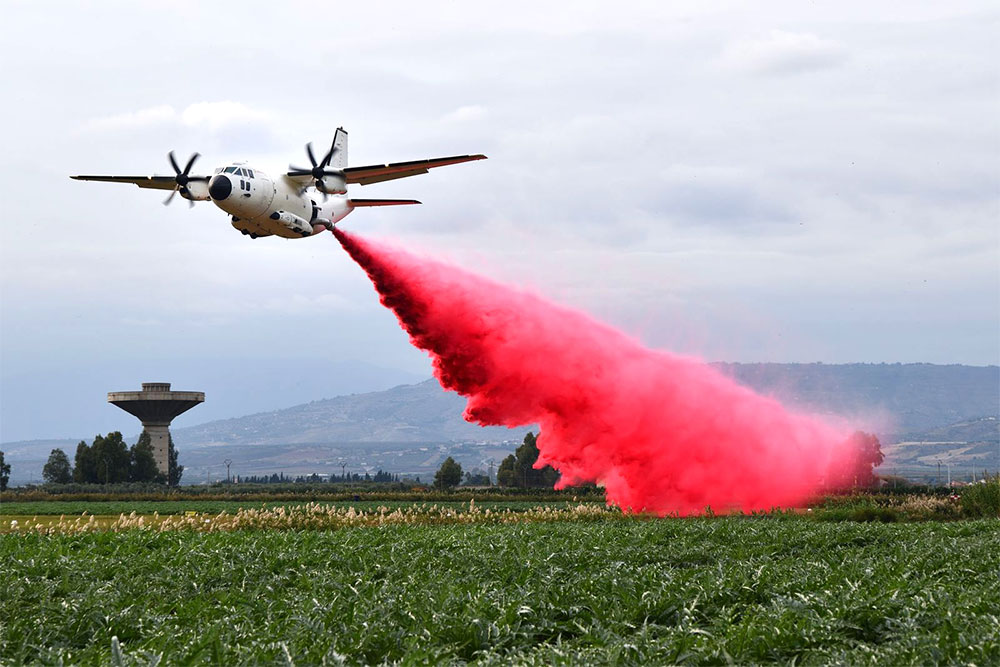
Fire Fighting (roll-on/roll-off Modular Airborne Fire Fighting System - MAFFS II - with 7,500 lt tank capacity)
Focusing on the latter mission, it is to be noted that an effective aerial fire-fighting system must meet a series of requirements: ability to reach isolated areas far away from the sea or other sources of water; rapid response to emergencies; low environmental impact.
In addition, the use of a multi-mission platform for fire-fighting purposes is highly advisable: such a solution allows a continuous use of the aircraft outside the critical season for tasks not related to firefighting, such as transport, humanitarian support, civil protection, and Search and Rescue, reducing its operational cost and providing an unparalleled mission flexibility.
In this frame, the Leonardo innovative, high-tech solution for the increasingly difficult fight against forest fires is the C-27J Next Generation "Fire Fighter", intended to work alongside helicopters and amphibious "scooper" aircraft that take water directly from seas, lakes and rivers.
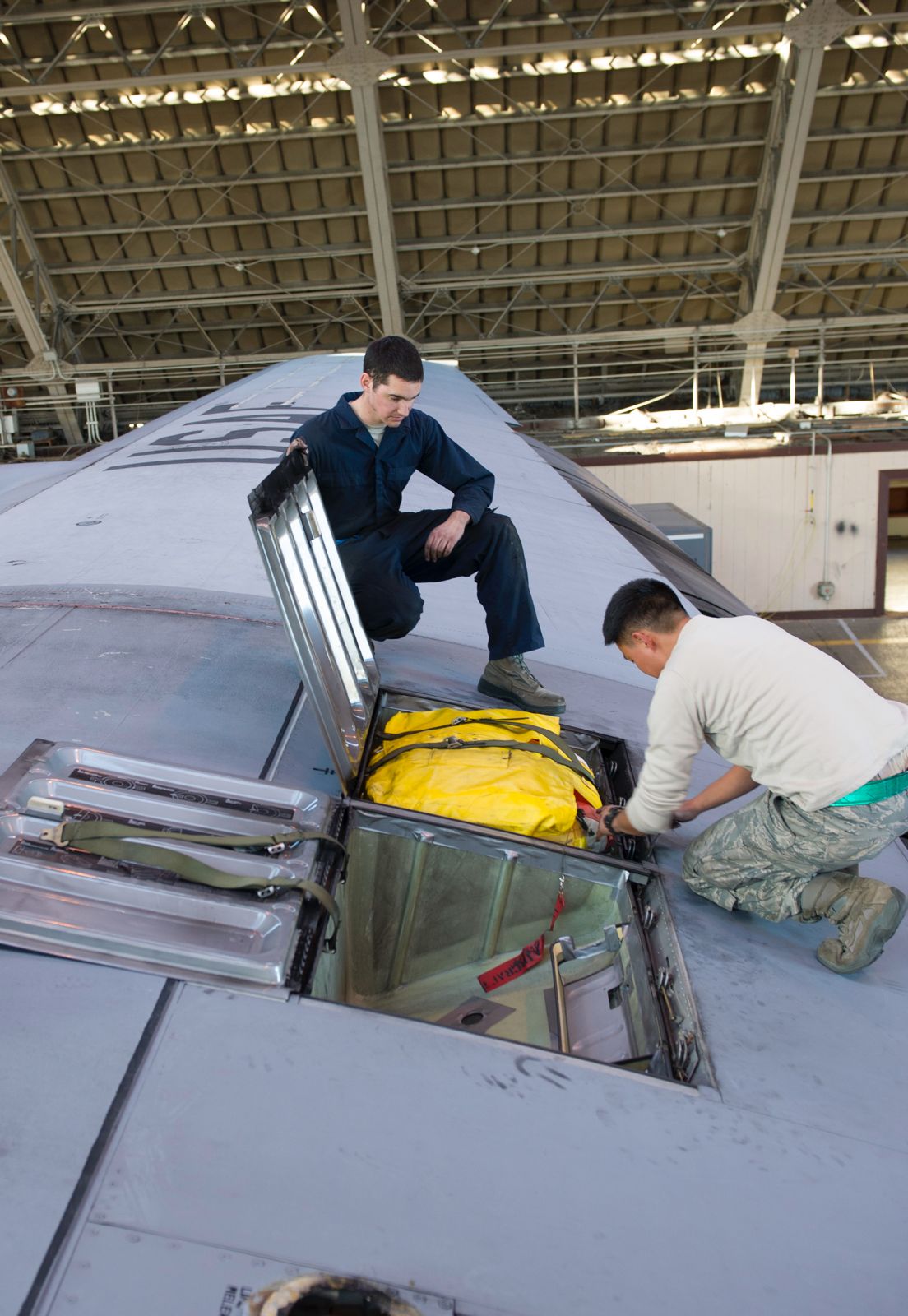
The C-27J Fire Fighter configuration is realized by equipping the versatile airlifter with the second-generation MAFFS II (Modular Airborne Fire Fighting System), a "roll-on/roll off" transportable module that can be loaded and unloaded in only 90 minutes. The module main elements are a 7,500-litre tank which can be refilled on ground with water or retardant liquid in under 10 minutes, and a spray nozzle emerging through a plug mounted in the opening of the left paratrooper door.
The C-27J Next Generation "Fire Fighter" provides a sustainable "ecosystem", scalable and adaptable for different purposes; a modular tool capable of providing both firefighting and emergency response capabilities in the frame of civil protection duties, ensuring maximum effectiveness along with minimized ownership costs.
What’s more, in line with the company's Environmental Sustainability Plan (which already includes the C-27J in this special configuration among its technological solutions for fighting the effects of climate change), the fire-retardant liquid chosen by Leonardo for use on the C-27J Fire Fighter is diluted Phos Chek 259 FX, composed of a mixture of ammonium polyphosphates – Ammonium Phosphate (map) CAS no. 7722-76-01 and Diammonium Phosphate CAS no. 7783-28-0. These substances are normally used for agricultural fertilisation and are absolutely non-polluting and non-harmful for the environment, people and animals, as certified by studies conducted by the European Chemicals Agency (ECHA), published on the website www.echa.europa.eu. In accordance with Regulation No. 1272/2008 (CLP), the product is not classified as hazardous, persistent, bioaccumulative or toxic (PBT/vPvB), and will not cause endocrine disruption or harmful effects on health. This is the compound normally used by fire fighters to carry out their typical duties.
The C-27J Fire Fighter inherits all the characteristics of the basic platform, hence is able to operate effectively even at low altitudes and in unfavourable weather conditions. Agile, manoeuvrable and fast, with cutting-edge digital avionics, STOL characteristics and autonomous deployment capabilities, the C-27J can exploit the most austere runways, operating near the sites of intervention to grant the minimum revisit time. Moreover, it can quickly reach and operate optimally where and when other firefighting vehicles travelling by air or land cannot, including isolated locations and places where water is scarce or the sea is too rough for "scooper" aircraft type operations.
At the average release speed of 130 knots (250 Km/h), the pressurised jet of water or fire-retardant liquid deployed by the C-27J can cover a large amount of ground with each drop. Its coverage level can be adjusted, allowing the crew to adapt the mission profile to the specific conditions of each fire and the orography of the terrain. Moreover, the proposed solution is not limited to fighting fires but can also be used in their prevention.