FNSS is the Major Supplier of Frontline Armored Combat Vehicles to Turkish Armed Forces
Defence Turkey: FNSS has designed and produced specialized, efficient, reliable, and innovative armored vehicles and delivered thousands of tracked and wheeled armored vehicles to domestic and international users. Could we start out our interview with information on the performance of FNSS Defence Systems, one of Türkiye's leading land system companies? Additionally, could you share FNSS's expectations and strategic objectives for 2024 with us?
Hakkı Burak SAĞ: FNSS has undertaken critical roles in establishing and sustaining the combat power of the Turkish Armed Forces since its establishment. Especially after 2014, vehicles developed domestically and nationally with FNSS engineering capabilities have successfully served as force multipliers for our Armed Forces on land.
Regarding 2023, it would be accurate to state that it was an intense and productive year for FNSS, marked by the transformation of our diligent efforts into deliveries and the initiation of new beginnings, considering the projects started over a 10-year period. Looking at our overall performance in 2023, it was a year of intense activity. We successfully completed critical stages both domestically and internationally regarding vehicle deliveries, production, and business development activities.
I would like to share some critical developments as an example of our Project performance in 2023.
First of all, we started the AAPC Modernization Project Contract, which was a precursor to a dynamic and motivating year. Within the scope of the project, we initiated modernization activities in 2023 and aim to complete all deliveries within a short period of 24 months.
In our Weapon Carrier Vehicle Project signed with the Secretariat for Defence Industries (SSB) in 2016, we completed the delivery of the 300th vehicle. Our PARS 4x4 and KAPLAN vehicles, along with our FNSS-designed OMTAS and KORNET remotely controlled turret systems, have been delivered to the Turkish Land Forces inventory and are successfully fulfilling their duties.
We completed platform deliveries as part of the KORKUT Serial Production Project, which was initiated in 2016 with ASELSAN as the main contractor.
In the Marine Assault Vehicle (ZAHA) Project signed in 2017, we developed the most up-to-date amphibious assault vehicle in the world, qualified it with the Marine Assault Vehicle (ZAHA) Project and the Turkish Naval Forces, and successfully delivered all vehicles.
As you know, we completed our deliveries last year under the 6x6 Mine Resistant Ambush Protected Vehicles Project initiated in 2018, and we provided field support services to the end-user in 2023.
Under the Special Purpose Vehicles Project which was initiated in 2019, we started the necessary subsystem and system-level qualification tests in 2023.
Our deliveries have continued according to the planned timeline of the Armored Combat Vehicle Modernization Project.
Thanks to the success of the KAPLAN vehicles developed under the Weapon Carrier Vehicle Project on the field, we successfully delivered our vehicles within a short period of 8 months under the KMC-U Project, which was initiated in 2022 under the auspices of the Secretariat for Defence Industries (SSB) and ROKETSAN as the main contractor.
Like our domestic projects, we have completed the deliveries of our KAPLAN Medium Weight Tank, developed through a government-to-government cooperation model with Indonesia. We have also finalized all activities in the project conducted in the Philippines, preparing vehicles and turret systems for customer acceptance.
In addition to our project activities, due to 2023 being the year of IDEF, we have achieved our vehicle debut goals and completed critical stages in FNSS-originated R&D projects. During IDEF'23, we proudly revealed two (2) different vehicles and also exhibited our vehicles in collaboration with foundation companies. Our participation at the fair with 11 vehicles marked a significant success, drawing considerable attention from both domestic and international delegations.
During the fair, unveiling the KAPLAN hybrid powerpack and PARS Scout 8x8 garnered significant attention and interest both domestically and internationally. Developed entirely with FNSS internal resources for tracked vehicles weighing up to 20 tons, the KAPLAN Hybrid Powerpack introduces a new vehicle capable of effectively performing tasks such as silent movement, long-duration silent observation, extended range, superior off-road performance, and external power supply in new combat and reconnaissance scenarios.
On the other hand, within the framework of the project initiated by the Secretariat for Defence Industries (SSB) to develop Special Purpose Vehicles tailored to the needs of the Turkish Armed Forces, the PARS Scout 8x8 was exhibited for the first time at the fair. The PARS Scout vehicle family left its mark alongside the 6x6 KMC and 8x8 BURÇ (Mobile Air Defence System) at the ROKETSAN booth.
The PARS Scout, designed specifically for reconnaissance and internal security operations, has proven to be a modular platform with a design solution that provides high situational awareness, reliable subsystems ensuring high mobility in all terrain conditions, and adaptability to different missions.
In addition to the intense agenda of 2023, I would like to mention a critical project for the Turkish Armed Forces and the land vehicle sector. In 2023, we successfully completed over three years of testing for the Next Generation Vehicles Project, led by the Secretariat for Defence Industries (SSB). Under the project, we concluded an intensive testing process conducted in compliance with NATO standards for the first time in our country.
While anticipating that the intense agenda of 2023 will continue into 2024, ensuring the continuity of the success achieved in our existing projects is our foremost objective as part of our goals. While providing solutions that maintain the highest level of user satisfaction, I want to express that our business development goals will be more aggressive in 2024. In Turkey, while FNSS continues to be ambitious in projects such as Next Generation Vehicles and Heavy Class Unmanned Ground Vehicles, we will continue to pursue the highest level of performance in our ongoing projects without sacrificing customer satisfaction.
Similarly, we will continue to pursue a proactive strategy abroad to maintain FNSS's competitive power and its status as the export champion of the land vehicle sector.
Defence Turkey: Could you provide information on the current status of the PARS IV 6X6 MRAP Vehicles, ZAHA MAV (Marine Assault Vehicle), ACV (Armored Combat Vehicle) and APC (Armored Personnel Carrier) Modernization, as well as KMC, and Korkut Projects?
Hakkı Burak SAĞ: In the last decade, we have witnessed significant success in the proportion of projects FNSS has pursued and signed contracts for domestically. Our revenue distribution, which was previously export-focused, has shifted to a domestic focus in recent years due to projects initiated for the Turkish Armed Forces. Additionally, we can describe our recent years as a period of product development. We have an extensive product portfolio comparable to only a few firms worldwide.
From the 4x4 PARS Weapon Carrier Vehicle (WCV) to the 6x6 PARS Special Operations Vehicle, from our specially designed 6x6 and 8x8 PARS Scout vehicles for reconnaissance missions to our new generation wheeled vehicles, we have a diverse range of wheeled armored vehicle offerings capable of fulfilling various mission requirements. With our tracked vehicle family ranging from 10 tons to 40 tons, we are the sole supplier to the Turkish Armed Forces in this field. We have a range of engineering vehicles, including the Rapid Deployable Amphibious Assault Bridge, the AACE (Armored Amphibious Combat Earthmover), and our Shadow Rider Unmanned Ground Vehicle (UGV). We are developing turret systems, and our work on hybrid powerpacks is ongoing. In this context, it seems that the upcoming period will be a growth phase in exports as well.
As I just mentioned, 2023 stood out as the year of deliveries. In this context:
In the ZAHA Project, all vehicle deliveries have been successfully completed. Our work will continue within the warranty period in the upcoming period, and user feedback from the field is critical for us. We aim to improve our vehicles continuously based on this feedback.
In the WCV Project, we conducted the delivery ceremony for the 300th vehicle with the participation of Prof. Dr. Haluk GÖRGÜN, the President of the SSB. We plan to deliver the remaining vehicles by the end of October 2024 at the latest.
In the Special Purpose Vehicle (SPV) Project, we expect the completion of qualification activities and tests for numerous variants with intensive mission equipment to be carried out simultaneously throughout the first half of 2024.
In the ACV Modernization Project, we have reached a significant milestone in modernization activities, and our deliveries are progressing rapidly.
In the AAPC Modernization Project, design evaluation studies have been completed, and the development of prototype vehicles is ongoing. Qualification tests will commence in the first quarter of 2024, with deliveries expected to begin later in that year.
In the KMC-U Project, we aim to deliver all vehicles within 2024.
Defence Turkey: The procurement activity under the New Generation Vehicle (Turkish: Yeni Nesil Araçlar - YNA) Project will be carried out by selecting the firm or firms via the competition of prototype vehicles. Could we get your assessment regarding the significance of the YNA Project initiated by the SSB in response to the needs of the Turkish Land Forces Command (TLFC) and the potential it offers for the Turkish Defence Industry Land Vehicle Sector companies?
Hakkı Burak SAĞ: The New Generation Vehicles Project is a high-potential endeavor comprising modern vehicles and systems intended to serve the Turkish Land Forces for the next 50 years, effectively acting as a force multiplier.
The project aims to procure both wheeled and tracked vehicles. In the first phase initiated by the Secretariat for Defence Industries (SSB) in 2019 under the name New Generation Vehicles Project to meet the needs of the Turkish Land Forces Command, a Request for Proposal (RFP) was published for the procurement of a total of 6x6 and 8x8 vehicles, while a Request for Information (RFI) Document was published for tracked vehicles.
For the first time in Türkiye, a two-stage procurement process was implemented within the framework of the YNA Project. In the first stage, vehicles developed by sector companies were tested through a competition involving the SSB, Turkish Land Forces Command, TR-Test, and industry participants. The competition, which began in 2020 with the participation of the SSB and TLFC, was completed in 2023 after approximately three years, during which vehicles were comprehensively tested for survivability and automotive subsystems.
In the second stage, the technical responses provided in 2020 were reviewed. As of the end of 2023, we have submitted our final offers, and the Project is at the decision stage.
The YNA Project has a high potential considering the total requirement, variety of wheeled and tracked vehicles, and payload diversity. Before making a specific assessment of the project, I would like to draw your attention to a few points regarding the land vehicle sector.
Considering the capabilities of the land vehicle sector in our country, it can be said that it competently meets all the land platform needs of the Turkish Armed Forces competitively domestically, and this capability brings along a significant export potential. We can confidently state that the land vehicle sector within the Turkish defence industry is an area where a competitive environment can be created in the best possible way.
Similar to the international market, there is private sector dominance, and it is the sector with the most intense competition (sometimes destructive) within the Turkish defence industry.
Especially considering high-potential projects like YNA that have the potential to shape the industry, we believe that it is critical for the Secretariat for Defence Industries to put forward sectoral strategies under its leadership to preserve the achievements made in land vehicles since its establishment and to establish strong corporate structures that can compete internationally.
It is important to look at the YNA Project from this perspective in terms of competitiveness and sustainability at the system and subsystem levels. Considering its scope covers both wheeled and tracked vehicles, the YNA Project will be a "System Solution" that will meet the needs of today and beyond 2050, especially regarding the threats faced today. We reckon New Generation Vehicles will be a system solution for asymmetric, hybrid, and conventional potential operations and conflicts, especially focusing on peacekeeping operations.
Considering the service life of the vehicles for 30 years, which is expected to extend to approximately 50 years with possible modernization, the integrated systems, the number of variants, currently developed and to be developed subsystems, and the budgets of international similar projects, the YNA Project is crucial in shaping the future of the land vehicle sector.
Defence Turkey: We believe you will recommend PARS 8x8 and 6x6 New Generation Wheeled Armored Vehicles and KAPLAN New Generation Tracked Armored Combat Vehicle for the YNA Project. What can you tell our readers about the test activities planned for the project and the significant milestones in 2023?
Hakkı Burak SAĞ:FNSS will advance with PARS solutions for wheeled vehicles and KAPLAN solutions for tracked vehicles within the scope of the YNA Project. Our fundamental approach at FNSS is to analyze and understand user needs accurately to provide the most optimal system solution. In this regard, we will propose our PARS and KAPLAN vehicles in accordance with the requirements to be published by the SSB. I would like to emphasize that we are also capable of making necessary adaptations and modifications to meet the requirements.
The 2023 was significant for the procurement of wheeled vehicles under the YNA Project. In the testing process that began in 2020, all critical tests were conducted in accordance with NATO standards, and performance and durability tests were completed in 2023.
These tests, involving vehicles from all three companies, resulted in numerous lessons learned for each company. For the SSB, the pre-tender competition method, which had never been implemented before, was tested thoroughly, providing experience along with lessons learned.
Another significant step for the YNA Project in 2023 was submitting the Best and Final Offers (BAFO) for wheeled vehicles. A decision is awaited within the project scope.
The SSB is conducting the process for the tracked YNA requirement, and we expect progress in the coming months.
Defence Turkey: Could you briefly introduce your PARS 8x8 New Generation Wheeled Armored Vehicle, developed to meet the 8x8 vehicle requirement under the first phase of the New Generation Vehicle (YNA) Project? Additionally, could you provide an assessment of its performance in blast (mine and IED) and field/mobility tests conducted under the YNA Project?
Hakkı Burak SAĞ: FNSS's fundamental design philosophy is to design the most suitable vehicles according to user needs. In this regard, we have contributed to the YNA Project with the PARS vehicle family. I can confidently state that the PARS ALPHA 8x8 Next Generation Armored Combat Vehicle, specially developed for the YNA Project, is an effective solution for the future combat environment with its superior features.
On the other hand, since the bid evaluation for the YNA Project has not yet been completed, we cannot say anything. The bid evaluation committee is evaluating the results of the tests conducted over more than three years, and the results are being reported.
Regardless of the test results, our vehicles tested in the YNA Project have a strong commonality with the PARS Vehicle Family, having been tested in different geographical locations and environmental conditions worldwide, proved on the battlefield, and providing high levels of mine, ballistic, IED protection, and maneuverability to the user. Among the standout features of the PARS family are the co-seating of the driver and commander and high situational awareness capabilities, modular interior layout, ability to operate with hatches closed (buttoned-up) with air conditioning and heating, integration of weapon systems of different calibers into the vehicle, equal axle load distribution, and high horsepower ratio, making it arguably the best vehicle in its class.
Defence Turkey: In July 2022, images of a new vehicle design featuring an 8x8 configuration with interchangeable mission modules and dimensions similar to the PARS IV were circulated on social media. Can you tell us more about this new vehicle, named PARS V? What are the differences between it and its predecessor, PARS IV? Is the vehicle developed for a specific project or customer?
Hakkı Burak SAĞ: The PARS ALPHA 8x8 NG-ACV, which we specially developed for the YNA Project, is slightly different in layout from the PARS vehicle family but shares a similar underlying infrastructure in terms of common component usage. Due to optimization in interior layout, the vehicle will be presented to the user with high mobility features and a lower silhouette, leading to a more compact design. The PARS ALPHA 8x8, unveiled at the World Defence Show held in Saudi Arabia, successfully completed the IED, mine, ballistic resistance, and durability tests as part of the YNA Project in front of our Turkish customer.
It is worth mentioning that we have benefited from the experience of our journey in wheeled vehicle design and production that started in the early 2000s in the vehicles developed for this project. Our 20 experience in two separate projects in Malaysia and Oman has been quite instructive during this process. Our PARS vehicle achieved remarkable success first in Malaysia, then in Oman, and was later crowned with success in projects for 6x6 MRAP Vehicles and Special Purpose Vehicle Projects in Türkiye. We are doing our best to sustain this success.
In this context, we participated in the tests with both PARS IV 8x8 and PARS ALPHA 8x8, which we debuted in Saudi Arabia. We have now reached the decision stage of the project, and we can say that the completion of the tender process is imminent. I hope it will benefit our country.
Defence Turkey: In 2022, within the scope of the New Generation Vehicle (YNA) Project's second phase, which focuses on the New Generation Tracked Armored Vehicle (ZMA) requirement, the SSB issued an RFI (Request for Information) to companies and received proposals from them. In this context, which version of the KAPLAN NG-ACV has FNSS proposed? Are any revisions or changes being made to the vehicle to meet project requirements?
Hakkı Burak SAĞ: FNSS's experience in designing and manufacturing tracked vehicles has been increasing exponentially since its establishment. Its product portfolio includes several variants serving every weight class of the AACV-15, ACV-15, AAPC, ZAHA, and KAPLAN families.
Regarding tracked vehicles as part of the YNA Project, a clear requirement set has not yet been published, so no specific solution has been provided for a particular product. Following the basic design approach of FNSS, a conceptual tracked vehicle study has been conducted and presented in accordance with the Request for Information. As stated, once the final version of the requirements is determined under the Request for Proposals, detailed design work will be completed and shared with the end-user and procurement authority.
As you know, FNSS is the sole supplier of tracked vehicles for the Turkish Armed Forces and has produced modern armored land vehicles for over 35 years. Today, we have a wide range of tracked vehicle products, including ACVs that serve as the backbone of the Turkish Armed Forces, the KAPLAN-10 produced for the Weapon Carrier Project, the Air Defence System Platform developed for the KORKUT and HİSAR Projects, the ZAHA Marine Assault Vehicle found in only a few military inventories worldwide, as well as the ACV-15 and AKINCI ACV produced for the United Arab Emirates and Malaysia, and the medium-class tank produced for Indonesia. As a company with such a broad range of tracked vehicle solutions, we can confidently say we will be involved in this project in one way or another.
Defence Turkey: According to the information we have acquired, the SSB has also defined domestic powerpack requirements for tracked vehicles. In this regard, what options are being considered for the engine and transmission in the KAPLAN NG-ACV? Due to the potential differences in weight, volume, and design of the domestic power pack compared to the foreign engines, are revisions expected in the design of the engine compartment of the KAPLAN?
Hakkı Burak SAĞ: In line with the vision of the Turkish defence industry as a self-sufficient and sustainable sector, indigenous product and subsystem use are priorities for FNSS. We place utmost importance on the localization of the engine and transmission as part of the indigenization efforts. Especially within the scope of the YNA Project, we are meticulous in sharing the necessary information for the ongoing development of the powerpack, and we spare no support to the Secretariat for Defence Industries (SSB) and the contractor company.
As an alternative to the indigenous powerpack, we continuously update our work and analyses on the currently used engine and transmission alternatives, keeping track of developments in this field. As you may know, especially in armored vehicles with high-weight classes, we may encounter problems with transmission procurement for tracked vehicles. For example, the hybrid powerpack development project initiated by FNSS can be shown as an alternative to eliminate dependence on foreign-origin transmissions.
However, depending on how the powerpack developed under the scope of the YNA Project will be included in the request for proposal, there may be design implications for the vehicle. However, since the general vehicle requirements are not yet clear, it would not be appropriate to make a definitive statement regarding the impacts today.
Defence Turkey: Can we get information on the current local content level for FNSS vehicles?
Hakkı Burak SAĞ: I have just mentioned the basic features and dynamics of land vehicles. In parallel, the use of domestic subsystems in land vehicles is quite prevalent. With the exception of engines and transmissions, there are domestic alternatives for almost all subsystems in our country. This also gives an idea of the sectoral depth at the subsystem level. At this point, we can meet a large portion of the components that make up the vehicle from the domestic market. The localization rates in our vehicles have reached 80%.
Defence Turkey: Recently, Türkiye has been subjected to overt or covert embargoes by EU and NATO member countries, leading to disruptions in the delivery processes of some defence projects. Have you experienced such a situation at FNSS? Do you have any projects where delays occurred due to the non-timely delivery of either powerpacks, or electronic equipment/devices used in the vehicles due to these embargoes?
Hakkı Burak SAĞ: Unfortunately, such embargoes can sometimes be imposed against Türkiye, leading to project disruptions. However, thanks to the maturity of the land vehicle sector, our efforts in subsystem development and our competence in finding alternative subsystems allow us to minimize such delays.
In recent years, one of our key priorities at FNSS has been localization activities, developing suppliers in indigenous product and subsystem development, and supporting and incentivizing them through special teams and projects.
Localization and the development of design alternatives, such as the hybrid powerpack development project, are some of the best examples. At FNSS, we took action, and with the hybrid powerpack project, we have developed a solution that eliminates dependence on foreign-origin transmission, propelling the vehicle with an electric motor and gearboxes designed with FNSS resources.
Defence Turkey: Could we have a general assessment of the future of Türkiye's tracked and tactical wheeled armored vehicle industry, especially considering the significant progress made in the last 25 years? In this context, how does FNSS position itself?
Hakkı Burak SAĞ:With the advancement of technology, the battlefield is evolving into a more hybrid structure, benefiting from development. The active use of unmanned systems in combat zones has dramatically increased in the past five years, and we will often discuss hybrid armies and the collaboration of manned and unmanned systems in the coming years. In order to stay within these developments and lead in heavy-class unmanned systems, we have been conducting hardware and software studies on remote command and autonomy since 2018. We aim to elevate the autonomy level of the Shadow Rider Unmanned Ground Vehicle (UGV) to a higher level by blending these studies with evolving technology every day. Our greatest goal with the Shadow Rider UGV, the capabilities of which are proven through end-user exercises, is to ensure that it takes an active role in the army.
With the technologies of mission equipment such as cameras, radars, and communication radios developing at a faster pace, especially modernization issues will come to the forefront more often. The mission equipment on vehicles will become obsolete faster, and the need for modernization will arise more rapidly. While the hulls of the vehicles may not age, there will be a faster need for equipment upgrades. Since FNSS has had modernization experience since its establishment and continues to do so, we consider that we will actively use our experiences in this regard in the future.
With the completion of the hybrid powerpack studies, we foresee its use in vehicles in both new projects and modernization efforts. Even today, land vehicle manufacturers in the defence industry reveal and offer vehicles with hybrid or electric powerpacks to their potential customers. This will become even more important in the coming years and will find its place in projects.
Defence Turkey: Is there any message you would like to add for our readers?
Thank you very much
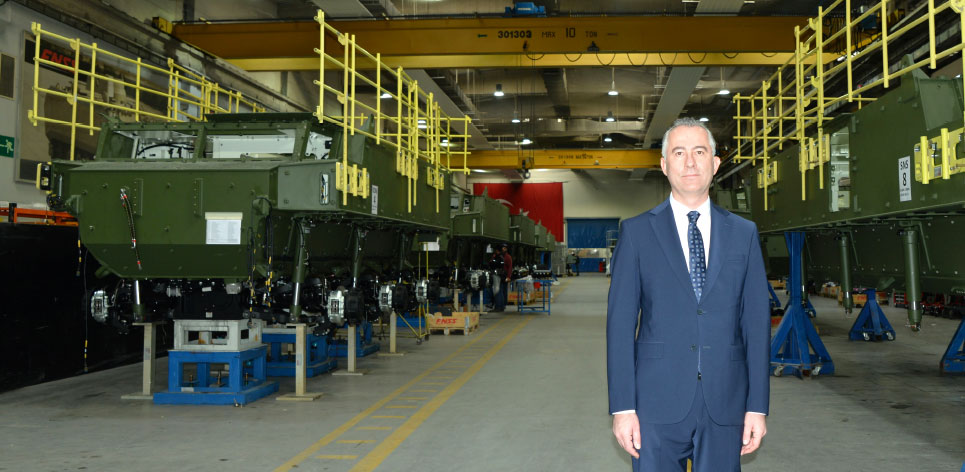
FNSS Business Development Director - Hakkı Burak SAĞ shed light on its expectations & strategic objectives in 2024, ongoing programs at home as well as its future prediction for our readers.
Defence Turkey: FNSS has designed and produced specialized, efficient, reliable, and innovative armored vehicles and delivered thousands of tracked and wheeled armored vehicles to domestic and international users. Could we start out our interview with information on the performance of FNSS Defence Systems, one of Türkiye's leading land system companies? Additionally, could you share FNSS's expectations and strategic objectives for 2024 with us?
Hakkı Burak SAĞ: FNSS has undertaken critical roles in establishing and sustaining the combat power of the Turkish Armed Forces since its establishment. Especially after 2014, vehicles developed domestically and nationally with FNSS engineering capabilities have successfully served as force multipliers for our Armed Forces on land.
Regarding 2023, it would be accurate to state that it was an intense and productive year for FNSS, marked by the transformation of our diligent efforts into deliveries and the initiation of new beginnings, considering the projects started over a 10-year period. Looking at our overall performance in 2023, it was a year of intense activity. We successfully completed critical stages both domestically and internationally regarding vehicle deliveries, production, and business development activities.
I would like to share some critical developments as an example of our Project performance in 2023.
First of all, we started the AAPC Modernization Project Contract, which was a precursor to a dynamic and motivating year. Within the scope of the project, we initiated modernization activities in 2023 and aim to complete all deliveries within a short period of 24 months.
In our Weapon Carrier Vehicle Project signed with the Secretariat for Defence Industries (SSB) in 2016, we completed the delivery of the 300th vehicle. Our PARS 4x4 and KAPLAN vehicles, along with our FNSS-designed OMTAS and KORNET remotely controlled turret systems, have been delivered to the Turkish Land Forces inventory and are successfully fulfilling their duties.
We completed platform deliveries as part of the KORKUT Serial Production Project, which was initiated in 2016 with ASELSAN as the main contractor.
In the Marine Assault Vehicle (ZAHA) Project signed in 2017, we developed the most up-to-date amphibious assault vehicle in the world, qualified it with the Marine Assault Vehicle (ZAHA) Project and the Turkish Naval Forces, and successfully delivered all vehicles.
As you know, we completed our deliveries last year under the 6x6 Mine Resistant Ambush Protected Vehicles Project initiated in 2018, and we provided field support services to the end-user in 2023.
Under the Special Purpose Vehicles Project which was initiated in 2019, we started the necessary subsystem and system-level qualification tests in 2023.
Our deliveries have continued according to the planned timeline of the Armored Combat Vehicle Modernization Project.
Thanks to the success of the KAPLAN vehicles developed under the Weapon Carrier Vehicle Project on the field, we successfully delivered our vehicles within a short period of 8 months under the KMC-U Project, which was initiated in 2022 under the auspices of the Secretariat for Defence Industries (SSB) and ROKETSAN as the main contractor.
Like our domestic projects, we have completed the deliveries of our KAPLAN Medium Weight Tank, developed through a government-to-government cooperation model with Indonesia. We have also finalized all activities in the project conducted in the Philippines, preparing vehicles and turret systems for customer acceptance.
In addition to our project activities, due to 2023 being the year of IDEF, we have achieved our vehicle debut goals and completed critical stages in FNSS-originated R&D projects. During IDEF'23, we proudly revealed two (2) different vehicles and also exhibited our vehicles in collaboration with foundation companies. Our participation at the fair with 11 vehicles marked a significant success, drawing considerable attention from both domestic and international delegations.
During the fair, unveiling the KAPLAN hybrid powerpack and PARS Scout 8x8 garnered significant attention and interest both domestically and internationally. Developed entirely with FNSS internal resources for tracked vehicles weighing up to 20 tons, the KAPLAN Hybrid Powerpack introduces a new vehicle capable of effectively performing tasks such as silent movement, long-duration silent observation, extended range, superior off-road performance, and external power supply in new combat and reconnaissance scenarios.
On the other hand, within the framework of the project initiated by the Secretariat for Defence Industries (SSB) to develop Special Purpose Vehicles tailored to the needs of the Turkish Armed Forces, the PARS Scout 8x8 was exhibited for the first time at the fair. The PARS Scout vehicle family left its mark alongside the 6x6 KMC and 8x8 BURÇ (Mobile Air Defence System) at the ROKETSAN booth.
The PARS Scout, designed specifically for reconnaissance and internal security operations, has proven to be a modular platform with a design solution that provides high situational awareness, reliable subsystems ensuring high mobility in all terrain conditions, and adaptability to different missions.
In addition to the intense agenda of 2023, I would like to mention a critical project for the Turkish Armed Forces and the land vehicle sector. In 2023, we successfully completed over three years of testing for the Next Generation Vehicles Project, led by the Secretariat for Defence Industries (SSB). Under the project, we concluded an intensive testing process conducted in compliance with NATO standards for the first time in our country.
While anticipating that the intense agenda of 2023 will continue into 2024, ensuring the continuity of the success achieved in our existing projects is our foremost objective as part of our goals. While providing solutions that maintain the highest level of user satisfaction, I want to express that our business development goals will be more aggressive in 2024. In Turkey, while FNSS continues to be ambitious in projects such as Next Generation Vehicles and Heavy Class Unmanned Ground Vehicles, we will continue to pursue the highest level of performance in our ongoing projects without sacrificing customer satisfaction.
Similarly, we will continue to pursue a proactive strategy abroad to maintain FNSS's competitive power and its status as the export champion of the land vehicle sector.
Defence Turkey: Could you provide information on the current status of the PARS IV 6X6 MRAP Vehicles, ZAHA MAV (Marine Assault Vehicle), ACV (Armored Combat Vehicle) and APC (Armored Personnel Carrier) Modernization, as well as KMC, and Korkut Projects?
Hakkı Burak SAĞ: In the last decade, we have witnessed significant success in the proportion of projects FNSS has pursued and signed contracts for domestically. Our revenue distribution, which was previously export-focused, has shifted to a domestic focus in recent years due to projects initiated for the Turkish Armed Forces. Additionally, we can describe our recent years as a period of product development. We have an extensive product portfolio comparable to only a few firms worldwide.
From the 4x4 PARS Weapon Carrier Vehicle (WCV) to the 6x6 PARS Special Operations Vehicle, from our specially designed 6x6 and 8x8 PARS Scout vehicles for reconnaissance missions to our new generation wheeled vehicles, we have a diverse range of wheeled armored vehicle offerings capable of fulfilling various mission requirements. With our tracked vehicle family ranging from 10 tons to 40 tons, we are the sole supplier to the Turkish Armed Forces in this field. We have a range of engineering vehicles, including the Rapid Deployable Amphibious Assault Bridge, the AACE (Armored Amphibious Combat Earthmover), and our Shadow Rider Unmanned Ground Vehicle (UGV). We are developing turret systems, and our work on hybrid powerpacks is ongoing. In this context, it seems that the upcoming period will be a growth phase in exports as well.
As I just mentioned, 2023 stood out as the year of deliveries. In this context:
In the ZAHA Project, all vehicle deliveries have been successfully completed. Our work will continue within the warranty period in the upcoming period, and user feedback from the field is critical for us. We aim to improve our vehicles continuously based on this feedback.
In the WCV Project, we conducted the delivery ceremony for the 300th vehicle with the participation of Prof. Dr. Haluk GÖRGÜN, the President of the SSB. We plan to deliver the remaining vehicles by the end of October 2024 at the latest.
In the Special Purpose Vehicle (SPV) Project, we expect the completion of qualification activities and tests for numerous variants with intensive mission equipment to be carried out simultaneously throughout the first half of 2024.
In the ACV Modernization Project, we have reached a significant milestone in modernization activities, and our deliveries are progressing rapidly.
In the AAPC Modernization Project, design evaluation studies have been completed, and the development of prototype vehicles is ongoing. Qualification tests will commence in the first quarter of 2024, with deliveries expected to begin later in that year.
In the KMC-U Project, we aim to deliver all vehicles within 2024.
Defence Turkey: The procurement activity under the New Generation Vehicle (Turkish: Yeni Nesil Araçlar - YNA) Project will be carried out by selecting the firm or firms via the competition of prototype vehicles. Could we get your assessment regarding the significance of the YNA Project initiated by the SSB in response to the needs of the Turkish Land Forces Command (TLFC) and the potential it offers for the Turkish Defence Industry Land Vehicle Sector companies?
Hakkı Burak SAĞ: The New Generation Vehicles Project is a high-potential endeavor comprising modern vehicles and systems intended to serve the Turkish Land Forces for the next 50 years, effectively acting as a force multiplier.
The project aims to procure both wheeled and tracked vehicles. In the first phase initiated by the Secretariat for Defence Industries (SSB) in 2019 under the name New Generation Vehicles Project to meet the needs of the Turkish Land Forces Command, a Request for Proposal (RFP) was published for the procurement of a total of 6x6 and 8x8 vehicles, while a Request for Information (RFI) Document was published for tracked vehicles.
For the first time in Türkiye, a two-stage procurement process was implemented within the framework of the YNA Project. In the first stage, vehicles developed by sector companies were tested through a competition involving the SSB, Turkish Land Forces Command, TR-Test, and industry participants. The competition, which began in 2020 with the participation of the SSB and TLFC, was completed in 2023 after approximately three years, during which vehicles were comprehensively tested for survivability and automotive subsystems.
In the second stage, the technical responses provided in 2020 were reviewed. As of the end of 2023, we have submitted our final offers, and the Project is at the decision stage.
The YNA Project has a high potential considering the total requirement, variety of wheeled and tracked vehicles, and payload diversity. Before making a specific assessment of the project, I would like to draw your attention to a few points regarding the land vehicle sector.
Considering the capabilities of the land vehicle sector in our country, it can be said that it competently meets all the land platform needs of the Turkish Armed Forces competitively domestically, and this capability brings along a significant export potential. We can confidently state that the land vehicle sector within the Turkish defence industry is an area where a competitive environment can be created in the best possible way.
Similar to the international market, there is private sector dominance, and it is the sector with the most intense competition (sometimes destructive) within the Turkish defence industry.
Especially considering high-potential projects like YNA that have the potential to shape the industry, we believe that it is critical for the Secretariat for Defence Industries to put forward sectoral strategies under its leadership to preserve the achievements made in land vehicles since its establishment and to establish strong corporate structures that can compete internationally.
It is important to look at the YNA Project from this perspective in terms of competitiveness and sustainability at the system and subsystem levels. Considering its scope covers both wheeled and tracked vehicles, the YNA Project will be a "System Solution" that will meet the needs of today and beyond 2050, especially regarding the threats faced today. We reckon New Generation Vehicles will be a system solution for asymmetric, hybrid, and conventional potential operations and conflicts, especially focusing on peacekeeping operations.
Considering the service life of the vehicles for 30 years, which is expected to extend to approximately 50 years with possible modernization, the integrated systems, the number of variants, currently developed and to be developed subsystems, and the budgets of international similar projects, the YNA Project is crucial in shaping the future of the land vehicle sector.
Defence Turkey: We believe you will recommend PARS 8x8 and 6x6 New Generation Wheeled Armored Vehicles and KAPLAN New Generation Tracked Armored Combat Vehicle for the YNA Project. What can you tell our readers about the test activities planned for the project and the significant milestones in 2023?
Hakkı Burak SAĞ:FNSS will advance with PARS solutions for wheeled vehicles and KAPLAN solutions for tracked vehicles within the scope of the YNA Project. Our fundamental approach at FNSS is to analyze and understand user needs accurately to provide the most optimal system solution. In this regard, we will propose our PARS and KAPLAN vehicles in accordance with the requirements to be published by the SSB. I would like to emphasize that we are also capable of making necessary adaptations and modifications to meet the requirements.
The 2023 was significant for the procurement of wheeled vehicles under the YNA Project. In the testing process that began in 2020, all critical tests were conducted in accordance with NATO standards, and performance and durability tests were completed in 2023.
These tests, involving vehicles from all three companies, resulted in numerous lessons learned for each company. For the SSB, the pre-tender competition method, which had never been implemented before, was tested thoroughly, providing experience along with lessons learned.
Another significant step for the YNA Project in 2023 was submitting the Best and Final Offers (BAFO) for wheeled vehicles. A decision is awaited within the project scope.
The SSB is conducting the process for the tracked YNA requirement, and we expect progress in the coming months.
Defence Turkey: Could you briefly introduce your PARS 8x8 New Generation Wheeled Armored Vehicle, developed to meet the 8x8 vehicle requirement under the first phase of the New Generation Vehicle (YNA) Project? Additionally, could you provide an assessment of its performance in blast (mine and IED) and field/mobility tests conducted under the YNA Project?
Hakkı Burak SAĞ: FNSS's fundamental design philosophy is to design the most suitable vehicles according to user needs. In this regard, we have contributed to the YNA Project with the PARS vehicle family. I can confidently state that the PARS ALPHA 8x8 Next Generation Armored Combat Vehicle, specially developed for the YNA Project, is an effective solution for the future combat environment with its superior features.
On the other hand, since the bid evaluation for the YNA Project has not yet been completed, we cannot say anything. The bid evaluation committee is evaluating the results of the tests conducted over more than three years, and the results are being reported.
Regardless of the test results, our vehicles tested in the YNA Project have a strong commonality with the PARS Vehicle Family, having been tested in different geographical locations and environmental conditions worldwide, proved on the battlefield, and providing high levels of mine, ballistic, IED protection, and maneuverability to the user. Among the standout features of the PARS family are the co-seating of the driver and commander and high situational awareness capabilities, modular interior layout, ability to operate with hatches closed (buttoned-up) with air conditioning and heating, integration of weapon systems of different calibers into the vehicle, equal axle load distribution, and high horsepower ratio, making it arguably the best vehicle in its class.
Defence Turkey: In July 2022, images of a new vehicle design featuring an 8x8 configuration with interchangeable mission modules and dimensions similar to the PARS IV were circulated on social media. Can you tell us more about this new vehicle, named PARS V? What are the differences between it and its predecessor, PARS IV? Is the vehicle developed for a specific project or customer?
Hakkı Burak SAĞ: The PARS ALPHA 8x8 NG-ACV, which we specially developed for the YNA Project, is slightly different in layout from the PARS vehicle family but shares a similar underlying infrastructure in terms of common component usage. Due to optimization in interior layout, the vehicle will be presented to the user with high mobility features and a lower silhouette, leading to a more compact design. The PARS ALPHA 8x8, unveiled at the World Defence Show held in Saudi Arabia, successfully completed the IED, mine, ballistic resistance, and durability tests as part of the YNA Project in front of our Turkish customer.
It is worth mentioning that we have benefited from the experience of our journey in wheeled vehicle design and production that started in the early 2000s in the vehicles developed for this project. Our 20 experience in two separate projects in Malaysia and Oman has been quite instructive during this process. Our PARS vehicle achieved remarkable success first in Malaysia, then in Oman, and was later crowned with success in projects for 6x6 MRAP Vehicles and Special Purpose Vehicle Projects in Türkiye. We are doing our best to sustain this success.
In this context, we participated in the tests with both PARS IV 8x8 and PARS ALPHA 8x8, which we debuted in Saudi Arabia. We have now reached the decision stage of the project, and we can say that the completion of the tender process is imminent. I hope it will benefit our country.
Defence Turkey: In 2022, within the scope of the New Generation Vehicle (YNA) Project's second phase, which focuses on the New Generation Tracked Armored Vehicle (ZMA) requirement, the SSB issued an RFI (Request for Information) to companies and received proposals from them. In this context, which version of the KAPLAN NG-ACV has FNSS proposed? Are any revisions or changes being made to the vehicle to meet project requirements?
Hakkı Burak SAĞ: FNSS's experience in designing and manufacturing tracked vehicles has been increasing exponentially since its establishment. Its product portfolio includes several variants serving every weight class of the AACV-15, ACV-15, AAPC, ZAHA, and KAPLAN families.
Regarding tracked vehicles as part of the YNA Project, a clear requirement set has not yet been published, so no specific solution has been provided for a particular product. Following the basic design approach of FNSS, a conceptual tracked vehicle study has been conducted and presented in accordance with the Request for Information. As stated, once the final version of the requirements is determined under the Request for Proposals, detailed design work will be completed and shared with the end-user and procurement authority.
As you know, FNSS is the sole supplier of tracked vehicles for the Turkish Armed Forces and has produced modern armored land vehicles for over 35 years. Today, we have a wide range of tracked vehicle products, including ACVs that serve as the backbone of the Turkish Armed Forces, the KAPLAN-10 produced for the Weapon Carrier Project, the Air Defence System Platform developed for the KORKUT and HİSAR Projects, the ZAHA Marine Assault Vehicle found in only a few military inventories worldwide, as well as the ACV-15 and AKINCI ACV produced for the United Arab Emirates and Malaysia, and the medium-class tank produced for Indonesia. As a company with such a broad range of tracked vehicle solutions, we can confidently say we will be involved in this project in one way or another.
Defence Turkey: According to the information we have acquired, the SSB has also defined domestic powerpack requirements for tracked vehicles. In this regard, what options are being considered for the engine and transmission in the KAPLAN NG-ACV? Due to the potential differences in weight, volume, and design of the domestic power pack compared to the foreign engines, are revisions expected in the design of the engine compartment of the KAPLAN?
Hakkı Burak SAĞ: In line with the vision of the Turkish defence industry as a self-sufficient and sustainable sector, indigenous product and subsystem use are priorities for FNSS. We place utmost importance on the localization of the engine and transmission as part of the indigenization efforts. Especially within the scope of the YNA Project, we are meticulous in sharing the necessary information for the ongoing development of the powerpack, and we spare no support to the Secretariat for Defence Industries (SSB) and the contractor company.
As an alternative to the indigenous powerpack, we continuously update our work and analyses on the currently used engine and transmission alternatives, keeping track of developments in this field. As you may know, especially in armored vehicles with high-weight classes, we may encounter problems with transmission procurement for tracked vehicles. For example, the hybrid powerpack development project initiated by FNSS can be shown as an alternative to eliminate dependence on foreign-origin transmissions.
However, depending on how the powerpack developed under the scope of the YNA Project will be included in the request for proposal, there may be design implications for the vehicle. However, since the general vehicle requirements are not yet clear, it would not be appropriate to make a definitive statement regarding the impacts today.
Defence Turkey: Can we get information on the current local content level for FNSS vehicles?
Hakkı Burak SAĞ: I have just mentioned the basic features and dynamics of land vehicles. In parallel, the use of domestic subsystems in land vehicles is quite prevalent. With the exception of engines and transmissions, there are domestic alternatives for almost all subsystems in our country. This also gives an idea of the sectoral depth at the subsystem level. At this point, we can meet a large portion of the components that make up the vehicle from the domestic market. The localization rates in our vehicles have reached 80%.
Defence Turkey: Recently, Türkiye has been subjected to overt or covert embargoes by EU and NATO member countries, leading to disruptions in the delivery processes of some defence projects. Have you experienced such a situation at FNSS? Do you have any projects where delays occurred due to the non-timely delivery of either powerpacks, or electronic equipment/devices used in the vehicles due to these embargoes?
Hakkı Burak SAĞ: Unfortunately, such embargoes can sometimes be imposed against Türkiye, leading to project disruptions. However, thanks to the maturity of the land vehicle sector, our efforts in subsystem development and our competence in finding alternative subsystems allow us to minimize such delays.
In recent years, one of our key priorities at FNSS has been localization activities, developing suppliers in indigenous product and subsystem development, and supporting and incentivizing them through special teams and projects.
Localization and the development of design alternatives, such as the hybrid powerpack development project, are some of the best examples. At FNSS, we took action, and with the hybrid powerpack project, we have developed a solution that eliminates dependence on foreign-origin transmission, propelling the vehicle with an electric motor and gearboxes designed with FNSS resources.
Defence Turkey: Could we have a general assessment of the future of Türkiye's tracked and tactical wheeled armored vehicle industry, especially considering the significant progress made in the last 25 years? In this context, how does FNSS position itself?
Hakkı Burak SAĞ:With the advancement of technology, the battlefield is evolving into a more hybrid structure, benefiting from development. The active use of unmanned systems in combat zones has dramatically increased in the past five years, and we will often discuss hybrid armies and the collaboration of manned and unmanned systems in the coming years. In order to stay within these developments and lead in heavy-class unmanned systems, we have been conducting hardware and software studies on remote command and autonomy since 2018. We aim to elevate the autonomy level of the Shadow Rider Unmanned Ground Vehicle (UGV) to a higher level by blending these studies with evolving technology every day. Our greatest goal with the Shadow Rider UGV, the capabilities of which are proven through end-user exercises, is to ensure that it takes an active role in the army.
With the technologies of mission equipment such as cameras, radars, and communication radios developing at a faster pace, especially modernization issues will come to the forefront more often. The mission equipment on vehicles will become obsolete faster, and the need for modernization will arise more rapidly. While the hulls of the vehicles may not age, there will be a faster need for equipment upgrades. Since FNSS has had modernization experience since its establishment and continues to do so, we consider that we will actively use our experiences in this regard in the future.
With the completion of the hybrid powerpack studies, we foresee its use in vehicles in both new projects and modernization efforts. Even today, land vehicle manufacturers in the defence industry reveal and offer vehicles with hybrid or electric powerpacks to their potential customers. This will become even more important in the coming years and will find its place in projects.
Defence Turkey: Is there any message you would like to add for our readers?
Thank you very much