IP in Turkey: Developing and Protecting the Future of Turkish Economy
In the last 10 years, economic development in Turkey has accelerated due to the sustainable political stability and increasing production in the country. Economic growth was reported as 6.5 on average per cent for the last decade and GDP was accounted as $773 billion in 2011. Turkish economy also recovered very fast in 2009 after experiencing around 4 per cent recession because of the global financial crisis. Due to proven strong financial situation attracted many multinational companies to Turkey like Huawei, Microsoft, 3M and so on. In other words, Turkey is on the edge of investing to R&D and fostering high-end production thanks to the globally integrated strong financial conditions. At this point, Turkish government and policy makers should utilize this opportunity by providing ‘’Intellectual Property’’ protection to companies, universities and techno centres. Apart from the well economic conditions, increasing interest for R&D to pursue 100 per cent local production in some industries such as automotive, defence and ICT are spurring need for well-developed Intellectual Property protection in Turkey.
Despite strong economy with growing export rates, import dependency among end-products tends to increase since 2009. As of 2011, export dependency in manufacturing industry is 43 per cent which is raising country’s deficit. So that, Turkey’s road map is depending on promoting local production without dependency of exported components and being able to shift production to technologically advanced end-products. At this point, R&D centres are the key for successful transformation of Turkish industry, especially those focussed on Aerospace, Defence and Security. Turkish government is aware of that and necessary steps have been taken since 10 years including support of R&D centres, promotion of collaborating with universities by techno centres and providing incentives to private sector.
Among from the efforts pushing R&D and high technology production, intellectual property protection is the most significant element in attracting both foreign direct investment and local investment to the R&D industry.
Key Markets and Industries driving IP regulation in Turkey
Automotive Industry
In 2000’s, Turkish automotive industry has evolved into a production base for the Middle East and European region from being an assembly line for the local demand. In 2011, Turkey became the 17th biggest automobile manufacturer in the world. Especially in commercial vehicles Turkey has deep experience and outstanding export numbers. However, import dependency in the sector is very high with 51 per cent. Turkish government is trying to support local companies to develop R&D centres to foster local production. Also, in automotive industry encouraging global manufacturers to invest R&D centres in Turkey as essential as spurring local R&D investments to benefit from global expertise. As of 2012, 49 of total 129 active R&D centres are in automotive industry. Turkish manufacturer TOFAS is the 939th company in terms of R&D expenditures according to European Union statistics. Also, government announced new incentives for the industry. New incentives including tax exceptions, land allocations and interest reductions. Moreover, local design and production of electrical vehicle is on the agenda of Turkish government. Turkish government is encouraging Turkish companies to start production by offering 100 per cent R&D incentive.
ICT Industry
ICT industry in Turkey is rapidly growing and attracting foreign companies to invest in Turkey. Both government and local private sector is investing to infrastructure of the industry as the transformation of the country is depending on ICT industry. ICT industry is enabling Turkey to renew education, defence and production in the country in every aspect with evolving technological advancements in the industry.
Total ICT investment of the government in 2011 is reported to be more than $2 billion. Also, including the private sector, growth of ICT industry between 2002 and 2010 accounted 14 per cent in terms of CAGR. Yet, total market for ICT is accounted $35 billion which is relatively low compared to developed countries. The gap in the ICT market is pointing that growth of the industry will continue with outstanding growth rates in the long-run. Furthermore, young and dynamic population of the country is promising the industry for the future opportunities.
Currently, most multinational companies do not have R&D centres in Turkey but growing local market and increasing qualified man power with collaboration of universities making the country more and more attractive for the R&D investments. Most recently, the Chinese ICT giant Huawei has opened its second biggest R&D centre, after China, in Turkey. Also, Turkish GSM company Turkcell has ranked 3rd in terms of patent applications in 2011 in Turkey. Both local and international investments to ICT industry are driving the R&D practises with support of government. Ministry of Communications allocated $160 million to support R&D in ICT industry.
In addition, after automobile industry, ICT industry has ranked 2nd in terms of number R&D centres in the country. As of 2013, there are 13 R&D centres operating in Turkey.
Defence Industry
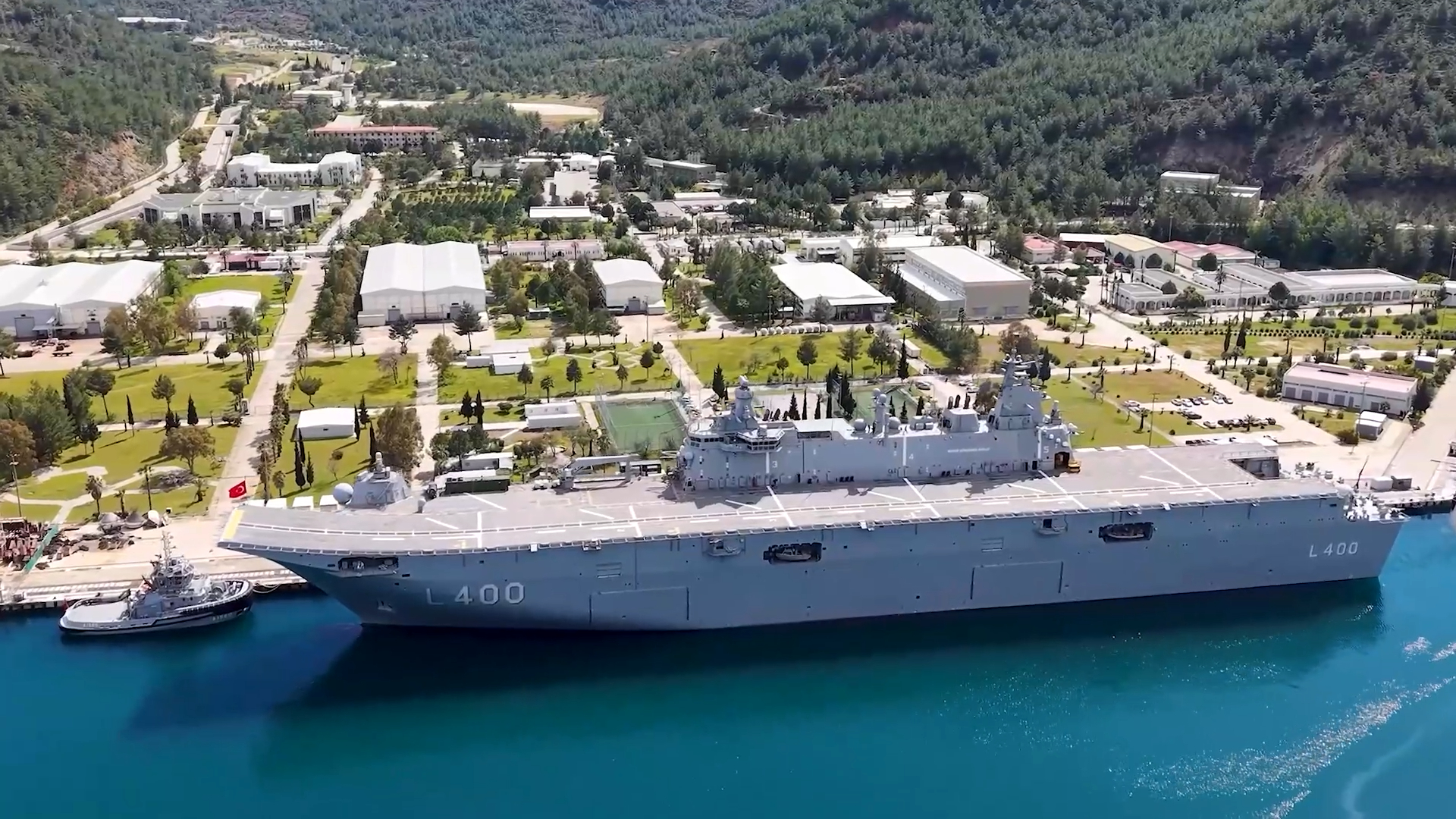
Defence industry, due to its strategic structure and high technology excellence is one of the leaders in the R&D market and is currently transforming to a more open sector that allows sharing know-how and capabilities at different levels. Production of spare parts is slowly shifting to local markets which Western companies penetrated. However, defence industry is still a closed book at country basis and it is not likely to change significantly in the middle or long run. At this point, Turkish defence industry started vast variety of R&D projects including domestic satellite centre, local battle tank and national battleship to spur local competence.
Frost & Sullivan calculated total market for the defence in 2012 in Turkey as $18 billion. The market is expected to grow with CAGR of 3.2 per cent until 2020. Local production can currently meet more than 50 per cent of the requirements of defence industry which is likely to increase accordingly with local projects and R&D operations. Total R&D expenditures increased with CAGR of 45 per cent from $100 million to $700 million in last 5 years due to the projects mainly conducted by TAI and Aselsan such as satellite centre and local UAVs. Also, R&D centres in the defence industry ranked 3rd in the country with 12 currently operating centres.
Role of Academy and Techno centers
Role and definition of techno centres have shaped in Turkey in 2001. Currently there are 45 techno centres in Turkey and 32 of those actively operating. Techno centres have tax exemption privilege extended to end of 2023 from 2013 which was one the major concerns of companies in the techno centres. In addition to tax incentives provided Ministry of Science, Industry and Technology, Small and Medium Enterprises Development Organization also supporting small-scaled companies in the techno centres up to $60K.
Apart from the techno centres, universities itself are also conducting and financing the R&D projects in Turkey. In 2011, 45.5 per cent of total R&D expenditures in Turkey was made by universities yet, universities are not allowed to obtain patents as corporation. Universities currently could demand only their expenses from the product that have been developed and commercialized in the university’s facility.
Turkey’s ‘‘2023 Vision’’ and IP to Support
Turkey 2023 vision is aiming to development in the country in every aspect including education, industrialization, defence, economy and so on. In this vision, GDP is aimed to be $2 trillion which is currently $773 billion. Also, R&D expenditures expected to be $60 billion which will be 3 per cent of GDP. In 2012, total R&D expenditures are roughly 1 per cent of Turkey’s GDP. In addition, Turkish government announced that more than 65 per cent of R&D investments expected to done by private sector which will be around $40 billion. To be able achieve that foreign direct investments also need to be allocated to R&D centres in Turkey.
In the light of 2023 Vision, R&D will be the key to achieve transformation of Turkish industry to produce high-end products with local resources. Automobile, defence and ICT sectors will also continue to drive the Turkish economy and R&D operations. High-end production in Turkey is around 5 per cent and in 2023 it is expected to increase to 20 per cent.
In 2023, R&D expenditures in automobile industry are aimed to be in top 5 among European Union countries. Also, as one of the top 10 biggest economy in the world in terms of GDP, ICT industry expected to be $160 billion in total in 2023 which is expected to allocate around $7 billion to R&D. Defence industry as well, expected to sustain its growth both in total market and in R&D expenditures. Number of ongoing projects is quite high currently and it is expected to increase accordingly until 2023, Defence Ministry announced that the total R&D expenditures of the industry should be aimed to reach $8.1 billion in 2023.
In addition, in the last decade due to developments in the techno centres, R&D centres and increasing interest to high end production, patent applications via PCT and Madrid system in total increased to 1,521 in 2011 which was only 541 in 2002. Until 2023 this number expected to increase accordingly.
Road map for Turkey
Although, Turkey has developed its financial economy with outstanding growth rates and promising industry in terms of R&D and technological advancements, low number of patent applications and total percentages that allocated for R&D so far show us Turkey is just at the beginning of the transformation. Apart from the local investments, Turkey also could not convinced international companies to move their R&D facilities to Turkey. Because of that, currently, only 0.7 per cent of R&D expenditures are financed by foreign investments in Turkey. To increase total R&D industry to $60 billion in 2023, foreign direct investments must be attracted to Turkey. Foreign companies will provide both financial resources and industry know-hows to the country. Complete IP protection and IP support is one way to that with right incentives given by government. Also, Turkey should highlight qualified man power and young population as an advantage in the global platforms.
Apart from attracting multinational companies’ R&D centres to Turkey, small-scaled local firms must be supported by incentives by the Turkish government. While large and medium-scaled companies in Turkey are able to take advantage of government incentives, small-scaled companies are currently not benefitting a lot from the incentives. Currently, Tübitak which is allocating the incentives to local companies is stipulating at least 50 employees have to be working in R&D project which is the biggest handicap for small-scaled local companies. Also, poor prohibition of competition laws in Turkey is not enough to prevent small-scaled companies when a former employee decided to leave the project and the company.
In addition, patent issue of universities must be considered as priority in Turkey’s roadmap and universities should be able to obtain patents. Universities should be able to act as a corporation and commercialize the developments which will encourage them to invest into R&D effectively.