Iran Airshow 2024 An Aviation Enthusiast’s Experience
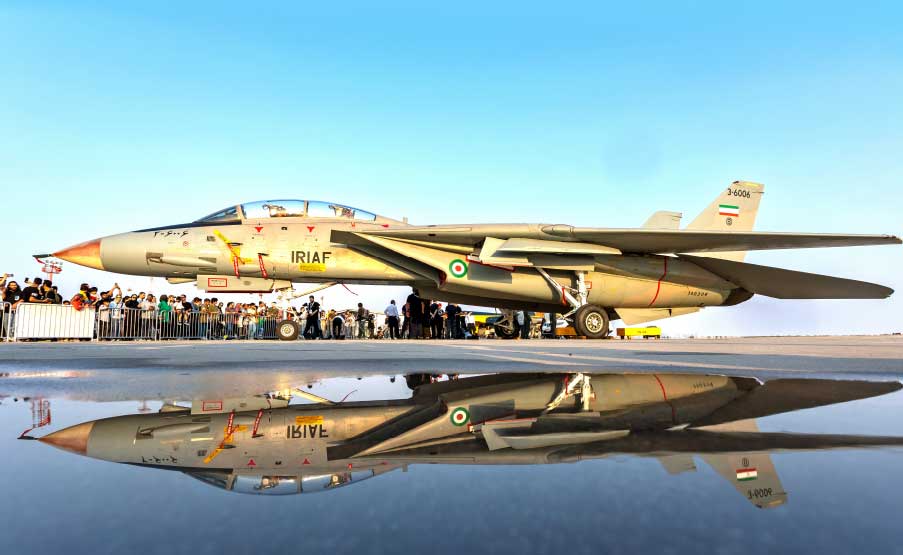
During the Shah's era, Iran had the most powerful Air Force in the region, equipped with advanced fighter jets. However, following the Islamic Revolution, the Air Force suffered the most significant blow. Many of its officers were either executed or imprisoned. When the Iran-Iraq War broke out in 1980, the need for the Air Force became crucial again, leading to the reinstatement of previously imprisoned pilots. These pilots played a decisive role in Iran’s war efforts. The F-4 and F-14 aircraft carried out critical missions. However, due to war losses and subsequent embargos, the Iranian Air Force never regained its former strength. Struggling to procure new aircraft and spare parts, Iran had to develop its own aviation infrastructure, keeping both military and civilian aircraft operational through domestic means. Reverse engineering became essential for sustaining its existing air fleet, making maintenance and parts manufacturing critical aspects of Iran’s aviation strategy. Walking through the airshow, one can easily grasp this reality—almost all critical components, particularly engines, of the aircraft in Iran's inventory are being locally renewed.
Established in 2002, the Iran Airshow has evolved into a platform where leaders of the aviation industry, military representatives, and aviation enthusiasts come together to showcase technological advancements and aerial prowess. Held biennially on Kish Island in the Persian Gulf, it has become a key event in the Middle East's aviation calendar.
The geographical location of Kish Island enhances the event’s significance. Its proximity to Gulf countries and the ease of access via international flights, especially from Dubai, allow for greater attendance. As a free trade zone with developed infrastructure and natural beauty, Kish serves as an important center for international trade and tourism in Iran.
Iran Airshow features a mix of commercial, military, and general aviation, including static displays state-of-the-art aircraft, live aerobatic performances, and aviation technology exhibits. Notable participants include local manufacturers such as the Iran Aircraft Manufacturing Industries Corporation (HESA), Iran Helicopter Support and Renewal Company (IHSRC), and Qods Aviation Industries. Additionally, Iranian airlines and aviation companies take part. This year’s most prominent foreign participant was Russia’s Rosoboronexport.
The military exhibits typically feature Iranian-designed and produced aircraft such as the Saeqeh and Kowsar fighter jets, the Simorgh transport aircraft, and drones like the Mohajer-6B and Ababil-5, which showcase Iran’s engineering capabilities. The civil aviation segment focuses on technological innovations and sustainable solutions, displaying passenger aircraft, helicopters, and UAVs.
The 12th edition of the Iran Airshow was held from December 10-13, 2024. The event featured aircraft from the Islamic Republic of Iran Air Force (IRIAF), including the F-4E Phantom II, Saeqeh, Kowsar, and F-14A Tomcat.
The F-14 Tomcat, an aircraft ahead of its time with variable-sweep wings, a powerful radar, and AIM-54 Phoenix missiles offering exceptional range, gained legendary status, further immortalized by the 1986 movie Top Gun. As an aviation photographer, seeing and capturing the F-14 had been a lifelong dream. I first heard about the Kish Airshow in 2018 when that year’s event recorded the highest participation in Iran’s airshow history.
The 2020 and 2022 editions of the airshow were overshadowed by the pandemic. Determined to attend the 2024 event, I completed my online application and began planning my trip. Traveling to Iran is relatively easy from my country, but there are no direct flights to Kish. There are two options: flying via Dubai or traveling to Tehran and taking a domestic Iranian airline to Kish. The Dubai route was not economically feasible, while purchasing a domestic flight ticket in Iran is nearly impossible for foreigners, as these flights are not available for online booking. Due to sanctions, Iran is not integrated into the international banking system, rendering foreign credit cards useless. A friend who works as a tour guide in Iran assisted me in purchasing my domestic flight ticket and booking my hotel.
A day after securing my flight ticket and accommodations, a tragic accident occurred near Shiraz. On December 5, an Iranian-developed Yasin jet trainer crashed, claiming the lives of two experienced pilots. Although no official statement was made, I later learned that the accident happened during rehearsals for the airshow. Following this incident, the event organizers announced that military aircraft would not participate in the show. Disappointed, I decided to cancel my trip and refund my ticket, albeit with a penalty.
Two days later, a new announcement stated that the event would proceed as planned. I rebooked my flight from Istanbul to Tehran, this time at a higher cost due to the approaching travel date. On December 8, I flew into Tehran’s Imam Khomeini International Airport, took a brief city tour, and then headed to Mehrabad International Airport for my Kish Air flight aboard an MD-83 aircraft (registration EP-LCO). This 34-year-old aircraft became the oldest jet I had ever flown in. After checking into my hotel, I rested, hoping to witness the rehearsal flights the next day.
Unfortunately, no rehearsals took place, and I only managed to spot an IRIAF C-130E aircraft. On December 10, I arrived at the venue, paid the entrance fee, and received my press and aviation photographer access passes. Due to organizational issues, access to the designated area was delayed, forcing us to capture the F-4E’s flyby and the F-14’s landing against harsh backlighting. While making my way through the crowd, I unintentionally said “Teşekkürler” (Thank you in Turkish) to a spectator. The person turned to me and asked in English, “Where are you from?” Upon responding with “Türkiye,” he excitedly said, “We are Turkish too!” and kindly made way for me to move to the front. Throughout my journey in Iran, I received incredible hospitality from the local Turkish community.
The next day, hoping to see Tomcat in flight, I headed to the venue. Although there were again issues with entry, we managed to get inside on time and reach the designated area across the runway. As expected, the aircraft crash from the previous week had cast a shadow over the event, making the 12th Iran Airshow feel somewhat somber. While IRIAF's F-4E Phantom IIs performed flights, the F-14A, T-90, Saeqeh, and Kowsar were only on static display. The Phantoms that participated in the flyby bore distinctive eagle nose art, indicating their affiliation with Oghab 44. In February 2023, Iran introduced its first underground airbase, “Oghab 44” (Eagle 44), designed to house fighter jets and advanced UAVs. The number 44 refers to the 44th anniversary of the 1979 revolution.
Observing the aircraft at the show, certain details caught my attention. The F-4E Phantom II with tail number 3-6538 had two white antennas on its fuselage, both on top and underneath, whereas the 3-6526 Phantom lacked these features and appeared to have more worn-out camouflage. This suggests that 3-6538 had undergone some form of modernization. Another notable Phantom, tail number 3-6666, had a Target Identification System Electro-Optical (TISEO) mounted on the leading edge of its left wing. TISEO was used on F-4E Phantoms to provide visual target identification beyond normal engagement ranges. Since it is a system that requires intensive maintenance, it is likely no longer operational.
The F-5E aircraft modified by the Iran Aircraft Manufacturing Industries Corporation (HESA) feature two vertical stabilizers instead of one. This version is known as the Saeqeh (Thunderbolt). The fuselage, landing gear, engines, weapons, and cockpit instruments appear identical to those of the F-5E, suggesting that the Saeqeh is not a newly built fighter jet but rather a modification of existing Northrop F-5Es. These aircraft are affiliated with TAB 2 in Tabriz.
Three T-90 trainer aircraft belonging to the Islamic Republic of Iran Air Force (IRIAF) were on static display. The T-90 is an Iranian-upgraded version of the Swiss-made PC-7. The cockpit and some avionics have been modified, and it is currently used as IRIAF’s primary trainer aircraft.
Three Mohajer-6B UAVs also participated in the flight demonstrations, flying in formation to salute the spectators. Developed by Qods Aviation Industries Company, the Mohajer-6B is capable of intelligence, surveillance, reconnaissance (ISR), and attack missions, carrying up to four miniature munitions. The UAV has flight endurance of 12 hours, a maximum takeoff weight of 650 kg, a payload capacity of 285 pounds, and a top speed of 200 km/h. The Mohajer-6 first flew in 2017.
Another aircraft that participated in flight demonstrations was the HESA Simorgh, a light transport aircraft introduced on May 19, 2022. It is a modified version of Iran’s IrAn-140 turboprop aircraft, which itself is based on the Antonov An-140. Designed for cargo and troop transport, the Simorgh differs from the IrAn-140 in several ways. While the IrAn-140 has trapezoidal wings, the Simorgh features rectangular wings for increased lift. Additionally, its horizontal stabilizers were changed from V-shape to a fully horizontal configuration. The rear fuselage was also redesigned, incorporating a cargo ramp.
With new friendships and fond memories, I began my return journey on the evening of December 13. I flew from Kish to Mehrabad Airport aboard an AVA Airlines MD-83. After spending the night in Tehran, I returned to Istanbul the next day. Seeing such rare civilian and military aircraft made this an unforgettable trip for me





