July 1st Maritime and Cabotage Day
Veteran Mustafa Kemal Atatürk was aware that the Ottoman Empire’s naval forces were becoming outdated in various areas towards the end of the empire’s reign and strived to ensure the prominence of the Turks with the fortitude of the seas both through his statements and actions during the Republic Period in order to avoid the mistakes made by the Empire.
In the first years of the Republic’s foundation, despite the internal and external problems faced, the Turkish Nation realized that the gateway to achieving the level of modern civilizations was through the accomplishment of political, social and economic structural reforms.
The first step towards economic independence had been taken in the seas upon the decisions adopted at the İzmir Economic Congress where the issues related to the development of the nation, that recently survived the war, had been discussed.
The “Cabotage Law” entered into effect by the young Republic on July 1st, 1926. This legislation was one of the fundamental elements of the “Montreux Convention” signed in 1936 and it is also the inspiration of today’s “Blue Homeland” doctrine.
Thanks to this law, execution of the transportation of passengers and goods between ports, port management and towage services, was assumed by the Turkish flagged vessels and Turkish citizens.
Though it may be regarded as the declaration of a basic law from today’s perspective, when considering the circumstances that prevailed during those times, the hardship experienced in acquiring cabotage rights can be clearly understood.
This right should not only be seen as a right to operate vessels in our country. It should be regarded as the integration of the network of maritime-related economic affairs with the modern world and the development of numerous sectoral areas ranging from training seamen to the ship building sector.
In this way, Turkish maritime with a tradition surviving for centuries and its historical past once again embraced its existence in the seas which had been handed over to foreigners through capitulations.
The incentives provided in recent years resulted in the increase of Turkish Maritime Power in both quantity and quality.
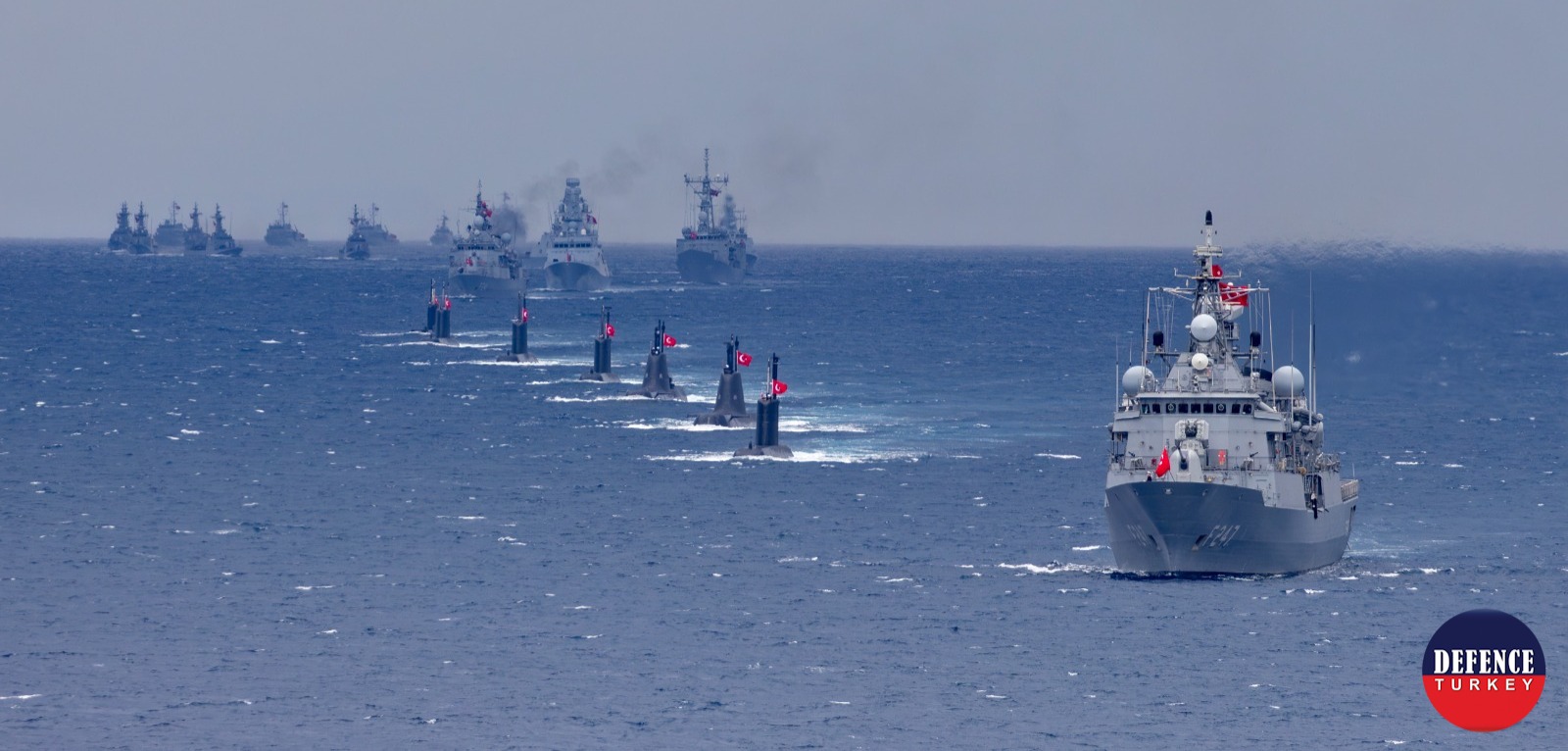
Situational awareness was achieved in our seas that became more meaningful with the “Blue Homeland” concept, which refers to the homeland covering the maritime interests and jurisdiction areas in the Black Sea, Mediterranean and Aegean Sea and the public’s positive perception of our Maritime Power was maintained.
Despite all the issues, the level achieved by our maritime is “OK… but is it sufficient?”
Of course, not...
The to-do-list for accomplishing the “A Maritime Nation and a Maritime Country” target:
A Blue Homeland Political Document should be prepared to achieve a common voice in line with the government’s maritime mission and vision.
Maritime and Turkish Maritime lectures should be included in the curriculum of the 12-year Compulsory Education System in every four-year period and the young population, particularly the ones residing in coastal towns should be motivated towards maritime activities.
Our working age population should be encouraged to be involved in the maritime profession and the shipping of exports that result in high foreign currency inflow should be adopted as a country policy.
A social security law in line with the current legislation should be put into effect for the shipman working on the foreign flag vessels or for foreign companies.
A determined and resilient stance should be displayed against impositions and threats that ignore Turkey’s sovereign rights in the seas.
The seismic research and the activities of drill ships should be conducted in a stable and determined manner in all three seas.
Actions and discourses that may harm the spirit of the Montreux Convention should be avoided.
The Black Sea Naval Cooperation Task Group (Blackseafor) built for the maintenance of peace and stability in the Black Sea should be reactivated.
Turkish type new vessel and yacht building projects should be encouraged to control Maritime Trade and Tourism in our surrounding seas.
Considering the fact that 75% of our trade, which is valued at US$ 400 billion, is realized through the sea the execution of shipping activities by Turkish flag ships rather than those with the flag of convenience should be encouraged.
Accommodation-Based
tourism should include yacht tourism.
The fishery sector should be directed to the open seas.
Fishing should be prohibited for the next 2-3 years to avoid the negative effects of the mucilage in the Sea of Marmara and Turkish Straits and penal sanctions should be increased to prevent pollution caused by passages.
As part of the “September 21st World Cleanup Day”, the underwater cleaning of the coastline and the 6 nautical miles of territorial waters should be carried out with the broad participation of the citizens to create an awareness of clean seas.
To boost the domestic tourism and increase the number of foreign tourists, a Maritime Festival should be organized in the years ending with 0 and 5, in a way to include the July 1st, particularly in the cities of İstanbul, İzmir, Mersin and Samsun.
To enable the exclusive execution of all maritime activities, a Maritime Ministry should be established and a Maritime Policies Council should take place in the new governmental system.
The only path towards increasing Turkey’s welfare and paving the way to success in line with the importance of the seas and maritime activities is through the idea that states the “Blue Homeland requires action rather than a mere discourse.”
Happy “Maritime and Cabotage Day” to the Turkish Nation!
Following his education in Kabataş High School, Hergünşen graduated from the Naval Military College and joined the Navy. After his assignments on Warships, Torpedo Boats and Frigate Class Vessels, Hergünşen acted as a commander on the TCG Fatih Frigate and as a commodore on Torpedo Boats. He retired voluntarily during his post as a Commander on the Coast Guard Marmara and Turkish Straits Regional Command. He worked as an academician at Bahçeşehir University, Bildeniz and the Maritime Trade Institute
Contact Details:
+905325124728
Feneryolu/Kadıköy-İSTANBUL