KURTARAN-2024 Submarine Escape & Rescue Exercise
The distinguished observer day of the KURTARAN-2024 Exercise, conducted by the Turkish Naval Forces Command between April 24-30, 2024, was held on April 30 in Aksaz/MARMARİS with the participation of numerous press members.
As part of the exercise where the Rescue Operation for a Submarine that has lost its ability to surface was conducted, training sessions were held for searching the submarine, providing life support, and rescuing personnel. Additionally, the exercise aimed to share information and experience on submarine rescue activities with personnel from other participating countries, as well as develop interoperability procedures with other Military Branches and Public Institutions.
The operational phase of the exercise began with the Alarm Message given by the Submarine Operations Control Authority on April 25, 2024, and the Search and Rescue Units were mobilized from Aksaz Naval Base to Search, Detect, and identify the Submarine that has lost its ability to surface.
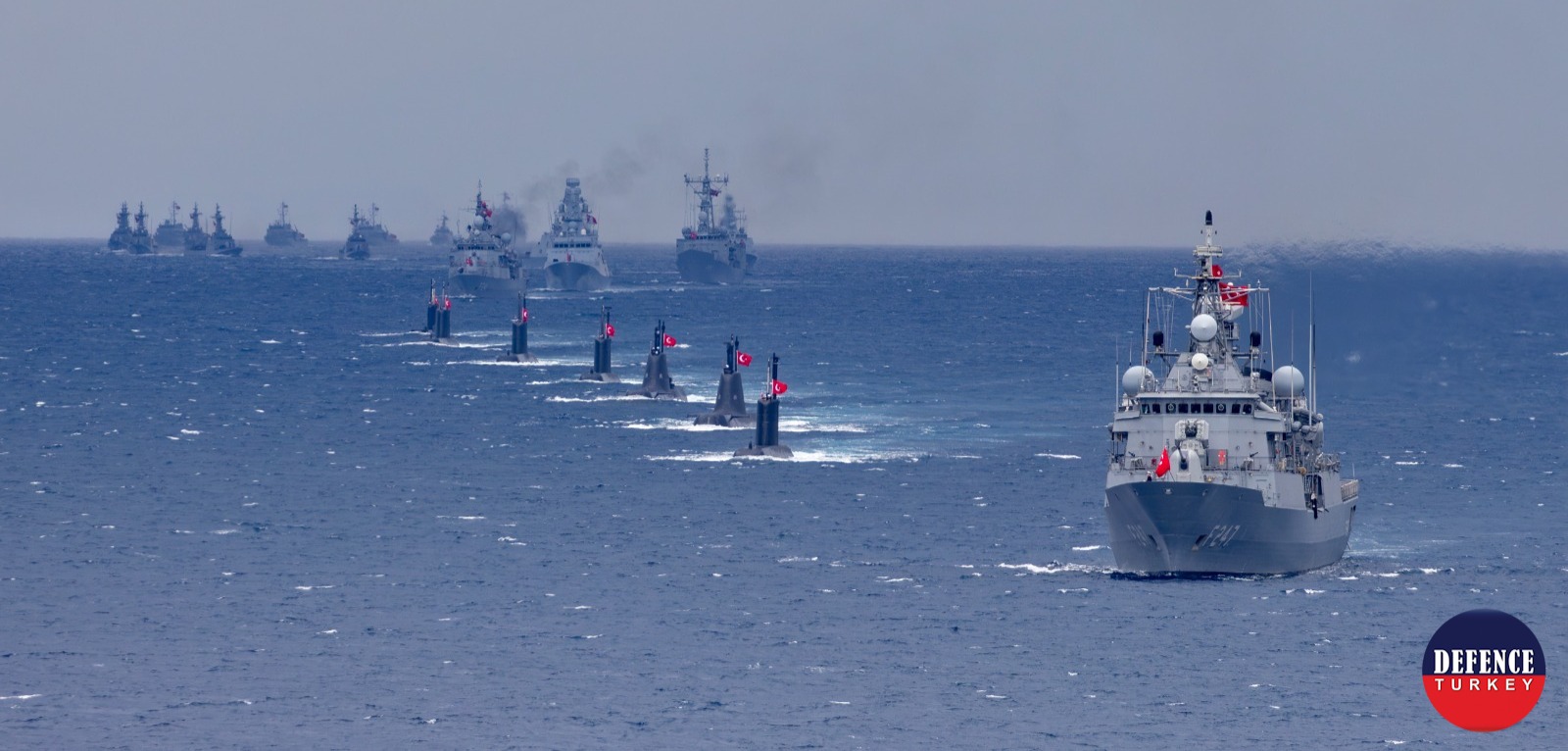
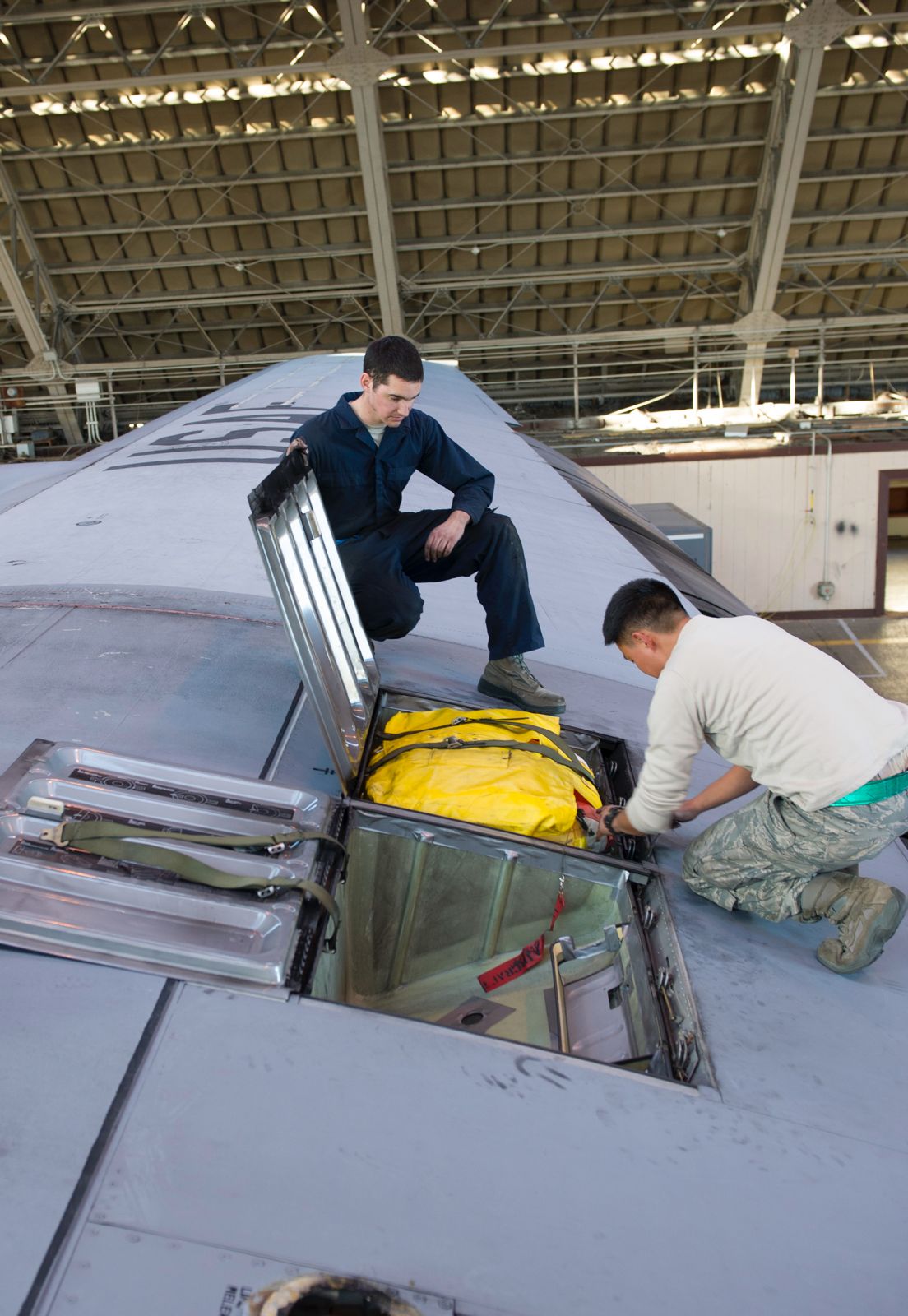
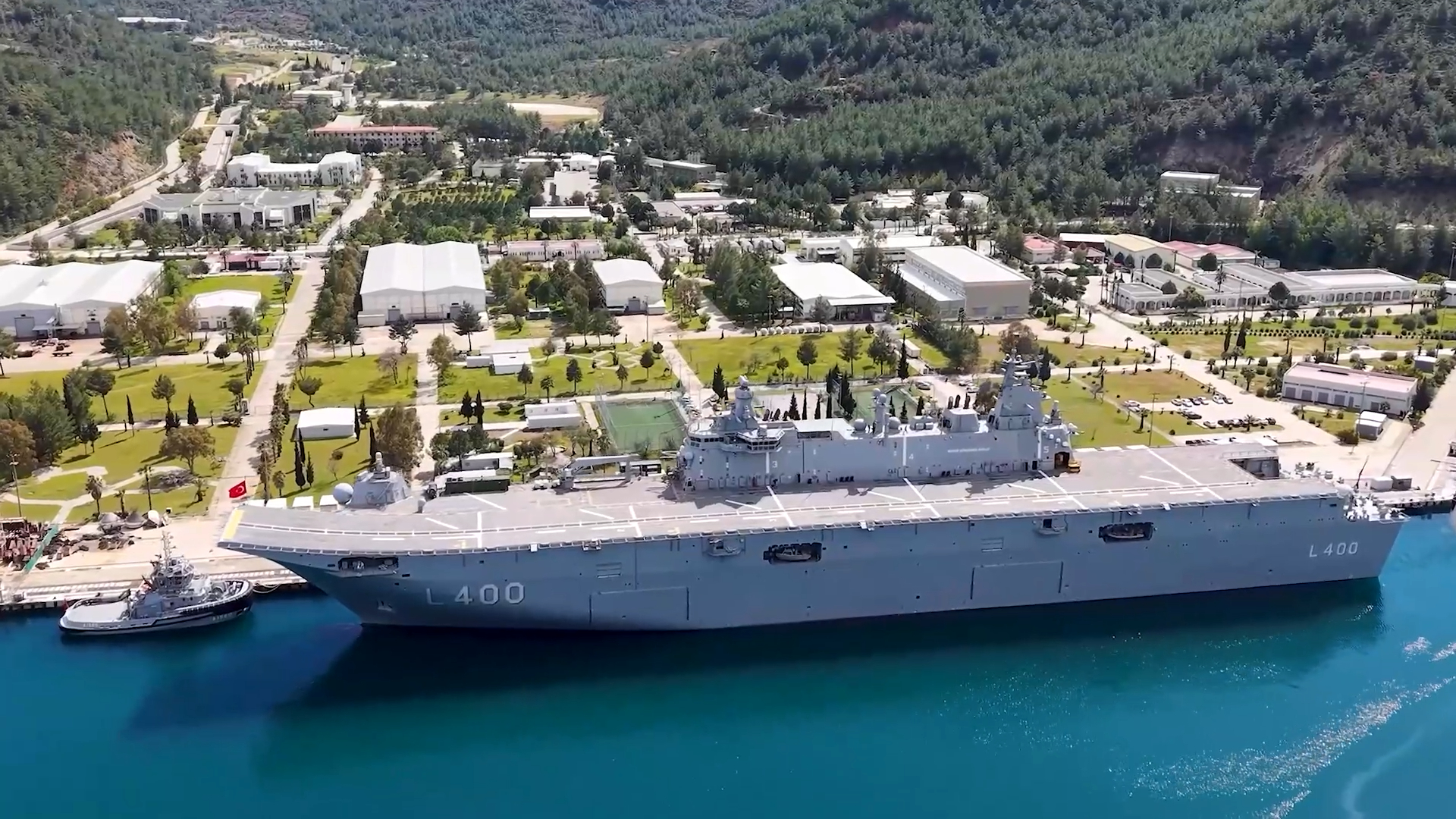
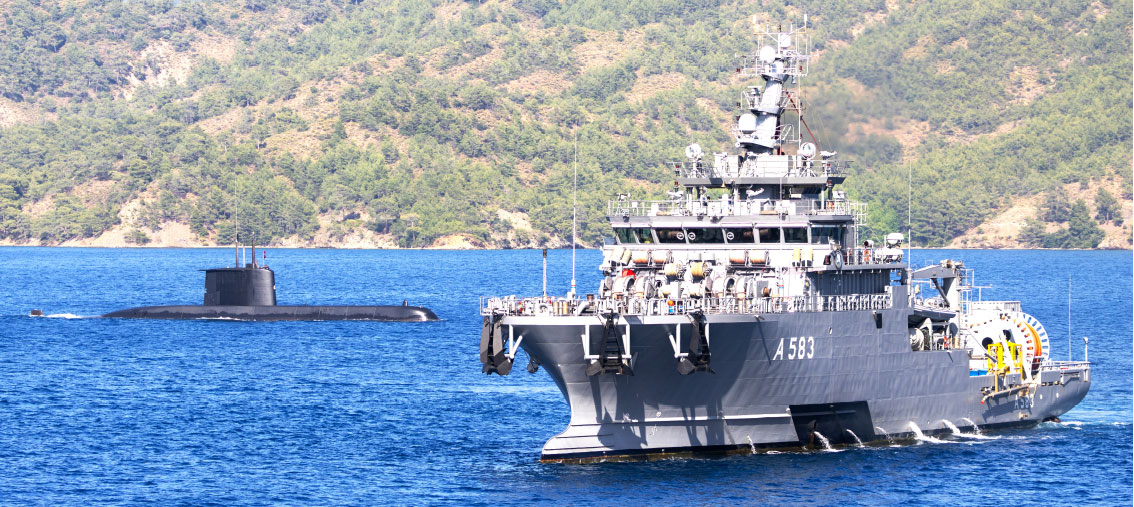
The Naval Forces Command participated in the exercise with 1 Frigate, 3 Submarines, 1 Submarine Rescue Ship, 2 Rescue/Support Ships, 1 Minesweeper, 2 Patrol Ships, 1 Tugboat, 1 Helicopter, 1 Maritime Patrol Aircraft, 1 Unmanned Aerial Vehicle, 1 SAT (Navy SOF) Boat, 1 Parachute Search and Rescue Team, and 1 Submarine Evacuation and Rescue Assistance Team. The Land Forces Command contributed with 1 Ambulance Helicopter, the Air Force Command with 1 C-130 Transport Aircraft, and the Coast Guard Command with 2 Coast Guard boats. Additionally, 35 personnel from 16 countries, including the United States, Azerbaijan, Bangladesh, Bahrain, Bulgaria, Brazil, Morocco, South Africa, the Netherlands, Malaysia, Egypt, Mozambique, Pakistan, Saudi Arabia, Thailand, and Oman, participated as Observers and Staff Officers in the exercise.
Captain (CAPT) Necati Koray SALAR, the Commander of the Search and Rescue Submarine Unit, provided information about the seventh edition of the exercise. He stated that the purpose of the exercise was to rescue personnel from a submarine that had lost its ability to surface, with the participation of NATO member countries and other nations, using the rescue elements in the Turkish Naval Forces Command's inventory. He also mentioned that the exercise aims to develop methods for joint rescue activities for personnel rescue from submarines with non-NATO member countries and to provide appropriate treatments for injury scenarios that may arise during submarine evacuation and rescue operations. Captain (CAPT) SALAR further elaborated, "The KURTARAN-2024 Exercise is a submarine personnel rescue exercise planned by the Turkish Naval Forces Command, executed by the Northern Sea Area Command, and conducted for the seventh time this year in the Marmaris/Aksaz region. During the exercise, national rescue ships will intervene in three different areas where three submarines have submerged. The target group of the exercise is the surface, underwater, and aerial elements and established headquarters that take part in the submarine search and rescue operation."
Captain (CAPT) SALAR also provided information about the activities conducted during the exercise, stating, "In the initial stage of the submarine personnel rescue operation, our command conducts the first response after locating the submarine. At this stage, we can intervene with our divers up to 91 meters, with our Atmospheric Diving Suits (ADS) up to 365 meters, and our Remotely Operated Underwater Vehicles (ROVs) up to 1000 meters to provide external ventilation to the submarine and transfer emergency life support packages to prepare the submarine for rescue. According to the generic scenario, with the Remotely Operated Underwater Vehicle (ROV), an external ventilation system was attached to the submarine to supply fresh air and exhaust stale air at a depth of 600 meters. This system reaches an internal pressure of 5 atmospheres and provides a clean air supply to the submarine with a crew of 50 for 14 days. This capability buys time for requesting assistance from mini-submarines capable of rescuing in deep waters (207m) from NATO countries if the diving bell is insufficient for personnel rescue. The Turkish Naval Forces' Submarine Personnel Rescue Concept aims to locate the submarine that has lost its capability to surface within the first 24 hours, conduct its initial assessment, perform external ventilation needed by the submarine within the first 36 hours, deliver Emergency Life Support Packages to the submarine, and initiate the evacuation of the first survivors from the submarine within the first 72 hours. Another capability demonstrated during the exercise was the delivery of Emergency Life Support Packages to the submarine using the Atmospheric Diving System (ADS-1200) up to a depth of 365 meters. The ADS-1200, which is available in the Turkish Naval Forces' inventory and capable of operating up to 365 meters, can deliver emergency life support packages to personnel inside the submarine when needed."
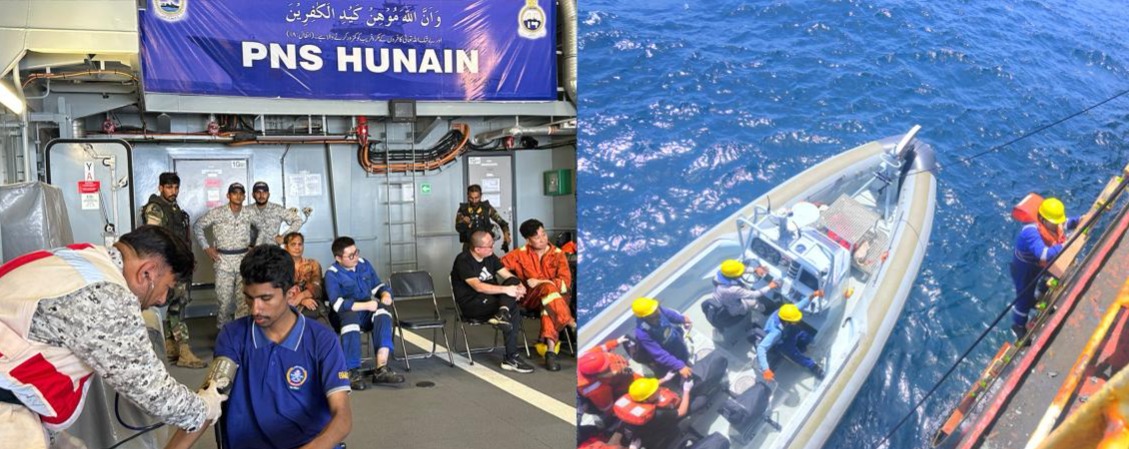
During the press and distinguished observer day, Admiral Ercüment TATLIOĞLU, the Commander of the Turkish Naval Forces, and his delegation inspected the systems used in the exercise aboard the TCG ALEMDAR Submarine Rescue Mother Ship (MOSHIP). According to the exercise scenario, the location of the submarine, which lost its capability to surface, was determined using sonar. A survey activity was conducted using the remotely operated underwater vehicle (ROV) on board the TCG ALEMDAR at 35 meters. Subsequently, first-class divers delivered emergency life support packages to the submarine. As part of the submarine evacuation training, two casualties were brought to the surface using Submarine Escape Immersion Equipment. Upon arrival on the ship, the casualties received medical treatment, including treatments in the pressure chamber. Another activity in the exercise was the rescue of casualties at sea. For this purpose, the Parachute Search and Rescue Team jumped from the C-130B aircraft and rescued the casualties from the water using the rigid-hulled inflatable boats (RHIB) they brought with them. After first aid was applied to the casualties, the rescue teams were transferred to the TCG ALEMDAR ship. One casualty, whose condition was stabilized, was transported by helicopter, accompanied by medical personnel, to a fully equipped hospital in the area. The medical exercise was successfully completed, achieving all its objectives.
Following the conclusion of the exercise scenario, Admiral TATLIOĞLU addressed the troops, stating that the personnel had successfully executed the exercise. Pointing out that the history of diving in the Turkish Naval Forces dates to the 17th century, TATLIOĞLU remarked, "Diving activities conducted around Gallipoli in the 17th century are well known. Our divers served in mine detection missions during the 1877-1878 Ottoman-Russian War." He also mentioned that divers were aboard the Ertuğrul Frigate sent to Japan in 1889 and recalled the rescue activities conducted through the Kurtaran ship acquired from the United States in 1951. Continuing his speech, Admiral TATLIOĞLU stated, "As of today, we have produced our ships and the rescue equipment on our ships domestically and nationally, and we used three of our ships, TCG Alemdar, TCG Akın, and TCG Işın, in this exercise to rescue the personnel of three submarines that had lost their ability to surface. We have the capability to detect wreckage and sunken objects at depths of up to 3,000 meters. We can supply oxygen to submarines at a depth of 600 meters. With our atmospheric diving suits, we can dive up to 365 meters and rescue up to six people from submarines using a diving bell at 207 meters. In today's exercise, we utilized these capabilities and saw the adequacy of our capabilities."
Following Admiral TATLIOĞLU's remarks, Rear Admiral (RDML) Gökçen FIRAT reminded the audience that this year marks the seventh edition of the exercise. He stated, "This exercise was conducted in conjunction with the Dynamic Monarch NATO submarine search, escape, and rescue exercise in 2021, and the Turkish Navy hosted Dynamic Monarch in 2017."
Capabilities of TCG Alemdar Submarine Rescue Mother Ship (MOSHIP) and Submarine Rescue Systems
The TCG Alemdar Submarine Rescue Mother Ship, with a length of 90 meters, a width of 19 meters, and a total displacement of 4,035 tons, is equipped with a 5-bed capacity patient ward, an operating room for emergency and simple surgical interventions, as well as X-ray and Ultrasound devices.
The TCG Alemdar features the following systems and basic capabilities for its missions:
It can dive up to 40 meters using SCUBA and 91 meters using the Surface-Supplied Air and Mixed Gas System.
It can dive up to 91 meters using the Crew Transfer Capsule and Diver Lift.
It can provide clean air to the submarine and exhaust stale air from the submarine using the Submarine Ventilation System, reaching depths of up to 600 meters.
It has 4 Pressure Chambers, with a total capacity of 44 personnel, to provide medical treatment as needed.
The Rescue Systems used on the deck include:
Submarine Rescue Bell: The rescue bell can operate up to a maximum depth of 207 meters and sea state 3 and evacuate a total of 6 submarine crewmembers and 2 rescue personnel each time. After being evacuated with the rescue bell, personnel can be accommodated in the pressure chamber onboard the TCG Alemdar ship.
Atmospheric Diving System (ADS-1200): The ADS-1200 is capable of diving up to a depth of 365 meters and is currently used in six countries (China, France, Italy, Russia, Vietnam, and Türkiye). It can perform various tasks, such as delivering Emergency Life Support Packages to the submarine, connecting and disconnecting clean and dirty air hoses, and attaching/releasing the guide wire of the rescue bell.
Emergency Life Support Package: ELSP is used to transfer materials needed for initial intervention to the submarine.
Remotely Operated Underwater Vehicle (ROV): This vehicle enables unmanned underwater operations up to 1,000 meters. The ROV-1000m entered service with the Naval Forces Command's inventory in 2017. It has 3 cameras, 4 lighting systems, a wire cutter that can cut up to 36mm, and 2 sets of 7-function robotic arms