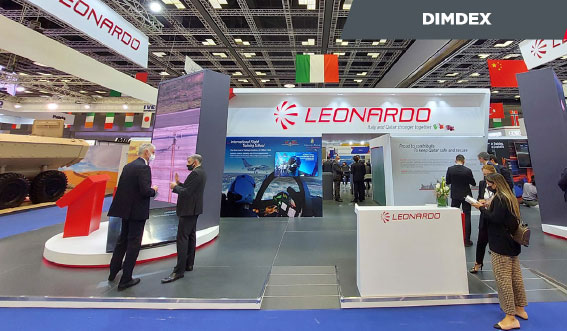
Leonardo at DIMDEX 2022 IFTS, NH90 TTH & NFH Helicopters, MIYSIS DIRCM and Naval Operation Center
Leonardo already plays a key role in the protection of Qatar, with its technologies used in country for almost 25 years. Leonardo has a substantial presence in Qatar through its representative office and a branch in Doha. Its cross-domain technological solutions are supporting Qatari Institutions in the protection of people and homeland, also thanks to the company’s participation in the MBDA, Eurofighter and NHI consortia. Today, Qatari Emiri Air Force (QEAF) pilots are flying Leonardo’s T-346A advanced jet trainers at the Italy-based training school called IFTS (International Flight Training School) which combines the Italian Air Force (ItAF)’s world-renowned experience in flight training and Leonardo’s leadership in integrated training solutions.
QEAF pilots have recently embarked on the final stage of their advanced/lead-in fighter training at the International Flight Training School (IFTS), which capitalizes on the modular and versatile ItAF Lead-In Fighter Training (LIFT) syllabus, based on the innovative T-346A Integrated Training System (ITS). IFTS it is currently located at Galatina Air Base in Italy where the high-performance aircraft T-346A, as well as a fully integrated and interconnected Ground Based Training System (GBTS), including two Full Mission Simulators (FMS), are in operation using state-of-the-art Live Virtual Constructive (LVC) technology. The Phase IV syllabus implemented in IFTS has been specifically designed to improve teaching effectiveness during the LIFT phases of training. The IFTS syllabus enables the download of training from the OCU saving time and valuable resources and includes, in addition to the qualification and basic training, the following modules: Air to Air, Advanced Air to Air, Air to Ground, Live Range, Air to Air Refueling, Night NVG. With the outstanding T-346A performance, advanced avionics, and full suite of embedded simulation, the Phase IV syllabus used by IFTS brings the pilots to a level of airmanship and skills not achievable with any other training system. Meanwhile, in May the IFTS awarded the first Phase IV (Advanced/Lead-In to Fighter Training) diploma to the first two pilots, coming from the German Air Force (Luftwaffe), who underwent training activity that took place over a course of nine months at the Galatina airport.
The decision of the Qatari Emiri Air Force (QEAF) to send their pilots to train in Italy at the IFTS is a vote of confidence in the school and highlights the potential of this ambitious international project.
In Qatar, Leonardo also has a significant presence in the helicopters sector: the company is acting as Prime Contractor for the 28 NH90 (16 in TTH and 12 in NFH configurations) Program, with the first four helicopters (two NFH and two TTH) already delivered. The program also has the potential to be extended in the future with the addition of 6 + 6 units in a mixture of TTH and NFH variants. In addition, more than 40 helicopters including the AW139 and the AW189 are performing offshore transportation, utility, surveillance, search and rescue and emergency medical services missions. Models of the NH90 and AW149 were on display in Doha, in addition to the AWHero, Leonardo’s rotary wing unmanned system.
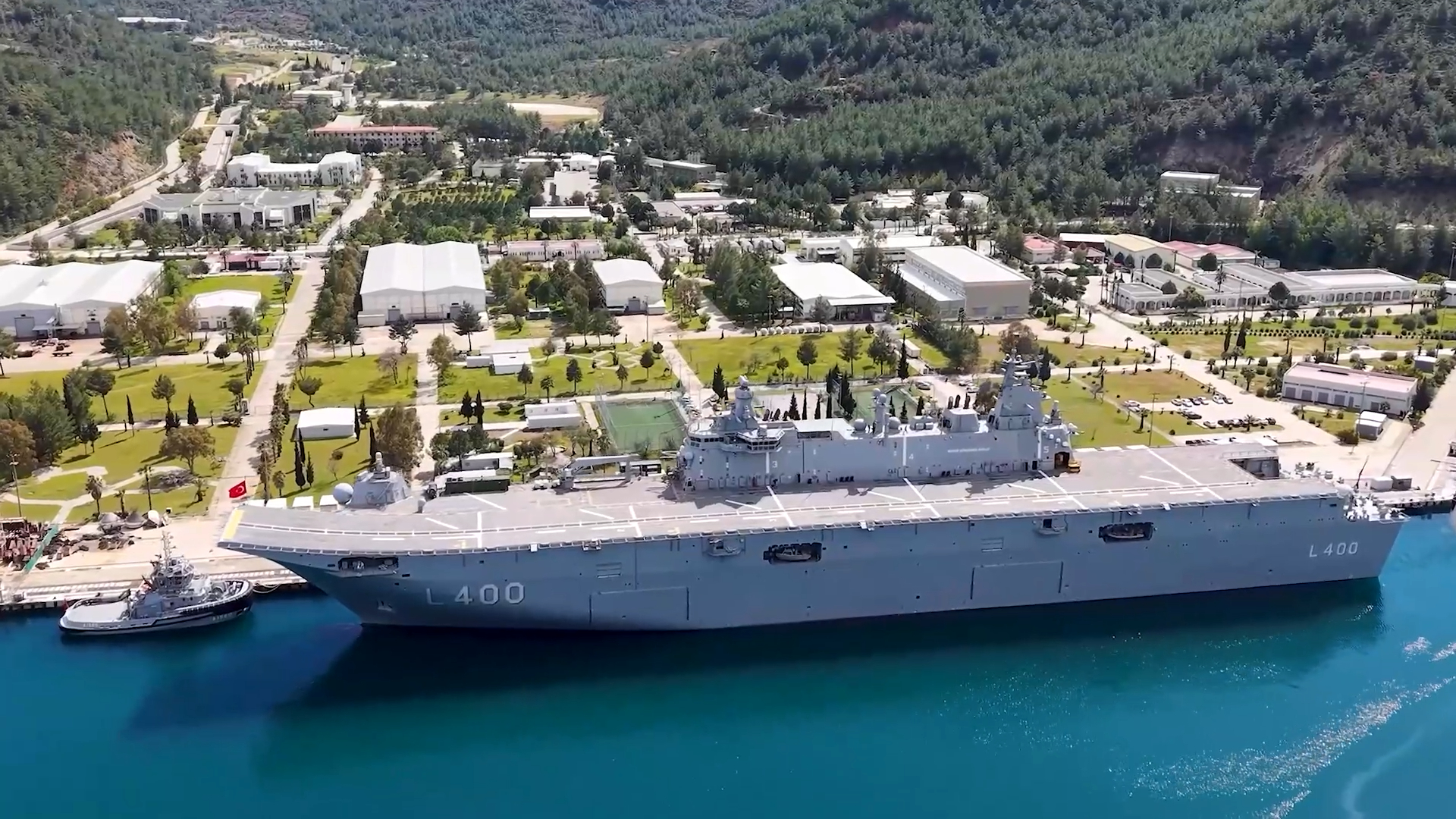
A major milestone in the QEAF’s NH90 Helicopter Program was achieved on December 18, 2021, when the first TTH (Tactical Transport Helicopter) and the first NFH (NATO Frigate Helicopter) helicopters took part in Qatar’s National Day parade. The first NH90 TTH helicopter for land operations was delivered from Airbus Helicopters’ facility in Marignane (France) on December 11, 2021. The second NH90 TTH was handed over recently. On March 31, 2022, the first two NH90 NFH helicopters that are dedicated to naval missions, were delivered to the QEAF during a ceremony at Leonardo’s Venice Tessera final assembly line (Italy). Acting as Prime Contractor for the overall program, Leonardo is responsible for the final assembly and delivery of the 12 NH90 NFH helicopters from its Venice Tessera facility. The company is also providing a support and training services package for crews and maintenance technicians. Airbus Helicopters, on the other hand, is responsible for carrying out the final assembly of the 16 NH90 TTH aircraft. Deliveries will continue through to 2025. The NH90 NFHs will be deployed on the new OPV Class Cadet Training Ships (constructed at ANADOLU Shipyard in Turkey, Al Doha [QTS 91] was commissioned in August 2021 and Al Shamal [QTS 92] was commissioned in February 2022) and Al Zubarah Class Multi-Mission Corvettes (first ship Al Zubarah [F101] was delivered in October 2021 and the second ship Damsah [F102] was delivered in April 2022 at La Spezia shipyard) and the new Air Defense LPD of the Qatari Emiri Naval Forces (QENF), respectively, under delivery and under construction by Fincantieri in Italy. Fincantieri announced on May 17, 2022, that it has laid the keel of the QENF’s LPD at its Palermo shipyard. Delivery of the LPD is expected to take place in 2024.
Leonardo’s avionics, promoted at DIMDEX, also included a range of technologies for platform protection such as the MIYSIS Next Generation DIRCM (Directed Infra-Red Countermeasure) System.
One of the greatest threats to airborne platforms is that posed by infrared (IR) guided Man Portable Air Defense Systems (IR MANPADS) missiles. These fire-and-forget type missiles are inexpensive, highly portable and have been used lethally during the last 40 years in both military conflicts and by terrorist organizations. In parallel to developments in IR sensor technologies MANPADS have become increasingly resistant to standard countermeasures such as decoy flares and, as such, the most effective defense from MANPADS is to directly attack them with a high power, multi-band, laser DIRCM system. Modern MANPADS can engage low signature threats from any aspect, meaning that DIRCM systems must now provide all-aspect protection. To counter this threat, Leonardo, as a global leader in the development, manufacture and support of airborne laser and electro-optic systems, has developed the MIYSIS DIRCM System, which provides high power, all-aspect protection against modern and legacy threats.
Leonardo has been a global leader in the design, development, manufacture and support of airborne laser and electro-optic pointing and stabilization systems for over 40 years. The company began working with the UK Ministry of Defense (MoD) on DIRCM in the late 1980’s and was selected in 1995 as the supplier of DIRCM pointer/trackers for the AN/AAQ-24(V) Nemesis DIRCM System. Since then, over 3,500 combat proven DIRCM pointer/trackers of various types have been built in Edinburgh and deployed on over 50 aircraft types, including rotary, fixed wing turboprop and jet transport.
Designed and built at Leonardo’s Edinburgh site in the UK, the MIYSIS DIRCM is the culmination of the company’s 20-years of experience in DIRCM development, testing, validation and certification. It is made up of two integrated Laser Pointer/Trackers (each weigh15.6kg), a system controller (Electronics Unit, weighs 5.7kg), which is interfaced with the Cockpit Interface Unit (weighs 1.1kg) and alert sensors (MWS) that detect the emissions from the missile when it launches. The Electronic Unit can handle the whole threat engagement process including the simultaneous engagement of multiple targets and the target hand-over between the two turrets (Laser Pointer/Trackers). The lightweight, low-cost Laser Pointer/Trackers feature a hyper-hemispherical beam director, centered on a low-inertia, two-axis servo mechanism enclosed by a 14cm sapphire dome, a low cost, strap-down inertial sensor, a 3rd Generation mid-wave infra-red focal plane array sensor with long-life cooler, multi-spectral co-liner optics for laser transmission and a continuous, multi-spectral high precision laser bore sighting capability. This configuration, with all moving parts sealed behind a 14cm sapphire dome, allows for effective tracking through the nadir and provides superior sightline performance. So, as a, spherical coverage DIRCM System the MIYSIS weighs less than 40kg without the alert sensors and is able to protect the full range of platform types from small helicopters to large, wide-bodied transport aircraft. Leonardo believes that the MIYSIS DIRCM System is the smallest and lightest high Energy-on-Target, multi-turret, full DIRCM system available on the global market today. It has a peak power draw of less than 1,300W, and typically draws less than 600W during jamming with both heads, giving it the lowest aircraft power requirements of any comparable system.
The MIYSIS DIRCM has been developed to engage any IR MANPADS threat immediately after launch, regardless of the range from which it was fired. Once the threat is confirmed, the MIYSIS DIRCM System, with its exceptional response speed, directs a high-powered laser beam with great precision onto the seeker head of the approaching missile, ‘dazzles’ it by disrupting the seeker guidance algorithms and prevents it from tracking and hitting its intended target. The MIYSIS can be integrated onto aircraft platforms either as a stand-alone DIRCM solution or as part of a broader Defensive Aids Suite.
The MIYSIS DIRCM has already been delivered to the UK Armed Forces and a number of other NATO and non-NATO nations. This includes:
Part of an integrated UK Defensive Aids System that will equip the UK RAF’s fleet of Shadow ISTAR aircraft based on the King Air 350CER.
The Royal Canadian Air Force’s fleet of 14 CP-140 Aurora (Canadian designation of the P-3 Orion) Maritime Patrol Aircraft.
Multiple undisclosed European and Middle Eastern customers.
Once the preserve of U.S. Armed Forces and close allies, DIRCM systems are now available to customers in the Middle East and Indo Pacific. Leonardo is in discussions to provide MIYSIS DIRCM to the UAE military and other customers in the region. Leonardo has been working with Abu Dhabi-based Platoon Advanced Technologies and other partners in the UAE to propose MIYSIS as the DIRCM solution for some of the UAE’s key platforms. A new collaboration between Leonardo and French aircraft MRO (maintenance, repair and overhaul) services provider Sabena Technics is also expected to widen the customer base (with particular emphasis on the European, Middle Eastern and African markets) for MIYSIS. In November 2021 Leonardo signed a memorandum of understanding (MoU) with Sabena Technics. Under the agreement, Sabena Technics will offer Leonardo’s MIYSIS DIRCM to customers looking to modify and equip their aircraft with gold standard protection against infrared-guided missiles. Air Forces, Governmental and special use aircraft owners will be able to benefit from the combination of Sabena Technics’ in-house integration capabilities for their complex modification or upgrade projects and Leonardo’s proven MIYSIS DIRCM solution.
Leonardo is attracting even more customers for the MIYSIS DIRCM, as its small size allows for installation on even very light helicopters and UAS, while the system outputs enough laser energy to protect even a large jet transport aircraft with a high heat signature. According to open sources the MIYSIS DIRCM has also been selected by Turkey within the scope of the Stand-Off Electronic Support/Electronic Attack (ES/EA) Capability at Air Platform (Air SOJ) Project and one system has been ordered for the integration onto the prototype aircraft. Under the Air SOJ Project, starting from 2026 TUSAŞ/ASELSAN will deliver a total of four Stand-Off Jammer Aircraft based on the Bombardier Global 6000 business jet, one prototype and three serial production models, to the Turkish Air Force (TurAF).
During the DIMDEX 2022 exhibition, Defence Turkey Magazine spoke with Robert KING, MIYSIS DIRCM Campaign Manager, to get first-hand information on the MIYSIS DIRCM System and its distinguishing features.
Defence Turkey: Can you please comment on the importance of a DIRCM System on the modern-day battlefield? Why should an aircraft be equipped with a DIRCM System?
Robert KING: As part of an aircraft self-protection system the MIYSIS is designed to protect aircraft from the threat of man-portable air defense systems (MANPADS), which are the most widely used on the battlefield, and we have seen recent incidents of engagement as late as in the Ukraine recently. So therefore, we require a DIRCM system to be placed onto an aircraft in order to afford that aircraft full spherical coverage with aircraft self-protection from the incoming threat.
Defence Turkey: There are also some other products in the field of DIRCM systems on the global market. Can you elaborate on the main the differences between the MIYSIS DIRCM and others, your competitors?
Robert KING: Ok, so our product is the lowest end swap, swap being the size, weight and the power draw, the type of laser which we use to engage the aircraft, that is a tri-band laser which covers the whole range of threats which are on the modern-day battlefield. Leonardo has a great heritage in building lasers, in Edinburgh, we produce the solid-state laser here that we see, and the laser is coupled to the MIYSIS DIRCM so therefore rather than having two individual components, you have a complete system here, a subsystem, which is a bit more compact. Moreover, MIYSIS is a two-axis system rather than a four-axis system; therefore, we have reduced the amount of moving parts and therefore increasing the reliability.
Defence Turkey: So, doesn’t the four-axis system perform better than the two-axis version?
Robert KING: No, no no. Absolutely false. The two-axis system, which MIYSIS has developed, uses specific algorithms to give it the complete coverage across the whole area of the hyper-hemispherical dome. Whereas a four-axis system is somewhat slower in its reaction. So therefore, MIYSYS DIRCM is quicker and more efficient, and more reliable because we have reduced the amount of moving parts.
Defence Turkey: Is the power generated by the MIYSIS DIRCM stronger or more powerful than other systems on the global market?
Robert KING: I’m saying it’s more efficient; the power output is more efficient to deal with the threat.
Defence Turkey: So, what about the engagement sequence? For example, is the MIYSIS able to deal with simultaneous MANPADS firings, are there any limitations?
Robert KING: The MIYSYS will deal with multiple threats from either a single direction or from multiple directions. It blinds the seeker head of the approaching missile, which allows the aircraft to go on its course and it deflects the missile away from the aircraft and that is the function of a DIRCM system.
Defence Turkey: What about the requirement of the sensor for full spherical coverage, for example, if you consider a business jet, like the Bombardier Global 6000 selected for Stand-Off Jammer (Air SOJ) Aircraft of TurAF, is one system enough or do you need to put one in the back and one in the front?
Robert KING: So, we have a recommendation to allow full spherical coverage of the aircraft, you would use two Laser Pointer/Trackers (turrets) for a business type jet aircraft or a helicopter. If you have a large wide-bodied fixed wing aircraft (such as the A400M), then you may choose to have three Laser Pointer/Trackers to provide that full spherical coverage in case you have any blind spots. The power output from the MIYSYS DIRCM is able to protect those aircraft from any threats.
Defence Turkey: Does the MIYSIS DIRCM System also require another separate energy source? Is it able to operate autonomously?
Robert KING: Yes. Ok, so, the beauty of the MIYSIS DIRCM is that it can be either installed as a self-contained system with a missile warner, several types of which MIYSIS is already integrated with, including our own MAIR (Multi-Aperture Infrared) system, or we can use any missile warning system that is available and DIRCM capable. The missile warner system (MWS) is a wide area system, which looks for the incoming missile, that warner then passes the information to the DIRCM which refines and then tracks the missile through its flight path. That subsystem can either work independently, i.e., the missile warner and the MIYSIS as a system, or it can be a part of an integrated defense suite.
Defence Turkey: Do you also have a pod version of this MIYSIS? Or is it integrated into the fuselage?
Robert KING: It’s a fantastic question. MIYSIS can also be placed into a pod, also for a role-fit, i.e., therefore a helicopter or UAS may choose to be fitted with MIYSIS on some occasions, but the pod can be removed and used, and the helicopter or UAS can go without MIYSIS, depending on the operational requirements.
Defence Turkey: And what about the current market? How many MIYSYS systems are operational globally?
Robert KING: Ok, so we have multiple NATO end users, minimum five, and we also have Middle Eastern head of state end users including them on jet transport aircraft…
Within the scope of the DIMDEX 2022 exhibition, on March 22, Leonardo announced that the company will provide the Qatari Emiri Naval Forces (QENF) with a Naval Operation Center (NOC) to ensure monitoring and control of territorial water, Exclusive Economic Zone (EEZ) and adjacent waters. Located inside the naval base in Umm Al Houl, a new naval base adjacent to the Hamad commercial port in development south of Doha, the NOC will enhance cooperation with other national agencies in charge of maritime security, according to a statement issued by Leonardo.
According to the announcement, under the agreement, the NOC will provide command, control and coordination of operations at sea allowing the Armed Forces to carry out integrated monitoring by exploiting the high level of cooperation between all the sensors on the field. The QENF will thus have fully integrated situational awareness to support the decision-making process of all operational and tactical stakeholders and rapid interventions along the entire chain of command.
“Leonardo is playing a key role in the protection of Qatar. Its presence in the country dates back almost 25 years. The maritime domain is a strong focus for the company, which is equipping, also as combat system integrator, the Navy’s new ships with its naval capabilities, ranging from turnkey combat management systems for all classes of military vessels, to naval defense systems,” the statement said